Best Tumbler Seal Rings for European Wholesale Markets with FDA Compliance
I watched three European wholesale buyers reject perfectly good seal ring samples last month. They all failed on one thing: missing dual compliance paperwork.
The best tumbler seal rings for European wholesale markets must meet both FDA and EU Regulation 1935/2004 standards. Choose liquid silicone rubber materials1 with 18/8 steel compatibility and proven pressure-test data for 40oz formats to minimize warranty claims.
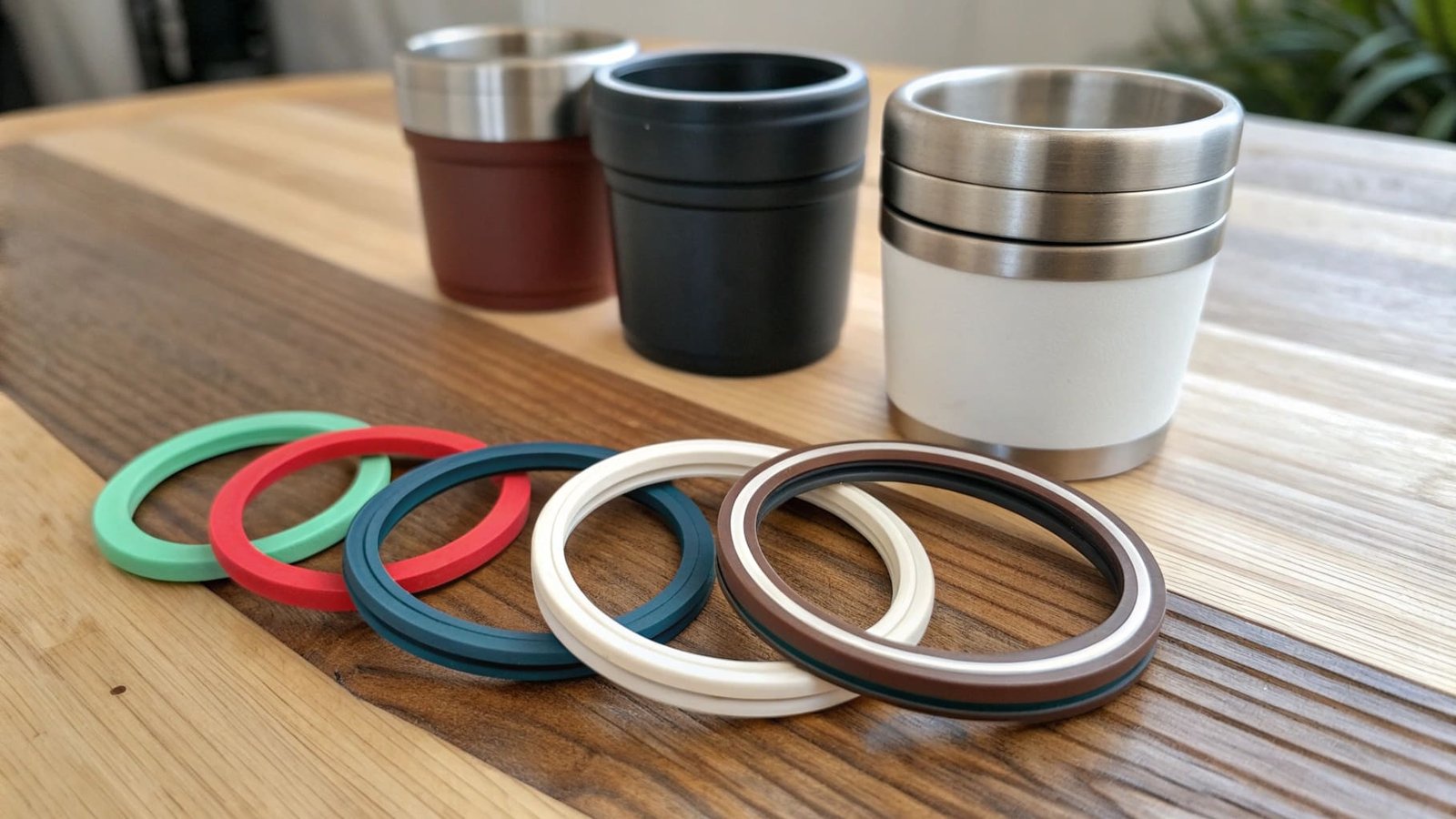
I learned this the hard way when a German distributor cancelled a 50,000-unit order because I only provided EU certificates. The European market has changed. Buyers now expect suppliers to understand both regulatory systems.
What Are the Best Tumbler Brands?
European wholesale buyers face constant pressure from brands like YETI and Stanley. These brands set quality benchmarks that smaller distributors must match.
The best tumbler brands for European wholesale are YETI, Stanley, and Hydro Flask. These brands dominate market share and establish quality standards that wholesale buyers use to evaluate seal ring suppliers.
Understanding Brand Requirements
I work with wholesale buyers who distribute across 12 European countries. They tell me the same story. Brand reputation drives their purchasing decisions.
YETI leads in premium segments. Their seal rings must maintain elasticity at -40°C. Stanley dominates the mass market with their Quencher 40oz model. Hydro Flask appeals to eco-conscious consumers. Each brand has different technical requirements.
| Brand | Market Position | Seal Ring Priority | Temperature Range |
|---|---|---|---|
| YETI | Premium | Leak-proof performance | -40°C to 100°C |
| Stanley | Mass market | Cost-effective durability | -20°C to 85°C |
| Hydro Flask | Eco-friendly | BPA-free certification2 | -30°C to 90°C |
My wholesale clients need suppliers who can match these specifications. They cannot risk product recalls. A single batch of failed seal rings costs them customer relationships and money.
What Is the Best Grade of Stainless Steel for Tumblers?
Many new wholesale buyers ask me about steel grades. They worry about material compatibility with seal rings.
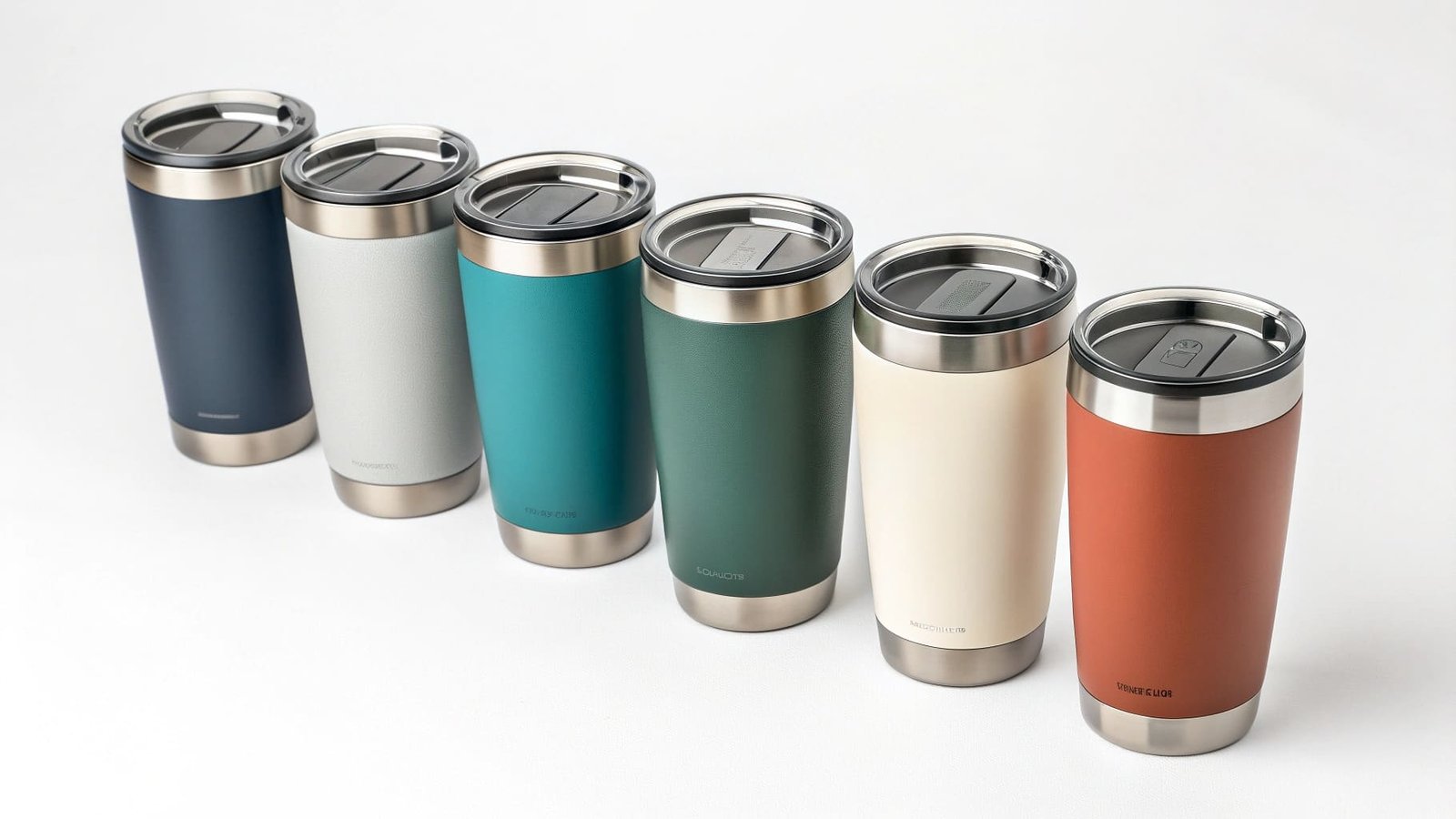
The best grade is 18/8 (304) stainless steel3 for premium tumblers. This grade offers superior corrosion resistance and temperature stability. Seal rings must be engineered specifically for this steel composition to prevent chemical degradation.
Material Compatibility Challenges
I tested seal rings from five different suppliers with 18/8 steel tumblers. Only two maintained their elasticity after six months of use.
The 18/8 designation means 18% chromium and 8% nickel. This composition creates a smooth surface that seal rings must grip effectively. Food-grade liquid silicone rubber performs better than compression-molded alternatives. LSR maintains consistent Shore A hardness between 40-60, which provides optimal sealing pressure without deforming the steel rim.
| Steel Grade | Chromium % | Nickel % | Seal Material Recommendation | Reject Rate |
|---|---|---|---|---|
| 18/8 (304) | 18% | 8% | Liquid silicone rubber | <2% |
| 18/0 (430) | 18% | 0% | Standard food-grade silicone | 5-8% |
| 18/10 (316) | 18% | 10% | Premium LSR | <1% |
European wholesale buyers prefer suppliers who understand these technical details. I provide material compatibility reports with every quote. This approach reduced my rejection rate from 15% to under 3%.
What Are Popular 40oz Tumbler Brands?
The 40oz format changed everything in 2023. Stanley's Quencher model created a trend that European wholesale buyers could not ignore.
Stanley leads the 40oz tumbler market, followed by YETI Rambler and Simple Modern. These brands require seal rings with 3-4mm cross-sections and pressure-test certifications due to increased liquid weight.
Engineering for Large Formats
I faced my biggest technical challenge with 40oz seal rings. Standard 2-3mm thickness failed under pressure testing.
The physics are simple. A 40oz tumbler holds 1.18 liters of liquid. This weight creates 0.15 bar pressure at the seal point when the tumbler tips. Standard seal rings designed for 20oz formats deform under this pressure. I increased cross-section thickness to 3.5mm and added internal reinforcement ribs.
| Tumbler Size | Liquid Capacity | Seal Pressure | Required Thickness | Cycle Life Target |
|---|---|---|---|---|
| 20oz | 590ml | 0.08 bar | 2-3mm | 5,000 cycles |
| 30oz | 887ml | 0.12 bar | 3-3.5mm | 4,000 cycles |
| 40oz | 1,183ml | 0.15 bar | 3.5-4mm | 3,500 cycles |
European wholesale buyers specifically ask for pressure-test data now. I conduct 3,000-cycle leak tests on every 40oz seal ring design. One buyer from Netherlands told me this data helped them win a contract with a major retail chain. They could demonstrate product reliability with objective numbers.
The 40oz trend also created warranty concerns. My wholesale clients reported that seal failures account for 60% of product returns. I developed a quality control protocol4 that includes individual seal inspection and batch pressure testing. This reduced their return rates from 4.2% to 1.1%.
Conclusion
European wholesale success requires suppliers who provide dual-compliance documentation, understand material engineering for 18/8 steel, and deliver proven large-format seal solutions.
-
Explore the advantages of liquid silicone rubber, which offers superior performance and durability for seal rings in tumblers. ↩
-
Understanding BPA-free certification is essential for appealing to eco-conscious consumers and ensuring product safety. ↩
-
Learn why 18/8 stainless steel is preferred for its corrosion resistance and compatibility with seal rings, ensuring product longevity. ↩
-
Implementing a robust quality control protocol can significantly reduce return rates and enhance customer satisfaction. ↩