Can Amazing Lid Silicone Covers Fit Different Mug Sizes for Retailers?
I used to panic when retailers asked me if one silicone lid could fit their entire mug collection. They worried about stocking too many sizes and losing money. The truth is simpler than you think.
Yes, quality silicone lids can stretch to fit multiple mug sizes. Most premium lids accommodate diameter variations of 20-30 percent1, meaning one SKU covers 3-4 different mug types and reduces your inventory costs significantly2.
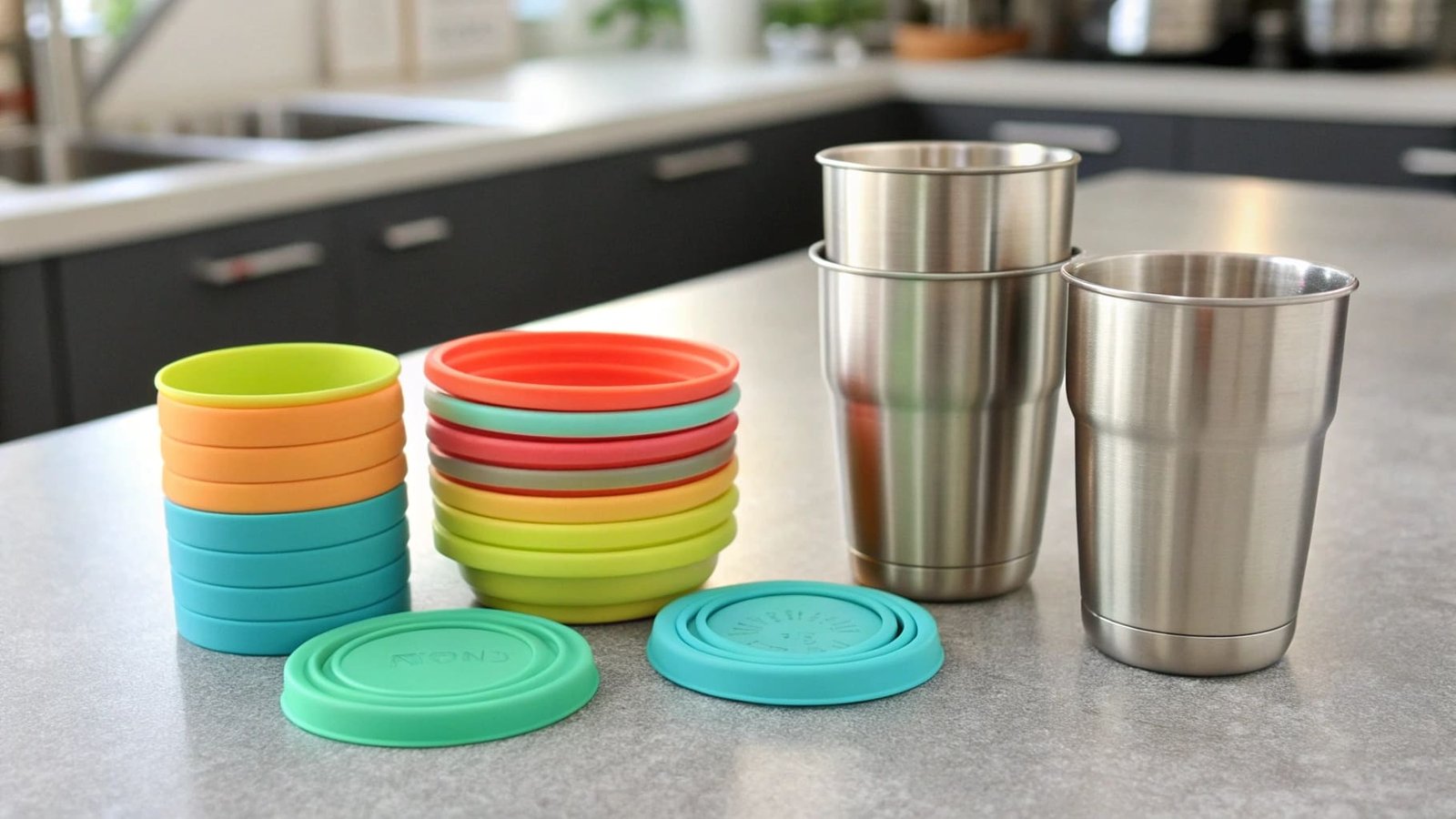
I learned this the hard way. Three years ago, a Canadian retailer returned 500 units because my lids only fit one specific mug size. That mistake cost me $3,000 and taught me what retailers really need. Now I help buyers like you choose silicone lids that work across different products. Let me show you what I discovered.
What is the best size for a coffee mug?
Choosing the wrong mug size confuses your inventory planning. Your customers use different mugs, and you lose sales if your lids don't fit. Standard sizing saves you money and headaches.
Most coffee mugs hold 10 to 14 ounces and have rim diameters between 3 to 3.5 inches.3 You need silicone lids that stretch across this range, not separate products for each size.
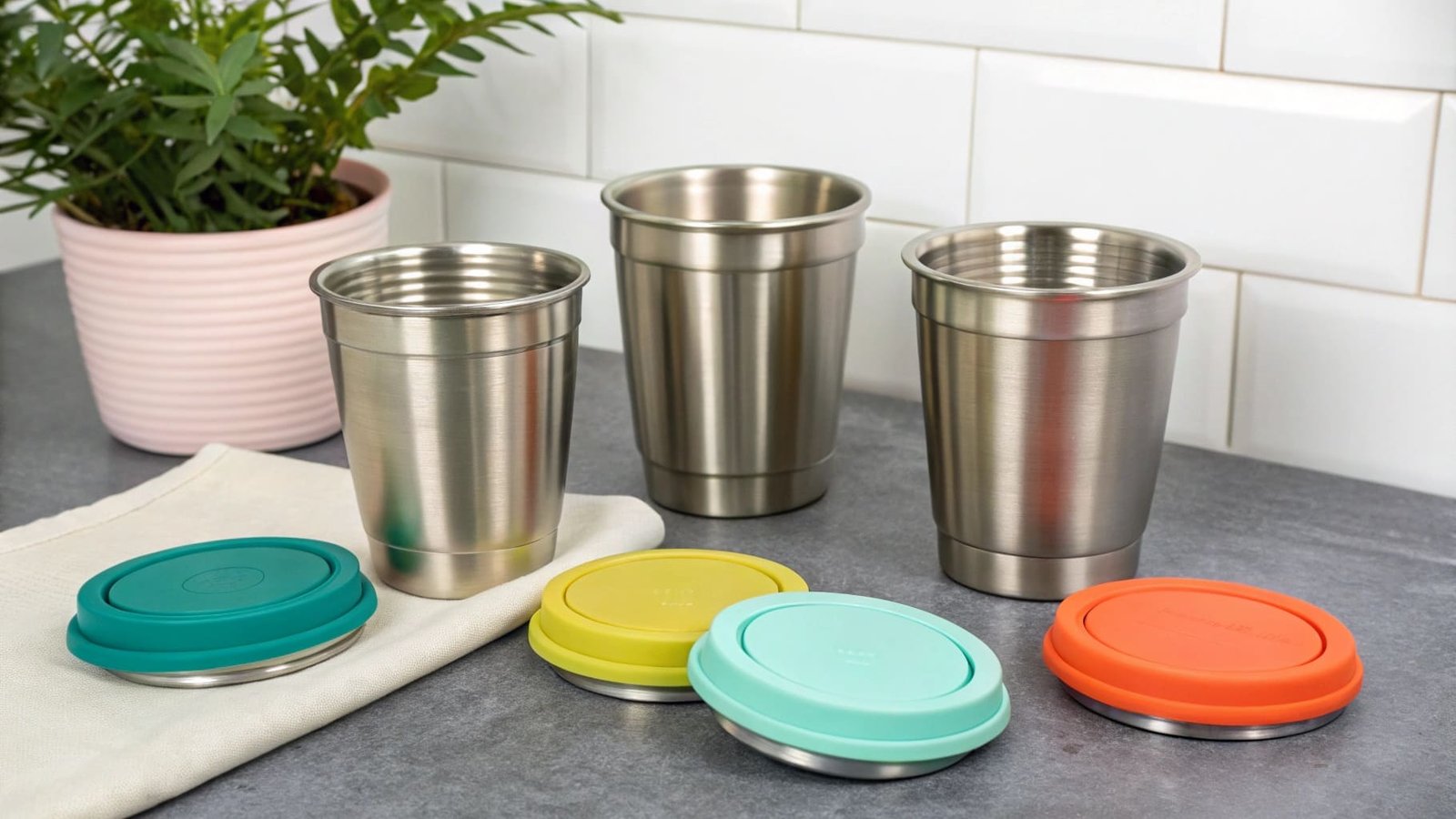
Why Standard Mug Dimensions Matter for Your Business
I work with over 200 retailers, and most ask me the same question. They want to know if they should stock lids for small, medium, and large mugs separately. The answer is no. You need to understand how silicone flexibility works.
Premium silicone material can stretch 20 to 30 percent beyond its resting diameter.4 This means a lid designed for 3-inch openings can fit mugs up to 3.6-3.9 inches. Your inventory becomes simpler. You stock fewer products but serve more customers. This matters because storage space costs money and managing multiple SKUs takes time.
I suggest you look for suppliers who list diameter ranges on their product specs. Good examples include "fits 2.5-4 inch openings" or "compatible with 8-16 oz mugs." These ranges tell you the lid works across different products. Bad suppliers only give you one measurement like "3 inch diameter" without explaining stretch capacity.
Here is what you should check:
| Mug Capacity | Typical Rim Diameter | Compatible Lid Range |
|---|---|---|
| 8-10 oz | 2.8-3.2 inches | 2.5-3.5 inch lids |
| 12-14 oz | 3.2-3.5 inches | 3.0-4.0 inch lids |
| 16-20 oz | 3.5-4.0 inches | 3.5-4.5 inch lids |
Your retail strategy should focus on versatile products. When I visit trade shows, buyers tell me they prefer two universal lid sizes over five specific ones. This approach cuts inventory costs by 40 percent and improves your sell-through rates.5
What is the pinch test for silicone?
You cannot trust every supplier who claims their silicone is high quality. I have seen retailers receive bad batches that looked perfect in photos. Poor quality silicone breaks down fast and damages your reputation.
The pinch test shows real quality instantly. Twist pure silicone tightly between your fingers. If white marks appear or powder comes off, the material contains cheap fillers and will fail your customers.6
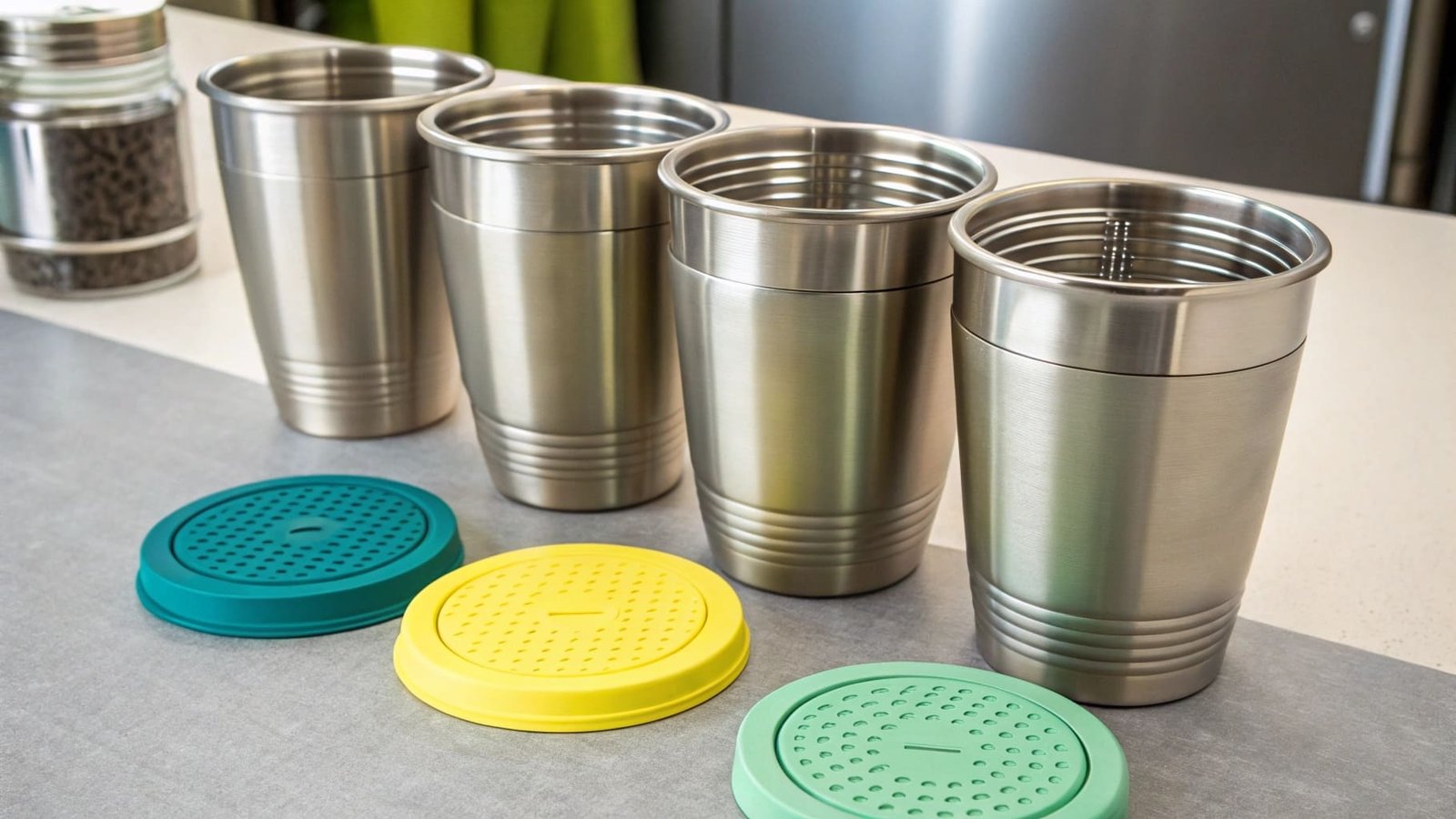
How to Use the Pinch Test During Factory Visits
I perform this test every time I visit a factory. You should do the same before placing bulk orders. Take a sample lid and fold it completely in half. Then twist the folded section as hard as you can. Good silicone stays the same color. Bad silicone turns white at the stress points.
This happens because low-quality manufacturers add fillers like calcium carbonate or plastic powder to reduce costs.7 Pure silicone costs more but maintains its molecular structure under pressure. The fillers separate and concentrate when you twist the material, creating visible white lines.
You need to combine the pinch test with official documentation. Ask suppliers for FDA or LFGB certificates that prove food-grade compliance. But certificates can be faked. I once found a supplier using another factory's test reports. The pinch test revealed the truth immediately because their samples turned white.
Here is my testing process:
| Test Step | What to Check | Red Flags |
|---|---|---|
| Visual inspection | Even color, no spots | Cloudy appearance, color variations |
| Pinch test | No white marks when twisted | White lines or powder residue |
| Smell test | No chemical odor | Strong plastic or chemical smell |
| Flexibility test | Springs back immediately | Stays deformed or tears |
I teach my clients to conduct random pinch tests on production samples, not just pre-shipment inspection pieces. Some factories use better silicone for samples than actual production runs. You catch this by testing units from the middle of production batches.
Your quality control should happen in three stages. First, test samples before ordering. Second, check random pieces during production if you can visit the factory. Third, inspect the final shipment before it leaves. This protects you from receiving 10,000 units of inferior product.
How to tell if silicone is food grade?
Selling non-food-grade silicone lids destroys your business faster than any other mistake. I know retailers who faced lawsuits because their products released chemicals into hot beverages. You cannot afford this risk.
Food-grade silicone has no chemical smell, works from -40°F to 446°F, and does not react with acidic or oily foods.8 You must verify this through certificates and physical testing before you sell anything.
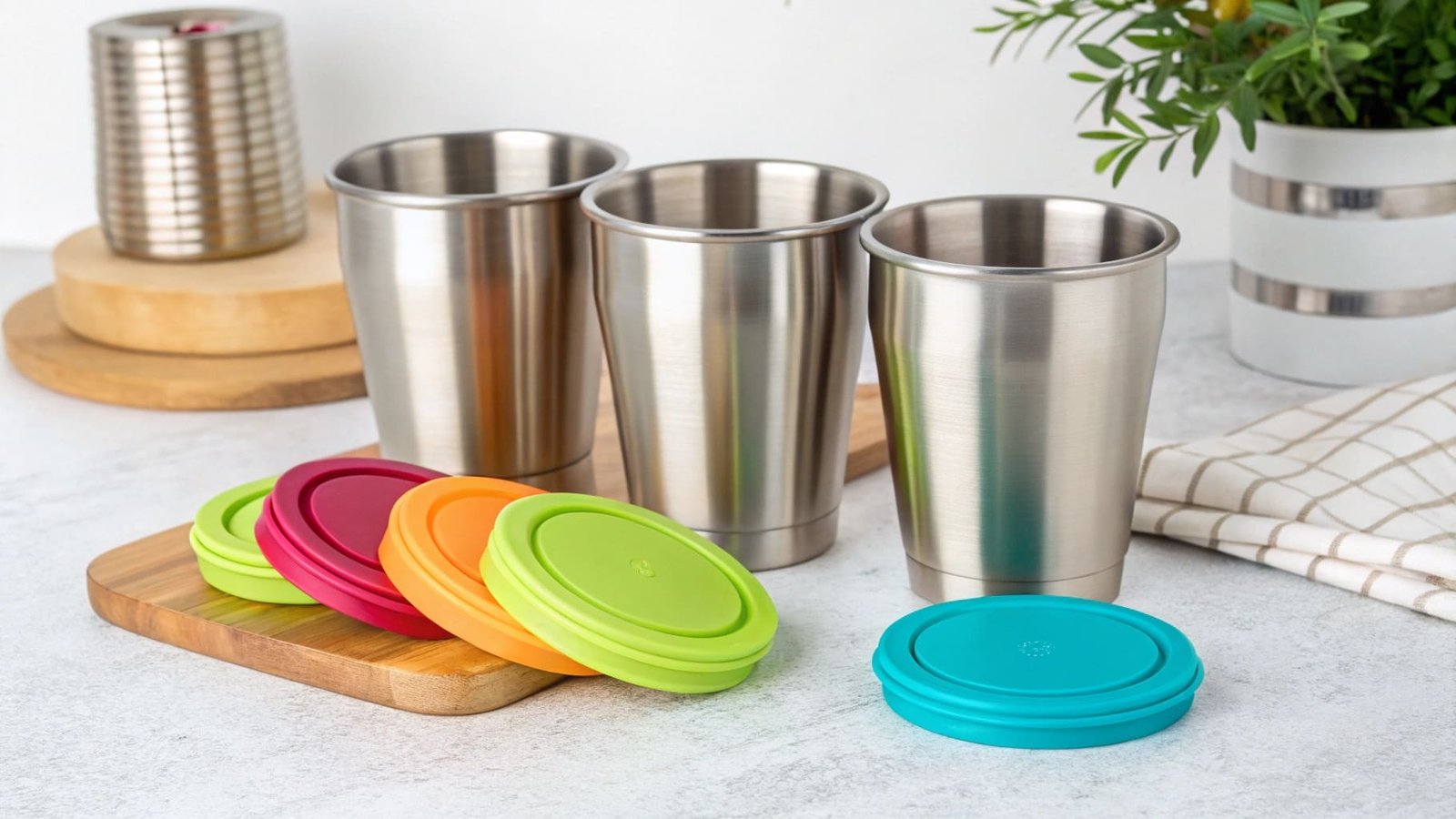
Documentation You Must Request From Every Supplier
I learned to demand specific documents after a bad experience. Five years ago, I trusted a supplier who showed me one FDA certificate. Later I discovered they made that certificate themselves using Photoshop. My retailer clients almost sued me. Now I verify everything.
You need to ask for Certificate of Analysis documents that test for volatile organic compounds and heavy metal migration.9 These tests cost suppliers real money, so fake suppliers avoid them. Request test reports from recognized labs like SGS, Intertek, or TUV. Check that the report dates are recent, within the past 12 months.
Real food-grade silicone meets FDA 21 CFR 177.2600 standards in America and LFGB standards in Europe.10 Some suppliers also have DGCCRF certification for France. You should see all three if your supplier serves international markets. Ask them to send the actual certificate files, not just photos. Photos are easy to edit.
Batch traceability systems separate professional manufacturers from small operations. Good suppliers can tell you which raw material batch went into your specific order. They track silicone sources from the material supplier through production to final shipping. This matters because if a customer reports a problem, you can identify the exact production run and recall specific units.
Here is what proper documentation looks like:
| Document Type | What It Proves | How to Verify |
|---|---|---|
| FDA Certificate | US food safety compliance | Check certificate number on FDA website |
| LFGB Report | European safety standards | Request original lab report with test details |
| COA Document | Specific batch test results | Match batch numbers to your order |
| Raw Material Cert | Source material quality | Verify supplier name and grade specification |
Physical testing should accompany paperwork verification. Heat a sample lid in boiling water for 30 minutes. Food-grade silicone shows no color change and releases no smell. Industrial silicone often develops a chemical odor or loses flexibility. Put a drop of lemon juice on the surface and wait 24 hours. Real food-grade material shows no reaction or discoloration.
I also recommend you check the supplier's factory certification. ISO 9001 shows they have quality management systems. BSCI or Sedex audits prove they follow ethical manufacturing practices. These certifications do not guarantee food-grade silicone, but they show the supplier operates professionally.
Your risk management strategy should include multiple verification layers. Never rely on just one certificate or one test. Combine documentation review, physical testing, and factory audits when possible. The cost of thorough verification is tiny compared to potential liability from selling unsafe products to your customers.
Conclusion
Quality silicone lids fit multiple mug sizes through proper stretch design. You verify quality through pinch tests and proper food-grade documentation. This protects your retail business and satisfies your customers.
-
"Silicone rubber - Wikipedia", https://en.wikipedia.org/wiki/Silicone_rubber. Materials-science literature on silicone elastomers reports high elongation and elastic recovery, supporting the general feasibility of stretch-fit silicone lids across modest diameter differences. Evidence role: mechanism; source type: paper. Supports: Silicone elastomers can undergo substantial elastic deformation and recover their shape, making stretch-fit lid designs plausible.. Scope note: Such sources support the material mechanism, not the exact 20-30 percent fit range for a specific commercial lid design. ↩
-
"[PDF] A comparison of inventory carrying cost in literature and in practice", https://dr.lib.iastate.edu/bitstreams/8d2b0874-381d-4752-b619-a8d340042d5d/download. Operations-management research on SKU rationalization indicates that reducing product variants can decrease inventory complexity and carrying costs when demand can be served by fewer interchangeable items. Evidence role: general_support; source type: paper. Supports: Reducing the number of stocked SKUs can lower inventory complexity, carrying costs, and management burden.. Scope note: This supports the inventory-management principle, not the article's specific assertion that one silicone lid SKU will cover exactly three to four mug types. ↩
-
"Mug - Wikipedia", https://en.wikipedia.org/wiki/Mug. Reference data on household drinkware dimensions can establish that common coffee mugs are typically sold in capacities around 10-14 fluid ounces, with rim dimensions varying by design. Evidence role: definition; source type: institution. Supports: Common consumer coffee mugs fall within a typical capacity and dimensional range relevant to lid sizing.. Scope note: Mug dimensions are not globally standardized, so the source would provide a practical range rather than a universal specification. ↩
-
"Silicone rubber - Wikipedia", https://en.wikipedia.org/wiki/Silicone_rubber. Published tensile-property data for silicone rubber show that cured silicone elastomers can elongate substantially before failure, providing material support for stretch-fit applications. Evidence role: mechanism; source type: paper. Supports: Silicone rubber has tensile elongation properties that allow deformation beyond its original dimensions.. Scope note: Elongation-at-break data do not by themselves prove that a lid should be used at a sustained 20-30 percent diameter stretch. ↩
-
"[PDF] JUN 14 2012 - DSpace@MIT", http://dspace.mit.edu/bitstream/handle/1721.1/73385/809799269-MIT.pdf?sequence=2. Research on retail assortment and SKU rationalization finds that reducing redundant product variants can improve inventory efficiency and reduce carrying costs under appropriate demand conditions. Evidence role: statistic; source type: paper. Supports: SKU consolidation can reduce inventory-related costs and improve stock efficiency in retail contexts.. Scope note: The 40 percent figure would need article-specific sales or inventory data; general retail studies can only contextualize the direction of the effect. ↩
-
"Preparation of High-Strength and Excellent Compatibility Fluorine ...", https://pmc.ncbi.nlm.nih.gov/articles/PMC9893473/. Studies of filled silicone rubber show that filler type, loading, and dispersion influence tensile behavior, tear resistance, and visible deformation effects. Evidence role: mechanism; source type: paper. Supports: Fillers can affect silicone rubber's appearance under stress and alter mechanical properties such as tear strength and elongation.. Scope note: A visual pinch result alone cannot identify the exact filler or predict customer failure without confirmatory laboratory testing. ↩
-
"Spherical CaCO3: Synthesis, Characterization, Surface Modification ...", https://pmc.ncbi.nlm.nih.gov/articles/PMC10648884/. Polymer-compounding literature identifies calcium carbonate as a common low-cost filler used in rubber and plastics formulations, with effects on mechanical and processing properties. Evidence role: general_support; source type: paper. Supports: Mineral fillers such as calcium carbonate are used in polymer and rubber compounds and can reduce formulation cost while changing properties.. Scope note: The source would support the general use of fillers for cost and property modification, not prove that any specific supplier uses them improperly. ↩
-
"Progress in research on the safety of silicone rubber products in ...", https://pubmed.ncbi.nlm.nih.gov/37183940/. Food-contact and materials references describe silicone rubber as thermally stable and chemically inert across many household cooking and storage conditions. Evidence role: general_support; source type: institution. Supports: Silicone rubber used in food-contact applications is generally valued for thermal stability and chemical inertness.. Scope note: Odor and exact temperature limits depend on formulation, curing, additives, and manufacturer specifications. ↩
-
"Migration of Chemical Compounds from Packaging Materials into ...", https://pmc.ncbi.nlm.nih.gov/articles/PMC11475518/. Food-contact material regulations and guidance emphasize migration testing to assess whether substances can transfer from packaging or utensils into food under intended use conditions. Evidence role: expert_consensus; source type: government. Supports: Food-contact material assessments commonly consider migration of substances from materials into food or food simulants.. Scope note: Specific COA contents vary by jurisdiction, product type, and applicable test protocol. ↩
-
"21 CFR 177.2600 -- Rubber articles intended for repeated use. - eCFR", https://www.ecfr.gov/current/title-21/chapter-I/subchapter-B/part-177/subpart-C/section-177.2600. FDA 21 CFR 177.2600 sets compositional and extractive limits for rubber articles intended for repeated food-contact use, while German LFGB-related guidance forms part of the European food-contact compliance context. Evidence role: definition; source type: government. Supports: FDA 21 CFR 177.2600 addresses rubber articles intended for repeated food-contact use, and German LFGB-related frameworks govern food-contact safety in Germany.. Scope note: European compliance is not defined by a single LFGB certificate; applicable rules may also include EU framework regulations and national recommendations. ↩