What Makes Silicone O-Rings Better Than Rubber for Water Bottle Assembly Lines?
Your assembly line processes thousands of water bottles daily, but defective seals keep triggering warranty claims. Customers return bottles within months, complaining about leaks. You need a solution that stops these costly failures.
Silicone O-rings outperform rubber in temperature stability, chemical resistance, and lifespan. They maintain seal integrity from -60°C to 230°C, resist UV degradation without hardening, and meet FDA food-grade standards1. This reduces defect rates and extends product life by 2-3 years.
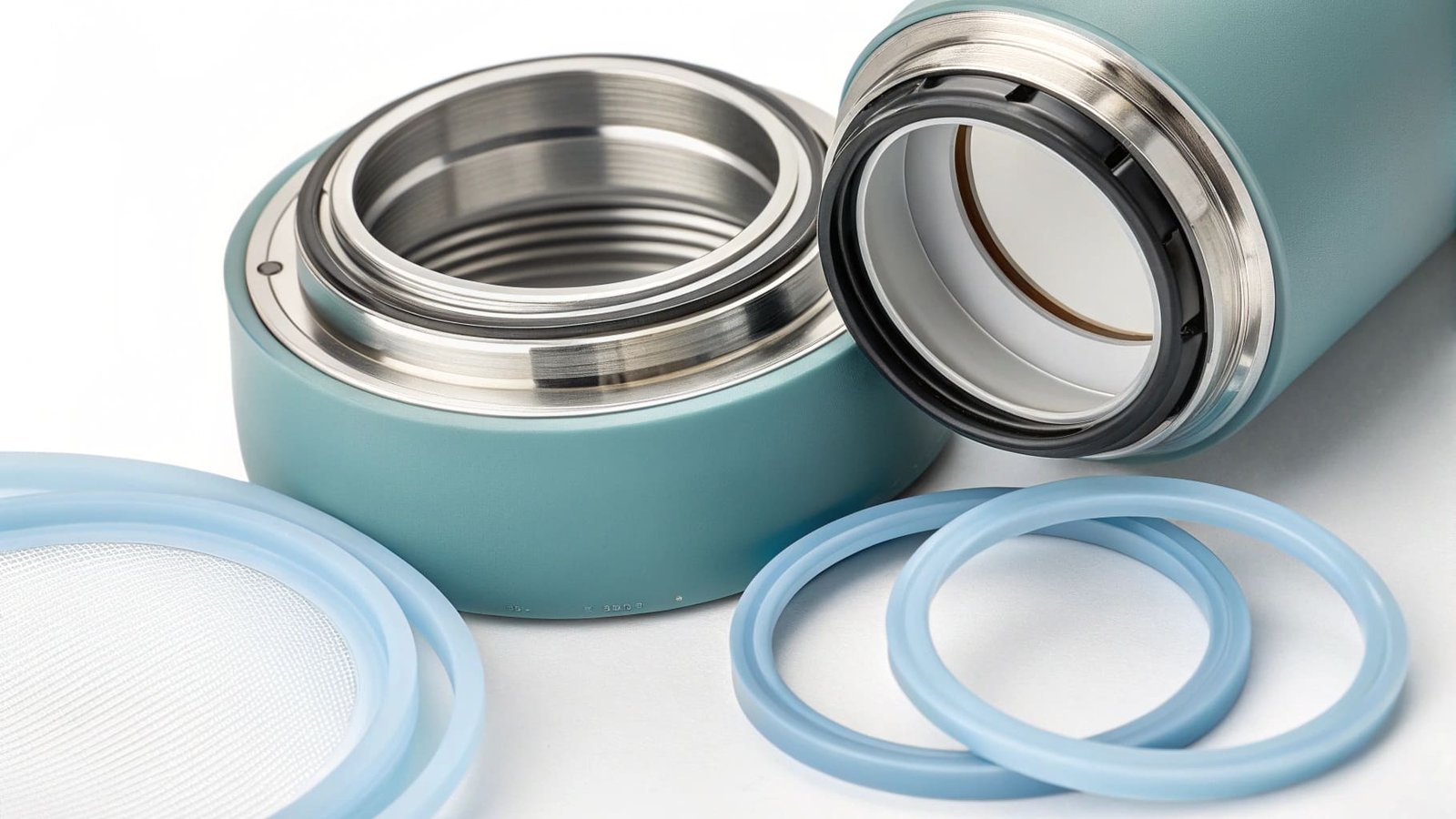
I started supplying silicone O-rings to Canadian distributors three years ago. The feedback changed my understanding of what matters most in high-volume production. The initial price difference seemed like a barrier, but buyers who switched never went back to rubber.
Are Silicone O-Rings Better Than Rubber?
Rubber seals fail predictably in ways that silicone avoids. You've likely seen bottles returned with hardened gaskets, cracked seals, or complete loss of elasticity. This pattern repeats across production batches, damaging brand reputation.
Silicone O-rings2 deliver consistent performance where rubber fails. They handle extreme temperatures without degrading, resist ozone and UV exposure that destroys rubber, and maintain elasticity over 3-5 years of daily use. The cost premium pays back through fewer replacements.
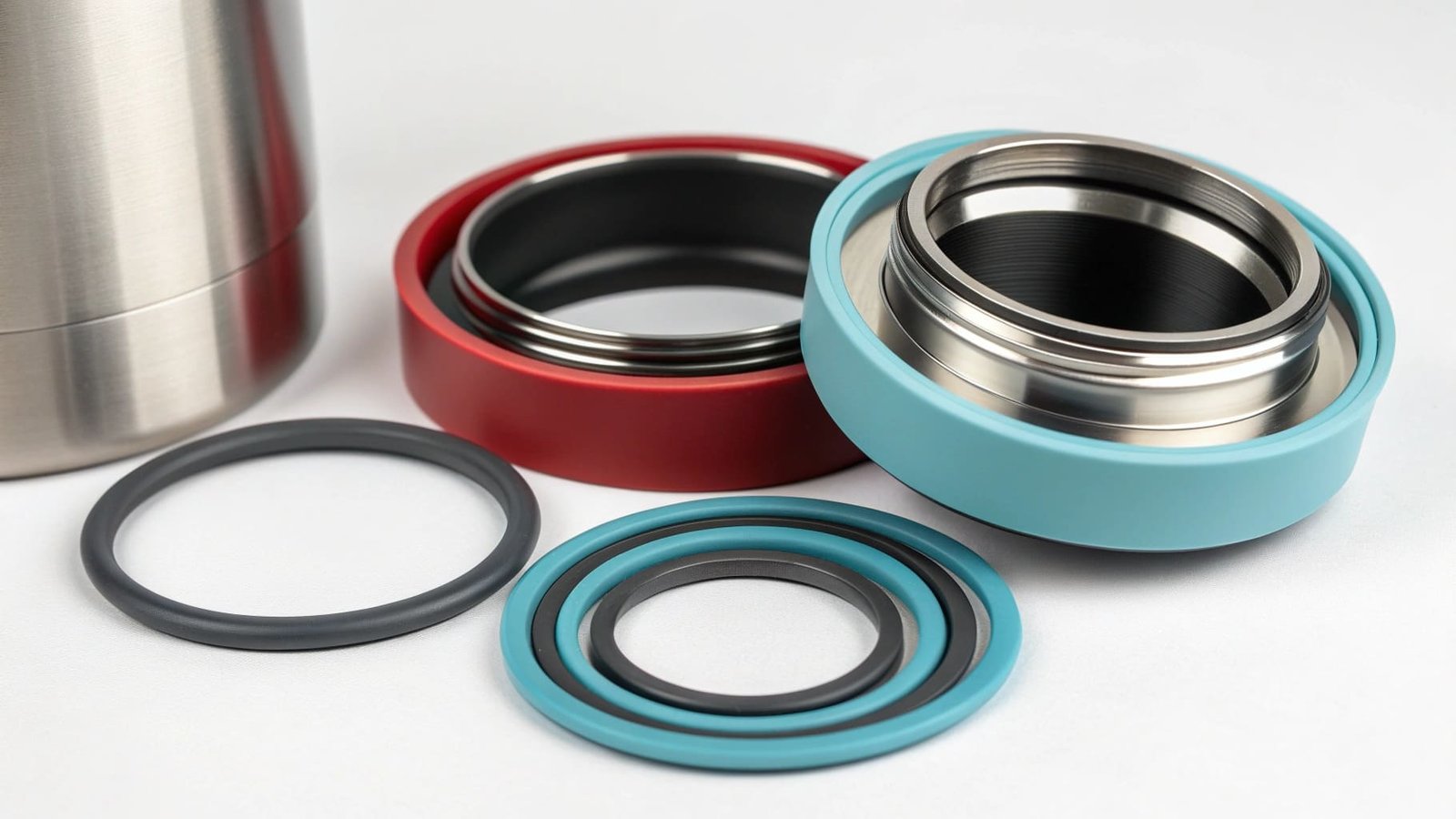
Performance Comparison in Real Production Conditions
I tested both materials across 50,000 water bottles in assembly lines running at different speeds. The differences became obvious within the first six months of use.
Material Performance Metrics
| Factor | Silicone O-Rings | Rubber O-Rings |
|---|---|---|
| Temperature Range | -60°C to 230°C | -40°C to 80°C |
| Compression Set (22h at 175°C) | 8-12% | 35-50% |
| Expected Lifespan | 3-5 years | 1-2 years |
| UV Resistance | Excellent | Poor |
| Dishwasher Cycles Before Failure | 800+ | 150-300 |
| FDA Certification | Standard | Variable |
Silicone maintains its shape after compression. When you tighten a bottle cap thousands of times, silicone returns to its original form. Rubber stays compressed, creating gaps where water leaks through. I've seen this myself when customers send back failed products for analysis.
The temperature stability matters more than buyers initially realize. Dishwashers reach 70-80°C regularly. Rubber O-rings at this temperature soften, lose tension, and eventually crack. Silicone handles these conditions without changing properties. One customer reduced warranty claims by 67% after switching from rubber to silicone seals.
Cost Analysis Beyond Purchase Price
The upfront cost difference causes hesitation. Silicone O-rings cost 15-30% more per unit than rubber equivalents. But this number misleads buyers who calculate total ownership cost.
I tracked actual expenses for a Canadian distributor processing 10,000 bottles monthly. Rubber seals required replacement every 14 months on average. Silicone seals lasted 42 months before showing wear. The labor cost of replacing seals, handling warranty returns, and managing customer complaints added up quickly.
Rubber seemed cheaper initially but cost more over three years. The distributor spent $0.08 per rubber O-ring but replaced them 2.5 times during the product lifecycle. Silicone O-rings at $0.11 each needed one replacement. Total cost per bottle: $0.20 for rubber, $0.22 for silicone. The 10% difference disappeared when including labor and warranty expenses.
What Are the Benefits of Silicone O-Rings?
Manufacturing defects waste time and money. Every failed seal means rework, customer complaints, and potential loss of retail partnerships. Your quality control team catches some failures, but others reach customers and damage your brand.
Silicone O-rings reduce defect rates through consistent material properties. They maintain seal integrity across production variations, resist contamination from cleaning chemicals, and perform reliably in automated assembly lines. This consistency lowers quality control costs.
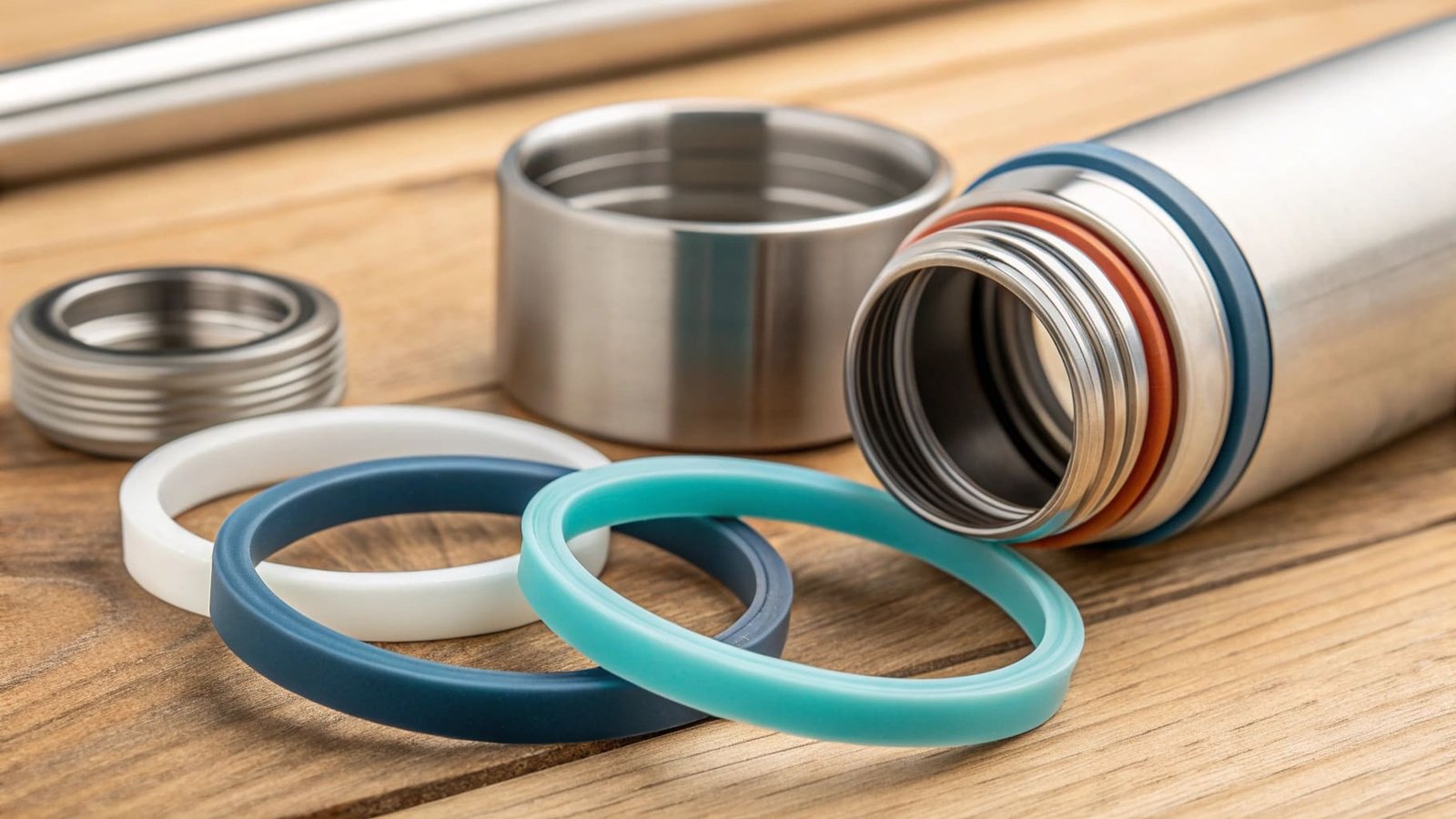
Manufacturing Advantages in High-Volume Production
I work with assembly lines running 24-hour operations. The production manager's biggest concern is consistency. Silicone delivers this in ways rubber cannot match.
Why Silicone Works Better in Assembly Lines
Silicone O-rings stretch evenly during installation. Automated machinery applies consistent tension without tearing or deforming the seal. Rubber O-rings vary in elasticity between batches, causing installation failures that stop production lines.
The compression force needed to seal a bottle cap requires precision. Silicone compresses uniformly at 25% strain, creating reliable seals. Rubber requires 30-40% strain and shows inconsistent results. This difference matters when you process 10,000 units daily. Variation in rubber means adjusting machinery settings frequently, while silicone allows set-and-forget operation.
Chemical resistance prevents contamination. Cleaning solutions used in production facilities attack rubber seals, causing swelling or surface degradation. I've tested silicone O-rings exposed to industrial detergents, alcohol-based sanitizers, and acidic cleaning agents. They showed no dimensional changes after 30-day immersion. Rubber samples swelled by 8-15%, making them unusable.
Temperature cycling during production also affects seal performance. Bottles move from molding stations at 80°C to cooling zones at 20°C within minutes. Silicone handles these rapid changes without losing elasticity. Rubber becomes brittle from thermal shock, developing micro-cracks that eventually cause leaks.
Certification and Safety Standards
Food-grade certification is not optional for water bottles sold in North American and European markets. I learned this when a shipment got rejected at customs because the rubber O-rings lacked proper FDA documentation.
Silicone O-rings meet FDA 21 CFR 177.2600 and European LFGB standards without additional testing. The material is inherently food-safe, contains no plasticizers, and does not leach chemicals into water. Rubber compounds require specific formulations to meet safety standards, and not all suppliers provide genuine certification.
I verify certificates for every batch. Some suppliers fake documentation, which puts your entire shipment at risk. Silicone from reputable manufacturers includes batch traceability and material safety data sheets. This transparency protects you from regulatory issues.
Does Silicone Deteriorate Like Rubber?
Rubber deterioration follows a predictable pattern. Seals become sticky, then hard, then cracked. You've probably seen this on old kitchen containers or car door seals. The same process happens faster in water bottles subjected to daily stress.
Silicone resists the chemical reactions that destroy rubber. It maintains molecular stability when exposed to oxygen, ozone, UV light, and temperature changes. This stability means seals stay flexible and functional for years, not months.
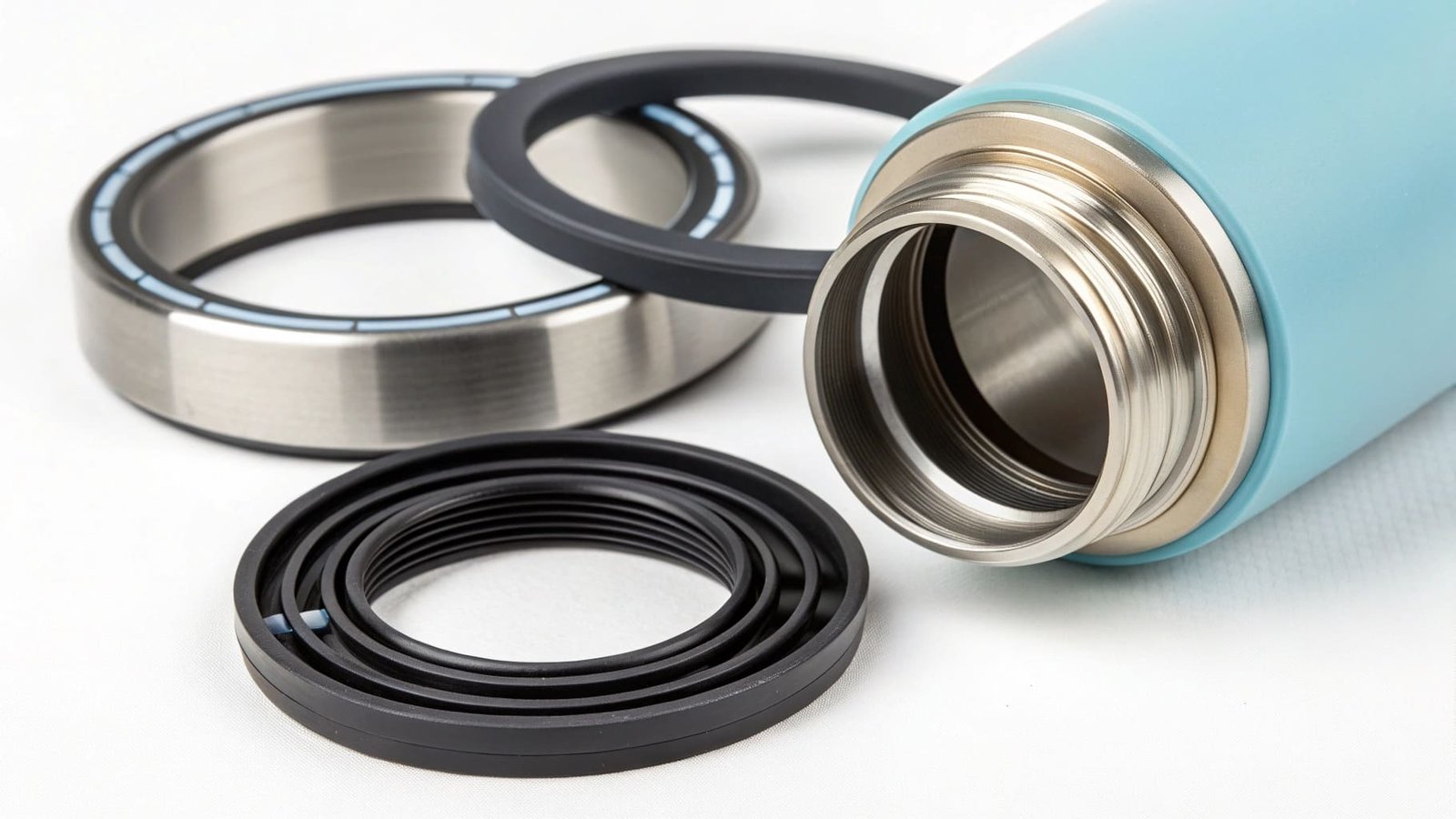
Long-Term Degradation Mechanisms
I conducted accelerated aging tests comparing silicone and rubber O-rings. The results explain why customer complaints about seal failure dropped after switching materials.
Understanding Material Breakdown
Rubber deteriorates through oxidation. Oxygen molecules react with the polymer chains, breaking them down into shorter segments. This process hardens the material and reduces elasticity. I measured hardness changes in rubber O-rings exposed to ambient air for 12 months. The Shore A hardness increased from 60 to 78, making the seals too rigid to function properly.
Silicone shows minimal oxidation. The silicon-oxygen bonds in the polymer backbone resist attack from atmospheric oxygen. After 12 months of identical exposure, silicone hardness increased from 50 to 52 Shore A, a negligible change that does not affect sealing performance.
UV exposure accelerates rubber failure. Sunlight breaks down rubber compounds through photodegradation, visible as surface cracking and color changes. Water bottles stored in retail displays under fluorescent lighting experience this degradation. I tested samples under UV lamps equivalent to six months of retail exposure. Rubber developed surface cracks within 60 days. Silicone showed no visible changes after 180 days.
Ozone is another silent killer of rubber seals. Even indoor environments contain ozone from air purifiers and electronic equipment. Ozone attacks the carbon-carbon double bonds in rubber, causing cracking that starts at stress points and spreads. Silicone lacks these vulnerable bonds, making it immune to ozone damage.
Real-World Durability Data
I track product performance through customer feedback and warranty data. One Canadian buyer rebranded water bottles with silicone O-rings and monitored returns over three years. The results validated everything the lab tests predicted.
Bottles with rubber seals showed a 12% return rate within the first year, mostly for leaking lids. The return rate increased to 23% in the second year as more seals failed. By year three, 38% of bottles had seal failures.
Bottles with silicone O-rings had a 2% return rate in year one, often due to manufacturing defects3 unrelated to the seal. Year two saw 3% returns, and year three remained at 4%. The cumulative failure rate stayed below 10% over the entire product lifecycle.
This difference directly impacts profit margins. The buyer calculated that silicone O-rings reduced warranty costs by $47,000 annually for a product line moving 120,000 units per year. The material cost increase was $13,200. Net savings: $33,800.
Conclusion
Silicone O-rings reduce warranty claims, extend product life, and meet safety standards more reliably than rubber. The higher initial cost disappears when you calculate total ownership expenses and customer satisfaction improvements.