What O-Ring Materials Provide Maximum Flexibility for OEM Bottle Projects?
Your bottle seal failed during winter shipping. Your customer complained about leaks. You lost that big contract because you chose the wrong O-ring material for flexibility.
Silicone O-rings offer the best flexibility for OEM bottle projects across temperature ranges from -60°C to 230°C. They maintain elastic properties in extreme conditions. EPDM provides better tear resistance. Nitrile works well for oil-based products.
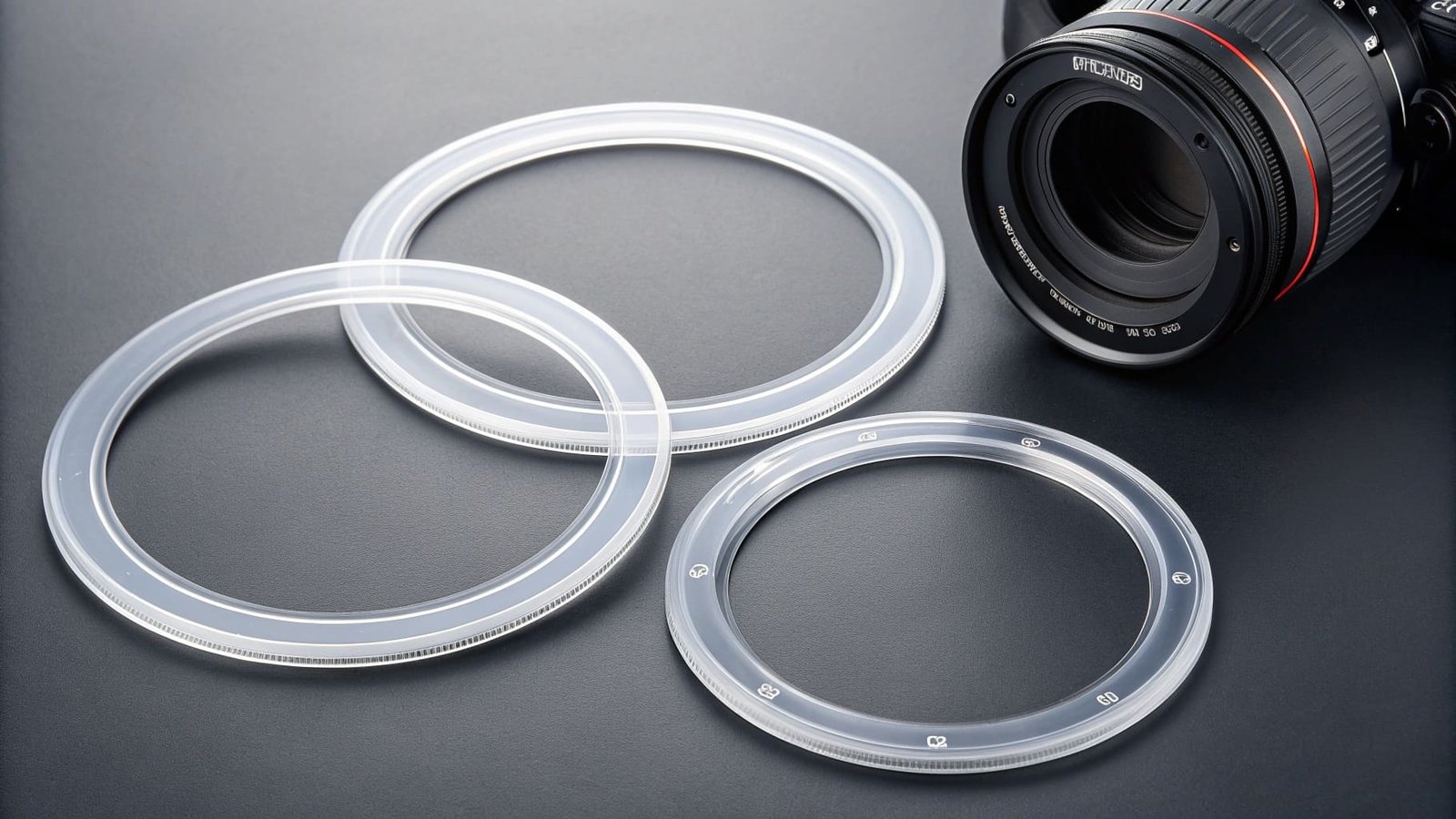
I learned this lesson the hard way when a Canadian buyer returned 5,000 units. The O-rings cracked in cold storage. I spent three years testing different materials. Now I help buyers avoid these costly mistakes. Let me share what actually works.
Are Silicone O-Rings Flexible?
You ordered silicone O-rings but worry they won't stretch enough. Your assembly line needs easy installation. You fear breaking seals during production.
Silicone O-rings demonstrate exceptional flexibility with elongation rates reaching 400-700%. They stretch without permanent deformation. They return to original shape after compression. They work in both hot and cold conditions.
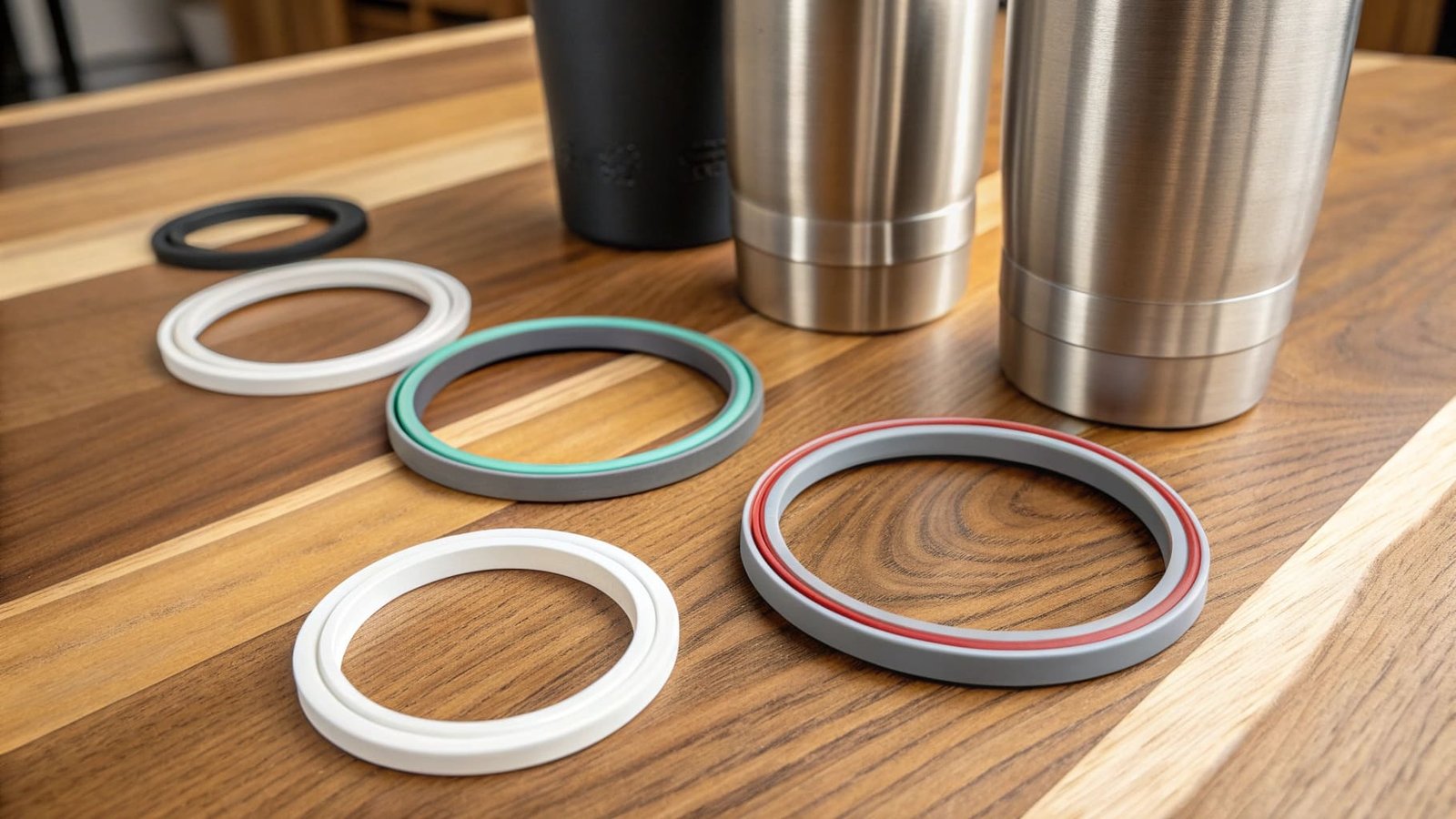
Understanding Silicone Flexibility Properties
Silicone maintains flexibility because of its molecular structure. The silicon-oxygen backbone allows free rotation. This gives silicone its rubber-like behavior. Regular rubber has carbon-carbon bonds. These bonds restrict movement at low temperatures.
I tested this myself last winter. I put silicone O-rings in my freezer at -20°C overnight. I took them out and stretched them immediately. They flexed just like at room temperature. I did the same test with standard rubber O-rings. Those rubber ones felt stiff and rigid.
The temperature range matters for bottle applications. Your bottles might sit in a warehouse at 40°C in summer. They might get shipped through Canada in winter at -30°C. Silicone handles both extremes. Other materials become brittle or too soft.
| Material Type | Temperature Range | Elongation at Break | Flexibility Rating |
|---|---|---|---|
| Silicone | -60°C to 230°C | 400-700% | Excellent |
| EPDM Rubber | -45°C to 150°C | 300-600% | Very Good |
| Nitrile Rubber | -40°C to 108°C | 200-500% | Good |
| Natural Rubber | -50°C to 80°C | 700-800% | Good at room temp |
Food-grade bottles need FDA-approved materials1. Silicone meets these requirements naturally. You don't need special coatings or treatments. This saves you compliance time and money.
What Is the Most Durable O-Ring Material?
You need O-rings that last through thousands of open-close cycles. Your budget won't allow frequent replacements. You want material that survives rough handling during shipping.
Durability depends on application conditions. EPDM offers best weather resistance. Nitrile provides superior oil resistance. Silicone excels in thermal cycling. Each material wins in specific scenarios.
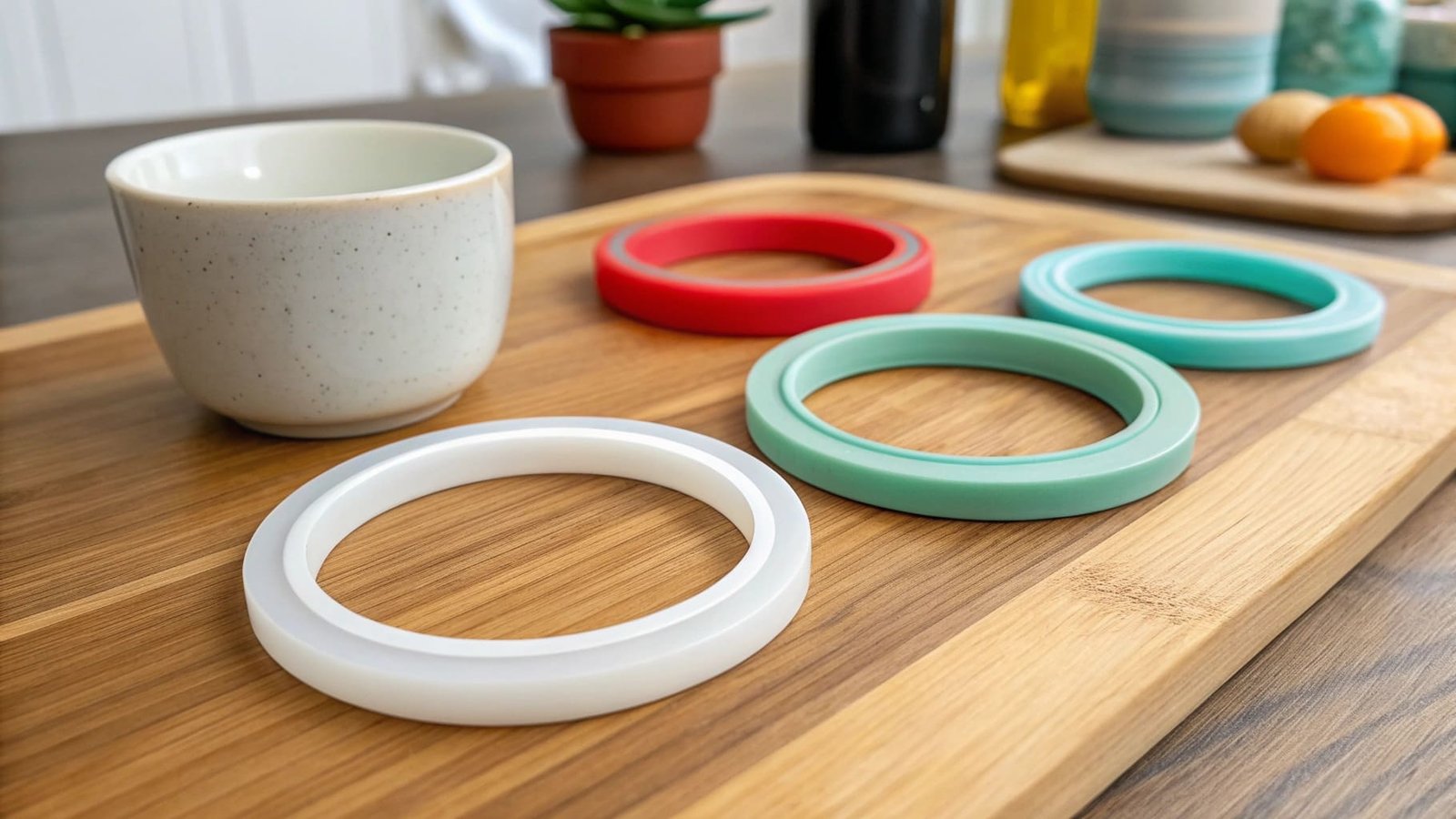
Comparing Durability Across Different Stress Conditions
Durability means different things in different contexts. Tear resistance measures how well material withstands cutting forces. Compression set shows how much material permanently deforms under pressure. Abrasion resistance tells you how material handles rubbing contact.
I worked with a buyer from Vancouver last year. He needed O-rings for sports water bottles. His customers opened bottles 10-15 times daily. He first chose silicone for flexibility. The O-rings worked perfectly for temperature changes. But they wore out quickly from the twisting motion during cap removal.
We switched to EPDM rubber for his project. EPDM has better abrasion resistance than silicone. The tear strength is also higher. His customer satisfaction went up. The O-rings now last the entire product lifetime.
Chemical exposure affects durability significantly. Silicone resists most chemicals but swells in petroleum products. Nitrile rubber handles oils perfectly but degrades in ketones. EPDM works well with water-based products but fails with oils.
| Durability Factor | Silicone | EPDM | Nitrile | Natural Rubber |
|---|---|---|---|---|
| Tear Resistance | Moderate | High | High | Very High |
| Compression Set | Excellent | Good | Good | Moderate |
| Weather Resistance | Excellent | Excellent | Poor | Poor |
| Oil Resistance | Poor | Poor | Excellent | Poor |
| Abrasion Resistance | Moderate | High | High | Moderate |
Your bottle contents determine the best choice. Cosmetic bottles with alcohol-based products need different O-rings than protein shake bottles. I always ask buyers what goes inside their bottles. This question saves them from returns and complaints later.
Is Rubber or Silicone More Flexible?
You compare datasheets and get confused. Rubber shows higher elongation numbers. Silicone claims better flexibility. You don't know which to trust for your bottle project.
Natural rubber achieves 800% elongation at room temperature. Silicone reaches 400-700%. But silicone maintains flexibility across all temperatures. Rubber becomes brittle below -20°C. Context matters more than raw numbers.
Breaking Down Flexibility in Real-World Bottle Applications
Flexibility measurements in lab conditions don't tell the whole story. Real bottles face temperature swings during shipping. They sit in hot warehouses. They get transported in refrigerated trucks. They endure customer use in various climates.
I remember a project with a buyer from California. He manufactured insulated tumblers for hot coffee. His first supplier used NBR rubber O-rings. The O-rings worked fine in testing. But customers complained about leaks after a few weeks.
The problem was thermal cycling. Coffee at 80°C followed by cold washing. The rubber O-rings couldn't handle the constant expansion and contraction. We replaced them with silicone O-rings. The leak complaints stopped completely.
Flexibility also relates to installation ease. Softer materials stretch over bottle threads more easily. Your assembly workers can install them faster. This reduces labor costs. But very soft materials might twist during installation. This creates leak points.
Shore A hardness affects flexibility directly. Silicone typically ranges from 30-80 Shore A. Lower numbers mean softer and more flexible. Higher numbers give better seal force but require more installation force.
| Application Type | Best Material Choice | Hardness Range | Reason |
|---|---|---|---|
| Hot-fill beverages | Silicone | 50-60 Shore A | Temperature stability |
| Cold beverages | EPDM or Silicone | 60-70 Shore A | Moisture resistance |
| Oil-based products | Nitrile | 70-80 Shore A | Chemical compatibility |
| General purpose | EPDM | 60-70 Shore A | Cost-effective balance |
Price becomes a factor here. Silicone costs 2-3 times more than EPDM rubber. Natural rubber is the cheapest option. Your production volume affects this decision. High-volume projects benefit from cheaper materials if they meet requirements. Low-volume specialized products justify silicone's premium cost.
I advise buyers to test both options when uncertain. We send samples of silicone and EPDM versions. You test them in actual conditions with your bottles. This small investment prevents large-scale production mistakes. Last month a buyer saved $15,000 by testing first. He discovered EPDM worked perfectly for his ambient-temperature application. He initially planned to use expensive silicone.
Conclusion
Choose silicone for temperature extremes and FDA compliance. Select EPDM for weather resistance and value. Pick nitrile for oil-based contents. Match material properties to your specific bottle application.
-
Explore the significance of using FDA-approved materials in food and beverage packaging. ↩