Where to Source Silicone O-Rings Sets with Traceability Documentation for Aerospace Use?
Last month, I lost a potential aerospace client because I could not provide complete traceability documents for my O-ring sets. That experience taught me the hard way that aerospace sourcing requires more than just good products.
You need to find suppliers who maintain AS9100 certification and provide full material traceability including batch records, material certificates1, dimensional reports, and compliance statements. These suppliers must understand aerospace documentation requirements and deliver complete chain-of-custody records with every shipment.
I spent the next three weeks researching what aerospace buyers actually need. I talked to quality managers and procurement officers. I learned that documentation matters as much as the product itself. Let me share what I discovered about sourcing O-rings for aerospace applications.
What Materials Are Used in Aerospace O-Rings?
Your aerospace O-rings will fail if you choose the wrong material. I have seen projects delayed for months because buyers did not understand material requirements. The consequences in aerospace can be catastrophic.
Aerospace O-rings primarily use fluorosilicone and methyl vinyl silicone2 elastomers. These materials withstand extreme temperatures from -60°C to +200°C while maintaining seal integrity. They also resist aviation fuels and hydraulic fluids that would destroy standard rubber.
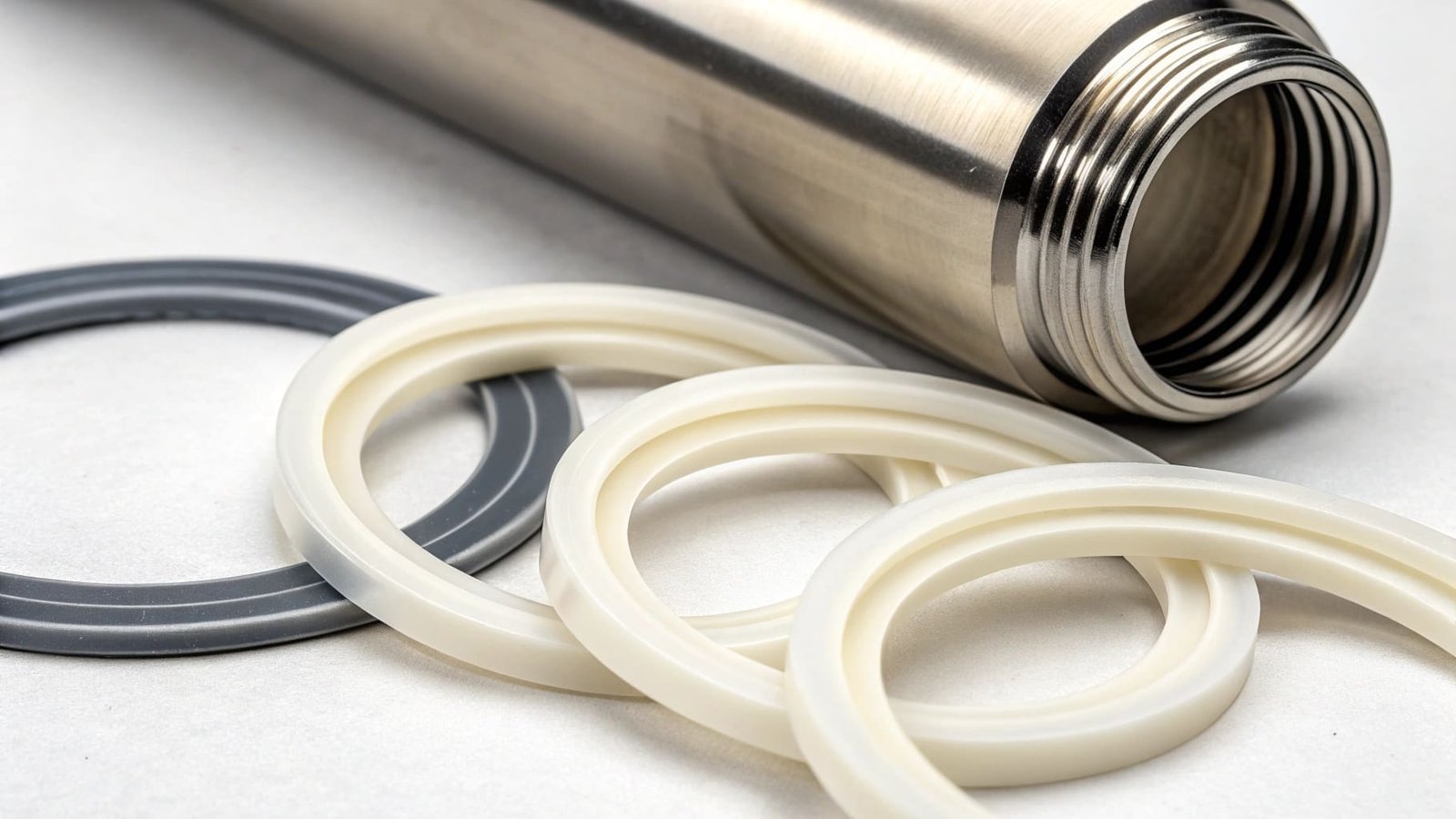
I remember when a buyer came to me asking for "just silicone O-rings" for an aircraft component. I had to explain that aerospace applications demand specific silicone grades. Fluorosilicone is the top choice when you need fuel resistance. It costs more than standard silicone but performs reliably in contact with jet fuel and petroleum products. I use fluorosilicone for clients who need O-rings near fuel systems or hydraulic lines.
Methyl vinyl silicone works well for applications that need temperature resistance without fuel contact. It handles extreme cold better than most elastomers. I have supplied VMQ O-rings for environmental control systems where temperatures fluctuate dramatically. The material stays flexible even at -60°C.
Your material choice must match your specific application. Here is how I help buyers decide:
| Material Type | Temperature Range | Best For | Key Advantage |
|---|---|---|---|
| Fluorosilicone | -60°C to +175°C | Fuel systems | Excellent fuel resistance |
| Methyl Vinyl Silicone | -60°C to +200°C | Temperature extremes | Superior flexibility at low temps |
| Phenyl Silicone | -115°C to +200°C | Extreme cold | Widest temperature range |
The material must also meet AMS specifications. AMS 3302 covers fluorosilicone compounds while AMS 3325 defines methyl vinyl silicone requirements. I always verify that my suppliers can provide materials that meet these military specifications. Without proper AMS compliance, your O-rings will not pass aerospace quality audits.
What Is the ISO Standard for O-Rings?
Missing ISO documentation has cost me deals worth thousands of dollars. Buyers need proof that your O-rings meet international standards. Without this proof, they cannot use your products.
ISO 3601 defines the international standard for O-ring dimensions, tolerances, and quality specifications. Part 1 covers sizing while Part 5 addresses material identification and designation. This standard ensures consistency across global aerospace supply chains.
I learned about ISO 3601 after a European buyer rejected my shipment. The O-rings were perfect but my documentation referenced only AS568. The buyer needed ISO 3601 compliance certificates for their quality management system. I had to scramble to get proper documentation from my supplier.
ISO 3601-1 establishes the dimensional standards. It defines groove design, compression ratios, and tolerance classes. I now make sure every batch comes with dimensional inspection reports that reference ISO 3601-1. These reports show measurements for inside diameter, cross-section, and surface finish. The standard allows different tolerance classes but aerospace typically requires the tightest tolerances.
Part 2 of ISO 3601 covers housing dimensions. It tells engineers how to design grooves that accommodate the O-rings properly. I keep copies of this standard to help customers with groove design questions. Even though I am not an engineer, I have learned enough to guide buyers toward correct housing specifications.
ISO 3601-5 deals with material designation. It uses a coding system that identifies the polymer type, hardness, and special properties. A typical designation might be VMQ 70. This tells you the material is methyl vinyl silicone with 70 Shore A hardness3. I make sure my material certificates include proper ISO 3601-5 designations. Here is how the coding works:
| Code Element | What It Means | Example |
|---|---|---|
| Polymer Type | Base elastomer material | VMQ, FVMQ |
| Hardness | Shore A durometer | 70, 80 |
| Special Properties | Additional characteristics | Low compression set |
What Is the Standard Code for O-Rings?
Wrong size codes have caused me headaches with rush orders. You order a "-012" size and receive a "-120" size instead. These mix-ups delay projects and frustrate customers who operate on tight schedules.
AS568 provides the standard sizing code for O-rings in North America and aerospace applications. The system uses dash numbers that correspond to specific inside diameters and cross-sections. Size -001 through -932 cover the most common dimensions used in aerospace sealing applications.
The AS568 system started as a military standard but became the industry norm. I use it for all my North American aerospace customers. Each dash number represents an exact size. A -012 O-ring always measures 0.614 inches inside diameter with a 0.070 inch cross-section. This standardization prevents sizing confusion across the supply chain.
I keep an AS568 reference chart at my desk because buyers often ask me to verify sizes. They call and say "I need dash twelve O-rings" and I can immediately confirm the dimensions. The system covers sizes from tiny -001 (which measures just 0.029 inches inside diameter) up to massive sizes like -475 (which spans over 280 inches).
Aerospace applications typically use sizes between -001 and -050 for most components. I stock these sizes because they represent about 80% of my aerospace orders. Larger sizes get manufactured on demand because they require more material and have longer lead times.
The dash number alone does not tell you everything. You also need to specify the material and hardness. I always ask buyers to provide complete specifications like "AS568-012, Fluorosilicone 75 durometer, AMS 3302." This complete specification prevents any confusion.
Here is how I help buyers understand the coding system:
| Dash Number | Inside Diameter | Cross-Section | Common Use |
|---|---|---|---|
| -012 | 0.614 inches | 0.070 inches | Small fittings |
| -018 | 0.864 inches | 0.103 inches | Standard connections |
| -024 | 1.239 inches | 0.139 inches | Medium assemblies |
Some applications require metric sizing based on ISO 3601. European buyers often prefer metric dimensions over the AS568 system. I maintain conversion charts that cross-reference AS568 dash numbers to ISO metric sizes. This helps when a buyer needs documentation in both formats.
The standard also includes special size series for specific applications. The 900 series covers fractional sizes while the 200 series handles metric conversions. I work with suppliers who understand all these variants because aerospace projects sometimes specify unusual sizes.
Conclusion
Finding the right supplier for aerospace O-rings requires verifying their documentation capabilities, material certifications, and understanding of aerospace standards. I now prioritize suppliers who provide complete traceability and proper compliance records with every order.