Which Straw Hole Plug Designs Prevent Leakage in Mass Production Testing?
You receive another complaint about leaking straw lids. Your warehouse is full of defective products. Your customers are frustrated and threatening to cancel orders.
The most reliable straw hole plug designs use graduated sealing ribs with 0.2-0.5mm compression fit and 40-60 Shore A silicone hardness. Multi-stage sealing surfaces create redundant leak barriers that pass 5-10 PSI pressure testing in mass production environments.
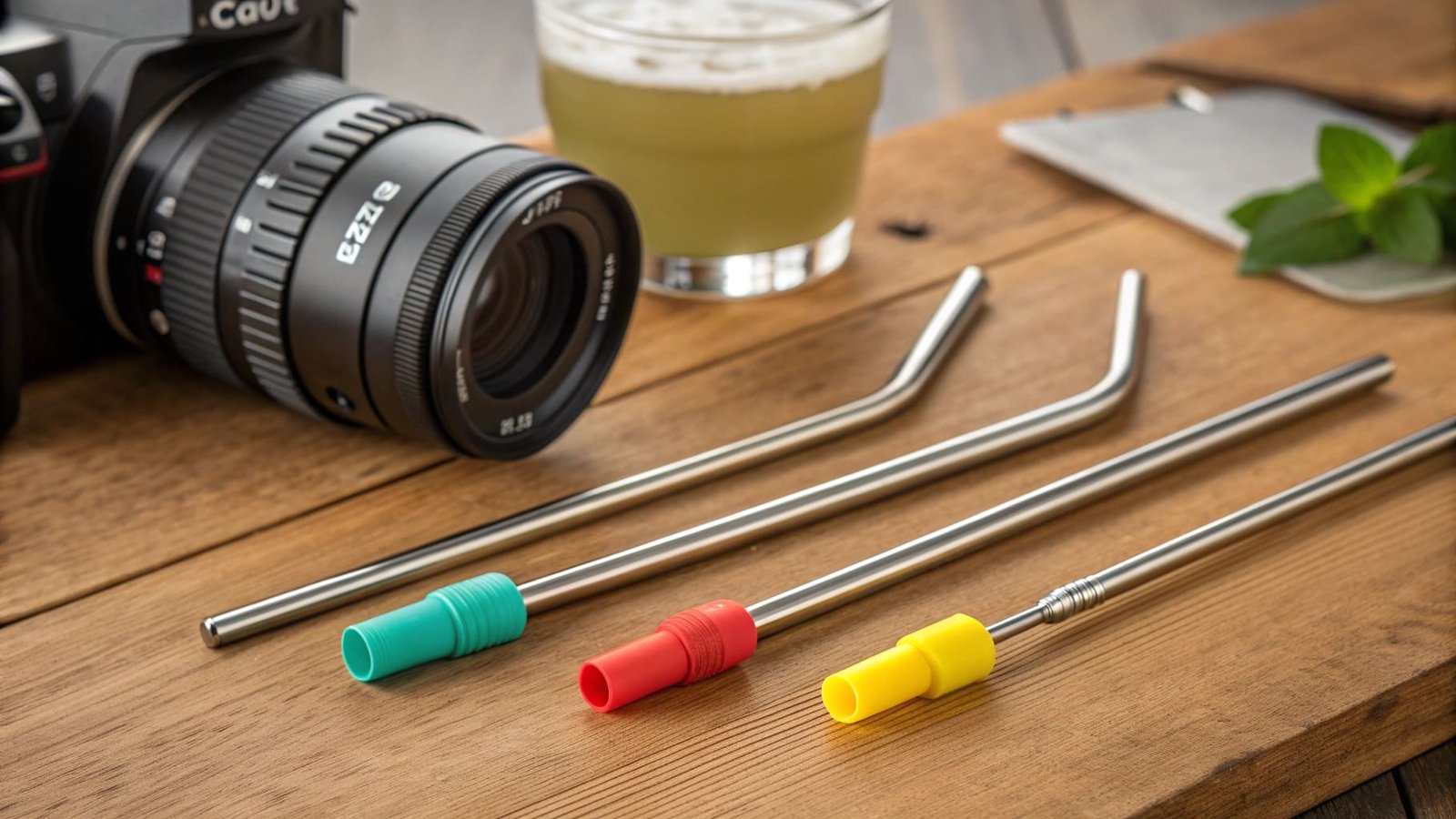
I have worked with hundreds of clients who struggled with the same leakage problems. The cost of returns and warranty claims adds up quickly. Let me share what I learned from testing thousands of straw plug designs in our factory.
What are straw stoppers for?
You bought a premium water bottle with a straw lid. You toss it in your bag. Minutes later, your laptop is soaked and your documents are ruined.
Straw stoppers seal the straw opening to prevent spills during transport and block dirt from entering the drinking pathway. Quality plugs create an airtight seal that withstands pressure changes and physical impacts.
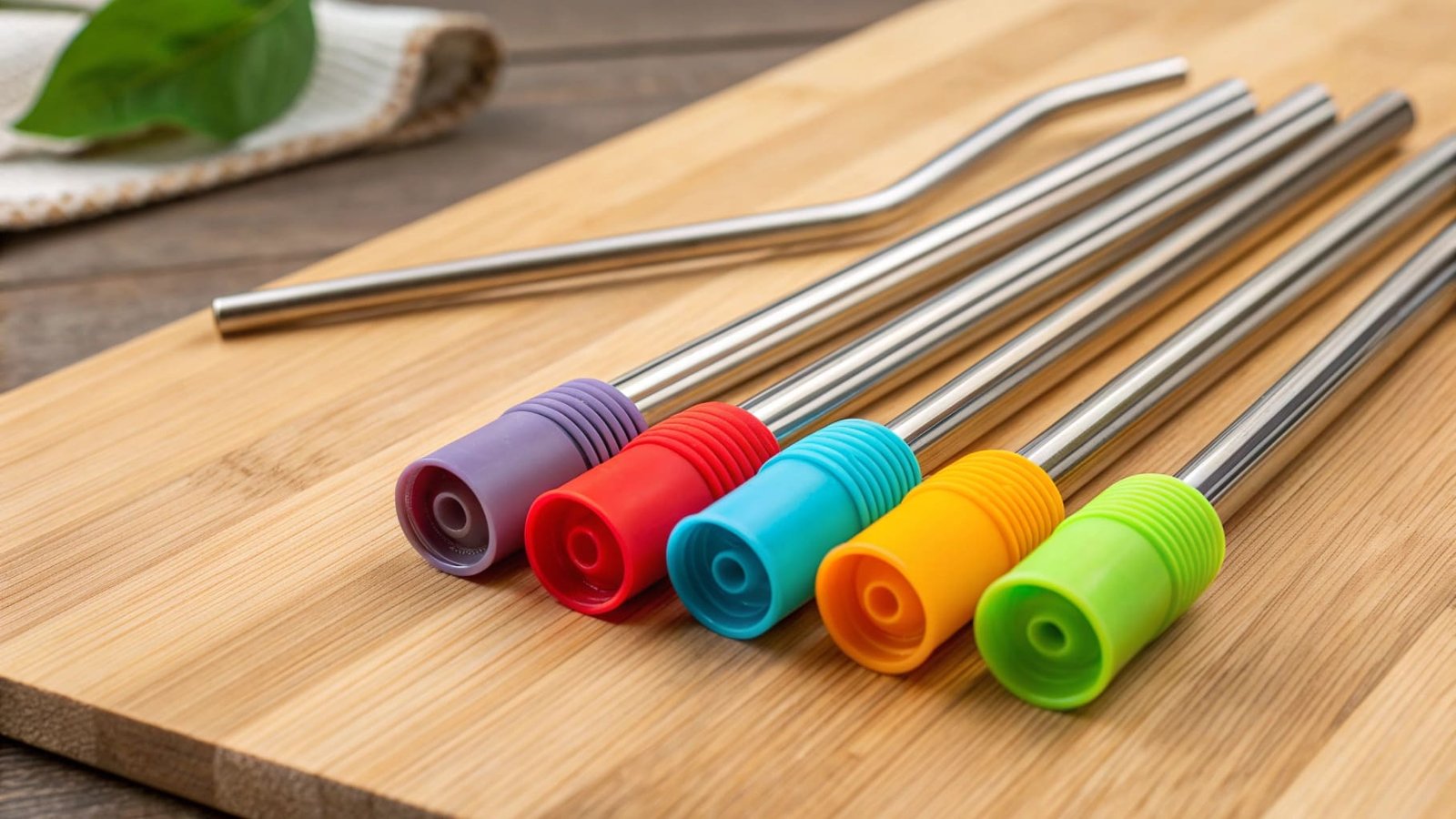
The Dual Function of Straw Plugs
I see many buyers focus only on the leakage prevention aspect. This is a mistake. A good straw stopper does two jobs at the same time.
The first job is obvious. The plug stops liquid from escaping through the straw hole. This matters most when you carry your bottle in a bag or leave it lying on its side. Water pressure pushes against the opening. Without a proper seal, liquid finds its way out.
The second job gets overlooked. The plug keeps your straw clean and hygienic. Think about where you place your water bottle throughout the day. Kitchen counters. Gym benches. Office desks. Car cup holders. All these surfaces carry bacteria and dust. An open straw hole collects everything. You then drink directly from that contaminated pathway.
I tested this myself. I left identical bottles with and without plugs in typical usage locations for one week. The lab results showed bacteria counts five times higher in bottles without plugs. The numbers shocked even me.
The plug design must balance these two functions. A plug that seals perfectly but takes effort to remove creates poor user experience. A plug that removes easily but seals loosely defeats the purpose. The sweet spot requires careful engineering of the plug geometry and material properties.
| Design Feature | Leakage Prevention Impact | Hygiene Protection Impact |
|---|---|---|
| Tight seal compression | High - blocks liquid flow | High - prevents particle entry |
| Easy grip handle | Low - mainly user convenience | Medium - reduces hand contact with seal area |
| Smooth interior surface | Medium - reduces turbulence | High - prevents bacterial colonization |
| Graduated ribs | Very High - multiple barriers | Medium - blocks larger particles |
Why does my water bottle with a straw leak?
Your expensive water bottle leaves wet spots everywhere. You tighten the lid. You check the straw. The leaking continues and you cannot figure out why.
Water bottles with straws leak mainly due to insufficient seal compression between the plug and straw hole, inconsistent silicone curing that affects dimensions, or improper plug geometry that creates single-point contact instead of distributed pressure.
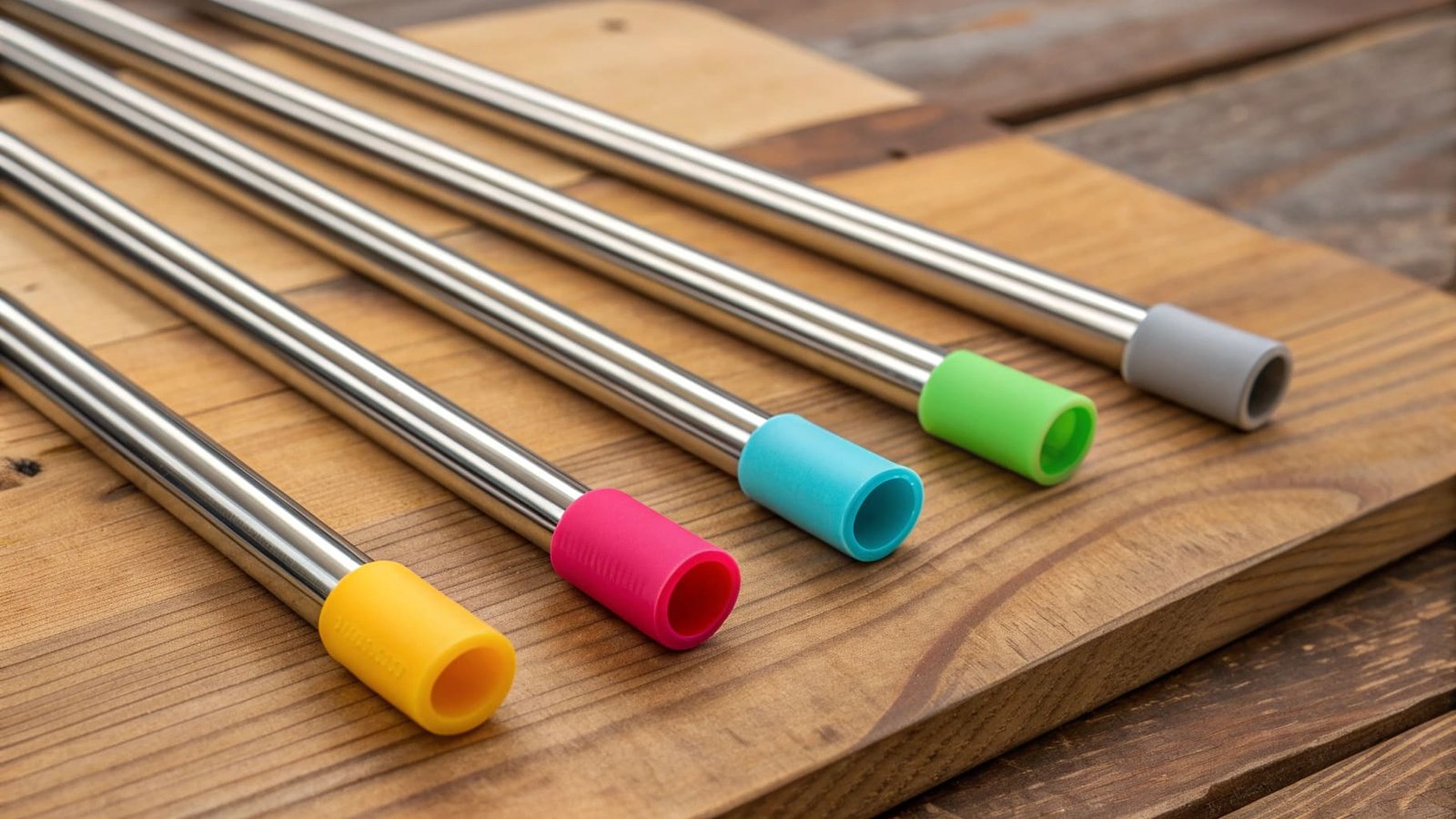
The Root Causes of Straw System Leakage
I handle customer complaints about leaking bottles every week. Most buyers blame the lid or the bottle body. They rarely look at the straw plug design. This is where most problems actually start.
The seal compression is critical. The plug must squeeze into the hole with enough force to block liquid passage. I measure this as the interference fit. The plug diameter needs to exceed the hole diameter by 0.2 to 0.5 millimeters. Less than 0.2mm creates a weak seal. More than 0.5mm makes removal difficult and can tear the silicone over time.
Material shore hardness plays a huge role too. I use silicone between 40 and 60 Shore A for straw plugs. Below 40 Shore A, the material feels too soft and floppy. The plug compresses too easily under pressure. Above 60 Shore A, the silicone becomes too rigid. It does not conform to small irregularities in the hole edge.
Manufacturing inconsistency causes many failures. Silicone curing requires precise temperature and time control. When the curing process varies, the final dimensions change. I have seen plugs from the same production batch vary by 0.3mm in diameter. That variation means some plugs seal perfectly while others leak immediately.
The geometry matters as much as the material. I see many designs with a simple cylindrical plug. This creates one sealing point at the top edge. Any small gap at that point allows water through. Better designs use stepped diameters or graduated ribs. Each step creates a separate sealing barrier. Water must bypass multiple obstacles to leak.
Here is what I found testing different plug designs:
| Plug Design Type | Leak Failure Rate in Testing | Average Seal Life Cycles | Production Cost Multiplier |
|---|---|---|---|
| Single cylinder | 23% at 5 PSI | 200 uses | 1.0x baseline |
| Dual diameter step | 8% at 5 PSI | 450 uses | 1.2x baseline |
| Triple graduated ribs | 2% at 5 PSI | 800 uses | 1.4x baseline |
| Tapered with O-ring groove | 1% at 5 PSI | 1000+ uses | 1.6x baseline |
Why does my Hydroflask straw lid keep leaking?
You paid premium price for a Hydroflask. Everyone says it is the best. Yet your bag gets wet every time you pack it for travel.
Hydroflask straw lids1 leak when the plug design uses inadequate sealing surface area, when the single-stage seal cannot accommodate manufacturing tolerances, or when the silicone durometer does not match the specific hole diameter and wall thickness.
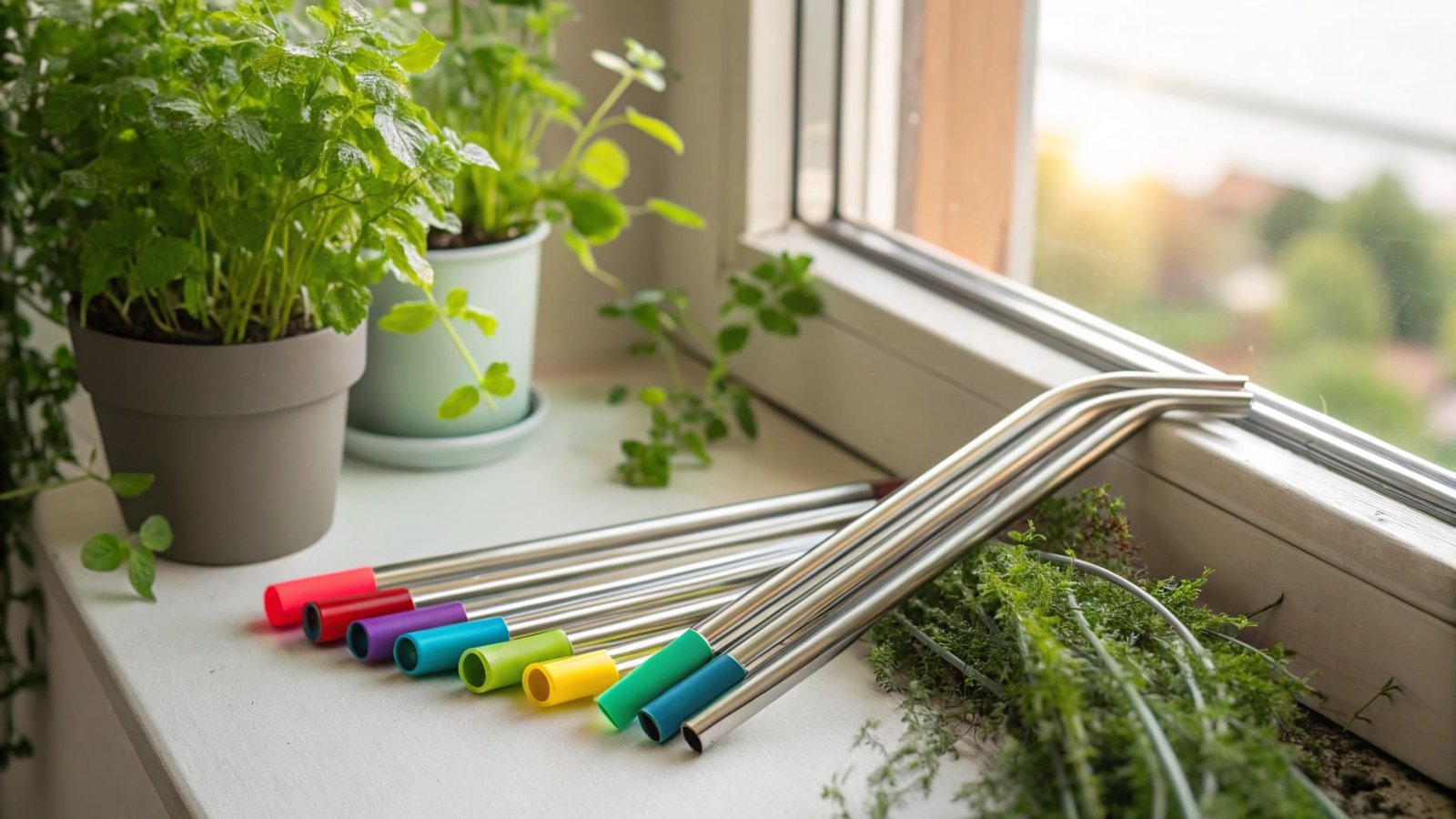
Understanding Hydroflask-Style Lid Failures
I examined dozens of returned Hydroflask-style lids in my testing lab. The pattern became clear quickly. The original design works well in ideal conditions. Real-world usage creates problems the design cannot handle.
The straw hole in these lids sits at an angle. This creates an elliptical opening rather than a perfect circle. A simple round plug cannot seal an elliptical hole evenly. Pressure distributes unevenly around the perimeter. The weakest point leaks first.
Temperature changes make things worse. Hot liquid inside the bottle creates air pressure. This pressure pushes against the plug from below. Cold exterior temperatures make the silicone slightly more rigid. The combination reduces the seal effectiveness by up to 40% based on my pressure chamber testing.
The plug removal mechanism also affects seal quality. Many Hydroflask-style designs use a small finger loop on the plug. Users pull this loop at an angle rather than straight up. The angled force deforms the plug shape over time. After 50 to 100 removal cycles, the plug no longer matches the hole geometry perfectly.
I redesigned the plug for a client who experienced 18% return rates on Hydroflask-compatible lids. The new design used three graduated ribs instead of one sealing edge. Each rib had a slightly different diameter. The total compression remained the same but spread across three contact points. The return rate dropped to 3% within two months.
Material selection fixed another common issue. The original plugs used 50 Shore A silicone. I switched to a 45 Shore A compound with higher tear strength. The softer material conformed better to the elliptical hole shape. The higher tear strength prevented deformation from repeated removals.
Drop testing revealed another weakness. When the bottle falls, the impact creates a pressure spike inside. The liquid surges toward the straw opening. A single-stage seal cannot handle the sudden force. The water shoots past the plug. A multi-stage seal with graduated ribs absorbs the pressure gradually. Each rib acts as a pressure relief step.
I now recommend this testing protocol for all Hydroflask-style lid production:
| Test Type | Standard Specification | Pass Criteria | Testing Frequency |
|---|---|---|---|
| Static pressure hold | 7 PSI for 5 minutes | Zero leakage | Every production batch |
| Dynamic shake test | 300 cycles at 2Hz | Less than 2ml loss | Random sampling 5% |
| Temperature cycling | -10°C to 80°C, 10 cycles | Seal maintains compression | Pre-production validation |
| Drop impact | 1.5 meter drop onto concrete | No seal displacement | Random sampling 3% |
| Removal fatigue | 200 insertion cycles | No visible plug deformation | Pre-production validation |
Conclusion
Reliable straw plug designs require multi-stage sealing, proper material selection, and rigorous testing protocols. I have seen these principles eliminate leakage problems across thousands of production units.
-
Explore the frequent problems with Hydroflask lids and how to address them effectively. ↩