Why Do Large Cups with Straws Require Specialized Silicone Boot Solutions?
I remember the first time a buyer called me about damaged Stanley cups. His entire shipment had dented bottoms. The vacuum seal broke. The cups could not keep drinks cold anymore. He lost thousands of dollars. That day changed how I think about tumbler protection1.
Large insulated tumblers need silicone boots because bottom damage destroys the vacuum seal that keeps drinks cold. The boot absorbs impact, reduces noise, prevents tipping, and extends the cup's lifespan. Without this protection, even premium tumblers become useless after minor drops.
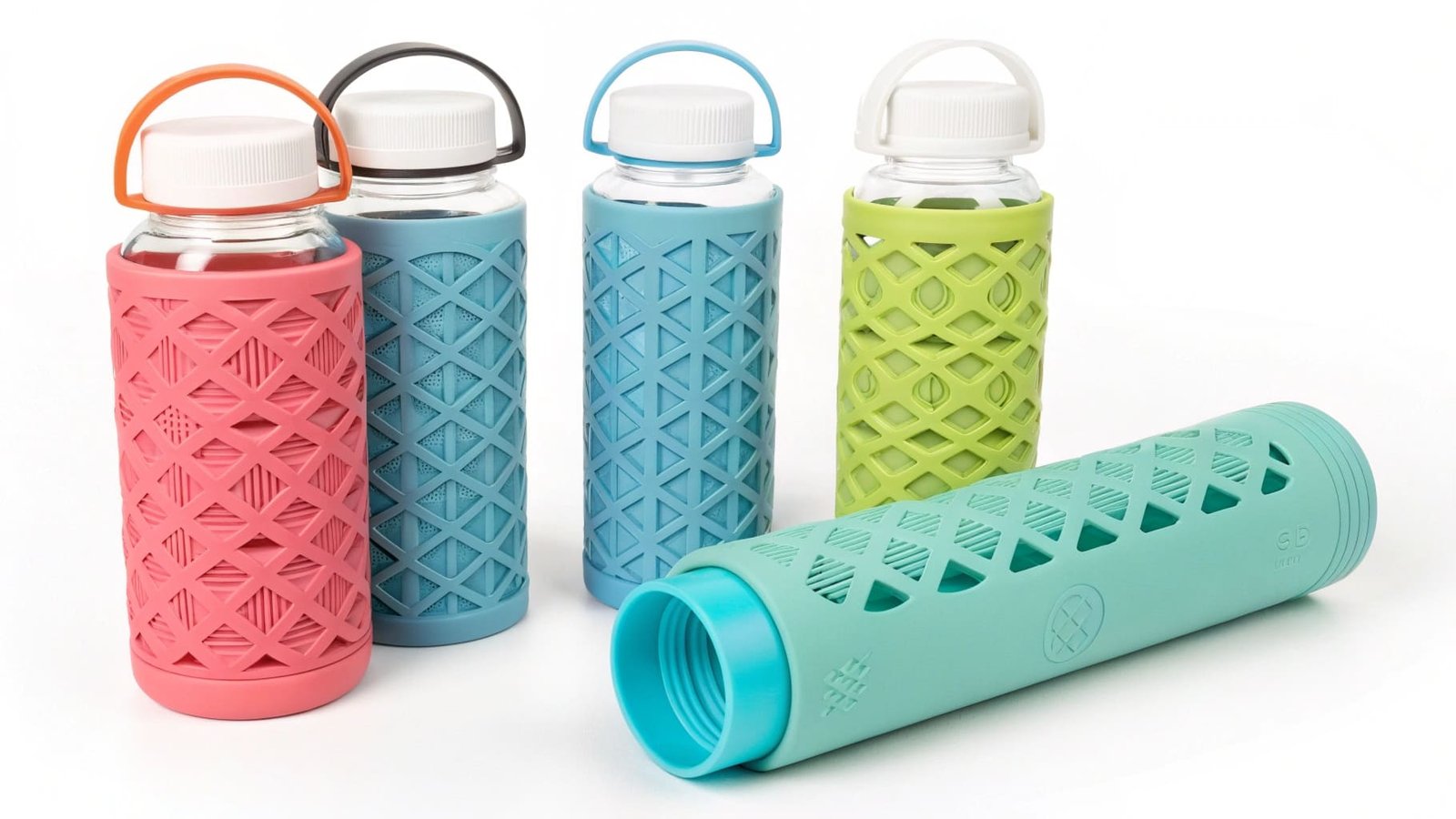
I have worked with tumbler importers for years. Many of them face the same problem. Their customers buy expensive insulated cups. But these cups get damaged easily. The bottom dents. The vacuum seal breaks. The insulation stops working. Then customers complain. They want refunds. They leave bad reviews. This hurts the brand reputation. I realized that silicone boots solve this problem before it starts.
What is a boot for a Stanley cup?
You bought a premium tumbler. You paid good money for it. But now you worry about damage every time you set it down. The metal bottom scratches your desk. It makes loud noises. You fear it will tip over and spill. This anxiety ruins the experience you paid for.
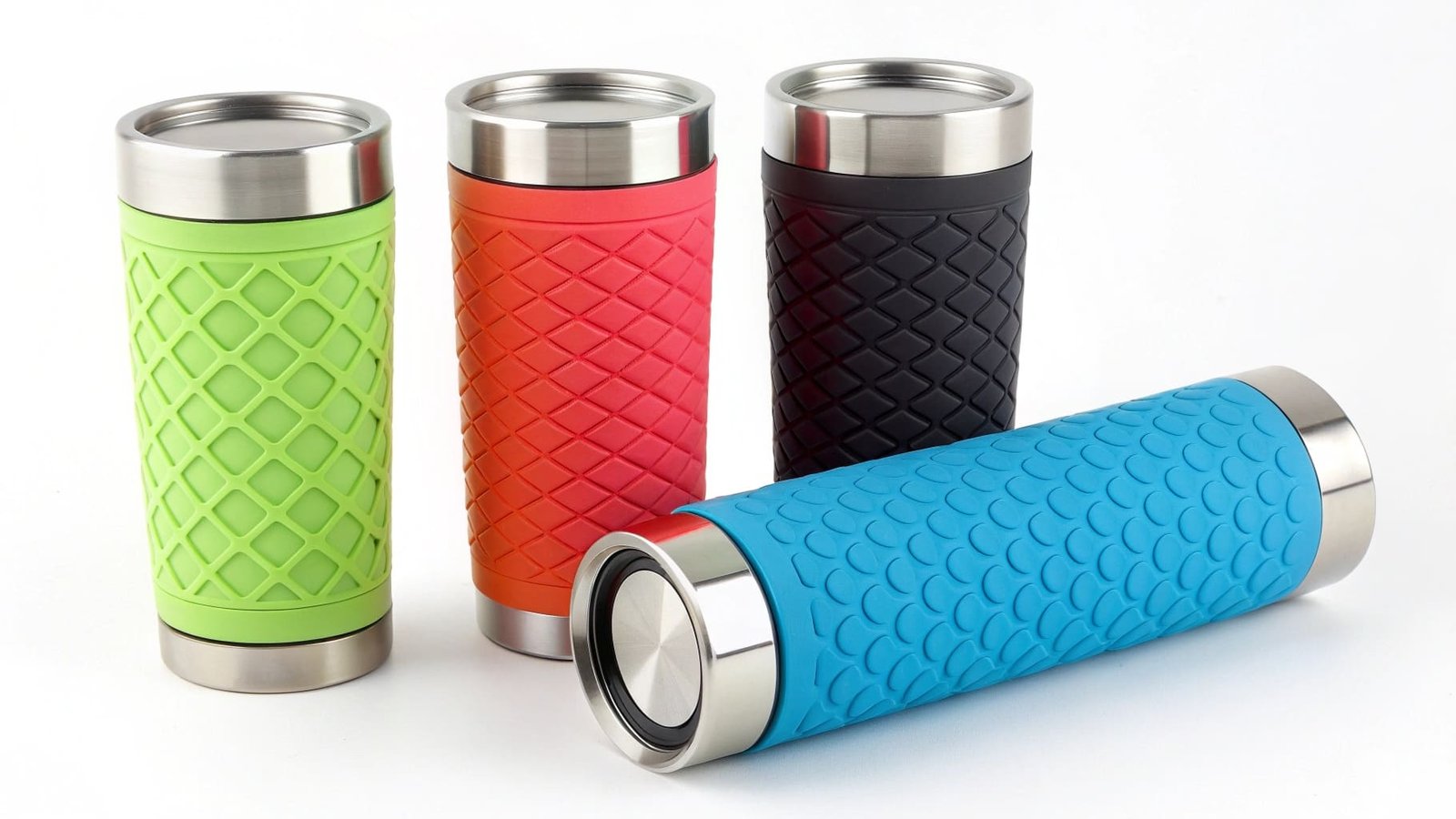
A boot for a Stanley cup is a silicone sleeve2 that fits over the bottom of the tumbler. It protects the metal base from scratches and dents. It also reduces noise when you place the cup on hard surfaces. The boot provides grip stability to prevent accidental tipping.
The Core Components of a Quality Tumbler Boot
I need to explain what makes a boot actually work. Many buyers think all silicone boots are the same. They are not. The difference between a good boot and a bad boot determines whether your customers will reorder or complain.
A proper Stanley cup boot has three main parts. The base layer contacts the surface. This layer needs anti-slip patterns. Without these patterns, the boot slides around just like the bare metal. The side walls wrap around the tumbler bottom. These walls must match the cup's taper angle. If the angle is wrong, the boot either falls off or does not fit at all. The rim edge holds everything in place. This edge needs enough grip to stay secure but not so tight that it tears during installation.
| Component | Function | Quality Indicator |
|---|---|---|
| Base Layer | Surface contact and grip | Deep anti-slip pattern depth |
| Side Walls | Impact absorption | 3-5mm thickness minimum |
| Rim Edge | Secure attachment | Proper elastic tension |
| Material Grade | Safety and durability | Food-grade silicone certification |
The thickness matters more than most people realize. I have tested boots from different suppliers. Thin boots under 3mm provide almost no protection. They look good but fail after the first drop. Quality boots use 4-5mm thickness. This absorbs real impact. The silicone compresses during a drop. It spreads the force across the entire base. The metal bottom stays intact. The vacuum seal survives.
Do silicone cups keep drinks cold?
Your customers expect their drinks to stay cold for hours. You promised them premium insulation. But some tumblers lose their cooling power within weeks. Customers blame the cup. They blame you. But the real culprit might be hidden damage you cannot see from the outside.
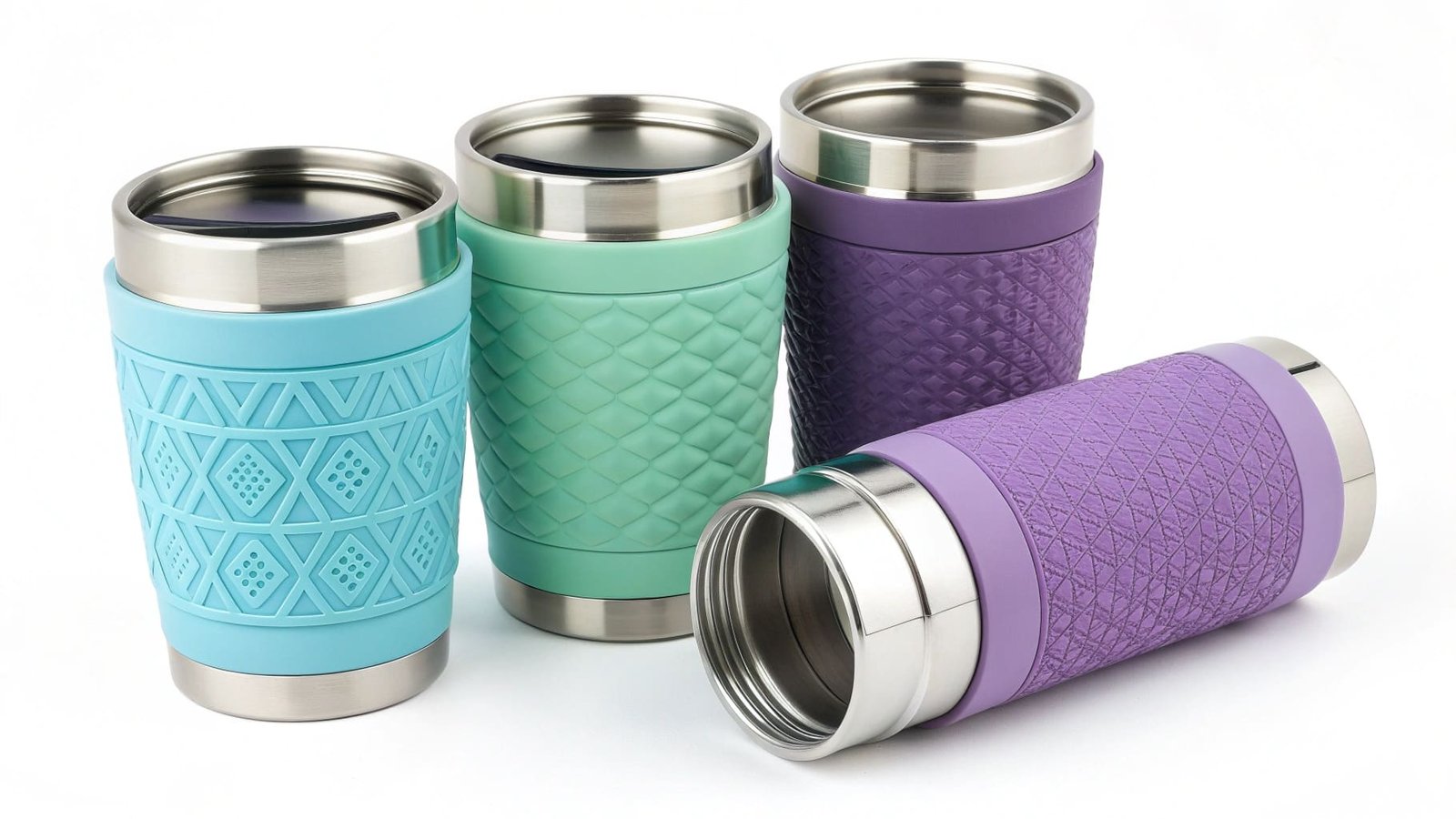
Silicone cups themselves do not keep drinks cold. The stainless steel double-wall vacuum insulation maintains temperature. However, silicone boots protect this vacuum seal3 from damage. When the metal bottom dents, air enters the vacuum space. The insulation fails completely. Boots prevent this damage.
How Bottom Damage Destroys Temperature Performance
I want to share something that surprised me when I first learned it. The vacuum seal in a tumbler is incredibly fragile. People think the thick steel walls mean the cup is indestructible. This is wrong. One small dent in the wrong place can ruin everything.
The bottom of a tumbler has the thinnest metal. Manufacturers design it this way to keep the cup lightweight. When you drop the cup, the bottom hits first. The metal dents inward. This creates a tiny gap between the inner and outer walls. Air rushes into the vacuum space. Once air gets in, the vacuum is gone. The cup can no longer maintain temperature. Your drink warms up in an hour instead of staying cold all day.
I tested this myself. I took two identical tumblers. I filled both with ice water at the same time. I measured the starting temperature at 2 degrees Celsius. One tumbler had a silicone boot. The other had no protection. I dropped the unprotected tumbler from table height. It landed on its bottom. I could see a small dent. Not big. Maybe 2mm deep. But that was enough.
After 8 hours, the protected tumbler still read 4 degrees Celsius. The dented tumbler measured 18 degrees Celsius. The vacuum seal was completely broken. The customer would think they bought a defective product. But the real problem was the lack of protection. A simple silicone boot would have prevented this entire issue.
The Economics of Prevention vs Replacement
Let me break down the numbers. This matters for your business decisions. A quality silicone boot costs around 1 to 2 dollars in bulk. A replacement tumbler costs 15 to 30 dollars wholesale. When a customer damages their cup, you face three costs. First, the replacement product cost. Second, the shipping expense. Third, the time spent handling the complaint and return. This adds up fast.
I worked with a Canadian distributor last year. He imported 5000 tumblers without boots. Within three months, he received 380 damage complaints. That is a 7.6 percent failure rate. Each replacement cost him 25 dollars on average. He spent 9500 dollars fixing problems. If he had included boots from the start, his additional cost would have been 7500 dollars. But his actual savings would be much higher. He would have avoided shipping costs. He would have saved labor time. Most importantly, he would have protected his brand reputation.
Why are people getting rid of Stanley cups?
You invested in premium tumbler inventory. You built marketing campaigns around quality and durability. But now you see returned products piling up. Customers post negative reviews. They say the cups are overrated. They complain about noise, scratches, and performance issues. Your sales start dropping. You wonder what went wrong.
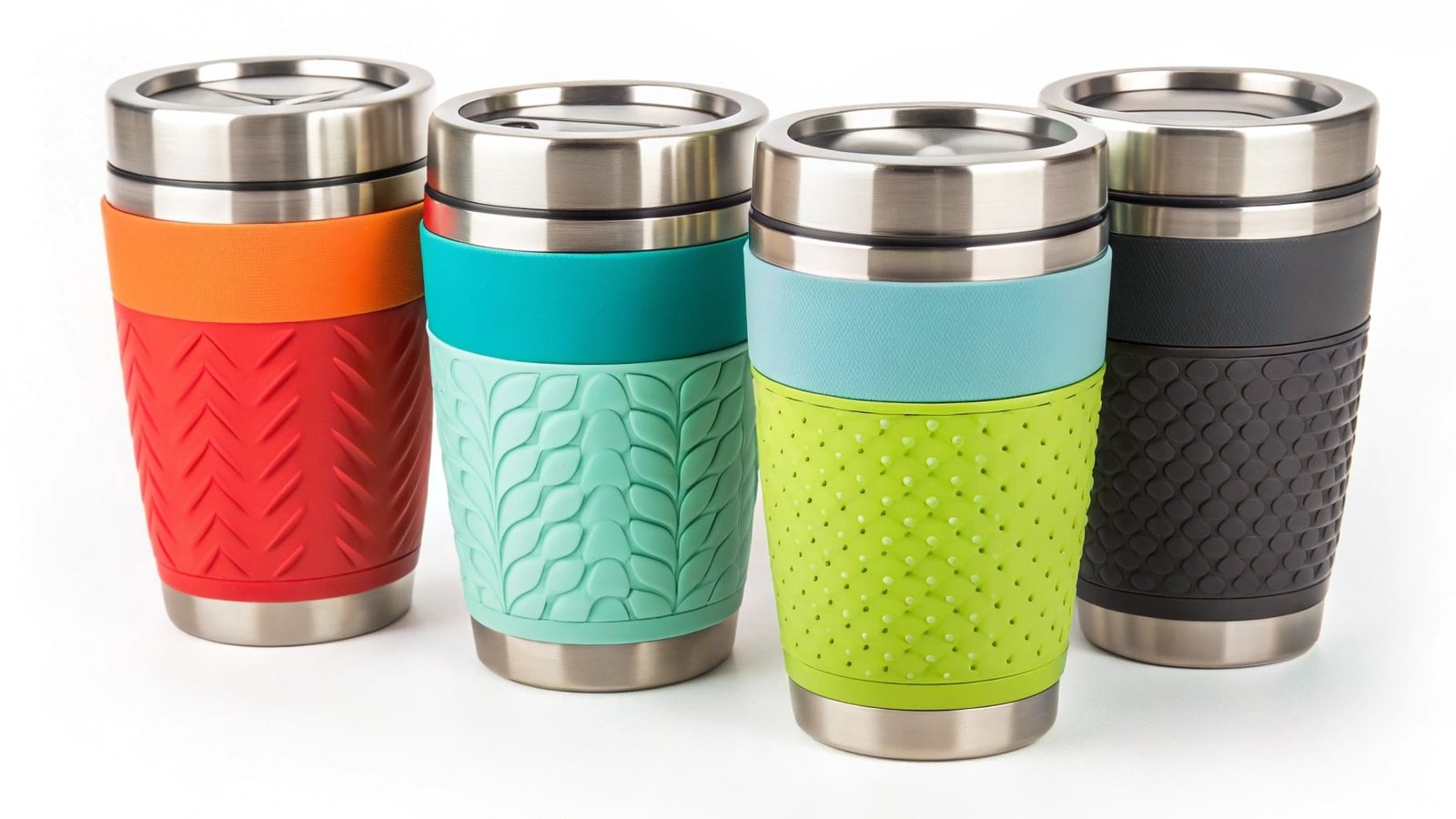
People discard Stanley cups because of bottom damage that breaks the vacuum seal, excessive noise on hard surfaces, visible wear and scratches that look unprofessional, and tipping accidents that cause spills. These issues frustrate users enough to abandon their expensive tumblers. Silicone boots solve all these problems simultaneously.
The Hidden Causes Behind Customer Abandonment
I need to tell you about a conversation I had with Mark last month. He runs a distribution company in Canada. He was frustrated because customers loved his tumblers initially. But after a few months, return rates spiked. People said the cups did not work anymore. He thought he had received bad inventory. He almost switched suppliers. Then we discovered the real problem.
The issue was not the cup quality. It was the lack of protection. Customers used their tumblers daily. They set them on desks, in cars, on countertops. Every time the metal bottom hit a hard surface, it made a loud clanging sound. This annoyed coworkers in offices. It disrupted quiet home environments. People started leaving their cups at home to avoid embarrassment. The cups sat unused. Eventually, customers decided to get rid of them.
But the noise was just the beginning. The metal bottom scratched easily. After a few weeks, the once-shiny tumbler looked worn and cheap. Professional buyers especially hated this. They wanted a product that looked good in meetings and at client presentations. A scratched-up cup did not match that image. They threw away perfectly functional tumblers just because of cosmetic damage.
The worst problem was performance degradation. Most users never realized their cups had dented bottoms. The dents were small. Sometimes less than 1mm deep. But these tiny imperfections destroyed the vacuum seal. Drinks stopped staying cold. Users blamed the manufacturer. They wrote bad reviews. They told friends not to buy the brand. This damaged the reputation of quality products.
Creating a Solution-Based Sales Strategy
Let me show you how to turn this problem into opportunity. When I work with importers, I tell them to think differently about silicone boots. Do not sell boots as optional accessories. Position them as essential protection that comes standard with premium tumblers. This changes the entire value proposition.
Create product bundles that include boots. Price them so the boot appears as a free value-add rather than an extra cost. For example, if you sell tumblers at 20 dollars each, do not sell boots separately for 2 dollars. Instead, offer "Protected Tumbler Sets" at 21 dollars. The customer sees 95 percent of the value in the tumbler and 5 percent in the boot. But you capture the full margin while solving their future problems.
| Strategy | Customer Perception | Business Impact |
|---|---|---|
| Sell boots separately | Additional expense | Low attachment rate (15-20%) |
| Bundle boots standard | Included value | High protection rate (100%) |
| Offer boot upgrades | Premium choice | Medium adoption (40-50%) |
| Create multi-boot packs | Variety and backup | Increased order value |
I worked with one brand that implemented this strategy. They created three product tiers. The basic tier included a standard tumbler with no boot. The premium tier bundled one boot in a matching color. The deluxe tier came with three boots in different colors so customers could change the look. The deluxe tier sold 60 percent of total volume. Customers loved having options. The brand increased average order value by 35 percent. And they reduced return rates by 82 percent.
You can also create seasonal boot collections. Offer holiday colors. Make limited edition patterns. This encourages repeat purchases from existing customers. They already own the tumbler. Now they want to refresh it with a new boot. You generate additional revenue without selling a new cup. The customer gets a fresh look without buying a whole new product. Everyone wins.
Conclusion
Silicone boots protect tumblers from damage, preserve vacuum seal integrity, reduce noise, and extend product lifespan. For importers and distributors, boots transform from accessories into essential value-adds that reduce returns and increase customer satisfaction. The small upfront investment prevents costly replacements and protects brand reputation.