Why Do Rubber Square O-Rings Perform Better in High-Pressure Tumbler Assemblies?
You face constant headaches with leaking tumblers. Your customers complain. Your reputation suffers. I understand this frustration because I see it every day in my business.
Square O-rings solve your high-pressure sealing problems. They create more contact area than round O-rings. This means better sealing and fewer leaks in tumbler assemblies1 above 1,500 PSI.
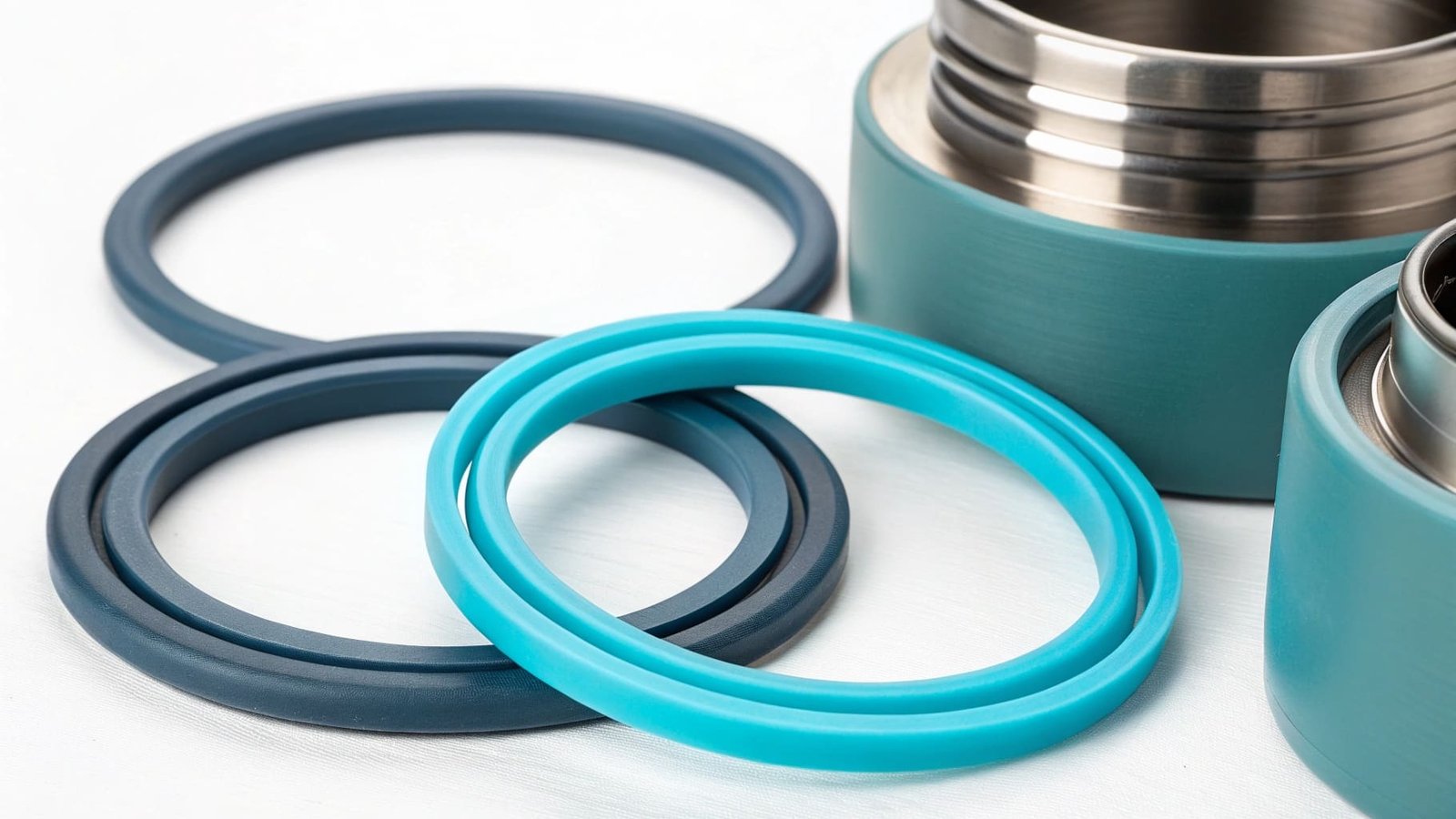
I started working with O-rings ten years ago. Back then, I thought all O-rings were the same. I was wrong. When I first shipped round O-rings to a customer in Texas, he called me three weeks later. His tumbler lids were failing under pressure. That phone call changed everything I knew about sealing technology. Let me share what I learned.
What are the advantages of square O-rings?
Your round O-rings keep failing. You order replacements again and again. Your production line stops. Square O-rings2 break this cycle with their superior design.
Square O-rings provide four flat sealing surfaces instead of one curved surface. This creates multiple contact points. Your assemblies stay sealed even when pressure spikes unexpectedly.
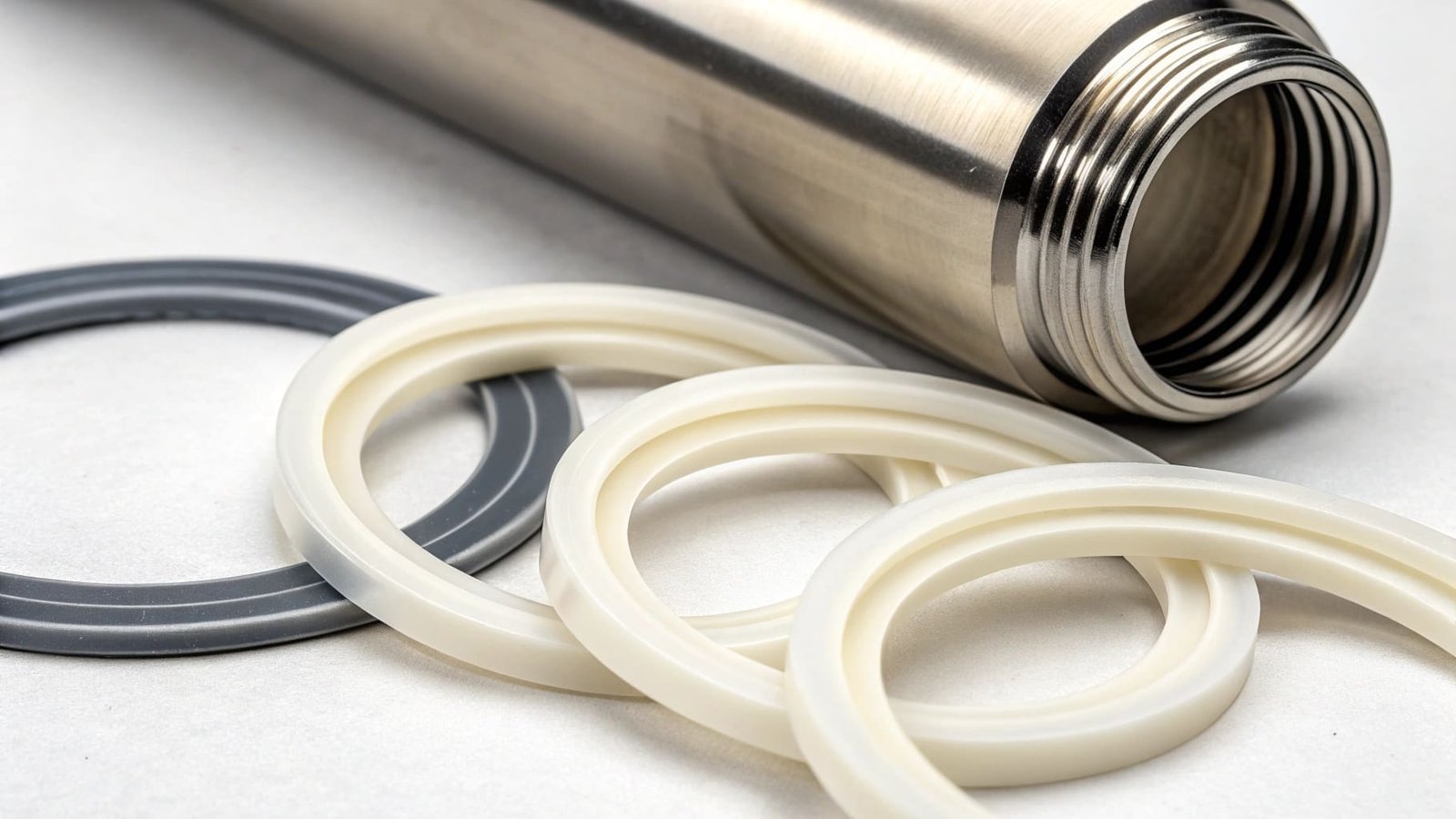
I remember visiting a manufacturing facility in Ohio last year. The production manager showed me bins full of failed round O-rings. He was frustrated. His team was replacing seals every two weeks. I introduced him to square O-rings. The difference was immediate.
Square O-rings distribute pressure evenly across their flat surfaces. Round O-rings concentrate stress at a single point. This single point becomes a weak spot. When pressure increases, round O-rings deform. They squeeze into gaps between parts. This is called extrusion. Extrusion leads to failure.
The geometry of square O-rings prevents this problem. Their four sides create a stable structure. Each side supports the others. When one side faces pressure, the opposite side pushes back. This balanced force distribution keeps the seal intact.
Square O-rings also resist spiral failure. I see this problem often with round O-rings in rotating applications. The round shape allows twisting during movement. Once an O-ring twists, it loses sealing power. Square O-rings cannot twist the same way. Their flat sides maintain position during rotation.
Here is a comparison of key performance factors:
| Feature | Round O-Rings | Square O-Rings |
|---|---|---|
| Contact Area | Single curved line | Four flat surfaces |
| Extrusion Resistance | Moderate | High |
| Spiral Failure Risk | High in rotation | Low |
| Pressure Rating | Up to 1,500 PSI | Up to 3,000 PSI |
| Service Life | 6-12 months | 18-24 months |
What is the purpose of using backup rings with O-rings in high pressure hydraulic systems?
Your O-rings work fine at first. Then pressure increases. The seals fail without warning. Backup rings prevent this disaster by protecting your O-rings from extreme forces.
Backup rings fill the gap on the low-pressure side of your O-ring. This stops the O-ring from pushing through. Your seals last three to five times longer with this protection.
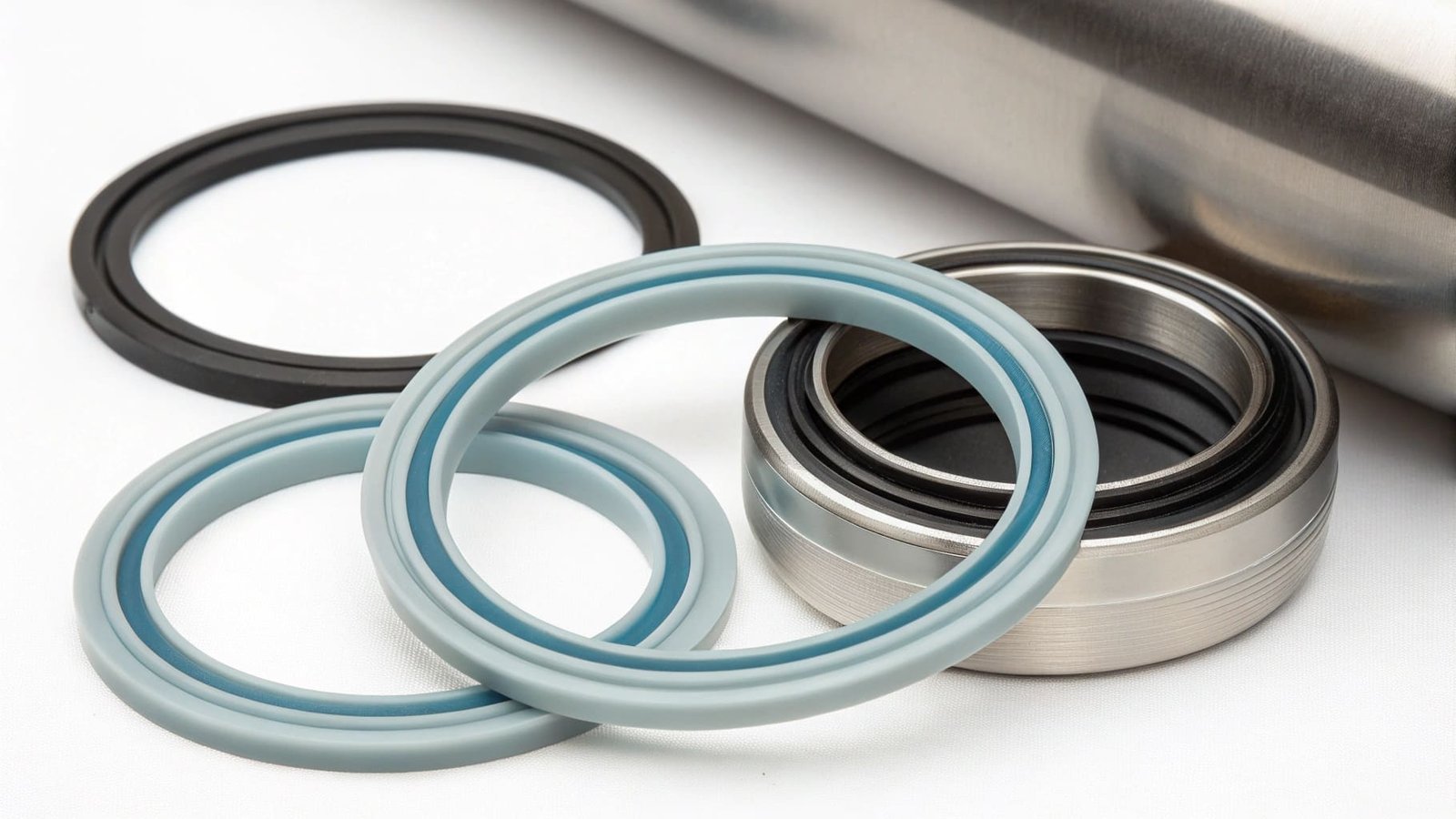
I learned about backup rings the hard way. A customer in Germany ordered 5,000 silicone O-rings3 for his high-pressure tumbler line. He did not use backup rings. Within two months, he reported a 30% failure rate. I flew to his facility to investigate.
The problem was clear. His system operated at 3,500 PSI. The O-rings were extruding into the clearance gap between metal parts. Once extrusion started, complete failure followed quickly. I recommended adding backup rings made from PTFE. The failure rate dropped to less than 2%.
Backup rings work by sitting next to your O-ring. They use a harder material than the O-ring itself. When pressure builds, the O-ring wants to squeeze into any available space. The backup ring blocks this movement. It acts like a wall.
The placement matters. You install backup rings on the side where pressure is lowest. This seems backward at first. But the O-ring gets pushed away from high pressure toward low pressure. The backup ring catches it before extrusion happens.
Material choice for backup rings depends on your application. PTFE works well for most situations. It handles high temperatures and resists chemicals. Nylon backup rings cost less but work only in moderate conditions. Peek backup rings offer the best performance but carry a higher price.
I always tell my customers to consider backup rings when pressure exceeds 2,000 PSI. Below this threshold, quality O-rings can work alone. Above it, backup rings become essential. The small extra cost of backup rings saves money compared to frequent seal replacement and downtime.
What is the best O-ring for high pressure?
You need reliable seals. Your business depends on it. Choosing the wrong material wastes money and damages your reputation. The best O-ring material depends on your specific pressure and temperature conditions.
Food-grade silicone square O-rings rated to 2,000 PSI offer the best balance for tumbler assemblies. They meet safety standards, resist pressure, and cost less than specialty materials.
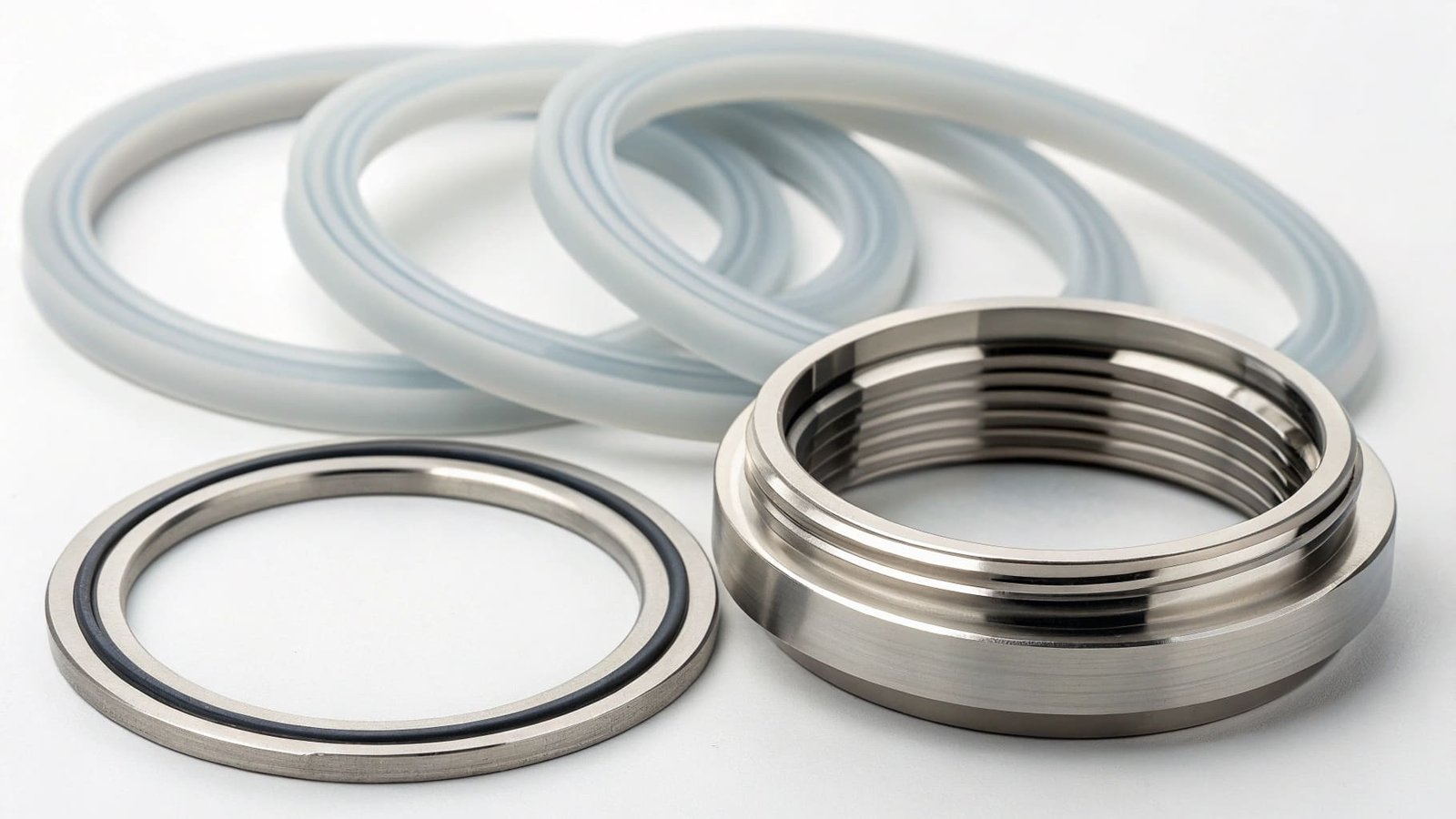
I test different O-ring materials in my lab every month. Last quarter, I compared silicone, HNBR, and FKM under identical conditions. Each material showed different strengths. The results surprised me.
Silicone O-rings excel in temperature extremes. They stay flexible at minus 60 degrees Celsius. They maintain integrity at 200 degrees Celsius. For tumbler applications, this matters. Your customers use tumblers for hot coffee and cold smoothies. Silicone handles both without hardening or cracking.
HNBR offers superior mechanical strength. I use HNBR when customers need seals for industrial hydraulic systems. It resists extrusion better than silicone. But HNBR costs 40% more than silicone. For tumbler assemblies, this extra cost does not provide enough benefit.
FKM provides excellent chemical resistance. It stands up to oils, fuels, and aggressive chemicals. But tumblers hold beverages, not chemicals. The advantage of FKM does not match its premium price in drinkware applications.
I recommend considering these factors when choosing your O-ring material:
| Factor | Silicone | HNBR | FKM |
|---|---|---|---|
| Maximum Pressure | 2,000 PSI | 5,000 PSI | 4,000 PSI |
| Temperature Range | -60°C to 200°C | -40°C to 150°C | -20°C to 200°C |
| Food Safety | FDA Approved | Limited | Not Typical |
| Cost per Unit | $ | $$$ | $$$$ |
| Tumbler Suitability | Excellent | Good | Fair |
The square profile matters as much as material choice. I always pair square geometry with appropriate material. A round HNBR O-ring might fail where a square silicone O-ring succeeds. The shape amplifies the material properties.
Shore hardness4 also affects performance. I stock O-rings from 40A to 80A durometer. Softer O-rings seal better at lower pressures. Harder O-rings resist extrusion at higher pressures. For tumbler assemblies operating between 1,500 and 2,000 PSI, I recommend 60A to 70A durometer square silicone O-rings.
Conclusion
Square O-rings solve your high-pressure sealing challenges. They last longer, seal better, and protect your business reputation. Choose food-grade silicone square O-rings for reliable tumbler performance.
-
Find out how to maintain tumbler assemblies for optimal performance and longevity. ↩
-
Explore the advantages of Square O-rings for better sealing and durability in high-pressure tumbler assemblies. ↩
-
Learn about the benefits of silicone O-rings and their suitability for tumbler assemblies. ↩
-
Learn how Shore hardness influences the sealing capabilities of O-rings in different conditions. ↩