How to Apply Shrink Wrap Sleeves on Tumblers for OEM Production Lines?
I watched three production lines fail last quarter because they skipped proper shrink wrap protocols. Their rejection rates1 hit fifteen percent. I knew they needed a better system.
You need three things to apply shrink wrap sleeves2 correctly: precise sleeve dimensions, controlled heat between 375-400°F, and uniform pressure distribution. This combination prevents defects and keeps your rejection rates below two percent.
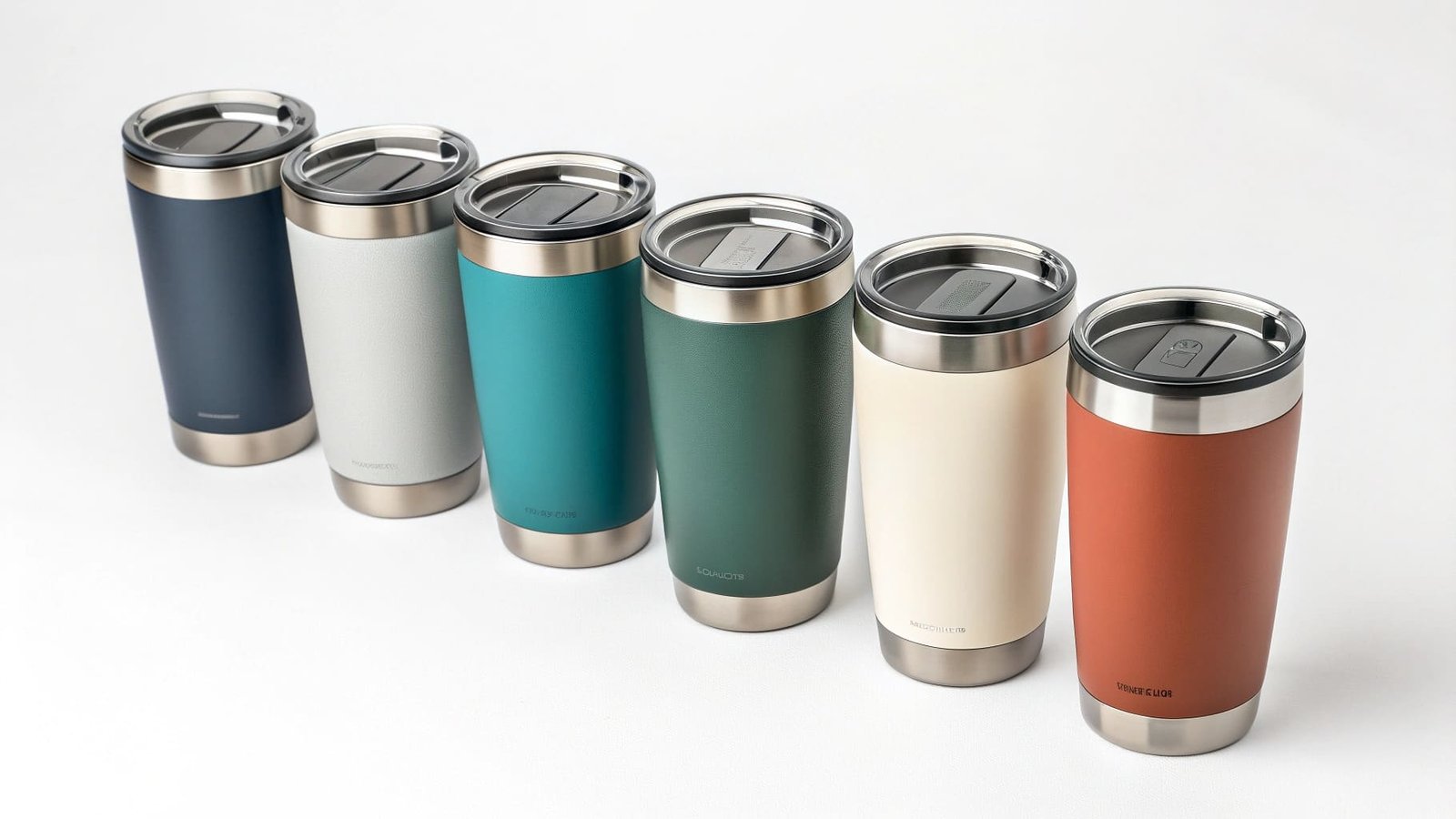
I started working with OEM tumbler manufacturers five years ago at silijoy. Back then, I thought shrink wrap was just about heating and waiting. I was wrong. The process controls everything from your customer satisfaction scores to your return rates. Let me show you what I learned from processing over 500,000 units.
How to use shrink wrap sublimation sleeves?
You face a problem when your sleeves wrinkle or bubble during application. Your buyers reject entire batches. You lose money and time.
First, clean the tumbler surface3 completely. Then slide the sleeve over the tumbler and align the seam at the back centerline. Place it in a convection oven at 380°F for 45-60 seconds while rotating continuously.
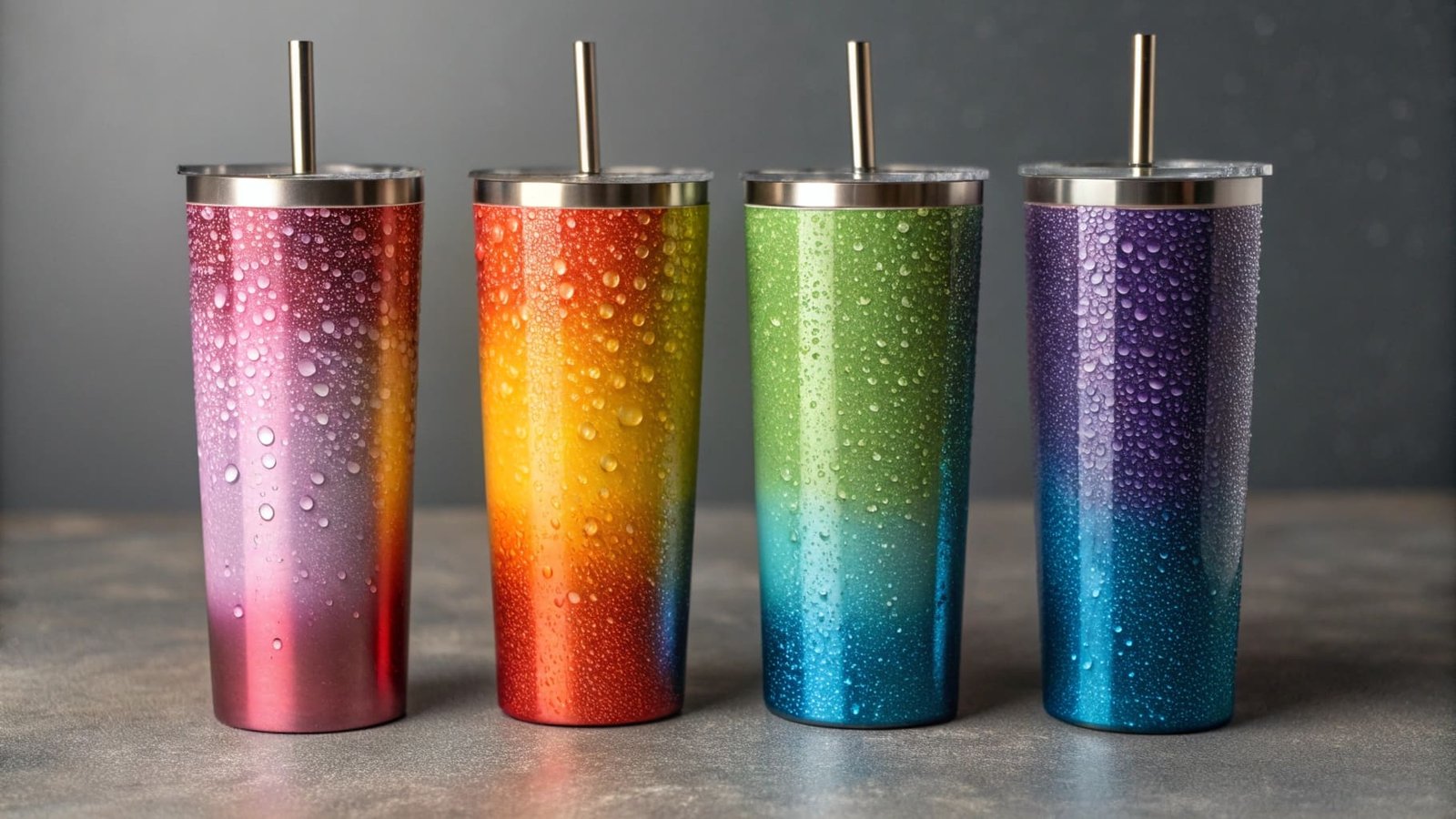
The Complete Application Process
I train my team to follow six steps for every single tumbler. We start by inspecting the tumbler surface for any dust or oils. These create adhesion problems later. We wipe each tumbler with isopropyl alcohol and let it dry for thirty seconds.
Next, we store our sleeves in a climate-controlled room at 65-70°F with forty percent humidity. I learned this the hard way. Sleeves that absorb moisture create steam pockets during heating. Those pockets turn into visible defects on your final product.
The sleeve alignment matters more than most people think. We mark the back centerline of each tumbler with a small dot. Our operators slide the sleeve over the tumbler and rotate it until the seam lines up with that dot. This puts any potential seam marks in the least visible location.
Our convection oven runs at a steady 380°F. I tested temperatures from 350°F to 420°F over six months. Below 375°F gives incomplete shrinkage. Above 400°F damages the sublimation ink. The sweet spot sits right at 380°F.
We place tumblers on a rotating rack inside the oven. The rotation delivers even heat to all sides. Without rotation, you get hot spots that create uneven shrinkage patterns. Those patterns show up as distortion lines on the finished product.
Timing controls the final quality. We pull tumblers at exactly fifty seconds. Then we move them to a cooling station where they sit for two minutes before handling. Fast cooling prevents the material from contracting properly.
What size shrink wrap for 30 oz tumbler?
Your sleeves bunch up or leave gaps because you ordered the wrong dimensions. Your production line stops while you wait for correct sizes. You miss delivery deadlines.
Standard 30 oz tumblers need sleeves measuring 9.3 inches in height and 9.8-10 inches in width. You must verify these dimensions with your specific tumbler mold because taper angles vary between manufacturers.
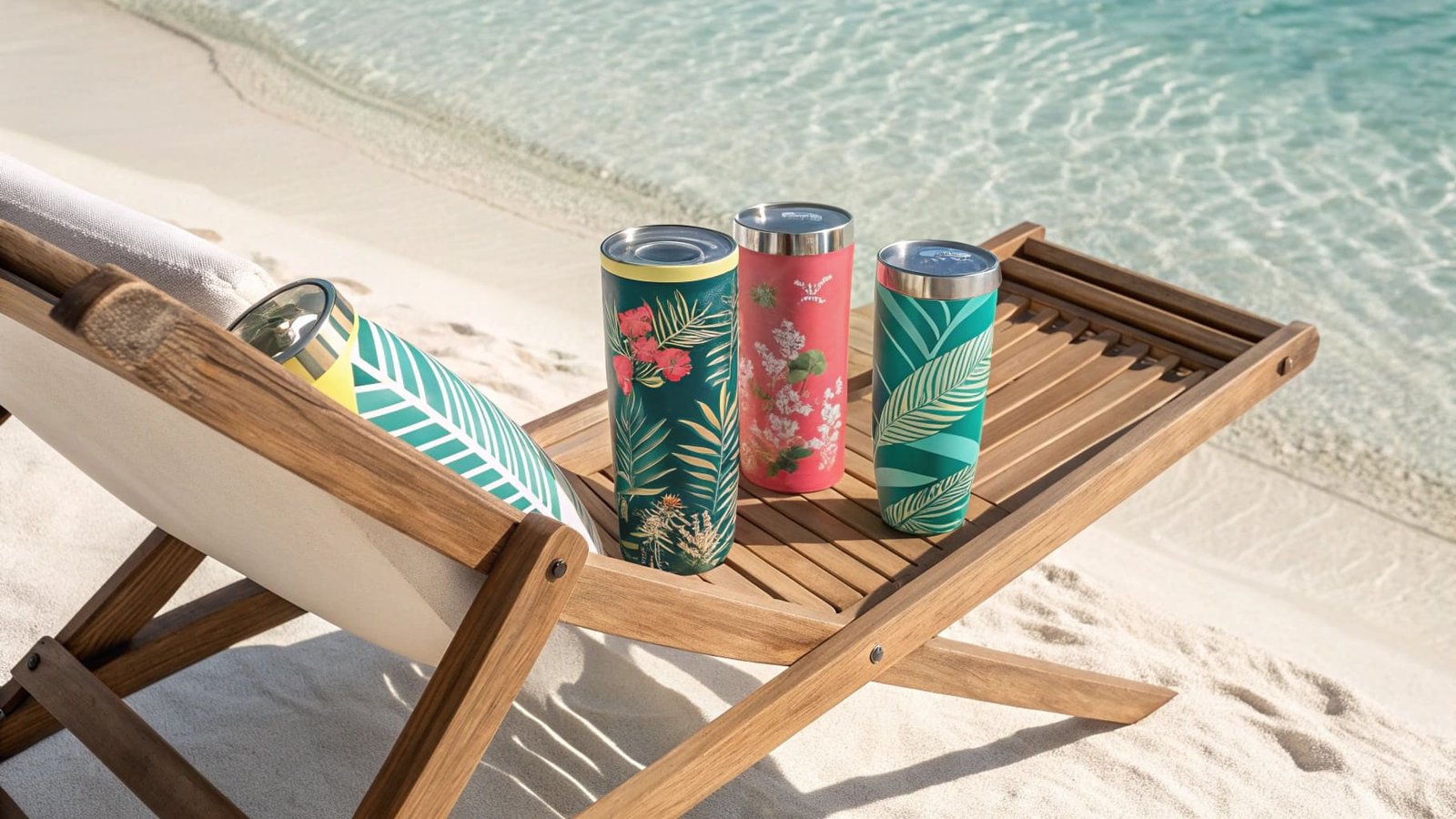
Sizing Variables You Cannot Ignore
I maintain a testing protocol for every new tumbler design we receive. The 9.3 by 9.8-10 inch measurement works as a starting point. But each tumbler mold has unique characteristics.
Taper angle makes the biggest difference in sleeve selection. A tumbler with a steep taper from top to bottom needs a sleeve with different proportions than a straight-walled design. I measure the diameter at three points: top rim, center, and bottom. Then I calculate the taper angle.
My European buyers care deeply about dimensional consistency. They run incoming quality checks on every shipment. One batch with mismatched sleeves costs me the entire order. I learned to test five samples from each new sleeve batch before running production.
The tolerance range matters too. I accept plus or minus 0.1 inches on height and 0.15 inches on width. Anything outside that range creates problems. Too tight and the sleeve tears during application. Too loose and you get wrinkles that never smooth out.
Material thickness affects sizing as well. Thicker sleeves need slightly larger dimensions to account for their reduced flexibility. I work with 0.004 inch thick material as my standard. When buyers request thicker sleeves, I add 0.2 inches to the width measurement.
I keep detailed records of sleeve specifications matched to each tumbler style. My production team references these records before starting any new batch. This simple documentation system cut our sizing errors from eight percent down to less than one percent.
Temperature and humidity during storage change how sleeves perform. Material expands in warm conditions and contracts in cold. I test sleeves at room temperature after they have stabilized for at least four hours.
How to avoid lines on sublimation tumbler?
Lines ruin your product appearance and trigger customer complaints. Your rejection rate climbs above acceptable levels. You need a solution that works consistently.
Position the sleeve seam along the back centerline of the tumbler. Use a convection oven with rotating racks at 380°F. Apply even pressure during cooling to prevent premature material contraction.
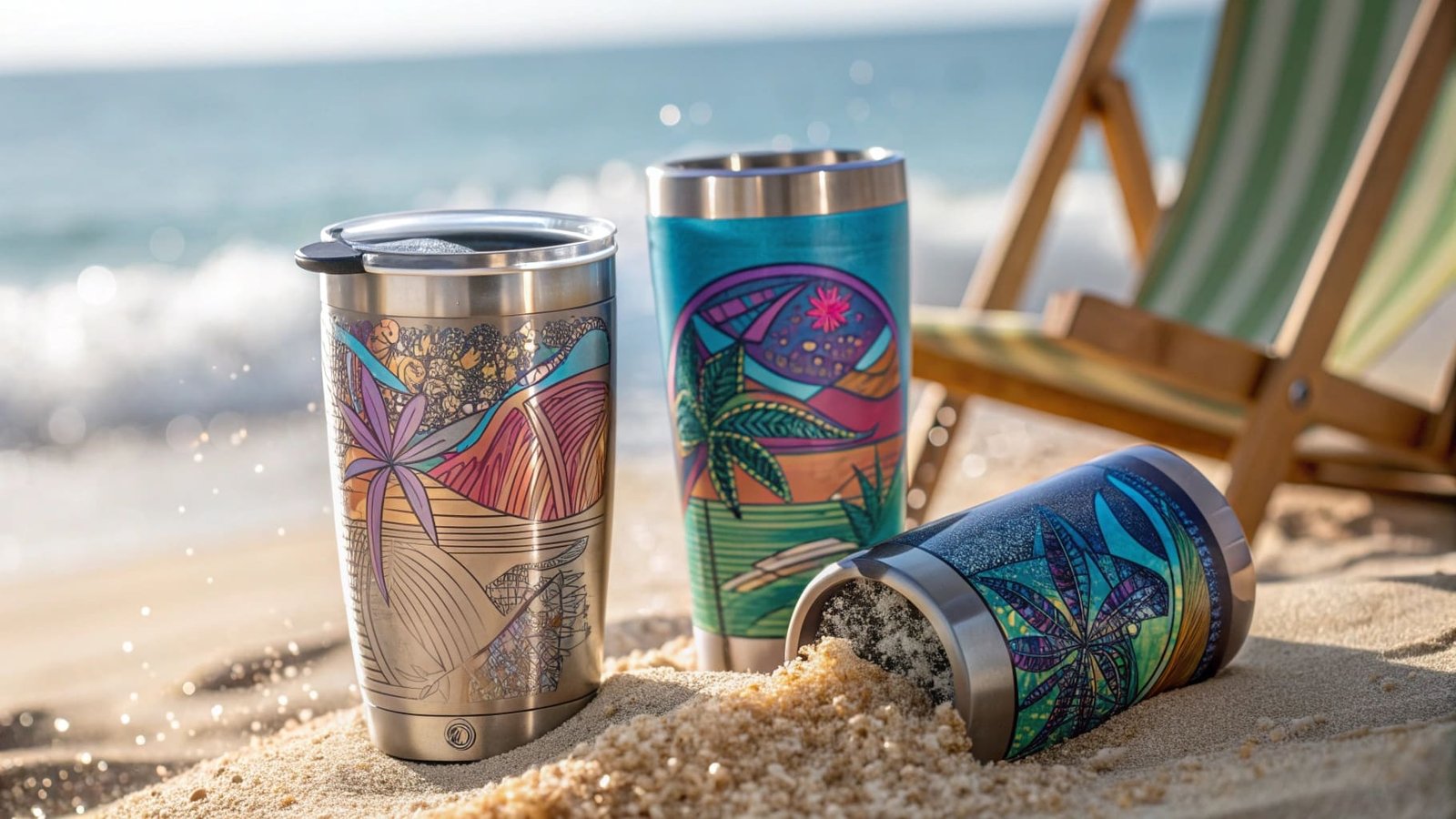
The Three-Stage Quality System That Works
I developed a three-stage approach after analyzing defects from 10,000 rejected tumblers. Stage one focuses on seam alignment. Stage two controls heat distribution. Stage three manages the cooling process.
For seam alignment, I trained my operators to find the natural back of each tumbler design. Most tumblers have a slight asymmetry. We mark this spot with a temporary indicator. The sleeve seam must land exactly on this mark. I check random samples every hour.
Our heating system uses convection ovens because they deliver superior heat uniformity compared to heat guns or infrared panels. The convection currents move hot air continuously around each tumbler. I installed temperature sensors at six locations inside the oven to verify consistency.
Rotation speed affects results more than I expected. Too slow and you get hot spots. Too fast and the sleeve does not have enough contact time with heated air. We run at twelve rotations per minute. This gives complete coverage while maintaining thermal contact.
I watch for edge effects at the top and bottom of each tumbler. These areas cool faster than the center section. Uneven cooling creates stress lines that show up as visible defects. We added secondary heating elements at the oven edges to compensate.
The cooling station prevents premature contraction. When hot sleeves hit room temperature air too quickly, the material contracts unevenly. We use a two-stage cooling system. First stage holds tumblers at 150°F for sixty seconds. Second stage brings them down to room temperature over another sixty seconds.
Pressure application during cooling matters too. We place tumblers on soft foam pads that support the entire surface. Hard surfaces create pressure points. Those points turn into visible marks on the finished product.
My quality control team inspects every twentieth tumbler during production. We mark any visible lines and track their location. This data tells us if our equipment needs recalibration. When line defects exceed two percent, we stop production and adjust our parameters.
I document everything in our process control system. Each production batch has recorded data for oven temperature, rotation speed, cooling time, and defect rate. My North American buyers require this documentation. It proves we maintain consistent quality standards.
Conclusion
I built my tumbler production process4 around these three elements: proper sleeve sizing, controlled heating, and systematic quality checks. Your success depends on treating each step as equally important.
-
Discover strategies to minimize rejection rates, enhancing product quality and customer satisfaction. ↩
-
Explore this resource to learn effective techniques for applying shrink wrap sleeves, ensuring high-quality results. ↩
-
Find out the best methods for preparing tumbler surfaces to ensure optimal adhesion and finish. ↩
-
Explore the essential components of a successful production process to enhance your manufacturing efficiency. ↩