How to Choose the Right Silicone O-Ring Set for Tumbler Manufacturing?
You picked the wrong O-ring. Your tumblers leak. Customers complain. Your brand takes the hit. This happens more than you think, and it is avoidable.
Choosing the right silicone O-ring for tumbler manufacturing comes down to three things: hardness, temperature resistance, and how the ring compresses under real use. Get these right, and your tumblers seal well every time. Get them wrong, and no amount of branding fixes the damage.
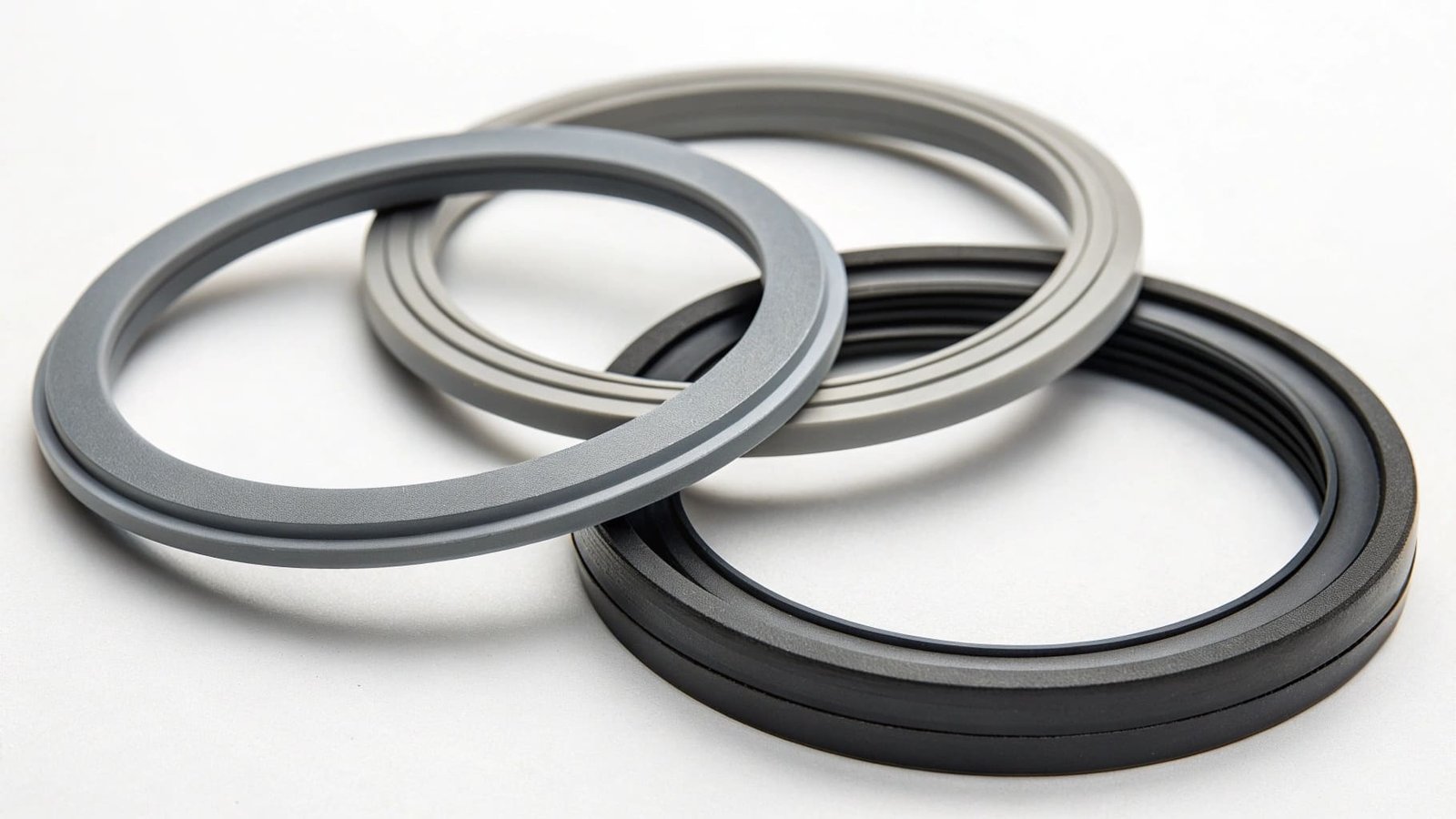
O-ring selection looks simple on the surface. You match a size, place an order, and move on. But I have seen this shortcut cause real production problems. The sections below break down each decision point so you can choose with confidence, not guesswork.
How Do You Choose the Correct O-Ring?
A wrong O-ring does not just leak. It fails quietly at first, then ruins a whole product line. Most buyers only find out after customers do.
The correct O-ring for a tumbler must match three things at once: the physical dimensions of the groove, the material certification required for food contact, and the hardness level suited to how the lid and body connect1. Missing any one of these leads to seal failure.
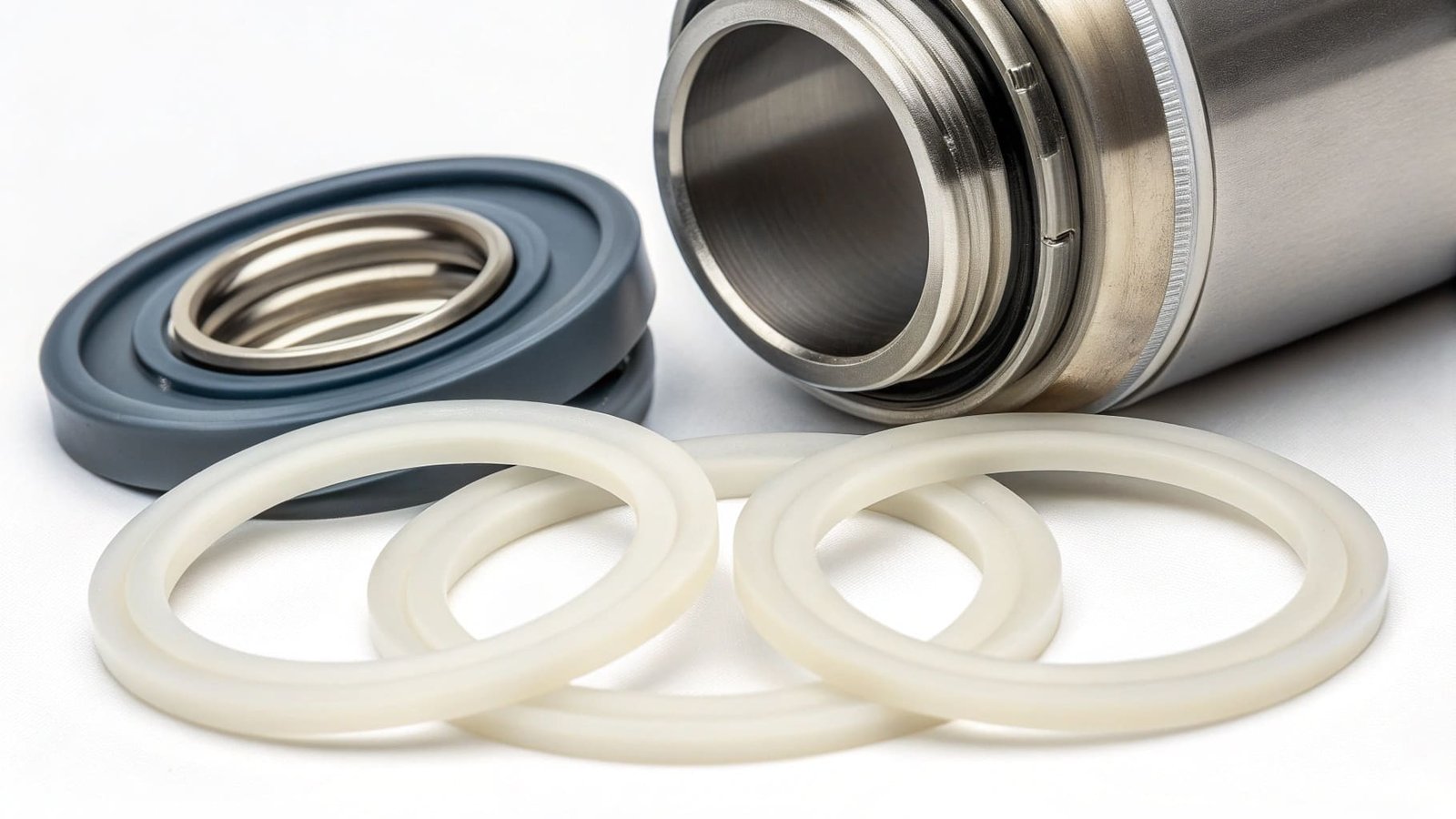
What Makes an O-Ring "Correct" for Tumbler Use?
An O-ring does one job. It fills the gap between two surfaces and stops liquid from passing through. For tumblers, this gap exists between the lid and the cup body. The O-ring must fill that gap completely under normal use, including when the tumbler is tilted, shaken, or dropped.
There are three things I always check before approving an O-ring for tumbler production.
Dimensional fit
The O-ring must sit inside the groove without gaps or bulging. If it is too small, it stretches and weakens over time. If it is too large, it folds or bunches and breaks the seal.2
Material certification
For food and beverage products, the silicone must meet food-grade standards. In North America, FDA certification is the minimum. In Europe, LFGB is the standard.3 I always ask suppliers to provide documentation before placing an order. Suppliers who hesitate on this are a red flag.
Compression behavior
The O-ring must compress enough to fill surface irregularities but not so much that it deforms permanently. This is where hardness becomes important, and I cover that in the next section.
| Selection Factor | What to Check | Why It Matters |
|---|---|---|
| Groove dimensions | Inner diameter, outer diameter, cross-section | Ensures proper fit without stretch or fold |
| Material certification | FDA, LFGB, or equivalent | Required for food contact safety |
| Compression ratio | 15%–30% for standard tumblers | Prevents under-seal or permanent deformation |
| Supplier documentation | Certificates, test reports | Protects you from certificate fraud |
Getting all four columns right before production saves significant rework costs later.
Which Is Harder, a 70 or 90 Durometer?
You have two O-rings in your hand. They look identical. But one seals better than the other. The difference is invisible, and it matters a lot.
A 90 durometer O-ring is harder than a 70 durometer O-ring. The durometer scale measures resistance to surface indentation. Higher numbers mean firmer, less flexible material.4 Lower numbers mean softer material that compresses more easily under pressure.
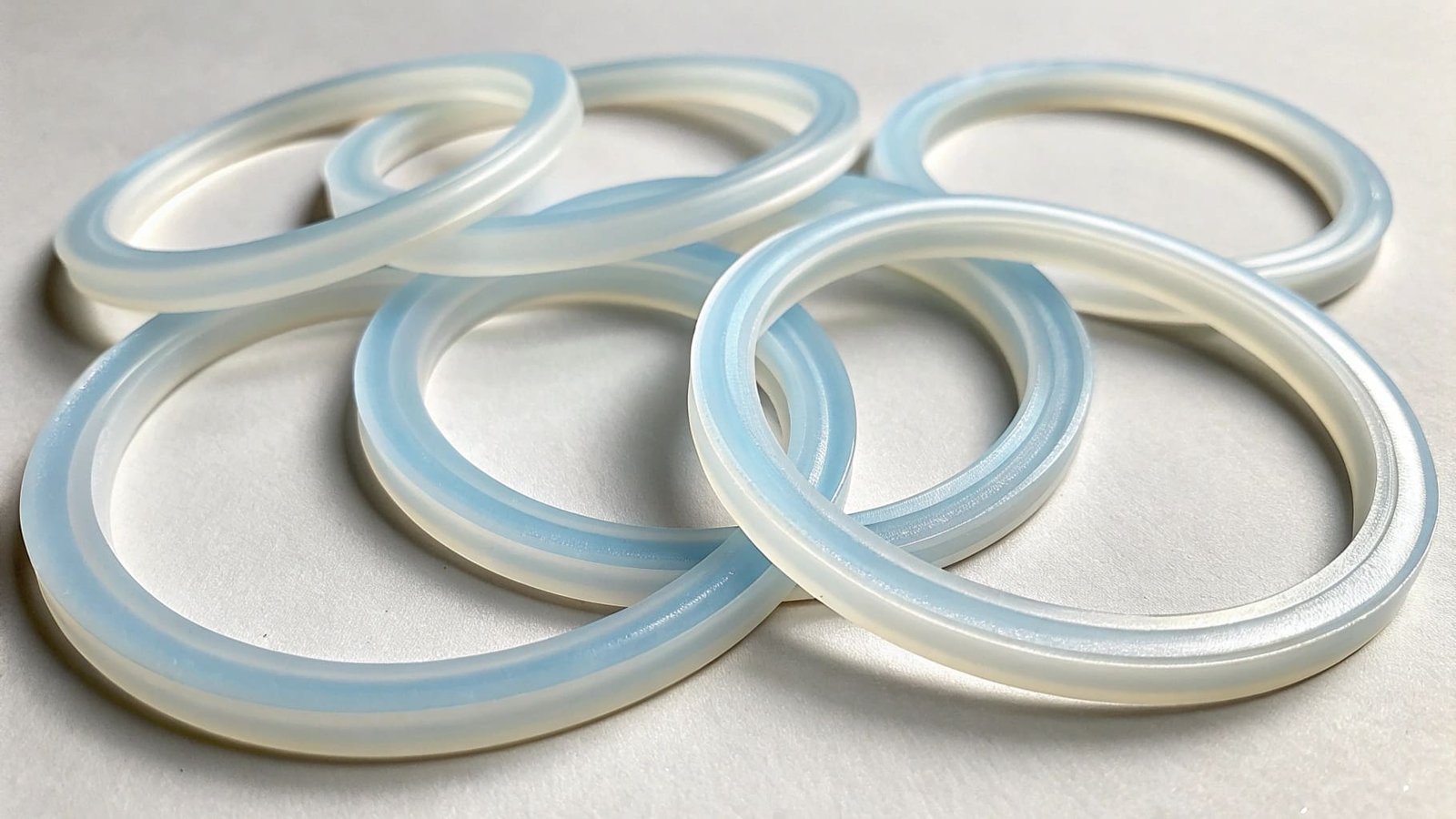
Understanding the Durometer Scale in Practice
The durometer scale is not just a technical number. It tells you how a material behaves under real conditions. For O-rings used in tumbler lids, this number directly affects whether your product leaks or holds.
Here is how 70 and 90 durometer silicone compare in practical terms.
70 durometer silicone
This is softer and more flexible. When you press it against a surface, it gives way and fills small gaps. This matters because no two machined or molded parts are perfectly identical. Stainless steel tumbler bodies and plastic lids always carry small surface variations from the manufacturing process.5 A 70 durometer O-ring adjusts to these variations. It creates full contact across the sealing surface6, even when the fit is not perfect.
90 durometer silicone
This is firmer and less flexible. It holds its shape well under pressure but does not conform to surface irregularities. In high-pressure industrial applications, this is useful. In standard tumbler lids that close by hand, it works against you. The firmness prevents the ring from filling small gaps, and leaks become more likely.
| Property | 70 Durometer | 90 Durometer |
|---|---|---|
| Flexibility | High | Low |
| Surface conformity | Excellent | Poor |
| Resistance to deformation | Moderate | High |
| Best application | Standard tumbler lids | High-pressure or industrial use |
| Risk of leaking in tumblers | Low | Higher |
For almost every tumbler application I have worked on, 70 durometer is the right choice. The only time I consider 90 durometer is when a client specifically asks for an O-ring that must maintain its shape over a very long compression period, such as in a permanent press-fit assembly that never opens.
How Do You Choose O-Ring Hardness?
You know 70 and 90 durometer exist. But how do you actually decide which one to specify in your production order? The answer depends on your product, not just the numbers.
O-ring hardness should match how your lid connects to your tumbler body, how often users open and close it, and what temperature range the product is designed for. These three conditions together point to the right durometer.
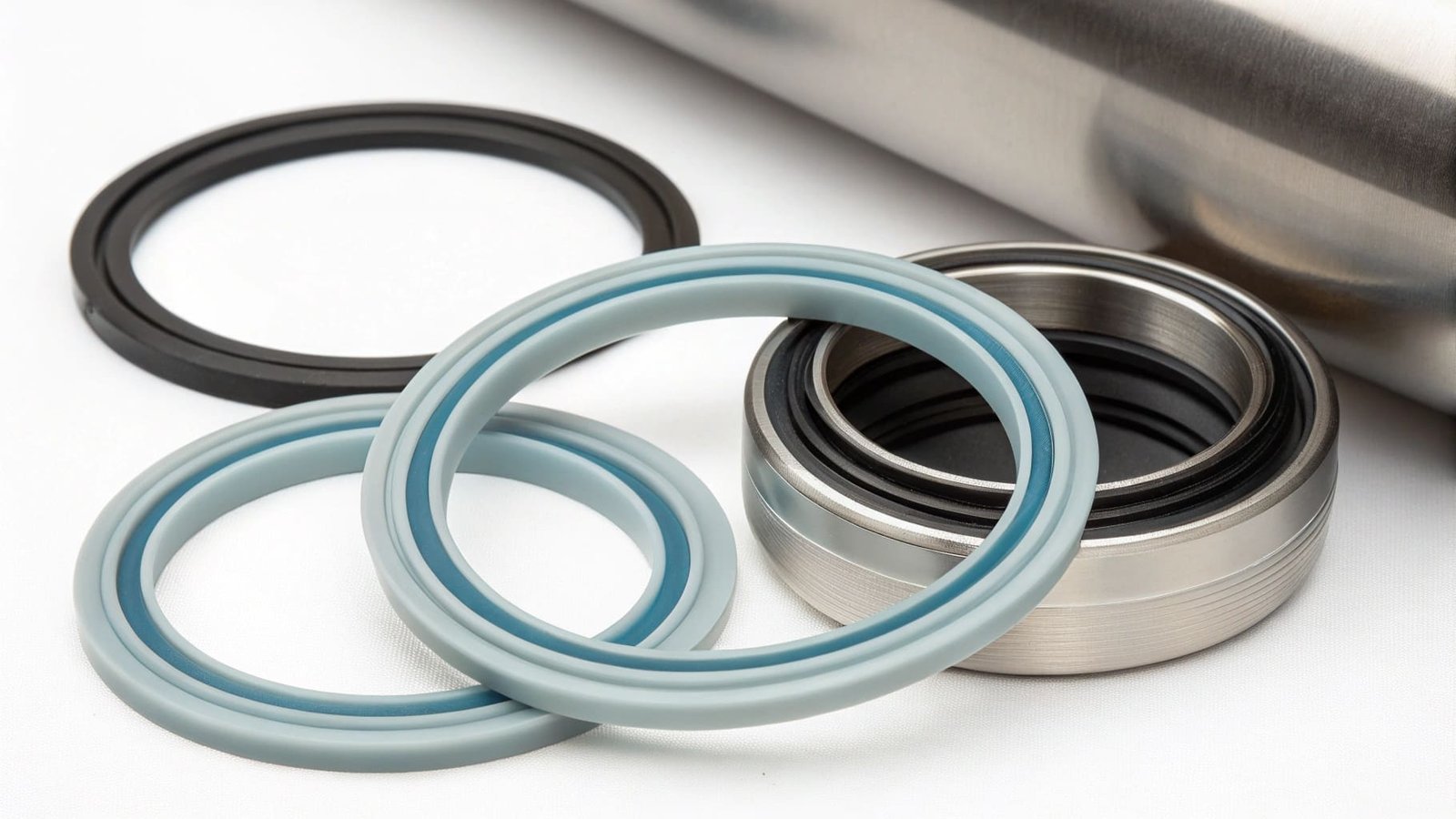
Matching Hardness to Real Use Conditions
I use a simple process when recommending hardness to buyers. I start with the end user, not the spec sheet.
Step one: Identify the closure type
Is the lid a screw-on, a press-fit, or a snap-lock? Screw-on lids apply consistent pressure as the user tightens them. A 70 durometer O-ring handles this well. Press-fit lids apply sudden, direct pressure. A softer O-ring absorbs this better. Snap-lock lids apply less controlled pressure and benefit most from 70 durometer flexibility.
Step two: Consider the use frequency
An O-ring that is compressed and released hundreds of times per year needs to recover its shape after each cycle. Softer silicone recovers better. Harder silicone develops compression set over time, meaning it stops bouncing back and the seal weakens.
Step three: Check the temperature range
Standard tumblers for cold and hot drinks operate between roughly -40°C and 220°C for silicone materials.7 Both 70 and 90 durometer food-grade silicone handle this range. But if your product is positioned for outdoor or industrial use with more extreme conditions, confirm the specific compound rating with your supplier.
| Use Condition | Recommended Hardness | Reason |
|---|---|---|
| Standard everyday drinkware | 70 Shore A | Best sealing and recovery |
| Outdoor or adventure tumblers | 70 Shore A | Handles temperature variation |
| High-pressure industrial containers | 90 Shore A | Dimensional stability needed |
| Permanent press-fit assemblies | 90 Shore A | Shape retention over time |
| Products opened and closed daily | 70 Shore A | Better compression recovery |
One more thing I always tell buyers: ask your supplier for a physical sample before finalizing the specification. Compress it by hand. Compare it against a known reference. No table replaces the feel of the actual material in a real groove.
Conclusion
Choose 70 durometer food-grade silicone for most tumbler applications. Confirm certifications, match groove dimensions, and always test with a physical sample before production.
-
"Food Packaging & Other Substances that Come in Contact with Food", https://www.fda.gov/food/food-ingredients-packaging/food-packaging-other-substances-come-contact-food-information-consumers. O-ring design references treat groove dimensions and elastomer hardness as design inputs for sealing performance, while food-contact regulations require materials used with food or beverages to satisfy applicable compositional or migration requirements. Evidence role: general_support; source type: institution. Supports: A standards or engineering source should show that O-ring selection requires groove-size compatibility and elastomer property selection, while a food-contact source should support the need for compliant materials.. Scope note: The support is assembled from mechanical-design and food-contact sources rather than from a tumbler-specific standard. ↩
-
"[PDF] VACUUM SEALS DESIGN CRITERIA - NASA", https://extapps.ksc.nasa.gov/reliability/Documents/Preferred_Practices/1223.pdf. O-ring design guidance explains that improper stretch and gland fill can distort the elastomer in its groove, increasing the risk of leakage or premature seal failure. Evidence role: mechanism; source type: government. Supports: A seal-design reference should support that excessive stretch or improper gland fill can distort an O-ring and compromise sealing.. Scope note: The cited guidance would describe general O-ring failure mechanisms rather than testing the specific tumbler geometry discussed in the article. ↩
-
"21 CFR 177.2600 -- Rubber articles intended for repeated use. - eCFR", https://www.ecfr.gov/current/title-21/chapter-I/subchapter-B/part-177/subpart-C/section-177.2600. Food-contact elastomer requirements are addressed in U.S. FDA regulations for rubber articles intended for repeated food contact and in European frameworks that include German LFGB and BfR recommendations for food-contact materials. Evidence role: general_support; source type: government. Supports: Government sources should support that food-contact elastomers are regulated under FDA provisions in the United States and under German LFGB/BfR or EU food-contact frameworks in Europe.. Scope note: LFGB is German legislation and is often used as a European market benchmark, but it is not identical to a single EU-wide silicone standard. ↩
-
"Shore durometer - Wikipedia", https://en.wikipedia.org/wiki/Shore_durometer. Shore durometer testing, as described in elastomer hardness standards, measures resistance to indentation; higher Shore values indicate a harder material under the specified test conditions. Evidence role: definition; source type: institution. Supports: A standards or metrology source should define Shore durometer as an indentation-hardness measurement and explain that higher values correspond to greater hardness.. ↩
-
"[PDF] Metrological issues in precision-tolerance manufacturing: A report of ...", https://nvlpubs.nist.gov/nistpubs/jres/098/jresv98n2p245_a1b.pdf. Manufacturing engineering texts describe molded plastic and metal components as having specified dimensional tolerances and surface-finish variations that arise from tooling, material behavior, and process conditions. Evidence role: general_support; source type: education. Supports: A manufacturing engineering source should support that molded plastic and formed or machined metal parts exhibit dimensional tolerances and surface finish variations.. Scope note: This supports the general presence of manufacturing variation, not the exact magnitude of variation in a particular tumbler product. ↩
-
"[PDF] Parker O-ring Handbook", https://wp.optics.arizona.edu/optomech/wp-content/uploads/sites/53/2016/10/Parker-O-ring-handbook.pdf. Elastomer sealing theory indicates that lower-hardness materials deform more readily under compressive load, which can improve conformity to small surface irregularities at a sealing interface. Evidence role: mechanism; source type: research. Supports: A research or engineering source should support that lower-hardness elastomers generally deform more under load and can better conform to surface irregularities in sealing interfaces.. Scope note: This provides a material-mechanics rationale; actual full contact depends on groove design, compression, surface finish, and the specific silicone compound. ↩
-
"Synthesis and Characterization of Room Temperature Vulcanized ...", https://pmc.ncbi.nlm.nih.gov/articles/PMC6680893/. Materials references describe silicone rubber as retaining useful elastomeric properties over a broad temperature range, commonly extending from subzero conditions to temperatures around 200°C or higher depending on formulation. Evidence role: general_support; source type: education. Supports: A university, materials-science, or standards source should support that silicone rubber generally remains flexible at low temperatures and can withstand elevated temperatures near 200°C or above.. Scope note: This supports the general temperature capability of silicone rubber; exact limits for a food-contact tumbler seal must be confirmed for the specific compound and test conditions. ↩