Where Can OEM Manufacturers Buy Replacement Rubber Seals for 16oz Tumblers?
You source from a supplier. The seal fails. Your customer complains. Now you are stuck between a warranty claim and a long lead time. This hurts.
The best place for OEM manufacturers to buy replacement rubber seals for 16oz tumblers is directly from specialized silicone gasket suppliers in China. These suppliers offer food-grade silicone seals with FDA and LFGB certification, Shore A hardness customization, and bulk pricing that general distributors cannot match.
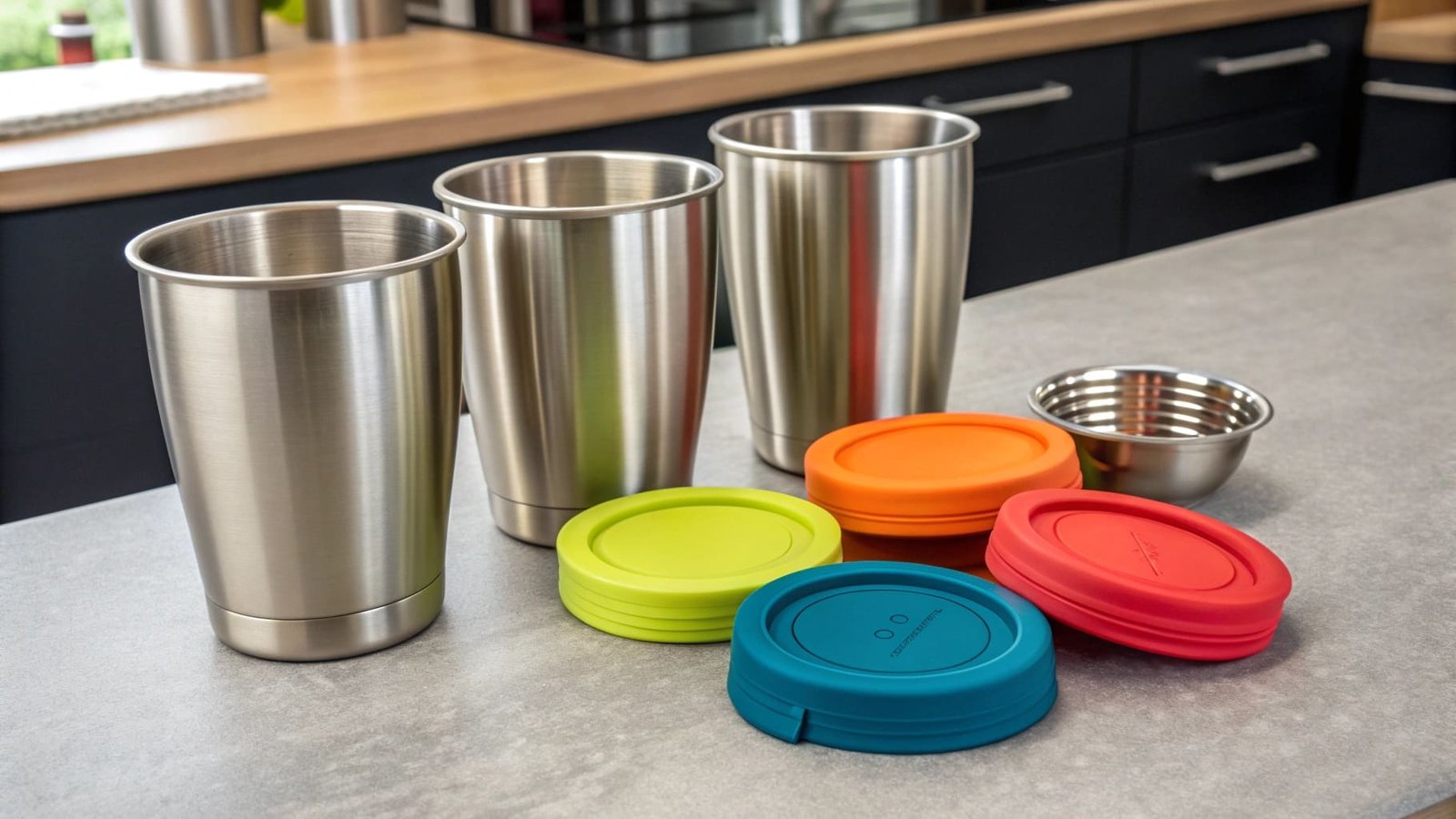
I have worked with buyers who spent months ordering from general rubber distributors. The seals looked fine on paper. But the fit was off, the material was not food-grade certified, and the customers noticed. The problem was not the price. The problem was the source. Once you understand where to look and what to look for, the whole process becomes easier and more predictable. Let me walk you through it.
How Do You Rejuvenate Rubber Seals?
You get a customer complaint. The seal on their tumbler is leaking. You wonder if you can fix it without replacing the whole part. That thought costs you more than you think.
Rejuvenating rubber seals is possible in a limited way. Cleaning with mild soap and applying food-safe mineral oil can restore some surface flexibility. But seals that have lost elasticity from repeated heat cycles and compression cannot return to their original shape1. For OEM operations, replacement is almost always the better choice.
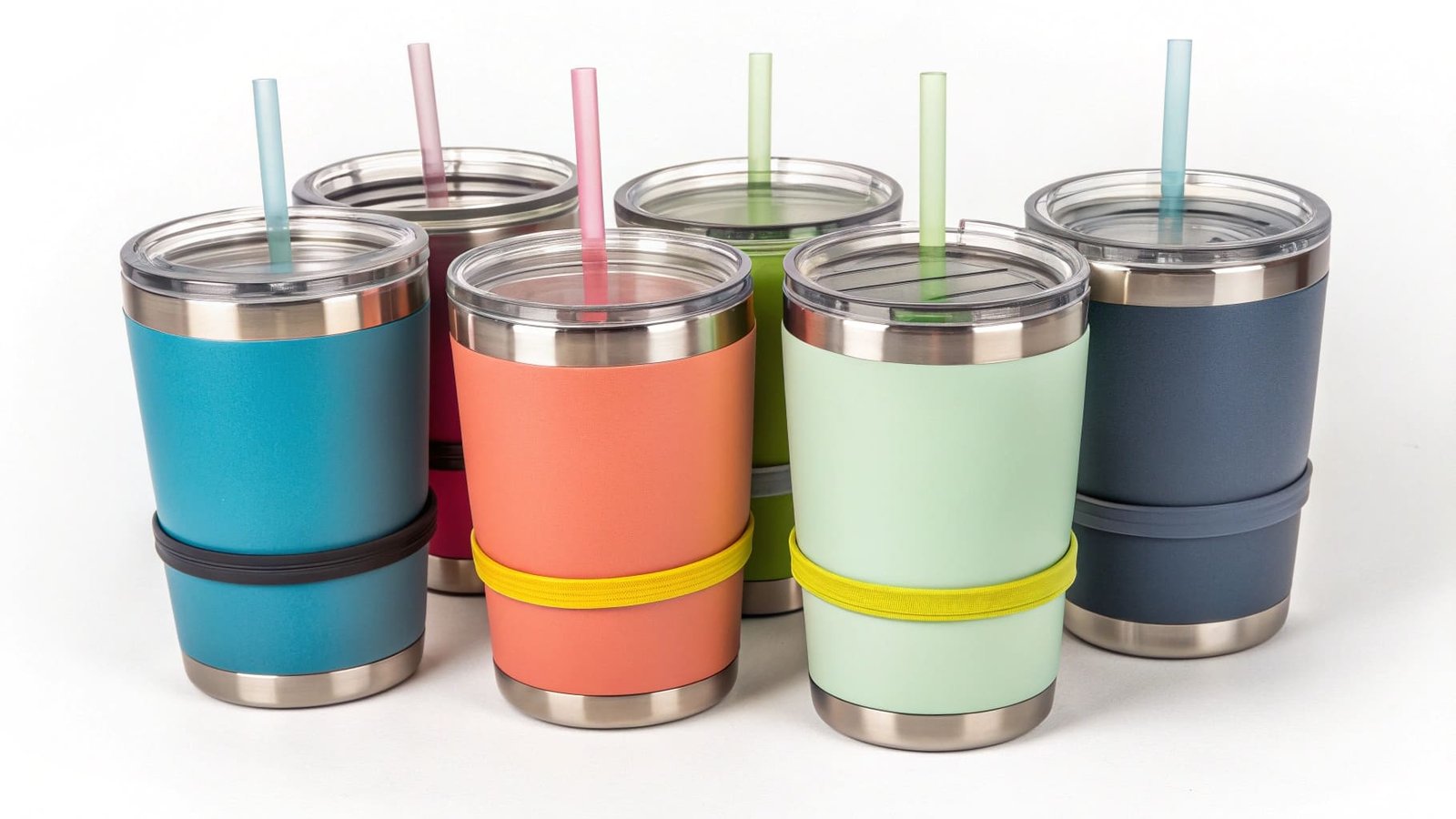
Why Rejuvenation Rarely Works at Scale
I understand the appeal of rejuvenation. It sounds like a cost-saving move. You clean the seal, apply something to it, and send the product back out. But this thinking does not hold up when you look at the actual cost breakdown.
The molecular structure of silicone and rubber changes over time. Heat, cleaning chemicals, and repeated compression all cause this change. Once a seal takes a compression set, meaning it no longer springs back to its original shape, no oil or conditioner will fix that. The material has changed at a structural level.
Here is what the cost comparison actually looks like for a B2B operation:
| Action | Time Required | Cost per Unit | Effectiveness |
|---|---|---|---|
| Manual cleaning and oiling | 5–10 minutes per seal | Labor-heavy | Short-term only |
| Bulk seal replacement at source | One purchase order | Low per unit | Long-term fix |
| Warranty replacement delay | Days to weeks | High (lost trust) | No improvement |
The labor cost of attempting to restore a single seal often exceeds the unit cost of a replacement seal ordered in bulk. When you are dealing with hundreds or thousands of units, that gap becomes very large very fast.
My recommendation is to keep a standing stock of replacement seals from your silicone supplier. Order them alongside your main product. Treat them as a consumable part of your product line. This removes the need to ever ask whether rejuvenation is worth trying.
Should You Use Silicone on Rubber Seals?
You run out of the right lubricant. Someone on your team grabs a silicone spray. It seems harmless. But that one decision can damage your entire batch of seals.
You should not use silicone lubricant on rubber seals. Silicone compounds cause swelling in certain rubber types.2 This swelling changes the seal dimensions and leads to leaks.3 For OEM manufacturers, this is a material compatibility issue that shows up only after the product reaches the customer.
Understanding Material Compatibility in Mixed Inventories
This is an area where technical knowledge matters, and many buyers do not have it. I have seen this mistake happen even in well-run operations. The person applying the lubricant does not know the seal material type. They use what is available. The damage happens slowly and then all at once.
Here is the basic rule: silicone lubricant belongs on silicone seals only. Rubber seals need a different approach. The safest option across mixed material inventories is food-grade mineral oil or a specialized seal conditioner that is tested for broad elastomer compatibility.
| Seal Material | Safe Lubricant | Unsafe Lubricant |
|---|---|---|
| Silicone | Silicone-based lubricant | Petroleum-based oil |
| EPDM Rubber | Food-grade mineral oil | Silicone spray |
| Nitrile Rubber | Compatible seal conditioner | Silicone lubricant |
| Neoprene | Glycerin-based solution | Strong solvents |
When you source replacement seals, ask your supplier to confirm the base material. Get this in writing. This one step removes all guesswork about which lubricant or conditioner to use. It also gives you documentation if a customer ever questions the material choice.
For OEM manufacturers who rebrand and distribute, this documentation has another value. It supports your quality claims to your own customers. If your brand promise is built on quality, you need to be able to back it up with real material data. A supplier who cannot give you that data is a risk to your brand.
What Can You Use to Seal a Rubber?
Your production run shows a small leak. You wonder if a sealant or coating will fix it. You apply something and hope for the best. This is where most manufacturers lose time and money.
The most effective way to seal a rubber component is through proper seal design, not post-production treatments. Contact surface finish, groove depth, and compression percentage control seal performance.4 These factors matter more than any coating or sealant applied after the fact.
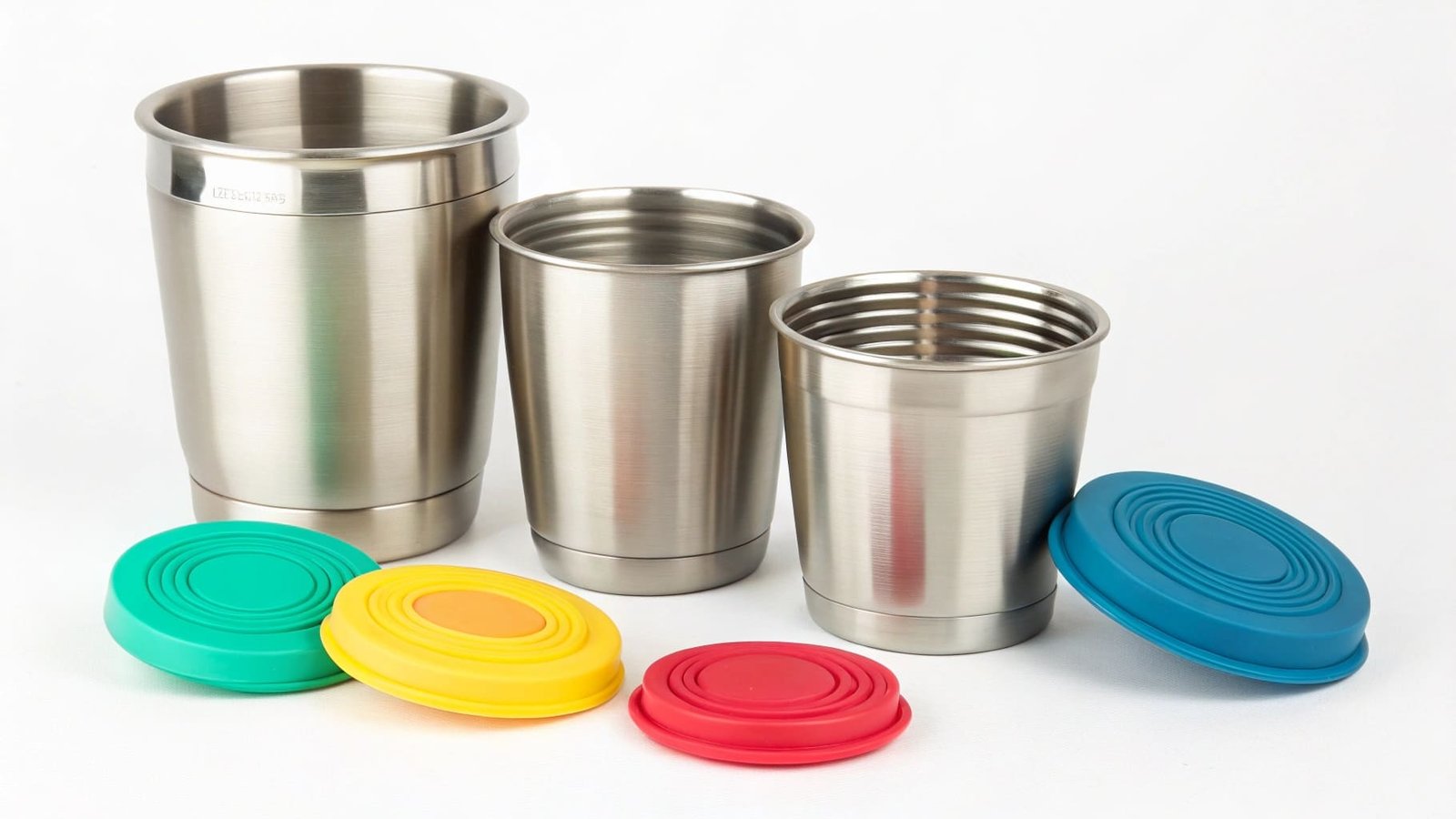
How Seal Design Determines Performance
I want to be direct about something. Most leakage problems I have seen in 16oz tumblers come from dimensional tolerances, not from seal material failure. The seal itself is fine. The groove it sits in is not cut to the right depth. Or the contact surface has a finish that is too rough or too smooth. These are design and manufacturing issues.
Here is a breakdown of the key design factors that determine whether a rubber or silicone seal performs well:
| Design Factor | What It Controls | Common Error |
|---|---|---|
| Groove depth | Compression percentage | Too shallow, seal does not compress enough |
| Contact surface finish | How well the seal grips the surface | Too rough, creates micro-leak paths |
| Compression percentage | Sealing force over time | Too high, accelerates compression set |
| Shore A hardness | Stiffness and flexibility balance | Wrong hardness for the application |
The compression percentage is worth focusing on. For most tumbler seal applications, a compression rate between 15% and 25% is standard5. Below that, the seal does not press hard enough against the surface. Above that, the seal wears out faster and takes a compression set earlier.6
When I work with buyers who are having leakage issues, I always ask them to send me the groove dimensions before I recommend a seal. This is because a seal that looks identical to the original may perform differently if the hardness or compression percentage is slightly off. Precision here is not optional. It is the whole point.
If you are sourcing replacement seals and your current supplier cannot discuss Shore A hardness or compression ratios, that is a sign you need a different supplier. A specialized silicone gasket manufacturer will ask you these questions first. That is how you know you are talking to the right person.
Conclusion
Source replacement seals from specialized silicone suppliers. Prioritize material certification, hardness matching, and groove compatibility. These three factors decide whether your product holds up.
-
"Cyclic Compression Testing of Three Elastomer Types—A ... - PMC", https://pmc.ncbi.nlm.nih.gov/articles/PMC9002981/. Studies of elastomer aging and compression set show that sustained compressive strain and elevated temperature can produce permanent deformation and loss of elastic recovery in rubber and silicone materials. Evidence role: mechanism; source type: paper. Supports: Elastomers can undergo permanent deformation and reduced elastic recovery after sustained compression and thermal aging.. Scope note: The evidence supports the mechanism generally; the exact recovery behavior depends on polymer formulation, temperature, duration, and seal geometry. ↩
-
"Rubber & elastomer lubrication - MOLYKOTE - DuPont", https://www.dupont.com/molykote/rubber-elastomer-lubrication.html. Elastomer compatibility research shows that absorption of incompatible oils or solvents can cause swelling, dimensional change, and altered mechanical behavior in rubber materials. Evidence role: mechanism; source type: research. Supports: Elastomer swelling can occur when a rubber absorbs an incompatible liquid, changing dimensions and mechanical properties.. Scope note: This supports the general compatibility mechanism; compatibility with silicone-based lubricants varies by elastomer formulation and lubricant composition. ↩
-
"[PDF] Elastomer O-Ring Seal Swell Measurements for Sustainable ...", https://ecommons.udayton.edu/cgi/viewcontent.cgi?article=1380&context=uhp_theses. Seal-design literature treats chemical swelling as a compatibility problem because dimensional growth and changes in hardness can disturb gland fit and contact stress, conditions associated with leakage. Evidence role: mechanism; source type: research. Supports: Swelling-induced dimensional changes can reduce the designed fit and contact stress of elastomer seals, increasing leakage risk.. Scope note: This supports the engineering mechanism; actual leakage depends on seal geometry, compression, fluid, and operating conditions. ↩
-
"Vacuum Seals Design Criteria - NASA's Lessons Learned database", https://llis.nasa.gov/lesson/674. Technical seal-design guidance identifies gland dimensions, seal squeeze, and mating-surface finish as variables that affect contact stress and leakage behavior in elastomeric seals. Evidence role: mechanism; source type: government. Supports: Elastomer seals depend on controlled gland dimensions, squeeze or compression, and mating-surface finish to maintain sealing contact.. Scope note: This provides general seal-design support and may not specify dimensions for 16oz tumbler lids. ↩
-
"Vacuum Seals Design Criteria - NASA's Lessons Learned database", https://llis.nasa.gov/lesson/674. Seal-design handbooks commonly specify elastomer squeeze ranges for static seals in the approximate 15% to 25% range, reflecting the need to create contact stress without excessive deformation. Evidence role: expert_consensus; source type: government. Supports: Many static elastomer seal designs use squeeze or compression ranges in the approximate 15% to 25% range, depending on material and application.. Scope note: This is contextual support for a common design range; the appropriate compression for a tumbler seal depends on material hardness, geometry, tolerances, and service conditions. ↩
-
"Compression Set in Elastomers | Canyon Components", https://www.canyoncomponents.com/post/compression-set-in-elastomers-how-it-happens-and-how-to-prevent-it. Elastomer seal research and design guidance associate excessive squeeze with increased stress, deformation, friction, and compression set, all of which can shorten seal service life. Evidence role: mechanism; source type: research. Supports: Higher compressive strain can increase stress and permanent deformation risk in elastomer seals.. Scope note: The relationship is material- and application-dependent; a source may support the mechanism without proving the exact failure rate for tumbler seals. ↩