How to Choose Water Bottle O-Rings for Food-Grade Manufacturing Standards?
Choosing the wrong O-ring material can get your product pulled from shelves. It can destroy your brand overnight. This guide shows you exactly what to look for.
Food-grade O-rings for water bottles must be made from FDA-approved materials such as silicone, EPDM, or food-grade Viton.1 These materials must pass migration tests and carry certifications like FDA CFR 21, NSF, or LFGB.2 Always request material safety data sheets and batch traceability documents from your supplier before placing any order.
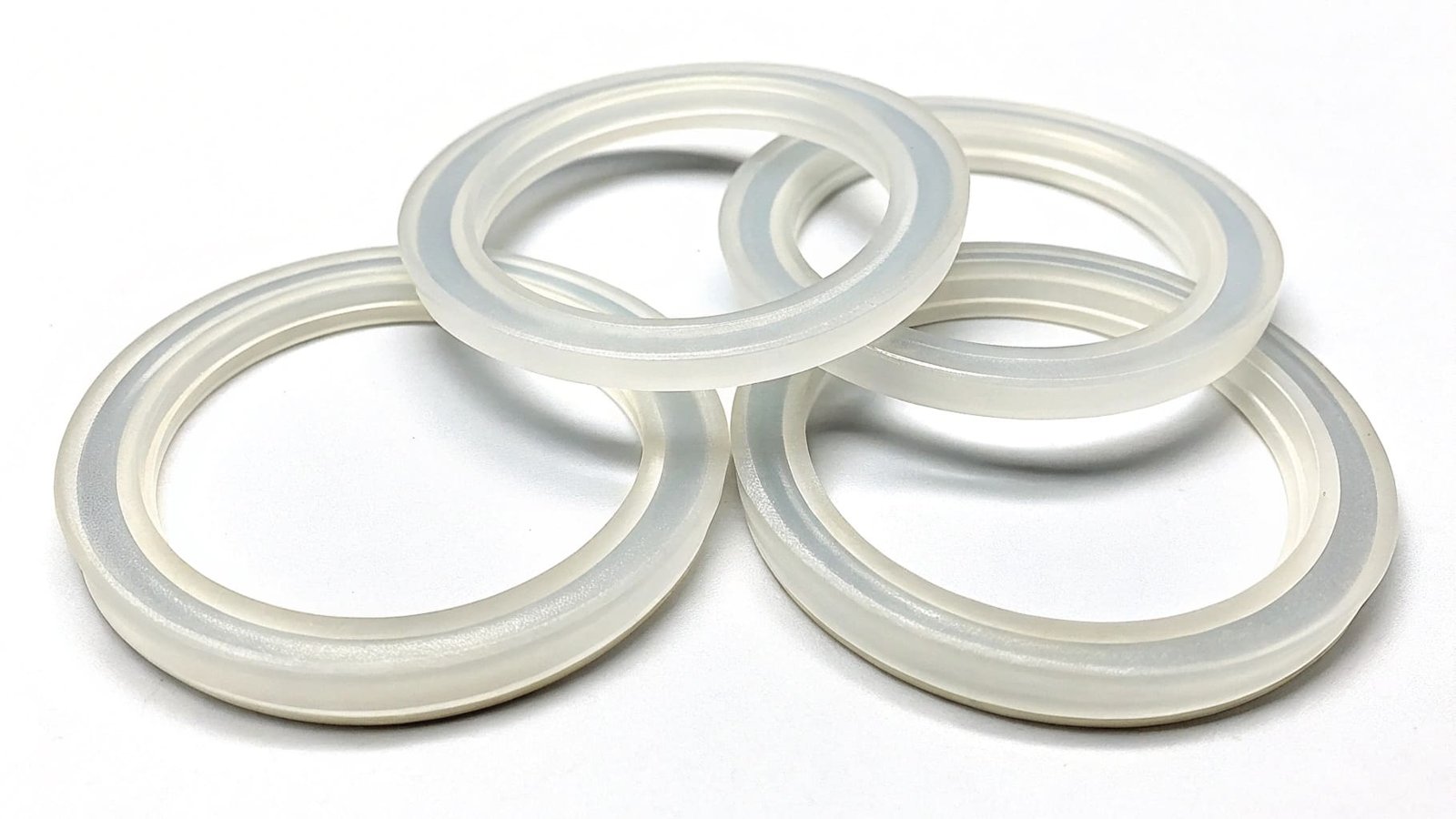
I have spent years working with buyers who source silicone sealing products for water bottles. Most of them make the same mistake early on. They assume that any rubber O-ring will do the job as long as it looks right and fits the dimension. That assumption costs them money, time, and sometimes their entire product line. The truth is that food-grade compliance is a layered process. It starts with material selection, runs through certification, and ends with documentation. If you skip any step, you are taking a risk that no business should take. Let me walk you through each part so you can make a confident, informed decision.
What O-Ring Material Is Food Grade?
Not all rubber is created equal. Picking the wrong one for a water bottle can cause taste contamination, health risks, and failed audits. Here is what actually works.
The most accepted food-grade O-ring materials for water bottles are FDA-approved silicone, EPDM rubber, and food-grade Viton (FKM). Silicone is the most widely used because it is taste-neutral, temperature-resistant, and accepted under both FDA CFR 21.177.2600 and European LFGB standards. EPDM is a cost-effective alternative for cold-water applications.
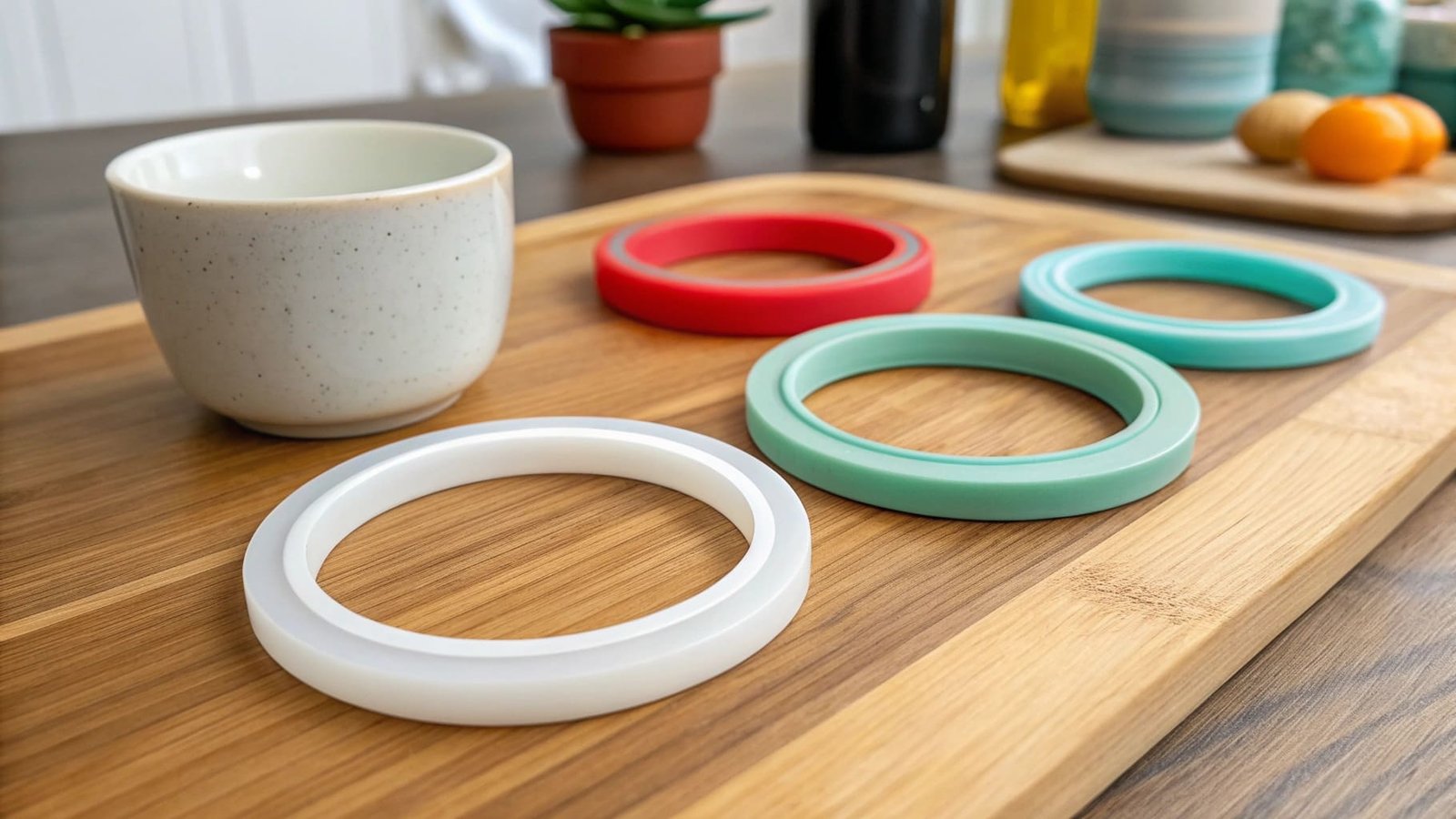
Silicone is the top choice for most water bottle applications. It does not absorb odors. It does not transfer any taste to the liquid inside. It handles a wide temperature range, from freezing cold to boiling hot, without breaking down. These properties make it a natural fit for consumer-facing products that go through daily use and repeated washing.
EPDM rubber is a solid second option. It is less expensive than silicone and performs well in water-based environments. However, it does not hold up as well in high-temperature settings, so it is better suited for cold or room-temperature water bottles rather than thermal or hot-fill containers.
Food-grade Viton is a different category. I will cover it in more detail in the next section. For now, understand that it is not the first material most buyers should reach for when sourcing O-rings for consumer water bottles.
The table below gives you a quick side-by-side comparison to help you match the right material to your product needs.
| Material | Temperature Range | Taste Neutral | Cost Level | Best Use Case |
|---|---|---|---|---|
| Silicone (FDA) | -60°C to 200°C | Yes | Medium | All water bottle types |
| EPDM | -40°C to 120°C | Yes | Low | Cold or ambient water bottles |
| Viton (FKM) | -20°C to 200°C | Conditional | High | Specialized or industrial use |
One more point worth noting here. The term "food-grade" does not mean the same thing in every market. The FDA standard applies to the United States market. LFGB applies to Germany and is often used as a benchmark across Europe. NSF/ANSI 61 is common in North American plumbing and drinking water systems.3 If you sell across multiple regions, you need to confirm which standard applies to each target market before you finalize your material spec.
Is Viton O-Ring Food Safe?
Viton sounds impressive on a spec sheet. But is it actually safe for a product that people drink from every day? The answer is more complicated than most suppliers will tell you.
Viton (FKM) can be food safe, but only in specific, FDA-compliant formulations. Standard Viton grades are not automatically cleared for direct food contact. You must request documentation confirming that the specific compound used meets FDA 21 CFR 177.2600. Without that document, you cannot assume it is safe.
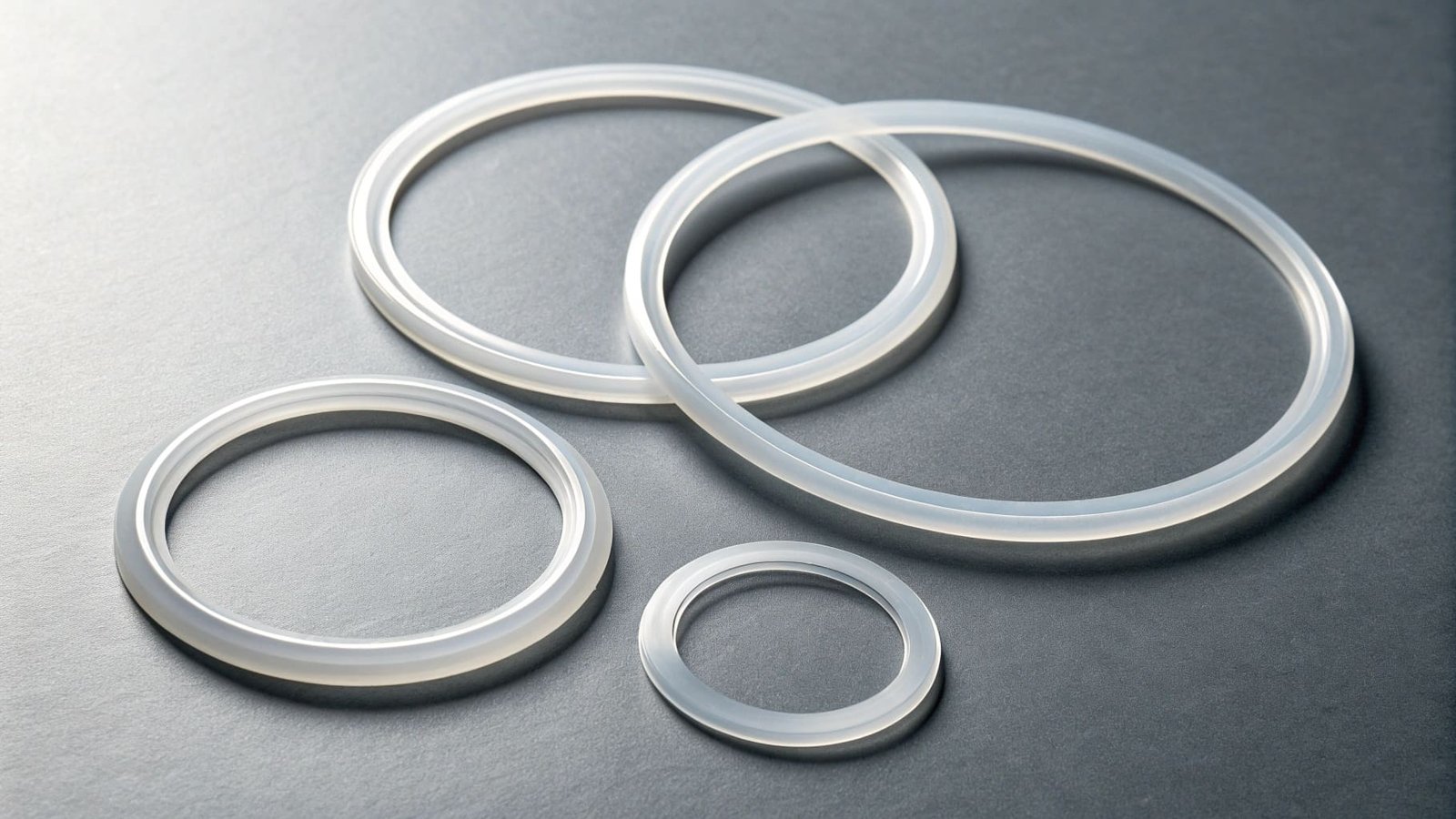
Here is what most buyers do not know. Viton is a brand name for a family of fluoropolymer elastomers made by Chemours. There are multiple grades within that family. Some are formulated for food contact. Many are not. The grade used in industrial chemical processing equipment is not the same as the grade used in a consumer water bottle. When a supplier tells you their Viton O-ring is food safe, your next question should always be: which grade, and can you show me the FDA compliance document for that specific compound?
The reason Viton is used in some food applications comes down to its chemical resistance. It handles aggressive cleaning agents, oils, and high-temperature steam better than silicone or EPDM.4 That makes it valuable in industrial food processing equipment such as pumps, valves, and pipeline seals. These are environments where the O-ring faces harsh chemicals or extreme pressures.
For a water bottle, that level of chemical resistance is usually not needed. The operating conditions are mild. The contact liquid is water or at most a flavored beverage. Using Viton in this context adds cost without adding meaningful benefit. The table below breaks down where Viton makes sense versus where it does not.
| Application | Viton Recommended? | Reason |
|---|---|---|
| Consumer water bottle | No (unless required) | Higher cost, silicone performs equally well |
| Thermal flask with acidic drinks | Possibly | Better chemical resistance at high temps |
| Industrial food processing equipment | Yes | Withstands aggressive cleaning agents |
| Reusable sports bottle | No | Silicone covers all performance needs |
My recommendation for B2B buyers sourcing O-rings for water bottles is this. Default to FDA-compliant silicone. Only consider Viton if your product has a specific performance requirement that silicone cannot meet. If your customer or product specification calls for Viton, demand the exact compound name, the FDA compliance certificate, and the migration test results before you approve any sample.
How to Identify Food Grade Rubber?
A supplier can print anything on a certificate. Knowing how to verify what you are actually buying protects your business and your customers.
To identify food-grade rubber, request the material safety data sheet, the certificate of compliance from a recognized body such as NSF or TÜV, and migration test results. Also ask for batch traceability documents that link the specific production lot to its certified raw materials5. Visual inspection alone is never enough.
I have spoken with buyers who were burned by certificate fraud. A supplier presented a clean-looking FDA certificate, the buyer approved the order, and the product failed an independent lab test six months later. The certificate was real, but it belonged to a different material compound than what was actually used in production. This is not a rare situation. It happens more often than people admit.
The way to protect yourself is to build a multi-layer verification process. Do not rely on a single document. Instead, look at the full chain of evidence.
Here is how I recommend approaching it.
Step one: Request the material safety data sheet (MSDS or SDS). This document tells you exactly what the material is made of. It lists all chemical components. If a supplier refuses to provide this, walk away.
Step two: Ask for the certification document. The certificate should name the specific standard it complies with, such as FDA 21 CFR 177.2600, NSF 51, or LFGB. It should also name the certifying body, the material compound, and the date of issue. Check that the certificate has not expired.
Step three: Verify the certifying body. NSF, TÜV, SGS, and Intertek are all recognized. If you see a certificate from a body you do not recognize, search for it independently before trusting it.
Step four: Request migration test results. Migration testing checks whether harmful substances pass from the rubber into the liquid it contacts.6 This is the most direct proof of food safety. A legitimate food-grade supplier will have these results on file.
Step five: Ask for batch traceability. This links the specific production batch to its raw material records. If a supplier uses certified raw materials consistently, they should be able to show you this documentation for every order.
The table below summarizes what to ask for and what each document tells you.
| Document | What It Confirms |
|---|---|
| Material Safety Data Sheet | Chemical composition of the material |
| Certificate of Compliance | Which standard the material meets and who certified it |
| Migration Test Results | Whether harmful substances leach into food or beverages |
| Batch Traceability Record | That the certified material was actually used in your order |
One practical habit I suggest to every serious buyer is this. Send your first production sample to an independent third-party lab for testing before you approve mass production. The cost of a lab test is small compared to the cost of a product recall or a rejected shipment. It also sends a clear signal to your supplier that you have standards and you verify them.
Conclusion
Food-grade O-ring selection comes down to three things: the right material, verified certifications, and documented traceability. Silicone leads for water bottles. Always verify before you trust.
-
"21 CFR 177.2600 -- Rubber articles intended for repeated use. - eCFR", https://www.ecfr.gov/current/title-21/chapter-I/subchapter-B/part-177/subpart-C/section-177.2600. FDA regulations for rubber articles intended for repeated food contact establish composition and extractive limits for compliant rubber formulations, supporting the need to select food-contact-approved elastomer compounds rather than relying on a generic material name. Evidence role: general_support; source type: government. Supports: FDA regulations cover rubber articles intended for repeated food contact and define composition and extractive requirements relevant to elastomer O-rings.. Scope note: The regulation supports formulation-level compliance; it does not certify that any particular supplier’s silicone, EPDM, or FKM O-ring is compliant. ↩
-
"Food Packaging & Other Substances that Come in Contact with Food", https://www.fda.gov/food/food-ingredients-packaging/food-packaging-other-substances-come-contact-food-information-consumers. Food-contact material frameworks, including EU migration rules and U.S. extractives requirements for repeated-use rubber articles, use testing and compliance documentation to assess substance transfer from materials into food or water. Evidence role: expert_consensus; source type: institution. Supports: Recognized food-contact frameworks use migration, extractives, or material-compliance testing to assess whether substances transfer from materials into food or drinking water.. Scope note: The exact tests and certificates required vary by market, application, and material formulation. ↩
-
"Inventory of Food Contact Substances Listed in 21 CFR - FDA", https://www.fda.gov/food/packaging-food-contact-substances-fcs/inventory-food-contact-substances-listed-21-cfr. Regulatory and standards sources distinguish U.S. FDA food-contact provisions, Germany’s LFGB food and consumer-goods framework, and NSF/ANSI 61 for drinking-water system components, supporting the article’s distinction among these compliance routes. Evidence role: historical_context; source type: institution. Supports: FDA food-contact rules, German LFGB-related requirements, and NSF/ANSI 61 address different jurisdictions or application categories relevant to food and drinking-water contact materials.. Scope note: This is jurisdictional context; it does not determine which standard is legally required for every water-bottle product or sales channel. ↩
-
"FKM (Viton®) vs EPDM (EPR) for O-Rings and Seals", https://www.marcorubber.com/FKM-vs-EPDM/material-type/10v7. Technical literature on fluoroelastomers describes their high resistance to oils, fuels, many chemicals, and elevated-temperature environments, supporting the article’s explanation of why FKM may be used in harsher food-processing conditions. Evidence role: general_support; source type: paper. Supports: Fluoroelastomers are generally recognized for strong resistance to oils, fuels, many chemicals, and elevated-temperature environments relative to several common elastomers.. Scope note: Chemical resistance is highly dependent on the exact chemical, concentration, temperature, exposure time, and elastomer formulation. ↩
-
"Traceability Lot Code - FDA", https://www.fda.gov/food/food-safety-modernization-act-fsma/traceability-lot-code. Food-contact material regulations, such as the EU framework regulation on materials intended to contact food, require traceability through production and distribution stages, supporting the use of batch records to connect finished parts with their source materials. Evidence role: general_support; source type: government. Supports: Food-contact material regulations require or encourage traceability through production and distribution so products can be linked to responsible materials and batches.. Scope note: Traceability requirements differ by jurisdiction and may not prescribe the exact document format described in the article. ↩
-
"Food Packaging & Other Substances that Come in Contact with Food", https://www.fda.gov/food/food-ingredients-packaging/food-packaging-other-substances-come-contact-food-information-consumers. Food-contact material guidance defines migration testing as the measurement of substances transferred from a material into food or food simulants, supporting the article’s description of testing for leaching into contacted liquids. Evidence role: definition; source type: government. Supports: Migration testing measures whether and how much material constituents transfer into food or food simulants under defined conditions.. ↩