Can Silicone O-Rings for Slokky Bottles Work with Other OEM Bottle Lines?
You source O-rings for one bottle brand, then another client asks if they fit his line too. A small question that can cost you a big contract.
Silicone O-rings for Slokky bottles can work with other OEM bottle lines, but only when the inner diameter, cross-sectional thickness, and compression ratio match. A difference of even 0.5mm can cause leaks or early wear.1 Always verify exact measurements before assuming compatibility across brands.
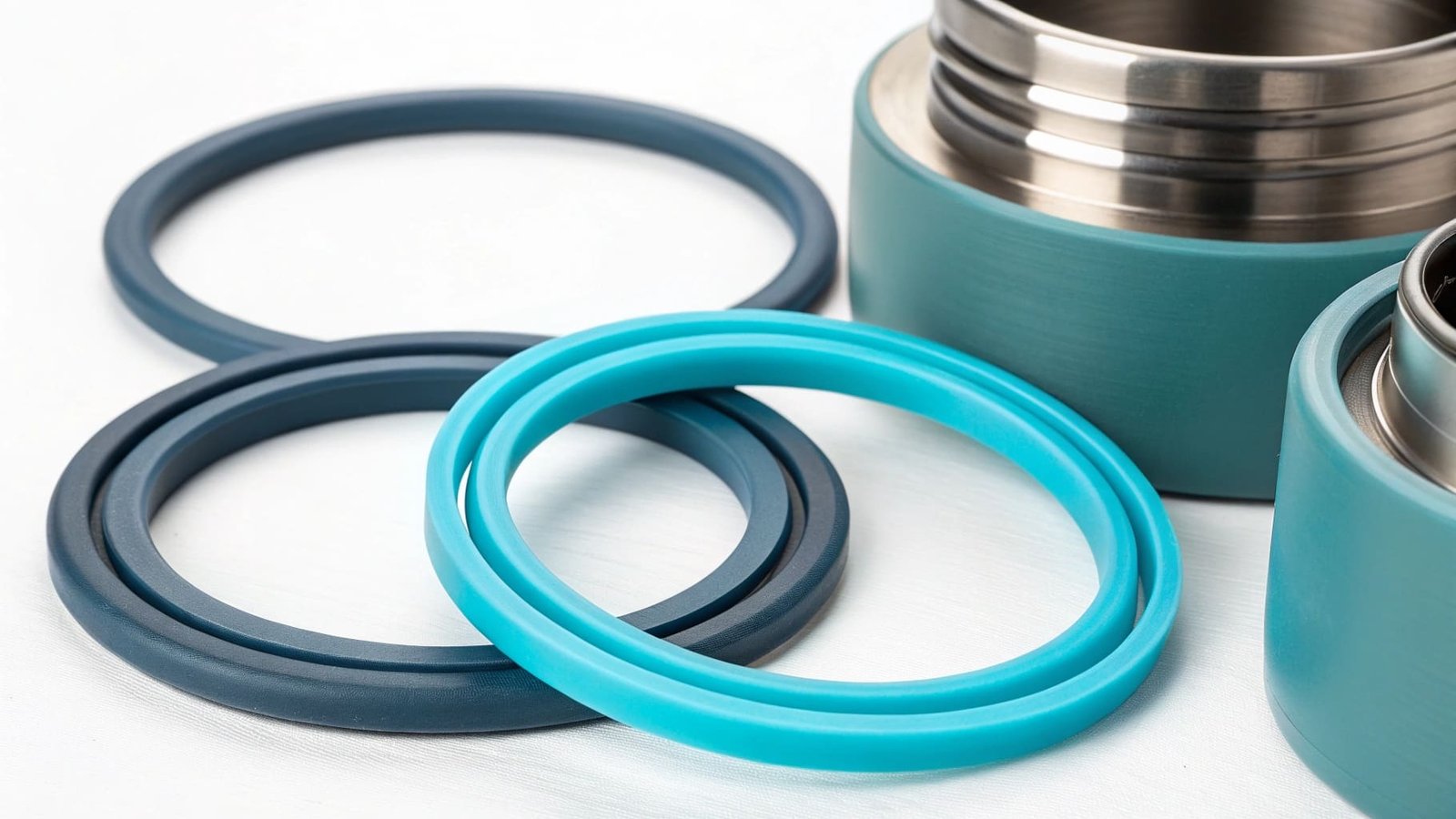
Cross-brand O-ring use sounds like a smart shortcut. But the gap between "it looks like it fits" and "it actually seals" is where most sourcing mistakes happen. Understanding what drives compatibility—and what causes failure—will help you make better decisions for every bottle line you carry.
Can Silicone O-Rings Designed for One Bottle Brand Fit Another?
You assume two bottles look the same, so the O-rings should be interchangeable. Then your client reports leaks. Now you have a return problem and a trust problem.
Many reusable bottle brands follow similar size standards, but each OEM adjusts groove depth, inner diameter, and cross-section for their specific cap and thread design2. These small differences affect how the O-ring compresses and seals. Verify three measurements before assuming fit: inner diameter, cross-sectional thickness, and compression ratio.
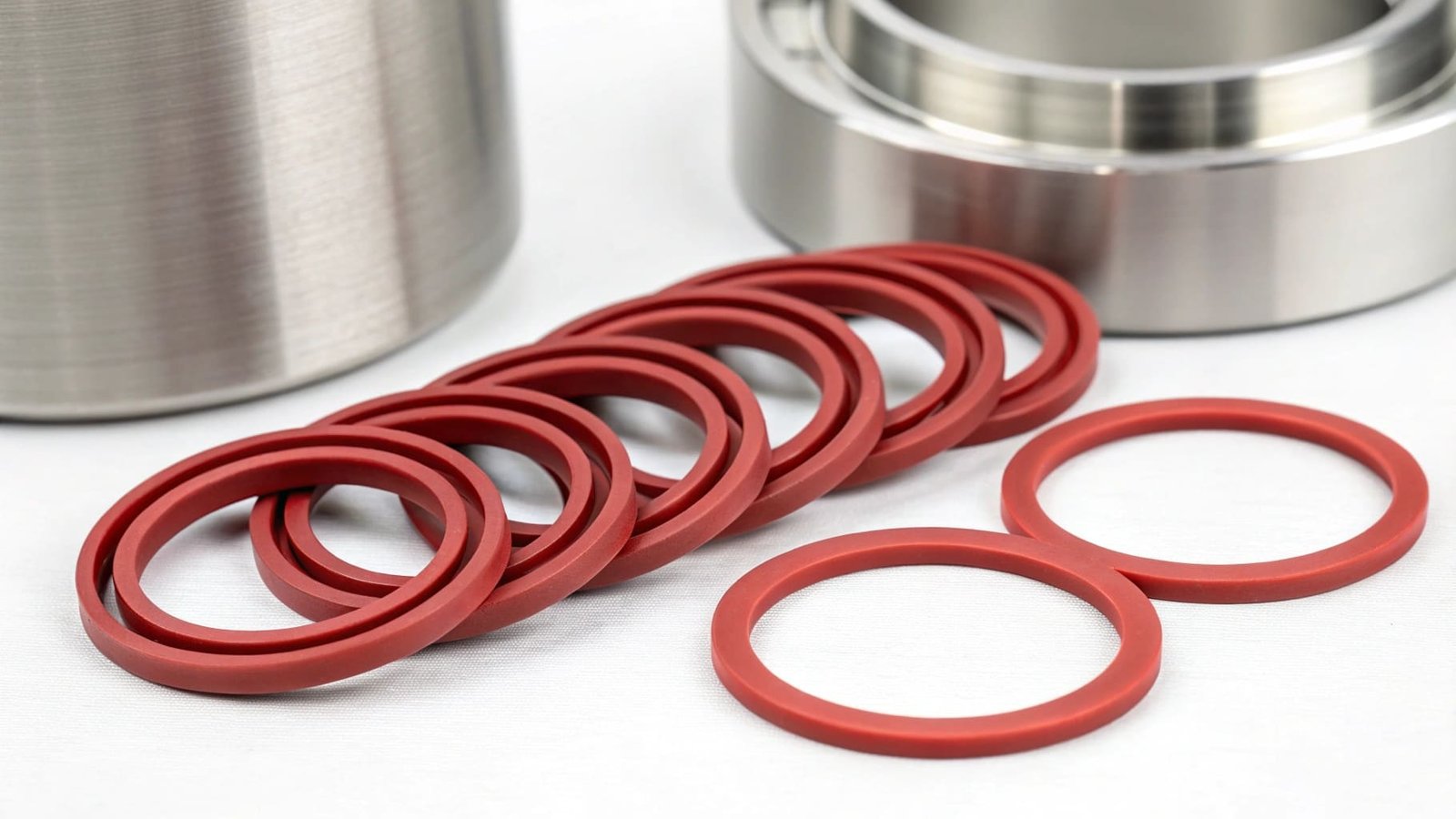
Why Small Dimensional Differences Matter More Than You Think
Most procurement officers I speak with focus on material and price. Dimensional tolerances rarely come up until something goes wrong. But this is exactly where cross-brand compatibility fails.
Each OEM designs their O-ring groove around their own cap mechanism and thread pattern. The groove depth controls how much the O-ring gets compressed when the cap closes.3 The inner diameter determines whether the O-ring sits flat or shifts under pressure. The cross-section thickness affects how much material fills the groove.
Here is a quick breakdown of the three measurements you must verify:
| Measurement | What It Controls | Risk If Wrong |
|---|---|---|
| Inner Diameter | Whether the O-ring seats correctly | Shifting, poor seal contact |
| Cross-Section Thickness | Compression level inside the groove | Over- or under-compression |
| Compression Ratio | Sealing force applied to the cap surface | Leakage or premature deformation |
A 0.5mm error in any of these can produce leaks or shorten the O-ring's lifespan. For brands managing multiple OEM bottle lines, the safest approach is to work with a manufacturer who can produce custom-sized O-rings based on actual measurements from each bottle design. This removes guesswork and gives you a documented spec sheet for every line you carry. I have seen clients save significant rework costs simply by requesting sample O-rings from their supplier before placing a full order, testing compression on the actual bottle cap before committing to volume.
What Is the Best Material for O-Rings Exposed to Hydraulic Fluid?
Your client works in an industrial setting. He asks if the silicone O-rings you supply will hold up near hydraulic equipment. The wrong answer here creates a liability problem.
For petroleum-based hydraulic fluids, silicone is not the best choice. Nitrile (NBR) and Fluorocarbon (FKM/Viton) handle petroleum-based oils and high-pressure environments far better.4 For water-based or synthetic hydraulic fluids, food-grade silicone can perform adequately due to its temperature stability and flexibility.5
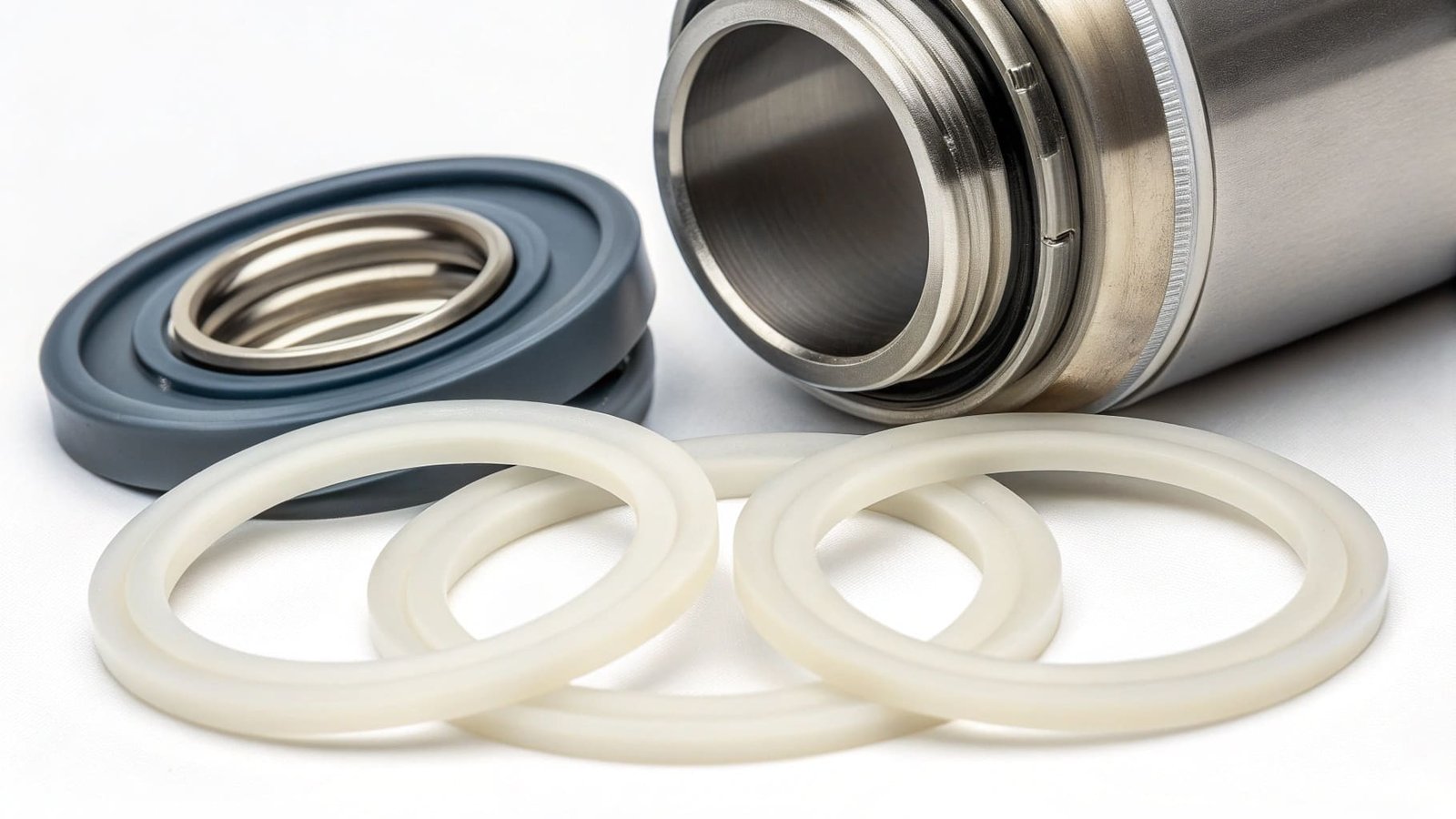
How to Match O-Ring Material to the Actual Fluid Type
The phrase "hydraulic fluid" covers many different chemical formulations. This is where a lot of buyers get confused. They hear "hydraulic fluid" and immediately disqualify silicone without checking what fluid type is actually involved.
Here is a practical material guide based on fluid type:
| Fluid Type | Recommended O-Ring Material | Can Silicone Be Used? |
|---|---|---|
| Petroleum-based hydraulic oil | NBR or FKM/Viton | No |
| Water-based hydraulic fluid | Silicone or EPDM | Yes |
| Synthetic ester-based fluid | FKM/Viton | Sometimes, test first |
| Phosphate ester fluid | FFKM or EPDM | No |
For bottle applications specifically, the O-ring on the cap or lid seals the beverage inside the bottle. That seal never contacts the hydraulic system directly. So food-grade silicone remains the right material for the bottle seal itself. But if the bottles are used in an industrial facility where the filling equipment or conveyor systems use hydraulic fluid, those machines require their own separate NBR or FKM seals in the relevant components.
The practical rule is this: match the material to the fluid the O-ring will actually contact, not just the environment around it. Operating temperature range matters too. Silicone performs well between -60°C and +200°C, which covers most industrial ambient conditions even if the seal itself only contacts water or a beverage.
What O-Rings Are the Most Chemical Resistant?
Your client wants to expand into bottles for laboratory or industrial use. He asks which O-ring material will survive the widest range of chemicals. This is a fair question that deserves a clear, ranked answer.
Perfluoroelastomer (FFKM) and Fluorosilicone top the chemical resistance rankings.6 Standard food-grade silicone sits in the middle tier, offering strong resistance to water, mild acids, alcohols, and cleaning agents. Its main weakness is resistance to hydrocarbons such as oils, gasoline, and strong solvents.7
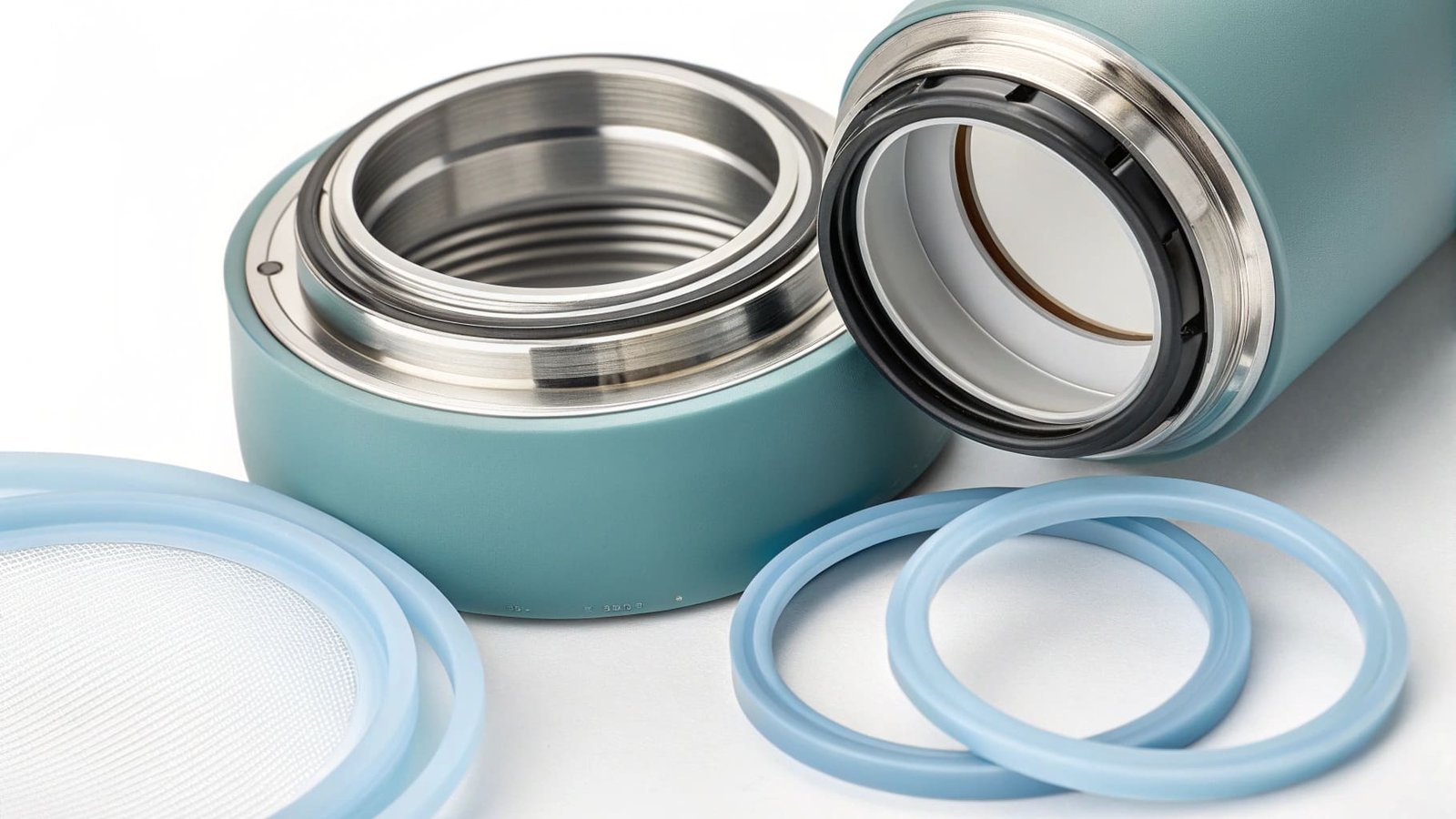
A Practical Chemical Resistance Ranking for O-Ring Buyers
Chemical resistance follows the structure of the polymer itself. The more fluorine atoms in the polymer chain, the higher the resistance to aggressive chemicals. This is why FFKM sits at the top of the chart and standard silicone sits in the middle.
| Material | Best For | Weak Against |
|---|---|---|
| FFKM (Perfluoroelastomer) | Strong acids, aggressive solvents, most chemicals | Cost, availability |
| FKM/Viton | Petroleum oils, fuels, hydraulic fluids | Low-temperature flexibility |
| Fluorosilicone | Fuels, oils, moderate chemicals | High-pressure environments |
| Food-Grade Silicone | Water, mild acids, alcohols, cleaning agents | Hydrocarbons, strong solvents |
| NBR (Nitrile) | Petroleum oils, water | Ozone, UV, weathering |
For everyday beverage bottles, sports drink containers, and water bottles, food-grade silicone offers more than enough chemical resistance. It also meets FDA and LFGB compliance requirements, which matter for clients distributing in North America and Europe.
For brands moving into specialized product lines—laboratory use, industrial workers' bottles, or chemical storage containers—a fluorosilicone upgrade is worth considering. The cost per unit is higher, but the liability risk of using an inadequate material in a regulated environment is far greater.
One point I always raise with buyers: generic chemical resistance charts are a starting point, not a final answer. Temperature, chemical concentration, and how long the O-ring stays in contact with the substance all affect real-world performance. Request material-specific testing data from your supplier and, where possible, run your own compatibility test with the actual liquid your bottle will contain.
What Is the Most Common O-Ring Failure in Bottle Applications?
Your client reports that the bottle seals are failing after a few months of use. The O-rings look intact but the bottles leak. Understanding the failure mode tells you exactly what to fix.
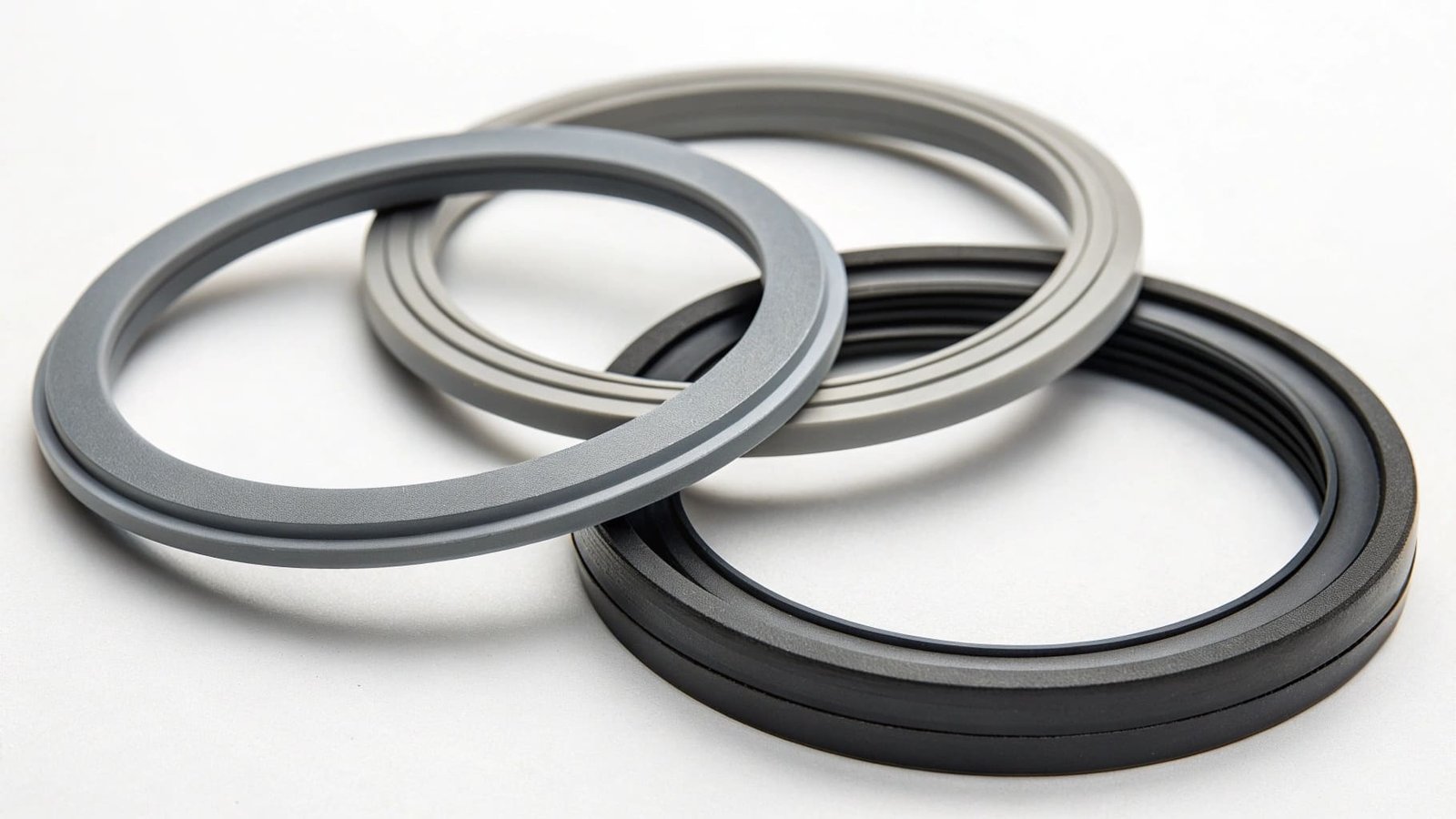
The most common O-ring failure in bottle applications is compression set.8 This is when the O-ring permanently deforms after extended compression and can no longer return to its original shape. The result is a seal that looks fine but no longer creates enough pressure to stop leaks.
The Three Main Failure Modes and How to Prevent Each One
Compression set is the leading failure mode, but it is not the only one. Knowing all three helps you identify the right fix faster.
| Failure Mode | What Causes It | How to Prevent It |
|---|---|---|
| Compression Set | Prolonged sealing, overtightened caps | Use 40–60 Shore A hardness silicone, verify groove dimensions |
| Extrusion | Temperature cycling, pressure changes | Correct groove tolerances, adequate O-ring hardness |
| Chemical Degradation | Incompatible liquids, cleaning agents | Match material to actual contents, conduct compatibility testing |
Compression set is especially common in reusable bottles because consumers often leave the cap tightly closed between uses for days or weeks at a time. This keeps the O-ring under constant compression, which slowly prevents it from bouncing back.
The material hardness rating matters here. O-rings in the 40–60 Shore A range offer the right balance between flexibility and resistance to permanent deformation for bottle seal applications. Too soft, and the O-ring deforms easily. Too hard, and it does not compress enough to create a reliable seal.
Ask your supplier for compression set testing data before placing a bulk order. A reliable O-ring for consumer bottle use should maintain seal integrity through at least 500 compression cycles. That number roughly equals two years of typical daily use. If a supplier cannot provide this data, treat that as a red flag. Certification documents are one thing—test data is what tells you how the product will actually perform in the hands of your client's end users.
Conclusion
O-ring compatibility depends on exact dimensions, material match, and failure resistance. Get those three things right, and your bottle seals will hold across every product line you supply.
-
"[PDF] //v-p "7 - NASA Technical Reports Server", https://ntrs.nasa.gov/api/citations/19930013368/downloads/19930013368.pdf. O-ring dimensional standards and seal-design guidance specify tolerances at submillimeter scales and explain that incorrect squeeze or gland fill can cause leakage or seal damage; this contextualizes the 0.5 mm warning, but does not establish a universal 0.5 mm failure threshold for all bottle caps. Evidence role: general_support; source type: institution. Supports: Small dimensional errors in O-ring or gland dimensions can alter squeeze and lead to leakage, extrusion, or accelerated wear.. Scope note: The evidence would support the engineering plausibility of the warning, not prove that every 0.5 mm mismatch fails in bottle applications. ↩
-
"O-Ring Groove Design | Global O-Ring and Seal", https://www.globaloring.com/o-ring-groove-design/. Mechanical-design references on O-ring glands explain that groove depth, gland width, and O-ring cross-section are selected according to the mating hardware and sealing interface; this supports the article’s statement that cap and thread design can require different O-ring dimensions. Evidence role: mechanism; source type: education. Supports: O-ring groove geometry is designed around the mating parts and closure geometry, so changes in cap or thread design can require different O-ring dimensions.. Scope note: The support is general to O-ring gland design and may not document specific OEM bottle-design practices. ↩
-
"v2 - NASA", https://www.nasa.gov/history/rogersrep/v2appl2c.htm. Elastomeric seal-design guidance defines O-ring squeeze as the reduction in cross-sectional height imposed by the gland, making groove depth a direct determinant of compression in the closed assembly. Evidence role: mechanism; source type: government. Supports: Gland or groove depth affects O-ring squeeze, which is the compression required to form a seal.. ↩
-
"Suitability of Test Procedures for Determining the Compatibility of ...", https://pmc.ncbi.nlm.nih.gov/articles/PMC11435413/. Elastomer-compatibility and hydraulic-seal references identify nitrile rubber and fluorocarbon elastomers as common choices for petroleum-oil service, supporting the article’s comparison with silicone; however, pressure capability is also determined by seal design, extrusion gaps, and operating conditions. Evidence role: expert_consensus; source type: institution. Supports: NBR and FKM are widely used for petroleum oil exposure in hydraulic sealing, while silicone is less compatible with hydrocarbon oils.. Scope note: The evidence supports material suitability for petroleum oils more directly than it supports all high-pressure use cases. ↩
-
"(PDF) Fire-Resistant Hydraulic Fluids - Academia.edu", https://www.academia.edu/8914359/Fire_Resistant_Hydraulic_Fluids. Elastomer-compatibility tables distinguish among water-glycol, synthetic ester, and phosphate ester hydraulic fluids and show that silicone compatibility is formulation-dependent; this supports a qualified version of the article’s claim rather than a blanket statement about all synthetic hydraulic fluids. Evidence role: general_support; source type: institution. Supports: Silicone may be compatible with some aqueous or non-petroleum fluids, but compatibility varies substantially by hydraulic-fluid chemistry.. Scope note: The evidence is likely to qualify or narrow the claim because not all synthetic hydraulic fluids are compatible with silicone. ↩
-
"Rubber Chemical Resistance Chart - Mykin Inc", https://mykin.com/rubber-chemical-resistance-chart. Materials-science and elastomer-compatibility references identify perfluoroelastomers as among the broadest chemical-resistance elastomers and describe fluorosilicone as having improved resistance to fuels and oils compared with standard silicone; this supports the ranking in general terms. Evidence role: expert_consensus; source type: research. Supports: Highly fluorinated elastomers such as FFKM and fluorosilicone generally show broad chemical resistance relative to many non-fluorinated elastomers.. Scope note: The ranking depends on the specific chemical, temperature, concentration, and exposure duration. ↩
-
"[PDF] Chemical Compatibility of the Tubing Materials", https://www.bnl.gov/esh/shsd/pdf/compressed_gas/chem_comp_tubing_material.pdf. Elastomer chemical-resistance references generally rate silicone rubber favorably for water and some mild aqueous media while noting poorer resistance to hydrocarbon oils, fuels, and many organic solvents; this supports the article’s middle-tier characterization. Evidence role: expert_consensus; source type: institution. Supports: Silicone rubber is generally compatible with water and some mild chemicals but is less suitable for many hydrocarbon oils, fuels, and solvents.. Scope note: Food-grade status concerns food-contact formulation and compliance, not necessarily superior chemical resistance. ↩
-
"Analysis of O-Ring Seal Failure under Static Conditions and ... - PMC", https://pmc.ncbi.nlm.nih.gov/articles/PMC6723462/. ASTM compression-set testing and elastomer failure-analysis literature define compression set as permanent deformation after compressive strain and describe its ability to reduce sealing force and cause leakage; this supports the mechanism, though it does not by itself prove that compression set is the most common failure mode in bottle applications. Evidence role: general_support; source type: institution. Supports: Compression set is a recognized elastomer failure mechanism that can reduce sealing force and cause leakage.. Scope note: Application-specific field data would be needed to substantiate the word “most common” for reusable bottles. ↩