How to Select Weather-Resistant Gasket Materials for Outdoor Drinkware Production?
You face production delays when your gasket materials fail after just a few months outdoors. Your customers complain about leaks. Your brand reputation suffers from warranty claims.
Food-grade silicone gaskets certified to FDA and LFGB standards1 offer the best weather resistance for outdoor drinkware. They maintain sealing performance across extreme temperatures, resist UV degradation, and meet potable water safety requirements better than traditional rubber materials.
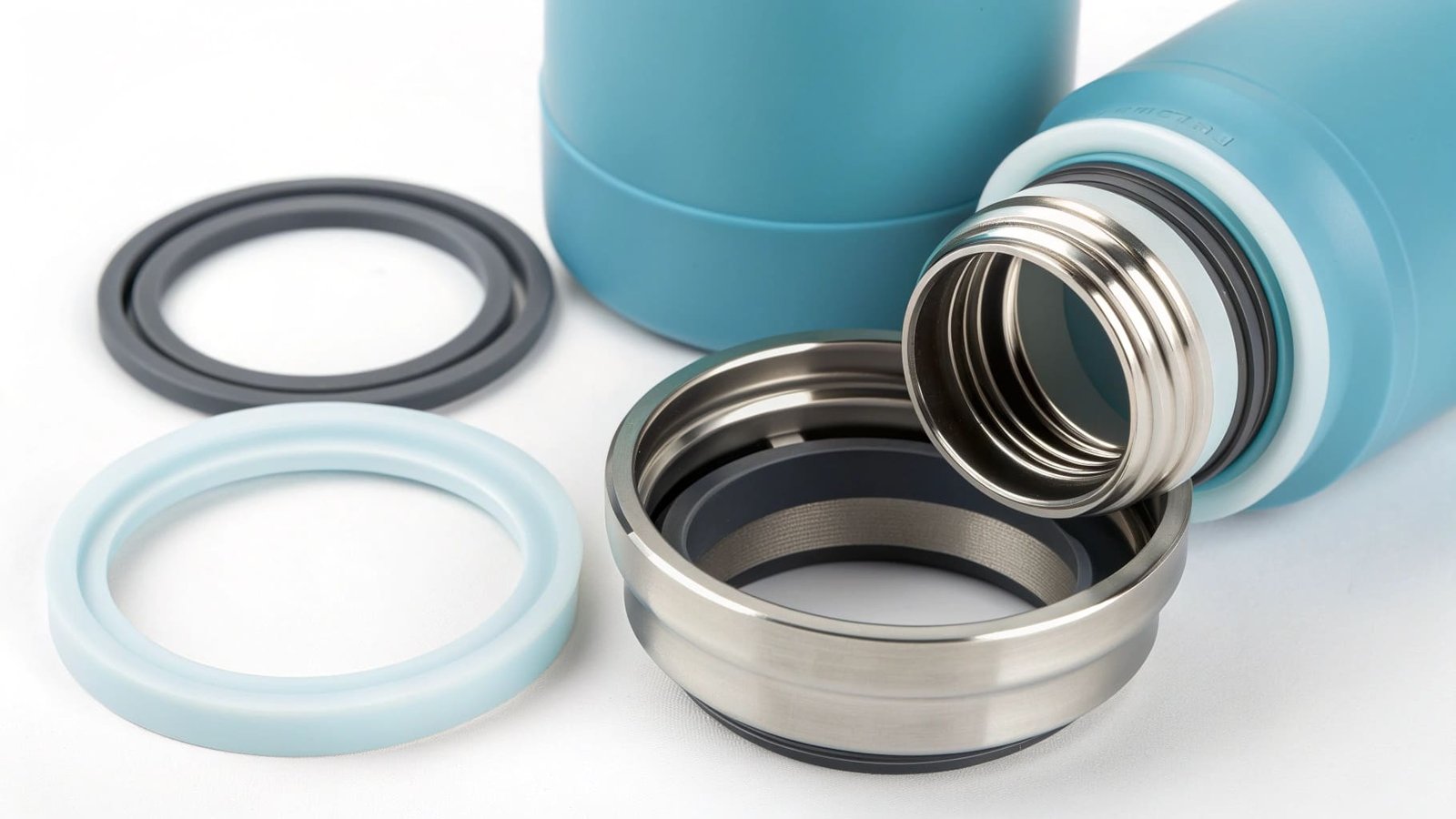
I have seen too many B2B buyers choose gasket materials2 based solely on unit cost. They later face much higher expenses from product returns and lost customer trust. The right material selection protects both your production efficiency and your market position.
What is the best gasket material for potable water?
Your customers drink directly from these products every day. Any contamination from gasket materials creates serious health risks. Generic rubber compounds simply cannot meet modern food safety standards.
Food-grade silicone certified to FDA CFR 21.177.2600 stands as the superior gasket material for potable water contact. It resists bacterial growth, does not leach chemicals into beverages, and maintains stability across the temperature ranges your customers demand.
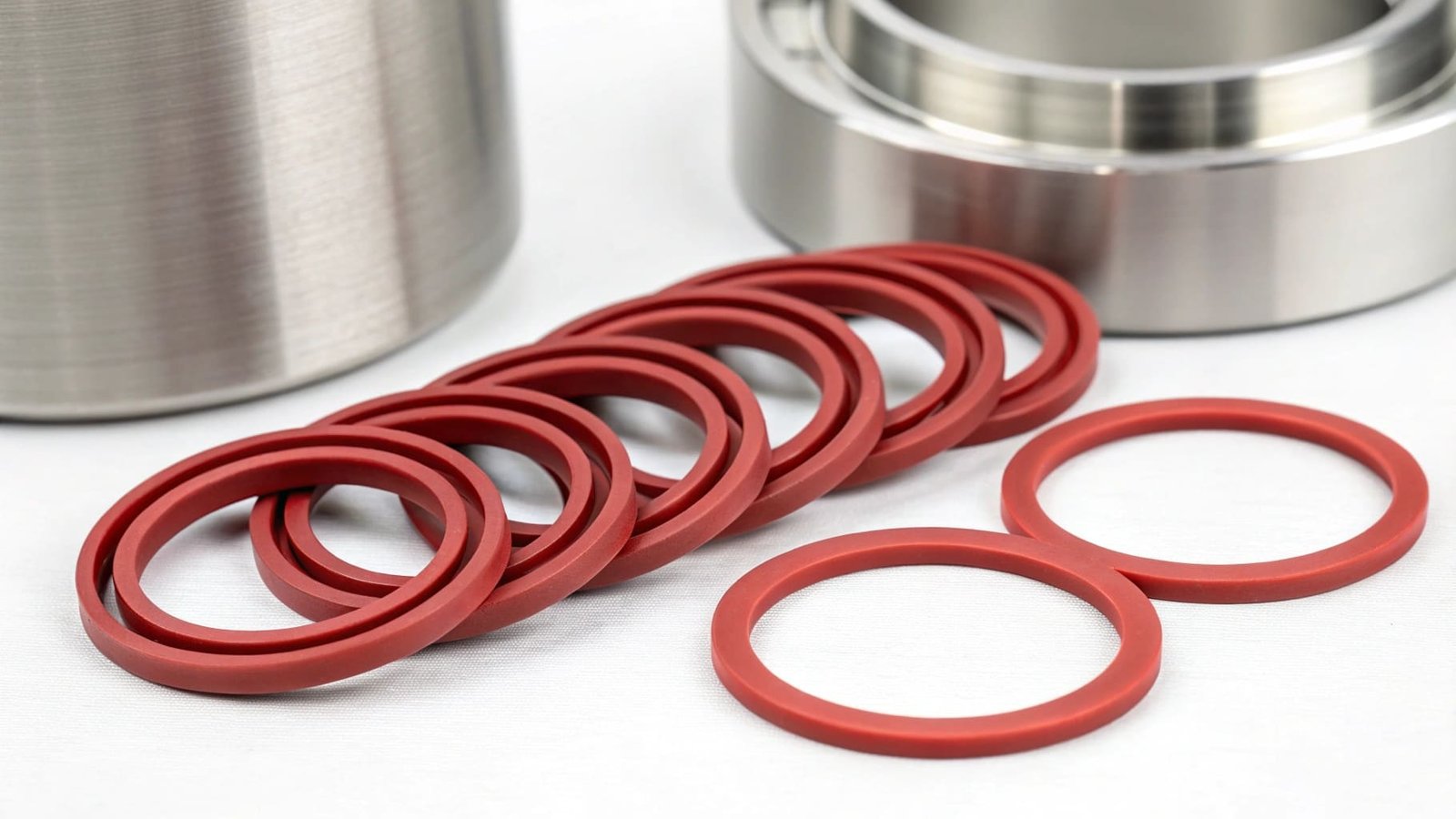
Why silicone outperforms traditional rubber materials
I always ask my clients to consider what happens when their products sit in a hot car during summer. Traditional rubber materials like EPDM or NBR start breaking down at temperatures above 80°C. Food-grade silicone maintains its integrity up to 200°C without releasing any compounds into the water.
The molecular structure of silicone creates this advantage. Silicon-oxygen bonds are much stronger than the carbon-carbon bonds in organic rubbers. This means silicone resists thermal degradation that would compromise both seal performance and food safety.
We conduct migration testing3 on all our silicone gaskets. The test results consistently show zero detectable migration of substances into water simulants. This matters when you sell to markets with strict regulations like the European Union or North America.
| Material Type | Maximum Safe Temperature | Migration Test Result | FDA Compliance |
|---|---|---|---|
| Food-Grade Silicone | 200°C | No detectable migration | Yes (21.177.2600) |
| EPDM Rubber | 80°C | Trace organic compounds | Limited applications |
| NBR Rubber | 70°C | Plasticizer migration | Not recommended |
| Natural Rubber | 60°C | Protein allergens present | No |
Certification requirements you cannot ignore
I worked with a startup last year that used uncertified silicone to save costs. Their first shipment to Germany was rejected at customs. They lost both the shipment value and three months of market entry time.
You need to verify your supplier provides actual certificates, not just claims of compliance. Request copies of FDA compliance letters and LFGB test reports. Check that the testing was done by accredited third-party laboratories4, not internal testing facilities.
How do I choose the right gasket material?
Your production team needs gaskets that seal reliably but also assemble easily. Your customers need products that maintain their seal through years of outdoor use. These requirements often seem to conflict.
Choose gasket materials by evaluating three critical factors: Shore A hardness5 for proper sealing force, compression set resistance for long-term performance, and environmental stability for outdoor durability. Match these properties to your specific application requirements.
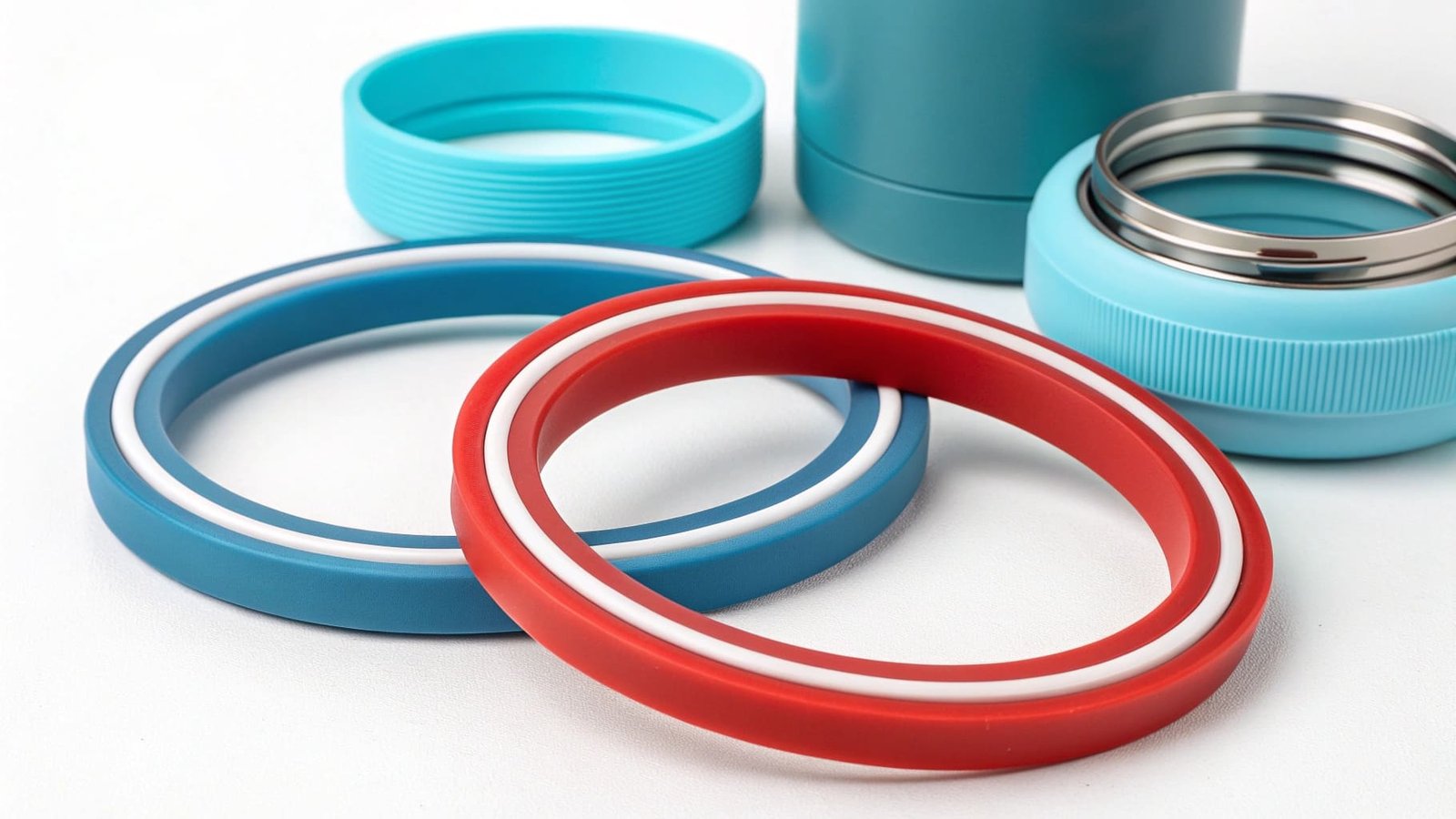
Understanding hardness specifications for drinkware applications
I have tested gaskets ranging from Shore A 30 to Shore A 70 in tumbler applications. The sweet spot sits between 40 and 60 for most outdoor drinkware products. This range provides enough flexibility for easy lid attachment while maintaining sufficient sealing pressure.
Softer gaskets below Shore A 40 seal well initially but wear quickly with repeated use. Your customers will start experiencing leaks within a few months. Harder gaskets above Shore A 60 require excessive force to compress, which can damage the lid threads or crack plastic components.
Think about how your customers actually use these products. They open and close the lid multiple times per day. They drop the tumbler on hard surfaces. They twist the lid while it is still sealed. Your gasket material must withstand all these stress cycles without losing its sealing ability.
| Shore A Hardness | Sealing Performance | Assembly Force | Durability Rating | Best Application |
|---|---|---|---|---|
| 30-40 | Excellent initial seal | Very easy | Poor long-term | Single-use products |
| 40-50 | Good seal | Easy | Good | Standard drinkware |
| 50-60 | Good seal | Moderate | Excellent | Premium outdoor gear |
| 60-70 | Fair seal | Difficult | Excellent | Industrial applications |
Testing compression set resistance
This property determines whether your gasket will maintain its seal after months of compression. I always request compression set data at both 70°C for 22 hours and 23°C for 70 hours. These test conditions simulate real-world use patterns.
Platinum-cured silicone typically shows compression set values below 15 percent. Peroxide-cured silicone might reach 25 percent. This difference matters because every percentage point of compression set represents lost sealing force. Higher compression set means your gaskets will leak sooner.
What is the waterproof gasket material?
Your marketing team calls the product waterproof. Your engineers need to deliver on that promise. A failed seal in an outdoor environment can ruin electronics, damage backpack contents, and destroy customer confidence.
Platinum-cured silicone with Shore A hardness of 50 provides the most reliable waterproof sealing for outdoor drinkware. Its elastic recovery and chemical inertness maintain consistent sealing pressure even after exposure to temperature cycling, UV radiation, and repeated compression cycles.
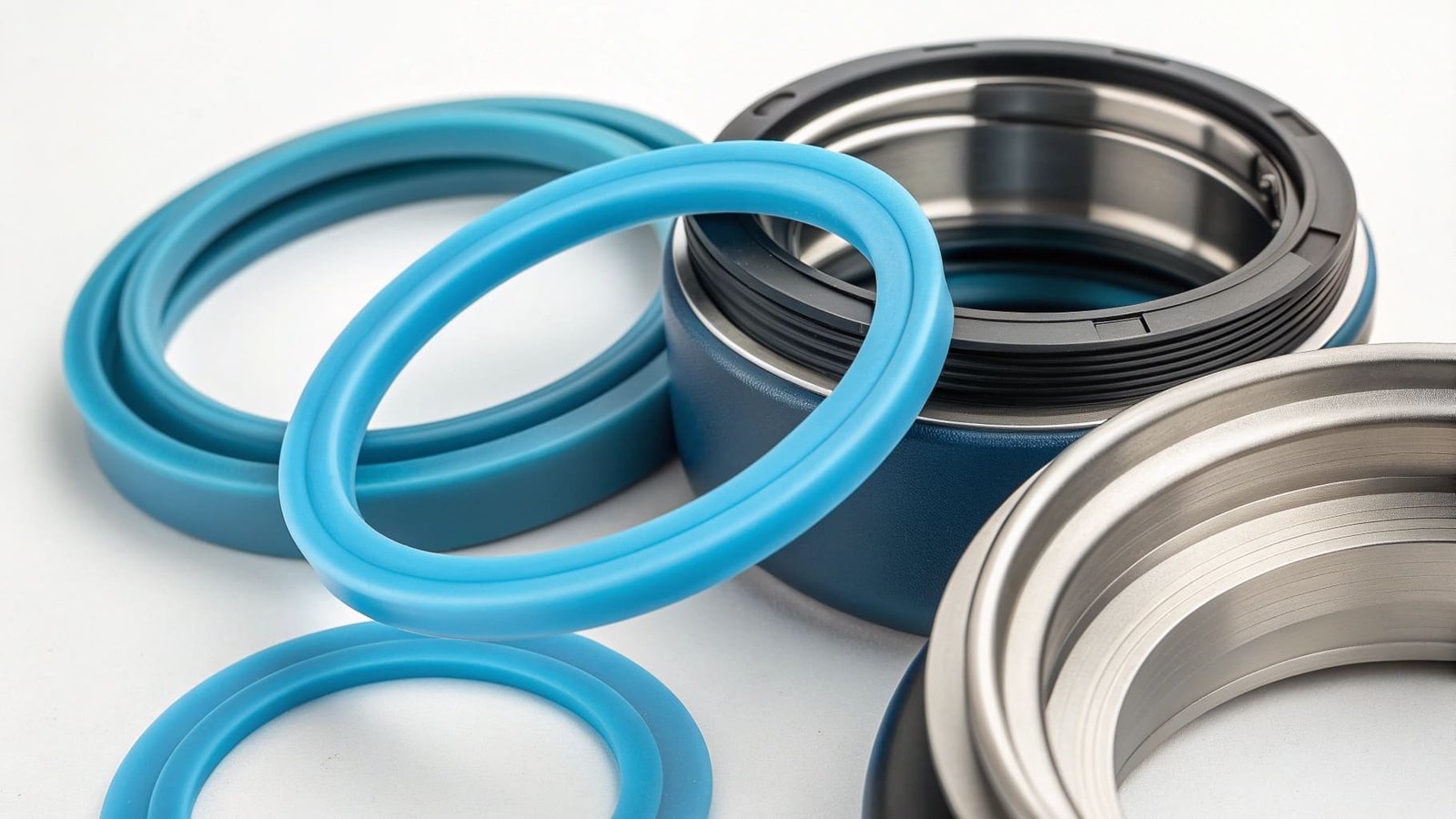
Environmental stress factors that destroy gasket seals
I spent three months testing gaskets in accelerated aging chambers to understand what really causes seal failure. UV exposure proved to be the most destructive factor for organic rubber materials. Just 500 hours of UV exposure equivalent to one summer of outdoor use caused visible cracking in EPDM gaskets.
Silicone showed no visible degradation after 2000 hours of UV exposure. The silicon-oxygen backbone does not absorb UV radiation in the damaging wavelength ranges. This means your gaskets maintain their elasticity and sealing force even after years of sun exposure.
Ozone presents another silent killer of rubber gaskets. Ozone concentrations in outdoor environments cause chain scission in carbon-carbon double bonds. Natural rubber and SBR gaskets become brittle and crack within months. Silicone contains no unsaturated bonds, making it completely resistant to ozone degradation.
| Environmental Factor | Impact on Organic Rubber | Impact on Silicone | Time to Seal Failure |
|---|---|---|---|
| UV Radiation | Severe cracking | No visible effect | 6 months vs. 5+ years |
| Ozone Exposure | Chain scission, brittleness | No effect | 3 months vs. indefinite |
| Temperature Cycling | Loss of elasticity | Maintains properties | 1 year vs. 5+ years |
| Moisture + Heat | Hydrolysis, swelling | Hydrophobic, stable | 8 months vs. 5+ years |
Design considerations for maximum waterproof performance
Material selection is only half the equation. I work with product designers to optimize gasket cross-sections and compression ratios. A properly designed silicone gasket can achieve IP67 waterproof ratings with minimal compression force.
The compression ratio should be between 15 and 25 percent of the original gasket thickness. Too little compression fails to create an adequate seal. Too much compression accelerates compression set and can cause gasket extrusion. Calculate the compression based on your specific lid design and tolerance stack-up.
Surface finish on the sealing faces matters more than most engineers realize. A surface roughness above 1.6 micrometers creates leak paths even with soft gasket materials. I recommend specifying Ra 0.8 or better on all sealing surfaces for critical waterproof applications.
Cost of ownership calculations for gasket material selection
I recently helped a Canadian distributor evaluate their total gasket costs. They were using EPDM gaskets that cost 40 percent less than silicone per unit. But their warranty claim rate was 12 percent compared to 2 percent for competitors using silicone.
When we factored in replacement costs, shipping expenses, customer service time, and lost sales from negative reviews, the EPDM gaskets actually cost them 60 percent more per unit sold. The lower unit price created a false economy that damaged their profitability.
You need to consider the entire lifecycle cost. How long will the gasket maintain its seal? What is your warranty period? What does a single warranty claim cost in processing, shipping, and customer goodwill? These factors often outweigh the material cost difference between silicone and cheaper alternatives.
Conclusion
Select food-grade silicone with proper hardness specifications and comprehensive certifications. Verify your supplier provides migration testing and environmental stress data. Calculate total ownership costs, not just unit prices, for sustainable profitability.
-
Understanding these standards is crucial for ensuring your products meet safety regulations. ↩
-
Find out which gasket materials are best suited for outdoor use and their benefits. ↩
-
Find out how migration testing ensures the safety of food-grade materials in consumer products. ↩
-
Discover the importance of third-party testing in ensuring material compliance. ↩
-
Learn about Shore A hardness and its significance in ensuring effective sealing. ↩