What Are Food Grade Rubber Sheets Made Of for Gasket Manufacturing?
Sourcing the wrong gasket material can trigger a product recall that wipes out an entire season's profit. Most buyers don't find out until it's too late.
Food grade rubber sheets for gasket manufacturing are primarily made from three materials: silicone rubber, EPDM, and nitrile rubber (NBR).1 Silicone is the most widely used because it is chemically stable, non-reactive with food, and able to pass the strictest food contact regulations, including FDA CFR 177.2600 and EU Regulation 1935/2004.
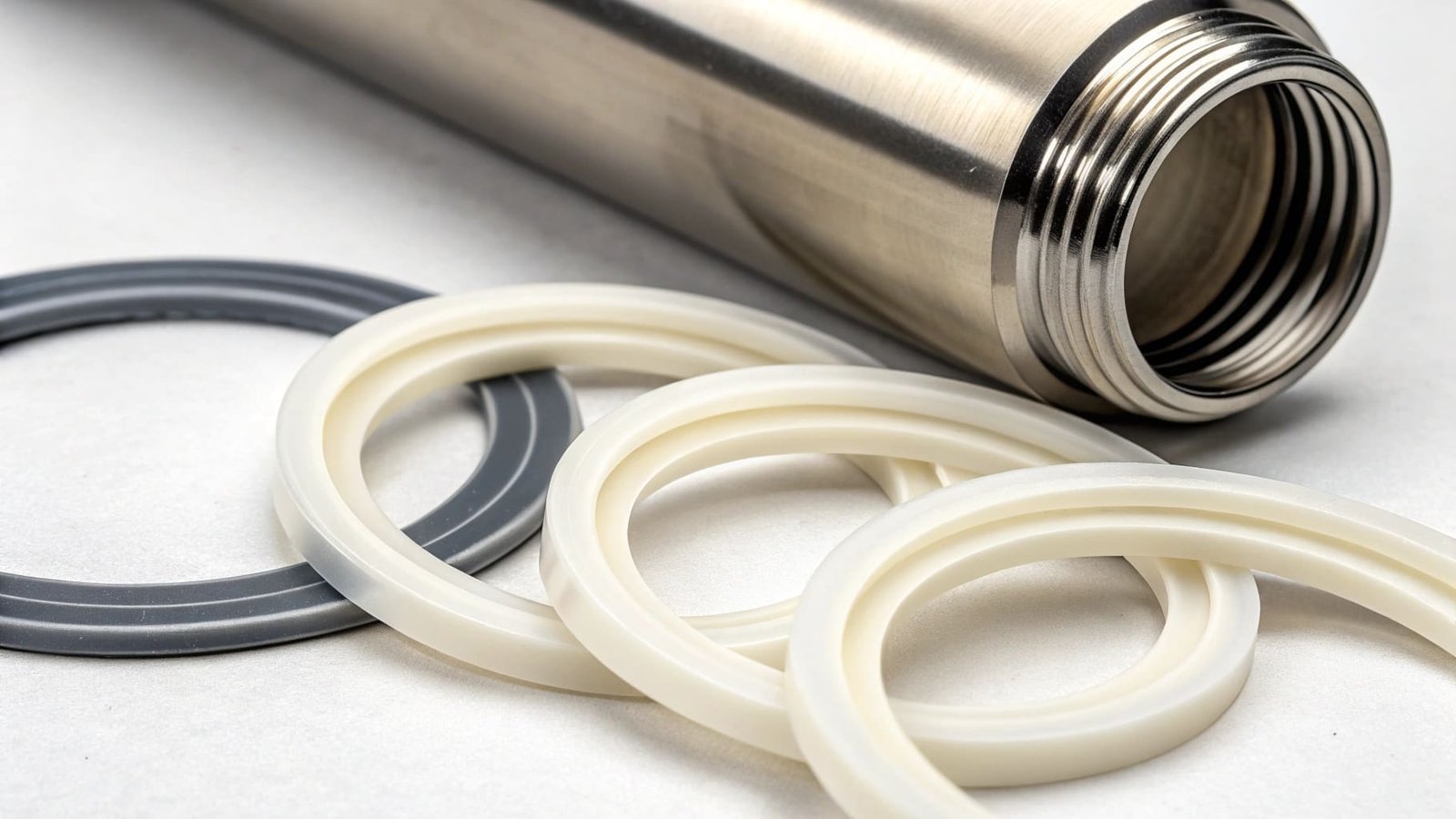
I've spoken with many procurement officers who tell me the same thing. They ask for "food grade" materials and assume that label covers everything they need. It doesn't. The label is only the starting point. What matters is what's inside the material, how it was cured, and whether the supplier can prove it with real test data. If you're sourcing rubber sheets for gasket manufacturing, this article will walk you through exactly what you need to know.
What Is Food Grade Rubber Gasket Material?
Most buyers have seen the term "food grade" on a product spec sheet and moved on. But when a shipment fails a compliance check, the first question is always: what exactly was in that gasket?
Food grade rubber gasket material refers to any rubber compound that has been tested and confirmed safe for direct or indirect food contact. It must not transfer harmful substances into food under normal use conditions.2 The three most common types are silicone, EPDM, and NBR, each suited to different applications and environments.
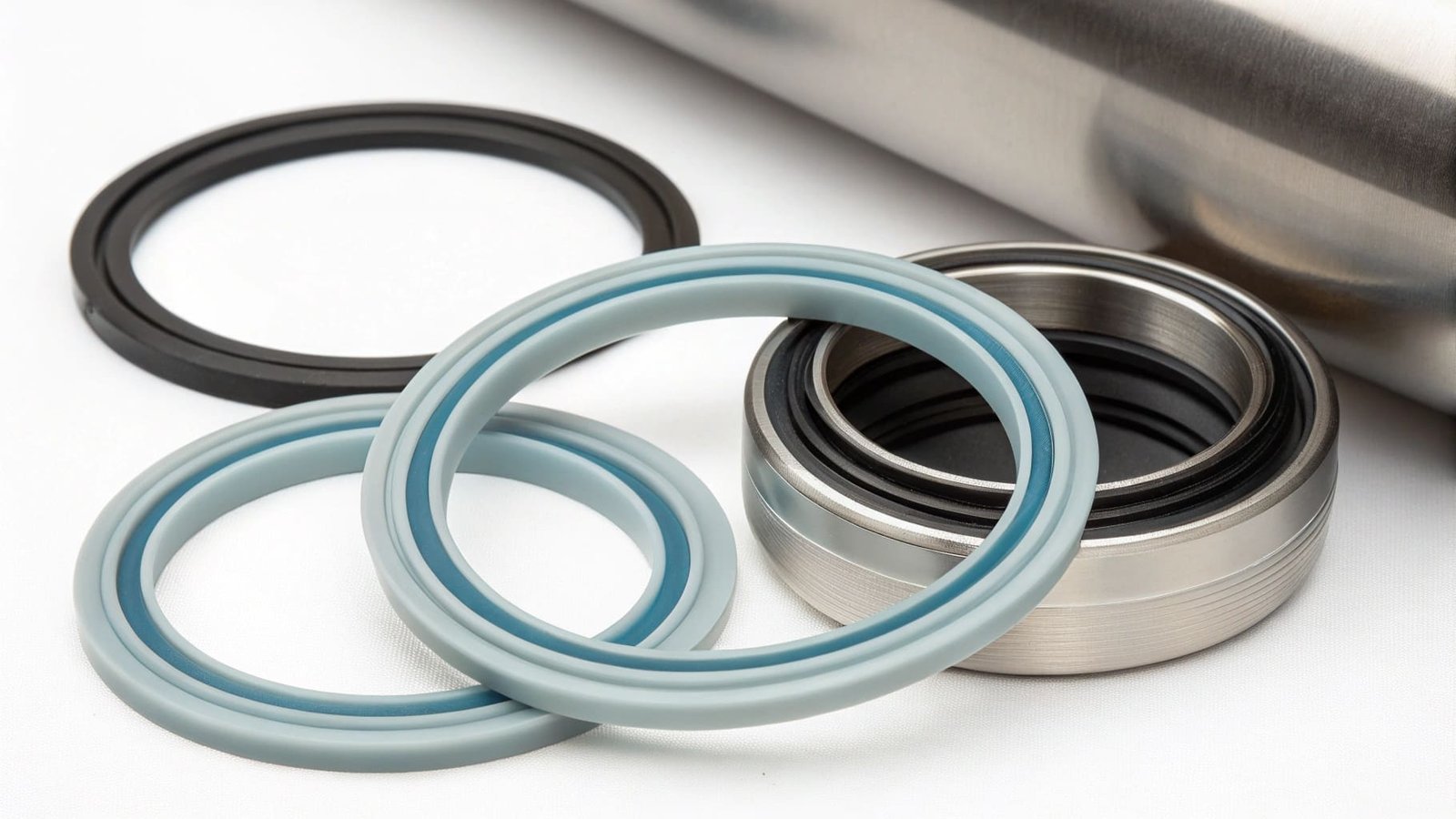
These three materials are not equal, and choosing the wrong one for your application is a costly mistake. Here is how they compare across the factors that matter most to a procurement decision.
How Do the Three Main Materials Compare?
Each material has a specific use case. The table below breaks down the key differences.
| Property | Silicone Rubber | EPDM | Nitrile Rubber (NBR) |
|---|---|---|---|
| Temperature Range | -60°C to +230°C | -40°C to +150°C | -30°C to +120°C |
| Food Contact Rating | Excellent | Good | Limited |
| Chemical Resistance | High | Moderate | High (oils/fats) |
| Typical Application | High-temp seals, lids, gaskets | Water and steam seals | Oil-contact seals |
| Regulatory Fit | FDA, EU 1935/2004 | FDA (selected grades) | Less common for food contact |
| Cost Level | Higher | Moderate | Lower |
Silicone is the most versatile and is the first choice for applications where temperature range, chemical resistance, and regulatory compliance all matter at the same time.3 EPDM works well in water and steam environments but is not suitable for oil-heavy applications.4 NBR handles oil and fat contact well but is rarely the right choice for broad food contact use.5
What Does "Food Grade Certified" Actually Require?
The certification is not a one-time approval of the material type. It applies to a specific compound formulation, including every additive, filler, and curing agent used in that batch. A supplier must show that the final cured product passes migration testing — meaning harmful substances do not transfer from the rubber into food or simulated food liquids at specified temperatures and contact times. Without batch-specific test data, a certificate is close to meaningless.
What Is Food Grade Rubber Made Of?
Many buyers I work with understand rubber at the product level but not at the chemistry level. That gap becomes a problem when a supplier sends documentation that looks complete but is missing something important.
Food grade rubber is made from a base polymer combined with curing agents, fillers, and stabilizers. The specific combination determines whether the finished material is safe for food contact. For silicone rubber, the base polymer is polydimethylsiloxane (PDMS), built from silica, carbon, hydrogen, and oxygen6 — all naturally occurring elements.
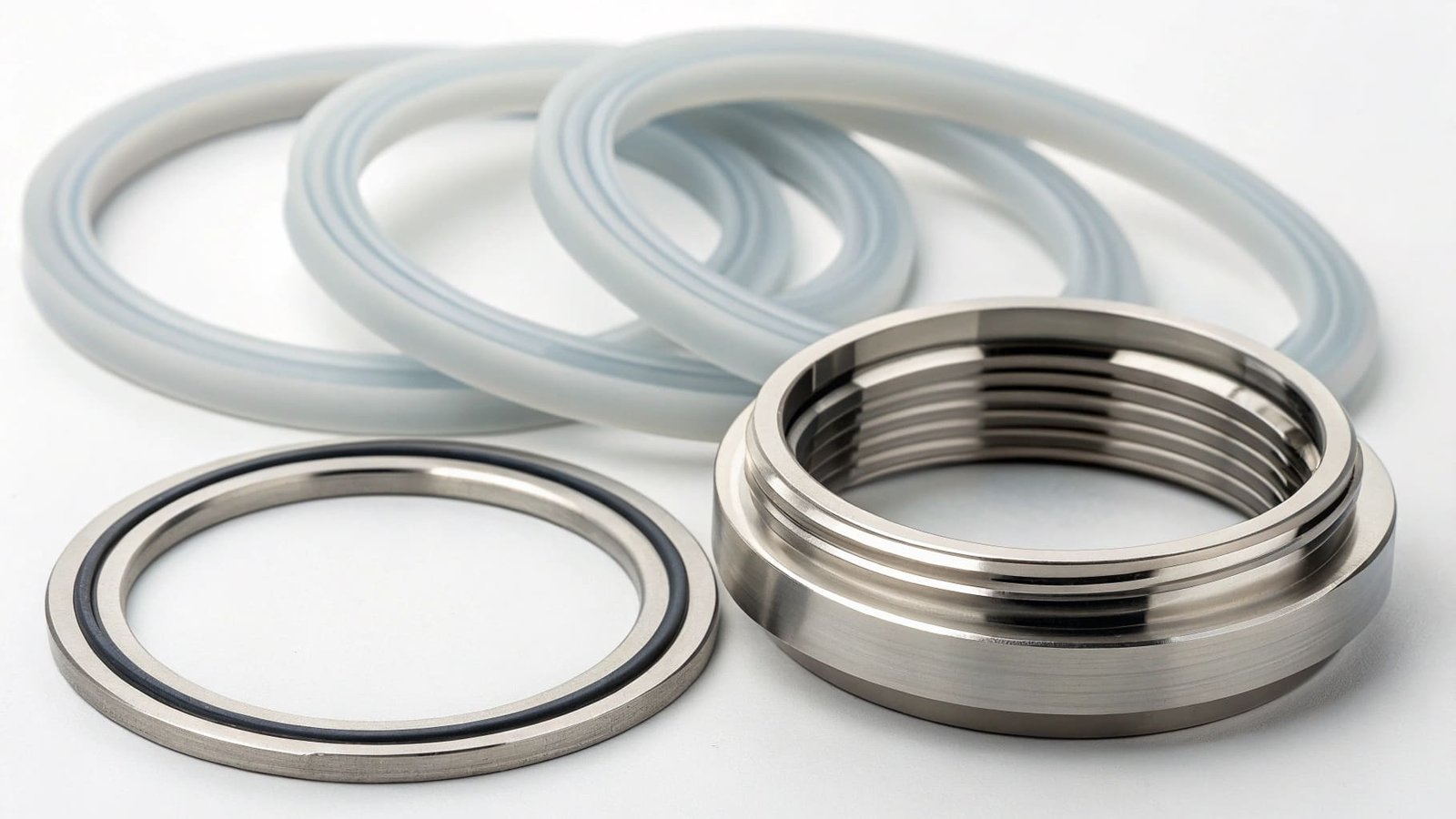
Understanding the composition at this level helps procurement teams ask the right questions and spot documentation gaps before they become compliance problems.
What Goes Into a Food Grade Silicone Compound?
Food grade silicone rubber is not a single ingredient. It is a formulated compound. Every component in that compound must be evaluated for food safety. Here is what a standard food grade silicone rubber compound contains.
| Component | Function | Food Safety Consideration |
|---|---|---|
| Polydimethylsiloxane (PDMS) | Base polymer | Chemically inert, stable |
| Silica filler | Reinforcement | Must be food-grade quality |
| Curing agent (platinum or peroxide) | Cross-links the polymer | Platinum is preferred; peroxide leaves residuals |
| Pigments / colorants | Visual identification | Must pass migration tests independently |
| Processing aids | Improves manufacturing | Must not migrate into food |
Platinum-cured silicone is the industry benchmark for food contact applications.7 The platinum catalyst is consumed during curing, leaving no residuals. Peroxide-cured silicone is less expensive but can leave behind byproducts that require additional post-curing steps to remove.8 If those steps are skipped, the finished product may not meet food contact standards even if the base materials are acceptable.
Why Does the Curing Method Matter So Much?
I've had customers send me samples from other suppliers asking why their silicone parts had an unusual smell after curing. In most cases, it was incomplete post-curing of a peroxide-cured compound. The smell is a sign of volatile residuals. For food contact applications, residuals are not just a sensory problem — they are a regulatory problem. Migration testing will catch them. Regulators will catch them. The recall that follows is avoidable.
Is Food Grade Silicone Still Toxic?
This question comes up often, and it usually comes from a place of real concern. A buyer has read something online, or a customer has pushed back, and now they need a clear answer they can defend.
Food grade silicone, when properly manufactured and fully cured, is not toxic. It is chemically stable and does not react with food, water, or most chemicals under normal use conditions. The concern about toxicity usually traces back to either low-quality products or incomplete information about how silicone behaves at a chemical level.
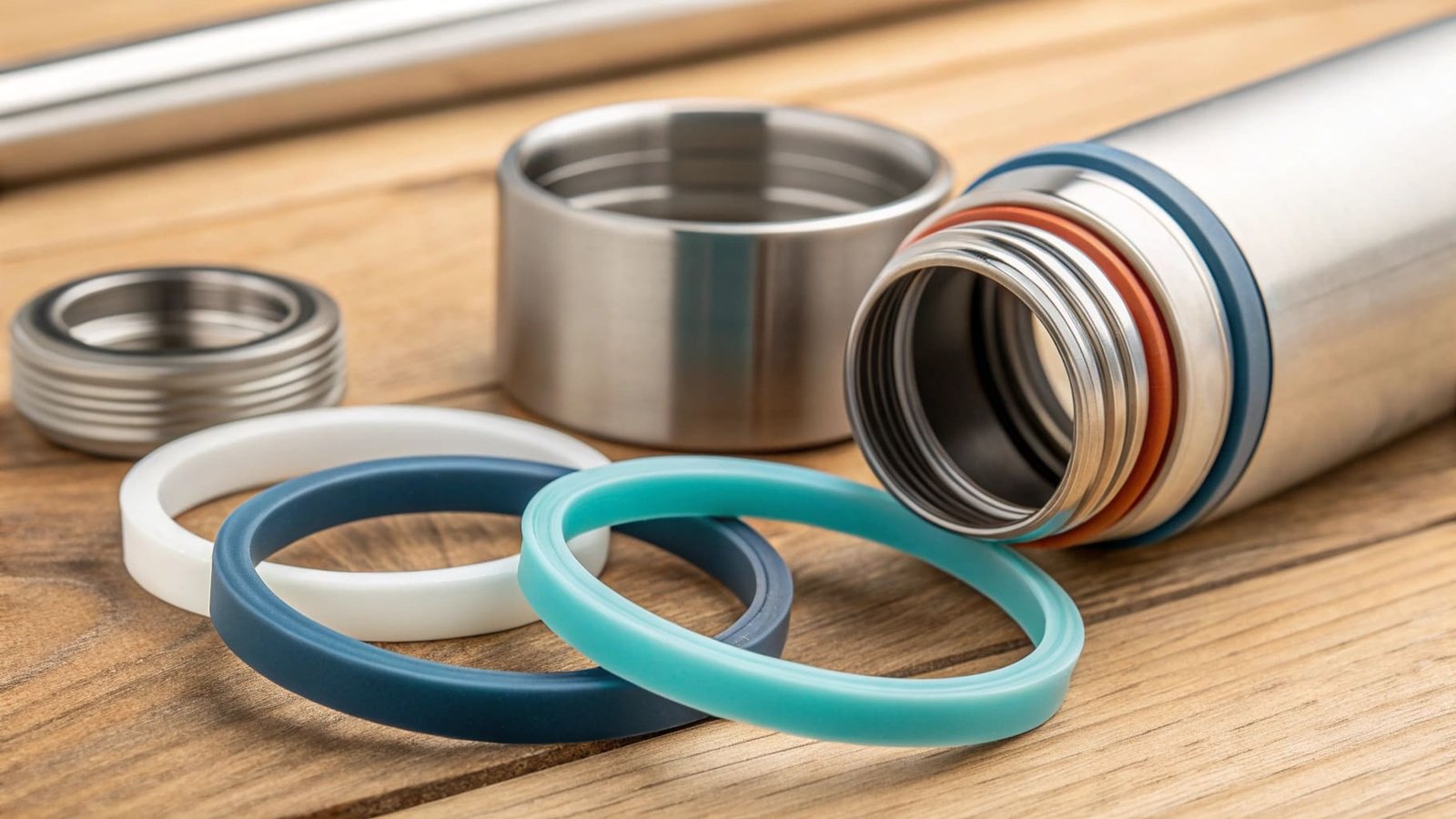
The honest answer is that silicone itself is safe. The risk comes from what manufacturers add to it and how carefully they control the curing process. That is the distinction buyers need to understand and verify before placing an order.
Where Does the Toxicity Concern Actually Come From?
The concern is not baseless. It is misplaced. Here is where the real risks exist in food grade silicone manufacturing.
| Risk Factor | Source | How to Verify |
|---|---|---|
| Tin-based catalysts | Low-cost alternative to platinum curing | Request curing method disclosure in material spec sheet |
| Excessive fillers | Reduces material cost, increases migration risk | Request migration test reports per FDA or EU standards |
| Uncured residuals | Incomplete post-cure process | Request post-cure process documentation |
| Unverified colorants | Pigments not independently tested | Request colorant migration certificates |
| Counterfeit certifications | Fraudulent or outdated compliance documents | Use third-party verification services |
The pattern is consistent. The material itself is safe. The process and the additives are where shortcuts lead to problems. A supplier who cannot provide batch-specific documentation for each of these points is a supplier who cannot fully account for what is in their product.
How Should Buyers Protect Themselves?
I tell every procurement officer I work with the same thing: do not treat the certification as the endpoint. Treat it as the starting point for your due diligence. Ask for the migration test report, not just the certificate number. Ask which curing agent was used. Ask for the material safety data sheet for every additive in the compound. A reliable supplier has all of this ready and will share it without hesitation. A supplier who deflects these questions is a supplier whose documentation you should not trust.
The price gap between a compliant product and a non-compliant one is often small. The cost gap between a smooth product launch and a regulatory violation is not.
Conclusion
Food grade rubber sheets are made from carefully formulated compounds, and every component in that compound carries a compliance obligation. Silicone dominates food contact applications for good reason. Know what's in your material, and demand proof.
-
"21 CFR 177.2600 -- Rubber articles intended for repeated use. - eCFR", https://www.ecfr.gov/current/title-21/chapter-I/subchapter-B/part-177/subpart-C/section-177.2600. Technical references on elastomer gasket materials identify silicone rubber, EPDM, and nitrile rubber as widely used sealing materials, supporting their selection as the principal categories discussed here; the source may describe general gasket use rather than only food-grade sheet manufacturing. Evidence role: general_support; source type: institution. Supports: A technical standards or engineering reference should identify silicone, EPDM, and nitrile rubber as common elastomers for gasket and seal applications, including food-contact contexts where applicable.. Scope note: Contextual support if the source covers industrial gasket materials generally. ↩
-
"Chemistry Recommendations for Submissions of Food Contact ...", https://www.fda.gov/regulatory-information/search-fda-guidance-documents/guidance-industry-preparation-premarket-submissions-food-contact-substances-chemistry. Regulation (EC) No 1935/2004 states that food-contact materials must not transfer constituents to food in quantities that could endanger human health under normal or foreseeable conditions of use. Evidence role: definition; source type: government. Supports: Official EU or FDA food-contact material guidance should state that materials must not transfer constituents to food in quantities that endanger human health under intended use.. ↩
-
"Risk Assessment of Food Contact Materials II - PMC - NIH", https://pmc.ncbi.nlm.nih.gov/articles/PMC9131608/. Technical literature describes silicone elastomers as thermally stable and chemically inert materials used in food-contact applications, supporting their suitability where temperature tolerance and low reactivity are required; the literature may not establish that silicone is universally the 'first choice' in every procurement context. Evidence role: general_support; source type: research. Supports: A technical review or institutional reference should document silicone rubber's thermal stability, chemical inertness, and use in food-contact materials.. Scope note: Supports the material-performance rationale but not a universal market preference. ↩
-
"[PDF] Fernco Rubber Chemical Resistance Chart", https://www.fernco.com.au/wp-content/uploads/2022/07/Fernco-Rubber-Chemical-Resistance-Chart-V002JUL22-LR.pdf. Materials-engineering references characterize EPDM as resistant to water, steam, and polar media while having poor resistance to petroleum oils and hydrocarbon fluids, supporting this compatibility distinction. Evidence role: mechanism; source type: education. Supports: An engineering or materials reference should state that EPDM is resistant to water, steam, and polar fluids but has limited resistance to oils and hydrocarbons.. ↩
-
"nitrile rubber - Inventory of Food Contact Substances Listed in 21 CFR", https://hfpappexternal.fda.gov/scripts/fdcc/index.cfm?set=IndirectAdditives&id=NITRILERUBBER. Elastomer references describe nitrile rubber as having strong resistance to oils and fats, while food-contact regulations evaluate the finished formulation rather than the polymer name alone; this supports the article's narrower use case for NBR. Evidence role: general_support; source type: education. Supports: A materials reference should verify nitrile rubber's oil resistance and a regulatory or technical source should clarify that food-contact suitability depends on the exact formulation.. Scope note: The source may not directly prove that NBR is 'rarely' appropriate, only that its food-contact use is formulation- and application-dependent. ↩
-
"Polydimethylsiloxane - Wikipedia", https://en.wikipedia.org/wiki/Polydimethylsiloxane. Chemical references define polydimethylsiloxane as a silicone polymer with a repeating silicon-oxygen backbone and methyl groups, supporting its role as the base polymer in many silicone rubbers. Evidence role: definition; source type: encyclopedia. Supports: A chemistry reference should define PDMS as a silicone polymer with a siloxane backbone and methyl side groups.. Scope note: The citation would support PDMS chemistry but may require the article wording to distinguish silicon from silica. ↩
-
"Platinum Cured Silicones vs. Peroxide Cured Silicones", https://www.stockwell.com/platinum-cured-silicones-vs-peroxide-cured-silicones/. Polymer-chemistry literature describes platinum-catalyzed addition curing of silicone as a low-byproduct process compared with peroxide curing, supporting its frequent use in applications where extractables and sensory effects are tightly controlled. Evidence role: mechanism; source type: paper. Supports: A polymer science or food-contact materials paper should explain that platinum-catalyzed addition curing produces fewer volatile byproducts than peroxide curing and is commonly used where purity is important.. Scope note: Supports the technical basis for preference, but not necessarily a quantified industry market share. ↩
-
"Peroxide-Based Crosslinking of Solid Silicone Rubber, Part I - PMC", https://pmc.ncbi.nlm.nih.gov/articles/PMC9609014/. Studies of peroxide-cured silicone rubber report residual volatile curing byproducts and show that post-curing can reduce these extractable or odor-causing compounds, supporting the need for controlled post-cure processing. Evidence role: mechanism; source type: paper. Supports: A peer-reviewed paper or technical research source should show that peroxide curing can leave volatile decomposition products and that post-curing reduces residuals.. ↩