What Are the Best Hydration Bladders for OEM Backpack Orders?
Choosing the wrong hydration bladder for your OEM order kills your brand before it starts. One bad batch, one leaking seam, one chemical aftertaste — and your customers never come back.
The best hydration bladders for OEM backpack orders use medical-grade silicone or BPA-free TPU, feature leak-proof welded seams, and come with wide-mouth openings and quick-disconnect bite valves.1 These three features are now the baseline expectation in North American and European markets.
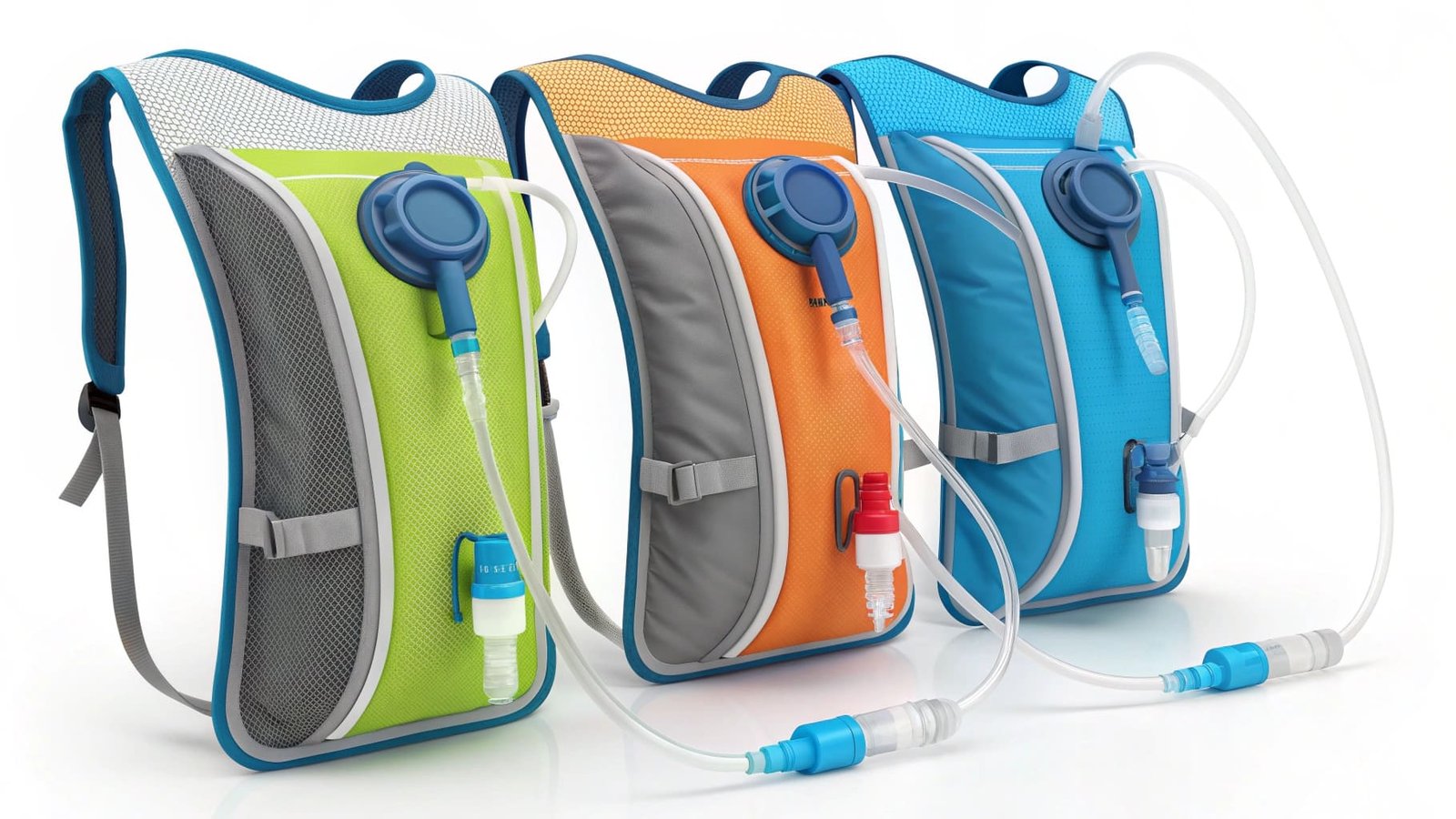
I have worked with backpack brands across North America and Europe for years. What I keep seeing is this: most B2B buyers focus on price first and material quality second. That order needs to flip. The brands that win long-term are the ones who get the material right from the start. Let me walk you through everything you need to know before placing your next OEM order.
Do Backpackers Use Water Bladders?
You might think water bottles are still the standard. They are not. The market has moved, and if your OEM backpack does not support a hydration system, you are already behind.
Over 60% of serious outdoor enthusiasts now prefer hydration bladders over bottles for multi-day treks.2 The reason is simple: hands-free drinking, better weight distribution, and no need to stop hiking to take a sip.3 For OEM buyers, this shift means one thing — your backpack needs to be bladder-compatible.
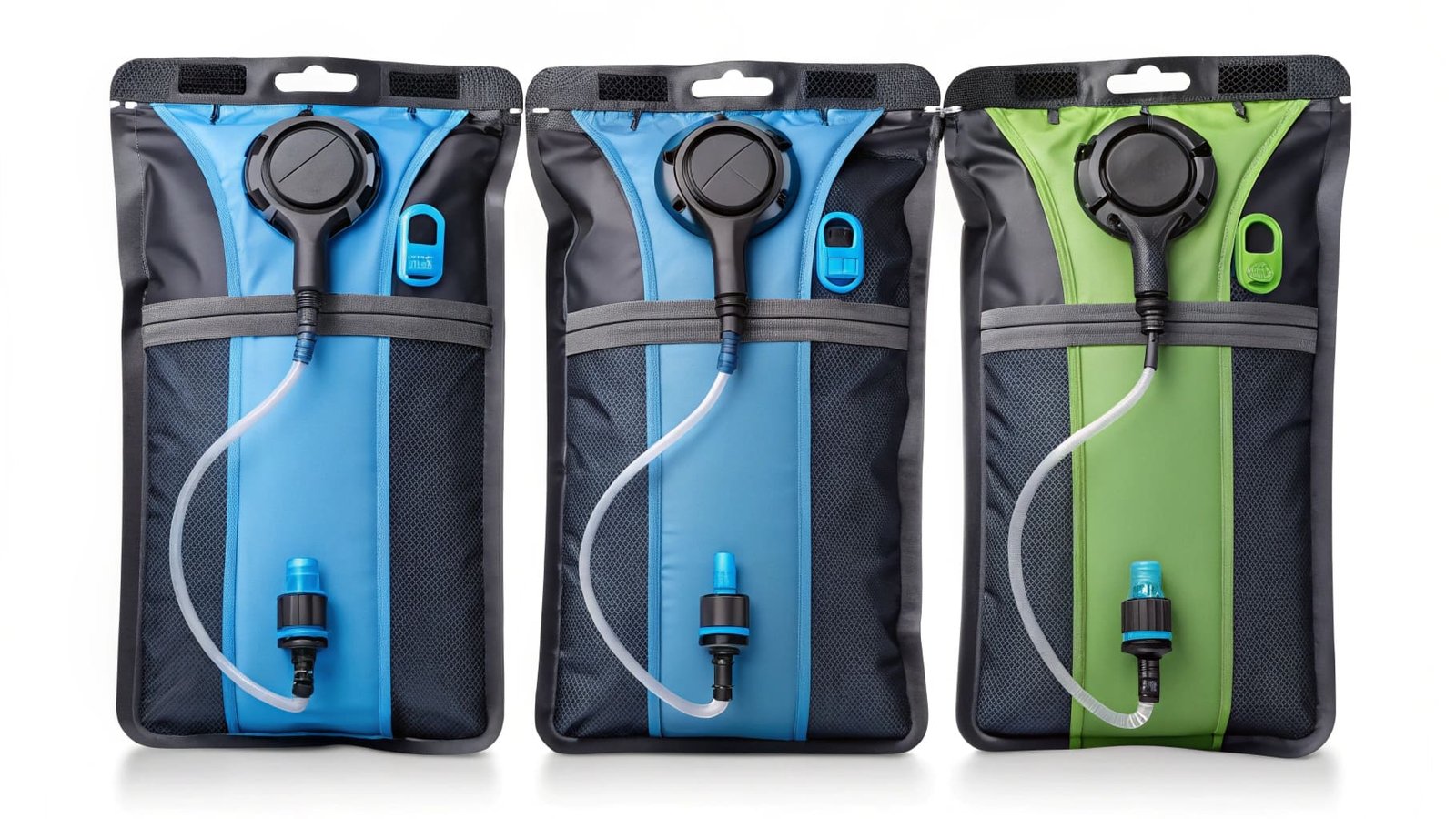
The shift away from bottles is not just a trend. It is a response to real problems that bottles create on the trail. When you are carrying a 30-pound pack on a steep climb, stopping to unzip a pocket, pull out a bottle, drink, and repack it costs you time and breaks your rhythm. A hydration bladder removes all of that friction.
I remember speaking with a buyer from a mid-sized outdoor brand in Ontario. He told me that three years ago, only about a third of his backpack SKUs included a bladder sleeve. Now every single pack in his lineup has one. His customers demanded it.
Here is what that means for OEM buyers placing bulk orders:
What Makes Bladder-Compatible Backpacks Sell Better?
| Feature | Why It Matters to End Users |
|---|---|
| Dedicated bladder sleeve | Keeps the bladder flat and stable against the back |
| Exit port for the tube | Allows routing to either shoulder strap |
| Secure hook or clip inside | Prevents the bladder from shifting during movement |
| Compatible with standard bladder sizes | Allows users to upgrade or replace their bladder later |
If you are sourcing backpacks with a hydration bladder as part of the OEM package, the bladder and the pack need to work as one system. A bladder that is too wide, too short, or too stiff will not sit correctly in the sleeve.4 That creates returns, complaints, and damage to your brand name.
The bite valve is another point buyers often overlook. A low-quality bite valve develops a stale taste after a few uses.5 That taste gets associated with your brand, not with the valve itself. This is why I always recommend pairing a quality bladder body with a food-grade silicone bite valve that is easy to remove and clean.
Which Hydration Backpack Is Best?
There is no single best hydration backpack. The right one depends entirely on the intended use. But there are three non-negotiable features that the best systems all share.
The best hydration backpacks pair with bladders that have welded seams, wide-mouth openings, and quick-disconnect bite valves. Glued seams fail in cold weather. Narrow openings make cleaning impossible. Fixed bite valves create hygiene problems. These are not preferences — they are quality standards.
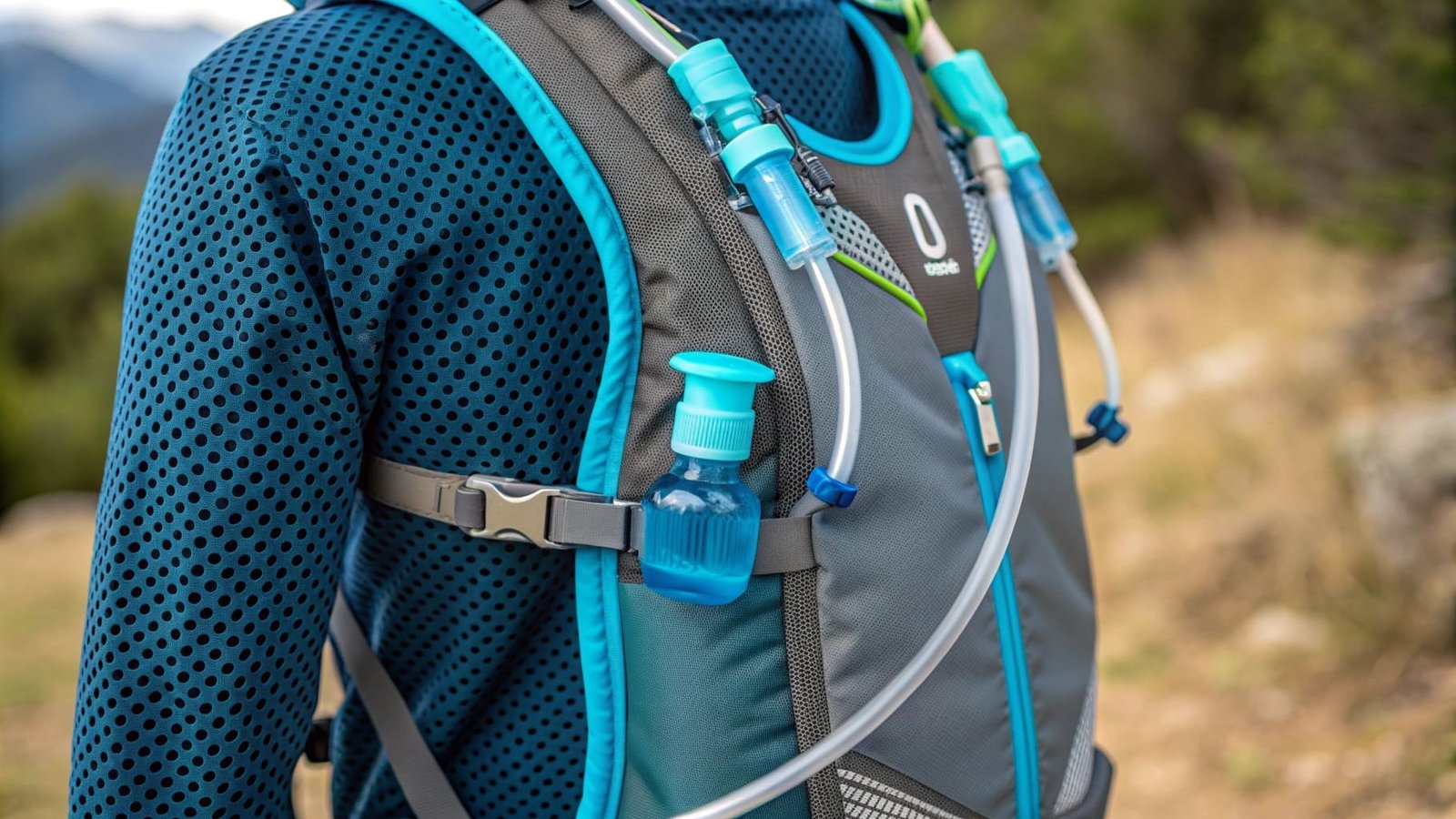
Let me break down why each of these three features matters, and what happens when you cut corners on any of them.
Why Do These Three Features Define Quality?
Welded Seams vs. Glued Seams
Glued seams look fine at room temperature in a factory. They do not stay fine on a mountain trail at 5°C or in a hot delivery truck in July. Heat and cold both break down adhesive bonds over time. A welded seam, on the other hand, fuses the material directly. There is no adhesive to fail.6 For OEM buyers selling into outdoor markets, this is not optional — it is the baseline.
Wide-Mouth Openings
Bladders get dirty inside. Water sits in them for days. If your end user cannot clean the inside properly, mold grows. A wide-mouth opening allows a cleaning brush to reach every corner. It also allows ice loading, which is a feature serious hikers actively look for. Bladders with narrow openings get replaced quickly. Bladders with wide openings get kept and recommended to friends.
Quick-Disconnect Bite Valves
A bite valve that cannot be removed is a hygiene problem. Moisture stays trapped in the connector between the valve and the tube. Bacteria grows.7 The user starts to notice a smell. A quick-disconnect system allows the valve, tube, and bladder body to be separated and dried individually. It seems like a small detail. It is not. It is the detail that determines whether a customer reorders your brand.
| Feature | Low-Quality Version | High-Quality Version |
|---|---|---|
| Seam Type | Glued, fails in temperature extremes | Welded, durable across conditions |
| Opening Size | Narrow, difficult to clean | Wide-mouth, brush-cleanable |
| Bite Valve Connection | Fixed, traps moisture | Quick-disconnect, fully dryable |
| Material | Standard plastic, may affect taste | BPA-free TPU or medical-grade silicone |
For OEM orders going into North American or European markets, certifications matter as much as the physical features. FDA approval and REACH compliance are increasingly required by buyers at the retail level.8 If your supplier cannot provide these, your customer cannot sell to their retail partners. That is a deal-breaker, and it comes up more often than it should.
What Size Hydration Bladder Should I Get?
Size is where most first-time OEM buyers make the wrong call. They either go too small and frustrate serious hikers, or they go too large and add unnecessary weight to a day-use pack.
For day hikes, a 1.5 to 2-liter bladder is the right fit. For multi-day trips, 2 to 3 liters is the standard.9 Getting this match right between your pack design and included bladder is one of the simplest ways to improve perceived product quality without raising your unit cost.
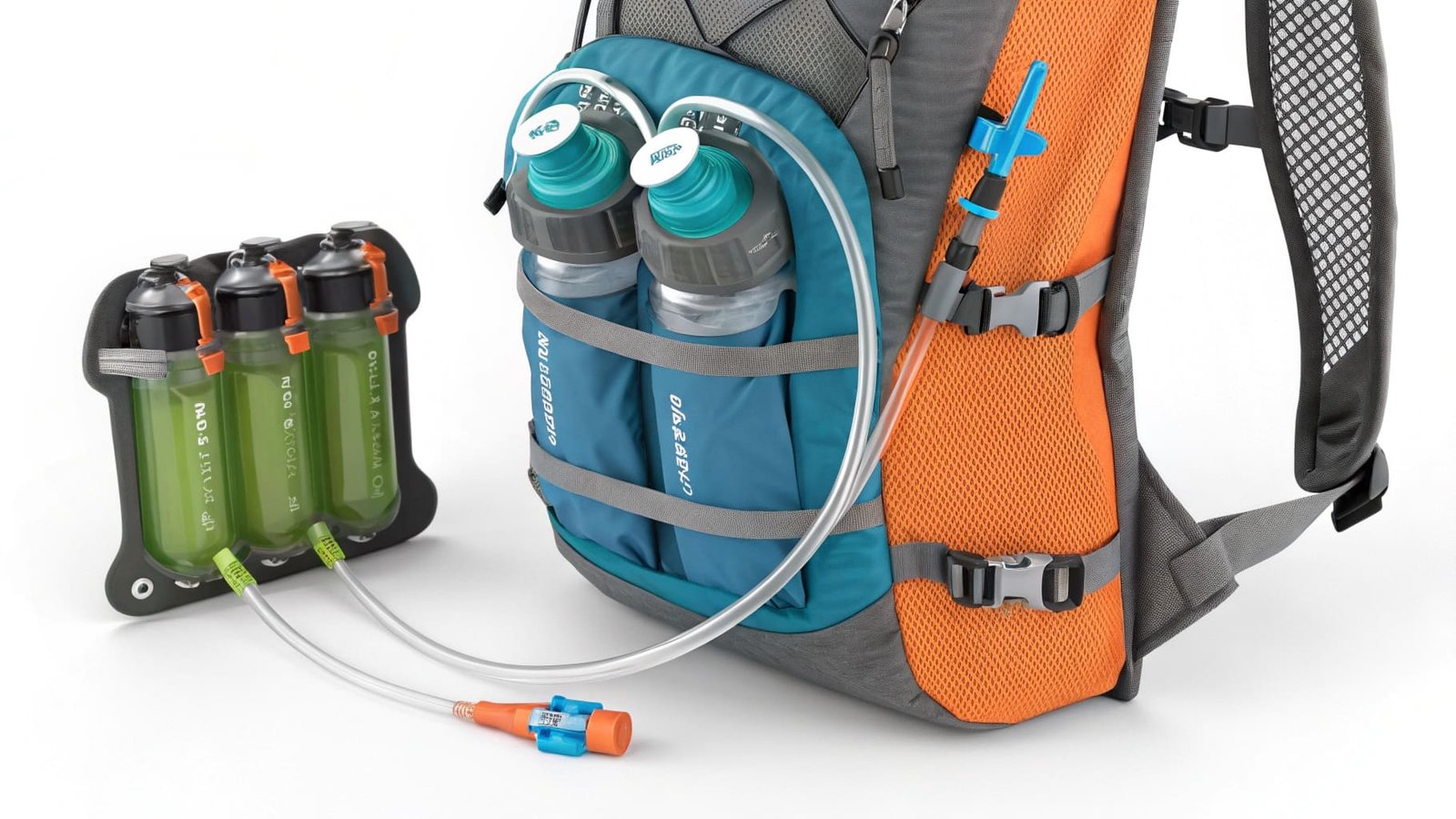
I have seen buyers source a 3-liter bladder for a lightweight day pack. It looked fine on paper. In practice, a fully loaded 3-liter bladder weighs 3 kilograms on its own. In a 20-liter day pack, that is nearly half the total carry weight in water alone. The end user feels the problem immediately. They leave a bad review. The buyer takes the hit.
Matching Bladder Size to Pack Type
Here is how I recommend OEM buyers think about the size decision:
| Pack Type | Recommended Bladder Size | Typical User |
|---|---|---|
| Lightweight day pack | 1.5 liters | Urban hikers, casual trail users |
| Standard day pack | 2 liters | Day hikers, cyclists |
| Multi-day trekking pack | 2.5 to 3 liters | Backpackers, trail runners |
| Technical expedition pack | 3 liters + modular | Serious mountaineers, military use |
Modular capacity systems are worth considering for premium OEM orders. These systems allow users to combine bladder units or swap sizes depending on the trip. The flexibility adds perceived value without a large increase in production cost. For brands targeting health-conscious buyers, it also signals that the product was designed thoughtfully rather than just sourced cheaply.
One more point on size: the shape of the bladder matters as much as the volume. A bladder that is too wide will buckle and create pressure points against the user's back. A bladder that is too narrow may not fit properly in the sleeve. When you are placing an OEM order, always confirm the exact dimensions of both the bladder and the sleeve together. Do not assume compatibility.
At silijoy, I work with buyers who bring their backpack sleeve measurements directly to the sourcing conversation. That is the right way to do it. It removes guesswork, prevents fit problems, and makes the final product feel like a complete, integrated system rather than two separate parts that happen to be sold together.
Conclusion
The best OEM hydration bladder comes down to three things: right material, right features, and right size for the intended pack. Get those right, and your brand earns repeat orders.
-
"[PDF] Report Name:National Food Safety Standard for Silicone Rubber ...", https://apps.fas.usda.gov/newgainapi/api/Report/DownloadReportByFileName?fileName=National%20Food%20Safety%20Standard%20for%20Silicone%20Rubber%20Materials%20and%20Products%20for%20Food%20Contact%20Use%20Notified%20to%20WTO_Beijing_China%20-%20People%27s%20Republic%20of_CH2023-0168. A technical or standards-oriented source on hydration reservoirs and food-contact polymers should be cited to show that material safety, seam construction, cleanability, and removable drinking components are recognized design considerations for water-carrying equipment. Evidence role: general_support; source type: institution. Supports: The source should support that food-contact polymer safety, seam integrity, cleanability, and valve/tube serviceability are relevant quality criteria for hydration reservoirs.. Scope note: Such a source may support the relevance of these criteria but may not independently prove that they are the single set of 'best' features for all OEM backpack orders. ↩
-
"Farmworker Acceptability of Backpack Hydration Systems - PMC - NIH", https://pmc.ncbi.nlm.nih.gov/articles/PMC11160487/. A survey-based source should be cited for the reported preference rate, including the sample definition, date, and question wording used to compare hydration bladders with bottles among backpackers or serious outdoor users. Evidence role: statistic; source type: research. Supports: The source should provide survey data on backpacker or hiker preference for hydration bladders versus bottles, ideally for multi-day use.. Scope note: If no survey directly reports the 60% figure, a broader gear-use survey can only support the general adoption trend, not the exact percentage. ↩
-
"Hike Smart (U.S. National Park Service)", https://www.nps.gov/articles/hiking-safety.htm. Outdoor recreation or ergonomics guidance should be cited to support that hydration reservoirs allow drinking through a tube while moving and place water mass close to the back, which can affect pack balance and drinking convenience. Evidence role: mechanism; source type: education. Supports: The source should explain how reservoir placement and drinking tubes affect access to water and load distribution compared with bottles carried in external pockets.. Scope note: Such guidance may explain the mechanism and typical advantage but may not quantify performance gains for all hikers or pack designs. ↩
-
"Impact of Backpacks on Ergonomics: Biomechanical and ... - PMC", https://pmc.ncbi.nlm.nih.gov/articles/PMC9180465/. Backpack fitting or design guidance should be cited to show that internal hydration reservoirs must match the compartment dimensions and be held close to the back to maintain stable load positioning. Evidence role: mechanism; source type: education. Supports: The source should support that a reservoir must fit the pack's hydration compartment and remain stable to avoid poor positioning or discomfort.. Scope note: Most available sources are likely to support general fit principles rather than test specific sleeve-width or stiffness thresholds. ↩
-
"Structure and microbial diversity of biofilms on different pipe ... - PMC", https://pmc.ncbi.nlm.nih.gov/articles/PMC4282696/. A food-contact materials or drinking-water biofilm study should be cited to support that wetted polymer components can contribute to taste and odor changes through extractables, retained moisture, or microbial growth. Evidence role: mechanism; source type: paper. Supports: The source should explain that elastomer or plastic drinking components can develop off-flavors through material migration or microbial biofilm formation when repeatedly wetted.. Scope note: This would support the mechanism behind stale taste but may not classify specific commercial bite valves as 'low-quality.' ↩
-
"Advances in Ultrasonic Welding of Thermoplastic Composites - PMC", https://pmc.ncbi.nlm.nih.gov/articles/PMC7142629/. A manufacturing engineering source should be cited to define thermoplastic welding as a joining process in which compatible polymer surfaces are fused together, distinguishing it from adhesive bonding. Evidence role: definition; source type: education. Supports: The source should define thermoplastic welding as a process that joins compatible plastics by melting or fusing the interface rather than using adhesive.. ↩
-
"Structure and microbial diversity of biofilms on different pipe ...", https://pmc.ncbi.nlm.nih.gov/articles/PMC4282696/. A drinking-water microbiology source should be cited to support that bacteria can form biofilms on wetted plastic surfaces, especially where moisture remains in tubing or connector interfaces. Evidence role: mechanism; source type: paper. Supports: The source should support that wet plastic tubing or connector surfaces in drinking-water systems can harbor bacterial biofilms when moisture is retained.. Scope note: Biofilm studies may involve drinking-water pipes or tubing rather than consumer hydration pack valves, so the support is mechanistic rather than product-specific. ↩
-
"Food Packaging & Other Substances that Come in Contact with Food", https://www.fda.gov/food/food-ingredients-packaging/food-packaging-other-substances-come-contact-food-information-consumers. Regulatory sources should be cited to show that materials intended to contact drinking water may fall under food-contact requirements in the United States and chemical-substance obligations under the EU REACH framework. Evidence role: general_support; source type: government. Supports: The source should establish the relevance of FDA food-contact rules and EU REACH obligations for consumer products or materials that contact drinking water.. Scope note: Government sources establish regulatory relevance but do not by themselves prove that retail buyers are increasingly requiring these documents unless paired with buyer or retailer compliance requirements. ↩
-
"You often hear us say, "drink plenty of water!" but how ... - Facebook", https://www.facebook.com/BryceCanyonnps/posts/you-often-hear-us-say-drink-plenty-of-water-but-how-much-water-do-you-really-nee/1383452510493833/. Hiking safety guidance should be cited to support that water needs commonly scale with time, exertion, and environmental conditions, making 1.5- to 3-liter reservoir capacities consistent with many day-hike and backpacking scenarios. Evidence role: general_support; source type: government. Supports: The source should support typical water-carrying needs for hikes and show why 1.5- to 3-liter reservoirs align with common day-hike and longer-trip hydration requirements.. Scope note: Hydration guidance supports the capacity range contextually, but exact bladder size remains situation-dependent and may vary by climate, route, and water availability. ↩