What Are the Key Features of Silicone Tumbler Boots for Wholesale Buyers?
Buying silicone tumbler boots at scale sounds simple. But one wrong decision costs you customers, returns, and your brand reputation. Here is what you need to know.
Silicone tumbler boots are protective sleeves that fit around the base and body of tumblers. They prevent scratches, reduce noise, and add grip. For wholesale buyers, they also serve as a branding tool. The right boot turns a plain tumbler into a premium product your customers want to buy again.
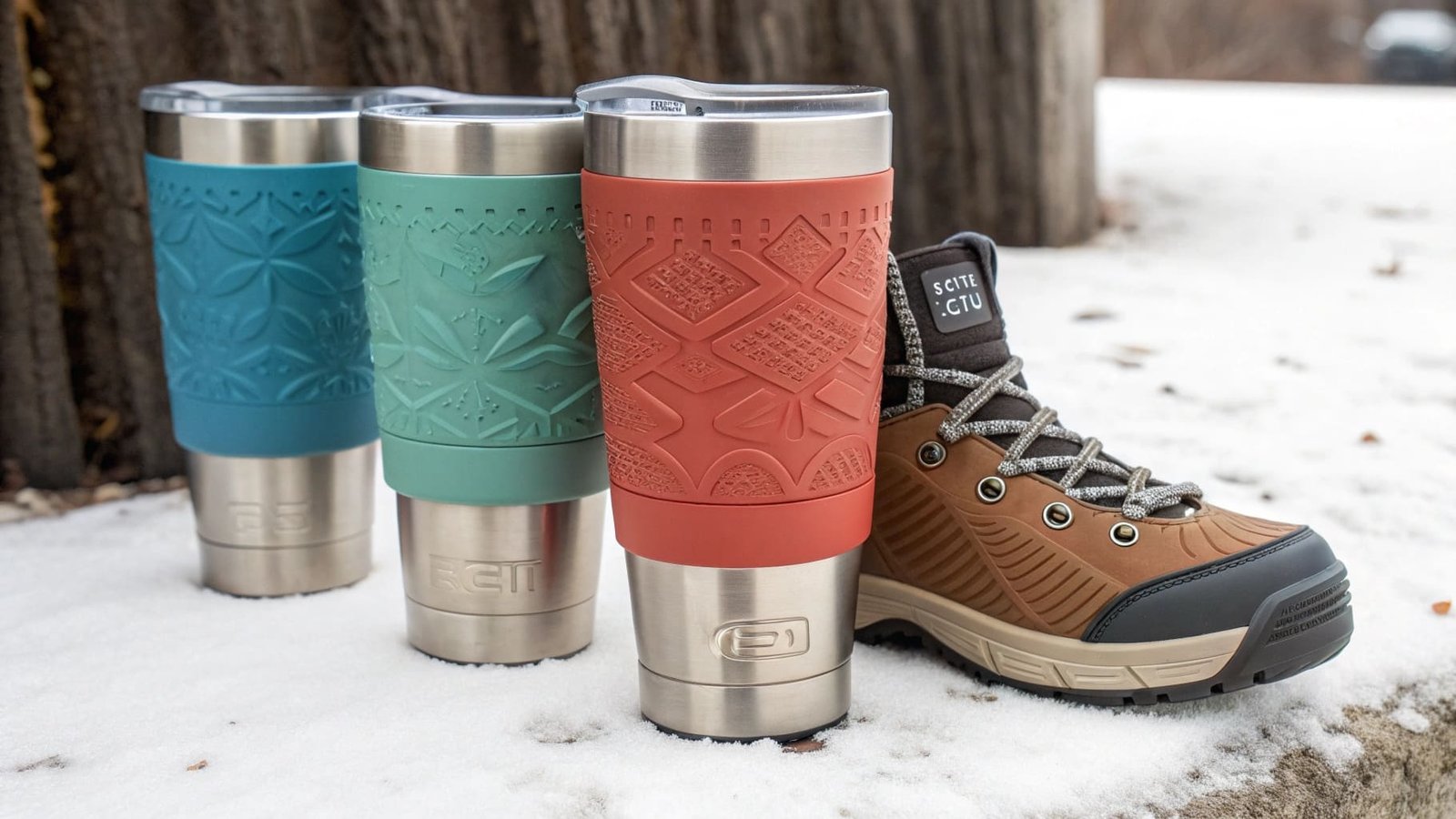
Most buyers focus only on price when sourcing tumbler boots. That is a mistake. The features you overlook at the sourcing stage are the exact ones your end customers will complain about. I have seen this happen too many times. A buyer locks in a low-cost order, ships the product, and then spends months handling complaints about boots that slip off, fade, or smell like chemicals. This guide breaks down the features that actually matter, so you can make a smarter buying decision from the start.
What Is a Silicone Boot For?
Most buyers think a silicone boot is just a cosmetic add-on. That thinking leads to poor sourcing decisions and unhappy end customers.
A silicone boot protects the base and lower body of a tumbler from scratches, dents, and surface damage. It also reduces the noise when a tumbler is set down on a hard surface. For end users, it improves grip. For wholesale buyers, it adds perceived value to the product and opens up a clear branding opportunity.
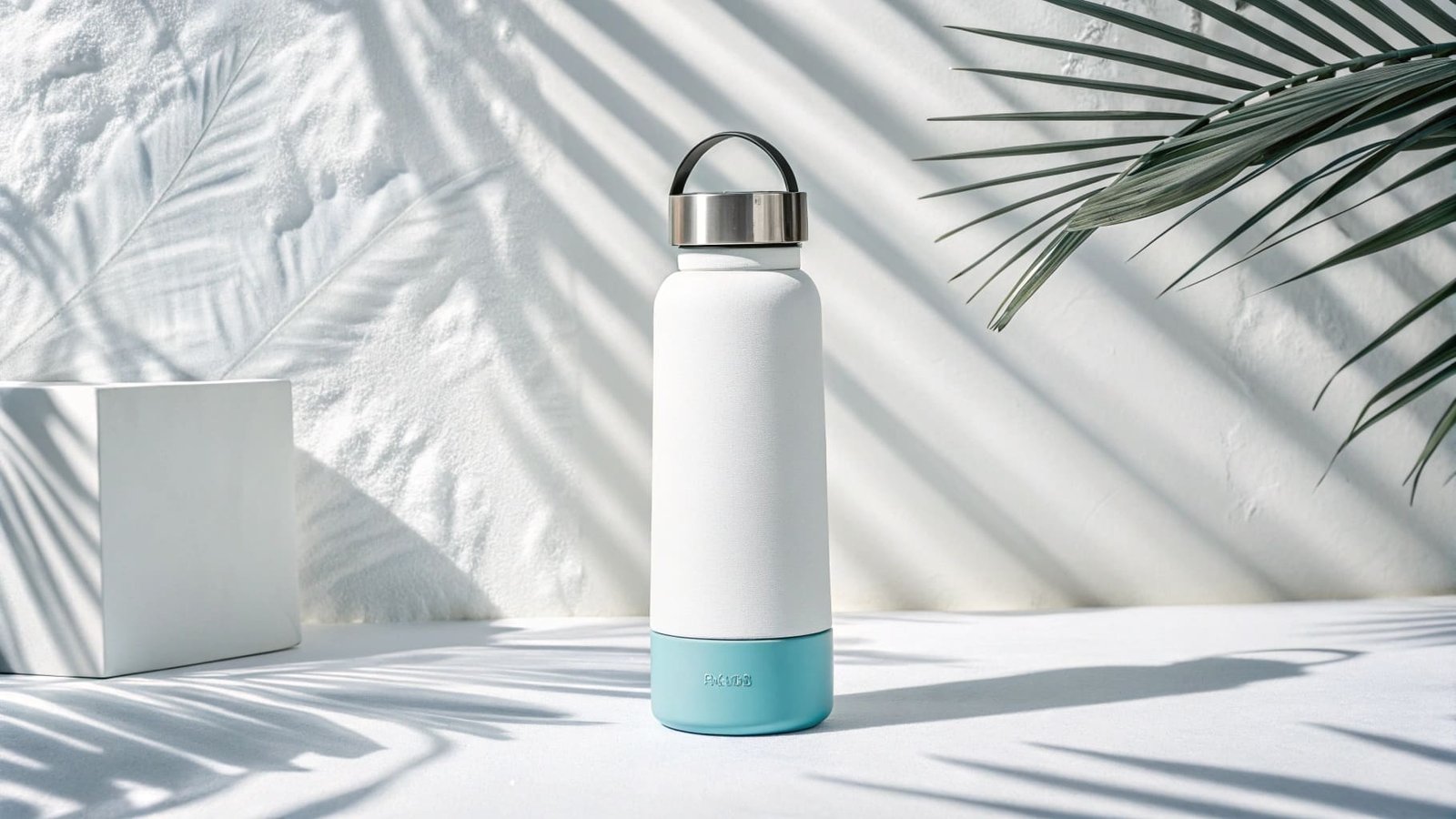
A silicone tumbler boot does more than protect a cup. It changes how a customer feels about the product from the first time they touch it.
Think about who buys premium tumblers. They are not just looking for something to hold their coffee. They want a product that feels well-made. A silicone boot contributes directly to that feeling. It changes the weight distribution in the hand. It softens the contact between the tumbler and a table. It signals to the customer that the seller paid attention to detail.
For wholesale buyers who rebrand and resell, this detail matters a lot. Your customer does not see your sourcing process. They only see the product. And the boot is one of the first things they touch.
There are three functional roles a silicone boot plays that every wholesale buyer should understand before placing an order:
| Function | What It Does | Why It Matters to Buyers |
|---|---|---|
| Surface Protection | Prevents scratches on furniture and the tumbler itself | Reduces product return rates |
| Grip Enhancement | Adds friction between the tumbler and the user's hand | Improves user safety, especially in hospitality use cases |
| Noise Reduction | Softens the impact when the tumbler is placed on a hard surface | Important for office and café environments |
Each of these functions is something your end customer will notice, even if they never describe it in those words. When the boot works well, the customer just feels satisfied. When it fails, they notice immediately and associate that failure with your brand, not the manufacturer.
What Are 5 Uses for Silicone in Commercial Markets?
Silicone is used in thousands of products. But not all of those uses are relevant to you as a wholesale buyer. The ones that are relevant directly affect your sourcing decisions.
Silicone is used in drinkware protection, food storage, medical devices, industrial sealing, and personal care.1 For wholesale drinkware buyers, the most important use cases are drinkware protection and food-grade applications, because these directly affect the certifications and material standards you need to demand from your supplier.
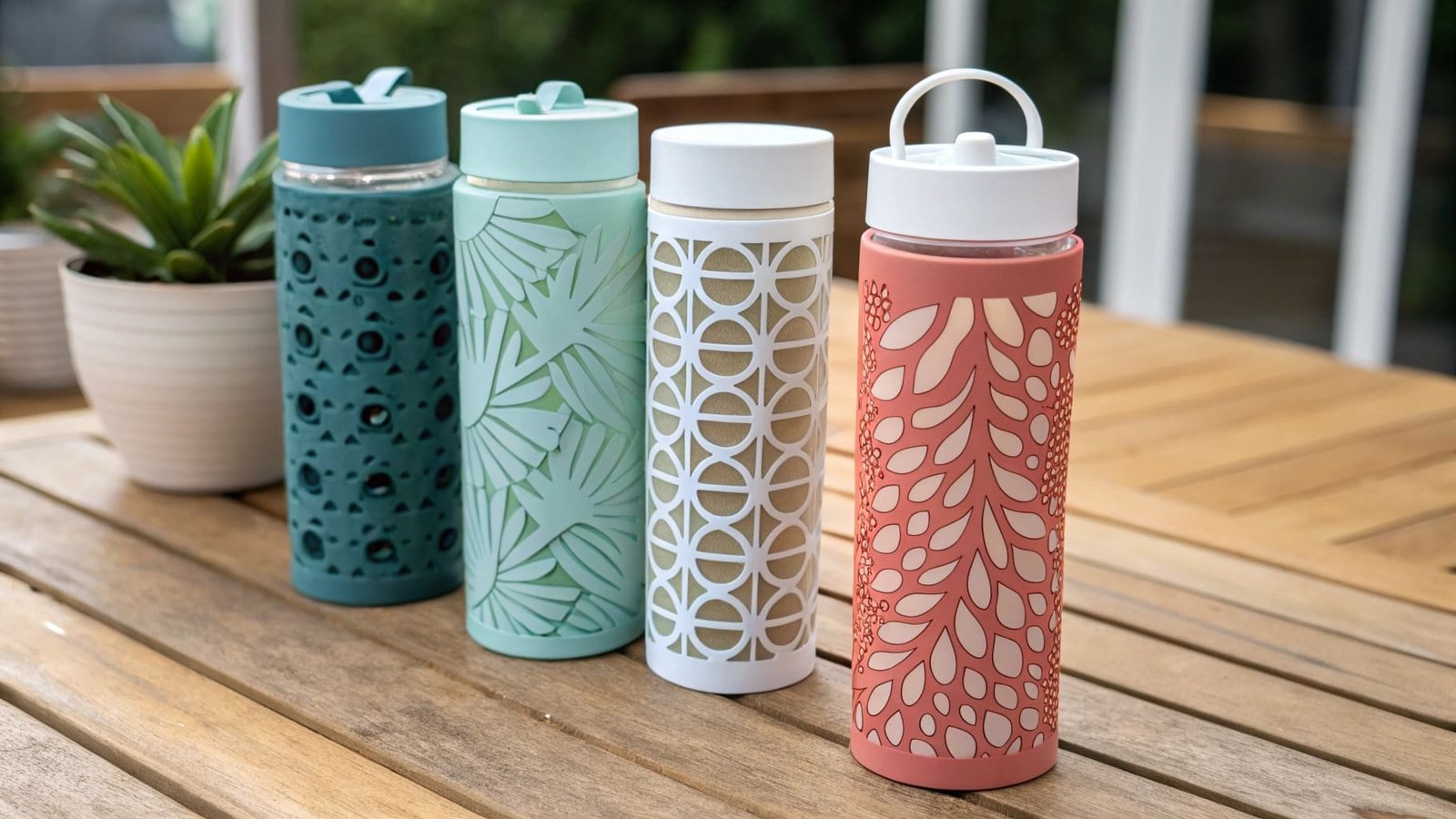
Understanding where silicone is commonly used helps you ask the right questions when you evaluate a supplier. A supplier who only makes industrial silicone parts is not the same as one who specializes in food-grade drinkware accessories. The materials, testing standards, and production controls are completely different.
Here are five commercial uses of silicone that are directly relevant to wholesale buyers in the drinkware space:
Impact Absorption in High-Use Products
Silicone absorbs impact well. This protects stainless steel tumblers during both shipping and daily use. Tumblers get knocked off desks. They get tossed into bags. They get set down hard on concrete countertops. A well-made silicone boot absorbs that impact before it reaches the tumbler wall. For wholesale buyers, this means fewer damaged-in-transit complaints and lower return rates. The thickness and shore hardness of the silicone material determine how well it performs this function.2 Suppliers who cannot tell you the shore hardness of their product are not the right partners for a quality-focused buyer.
Slip Resistance in Hospitality and Corporate Environments
Silicone provides natural grip on most surfaces. This matters in commercial settings like cafés, hotel lobbies, and office kitchens, where tumblers are used on polished wood, glass, or marble surfaces. A tumbler without a boot slides. A tumbler with a quality boot stays in place. For wholesale buyers who supply corporate merchandise or branded gifts, this is a practical selling point you can use with your own customers.
Thermal Barrier Between Tumbler and Surface
Silicone does not conduct heat well. This means a hot tumbler with a silicone boot will not leave a heat ring on a wooden desk. This is a small detail, but end customers notice it. It also reinforces the perception that the product is premium and well-designed. For buyers in markets where home office products are popular, this feature is worth highlighting in your product descriptions.
Noise Reduction in Office and Café Environments
This is one of the most underrated features of a silicone boot. When someone sets a metal tumbler down on a hard surface without a boot, it makes a loud clank. With a quality boot, that sound disappears. In an open office or a quiet café, this matters. It is not something most buyers think about at the sourcing stage, but it is something end users appreciate every single time they use the product. Suppliers who use higher-density silicone formulations tend to perform better on this measure.
Customization for Brand Differentiation
Silicone can be colored and embossed with precision.3 This makes it one of the best materials for brand customization on drinkware accessories. You can match the boot color exactly to your brand palette. You can emboss your logo into the surface. You can produce limited edition colorways for seasonal campaigns. For wholesale buyers who rebrand products, this flexibility is a major advantage. Generic plastic alternatives cannot match silicone's customization range at comparable cost.
| Use Case | Key Feature Required | Question to Ask Your Supplier |
|---|---|---|
| Impact Absorption | Shore hardness rating | What is the shore hardness of this material? |
| Slip Resistance | Surface texture specification | What surface texture does this boot use? |
| Thermal Barrier | Low thermal conductivity | What is the thermal rating of this silicone grade? |
| Noise Reduction | Material density | What density is used in this production run? |
| Brand Customization | Color consistency and embossing capability | Can you show me a color consistency report across batches? |
What Is the Most Common Use of Silicone?
Silicone shows up in thousands of products. But one category dominates the market, and it is the same one you are buying in right now.
The most common use of silicone is in kitchenware and drinkware accessories.4 This is because silicone meets food-grade safety standards, handles a wide temperature range, and holds up to repeated use.5 For wholesale buyers, this means the supplier base for food-grade silicone products is large, but quality levels vary significantly.
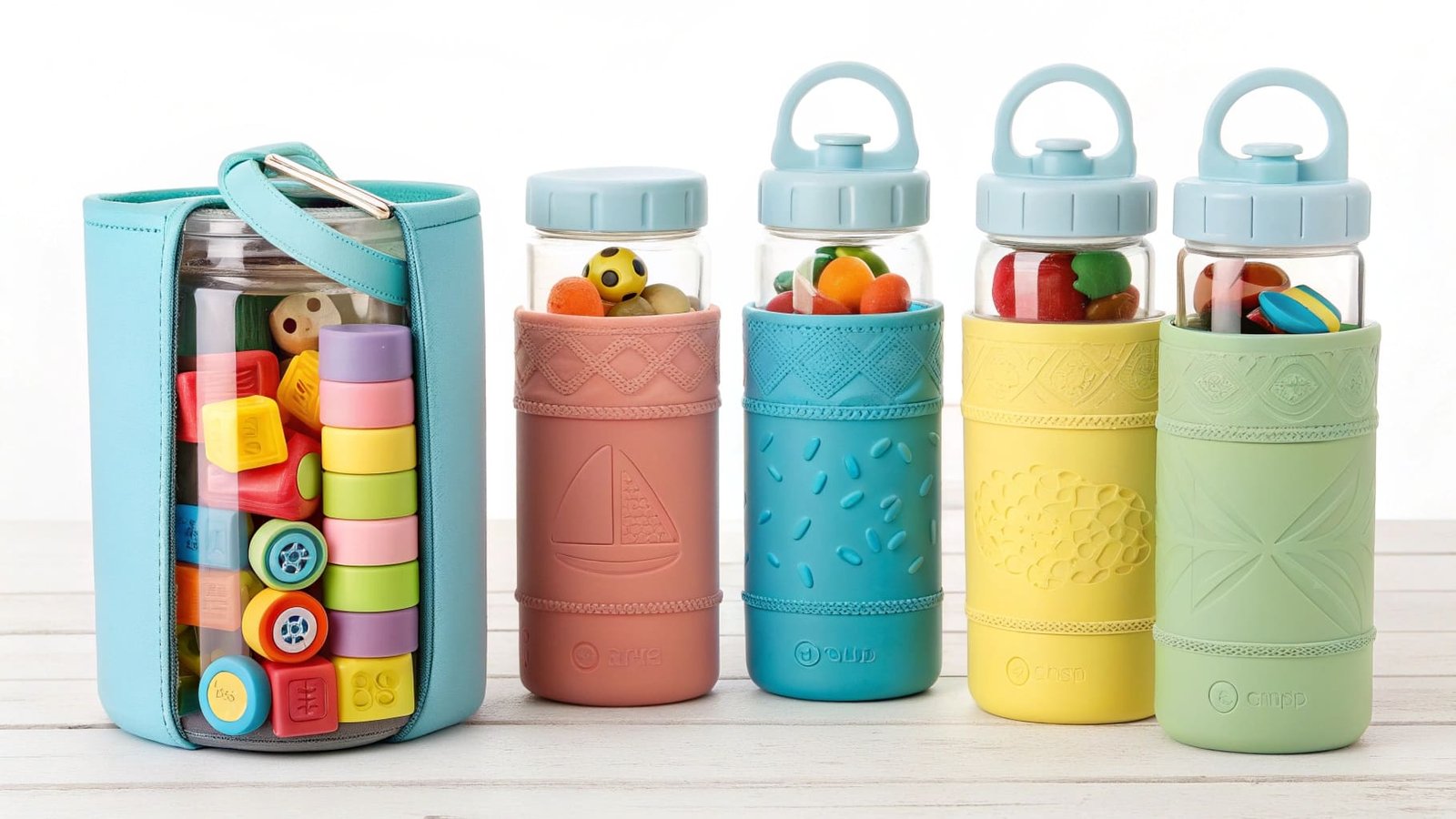
Food-grade silicone dominates kitchenware and drinkware accessories because it solves problems that other materials cannot. It is flexible but durable. It is safe for food contact. It does not crack under heat or cold. It does not absorb odors. And it can be manufactured in consistent colors and shapes at scale.
But the fact that silicone is widely used does not mean all silicone products are equal. The quality of a silicone tumbler boot depends on several factors that are easy to overlook when you are comparing price quotes.
The Manufacturing Details That Separate Quality Products from Cheap Ones
I have reviewed dozens of silicone tumbler boot samples from different suppliers. The differences are not always visible in a product photo. They show up in use.
Here is what separates a quality boot from a cheap one:
Food-Grade Certification
A quality silicone boot should come with documentation proving the material meets food-grade standards. In the US market, this typically means FDA compliance. In Europe, buyers look for LFGB certification.6 A supplier who cannot provide these documents is a risk you should not take. Certificate fraud is a real issue in this space. Always request the original test report, not just a certificate image, and verify the report was issued by a recognized third-party lab.
Dimensional Tolerances
A boot that does not fit snugly on the tumbler will slide, rotate, or fall off during use. This is one of the most common complaints in the tumbler accessory market. Dimensional tolerances refer to how precisely the boot is manufactured to match the tumbler's dimensions. A good supplier will provide tolerance specifications and be able to show you measurement data from their quality control process.
Color Consistency Across Production Runs
Color inconsistency is a serious problem for buyers who use silicone boots as part of a branded product line. If batch one is dark navy and batch two is noticeably lighter, your branding looks inconsistent and unprofessional. Ask your supplier for color consistency reports that compare Pantone measurements across production runs. This is a standard quality control step for serious manufacturers and a red flag if a supplier does not do it.
| Quality Factor | What to Check | Risk If Ignored |
|---|---|---|
| Food-Grade Certification | FDA or LFGB test report from a third-party lab | Legal liability in export markets |
| Dimensional Tolerance | Tolerance spec sheet and QC measurement data | High return rate due to poor fit |
| Color Consistency | Pantone comparison across batches | Brand inconsistency complaints from your customers |
| Material Smell | Request a sample and check for chemical odor | Negative reviews and returns from end customers |
| Surface Texture | Physical sample test on multiple surfaces | Grip complaints in real-use environments |
The difference between a commodity boot and a value-added product comes down to these details. Your end customers may not be able to name what they are noticing. But they will notice. And they will judge your brand based on it.
Conclusion
Silicone tumbler boots protect products, reduce returns, and build brand value. Know the features, ask the right questions, and choose suppliers who can prove their quality.
-
"Silicone rubber - Wikipedia", https://en.wikipedia.org/wiki/Silicone_rubber. General reference sources on silicones list applications in sealants, medical products, personal-care formulations, and food-contact or kitchen items, supporting the article's overview of commercial use categories. Evidence role: general_support; source type: encyclopedia. Supports: Silicones are used in multiple sectors, including sealants, medical applications, personal care, and food-contact or kitchen products.. Scope note: A general reference may not specifically mention tumbler boots or rank the relative size of each application. ↩
-
"Hardness and shock absorption of silicone rubber for ...", https://pubmed.ncbi.nlm.nih.gov/8642539/. Polymer-mechanics research shows that elastomer hardness and specimen geometry affect compressive response and energy absorption, supporting the relevance of Shore hardness and thickness to silicone boot cushioning. Evidence role: mechanism; source type: paper. Supports: Hardness and sample geometry influence the mechanical response of elastomeric materials under compression or impact.. Scope note: The relationship is design-dependent and may require product-specific testing for a given tumbler and boot geometry. ↩
-
"Creating Translucent Effects With Silicone Rubber Molding", https://www.sitech-corp.com/blog/creating-translucent-effects-with-silicone-rubber-molding/. Educational materials on silicone rubber processing describe pigment compounding and molding of detailed elastomeric features, supporting the feasibility of color customization and embossed markings. Evidence role: mechanism; source type: education. Supports: Silicone rubber can be compounded with pigments and molded into detailed shapes or surface features.. Scope note: The source would support manufacturing feasibility, not the cost or precision achievable by a particular supplier. ↩
-
"Silicone Products for Food Market Size, Trends & Growth 2035", https://www.wiseguyreports.com/reports/silicone-products-for-food-market. A market-analysis or institutional source should provide application-level data showing the relative share of silicone uses; without such data, the citation would only contextualize kitchenware as one recognized use rather than prove it is the most common. Evidence role: statistic; source type: research. Supports: Kitchenware and drinkware accessories represent a leading or the largest application category for silicone, if supported by market-share data.. Scope note: This claim may need revision if neutral market data shows larger silicone uses in sealants, electronics, industrial, or medical applications. ↩
-
"Inventory of Food Contact Substances Listed in 21 CFR", https://hfpappexternal.fda.gov/scripts/fdcc/index.cfm?search=silicone&set=IndirectAdditives. Food-contact regulations and materials references indicate that specified silicone materials may be used in food-contact applications and that silicone rubber has broad temperature resistance, supporting the article's general statement about food-grade silicone. Evidence role: general_support; source type: government. Supports: Certain silicone materials are permitted or evaluated for food-contact use, and silicone rubber is known for temperature resistance and durability.. Scope note: Regulatory acceptance depends on the exact formulation, additives, extraction limits, and jurisdiction. ↩
-
"21 CFR 177.2600 -- Rubber articles intended for repeated ...", https://www.ecfr.gov/current/title-21/chapter-I/subchapter-B/part-177/subpart-C/section-177.2600. Official food-contact materials guidance identifies FDA requirements in the United States and LFGB-related requirements in Germany, supporting the article's distinction between common US and European compliance references. Evidence role: definition; source type: government. Supports: FDA food-contact rules apply in the United States, and LFGB-related requirements are used in Germany and commonly referenced in European food-contact testing.. Scope note: LFGB is German law rather than a single EU-wide certification scheme, so the citation should avoid implying that it replaces all European Union food-contact requirements. ↩