Why Do B2B Buyers Choose Silicone Over Plastic for Tumbler Bottom Covers?
You picked a great-looking tumbler design. The branding is sharp. But your bottom cover keeps cracking, sliding, and scratching surfaces. That one small part is costing you customers.
Silicone tumbler bottom covers outperform plastic in three key ways: they absorb shock better, they contain no harmful chemicals, and they last far longer without cracking or fading.1 For B2B buyers who care about brand reputation, these differences are not small details. They are the difference between a repeat customer and a return claim.
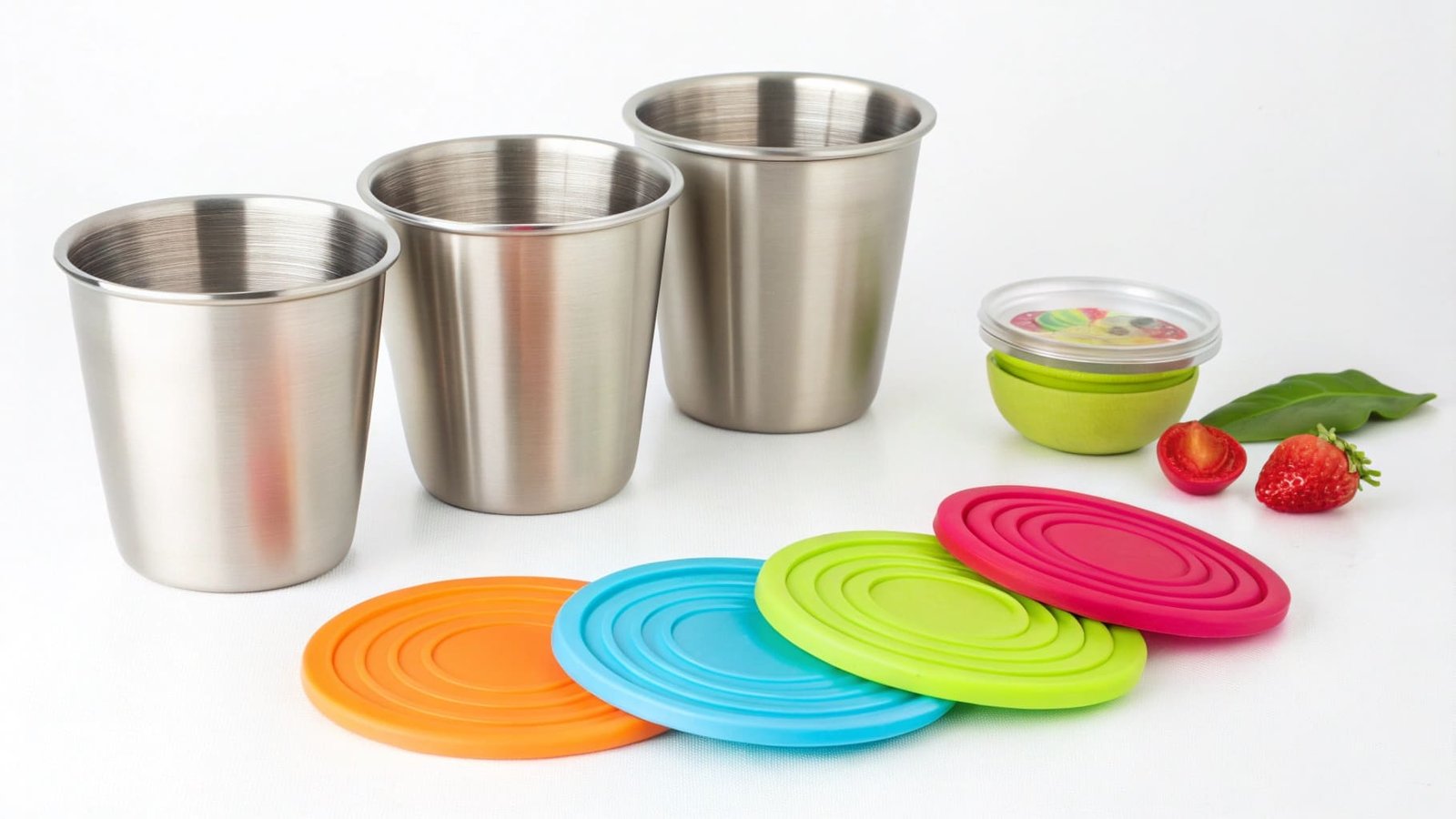
I have worked with dozens of buyers who switched from plastic to silicone. Most of them say the same thing: they wish they had made the switch earlier. The performance gap between the two materials is real. And in a competitive drinkware market, that gap shows up in reviews, returns, and reorder rates. Let me walk you through what the data and experience actually show.
Why Is Silicone Better Than Plastic?
You sell a premium tumbler. But the bottom cover slides on desks, scratches tables, and snaps after a few drops. That cheap plastic part is quietly killing your brand image.
Silicone handles daily wear in a way that plastic simply cannot. It absorbs impact, grips surfaces, and stays flexible even after years of use. Plastic becomes brittle. Silicone does not.
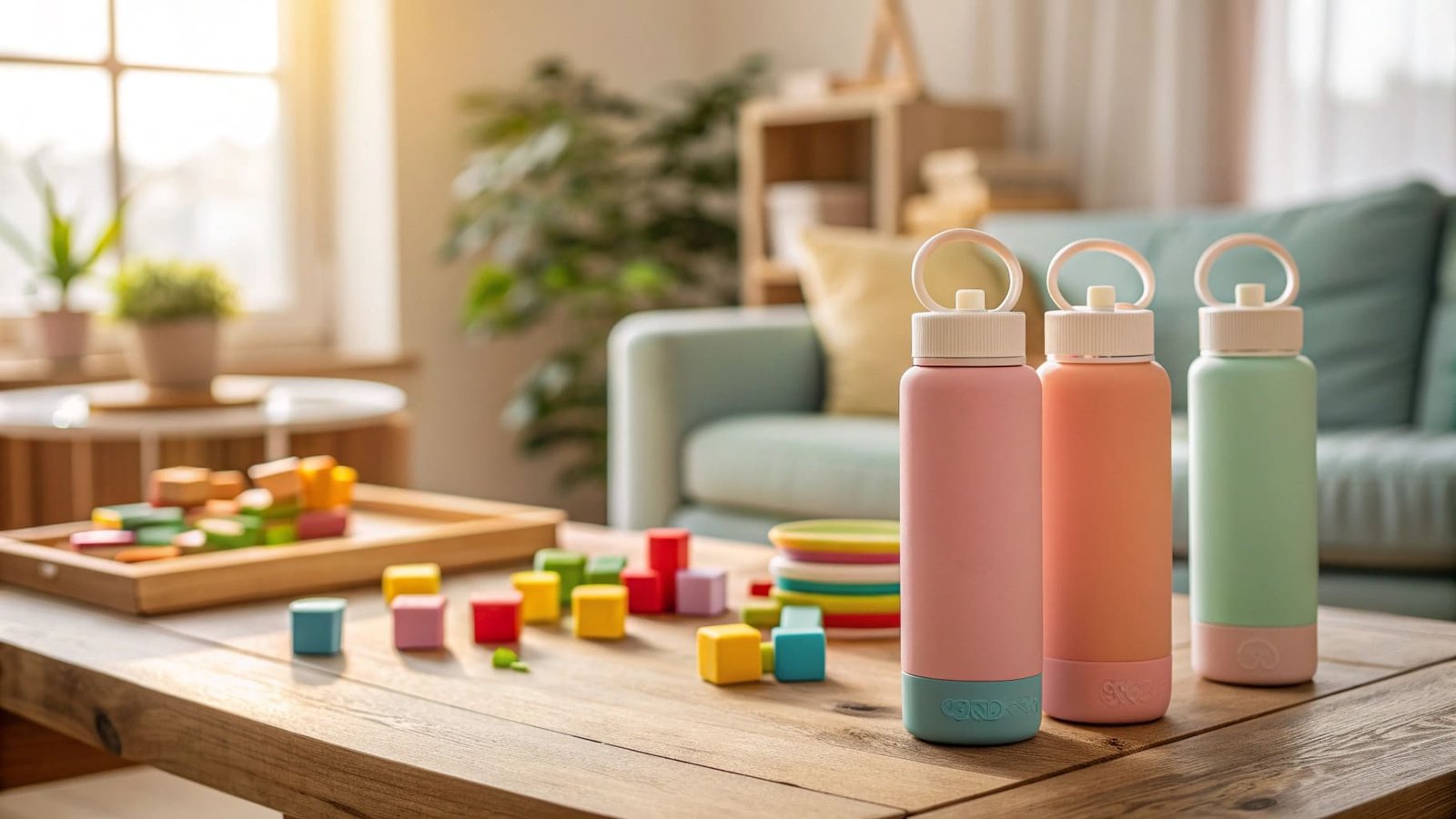
The core difference comes down to material properties. Plastic is rigid. When it takes a hit, it cracks or chips. Silicone is flexible. When it takes the same hit, it compresses and bounces back.2 This matters every single day for end users who carry tumblers in bags, set them on car dashboards, and place them on kitchen counters.
Beyond impact resistance, silicone has a natural grip texture. This keeps the tumbler stable on smooth surfaces. Plastic is slippery by comparison. A tumbler that tips over on a desk is a frustrating product. A tumbler that stays put is a reliable one.
There is also the noise factor. Plastic scrapes against hard surfaces and produces a scratching sound. Silicone is quiet. That is a small detail, but it shapes how a user feels about the product every time they set it down.
Here is a direct comparison of the two materials across the most important performance categories:
| Performance Category | Silicone | Plastic |
|---|---|---|
| Shock Absorption | High | Low |
| Surface Grip | Strong, non-slip | Slippery |
| Noise on Hard Surfaces | Silent | Loud scratching |
| Flexibility Over Time | Stays flexible | Becomes brittle |
| Crack Resistance | Excellent | Poor after repeated use |
| Temperature Tolerance | Wide range | Narrow range |
For B2B buyers like you, every one of these categories connects directly to customer satisfaction and return rates. A single crack in a bottom cover can trigger a one-star review that affects future sales. Silicone removes that risk from the table.
Are Silicone or Plastic Bottles Better?
Your customers are reading labels. They are searching for BPA-free, toxin-free, and safe-for-hot-liquids on product pages. If your bottom cover is plastic, that search ends with your competitor.
Silicone bottles and accessories test consistently better on safety benchmarks.3 Food-grade silicone contains no BPA, no phthalates, and no additives that leach into liquids.4 Plastic, especially lower-grade plastic, carries real chemical risks under heat or wear.
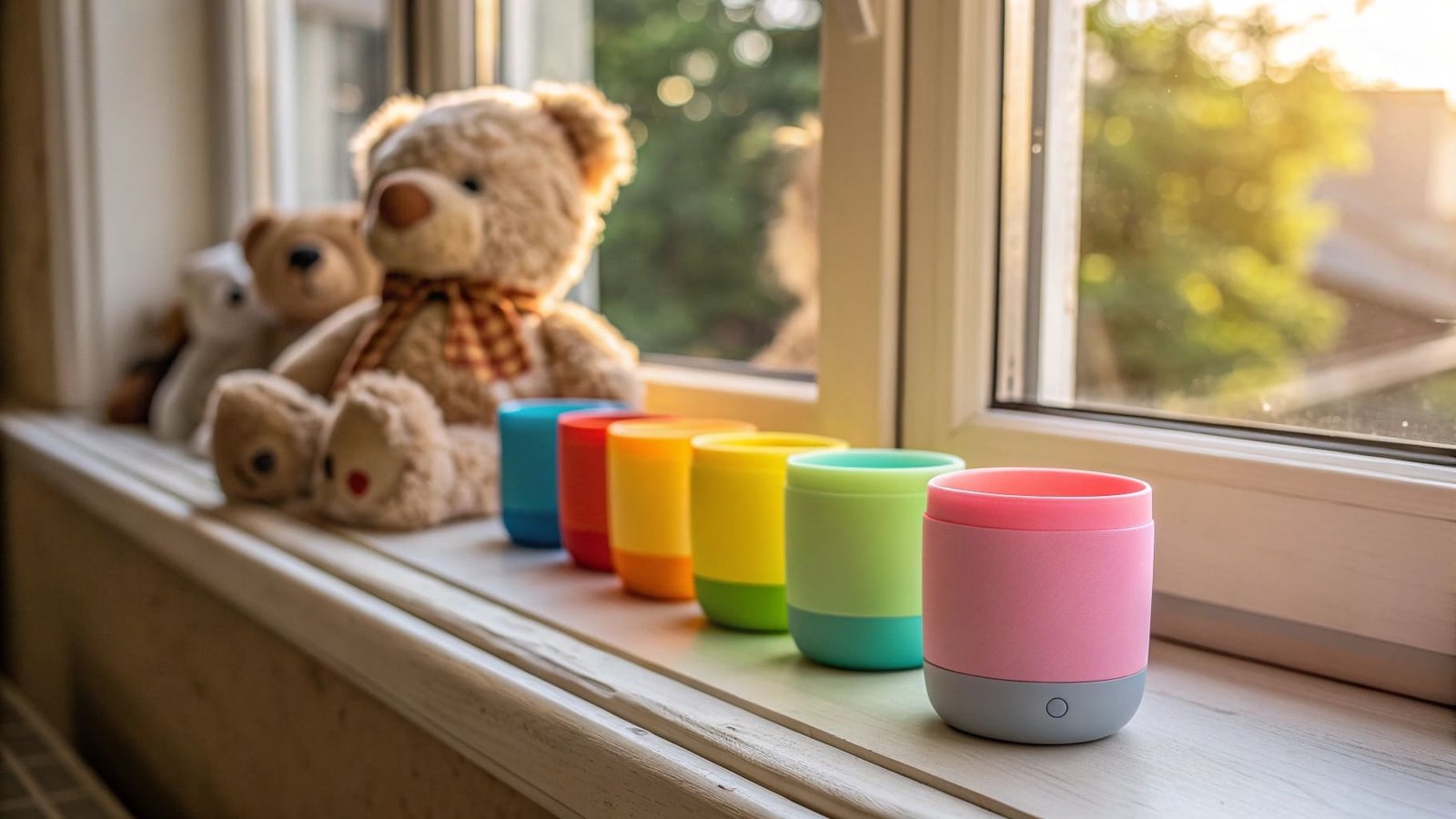
I talk to procurement officers every week. Many of them come to me after a supplier audit or a customer complaint. The pattern is almost always the same. They used a lower-cost plastic component to save a few cents per unit. Then a complaint came in. A certification question came up. Or a retailer asked for test reports and the supplier could not provide them.
Food-grade silicone avoids this entire category of risk. It is chemically stable. It does not react with liquids.5 It does not degrade in ways that release harmful substances. This matters most when tumblers are used with hot beverages or left in warm environments like cars.
Here is how silicone and plastic compare on the safety criteria that procurement officers and retailers most often check:
| Safety Criterion | Silicone | Plastic |
|---|---|---|
| BPA Content | None | Risk with certain grades |
| Phthalate Content | None | Risk with certain grades |
| Leaching Under Heat | None | Possible with wear |
| FDA / LFGB Compliance | Achievable | Grade-dependent |
| Suitability for Hot Liquids | Yes | Limited |
| Degradation Over Time | Minimal | Yes, especially with UV |
If your brand targets health-conscious consumers, or if you sell through retailers who require food-safety certification, silicone is not a premium option. It is the only option that keeps your compliance record clean.
Are Silicone Lids Safer Than Plastic?
You ordered 5,000 units with plastic bottom covers. Six months later, you are processing returns because the covers cracked. That is not just a product problem. That is a cash flow problem.
Silicone lids and covers are safer in the long run. They do not crack under pressure, they do not discolor with use, and they do not fail in ways that create sharp edges or chemical exposure risks.
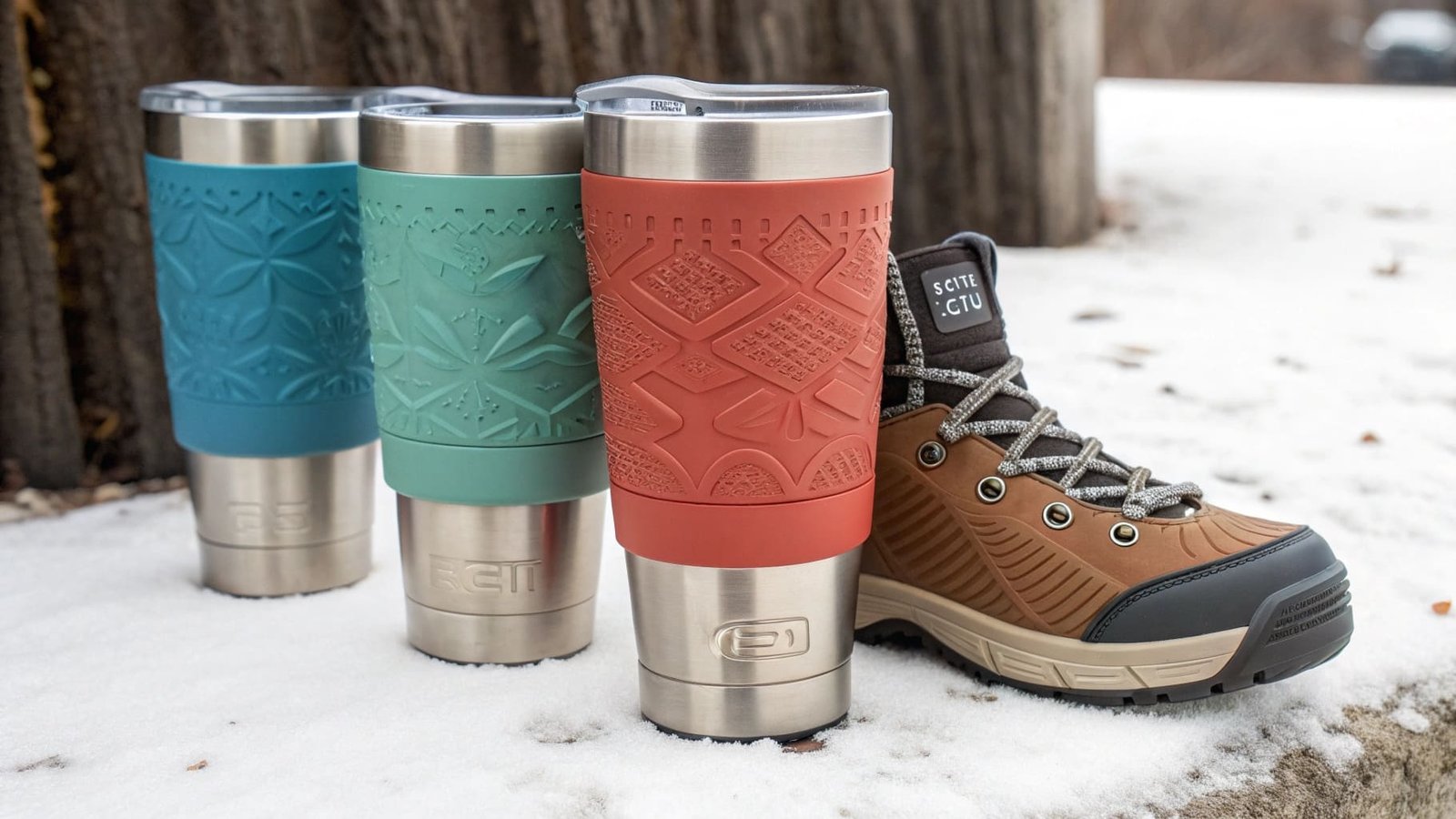
I have seen this scenario play out with real buyers. The plastic bottom cover looked fine in the sample. It passed the initial inspection. But after six months of normal use, reports came back: cracked edges, discoloration, covers popping off after light drops. The root cause was always the same. Plastic has a fatigue limit. Hit it enough times, and it fails.
Silicone does not have the same fatigue limit. Food-grade silicone can flex and compress thousands of times without losing its shape or structural integrity.6 This is the core reason why silicone bottom covers produce fewer warranty claims and fewer customer complaints over the life of the product.
There is also a safety dimension beyond chemistry. When plastic cracks, it can leave sharp edges. Those edges are a real risk for users, especially children. Silicone does not crack. When silicone wears, it stays soft. There is no sharp edge outcome.
Here is a direct breakdown of long-term safety and durability performance:
| Durability Factor | Silicone | Plastic |
|---|---|---|
| Lifespan Under Daily Use | Several years | Often under 12 months |
| Crack Risk | Very low | High after repeated impact |
| Discoloration Over Time | Minimal | Common |
| Sharp Edge Risk on Failure | None | Yes, if cracked |
| Warranty Claim Rate | Low | Higher |
| End-User Satisfaction Over Time | Sustained | Declines |
For a brand owner who distributes through retail channels, long-term durability is a brand protection strategy. One batch of cracked plastic covers can damage a reputation that took years to build. Silicone keeps that risk low without a significant increase in unit cost.
Conclusion
Silicone beats plastic on grip, safety, and durability. For B2B buyers, that means fewer returns, stronger brand perception, and better long-term margins.
-
"Effects of combined UV-tensile aging on structural and electrical ...", https://pmc.ncbi.nlm.nih.gov/articles/PMC12308822/. Materials-science literature describes silicone elastomers as flexible, chemically stable polymers with useful damping and aging-resistance properties, supporting the general comparison with rigid plastic components. Evidence role: general_support; source type: research. Supports: The source should support that silicone elastomers are flexible, chemically stable, and resistant to environmental aging relative to many rigid plastics.. Scope note: The evidence would support the material-property comparison generally, not prove performance for every tumbler-bottom-cover design. ↩
-
"[PDF] Study on mechanical properties of silicone rubber materials used as ...", https://docs.lib.purdue.edu/cgi/viewcontent.cgi?filename=2&article=1137&context=icpns&type=additional. Mechanical studies of silicone rubber document elastic recovery and compression-set behavior, supporting the claim that silicone components can deform under load and recover rather than fracture like rigid materials. Evidence role: mechanism; source type: paper. Supports: The source should support silicone rubber’s elastic recovery under compression and its use where repeated deformation is expected.. Scope note: The source would support the material behavior, while actual recovery depends on part geometry and silicone formulation. ↩
-
"Food Packaging and Chemical Migration: A Food Safety Perspective", https://pmc.ncbi.nlm.nih.gov/articles/PMC12096275/. Food-contact safety assessments evaluate silicone and plastic materials through migration and composition testing, providing a regulatory context for comparing safety benchmarks. Evidence role: general_support; source type: institution. Supports: The source should discuss food-contact safety evaluation and migration testing for silicone and plastic materials.. Scope note: The source may establish the testing framework rather than prove that all silicone products test better than all plastic products. ↩
-
"Migration study of phthalates from non-food plastic containers ...", https://pmc.ncbi.nlm.nih.gov/articles/PMC10559742/. Food-contact regulatory sources distinguish silicone rubber materials from BPA- or phthalate-containing plastics and require compliant materials to meet applicable migration and composition requirements. Evidence role: definition; source type: government. Supports: The source should support that BPA and phthalates are associated with certain plastics, while compliant food-grade silicone is regulated for food-contact use and migration limits.. Scope note: Compliance depends on the specific formulation and testing; the evidence should not be used to imply that every silicone product is automatically non-leaching. ↩
-
"Evaluation of the color stability of three maxillofacial silicone ... - PMC", https://pmc.ncbi.nlm.nih.gov/articles/PMC10867345/. Materials references describe silicone rubber as chemically stable and resistant to many aqueous media, supporting its common use in food-contact and sealing applications. Evidence role: mechanism; source type: research. Supports: The source should support silicone rubber’s chemical stability and resistance to reaction with water-based liquids.. Scope note: Chemical resistance varies with solvents, temperature, and additives, so the support is strongest for ordinary beverage-use conditions. ↩
-
"Cyclic Compression Testing of Three Elastomer Types—A ... - PMC", https://pmc.ncbi.nlm.nih.gov/articles/PMC9002981/. Cyclic mechanical testing of silicone rubber reports retention of elastomeric function over repeated compression or flexing, supporting the claim that silicone can endure many use cycles without major loss of shape. Evidence role: statistic; source type: paper. Supports: The source should provide cyclic loading, compression set, or fatigue data showing silicone rubber maintains mechanical integrity over many deformation cycles.. Scope note: The specific threshold of “thousands” should be matched to a tested formulation and loading condition. ↩