What Can Replace Silicone Grease in Tumbler Assembly for Mass Production?
You picked a cheaper lubricant. Now your seals are failing. Returns are piling up. Your peak season is gone. The wrong lubricant choice can kill a product line before it starts.
Silicone grease is the standard lubricant for tumbler assembly. It keeps seals flexible, resists water, and works across a wide temperature range. If you need an alternative, food-grade PFPE synthetic grease is the closest match. Petroleum jelly is not a safe substitute for silicone parts.
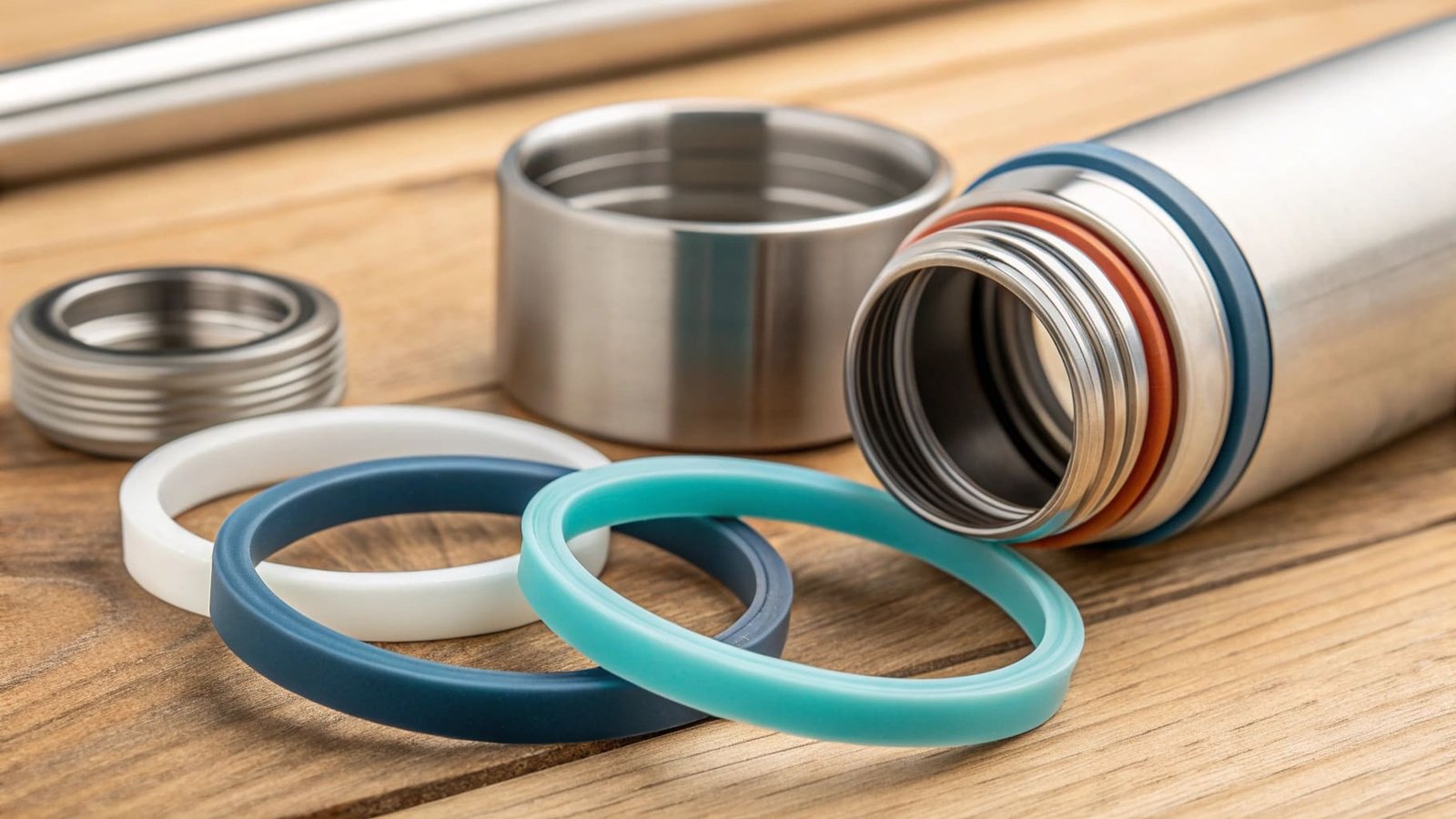
I work with silicone components every day. Tumblers, lids, gaskets, sleeves. And one question comes up more than I expect from buyers and production teams: can we swap the grease? The answer is not simple. Choosing the wrong lubricant in mass production is not just a technical mistake. It is a business risk. Let me break this down properly.
What Can Be Used Instead of Silicone Grease?
Most people ask this question because of cost. Silicone grease is not cheap. And when you are running thousands of units, every cent adds up.
The safest alternatives to silicone grease are food-grade PFPE synthetic lubricants and, in limited cases, food-grade mineral oil. These options avoid chemical damage to silicone rubber parts. Petroleum-based products should be avoided entirely when silicone seals are involved.1
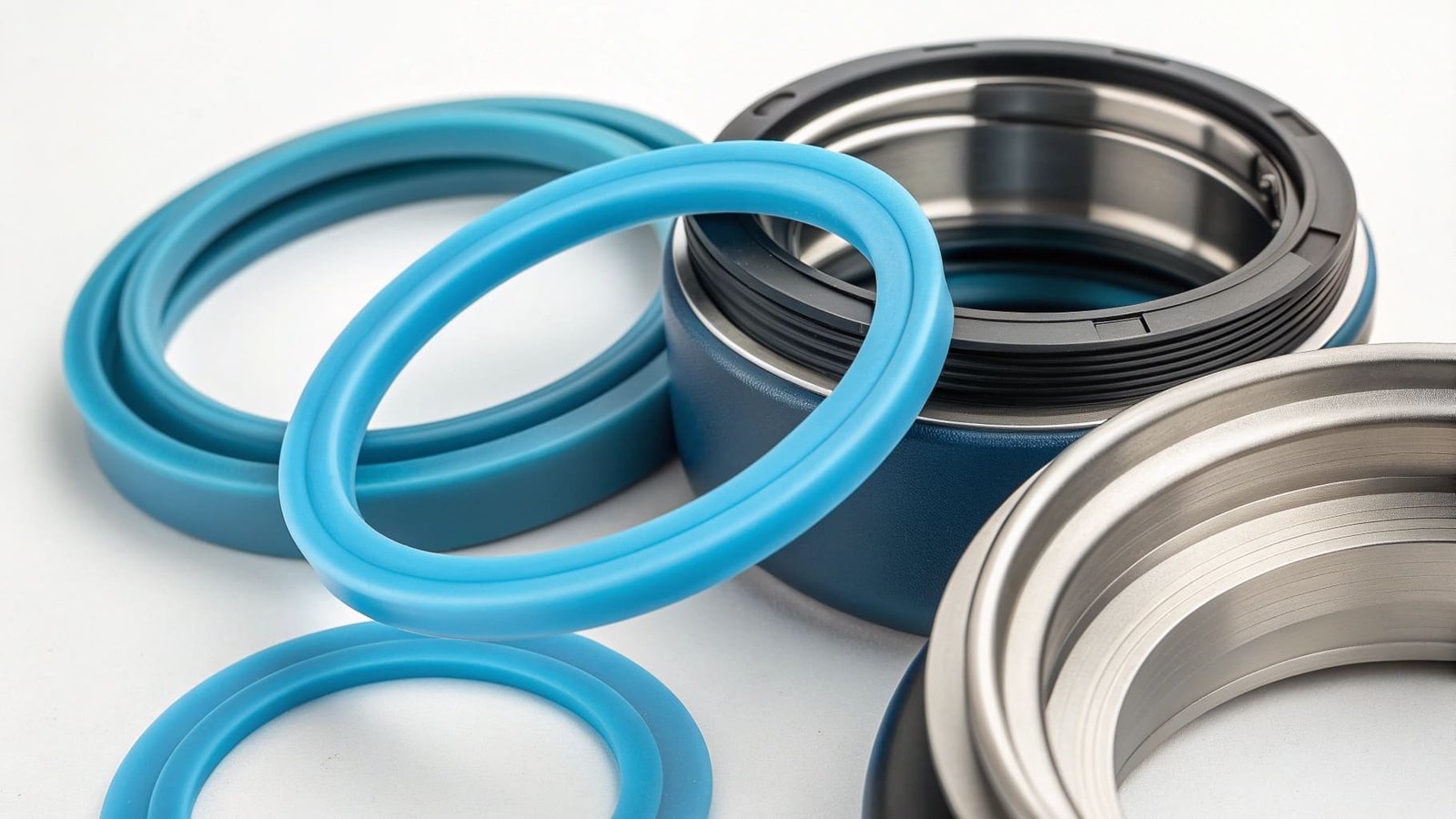
Let me explain why this matters so much in a production context.
Silicone rubber is sensitive to certain chemicals. When you apply a petroleum-based lubricant to a silicone seal, a reaction happens at the molecular level. The silicone absorbs the petroleum compounds and begins to swell.2 Over time, it loses its shape and its ability to create a proper seal. This does not happen overnight. It happens slowly, over weeks or months. By the time your customer notices the leak, the product has already left your warehouse, cleared customs, and been sitting on a shelf.
Here is a quick comparison of the main options available for tumbler assembly:
| Lubricant Type | Compatible with Silicone | Food-Safe | Temperature Stable | Cost Level |
|---|---|---|---|---|
| Silicone Grease | Yes | Yes (food-grade) | Yes | Medium |
| PFPE Synthetic Grease | Yes | Yes | Yes | High |
| Food-Grade Mineral Oil | Mostly Yes | Yes | Limited | Low |
| Petroleum Jelly | No | No | No | Very Low |
| Standard Mineral Grease | No | No | Limited | Low |
The takeaway is clear. If you are replacing silicone grease, you are moving up in cost, not down. The only true alternatives that hold up technically are more expensive, not cheaper.
Can I Use Petroleum Jelly in Place of Silicone Grease?
This is the most common substitution people try. Petroleum jelly is cheap, easy to find, and feels similar in texture. It seems like a logical swap.
Petroleum jelly is not compatible with silicone rubber. It causes swelling, softening, and seal degradation over time. In a mass production environment, using petroleum jelly on silicone parts will lead to product failure at scale.
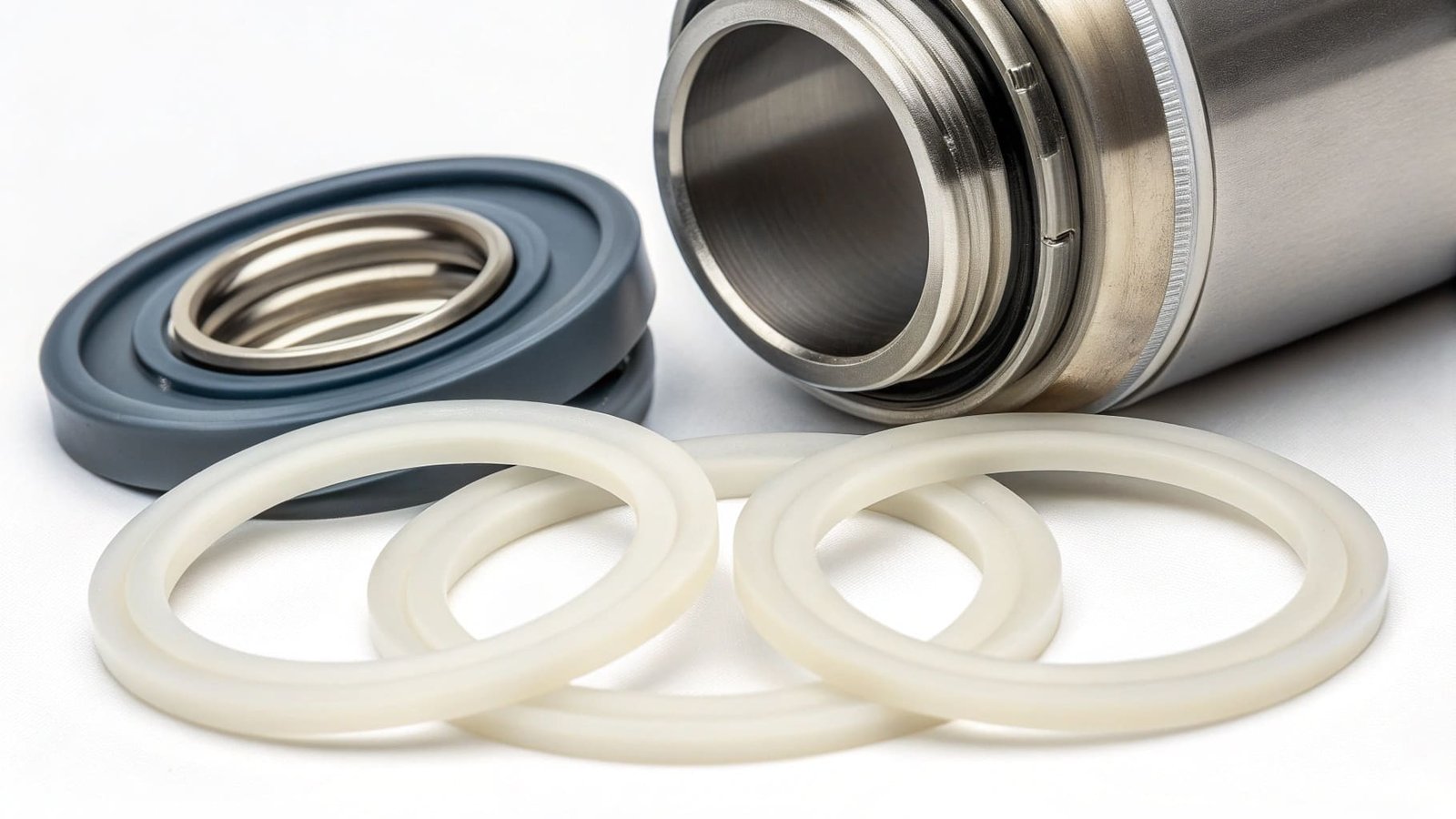
I want to be direct about this because the damage is not always visible during inspection.
When a tumbler leaves the production line, the seal may look and feel fine. The assembly goes smoothly. The lid closes properly. The quality check passes. But inside the silicone gasket, the petroleum compounds are already at work. The material is absorbing them slowly.
Here is what typically happens over time when petroleum jelly is used on silicone seals:
How Petroleum Jelly Damages Silicone Seals Over Time
| Time Frame | What Happens to the Seal |
|---|---|
| Day 1 to Day 30 | No visible change, seal appears normal |
| Day 30 to Day 90 | Slight swelling begins, fit becomes loose |
| Day 90 to Day 180 | Elasticity reduces, seal no longer forms tight contact |
| Day 180 and beyond | Leaking begins, material may crack or deform |
For a buyer like Mark, who is importing tumblers from China to resell in Canada under his own brand, this timeline is a serious problem. By the time customers start reporting leaks, he has already sold the stock, processed reorders, and invested in marketing. A wave of returns and complaints at that stage is not just a product issue. It is a brand issue.
There is also a food-safety angle here. Most tumblers are used for beverages.3 Any lubricant used in assembly that contacts the lid, gasket, or seal area could potentially transfer to the drink. Food-grade silicone grease is certified safe for this.4 Petroleum jelly is not certified for food contact in most markets, including the United States and Canada.5 This creates a compliance problem on top of the performance problem.
What Is the Closest Thing to Silicone Grease?
If you are facing a supply shortage or a cost pressure situation and need an alternative that actually performs, you want to know what comes closest. There is one clear answer here.
PFPE-based synthetic greases are the closest functional replacement for silicone grease. They are chemically inert, safe with silicone rubber, temperature stable, and meet food-safety standards. The main trade-off is cost. PFPE greases typically cost three to five times more than silicone grease.
Let me walk through why PFPE performs so well, and also help you decide when it actually makes sense to use it.
What Makes PFPE Grease a True Alternative
PFPE stands for perfluoropolyether. These are fully fluorinated synthetic lubricants. Because the molecular structure is built around fluorine and carbon bonds, they are almost completely chemically inert.6 They do not react with silicone rubber. They do not absorb into the material. They do not evaporate or migrate under heat.
Here is how PFPE compares to silicone grease across the factors that matter most in tumbler production:
| Performance Factor | Silicone Grease | PFPE Synthetic Grease |
|---|---|---|
| Compatibility with Silicone | Excellent | Excellent |
| Food-Grade Certification | Available | Available |
| Temperature Range | -40°C to 200°C | -70°C to 250°C |
| Water Resistance | High | Very High |
| Chemical Inertness | High | Very High |
| Automated Dispensing | Compatible | Compatible |
| Unit Cost | Medium | High |
| Used in Mass Production | Common | Less Common |
PFPE makes sense in a few specific situations. If you are making high-end tumblers with premium pricing, the lubricant cost becomes a smaller percentage of total product cost. If your target market has strict food-contact regulations that require certification documentation, PFPE often comes with more complete testing data. If your production environment involves extreme temperatures during storage or shipping, PFPE holds up better.
What About Food-Grade Mineral Oil?
Food-grade mineral oil sits in a middle ground. It is generally safe with silicone rubber in the short term, and it is affordable. But it lacks staying power. It is a liquid, not a grease. It migrates away from the seal surface over time. It evaporates under heat. In a tumbler that is washed regularly and exposed to hot beverages, mineral oil does not last.
I would consider food-grade mineral oil only for temporary lubrication during the assembly process itself, never as a long-term lubricant meant to remain in the product.
Conclusion
Silicone grease is still the best choice for tumbler assembly. Alternatives either damage the seals or cost more. Always verify the lubricant used before you commit to a supplier.
-
"Effects of Carbon Black on Mechanical Properties and Oil ...", https://pmc.ncbi.nlm.nih.gov/articles/PMC11013876/. Elastomer-compatibility literature reports that silicone rubber may swell in contact with hydrocarbon oils, supporting the warning against petroleum-based lubricants on silicone seals. Evidence role: mechanism; source type: research. Supports: Silicone rubber can swell or degrade when exposed to certain petroleum-derived oils or hydrocarbon lubricants.. Scope note: Compatibility varies with silicone formulation, oil composition, exposure time, and temperature. ↩
-
"Spreading and absorption of silicone oil droplets on ... - PMC", https://pmc.ncbi.nlm.nih.gov/articles/PMC12999746/. Polymer swelling studies explain that liquids can diffuse into elastomer networks and increase volume, providing a mechanism for petroleum-derived compounds to swell silicone rubber. Evidence role: mechanism; source type: paper. Supports: Organic liquids can diffuse into elastomer networks and cause swelling when the polymer and liquid are compatible enough for absorption.. Scope note: The mechanism is general polymer science and should be matched with silicone-specific compatibility data for direct proof. ↩
-
"Tumbler (glass) - Wikipedia", https://en.wikipedia.org/wiki/Tumbler_(glass). Reference definitions describe a tumbler as a drinking glass or cup used for beverages, supporting the article’s food-contact framing. Evidence role: definition; source type: encyclopedia. Supports: A tumbler is a drinking vessel or beverage container.. Scope note: Definitions establish ordinary use, not the proportion of all tumblers used for beverages. ↩
-
"21 CFR 178.3570 -- Lubricants with incidental food contact. - eCFR", https://www.ecfr.gov/current/title-21/chapter-I/subchapter-B/part-178/subpart-D/section-178.3570. Food-grade lubricant standards such as NSF H1 address lubricants with incidental food contact, supporting the statement that appropriately certified silicone greases can be used in food-contact-adjacent assemblies. Evidence role: expert_consensus; source type: institution. Supports: Food-grade lubricants may be certified or registered for incidental food contact under recognized standards such as NSF H1.. Scope note: Certification applies only to specific registered formulations and permitted use conditions, not to all silicone greases. ↩
-
"21 CFR 178.3570 -- Lubricants with incidental food contact.", https://www.ecfr.gov/current/title-21/chapter-I/subchapter-B/part-178/subpart-D/section-178.3570. Official food-contact and lubricant-registration guidance shows that incidental food-contact lubricants require compliance with specified substances and conditions, supporting the need to distinguish certified food-grade lubricants from ordinary petroleum jelly. Evidence role: general_support; source type: government. Supports: Food-contact lubricant use is regulated or certified by specific frameworks, and ordinary petroleum jelly is not automatically approved for incidental food-contact lubrication.. Scope note: This evidence may establish the regulatory framework rather than prove non-certification of every petroleum jelly product in every market. ↩
-
"[PDF] Synthesis Report on Understanding Perfluoropolyethers (PFPEs ...", https://one.oecd.org/document/ENV/CBC/MONO(2024)5/en/pdf. Chemistry literature on perfluoropolyethers attributes their high chemical stability to the strength and shielding effects of carbon-fluorine bonding in the fluorinated polymer backbone. Evidence role: mechanism; source type: paper. Supports: The fluorinated structure of PFPEs contributes to high chemical stability and inertness.. Scope note: The wording 'almost completely chemically inert' is qualitative and should be supported with sources describing resistance under specified conditions. ↩