What Makes Tumbler Sleeves with Handles Essential for Coffee Shop Suppliers?
Every coffee shop supplier faces the same problem. Customers burn their hands. Cups get dropped. And your brand stays invisible in a crowded market. Tumbler sleeves with handles solve all three at once.
Tumbler sleeves with handles protect hands from heat, improve grip, and give coffee shops a surface to print their brand on.1 They work as safety tools and marketing tools at the same time. For suppliers, they are one of the most practical products to offer.
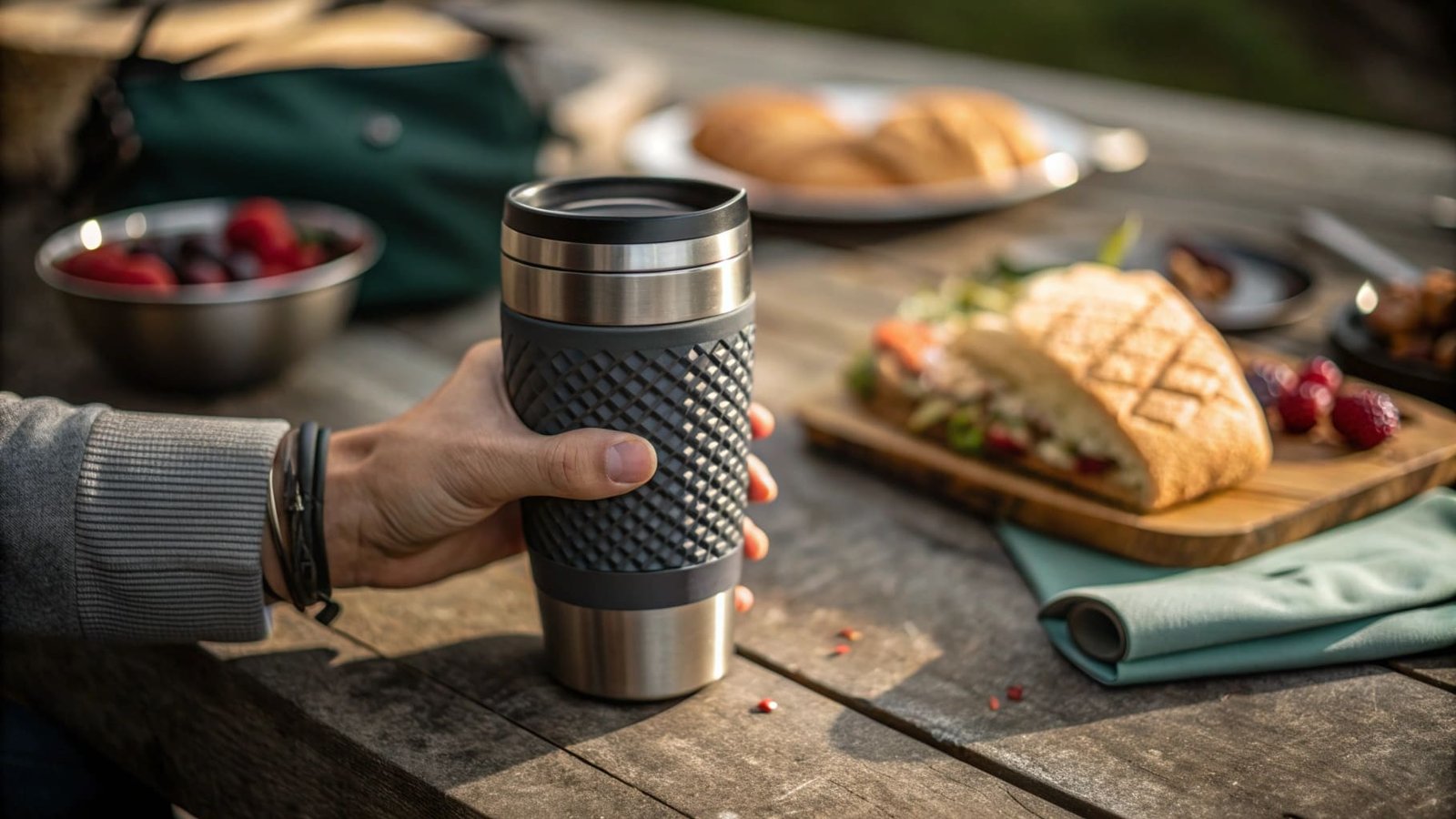
You might think a sleeve is just a sleeve. But the details behind sizing, cost, and naming tell a different story. Each of these details affects how well you serve your clients and how fast your business grows. Let me walk you through what actually matters.
Are Coffee Sleeves Cost-Effective?
Many suppliers look at the unit price and stop there. That single number hides the real story. And when you miss the real story, you leave money on the table.
Silicone coffee sleeves cost more upfront than cardboard ones. But silicone sleeves last through thousands of uses. That brings the cost per use far below what disposable sleeves ever could. For coffee shops buying in bulk, this difference is significant.
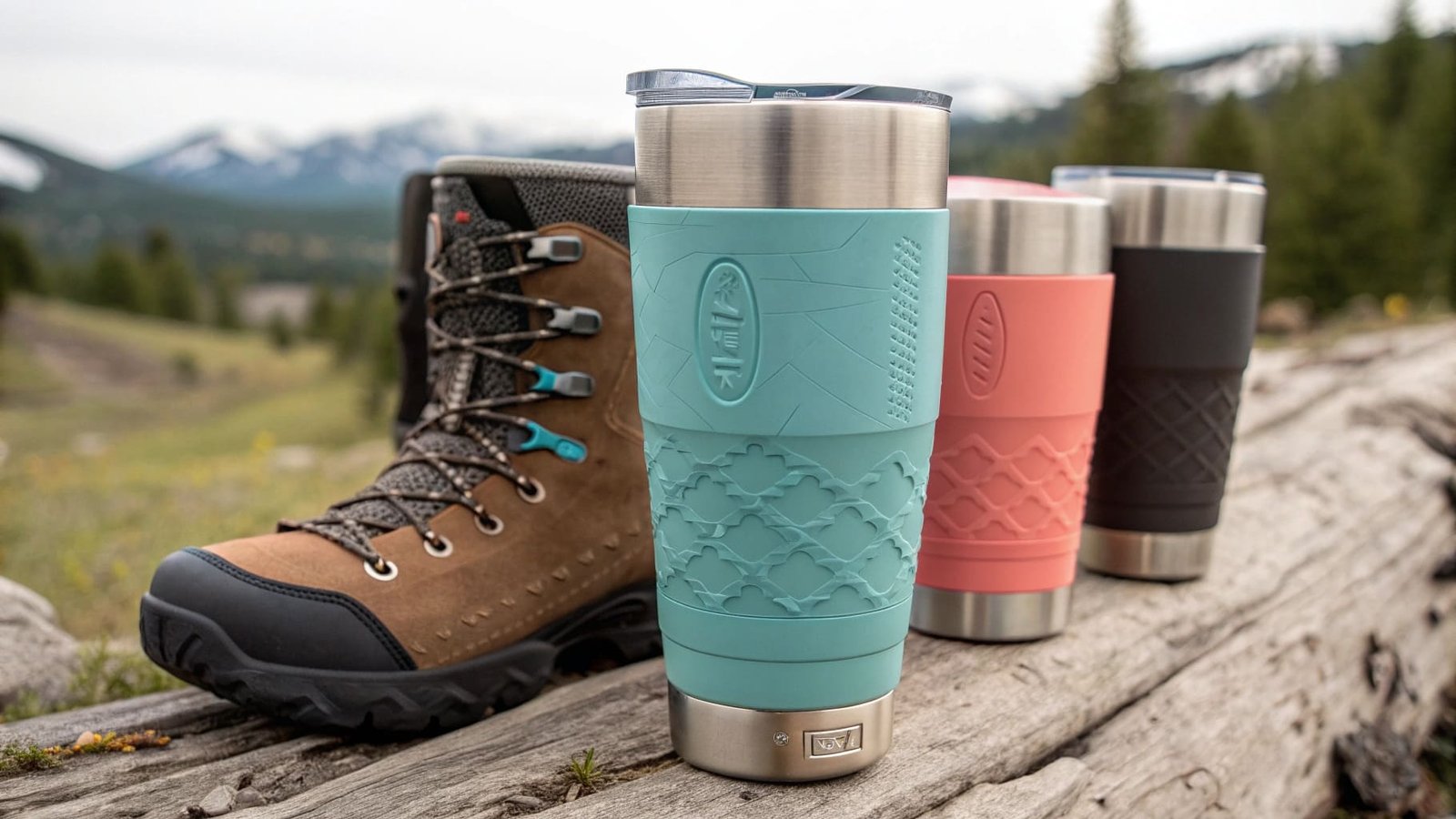
Let me put this in plain numbers. A cardboard sleeve costs around $0.02 to $0.05 per piece.2 A silicone sleeve costs between $1.50 and $4.00 per piece.3 That gap looks large until you factor in how long each one lasts.
A quality silicone sleeve holds up through 3,000 or more use cycles.4 If a coffee shop serves 300 customers a day, one silicone sleeve covers about ten days of use on its own. A cardboard sleeve covers one use and gets thrown away.
Here is how the two options compare across key cost areas:
| Cost Factor | Cardboard Sleeve | Silicone Sleeve |
|---|---|---|
| Unit Price | $0.02 – $0.05 | $1.50 – $4.00 |
| Use Cycles | 1 | 3,000+ |
| Cost Per Use | $0.02 – $0.05 | Less than $0.002 |
| Waste Disposal Cost | Ongoing | Near zero |
| Branding Value | Single use | Thousands of impressions |
| Annual Savings Potential | Baseline | 60–75% lower sleeve cost |
Coffee shops serving 200 to 500 customers daily feel this difference fast. They stop reordering disposables every week. They cut their waste disposal costs. And every silicone sleeve they hand out carries their logo into the street, the office, and the car.
I work with buyers who first push back on the price. Once they see the full picture, they almost always agree. The upfront cost is higher. The long-term cost is not.
This is the argument I bring to every coffee shop client. It works because the numbers are honest. And honest numbers build trust faster than any sales pitch.
What Is the Size of a Coffee Sleeve?
Sizing sounds simple. It is not. One wrong size and the sleeve slides off the cup or squeezes too tight. Either way, the customer notices, and your client gets a complaint.
Most standard coffee sleeves fit tumblers between 12 and 20 oz.5 The sleeve circumference usually falls between 9 and 11 inches. The height sits between 4 and 6 inches. These numbers cover the most common cup sizes in the market.
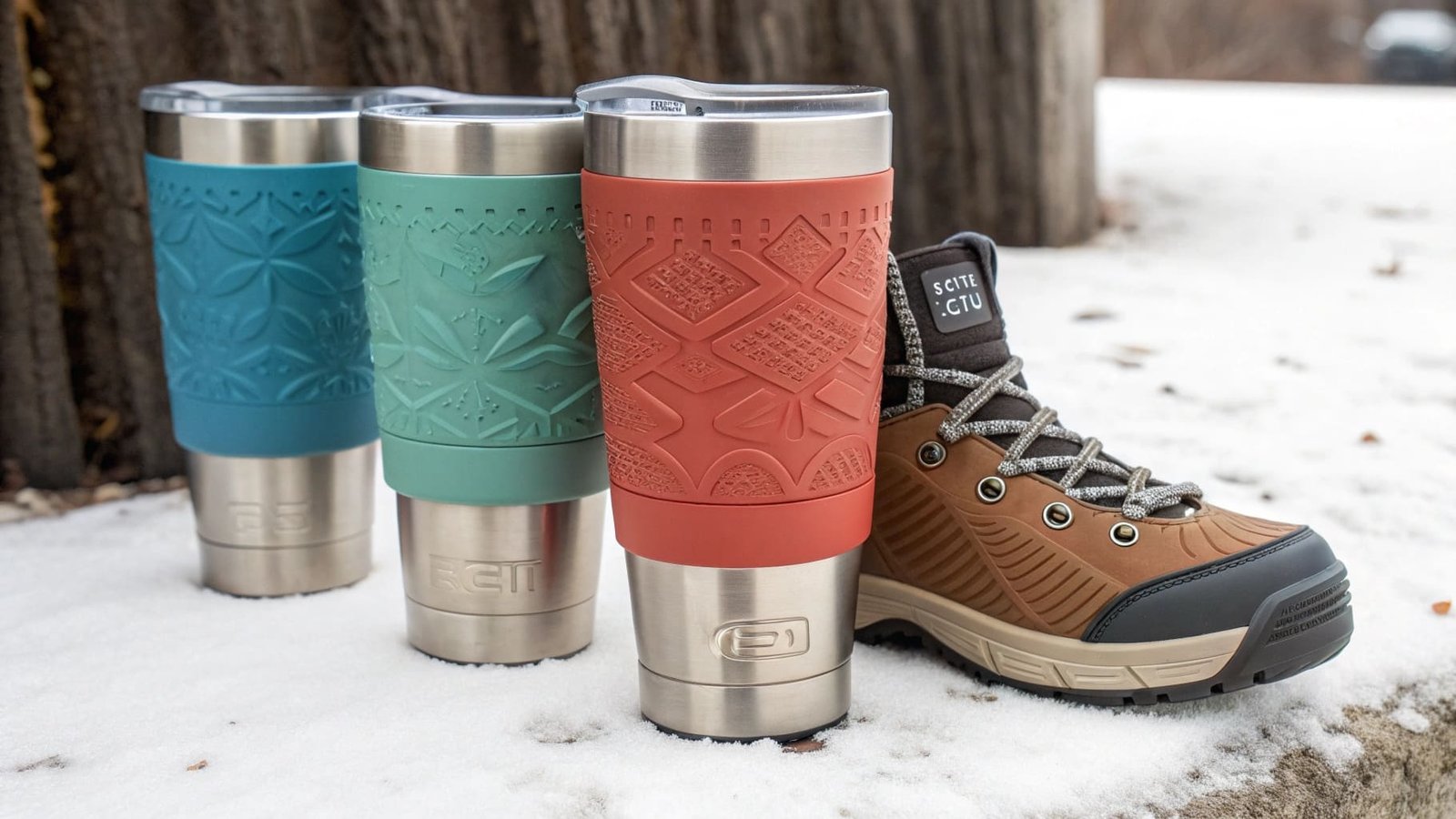
But the coffee shop market is not one-size-fits-all. Different tumbler brands have different shapes. Some are wider at the base. Some taper at the top.6 A sleeve built for one brand may not grip another brand well.
This is why the B2B market has moved toward flexible designs. Smart suppliers now offer sleeves that fit a range of tumbler shapes rather than one exact model. That flexibility reduces inventory complexity and makes it easier for coffee shop clients to manage their stock.
Here is a breakdown of common tumbler sizes and the sleeve specs that match them:
| Tumbler Size | Circumference Range | Sleeve Height | Thickness | Fit Type |
|---|---|---|---|---|
| 12 oz | 9 – 9.5 inches | 4 – 4.5 inches | 3 – 5 mm | Snug fit |
| 16 oz | 9.5 – 10 inches | 4.5 – 5 inches | 3 – 5 mm | Standard fit |
| 20 oz | 10 – 11 inches | 5 – 6 inches | 3 – 5 mm | Wide fit |
| Mixed sizes | Adjustable | Varies | 3 – 5 mm | Multi-fit |
The 3 to 5 mm thickness is not random. That range gives enough material to block heat transfer without making the sleeve stiff.7 A stiff sleeve is hard to grip. A sleeve that is too thin lets heat through.
About 70% of commercial tumblers fall in the 16 to 20 oz range.8 That fact alone shapes how I advise clients on which sizes to stock. Carrying the right sizes in depth beats carrying every size in small quantities.
I always ask new clients what tumbler brands they work with before we talk about sizing. That one question saves time on both sides and cuts down on returns.
What Do You Call a Coffee Cup Sleeve?
The name changes depending on who you ask. That sounds like a small issue. But in B2B purchasing, the wrong term slows everything down.
A coffee cup sleeve goes by many names. Coffee sleeve, cup grip, tumbler grip, thermal sleeve, heat shield, and tumbler sleeve with handle are all used in the market. The name a buyer uses often depends on where they are from.
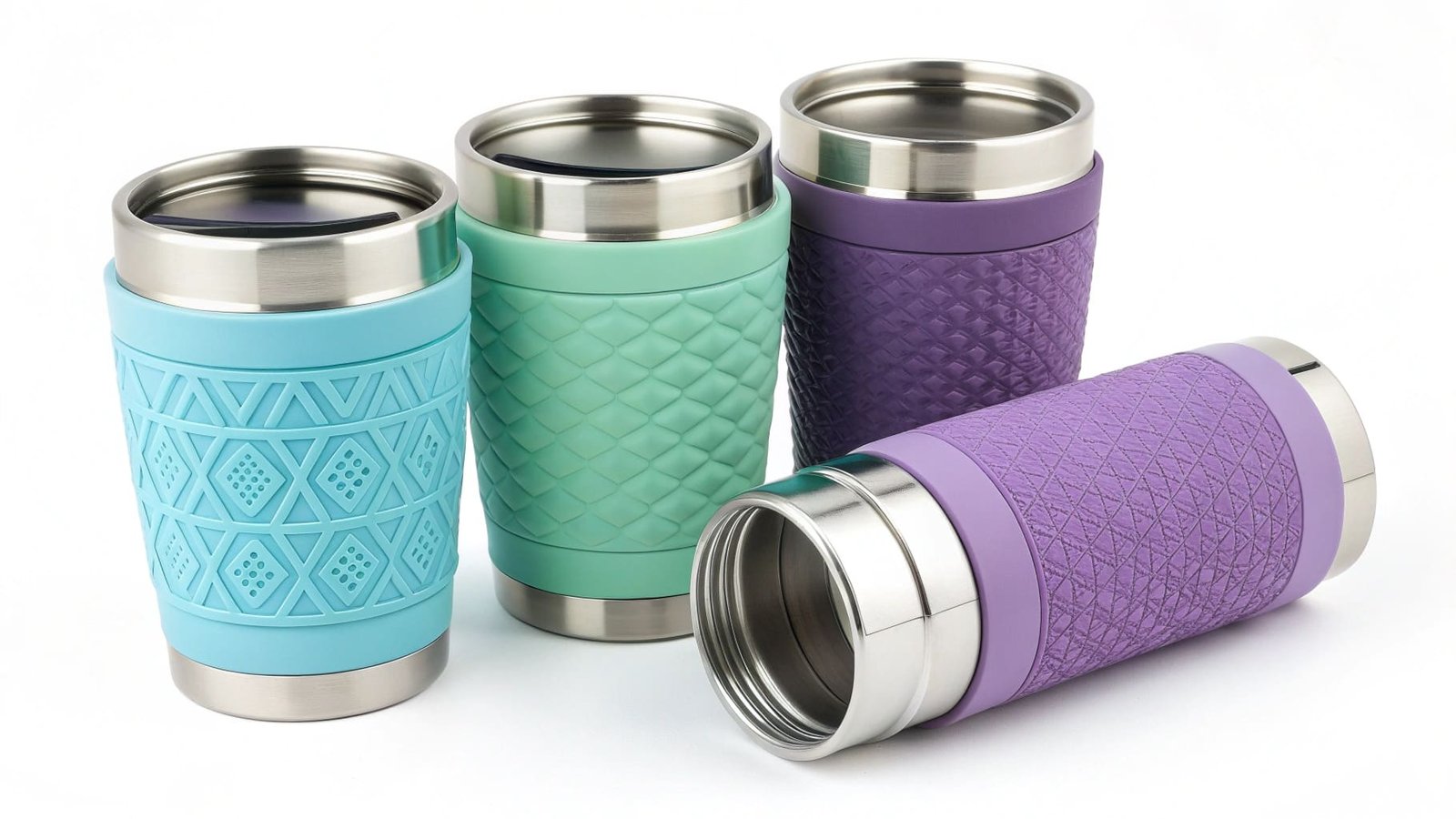
North American buyers, like many of my clients in Canada and the United States, tend to say "coffee sleeve" or "cup sleeve." European buyers more often say "cup grip" or "thermal sleeve." Neither group is wrong. They are just speaking the language of their market.
For silicone products in particular, the term "tumbler sleeve with handle" has become more common. This name does specific work. It tells the buyer right away that the product is reusable, structured, and different from a disposable cardboard band.
Here is a quick reference for the terms used across different markets:
| Term | Common Region | Product Type It Usually Refers To |
|---|---|---|
| Coffee sleeve | North America | Cardboard or silicone, disposable or reusable |
| Cup sleeve | North America | General term, any material |
| Tumbler sleeve with handle | Global B2B | Reusable silicone, structured design |
| Cup grip | Europe | Reusable, often silicone or rubber |
| Thermal sleeve | Europe | Insulating sleeve, any material |
| Heat shield | Industrial use | Heavy-duty insulating sleeve |
Why does this matter for suppliers? Because your clients search using these terms. If your product listings only use one term, you miss buyers who search with a different one. And when a procurement officer sends a purchase order with one term and receives a product labeled with another, that creates confusion.
I make it a point to educate clients on these differences early in our conversations. It builds clarity. It also shows them that I understand their market, not just my products. That kind of understanding is what makes a supplier worth coming back to.
Beyond naming, there is a practical side. When a coffee shop builds its internal inventory system or trains new staff, using the right term cuts down on mistakes. A staff member who knows what a "tumbler sleeve with handle" means will pick the right product every time.
Conclusion
Tumbler sleeves with handles cut costs, fit standard sizes, and carry a name worth knowing. For coffee shop suppliers, they deliver value at every level of the business.
-
"Coffee cup sleeve - Wikipedia", https://en.wikipedia.org/wiki/Coffee_cup_sleeve. Reference sources describe coffee cup sleeves as insulating grips for hot drink containers and note that their exterior surface may be printed, supporting the article’s description of their safety and communication functions. Evidence role: definition; source type: encyclopedia. Supports: Coffee cup sleeves are used to insulate hands from hot beverage containers and can carry printed information or branding.. Scope note: A general reference can define common functions but does not independently test the performance of a particular handled tumbler sleeve. ↩
-
"Custom Coffee Sleeves | Promote Your Brand with Cup Sleeve ...", https://www.yourbrandcafe.com/custom-coffee-sleeves/?srsltid=AfmBOoo0HN7kknkFAZUp3iTBWqjMc8k-R4lJd_rrtmBCYhSj7yN6RP_k. Institutional procurement pricing for disposable paper coffee sleeves provides contextual evidence that bulk unit costs can fall in the low-cent range cited in the article. Evidence role: statistic; source type: institution. Supports: Published procurement records or institutional purchasing catalogs show per-unit prices for disposable cardboard coffee sleeves in or near the stated range.. Scope note: Procurement prices are time- and volume-dependent and should be used as a market snapshot rather than a universal price. ↩
-
"Silicone Coffee Cup Sleeve - Amazon.com", https://www.amazon.com/silicone-coffee-cup-sleeve/s?k=silicone+coffee+cup+sleeve. Contemporaneous bulk pricing data for reusable silicone cup sleeves can document that their per-unit purchase price is commonly much higher than disposable paper sleeves. Evidence role: statistic; source type: other. Supports: Market listings or procurement data show that reusable silicone cup sleeves are priced substantially higher per unit than disposable cardboard sleeves.. Scope note: Market listings are not neutral research evidence and prices can change with order quantity, customization, shipping, and region. ↩
-
"Cyclic Compression Testing of Three Elastomer Types—A ... - PMC", https://pmc.ncbi.nlm.nih.gov/articles/PMC9002981/. Fatigue and cyclic-loading studies of silicone rubber show that the material can tolerate thousands of deformation cycles, lending contextual support to a 3,000-use durability estimate for well-designed sleeves. Evidence role: mechanism; source type: paper. Supports: Silicone rubber can withstand repeated cyclic loading or deformation without rapid failure under appropriate conditions.. Scope note: Material-level fatigue evidence is contextual unless the source tests the same sleeve geometry, washing conditions, temperatures, and handling stresses. ↩
-
"20-100Pcs Custom White/Kraft Coffee Cup Sleeves, Disposable ...", https://www.amazon.com/20-100Pcs-Custom-Sleeves-Disposable-Included/dp/B0CTQRK3F1. Published coffee-sleeve size charts commonly group sleeves around 12-, 16-, and 20-ounce hot cups, supporting the article’s statement that standard sleeves are designed around this capacity range. Evidence role: general_support; source type: other. Supports: Industry size charts or product specifications commonly list coffee sleeves for 12-, 16-, and 20-ounce cups.. Scope note: Industry size charts are not formal standards, and compatibility also depends on cup diameter, taper, and wall thickness. ↩
-
"Effect of material properties on the paper cup manufacturing process", https://bioresources.cnr.ncsu.edu/resources/effect-of-material-properties-on-the-paper-cup-manufacturing-process/. Packaging-design and engineering references describe beverage cups as commonly tapered containers with differing top and bottom diameters, supporting the article’s claim that sleeve fit is affected by cup geometry. Evidence role: mechanism; source type: education. Supports: Cup and tumbler design references describe tapered sidewalls and variable diameters as common features of beverage containers.. Scope note: General design references support the geometry issue but do not quantify variation across all tumbler brands. ↩
-
"Hand grip strength as a proposed new vital sign of health - PMC - NIH", https://pmc.ncbi.nlm.nih.gov/articles/PMC10777545/. Heat-transfer studies and silicone rubber property data show that thermal resistance rises with insulating thickness, while elastomer thickness influences bending stiffness, supporting the article’s stated insulation-flexibility tradeoff. Evidence role: mechanism; source type: paper. Supports: Increasing the thickness of a low-conductivity elastomer increases thermal resistance, while material thickness can also affect flexibility and grip feel.. Scope note: The cited mechanism supports the design rationale but not necessarily the exact 3–5 mm optimum for every sleeve and cup temperature. ↩
-
"Plastic Tumblers Market | Global Market Analysis Report - 2035", https://www.futuremarketinsights.com/reports/plastic-tumblers-market. Drinkware market data or a documented catalog analysis can substantiate whether 16- to 20-ounce tumblers account for approximately 70% of commercial offerings or sales. Evidence role: statistic; source type: other. Supports: Market research, sales data, or a large catalog analysis shows the distribution of commercial tumbler capacities and the share represented by 16- to 20-ounce models.. Scope note: The percentage may vary by region, channel, year, and whether the data measure sales volume, product listings, or procurement orders. ↩