Where to Buy Extruded Gasket Strips for European Automotive Supply Chains?
Wrong supplier choices cost European automotive buyers weeks of downtime and failed audits. The sourcing decision matters more than most buyers realize. Here is what you need to know.
Extruded gasket strips for European automotive supply chains are best sourced from certified manufacturers in China who hold ISO/TS 16949 certification, provide full material documentation, and offer custom profile extrusion in silicone or EPDM. These suppliers support REACH and RoHS compliance and ship directly to European distribution points.
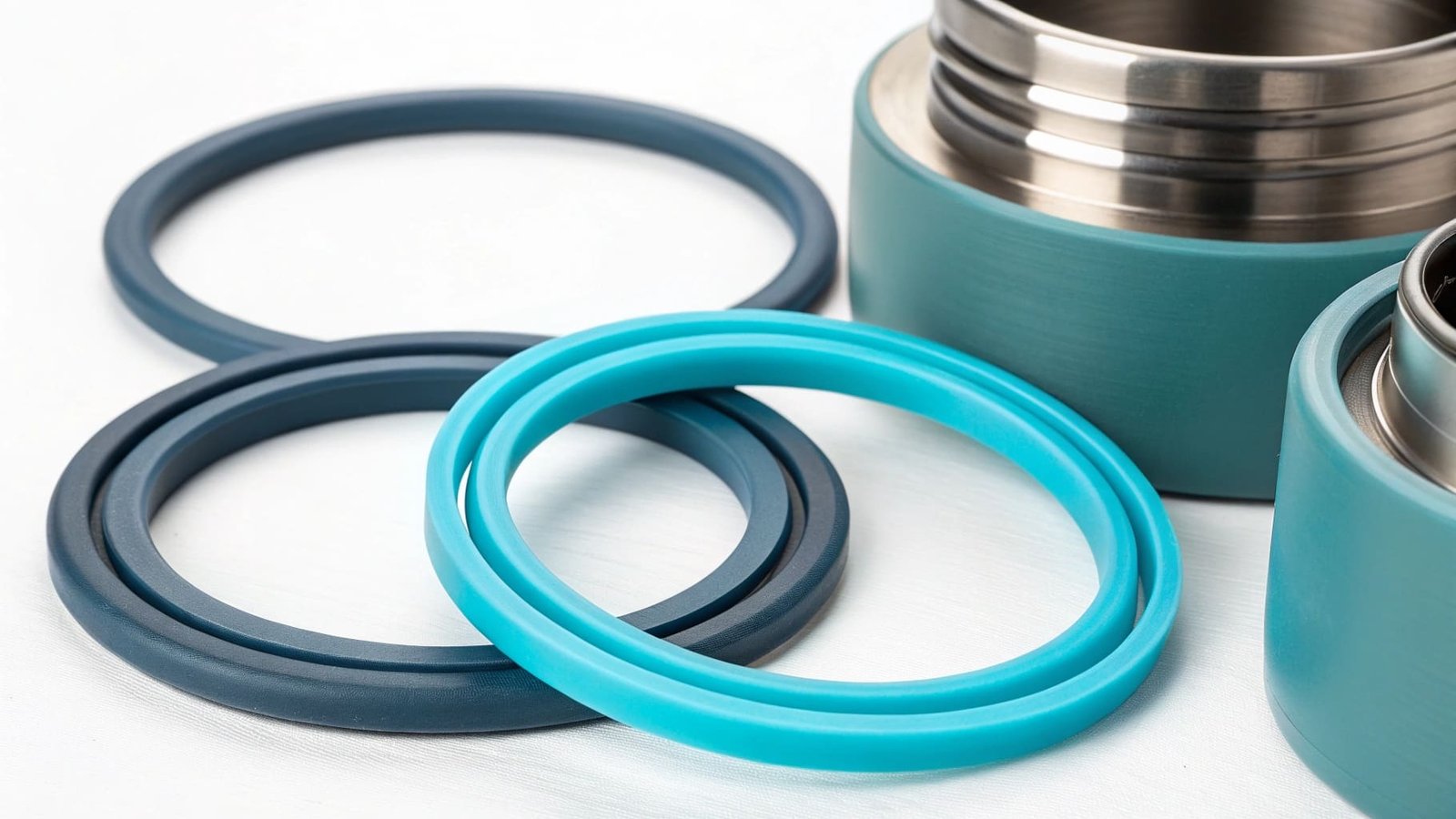
I have worked with procurement teams across Europe and North America. One thing comes up every time. They start with the wrong question. They ask "where is the cheapest source?" before they ask "what exactly do I need?" That question swap costs money. Let me walk you through the real decisions behind sourcing extruded gasket strips for automotive use — starting with material, moving through application, and ending with how to find a supplier who will not let you down at peak season.
What Material Is Used for Gasket Strips?
Many buyers choose the wrong gasket material early in the process. That single mistake leads to failed compression tests, returned shipments, and supplier disputes. Getting the material right from the start saves all of that.
Gasket strips used in automotive applications are most commonly made from silicone rubber, EPDM, neoprene, and natural rubber.1 For European automotive supply chains, silicone rubber is the most widely used material2. It handles temperatures from -60°C to +230°C, resists UV and ozone exposure, and meets REACH and RoHS compliance requirements.
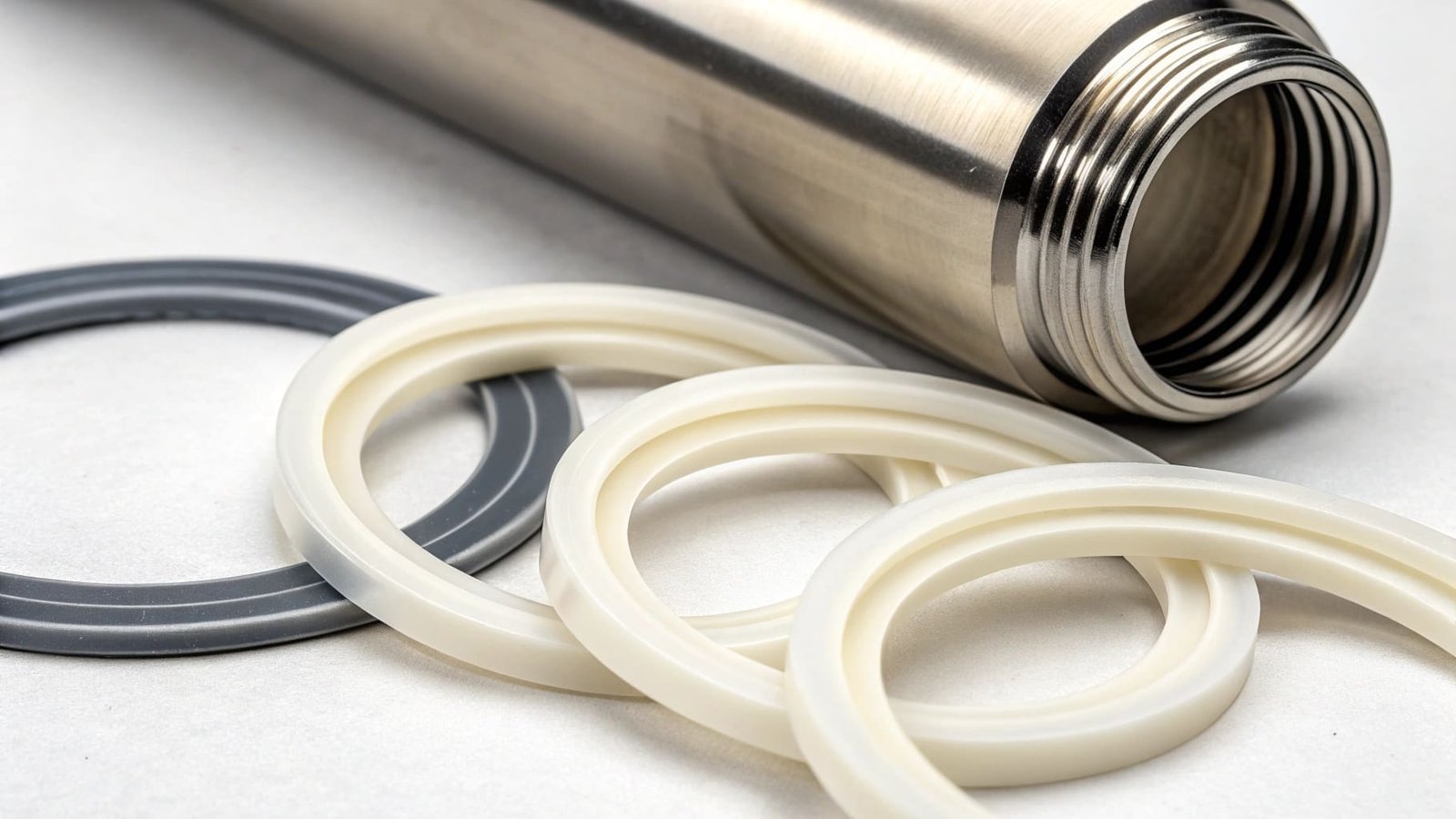
Why Material Choice Drives Everything Downstream
Each elastomer type performs differently under real operating conditions. European OEMs and Tier-1 suppliers know this. They ask for compression set values, aging test reports, and full material data sheets3 before they approve a supplier. These documents tell them how the gasket will perform after 10 years of heat cycles, moisture exposure, and mechanical stress4.
Here is a direct comparison of the most common gasket strip materials used in automotive applications:
| Material | Temperature Range | UV Resistance | Typical Application | REACH/RoHS |
|---|---|---|---|---|
| Silicone | -60°C to +230°C | Excellent | Engine bay, exterior seals | Compliant |
| EPDM | -50°C to +150°C | Good | Door seals, window seals | Compliant |
| Neoprene | -40°C to +120°C | Moderate | Vibration mounts, hose seals | Varies |
| Natural Rubber | -30°C to +80°C | Poor | Interior trim, low-heat areas | Varies |
Silicone leads in most automotive scenarios because it does not crack under thermal cycling. EPDM is a strong alternative for exterior applications where cost is a concern.5 Neoprene works where oil resistance matters alongside moderate temperature demands.6 Natural rubber is rarely used in modern European automotive builds due to weathering limitations.7
At Silijoy, I work with buyers who often arrive with a material already specified by their engineering team. When that specification says silicone, the conversation moves quickly. When it is undefined, I walk them through the operating environment first — engine compartment, exterior body, interior trim — and then match the material to the actual stress conditions the gasket will face. That process avoids expensive re-testing later.
What Can I Use to Make a Homemade Gasket?
Some buyers ask about homemade gasket options. This question usually comes from small repair shops or startups testing a prototype. It signals something important about where a buyer is in their sourcing journey.
A homemade gasket can be cut from sheet rubber, cork, or silicone foam using a craft knife and a printed template. These methods work for low-pressure, low-stakes repairs. They do not work for professional automotive supply chains that require repeatable dimensions, material traceability, and certified performance data.8
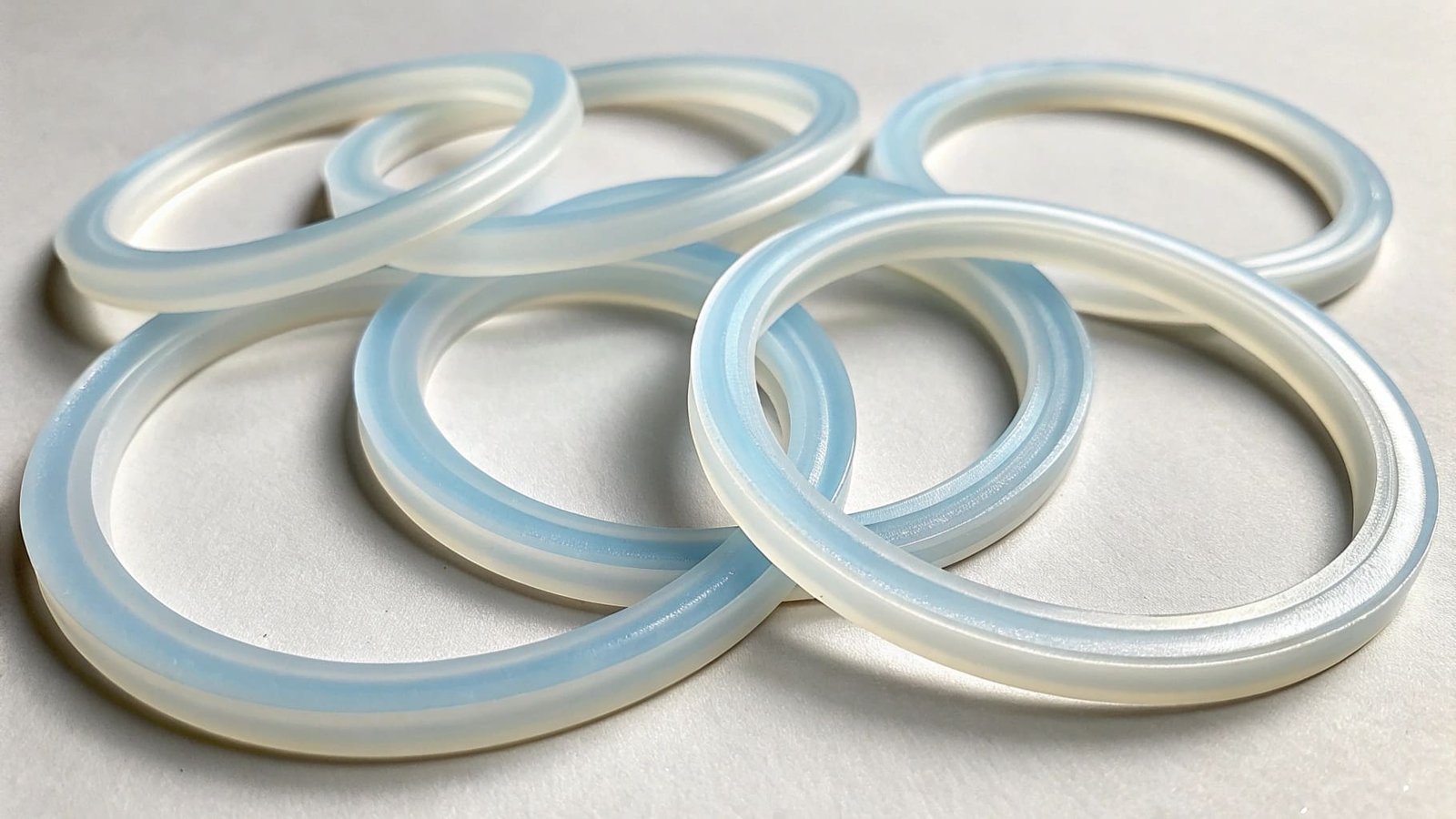
Where Homemade Methods Fall Short in B2B Procurement
The homemade gasket question is worth taking seriously because it reveals a real knowledge gap in some B2B procurement conversations. I have spoken with startup founders who want to test a product concept before committing to a production run. That is a fair position. But the gap between a hand-cut gasket and a certified extruded profile is larger than most people expect.
Here is where the two approaches separate:
| Requirement | Homemade Gasket | Extruded Gasket Strip |
|---|---|---|
| Dimensional tolerance | Low, varies by hand | ±0.1mm achievable |
| Material traceability | None | Full batch records |
| Compression set data | Not available | Lab tested, documented |
| REACH/RoHS documentation | Not possible | Provided by manufacturer |
| Certification support | None | ISO/TS 16949 available |
| Scalability | Not scalable | Supports high-volume runs |
European OEMs require every component in their supply chain to carry documentation. That means a material data sheet, a test report for aging performance, and a certificate of conformance on each shipment. No hand-cut gasket can produce those documents. Even a well-intentioned startup that wants to test a prototype needs to source from a manufacturer who can eventually scale that prototype into a certified production component.
I always tell first-time buyers this: if your end customer is a European automotive brand, your supplier needs to think like one. That means documentation, traceability, and the ability to repeat the same profile across thousands of meters without deviation. A homemade gasket is a conversation starter. A certified extruded strip is the actual product.
What Are Rubber Strips Used for?
Buyers sometimes underestimate how many roles a rubber strip plays inside a finished vehicle. That narrow view leads to undersourcing. One strip profile gets purchased, but three application needs go unmet.
Rubber strips in automotive assemblies serve as water and dust seals, vibration dampeners, noise barriers, and thermal insulators. A single vehicle may contain dozens of distinct rubber strip profiles, each designed for a specific location and performance requirement.
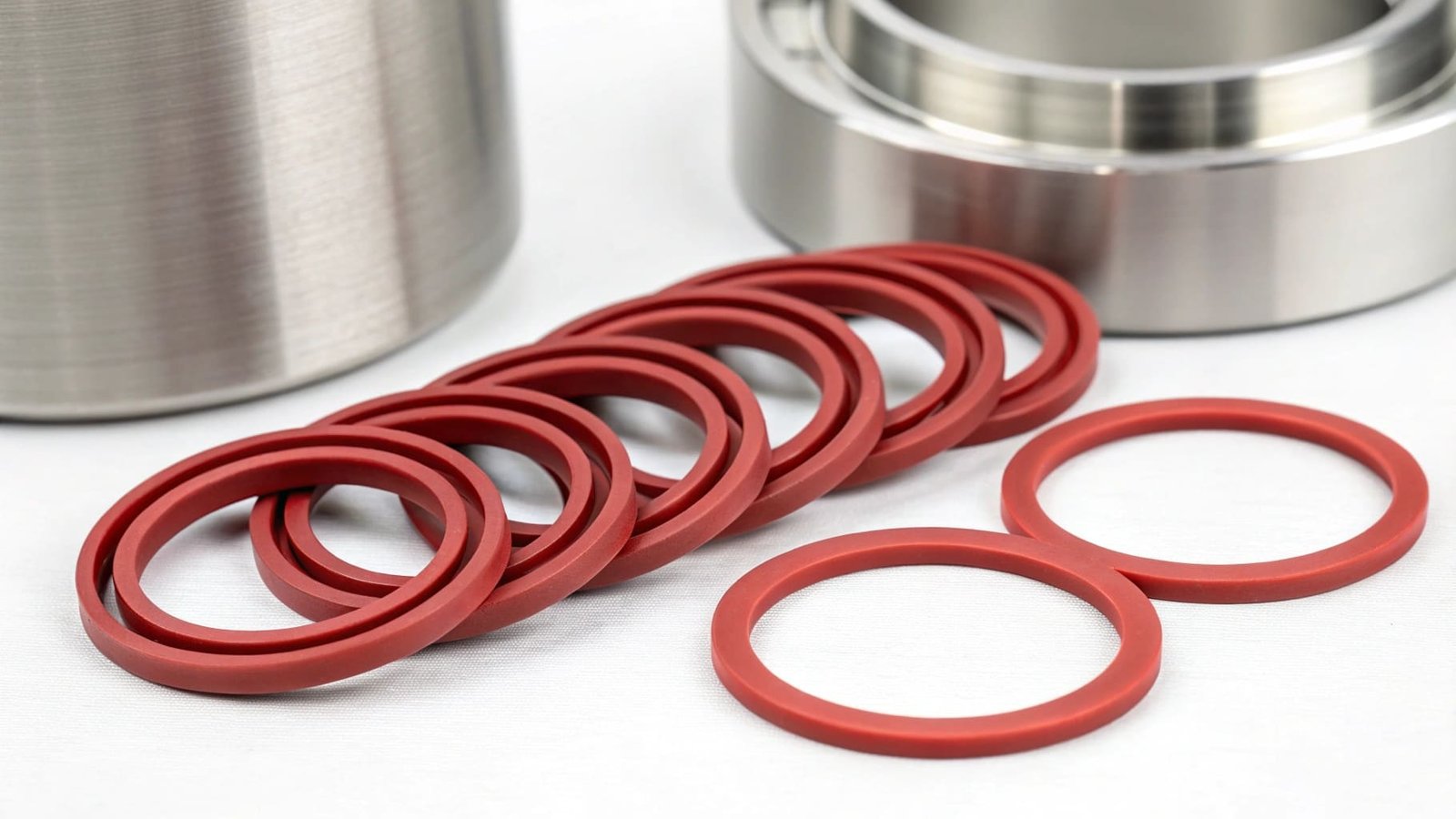
Mapping Rubber Strip Functions to Automotive Assembly Zones
Understanding where rubber strips work inside a vehicle helps procurement teams build a complete sourcing picture. European automotive buyers who source by application — rather than by product type — end up with better specifications and fewer surprises during production.
Here is a breakdown of rubber strip functions by assembly zone:
| Assembly Zone | Primary Function | Common Material | Key Performance Need |
|---|---|---|---|
| Door perimeter | Water and dust seal | EPDM or Silicone | Compression recovery |
| Engine compartment | Thermal barrier | Silicone | High-temp resistance |
| Window channel | Dust and noise seal | EPDM | UV and ozone resistance |
| Trunk and hood | Weather seal | EPDM or Silicone | Long-cycle fatigue |
| Interior trim | Noise dampening | Silicone foam | Soft feel, low outgassing |
| HVAC ducting | Air seal | Silicone | Temperature cycling |
Each zone has a different set of demands. A strip that works perfectly as a door seal may fail quickly in the engine bay. That is why material selection and application mapping need to happen together, not separately.
At Silijoy, I work with buyers who need custom extruded profiles for multiple zones within the same vehicle program. The ability to offer color matching, different durometer options, and co-extrusion for multi-material profiles makes a real difference when buyers are consolidating their supplier base. European automotive programs often prefer fewer, more capable suppliers over many narrow ones. That preference shapes how I approach product development conversations with procurement teams.
If you are building or expanding a European automotive supply chain and need a manufacturer who understands both extrusion technology and compliance documentation, I am happy to talk through your specific application requirements.
Conclusion
Material, documentation, and application mapping decide whether your gasket strip sourcing succeeds or fails. Choose a certified manufacturer who understands European automotive compliance from the start.
-
"A Guide to Rubber Gasket Materials - Custom Gaskets Ltd.", https://customgasketsltd.com/guide-to-rubber-gasket-materials/. Materials-engineering references describe silicone rubber, EPDM, neoprene, and natural rubber as elastomers used in sealing applications, including automotive gaskets and weatherstrips. Evidence role: general_support; source type: education. Supports: The source should identify these elastomers as materials used in automotive sealing, gasket, or weatherstrip applications.. Scope note: This supports the material list generally, but it may not establish relative market share for each material. ↩
-
"| EPDM vs. Silicone Gaskets: Uses and Applications", https://www.fournierrubber.com/epdm-vs-silicone-gaskets-uses-and-applications/. A market or materials study should be cited to support the assertion that silicone rubber is the leading material for the specified European automotive gasket-strip segment. Evidence role: statistic; source type: research. Supports: The source should provide market data or technical consensus on the relative use of silicone rubber versus other elastomers in automotive gasket or seal applications.. Scope note: If the source only discusses common applications rather than market share, it would provide contextual support but not direct proof that silicone is the most widely used material. ↩
-
"[PDF] REVIEW OF AGING DATA ON EPDM O-RINGS IN THE H1616 ...", https://sti.srs.gov/fulltext/SRNL-STI-2012-00149.pdf. Automotive production-part approval and quality-management guidance requires suppliers to provide material records, test evidence, and process documentation, which contextualizes the use of compression-set data, aging reports, and material data sheets in supplier approval. Evidence role: expert_consensus; source type: institution. Supports: The source should show that automotive supplier approval commonly requires material specifications, test evidence, and production part approval documentation.. Scope note: Specific document packages vary by OEM, part criticality, and purchase agreement. ↩
-
"Comparison of accelerated aging of silicone rubber gasket material ...", https://hero.epa.gov/reference/4370805/. Studies of elastomer aging use accelerated thermal, humidity, and mechanical loading tests to assess degradation mechanisms and estimate long-term sealing performance. Evidence role: mechanism; source type: paper. Supports: The source should explain how accelerated aging, compression set, thermal cycling, and environmental exposure tests are used to estimate elastomer seal durability.. Scope note: Accelerated tests provide predictive context, not direct proof that a given gasket will survive exactly ten years in all service environments. ↩
-
"Neoprene vs. EPDM Seals - American Elkhart", https://americanelkhart.com/neoprene-vs-epdm-seals-a-comprehensive-comparison-for-diverse-industries/. Materials references describe EPDM as a weather-resistant elastomer with good ozone and outdoor-aging performance, supporting its common use in automotive exterior seals and weatherstrips. Evidence role: general_support; source type: education. Supports: The source should support EPDM’s weathering, ozone, and UV resistance and its common use in automotive weatherstrips or exterior seals.. Scope note: The cost comparison with silicone depends on grade, formulation, and purchasing conditions. ↩
-
"[PDF] Elastomer Characteristics", https://www.nrc.gov/docs/ML0720/ML072040257.pdf. Elastomer handbooks characterize neoprene, or chloroprene rubber, as having useful resistance to oils and weathering with a moderate service-temperature range, making it suitable for selected gasket and sealing uses. Evidence role: mechanism; source type: education. Supports: The source should describe neoprene or chloroprene rubber as having moderate oil resistance and a moderate service-temperature range.. Scope note: Oil resistance and temperature limits vary by compound and are generally lower than those of specialized fluorocarbon or silicone materials. ↩
-
"Estimation of Synthetic Rubber Lifespan Based on Ozone ... - PMC", https://pmc.ncbi.nlm.nih.gov/articles/PMC11944956/. Polymer-aging references note that natural rubber is susceptible to ozone cracking and weathering degradation, which limits its suitability for exposed automotive sealing applications. Evidence role: mechanism; source type: education. Supports: The source should show that natural rubber is vulnerable to ozone, UV, and weathering degradation compared with synthetic elastomers such as EPDM.. Scope note: This supports the technical reason for limited use but may not directly quantify how rarely natural rubber is used in European vehicle builds. ↩
-
"(PDF) AIAG Production Part Approval process PP - Academia.edu", https://www.academia.edu/99043491/AIAG_Production_Part_Approval_process_PP. Automotive quality-management and production-part approval guidance requires documented dimensional results, material evidence, process controls, and traceability records for production parts. Evidence role: expert_consensus; source type: institution. Supports: The source should document that automotive supply chains require controlled production processes, dimensional evidence, material traceability, and test or conformance records.. Scope note: Such standards support the professional supply-chain requirement but do not specifically evaluate every possible hand-made prototype. ↩