Which Gasket Strip Material Lasts Longest in Food Industry Applications?
If you've ever had a gasket fail mid-production, you know the damage it causes. Downtime, contamination risk, and angry clients. The wrong material choice costs far more than you think.
Food-grade silicone lasts the longest in food industry applications.1 It handles temperatures from -60°C to +230°C, survives repeated sterilization cycles, and resists bacterial growth. No other common gasket material comes close to matching this combination of durability and safety.
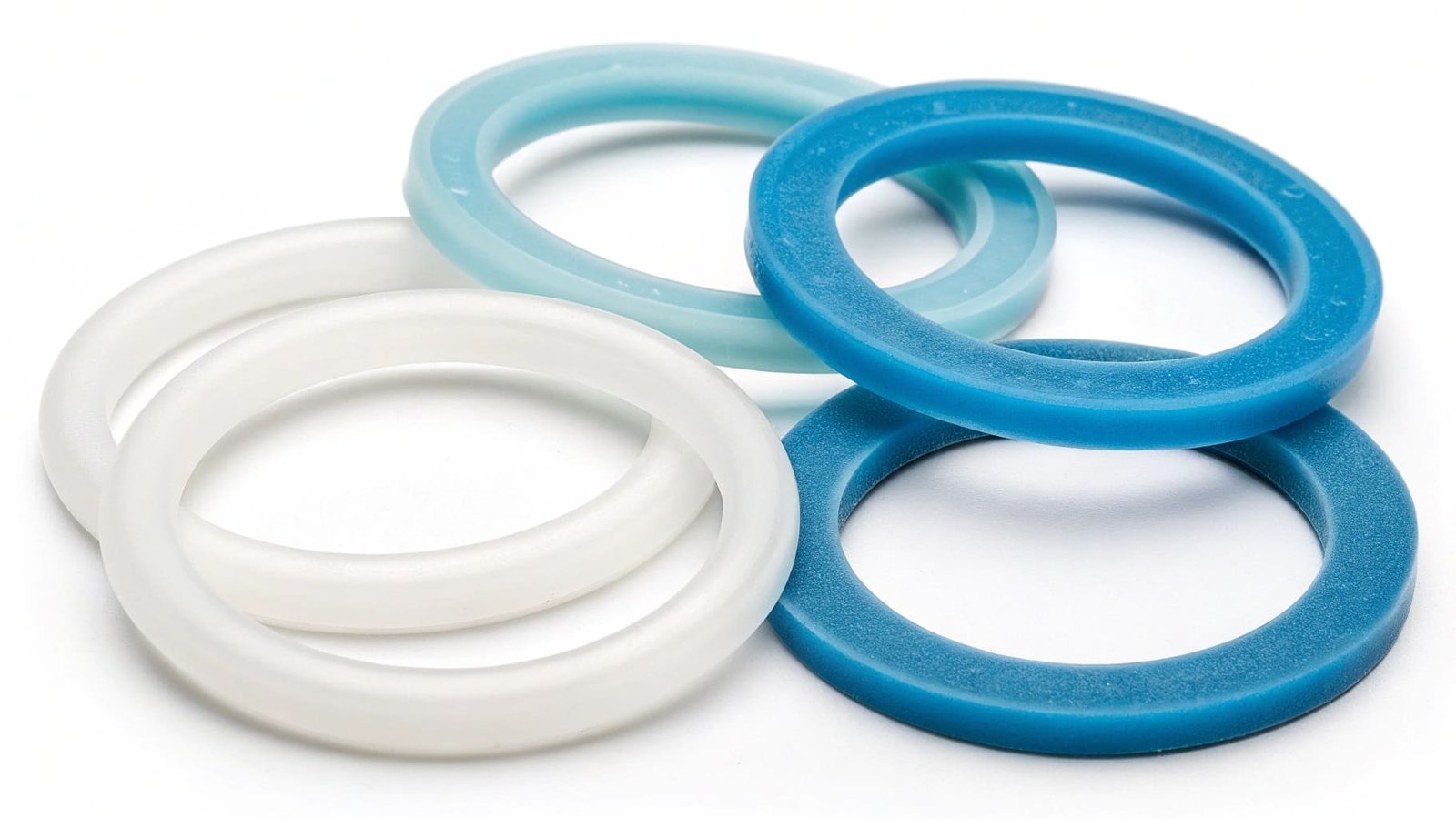
Most buyers focus on unit price when choosing a gasket material. That's the wrong place to start. The real question is how much a failed gasket costs you — in downtime, in product loss, and in compliance risk. I've seen procurement teams make this mistake repeatedly. They pick the cheapest option, and six months later, they're back to square one. This article breaks down the key materials used in food applications and explains exactly why the choice matters so much.
What Seal Is Food Safe?
Not every rubber seal is safe near food. The wrong seal can leach chemicals directly into your product — and you may never know until it's too late.
A food-safe seal must meet specific regulatory standards. In the United States, this means FDA approval under CFR Title 21. In Europe, the standard is EU Regulation 1935/2004. Both require that no harmful substances migrate from the seal into food.2 Platinum-cured silicone is the most widely accepted material under both frameworks.
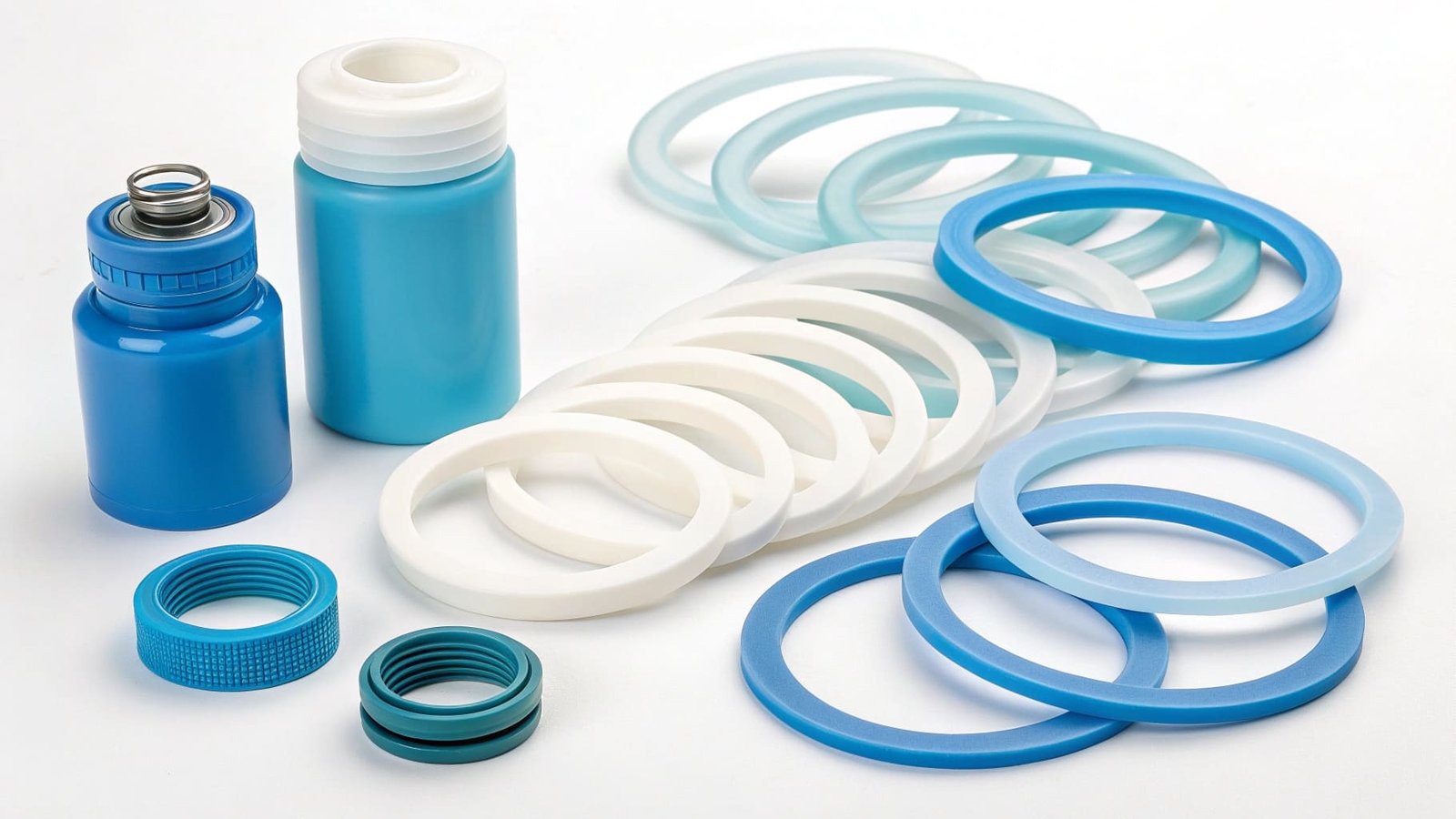
What Makes a Seal Truly Food Safe?
Food safety in gaskets is not just about the material itself. It is about how the material behaves over time, under heat, and in contact with different foods.
Here is what actually matters:
Migration resistance is the most critical factor. A seal may look clean and intact but still release trace chemicals into food products at high temperatures or under pressure. Standard rubber compounds — including some marketed as "food-safe" — often fail this test after repeated thermal cycles.
Surface structure also plays a role. A porous surface traps bacteria, even after cleaning. This is especially dangerous in dairy and beverage lines where biofilm builds up fast.
Thermal stability determines whether a seal holds its shape during sterilization. Steam autoclaving reaches 121°C to 134°C. A material that softens or deforms at these temperatures creates gaps — and gaps create contamination points.
| Criteria | Platinum-Cured Silicone | Standard Rubber (EPDM) | Nitrile Rubber |
|---|---|---|---|
| FDA Compliant | Yes | Partially | Rarely |
| EU 1935/2004 | Yes | Depends on grade | No |
| Migration Risk | Very Low | Moderate | High |
| Surface Porosity | Non-porous | Slightly porous | Slightly porous |
| Sterilization Safe | Yes | Limited | No |
The table above makes the comparison clear. Platinum-cured silicone is the only material that consistently passes across all five criteria. For any food processing environment where regulatory compliance is non-negotiable, this is the seal material that meets the standard.
Is There Food Grade Rubber?
You might be wondering if "food grade rubber" is even a real thing. It is — but the label alone means very little without certification to back it up.
Yes, food grade rubber exists. EPDM rubber is the most commonly used option. It resists hot water, steam, and many cleaning agents.3 However, its performance is temperature-limited and degrades faster than silicone under repeated sterilization. Certification documents must be verified carefully, as fraud is a known problem in the supply chain.4
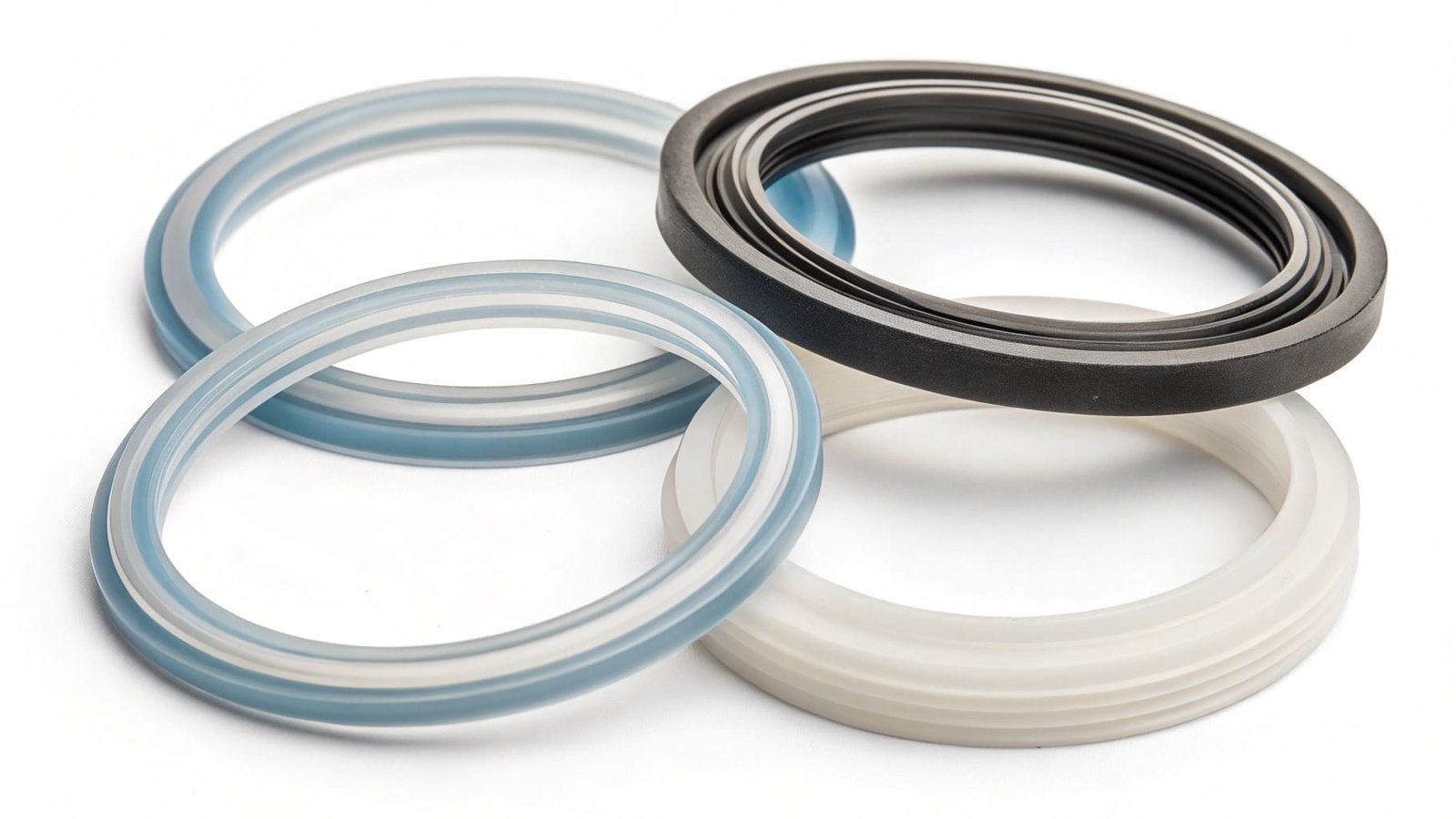
How Do You Tell Real Food Grade Rubber from Fake?
I want to address something that doesn't get talked about enough. Certificate fraud is real in this industry. I've spoken with buyers who received gaskets labeled "FDA approved" with documents that looked completely legitimate — and turned out to be fabricated.
Here is how to protect yourself:
Check the certification body. Real FDA compliance is self-declared in the US — it means the manufacturer has tested the product and confirmed it meets CFR Title 21. But third-party testing from recognized labs like SGS, Intertek, or Bureau Veritas adds a real layer of verification that self-declaration alone does not provide.
Ask for the test report, not just the certificate. A certificate is a single page. A test report shows the actual migration test data, the specific compounds tested, and the lab conditions. If a supplier can't produce the test report, treat that as a warning sign.
Know the difference between rubber types. The table below shows which rubber materials are commonly used in food applications and where they fall short.
| Material | Common Food Use | Temperature Limit | Main Risk |
|---|---|---|---|
| EPDM Rubber | Water and steam seals | Up to 150°C | Degrades in oils and solvents |
| Nitrile Rubber | Oil-resistant applications | Up to 120°C | Not suitable for hot water or steam |
| Natural Rubber | Low-temp food contact | Up to 80°C | Allergenic proteins, limited chemical resistance |
| Silicone Rubber | Universal food sealing | -60°C to +230°C | Higher initial cost |
The pattern here is consistent. Each rubber type has a narrow range where it works well. Step outside that range — higher temperatures, aggressive cleaning chemicals, repeated sterilization — and performance drops quickly. Silicone is the only material on this list that covers all those conditions without compromise.
What Is the Material of Food Grade Gasket?
This is the question I get asked most often from buyers who are new to food industry procurement. The short answer is silicone. The longer answer explains why other materials still get used — and where they actually work.
Food grade gaskets are made from several materials depending on the application. Silicone is the most versatile and durable option. EPDM is used in lower-temperature water and steam systems. PTFE (Teflon) is chosen for highly corrosive chemical environments.5 Each material fits a specific set of conditions.
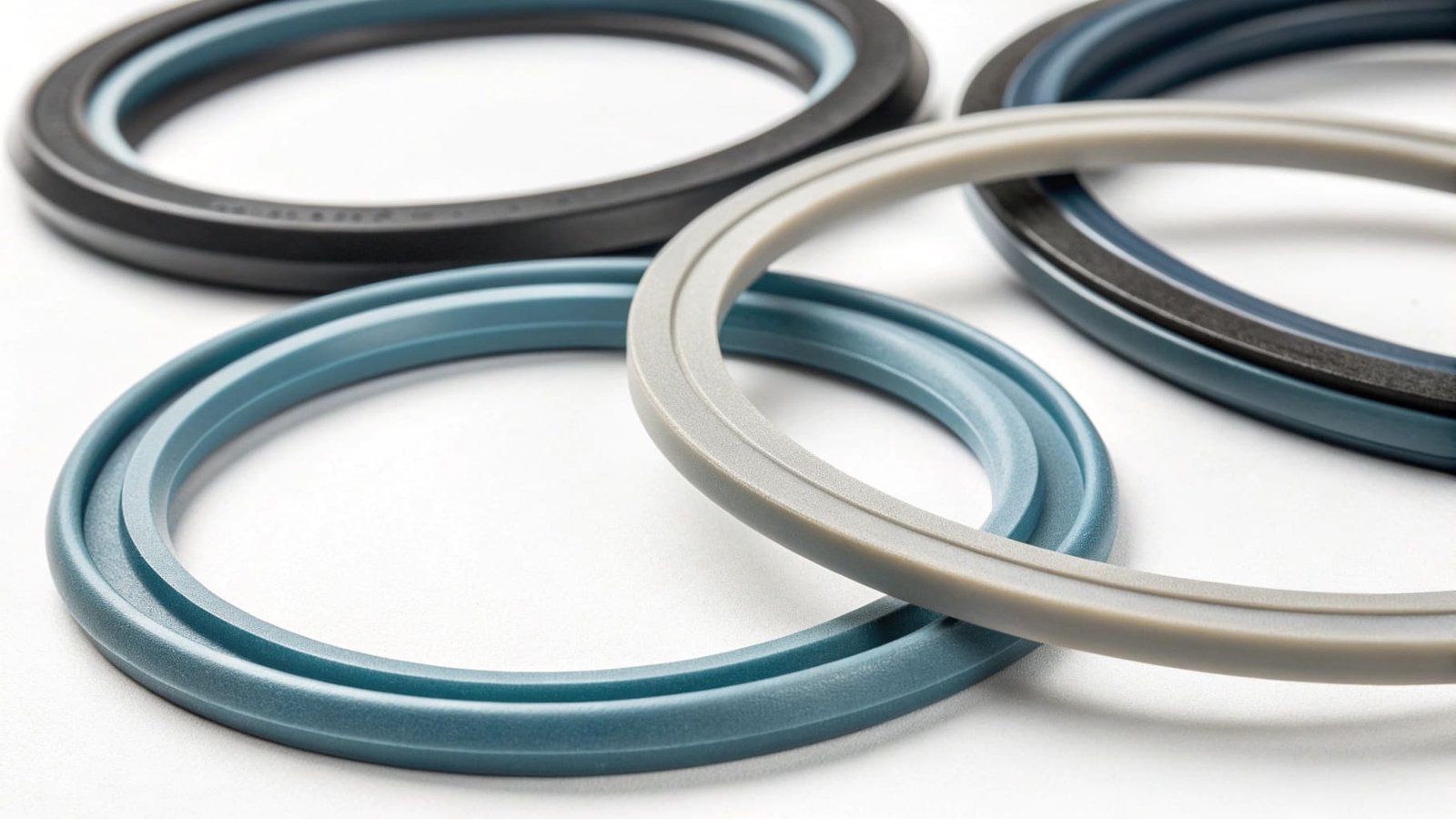
Which Gasket Material Fits Which Application?
Not every food processing line has the same demands. A dairy pasteurization system runs at different temperatures than a cold beverage bottling line. A gasket that works perfectly in one environment can fail quickly in another.
Let me break this down by application type.
High-temperature processing — think steam sterilization, retort packaging, or hot-fill beverage lines — requires a material that holds its shape above 150°C without releasing compounds into the product. This is where silicone is the clear choice. EPDM can manage up to 150°C, but it begins to degrade with frequent cycling at that level.
Chemical cleaning environments — facilities that use strong alkaline or acidic CIP (Clean-In-Place) systems — need a material that resists those agents without swelling or cracking. Silicone handles this well. Nitrile rubber does not. EPDM performs adequately with most alkaline cleaners but struggles with certain acidic compounds.
Cold storage and freeze-thaw environments — common in frozen food production — need a material that stays flexible at sub-zero temperatures. Silicone remains flexible down to -60°C. Most rubber compounds become brittle well before that point.
| Application | Recommended Material | Why |
|---|---|---|
| Steam sterilization | Platinum-cured Silicone | Stable above 200°C, non-reactive |
| CIP chemical cleaning | Silicone or PTFE | High chemical resistance |
| Cold storage sealing | Silicone | Flexible at -60°C |
| Low-pressure water lines | EPDM | Cost-effective for simple applications |
| Highly corrosive acids | PTFE | Maximum chemical inertness |
One more thing worth knowing: the total cost of ownership for silicone gaskets is lower than most buyers expect. The initial price is 20% to 40% higher than rubber alternatives. But silicone lasts three to five times longer. It requires less frequent replacement. And in food production environments, a single contamination event from a failed gasket can cost far more than years of material savings.
I've worked with procurement managers who switched to silicone after one major recall scare. The math becomes obvious very quickly when you factor in downtime, product loss, and regulatory consequences.
Conclusion
Silicone outperforms every alternative for food industry gaskets. It lasts longer, meets stricter safety standards, and costs less over time. For serious food production operations, there is no better material choice.
-
"Thermal Oxidative Aging and Service Life Prediction of Commercial ...", https://pmc.ncbi.nlm.nih.gov/articles/PMC11085669/. Materials-engineering literature describes silicone elastomers as having comparatively broad thermal stability and aging resistance relative to many organic rubbers, which supports their use where gasket life is limited by repeated heat exposure. Evidence role: general_support; source type: research. Supports: A neutral materials source should support that silicone elastomers generally retain properties better than common rubber alternatives under heat and sterilization-relevant conditions.. Scope note: Such evidence would be contextual unless it directly compares service life in the same food-processing application. ↩
-
"How FDA Regulates Substances that Come into Contact with Food", https://www.fda.gov/food/food-packaging-other-substances-come-contact-food-information-consumers/understanding-how-fda-regulates-substances-come-contact-food. EU Regulation 1935/2004 requires food-contact materials not to transfer constituents to food in quantities that could endanger human health, while U.S. rules for rubber articles include extractive limits for repeated-use food contact. Evidence role: definition; source type: government. Supports: Official sources should show that food-contact materials must not transfer constituents to food in harmful amounts and that U.S. rubber articles are subject to extractive limits.. Scope note: The two systems use different legal mechanisms, so the citation supports the shared principle rather than identical testing requirements. ↩
-
"High Temperature Resistant EPDM Rubber - GTeek", https://www.gteek.com/en/high-temperature-resistant-epdm-rubber. Engineering references commonly describe EPDM as an elastomer with good resistance to hot water, steam, weathering, and many polar chemicals, explaining its use in water and steam sealing applications. Evidence role: general_support; source type: education. Supports: A materials-engineering source should describe EPDM’s resistance to hot water, steam, and many polar cleaning environments.. Scope note: This supports material suitability more directly than the assertion that EPDM is the single most commonly used food-grade rubber. ↩
-
"Digital Traceability in Agri-Food Supply Chains - PMC - NIH", https://pmc.ncbi.nlm.nih.gov/articles/PMC11011367/. Institutional food-fraud reports identify falsified documentation and misrepresentation as recurring supply-chain integrity risks, supporting the need to verify compliance records. Evidence role: historical_context; source type: institution. Supports: An institutional report should document that fraudulent documentation, misrepresentation, or certification abuse occurs in food-related supply chains.. Scope note: Such reports may address food supply chains generally rather than gasket-certification fraud specifically. ↩
-
"Guide To PTFE Gasket Material", https://www.ramgaskets.com/help/guide-to-ptfe-gasket-material/. Polymer references describe polytetrafluoroethylene as highly chemically inert and resistant to many acids, bases, and solvents, supporting its use in corrosive sealing environments. Evidence role: mechanism; source type: education. Supports: A polymer-science or engineering reference should support PTFE’s high chemical resistance and low reactivity.. Scope note: Chemical resistance does not by itself establish suitability for every food-contact gasket design, where compression, temperature, and regulatory compliance also matter. ↩