How to Clean Rubber Door Seals on Commercial Fridge Units for Wholesalers?
A dirty fridge seal can quietly destroy your client's equipment, spike their energy bills, and eventually land back on your desk as a complaint.
Cleaning commercial fridge door seals starts with a weekly wipe-down using mild soap and warm water. For mold, use a diluted bleach solution — one part bleach to ten parts water.1 White vinegar works too. Avoid abrasive tools. They damage the seal material and shorten its life.
Most wholesalers I talk to focus entirely on the sale. They ship the unit, close the deal, and move on. But the clients who come back — the ones who reorder, refer others, and trust your brand — are the ones who got more than a product. They got answers. Proper seal maintenance is one of those answers. And once you understand it well enough to teach it, it also becomes a tool to sell better products.
How to Clean Rubber Door Seals?
A neglected fridge seal does not just look bad. It leaks cold air, drives up energy costs, and puts your client's food safety compliance at risk.
The right cleaning method depends on the seal material. For standard rubber seals, wipe with warm soapy water weekly. For deeper cleaning, use diluted bleach or white vinegar monthly. Always dry the seal fully after cleaning. Moisture left behind speeds up mold growth.
There are a few things I always make sure clients know before they start cleaning their door seals.
First, the tools matter. A soft cloth or a soft-bristle toothbrush is enough for most jobs. Anything harder — steel wool, rough sponges, stiff brushes — scratches the surface of the seal. Once scratched, the seal holds onto dirt and bacteria more easily.2 It also loses flexibility faster.
Second, the cleaning agent matters just as much as the tool.
| Cleaning Agent | Best For | Risk |
|---|---|---|
| Mild dish soap + warm water | Weekly routine cleaning | None if rinsed well |
| Diluted bleach (1:10 ratio) | Mold and bacteria removal | Can dry out rubber over time |
| White vinegar | Light mold, odor removal | Mild, safe for regular use |
| Hydrogen peroxide (3%) | Surface disinfection | Safe, low residue |
| Harsh chemical cleaners | Not recommended | Degrades seal material quickly |
Third, drying is a step most people skip. After any cleaning, the seal should be wiped dry with a clean cloth. If water sits in the folds of the seal, mold comes back within days.
I have seen clients repeat the same cleaning cycle every week and still end up with a moldy seal. In almost every case, they were either using the wrong product or skipping the drying step. Once they changed those two habits, the problem stopped.
How Do You Remove Mold From Refrigerator Rubber Seal?
Mold on a fridge seal is not just a visual problem. In commercial kitchens and food storage facilities, it is a health code violation waiting to happen.3
To remove mold, apply a diluted bleach solution — one part bleach, ten parts water — directly onto the affected area. Let it sit for five to ten minutes. Then scrub gently with a soft toothbrush. Rinse with clean water and dry completely. Repeat if needed.
When a client tells me the mold keeps coming back after cleaning, I ask them three questions.
The first question is: what are you cleaning it with? Many clients use all-purpose kitchen sprays. Those products are not strong enough to kill mold spores inside the folds of a rubber seal.
The second question is: how often are you cleaning it? Weekly cleaning prevents buildup. Monthly cleaning tries to fix it. The difference in effort is large.
The third question is: how old is the seal? This is the one most clients do not expect.
| Seal Age | Condition | Recommended Action |
|---|---|---|
| Under 1 year | Mold on surface | Clean with diluted bleach, dry thoroughly |
| 1–3 years | Mold in folds or cracks | Deep clean quarterly, inspect for wear |
| 3–5 years | Repeated mold, visible cracks | Consider full seal replacement |
| Over 5 years | Persistent leaks, hardening | Replace immediately |
Rubber seals are porous. Over time, the surface develops micro-cracks.4 Mold gets into those cracks and cleaning cannot fully reach it.5 At that point, more cleaning is not the answer. Replacement is.
This is something I bring up directly with clients who are in a cleaning loop that is not working. It is not a hard sell. It is honest advice. And honest advice is what turns a one-time buyer into a long-term client.
When I recommend a replacement, I also recommend moving to a food-grade silicone seal. Silicone is non-porous. Mold has no surface to grip onto.6 Cleaning takes less time and less product. For commercial kitchens operating under strict hygiene standards, the difference is immediate and measurable.
What Is the Rubber Seal Around a Refrigerator Door Called?
Most clients call it a rubber seal. But when they need to order a replacement, that name is not specific enough — and using the wrong term wastes everyone's time.
The rubber seal around a refrigerator door is called a door gasket.7 It is also referred to as a magnetic door seal because most commercial versions contain a magnetic strip inside that holds the door shut.8 Both terms are used in the industry.
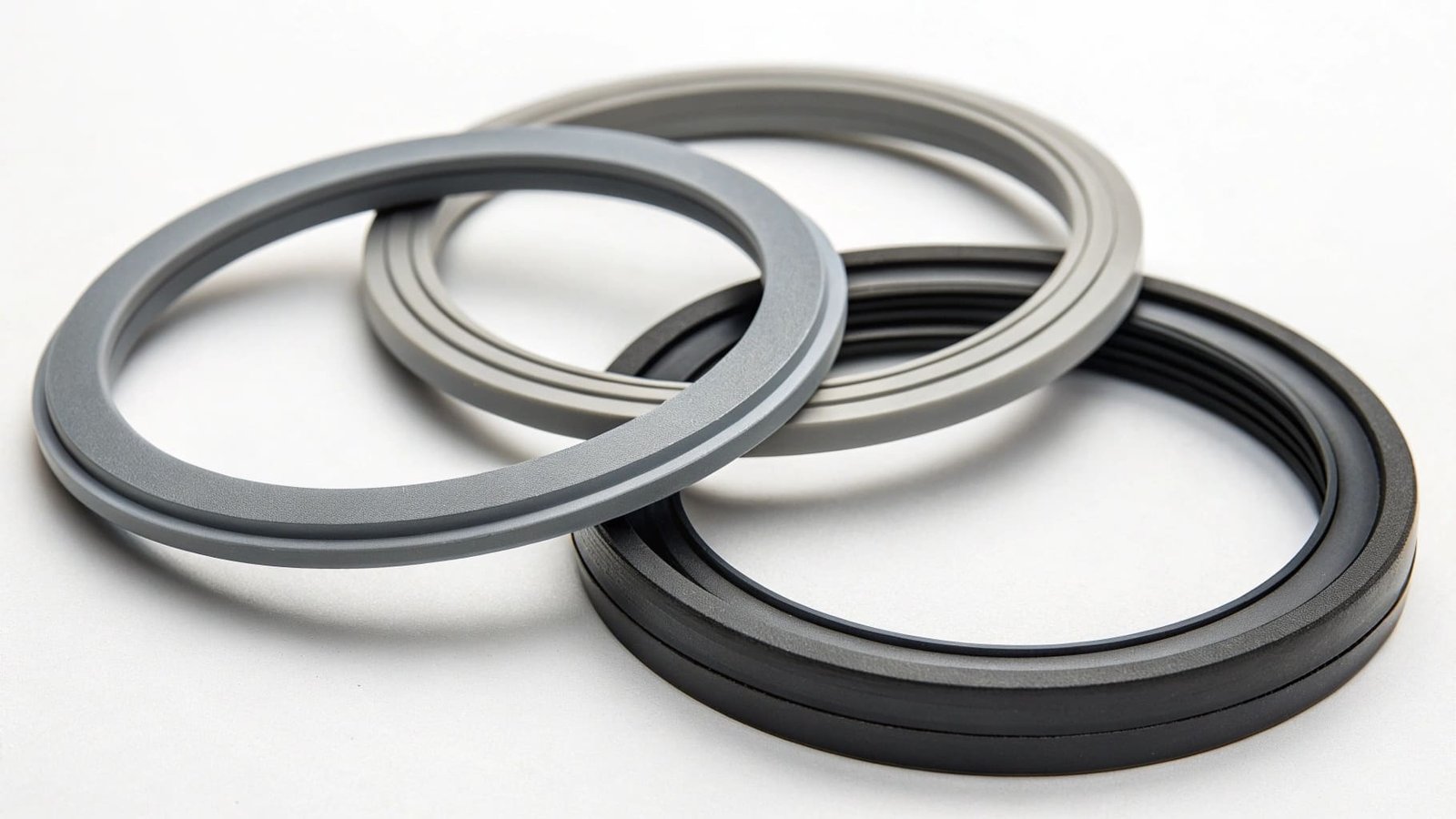
Understanding what the gasket is made of helps when choosing the right replacement or advising a client on how to care for it.
Most commercial fridge gaskets fall into two material categories.
| Feature | Traditional Rubber Gasket | Food-Grade Silicone Gasket |
|---|---|---|
| Porosity | High — absorbs moisture | Low — resists moisture |
| Mold resistance | Low | High |
| Cleaning effort | More frequent, more product | Less frequent, easier |
| Temperature range | Limited | Wide range, stays flexible |
| Lifespan | 3–5 years typical | 5–8 years or longer |
| Upfront cost | Lower | Higher |
| Total cost over time | Higher (maintenance + replacement) | Lower |
I use this table when I talk to procurement officers or company owners who are comparing products purely on price. The upfront cost difference is real. But the total cost of ownership tells a different story.
A commercial kitchen that cleans a rubber gasket weekly, replaces it every three years, and occasionally deals with mold-related compliance issues is spending more than a kitchen that pays more upfront for a silicone gasket and cleans it once a month with minimal effort.
The buyers I work with are experienced. They have been burned by cheap parts before. When I show them the full picture — not just the unit price but the maintenance load, the replacement cycle, and the hygiene performance — the conversation moves quickly toward quality.
That is the value of knowing what the product is called, what it is made of, and what it actually does in daily use.
Conclusion
Knowing how to clean, maintain, and replace commercial fridge seals helps wholesalers give better advice, sell better products, and build stronger long-term client relationships.
-
"Should I use bleach to clean up mold? | US EPA", https://www.epa.gov/mold/should-i-use-bleach-clean-mold. Public-health guidance describes diluted household bleach as an option for mold cleanup on suitable hard surfaces and gives dilution ratios comparable to a 1:10 solution, supporting the article’s cleaning method when used with proper ventilation and rinsing. Evidence role: mechanism; source type: government. Supports: The source should support the use of diluted household bleach for mold cleanup on hard or nonporous surfaces and provide a comparable dilution range.. Scope note: Most public-health guidance addresses general household or hard-surface mold cleanup rather than commercial refrigerator gaskets specifically. ↩
-
"Influence of Surface Roughness, Nanostructure, and Wetting ... - PMC", https://pmc.ncbi.nlm.nih.gov/articles/PMC10848269/. Studies of bacterial adhesion and biofilm formation report that roughened or damaged surfaces can retain microorganisms more readily than smooth surfaces, supporting the warning that scratched gaskets are harder to keep clean. Evidence role: mechanism; source type: paper. Supports: The source should show that increased surface roughness, scratches, or crevices can enhance bacterial attachment or make cleaning less effective.. Scope note: The evidence usually concerns food-contact or laboratory surfaces in general and may not measure bacterial retention on commercial refrigerator door seals directly. ↩
-
"[PDF] FDA Food Code 2022: Full Document", https://www.fda.gov/media/164194/download. The FDA Food Code requires food-establishment equipment and nonfood-contact surfaces to be maintained clean and in good repair, supporting the article’s point that moldy refrigerator gaskets can raise inspection and compliance concerns. Evidence role: general_support; source type: government. Supports: The source should support that food establishment equipment and nonfood-contact surfaces must be kept clean and maintained to prevent contamination.. Scope note: The Food Code may not list mold on refrigerator gaskets as an automatic violation in every jurisdiction; enforcement depends on local code adoption and inspector judgment. ↩
-
"Estimation of Synthetic Rubber Lifespan Based on Ozone ... - PMC", https://pmc.ncbi.nlm.nih.gov/articles/PMC11944956/. Elastomer-aging literature describes oxidation, ozone exposure, and mechanical fatigue as mechanisms that can harden rubber and produce surface cracking, supporting the article’s explanation of why older seals become harder to clean. Evidence role: mechanism; source type: paper. Supports: The source should explain that rubber and elastomer materials can age through oxidation, ozone attack, hardening, and cracking.. Scope note: The word “porous” may be imprecise for some dense rubber formulations; the stronger supported point is aging-related surface cracking and defect formation. ↩
-
"How biofilm changes our understanding of cleaning and disinfection", https://pmc.ncbi.nlm.nih.gov/articles/PMC10483709/. Food-safety and biofilm studies show that cracks and crevices can protect microorganisms from mechanical cleaning and sanitizers, supporting the recommendation to replace damaged gaskets rather than repeatedly clean them. Evidence role: mechanism; source type: paper. Supports: The source should support that cracks, crevices, and surface defects can harbor microorganisms and reduce cleaning or sanitizing effectiveness.. Scope note: The evidence may concern bacterial biofilms generally; it is contextually applicable to mold and gasket folds but may not directly test mold in refrigerator seals. ↩
-
"Can Superhydrophobic PET Surfaces Prevent Bacterial Adhesion?", https://pmc.ncbi.nlm.nih.gov/articles/PMC10058955/. Materials and microbiology literature characterizes silicone elastomers as hydrophobic and relatively low in moisture absorption, which can reduce conditions favorable to microbial attachment compared with damaged or absorbent elastomer surfaces. Evidence role: mechanism; source type: paper. Supports: The source should support that silicone elastomers are relatively hydrophobic, chemically stable, and can have lower moisture absorption than some rubber materials, affecting microbial adhesion.. Scope note: Silicone is not inherently mold-proof, and microbial adhesion can still occur depending on surface texture, soil load, and cleaning practices. ↩
-
"Gasket - Wikipedia", https://en.wikipedia.org/wiki/Gasket. Technical definitions of gaskets describe them as sealing components placed between mating surfaces, supporting the use of “door gasket” for the seal around a refrigerator door. Evidence role: definition; source type: encyclopedia. Supports: The source should define a gasket as a seal between surfaces and, ideally, identify refrigerator door seals as gaskets.. Scope note: A general gasket definition supports the terminology but may not provide commercial refrigeration ordering guidance. ↩
-
"How to Re-Magnetize a Refrigerator Door Gasket", https://hsmagnet.com/2025/11/11/how-to-re-magnetize-a-refrigerator-door-gasket/. Technical descriptions of refrigerator door gaskets explain that many designs incorporate magnetic material so the gasket seals against the metal cabinet, supporting the article’s use of “magnetic door seal.” Evidence role: definition; source type: education. Supports: The source should explain that refrigerator door gaskets often contain magnetic material to help seal the door against the cabinet.. Scope note: Not every commercial refrigeration door uses the same closure design, so the support should be read as applying to common magnetic-gasket designs. ↩