Which Micro Cord Locks Meet Quality Standards for European Outdoor Retailers?
Sourcing the wrong cord locks can cost you an entire product launch. One failed compliance check, and your shipment sits in customs. Here is what actually matters before you buy.
Micro cord locks that meet European quality standards must comply with REACH regulations, pass UV resistance tests, and come with full material safety data sheets. Silicon-based locks are the most reliable choice for outdoor use.1 They handle temperatures from -40°C to 200°C and contain no restricted substances under EU law.
I have spent years working with outdoor gear buyers across Europe. The questions I hear most often are the same ones that almost every procurement officer asks before placing a first order. Which lock type is best? Who makes the strongest locks? What do compliance teams actually check? I will answer each of these in order. By the end of this article, you will know exactly what to look for and what to avoid.
Which Type of Lock Is Best?
Choosing the wrong lock type is a quiet but expensive mistake. You only notice it after the returns start coming in. Let me break this down so you can avoid that entirely.
For outdoor gear sold in Europe, dual-spring silicon cord locks are the best choice. They hold better than single-spring designs, last longer under repeated use, and resist UV damage far better than standard plastic. They also stay lightweight, which matters for hiking and camping equipment where every gram counts.
The word "best" depends on what your product needs to do. There is no single answer that fits every situation. Here is how the main types compare across the factors that matter most to European outdoor retailers.
How Do the Main Lock Types Compare?
| Lock Type | Grip Strength | UV Resistance | Temperature Range | Weight | EU Compliance Risk |
|---|---|---|---|---|---|
| Dual-Spring Silicone | High | Excellent | -40°C to 200°C | Low | Very Low |
| Single-Spring Silicone | Medium | Excellent | -40°C to 200°C | Low | Very Low |
| Standard Plastic (ABS) | Medium | Poor | -20°C to 80°C | Low | Medium |
| Metal Toggle | High | Excellent | Wide range | High | Low |
| Nylon Composite | Medium | Fair | -30°C to 100°C | Low | Medium |
The gap between silicone and standard plastic becomes clear in outdoor conditions. Plastic locks become brittle after long sun exposure. Silicone does not.2 For a retailer managing warranty claims and product returns, that difference in UV resistance directly affects your after-sales costs.
I work with buyers who initially choose plastic locks to save a few cents per unit. Most of them switch to silicone after their first winter return season. The saving on unit cost does not cover the cost of processing returns and replacing stock. Dual-spring silicone locks cost slightly more upfront, but they reduce your total cost over the product lifecycle.
One more point worth raising here. The spring mechanism itself needs to be consistent. Inconsistent spring tension is a manufacturing defect that often passes visual inspection but fails in field use. When you evaluate samples, test the locking force across at least twenty units from the same batch. If the force varies widely between units, that is a sign of poor mold precision. Ask your supplier for their tolerance specs in writing before you place a bulk order.
What Locks Do Police Recommend?
This question comes up in sourcing conversations more than you might expect. It usually points to a deeper concern about product liability. Let me address what buyers are actually asking.
European outdoor retailers do not follow police recommendations for cord locks. They follow EU chemical regulations, product safety directives, and their own internal quality standards. The real question behind this one is: how do I know a lock is genuinely safe for consumers?
The answer comes down to documentation and testing. A cord lock can look and feel high quality but still carry restricted substances that violate REACH regulations. Here is what your compliance process should actually check.
What Does a Reliable Compliance Check Cover?
REACH is the regulation you need to understand first. It stands for Registration, Evaluation, Authorisation and Restriction of Chemicals. It applies to all products sold in the EU. If your cord lock contains restricted substances above the legal threshold, you cannot legally sell the product in Europe. The supplier's responsibility is to provide a full material safety data sheet. Your responsibility is to verify it.
Here are the core documents you should request from any supplier before approving a cord lock for European distribution.
Documents You Must Request
- Full material safety data sheet (MSDS or SDS)
- REACH compliance declaration with specific substance list
- ISO 9001 certification for the manufacturing facility
- Batch traceability records
- Third-party lab test reports from an EU-recognized testing body
| Document | Why It Matters | Red Flag If Missing |
|---|---|---|
| MSDS / SDS | Confirms no restricted chemicals | Supplier refuses or delays |
| REACH Declaration | Legal requirement for EU sales | Cannot sell in EU without it |
| ISO 9001 Certificate | Shows quality management system | No process consistency guarantee |
| Batch Traceability | Links defects to specific production runs | No accountability for failures |
| Third-Party Lab Report | Independent verification of claims | Self-certified data only |
I have seen suppliers provide certificates that look legitimate but are outdated or issued by uncertified labs. Always check the issuing body. EU-recognized testing organizations include SGS, Intertek, Bureau Veritas, and TÜV. If the certificate comes from a lab you cannot verify independently, treat it as unconfirmed until you can.
One practice I follow with new suppliers is requesting test reports for a specific product code, not just a general material test. A general silicone material certificate does not cover the finished product.3 The finished cord lock may include other materials or dyes that introduce compliance risks. Always test the final product, not just the raw material.
Who Makes the Strongest Locks?
Strength in a cord lock is not about how hard it is to break. It is about how consistently it performs across thousands of uses in outdoor conditions. Here is what that actually looks like in production.
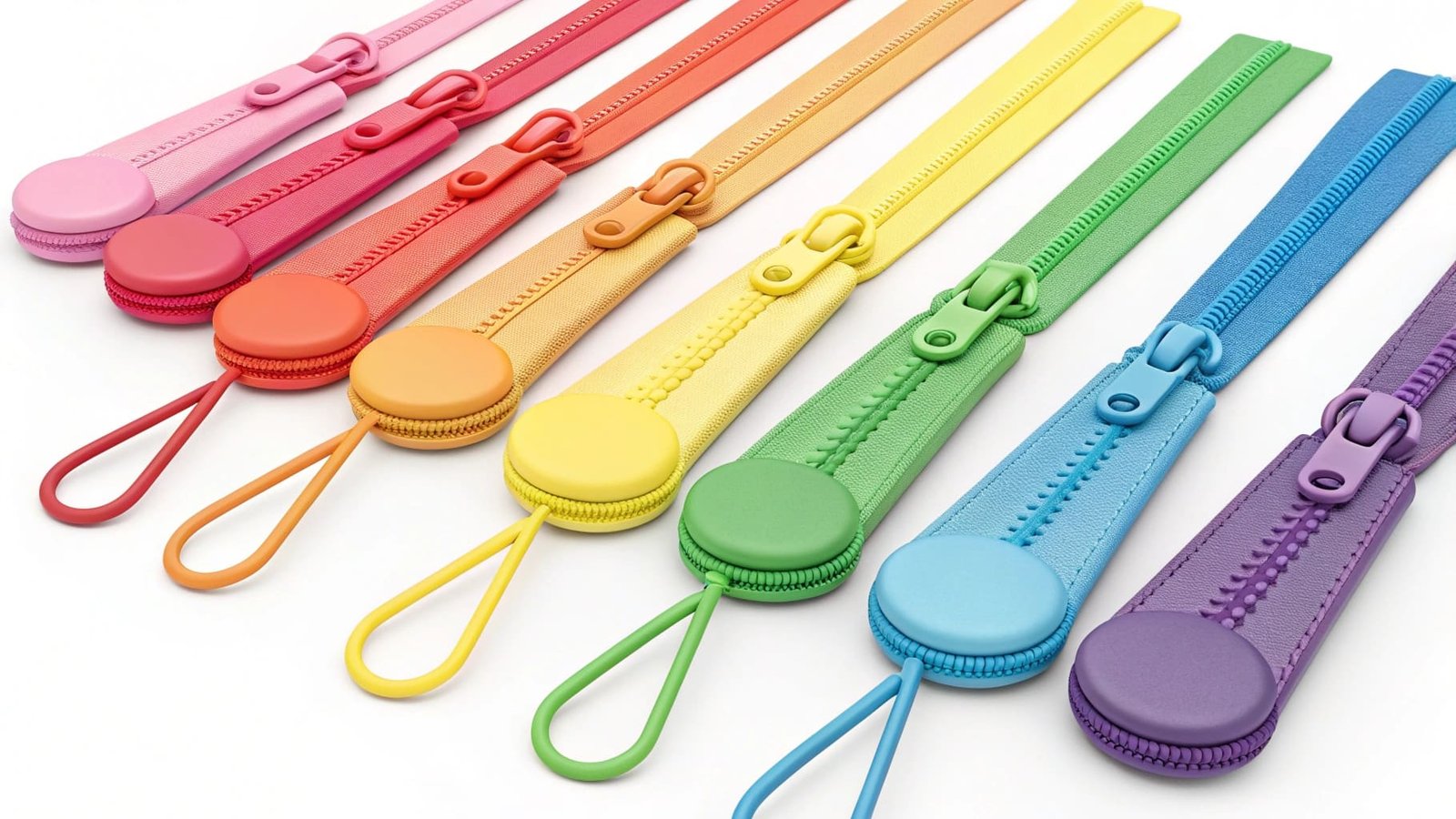
The strongest cord locks come from manufacturers who combine engineering-grade silicone with precision injection molding. The silicone compound needs to be consistent batch to batch. The mold needs to hold tight tolerances. Both conditions have to be true at the same time.
When European outdoor retailers talk about "strong" locks, they usually mean three things: locking force consistency, material durability over time, and resistance to environmental stress. Let me go through each one in practical terms.
What Makes a Cord Lock Strong in Real Outdoor Use?
Locking force consistency is a manufacturing problem. It is caused by variation in spring wire diameter, variation in silicone compound hardness, or variation in mold cavity dimensions. A good supplier controls all three. When you audit a new supplier, ask how they measure locking force during production. If they use manual spot checks only, that is a risk. If they use calibrated force gauges on a sample from every batch, that is a system you can trust.
Material durability depends on the silicone grade used in production. Not all silicone is equal. Food-grade and medical-grade silicone formulations have tighter purity standards than general industrial grades.4 For outdoor products that come into regular contact with hands and skin, a higher-grade formulation reduces health risk and improves surface feel. It also holds up better against sweat, sunscreen, and cleaning products that outdoor gear is regularly exposed to.
| Durability Factor | What to Test | Acceptable Benchmark |
|---|---|---|
| Locking Force | Force gauge measurement across 20 units | Variation under 10% within batch |
| UV Resistance | 500-hour UV exposure test | No cracking, no color shift |
| Temperature Cycling | -40°C to 80°C repeated cycles | No deformation, consistent grip |
| Chemical Resistance | Exposure to sweat and sunscreen | No surface degradation |
| Fatigue Life | 10,000 open-close cycles | Full locking function retained |
Environmental stress resistance is where silicone consistently outperforms plastic alternatives. The temperature cycling behavior is the most important test for outdoor gear. Locks that are used in alpine environments go from freezing temperatures at night to direct sun exposure during the day. Standard plastic becomes brittle and cracks under repeated thermal stress. Engineering-grade silicone absorbs this thermal movement without degrading. That physical property is the core reason why European outdoor retailers with premium product lines have shifted toward silicone cord locks over the past several years.
I have worked with buyers who source from multiple countries and compare suppliers side by side. The manufacturers who perform best in long-term testing are the ones who invest in material quality control at the raw material stage, not just at final inspection. Ask your supplier what incoming quality checks they run on the silicone compound before it enters production. That answer tells you a great deal about how seriously they take consistency.
Conclusion
Micro cord locks that meet European standards require REACH compliance, engineering-grade silicone, and traceable batch documentation. Dual-spring silicone locks give outdoor retailers the best combination of durability, compliance, and long-term cost control.
-
"Effects of UV radiation on natural and synthetic materials - PMC - NIH", https://pmc.ncbi.nlm.nih.gov/articles/PMC10088630/. Materials research describes silicone elastomers as having comparatively strong weathering and thermal stability, properties that are relevant to outdoor hardware exposed to sunlight and temperature variation. Evidence role: general_support; source type: paper. Supports: Silicone elastomers generally have strong resistance to weathering, ultraviolet exposure, and temperature extremes, which are relevant to outdoor component reliability.. Scope note: This would support the material rationale, not a direct ranking of all cord-lock designs or suppliers. ↩
-
"Photodegradation and photostabilization of polymers, especially ...", https://pmc.ncbi.nlm.nih.gov/articles/PMC4320144/. Polymer degradation literature links ultraviolet exposure to chain scission, oxidation, and embrittlement in susceptible plastics, while silicone elastomers are generally characterized by higher resistance to outdoor weathering. Evidence role: mechanism; source type: paper. Supports: Ultraviolet exposure can cause photodegradation and embrittlement in many plastics, while silicone elastomers are often reported to have comparatively strong weathering resistance.. Scope note: The comparison depends on the exact plastic grade, stabilizers, pigments, and silicone formulation. ↩
-
"Where are the SVHCs? 10 years consumer's 'right to ... - PMC - NIH", https://pmc.ncbi.nlm.nih.gov/articles/PMC5519652/. ECHA guidance on substances in articles explains that compliance assessment concerns substances present in the article as placed on the market, not only the base raw material. Evidence role: mechanism; source type: government. Supports: REACH article obligations depend on substances present in the finished article, including additives, pigments, dyes, or other components introduced during manufacturing.. Scope note: The source would support the compliance logic; direct proof for a particular cord lock still requires finished-product documentation or testing. ↩
-
"[PDF] Q3E Guideline for Extractables and Leachables - FDA", https://www.fda.gov/media/189890/download. Food-contact and medical-use silicone materials are commonly assessed under regulatory or standards-based frameworks addressing migration, extractables, and biocompatibility, which are more specific than ordinary industrial material specifications. Evidence role: general_support; source type: institution. Supports: Food-contact and medical-use silicones are evaluated under standards or regulatory frameworks addressing extractables, biocompatibility, or purity-related safety criteria.. Scope note: These frameworks support the distinction in intended-use requirements, but they do not mean every product marketed as food-grade or medical-grade automatically performs better outdoors. ↩