Which Paracord Lock Design Works Best for Military Equipment Supply Chains?
Choosing the wrong paracord lock design costs time, money, and trust. In military supply chains, that mistake can break a contract before it even starts.
The best paracord lock design for military equipment supply chains is the spring-loaded cam lock with cord-tensioning buckle backup.1 It maintains grip under extreme temperatures, supports rapid reconfiguration in the field, and meets fail-safe redundancy standards required by most defense procurement specifications.2
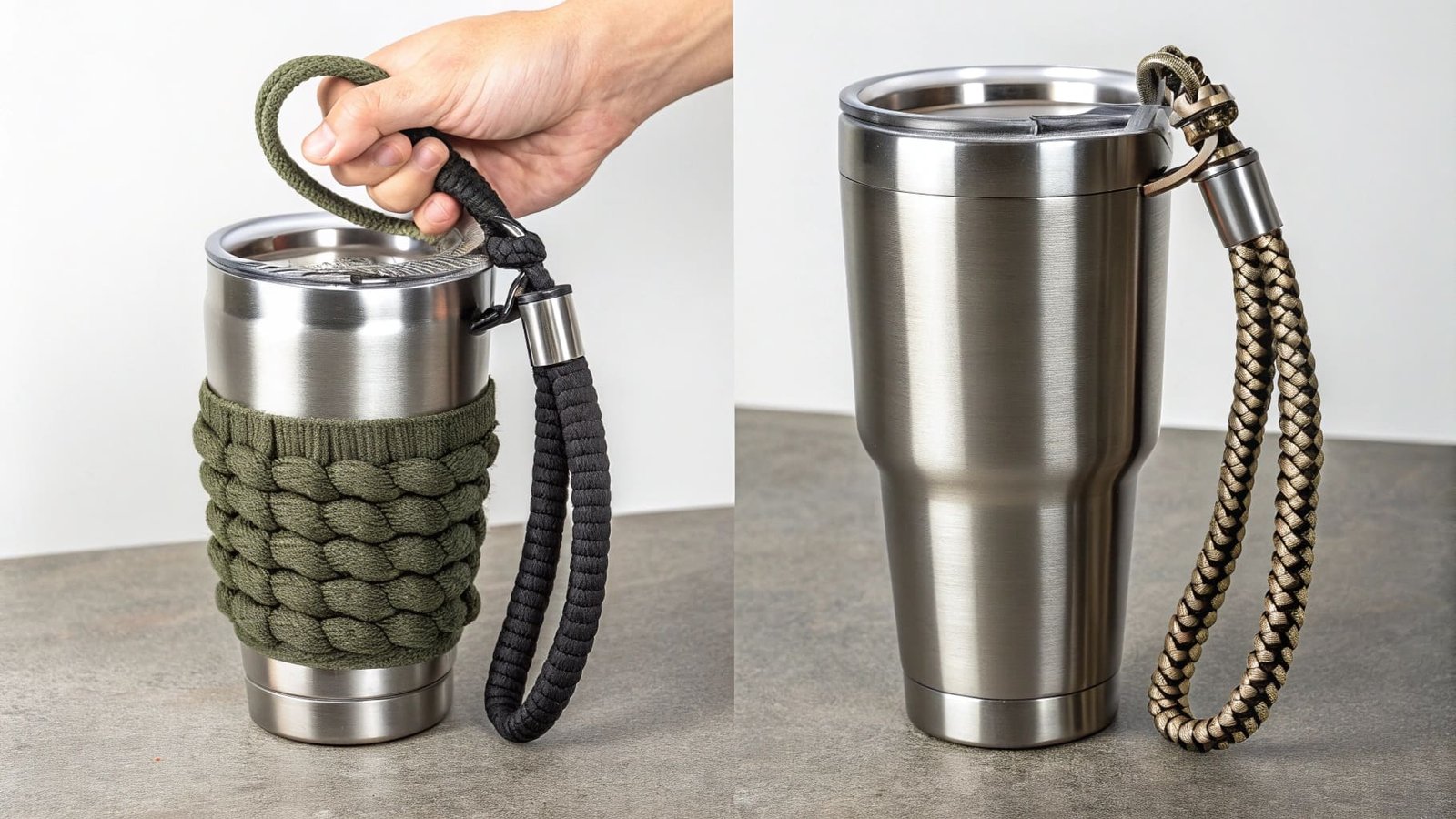
I have spent years working with buyers who source hardware components for demanding end-use environments. What I see again and again is this: most suppliers focus on the cord itself and treat the lock as an afterthought. That is exactly where supply chains break down. The lock is not just a fastener. It is the point where material performance, field usability, and compliance documentation all meet. If you get that part wrong, the rest of your product does not matter.
What Type of Paracord Does the Military Use?
Most buyers assume any strong cord will do. Then they receive a rejection notice citing non-compliance with MIL-C-5040H, and the shipment sits in a warehouse for weeks.
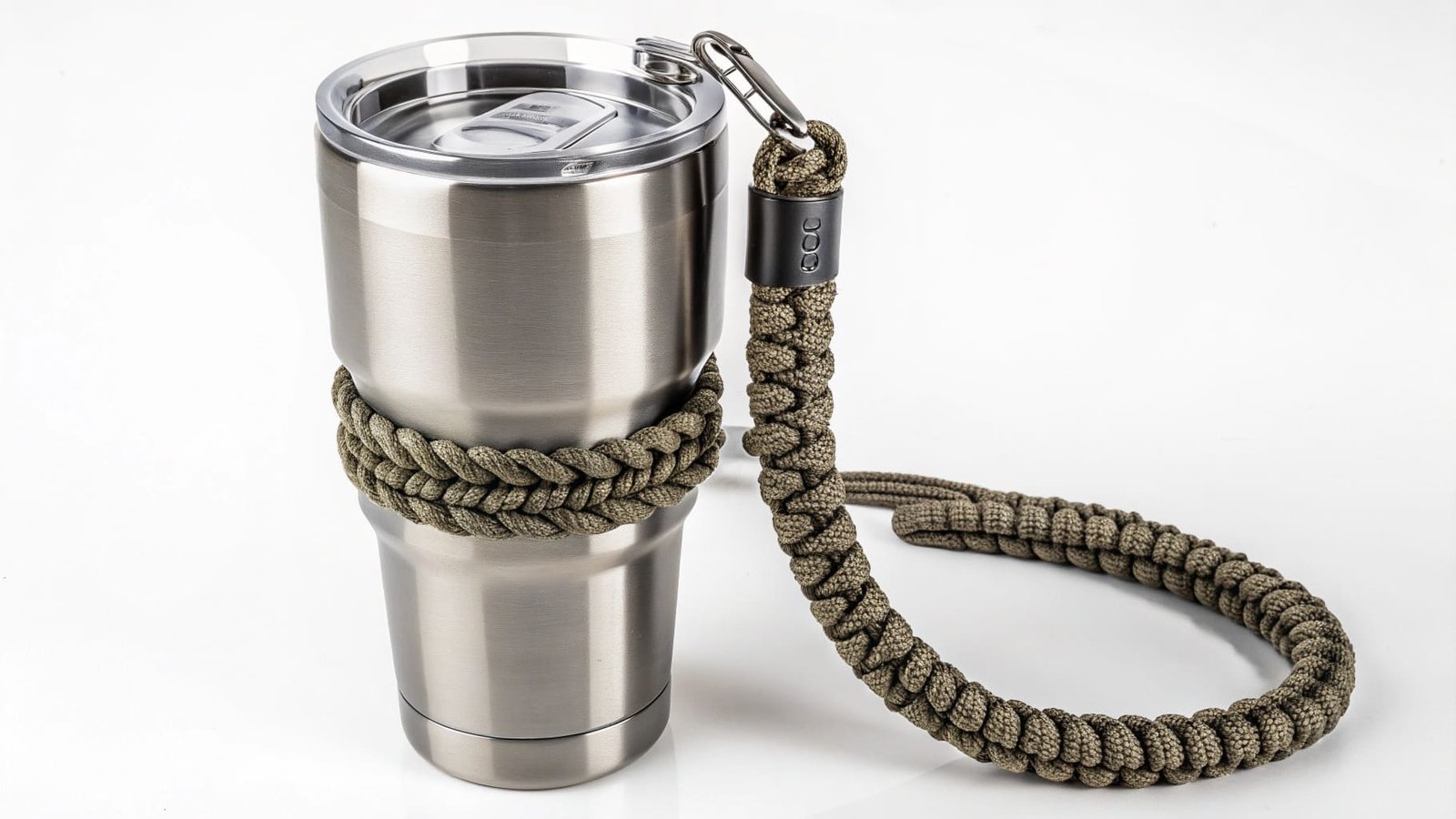
The military primarily uses Type III 550 paracord as its baseline standard.3 It meets MIL-C-5040H specifications, carries a 550 lb tensile strength rating, and offers a reliable weight-to-strength ratio for general-purpose applications.4 For load-bearing roles, Type IV 1100 paracord is specified instead.
Why Does the Standard Exist and What Does It Actually Cover?
The MIL-C-5040H specification is not just about breaking strength. It covers the full construction of the cord, including the number of inner yarns, the material of the sheath, the elongation rate under load, and the minimum diameter.5 Defense contractors do not just test whether the cord holds weight. They test whether the cord holds weight in the exact same way every time, across every batch.6
I once spoke with a procurement officer who told me his team had rejected three consecutive shipments from different suppliers. The cords passed basic tensile tests. But the inner yarn count was inconsistent across batches, which caused unpredictable stretch behavior when the cord was loaded through a spring-loaded lock. That kind of failure does not show up until the product is in use.
The table below shows the two most common military cord types and their key differences:
| Specification | Type III (550) | Type IV (1100) |
|---|---|---|
| Tensile Strength | 550 lbs | 1100 lbs |
| Inner Yarns | 7–9 | 11+ |
| Weight per Foot | Lower | ~40% higher |
| Primary Use | General purpose | Load-bearing |
| MIL Standard | MIL-C-5040H | MIL-C-5040H |
For most supply chain applications, Type III is the right starting point. Type IV enters the picture when the load-bearing requirement is explicit in the product specification sheet.
Is 550 or 1100 Paracord Better?
Buyers often ask this as if one answer fits every situation. That thinking leads to over-specified products that cost more than they need to, or under-specified products that fail in the field.
Neither is universally better. Type III 550 paracord is better for weight-sensitive and general-use applications. Type IV 1100 paracord is better when higher breaking strength is a defined requirement. The right choice depends on the mission profile written into the procurement specification.
How Do You Match Cord Type to Lock Design?
The cord type affects how a lock performs. This is the part most suppliers do not explain clearly, and it is where I see the most confusion in military supply chain conversations.
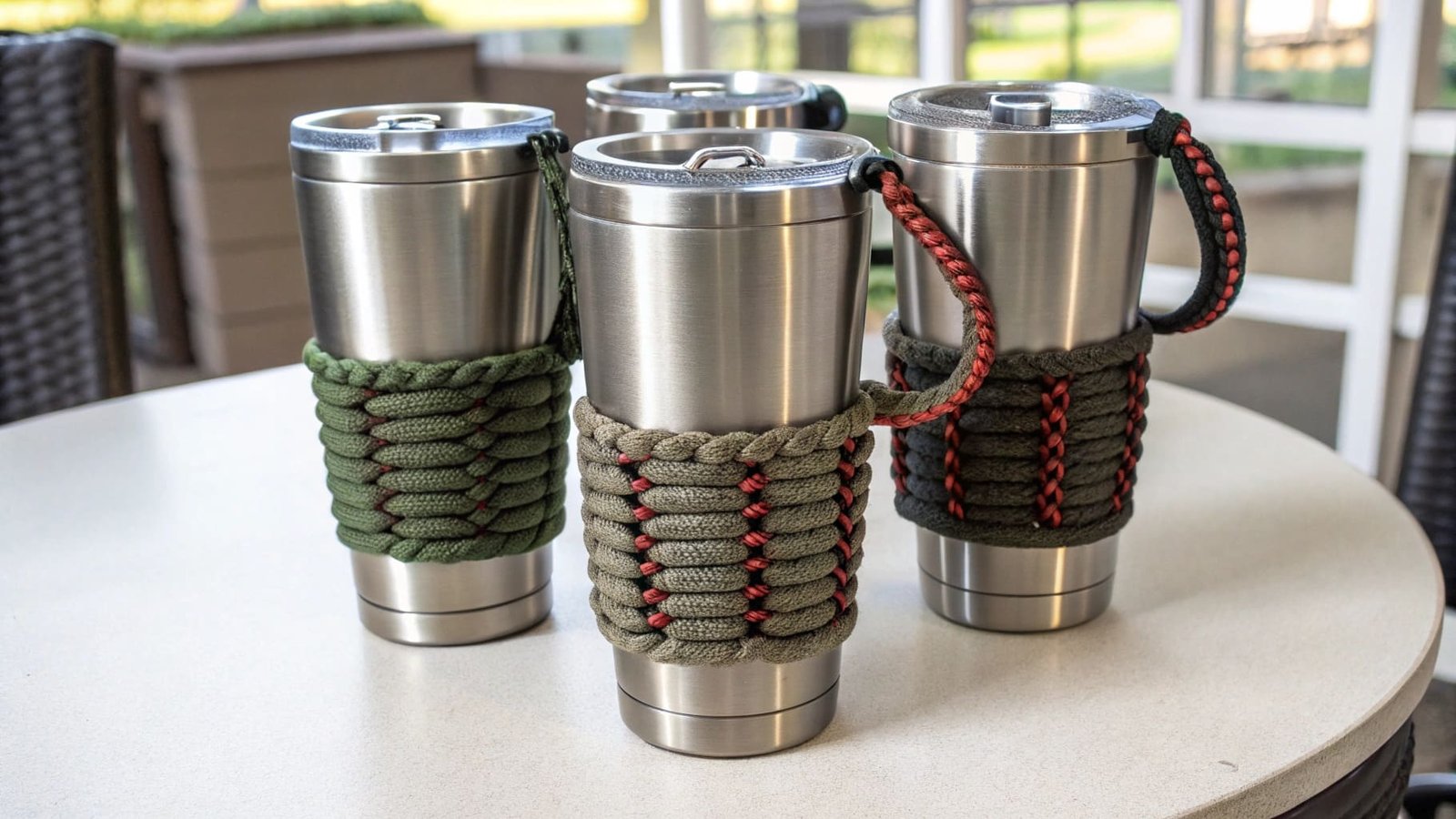
A spring-loaded cam lock applies tension through friction. When you run a thicker, stiffer cord like Type IV through a cam lock, the friction profile changes. The lock may hold under static load but slip under dynamic load if the cam is not sized for the cord diameter.7 This is not a theoretical problem. It shows up in field testing reports.
Here is a simple breakdown of how cord type interacts with common lock designs:
| Lock Type | Works Well With | Common Issue With |
|---|---|---|
| Spring-loaded cam lock | Type III 550 | Type IV if cam is undersized |
| Cord-tensioning buckle | Both types | Requires adjustment for diameter |
| Barrel/cord stopper | Type III 550 | Type IV may not seat correctly |
| Modular clip attachment | Both types | Dependent on cord sheath stiffness |
The practical implication here is that when you switch cord specification mid-production run, you may need to re-validate your lock design as well. Military procurement officers know this. They will ask for test data that covers both components together, not separately.
I always tell buyers: do not test the cord alone and the lock alone. Test them as a system, under the temperature range and load profile described in the actual product requirement. That is the only test result that carries weight in a compliance review.
What Is the Strongest Type of Paracord?
This sounds like a simple question. In practice, it depends on how you define strong, and military supply chains define it in more than one way.
In terms of raw tensile strength, Type IV 1100 paracord is the strongest standard military cord.8 But military buyers do not evaluate strength by tensile rating alone. They assess abrasion resistance, UV degradation in desert conditions, and breaking strength retention when the cord is wet.9
What Does Strength Really Mean in a Military Supply Chain Context?
Raw breaking strength is one data point. It is not the whole picture. I have reviewed procurement evaluation sheets where tensile strength was listed third on the priority list, behind abrasion resistance and environmental stability. That surprised me the first time I saw it. It makes sense when you understand how these products are actually used.
A cord that tests at 1100 lbs dry but loses 20% of its strength when wet is less reliable in field conditions than a cord that tests at 900 lbs and retains 95% of that strength in wet conditions.10 The same logic applies to UV exposure and heat cycling.
Here is a comparison of the material factors military evaluators look at:
| Strength Factor | Nylon 6,6 | Polyester Blend | Silicone-Coated Nylon |
|---|---|---|---|
| Dry tensile strength | High | High | High |
| Wet strength retention | 85–90% | 95–98% | 85–90% |
| UV resistance | Moderate | High | Moderate |
| Abrasion resistance | High | Moderate | High |
| Knot-holding reliability | High | High | Reduced |
| Friction in cam locks | Standard | Standard | Lower |
The silicone-coated row is worth a close look. Silicone coating reduces friction inside spring-loaded locks, which sounds like a benefit. But the coating also reduces the cord's ability to hold a knot under load. For military applications where both lock-secured and knot-secured configurations are used, that trade-off needs to be documented and disclosed. Buyers who discover it after delivery see it as a supplier trust issue, not a technical one.
This brings me to the supply chain point I consider most important. Manufacturers who provide integrated testing documentation gain a measurable advantage in military procurement. That means breaking strength certificates, environmental stress test results, and batch traceability records delivered together as a package. Without that, compliance verification adds four to six weeks to the approval process. With it, the buyer moves faster and the supplier builds a reputation for reliability that leads to repeat contracts.
Conclusion
The best paracord lock design pairs the right cord type with a validated lock system, backed by full compliance documentation. That combination wins military procurement contracts and keeps supply chains moving.
-
"Influence of Temperature on the Mechanical Performance of ... - PMC", https://pmc.ncbi.nlm.nih.gov/articles/PMC8070532/. Engineering literature on frictional rope or cord holding devices and redundant fastening systems supports the general principle that cam-based grip mechanisms can be strengthened by secondary tensioning or backup retention in high-consequence field applications. Evidence role: general_support; source type: research. Supports: A neutral source should support the engineering rationale for combining friction-based cord locking with redundant tensioning in demanding field equipment, even if it does not name this exact commercial design.. Scope note: The source is likely to support the design rationale rather than prove that this exact paracord lock configuration is universally the best choice for military supply chains. ↩
-
"Fail-safe - Wikipedia", https://en.wikipedia.org/wiki/Fail-safe. Military environmental and procurement standards provide context that field equipment components may be evaluated for temperature exposure, operational suitability, and failure-risk mitigation during qualification. Evidence role: general_support; source type: government. Supports: A government or standards source should establish that military equipment is commonly evaluated for environmental exposure, operational usability, and failure mitigation.. Scope note: Such standards would contextualize the claim; they would not by themselves verify the performance of a specific paracord lock without product-specific testing. ↩
-
"Parachute cord - Wikipedia", https://en.wikipedia.org/wiki/Parachute_cord. MIL-C-5040H identifies Type III nylon parachute cord as a specified military cord type and lists its construction and minimum breaking-strength requirements. Evidence role: definition; source type: government. Supports: The source should identify Type III nylon parachute cord under MIL-C-5040H and state its nominal 550-pound breaking strength.. ↩
-
"Parachute cord - Wikipedia", https://en.wikipedia.org/wiki/Parachute_cord. The MIL-C-5040H specification defines Type III nylon parachute cord and provides the minimum breaking-strength and construction requirements used to classify it as 550 cord. Evidence role: definition; source type: government. Supports: The source should document the Type III cord's minimum breaking strength and construction under MIL-C-5040H.. Scope note: The specification supports the rating and construction; the phrase 'general-purpose applications' may require contextual interpretation from procurement or field-use sources. ↩
-
"Parachute cord - Wikipedia", https://en.wikipedia.org/wiki/Parachute_cord. The MIL-C-5040H cord specification includes construction and performance criteria such as yarn configuration, material requirements, dimensional limits, and elongation behavior under load. Evidence role: definition; source type: government. Supports: The source should confirm that MIL-C-5040H includes detailed construction and performance requirements beyond tensile strength.. ↩
-
"Part 46 - Quality Assurance - Acquisition.GOV", https://www.acquisition.gov/far/part-46. Defense quality-assurance guidance and lot-acceptance procedures support the principle that supplied materials may be evaluated for repeatable conformance across batches, not only for a single strength result. Evidence role: general_support; source type: government. Supports: The source should show that defense procurement commonly uses lot acceptance, quality assurance provisions, or batch consistency checks for supplied materials.. Scope note: The source may establish general defense quality practice rather than specifically describing paracord lock assemblies. ↩
-
"Capstan equation - Wikipedia", https://en.wikipedia.org/wiki/Capstan_equation. Mechanical studies of rope friction and cam or cleat holding mechanisms show that holding force depends on contact geometry, cord diameter, surface properties, and loading conditions. Evidence role: mechanism; source type: paper. Supports: The source should explain how frictional holding capacity in rope or cord locking devices depends on contact geometry, load type, and cord properties.. Scope note: The evidence would support the mechanical mechanism generally; direct proof for a specific paracord lock would require product-level dynamic testing. ↩
-
"Parachute cord - Wikipedia", https://en.wikipedia.org/wiki/Parachute_cord. MIL-C-5040H lists Type IV nylon parachute cord with a higher minimum breaking-strength requirement than lower-numbered standard cord types, including Type III. Evidence role: definition; source type: government. Supports: The source should list the minimum breaking strengths for MIL-C-5040H paracord types and confirm that Type IV is rated higher than Type III.. Scope note: The specification supports tensile-strength comparison only; it does not establish superiority under all environmental or use conditions. ↩
-
"[PDF] MIL-STD-810G - The (New) People's Liberation Front of NE-80", https://snebulos.mit.edu/projects/reference/MIL-STD/MIL-STD-810G.pdf. Military environmental test methods and textile performance standards provide context for evaluating materials under abrasion, solar exposure, moisture, and other service conditions rather than relying solely on dry tensile strength. Evidence role: general_support; source type: government. Supports: The source should show that military or textile performance testing includes environmental exposure, abrasion, and moisture-related performance factors.. Scope note: The source may describe applicable test categories broadly rather than confirm that every military buyer weighs these exact factors for paracord. ↩
-
"[PDF] Tensile properties of pleated synthetic rope", https://nvlpubs.nist.gov/nistpubs/Legacy/IR/nbsir86-3375.pdf. Studies of synthetic fibers and ropes show that moisture exposure can alter tensile performance, making retained strength under wet service conditions an important reliability measure alongside dry breaking strength. Evidence role: mechanism; source type: paper. Supports: The source should explain how moisture affects tensile performance and why retained strength under expected service conditions matters for reliability.. Scope note: The exact 20% and 95% figures in the article are illustrative unless matched to a source testing the same cord materials and constructions. ↩