Which Silicone Rubber Grade Is Best for Tumbler Boot OEM Manufacturing Projects?
Choosing the wrong silicone grade for your tumbler boot order can cost you returns, failed certifications, and lost customers. The grade you pick matters more than most buyers expect.
The best silicone rubber grade for tumbler boot OEM projects depends on your target market and compliance requirements. Medical-grade silicone suits North American and European markets where food-contact standards are strict.1 Premium-grade works well for most mid-range consumer products. Standard food-grade fits budget-sensitive markets.
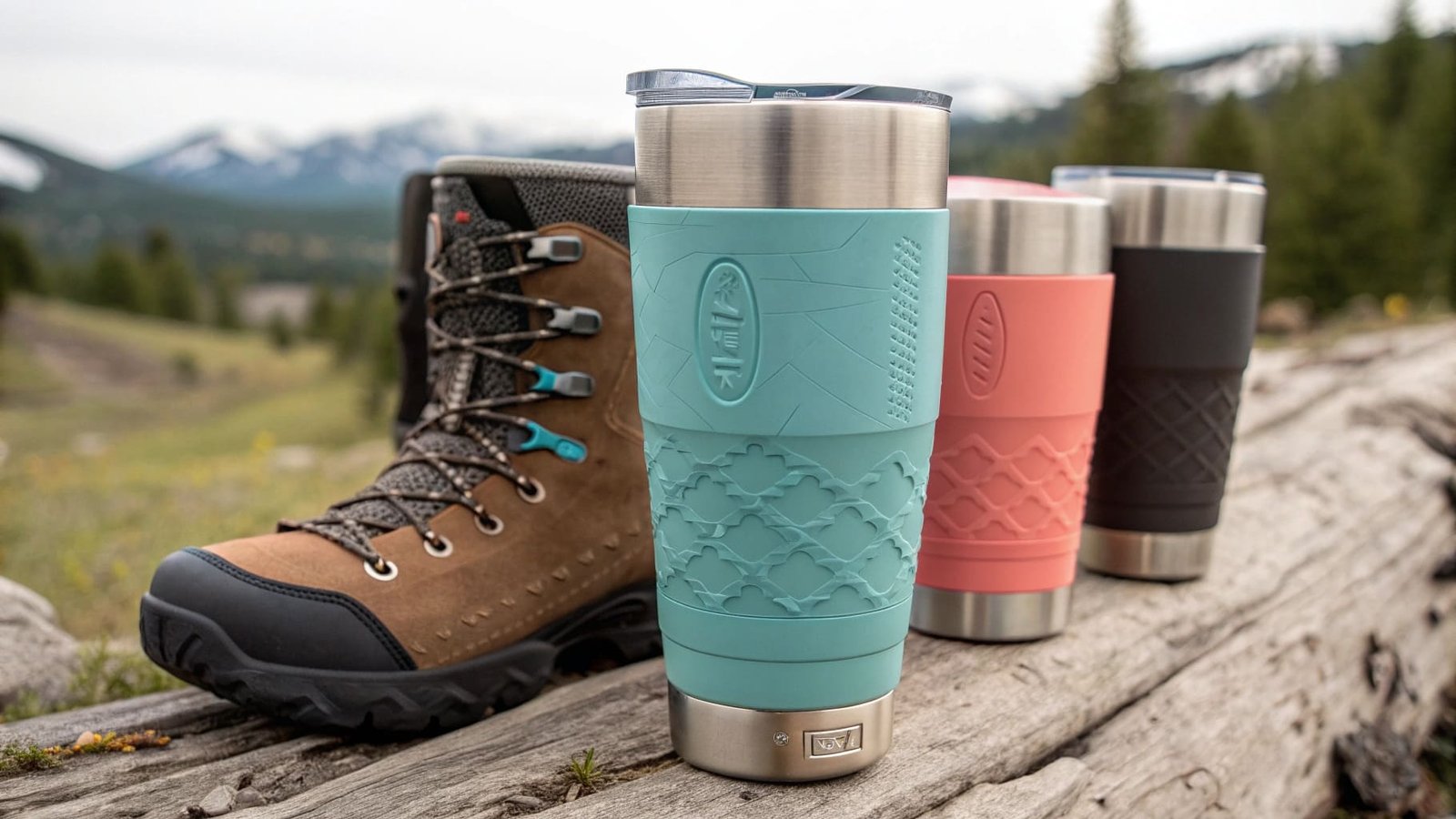
I have worked with buyers from Canada, the US, and Europe for years. One thing comes up in almost every project conversation: they know they want "good silicone," but they are not sure what that means on paper. That gap creates problems at customs, during audits, and when end consumers start asking questions. I want to break this down so you have a clear answer before you place your next OEM order.
What Is 100% Medical Grade Silicone?
Most buyers hear "medical grade" and assume it just means safe. That assumption leads to ordering mistakes and supplier miscommunications that delay production.
100% medical-grade silicone is a silicone material that passes biocompatibility tests set by regulatory bodies such as the FDA and ISO 10993. It contains no harmful fillers or additives. It is tested for cytotoxicity, skin sensitization, and irritation. It is produced in controlled environments with full batch documentation.
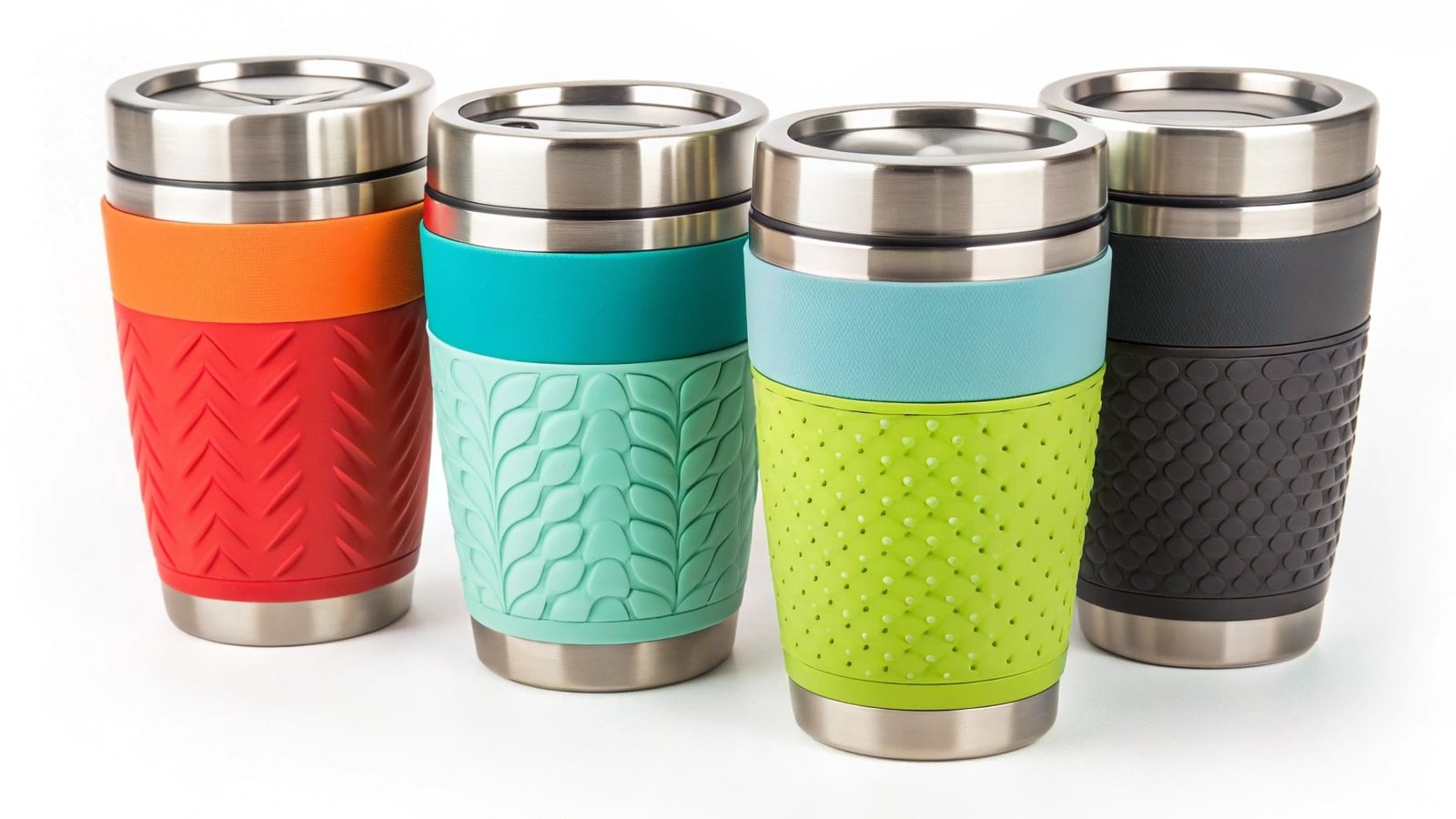
Let me be direct about what makes medical-grade silicone different from the label alone.
The "100%" in "100% medical-grade silicone" refers to raw material purity. No recycled content. No low-cost fillers added to reduce weight or cost. Every batch is traceable back to its raw materials, and that traceability is documented.
When I work with OEM clients sourcing tumbler boots for North American retail or hospitality markets, this documentation is not optional. Retail chains and distributors in the US and Canada often request it before a product hits shelves. If a supplier cannot provide it, that is a red flag.
Here is what medical-grade silicone testing typically covers:
| Test Category | What It Checks |
|---|---|
| Cytotoxicity | Whether the material harms living cells |
| Skin Sensitization | Whether repeated skin contact causes reactions |
| Irritation Potential | Whether the material causes surface-level irritation |
| Leach Testing | Whether any substance migrates out of the material into liquid |
For tumbler boots specifically, leach testing matters the most. A tumbler boot sits on the outside of a cup, but it still contacts hands repeatedly and sometimes sits in damp conditions for long periods. A material that leaches even trace compounds can affect odor, which affects brand perception.
Medical-grade silicone also performs well through dishwasher cycles. It does not degrade at high temperatures, and it does not absorb soap or food residue over time. For a product meant to protect a premium tumbler, that longevity is a direct part of the value proposition your end customer is paying for.
What Is the Difference Between Silicone and Medical-Grade Silicone?
You ask a supplier for silicone. They say yes. You place the order. The product arrives and fails a retailer's quality check. This happens more often than it should.
Standard silicone and medical-grade silicone are not the same material.2 The main differences are raw material purity, production environment controls, and the presence or absence of documented certifications. Medical-grade silicone meets strict regulatory standards. Standard silicone does not.
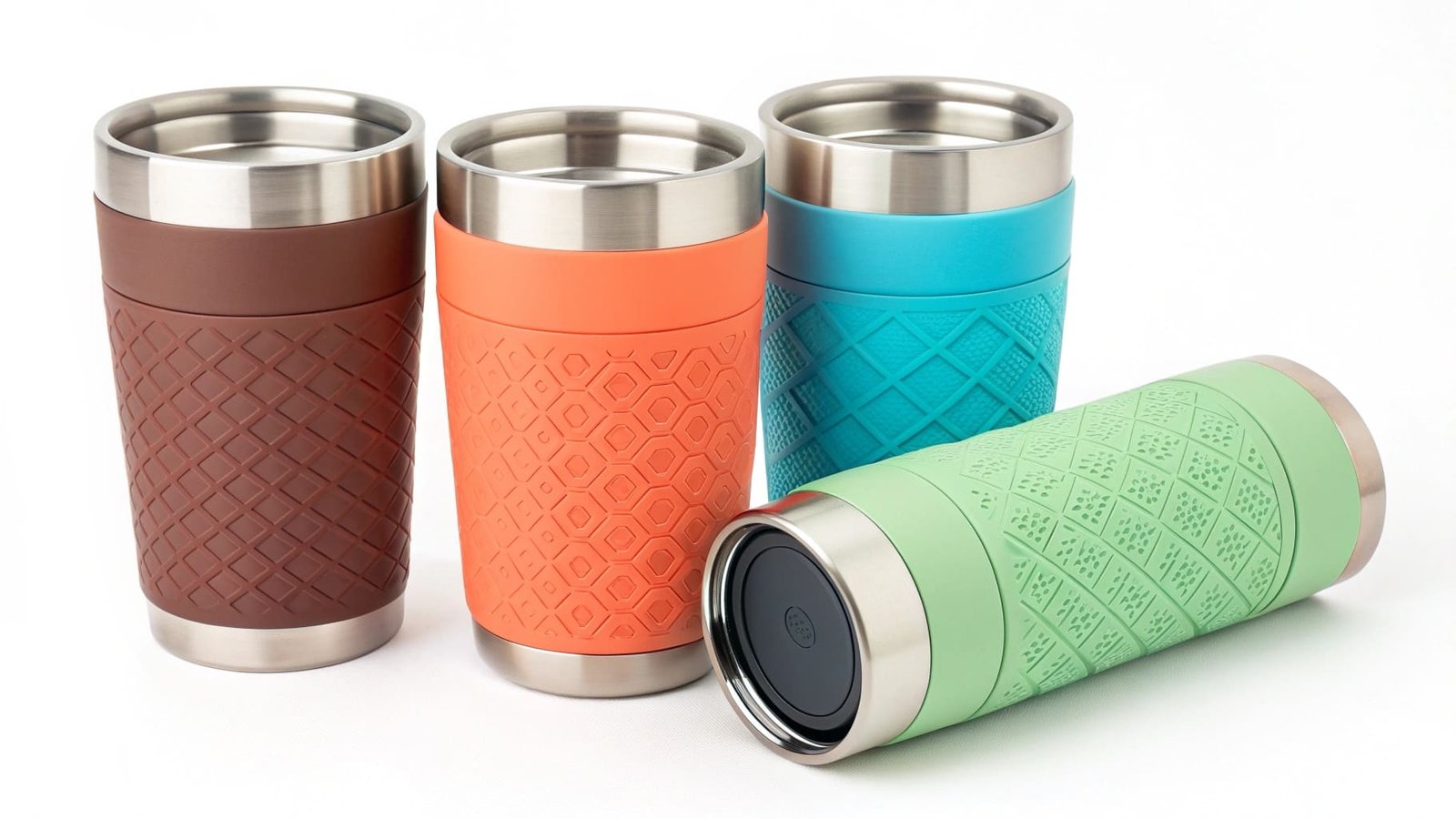
The word "silicone" on its own covers a wide range of material formulations.3 Some are fine for industrial seals. Some are appropriate for food contact. Some are not appropriate for prolonged skin contact or use in products where end users will be drinking from a container the material sits on.
Here is how the grades compare side by side:
| Feature | Standard Silicone | Food-Grade Silicone | Medical-Grade Silicone |
|---|---|---|---|
| Raw Material Purity | Variable | Controlled | Highest purity, no fillers |
| Regulatory Certification | None required | FDA 21 CFR or equivalent | FDA, ISO 10993 |
| Production Environment | Standard factory | Controlled | Cleanroom conditions |
| Batch Traceability | Rarely available | Sometimes available | Always required |
| Leach Testing | Not required | Basic testing | Full leach and biocompatibility testing |
| Typical Use Case | Industrial parts | Kitchen tools, food storage | Medical devices, premium food-contact products |
For tumbler boot OEM production, this table has a direct impact on your cost and your compliance exposure. If you source standard silicone when your customer or their retail partner expects food-grade or medical-grade, you are creating a liability, not a product.
I have seen buyers from Canada receive shipments that passed visual inspection but failed chemical testing during import. The supplier had used standard-grade silicone to cut material costs. The result was a delayed launch and a renegotiated order at higher cost. Paying for the right grade upfront is always cheaper than correcting a grade mismatch after production.
The other factor buyers often overlook is odor. Standard silicone can have a noticeable chemical smell, especially when new. Medical-grade silicone is essentially odorless. For a product that wraps around a premium water bottle or tumbler, that smell difference is something end customers notice immediately.
What Is Premium Grade Silicone?
Buyers often ask me where premium-grade silicone sits compared to medical-grade. The answer changes depending on which supplier you are talking to, which creates confusion during sourcing.
Premium-grade silicone is a mid-tier material that offers better durability and temperature resistance than standard silicone, without requiring the full certification process that medical-grade demands. It is suitable for most consumer food-contact applications and provides a good balance between performance and cost.
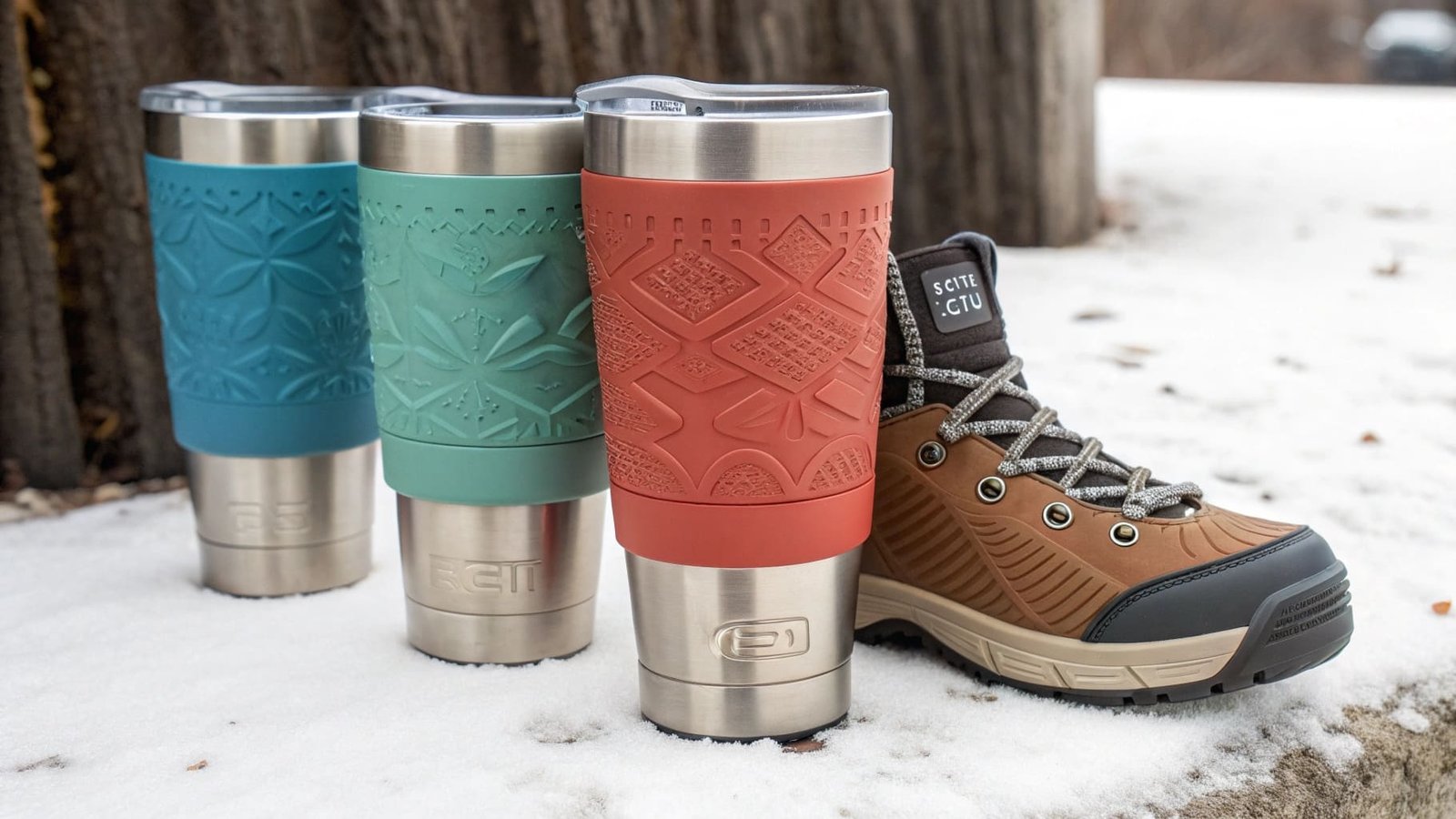
Premium-grade silicone is not a single regulated standard4 the way medical-grade is. It is a market term that signals performance above commodity silicone. Different manufacturers define it slightly differently, which means you need to ask the right questions when a supplier uses this label.
Here is what I look for when a supplier describes their silicone as premium-grade:
| Quality Indicator | What to Ask |
|---|---|
| Shore Hardness Range | What is the durometer of the finished product? |
| Temperature Range | What is the rated operating temperature? |
| Tear Resistance | What is the tensile strength? |
| Certification Documents | Does it carry FDA 21 CFR, LFGB, or REACH documentation? |
| Color Stability | Has it been tested for color migration after repeated washing? |
For tumbler boot applications, premium-grade silicone typically handles the demands of daily use very well. It resists cracking, holds its shape under the weight of a full tumbler, and survives repeated dishwasher exposure without losing grip texture5.
The real question is whether premium-grade is enough for your specific market. In my experience, the North American market, especially the US and Canada, is moving toward expecting medical-grade or premium-grade materials even in lifestyle products that are not strictly medical. Consumers are reading labels more carefully. Retailers are asking harder questions.
For OEM buyers who are building a brand in these markets, I recommend using premium-grade as the minimum starting point and medical-grade when the product will be marketed as high-end or health-focused. If the target market is price-sensitive or in an earlier stage of regulatory development, premium-grade gives you strong performance without pushing your unit cost too high.
The price gap between premium-grade and standard-grade silicone at wholesale volume is smaller than most buyers expect. The gap between a successful product launch and a compliance problem is much larger.
Conclusion
Match your silicone grade to your market and compliance requirements. Premium-grade covers most consumer needs. Medical-grade wins in high-standard markets. Never assume grade without asking for documentation.
-
"Inventory of Food Contact Substances Listed in 21 CFR", https://hfpappexternal.fda.gov/scripts/fdcc/index.cfm?search=silicone&set=IndirectAdditives. US FDA and European Commission food-contact material guidance establishes that materials intended to contact food are subject to safety and compositional requirements, supporting the article's point that North American and European markets commonly require stronger compliance documentation; this does not by itself prove that every tumbler boot must be medical-grade. Evidence role: general_support; source type: government. Supports: US and EU authorities regulate food-contact materials and require materials intended for food contact to meet safety requirements, providing context for why higher-grade silicone documentation may be important in those markets.. Scope note: Contextual support only, because market preference for medical-grade silicone is not identical to a legal requirement for all tumbler boots. ↩
-
"Most Important Biomedical and Pharmaceutical Applications ... - PMC", https://pmc.ncbi.nlm.nih.gov/articles/PMC12156025/. Technical reviews of silicone elastomers describe application-specific formulations and requirements for medical, food-contact, and industrial uses, supporting the article's distinction between standard and medical-grade silicone; the exact meaning of these grade names can vary by supplier and jurisdiction. Evidence role: general_support; source type: paper. Supports: Technical literature describes silicone elastomers as a family of materials with different formulations and application-specific requirements, supporting the distinction between standard and medical-grade silicone.. Scope note: Contextual support only, because grade terminology is not always standardized across manufacturers. ↩
-
"Silicone - Wikipedia", https://en.wikipedia.org/wiki/Silicone. General reference sources define silicones as a family of synthetic polymers rather than a single material, supporting the article's point that the term “silicone” can refer to many formulations with different properties. Evidence role: definition; source type: encyclopedia. Supports: A general reference should define silicones as a class of polymers that can appear as oils, elastomers, resins, and other formulations.. ↩
-
"Silicone rubber", https://en.wikipedia.org/wiki/Silicone_rubber. Regulatory materials from bodies such as FDA define food-contact and medical-device evaluation requirements, while not establishing “premium-grade silicone” as a formal regulatory category, supporting the article's characterization of the term as market-based. Evidence role: definition; source type: government. Supports: Regulatory sources define requirements for food-contact substances and medical-device biological evaluation but do not establish a legal category called premium-grade silicone.. Scope note: This supports the absence of a regulatory category in major cited frameworks, not every possible private standard or supplier specification. ↩
-
"Effects of Silicone Rubber on Rheological Properties and Aging ...", https://pmc.ncbi.nlm.nih.gov/articles/PMC11244462/. Materials-science studies of silicone rubber report elastic behavior, tear-strength characteristics, and resistance to heat aging, supporting the article's general claim that appropriately formulated silicone can retain shape and resist damage in repeated consumer use; the source would not directly verify the performance of a specific tumbler boot design. Evidence role: mechanism; source type: paper. Supports: Materials research on silicone rubber should support its elastic recovery, tear-strength considerations, and heat-aging behavior, which are relevant to cracking resistance and shape retention.. Scope note: Contextual support only, because product geometry, durometer, formulation, and wash conditions determine actual performance. ↩