How to Select Protective Cup Bottom Sleeves for 40oz Tumbler Bulk Orders?
The wrong sleeve ruins a bulk order. One bad measurement, one wrong type, and you are stuck with thousands of units no one wants. Here is how to get it right.
A protective cup bottom sleeve for a 40oz tumbler must fit the base diameter, match the material stretch range, and suit your target market. The right sleeve protects the tumbler, reduces surface scratches, and adds a branding surface. The wrong one causes returns and damages your reputation with buyers.
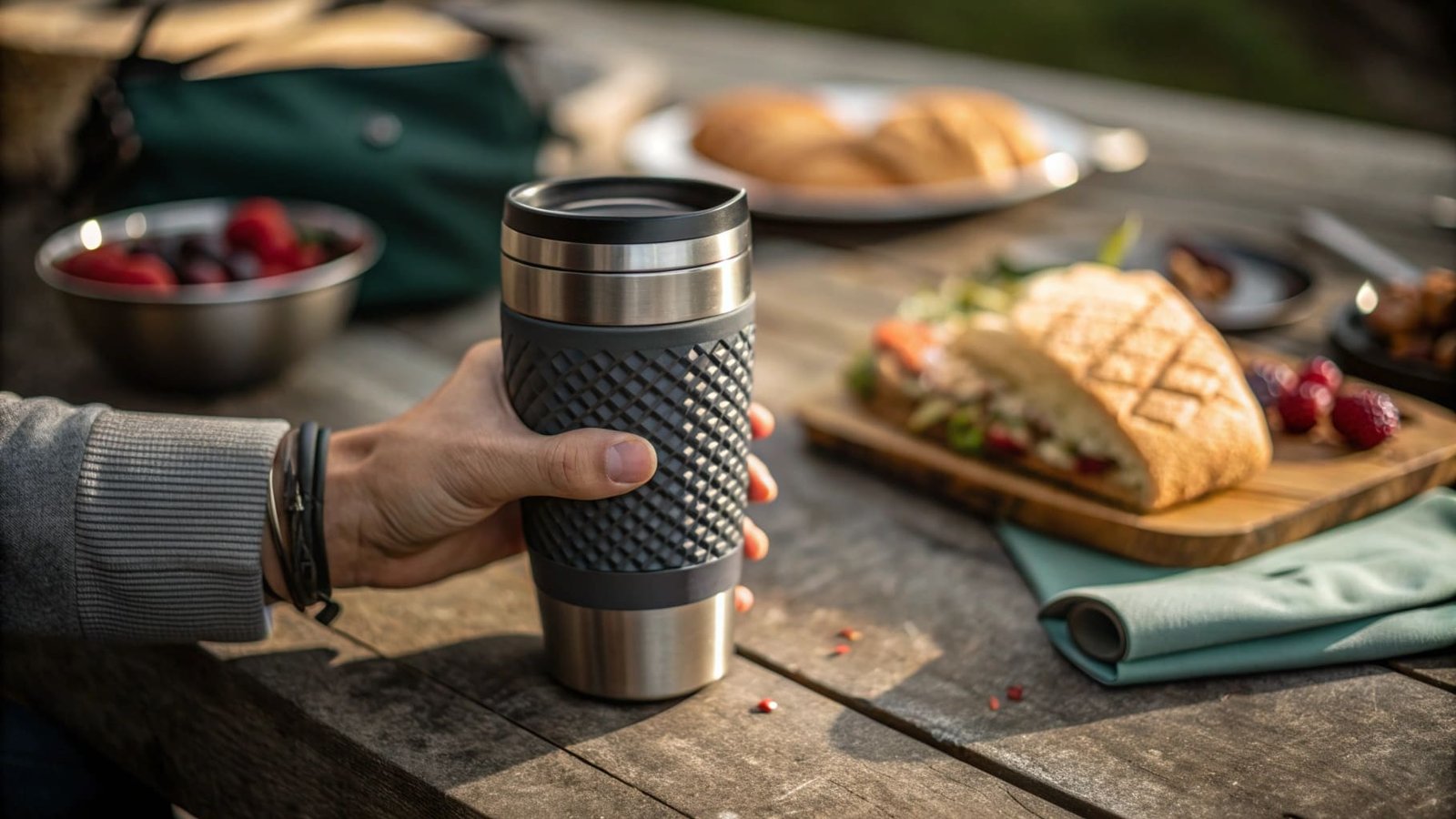
The 40oz tumbler market has grown fast.1 Brands like Stanley made the format go viral2, and now buyers everywhere want protective accessories to go with them. But most B2B buyers treat the sleeve as an afterthought. They pick a size, place a bulk order, and find out later that the fit is off. I have seen this happen more times than I can count. This article breaks down exactly what you need to check before you order, so you do not end up in that position.
How to Measure for a Cup Sleeve?
Measuring feels simple, but most buyers do it wrong. A single wrong number can make your entire bulk order unusable. Here is what you actually need to check.
To measure for a cup sleeve, you need three numbers: the base outer diameter, the sidewall height of the base area, and the base thickness. Do not measure only the outer diameter. Most 40oz tumblers have a tapered shape3, which means the base is narrower than the body. Missing this detail is the most common mistake buyers make.
Why a Tapered Shape Changes Everything
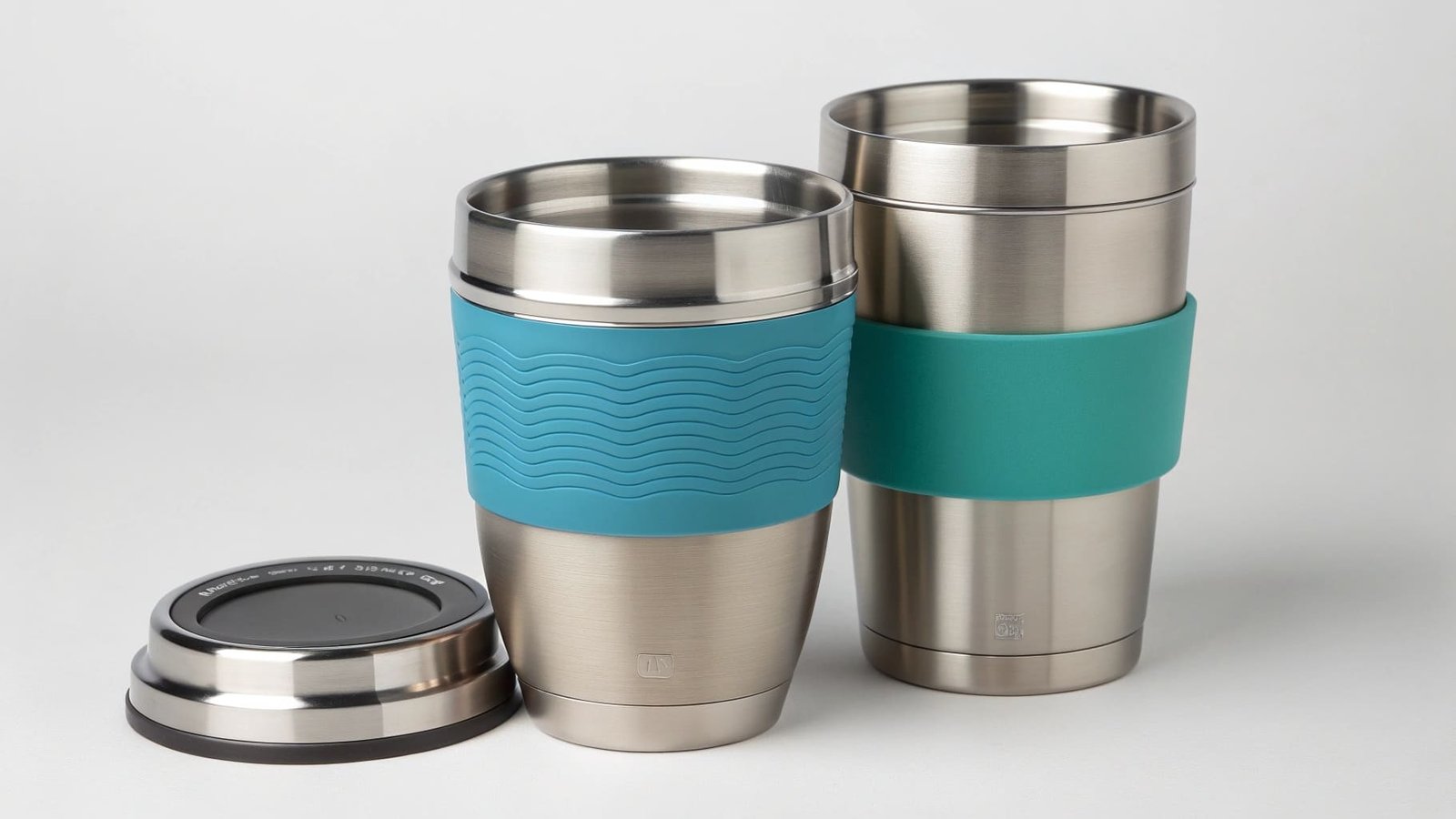
A 40oz tumbler is not a straight cylinder. The body widens toward the top and narrows at the bottom. This taper means the sleeve must fit a smaller diameter than the tumbler's widest point. If you measure the widest part and use that number for your sleeve order, the sleeve will be too loose at the base. It will slide off during use. That creates customer complaints.
Here is what I recommend to my buyers before they place a bulk order:
| Measurement Point | Why It Matters |
|---|---|
| Base outer diameter | Determines the core fit of the sleeve |
| Sidewall height of base | Determines how tall the sleeve should be |
| Base curvature or edge radius | Affects how the sleeve seats on the bottom |
| Widest body diameter | Confirms the taper difference |
The safest way to get accurate measurements is to request a CAD drawing from your tumbler manufacturer.4 If you cannot get that, make a physical cardboard template of the base and send it to your sleeve supplier. A 2–3mm error sounds small. But in a bulk order, it means every single unit has a loose or overly tight sleeve. Neither is acceptable to a retail buyer.
I once had a client in the distribution business who skipped the template step. They measured the outer body diameter instead of the base. The sleeves arrived looking fine in photos. When they opened the first carton, the sleeves fell off every tumbler they tested. They had to reorder. They missed their peak season window. Accurate measurement is not optional. It is the foundation of the entire order.
How to Calculate Sleeve Size?
Knowing your measurements is not enough. You still need to calculate the right sleeve size, and that step has its own rules. Get this wrong and even good measurements will not save you.
To calculate sleeve size, take your base outer diameter and subtract 5–10% to get the target sleeve inner diameter. Silicone stretches, so the sleeve needs to be slightly smaller than the tumbler base. This negative tolerance creates the grip that holds the sleeve in place during normal use.5
What Negative Tolerance Means in Practice
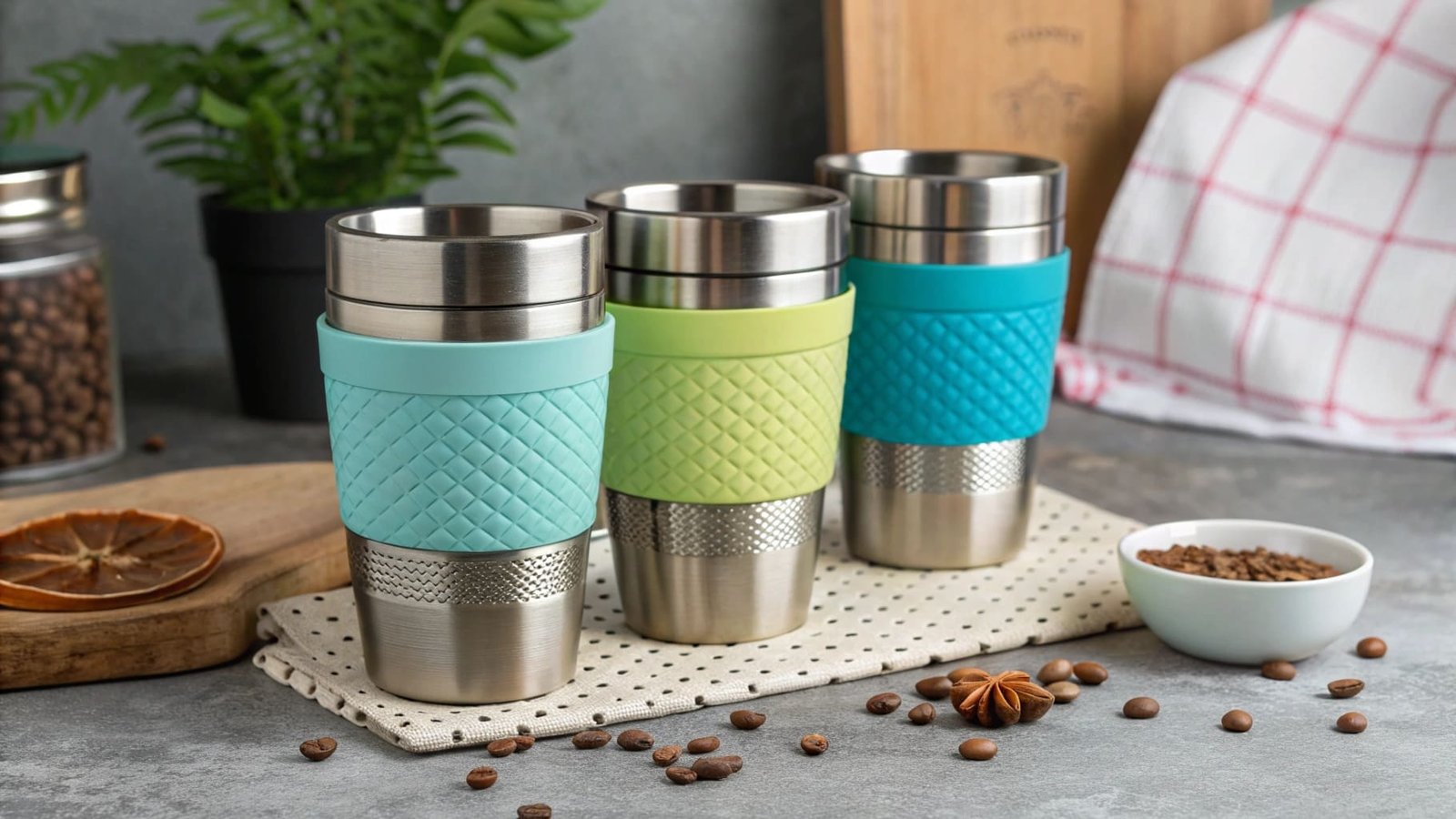
Negative tolerance means the sleeve is designed to be smaller than what it needs to fit. When you stretch it over the tumbler base, the material compresses and grips the surface. This is what keeps the sleeve from sliding off.
The typical range for silicone tumbler sleeves is 5–10% negative tolerance. Here is a simple way to think about it:
| Base Outer Diameter | Target Sleeve Inner Diameter (5% neg.) | Target Sleeve Inner Diameter (10% neg.) |
|---|---|---|
| 80mm | 76mm | 72mm |
| 85mm | 80.75mm | 76.5mm |
| 90mm | 85.5mm | 81mm |
The right number within that 5–10% range depends on two things: the durometer of the silicone and the intended end user.
Durometer measures how hard or soft the silicone is. A sleeve with a Shore A rating of 50 is softer and stretches more easily. A sleeve rated at Shore A 60 is firmer and provides more resistance.6 For most 40oz tumbler applications, a durometer in the 50–60 Shore A range gives the best balance of grip and ease of installation.7
For bulk orders, this matters even more. In a bulk order, no one inspects every single unit by hand. The sleeve needs to go on easily without tools, and it needs to stay on without any extra help. If the tolerance is too tight, installers will struggle. If it is too loose, sleeves will fall off in transit or on the shelf. I always recommend asking your supplier to send a tolerance test sample before you commit to the full order quantity. Test it on your actual tumbler, not a generic one.
What Are the Three Basic Types of Sleeves?
Not all sleeves do the same job. Picking the wrong type for your market is just as costly as picking the wrong size. Here is a clear breakdown of what each type actually does.
The three basic types of cup bottom sleeves are full-coverage sleeves, bottom-only pads, and hybrid sleeves. Each one serves a different purpose and fits a different market position. Knowing which one matches your buyer's needs saves you from stocking the wrong product.
Full-Coverage, Bottom-Only, and Hybrid: What Each One Is For
Each type has a clear use case. Mixing them up costs money and confuses your buyers.
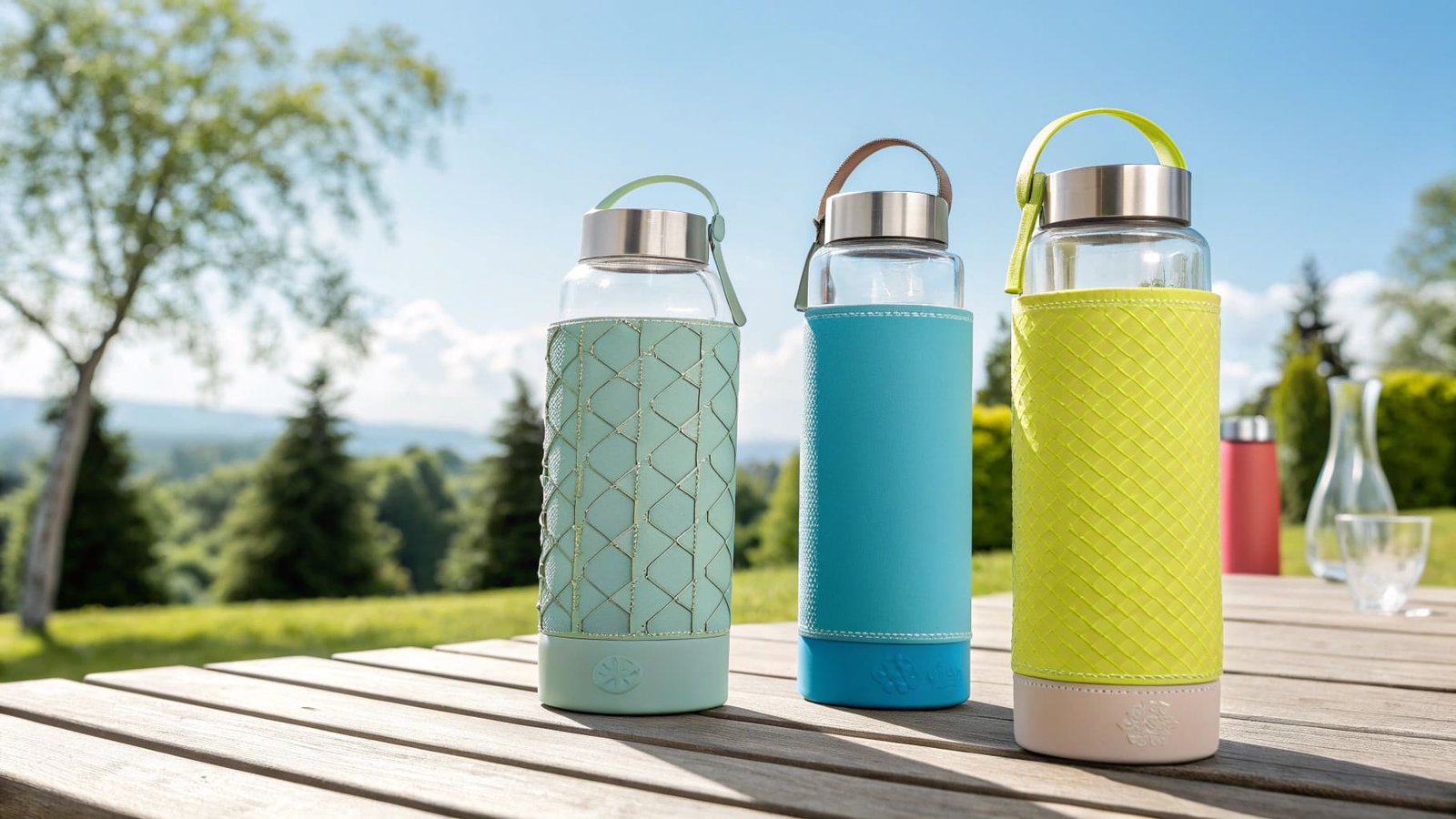
Full-coverage sleeves wrap around the entire lower section of the tumbler, from the base up through part of the sidewall. They offer the most surface area for branding. Custom logos, colors, and textures all show up well on full-coverage designs. The trade-off is cost. Full-coverage sleeves require more material and, in many cases, higher tooling investment for custom molds.
Bottom-only pads cover just the base of the tumbler. They protect the table surface from scratches and add a non-slip grip to the bottom. They use less material, cost less to produce, and have almost no impact on the tumbler's visual design. Retailers who want a clean, minimal look prefer this type. It is also the most common choice for buyers who are price-sensitive but still want some level of protection.
Hybrid sleeves sit between the two. They have a reinforced base pad with a partial sidewall that extends a few centimeters up the tumbler's body. This design protects the most vulnerable area—the base edge—while also allowing some airflow and keeping material costs lower than a full-coverage design.
Here is a quick comparison to help you decide:
| Sleeve Type | Protection Level | Branding Surface | Material Cost | Best For |
|---|---|---|---|---|
| Full-coverage | High | Large | Higher | Premium brands, gift sets |
| Bottom-only pad | Low to medium | Minimal | Lower | Cost-focused retailers |
| Hybrid | Medium to high | Moderate | Medium | Mid-market, everyday use |
For buyers distributing under their own brand, the full-coverage sleeve is often the smarter long-term investment. It turns a functional accessory into a branding tool. For buyers who compete on price, the bottom-only pad keeps landed costs low without sacrificing the basic protective function.
The type you choose should match how your end customer sees the product. A premium buyer expects premium packaging and premium accessories. A value buyer wants reliability at a fair price. Neither is wrong. But selling the wrong type to the wrong buyer will always create friction.
Conclusion
Measure the base accurately, calculate with the right tolerance, and pick the sleeve type that fits your market. These three steps are what separate a successful bulk order from an expensive mistake.
-
"The rise of the Stanley tumbler: How a 110-year-old brand achieved ...", https://www.retaildive.com/news/stanley-quencher-tumblers-viral-success/699416/. Industry or search-interest data can document the recent rise in consumer demand for large reusable tumblers, including 40oz formats; such data would support the market-growth context but may not isolate protective sleeve purchases. Evidence role: statistic; source type: institution. Supports: Recent consumer interest or sales data show increased demand for large-format reusable tumblers, including 40oz models.. Scope note: May support the broader tumbler market rather than sleeve-specific demand. ↩
-
"Stanley (drinkware company)", https://en.wikipedia.org/wiki/Stanley_(drinkware_company). A neutral reference source on the Stanley Quencher can provide historical context that the product became a widely recognized viral consumer item; this supports the background claim but does not prove that Stanley alone caused the broader 40oz format trend. Evidence role: historical_context; source type: encyclopedia. Supports: Stanley’s Quencher tumbler became widely discussed as a viral consumer product, especially through social media-driven demand.. Scope note: Provides historical context, not sole-causation evidence. ↩
-
"What base size is required to print on a large 40oz tumbler using Eufy?", https://www.facebook.com/groups/eufymakeuvprintere1usa/posts/2133959880785978/. Manufacturer or institutional product-specification data for common 40oz tumblers can show that the base diameter is smaller than the upper body, supporting the statement that many such tumblers are tapered; this is representative evidence rather than a complete survey of all models. Evidence role: general_support; source type: institution. Supports: Representative 40oz tumbler specifications show a smaller base diameter than upper body diameter, indicating tapered geometry.. Scope note: Representative product data may not cover every 40oz tumbler design. ↩
-
"[PDF] NISTIR 4757 - National Institute of Standards and Technology", https://nvlpubs.nist.gov/nistpubs/Legacy/IR/nistir4757.pdf. Dimensional metrology and engineering-drawing guidance from a standards or government source can support the general practice of using controlled drawings to specify part dimensions and tolerances; it does not directly compare CAD drawings with cardboard templates for tumbler sleeves. Evidence role: general_support; source type: government. Supports: Controlled engineering drawings and dimensional tolerances are standard tools for specifying manufactured part geometry and fit.. Scope note: Supports the engineering principle rather than the exact sleeve-ordering workflow. ↩
-
"Interference fit - Wikipedia", https://en.wikipedia.org/wiki/Interference_fit. Engineering teaching material on interference fits can support the mechanism that dimensional interference creates contact pressure and frictional retention; the principle is general and not specific to silicone tumbler sleeves. Evidence role: mechanism; source type: education. Supports: Interference fits generate contact pressure between mating parts, and friction from that pressure contributes to retention.. Scope note: General mechanical principle, not sleeve-specific validation. ↩
-
"Shore durometer", https://en.wikipedia.org/wiki/Shore_durometer. A technical source on Shore A hardness can support that a Shore A 60 elastomer is harder than a Shore A 50 elastomer, which contextualizes the article’s comparison of sleeve firmness; actual stretch behavior also depends on compound formulation and geometry. Evidence role: definition; source type: research. Supports: On the Shore A scale, a higher reading corresponds to greater indentation hardness for elastomeric materials.. Scope note: Hardness is only one factor affecting stretch and installation force. ↩
-
"50 Durometer Silicone Rubber", https://elastapro.com/blog/50-durometer-silicone-rubber/. Research on elastomer hardness, friction, and assembly behavior can support the general relationship between Shore A hardness, grip, and installation force; it would contextualize, rather than directly prove, that 50–60 Shore A is optimal for 40oz tumbler sleeves. Evidence role: general_support; source type: paper. Supports: Elastomer hardness affects grip, deformation, and assembly force, making mid-range Shore A values relevant to sleeve fit decisions.. Scope note: Contextual support only unless the source specifically tests tumbler sleeves. ↩