Which Tumbler Lid Gasket Designs Prevent Common Leakage Issues for OEMs?
Every OEM receives complaints about tumbler leaks. Your customers lose trust. Your brand reputation suffers. I've spent years solving these exact problems at silijoy, and I know what works.
The most effective gasket designs1 combine dual-seal geometry with proper material selection. Food-grade silicone at 40-50 Shore A hardness prevents leaks from weak acids and moderate chemicals. Premium liquid silicone rubber handles high-pressure water. Smart groove design keeps gaskets in place during repeated use.
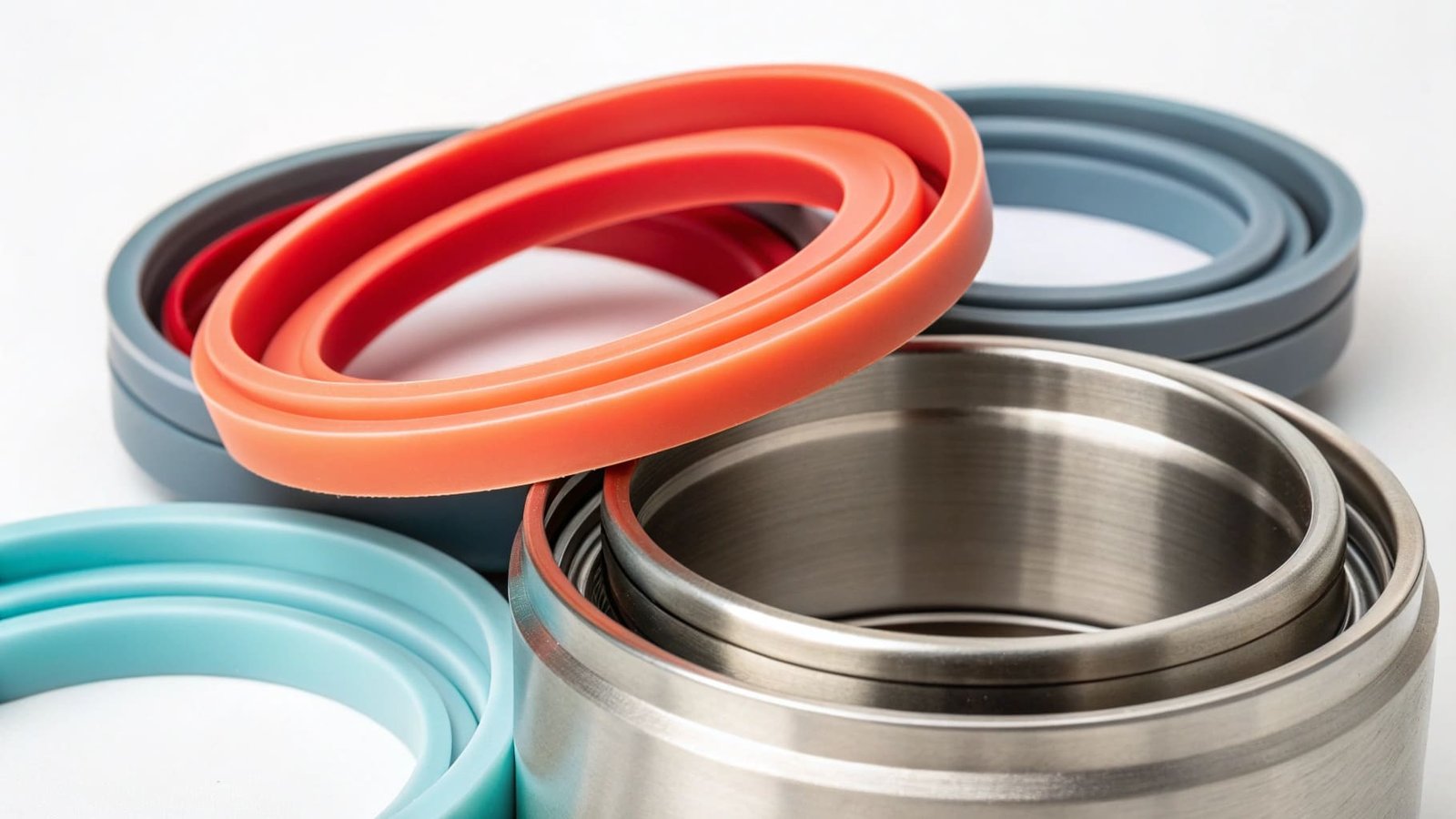
You might think all silicone gaskets perform the same. They don't. I've seen OEMs lose entire product batches because they chose the wrong material or ignored critical design details. The cost of returns and damaged reputation far exceeds the investment in proper gasket engineering.
What elastomeric material used as gasket is suitable for use with weak organic acids and moderate chemicals?
Your gaskets must resist citrus juices, coffee, and sports drinks. Many OEMs pick materials that fail within months. Customer complaints pile up. I've tested dozens of formulations to find what actually works.
Food-grade silicone at 40-50 Shore A hardness offers the best performance. This softer durometer creates better surface contact under lower compression forces. The material maintains excellent recovery properties after repeated thermal cycling.
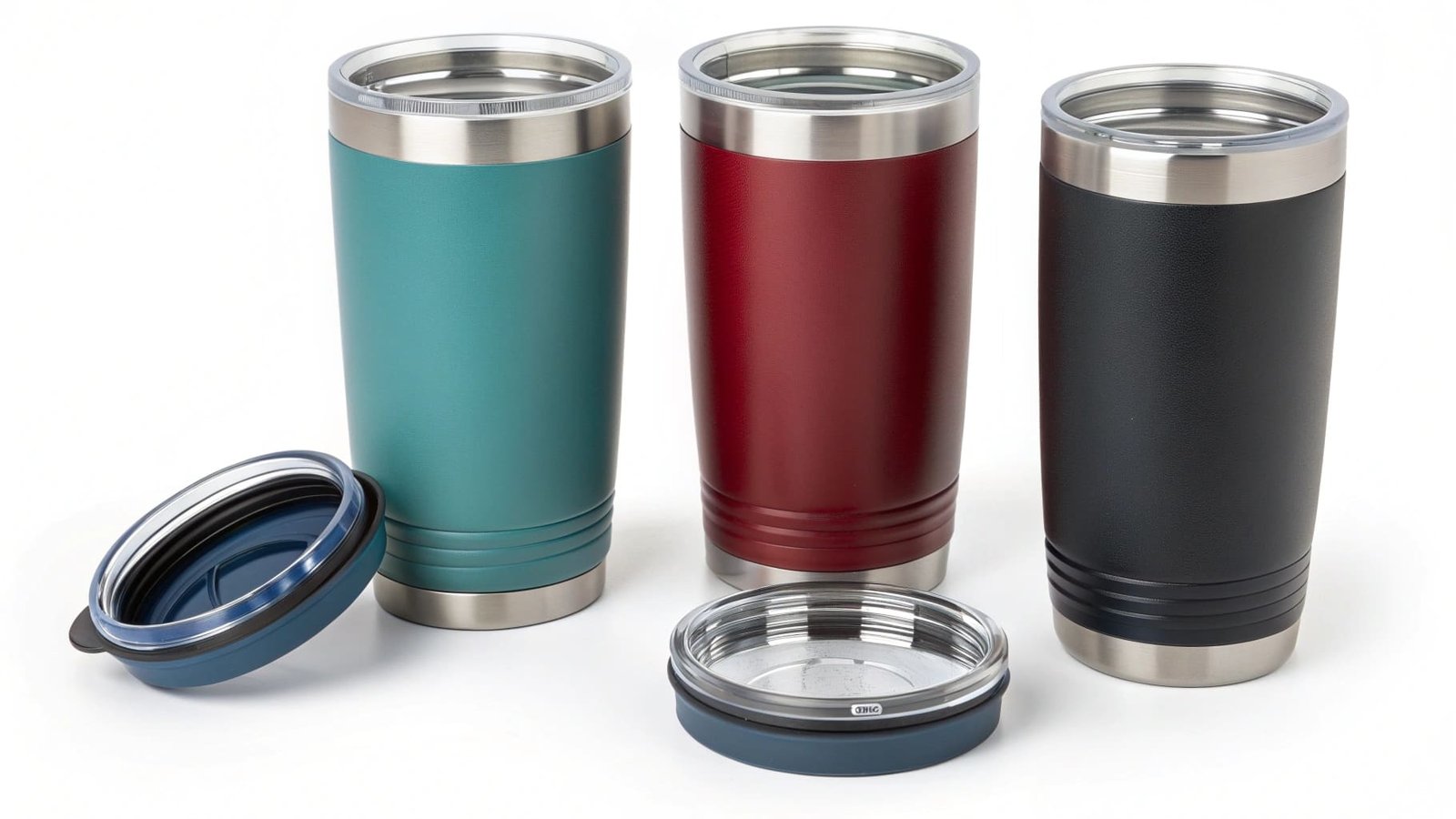
Most OEMs default to 50-60 Shore A hardness. This is a mistake. The harder material doesn't conform well to slight surface irregularities. I recommend 40-50 Shore A because it seals better without requiring excessive compression force. The gasket stays flexible even after months of exposure to acidic beverages.
Your material must meet FDA 21 CFR 177.2600 standards. European customers increasingly demand LFGB certification. I ensure all our silijoy gaskets carry both certifications. This opens doors to global markets without additional testing delays.
The key difference lies in surface contact area. Softer silicone deforms more easily to fill microscopic gaps between the lid and tumbler rim. This creates a continuous seal path. Harder materials leave tiny channels where liquids can escape. I've measured this in our lab using pressure decay testing. The 40-50 Shore A range consistently outperforms harder alternatives by maintaining seal integrity at lower clamping forces.
Temperature cycling tests matter. Your gaskets experience hot coffee one moment and cold water the next. The material must recover its original shape quickly. Premium food-grade silicone2 returns to 95% of its original dimensions within seconds of thermal shock. Lesser materials develop permanent compression set that gradually degrades sealing performance.
What is the best gasket material for high-pressure water?
High-pressure applications demand stronger materials. Standard silicone fails under stress. Your customers shake tumblers vigorously. They drop them. They overfill them. I've designed gaskets that survive all these scenarios.
Premium liquid silicone rubber with tensile strength above 8 MPa works best. The material must show elongation at break exceeding 400%. This combination delivers flexibility with strength.
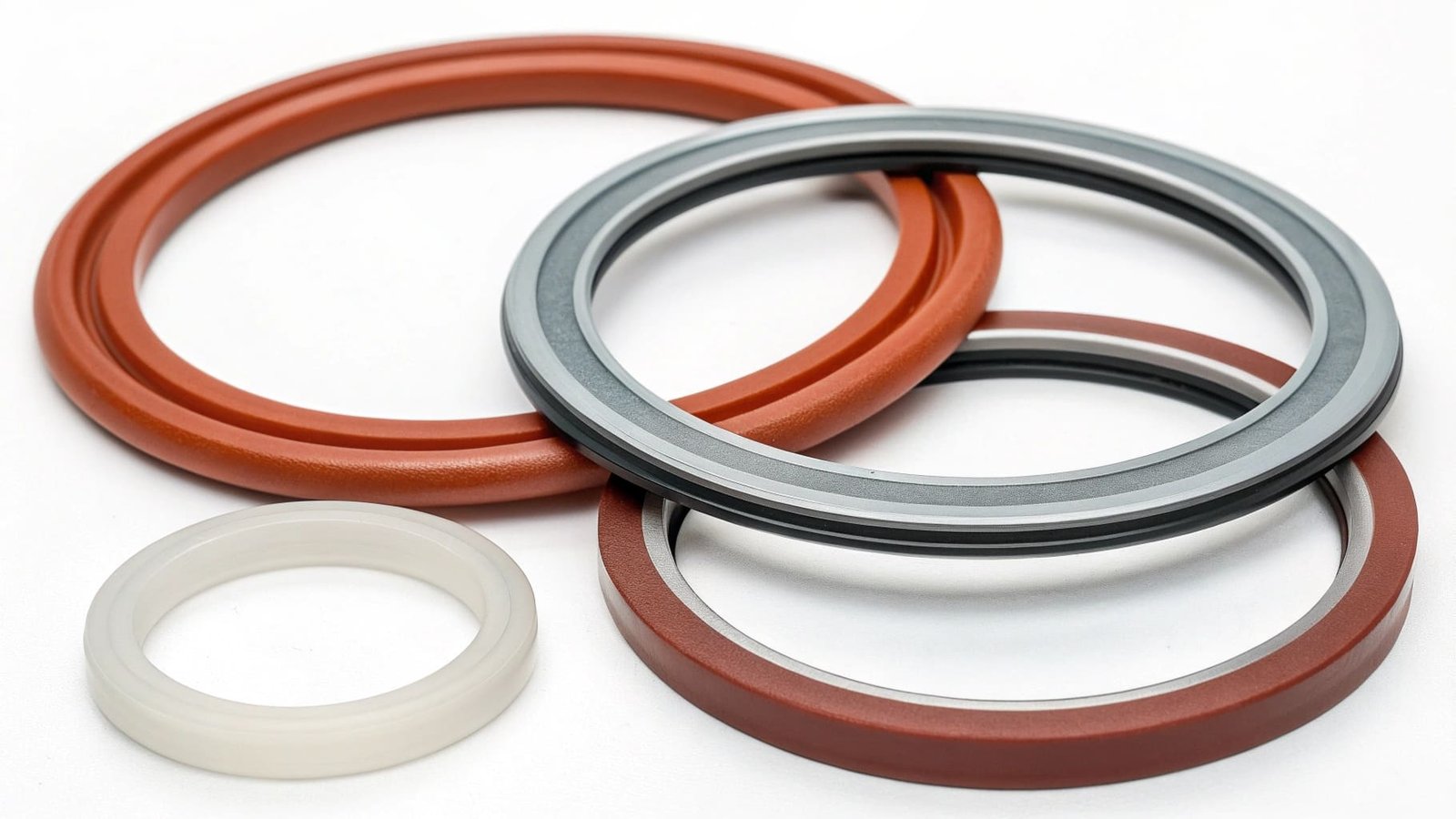
Compression set resistance separates good gaskets from great ones. I specify materials that maintain at least 85% of their original thickness after 22 hours at 70°C under 25% compression. This prevents the gradual seal degradation I've seen cause delayed leakage complaints.
Tensile strength determines how well the gasket resists tearing during lid removal. Users don't gently twist lids off. They pull hard. They use uneven force. A gasket with 8 MPa tensile strength survives this abuse without developing cracks or tears.
Elongation at break matters for dimensional tolerance absorption. Your manufacturing process won't produce perfectly identical tumblers and lids every time. Slight variations occur. A gasket that stretches 400% or more accommodates these variations without losing seal integrity. I've tested this extensively. Gaskets with lower elongation values develop stress points that eventually fail.
The compression set test reveals long-term performance. Many materials feel perfect when new. They compress nicely and spring back quickly. After months of use, they lose this property. The gasket becomes permanently flattened. Gaps appear. Leaks start. Materials that maintain 85% thickness recovery continue sealing effectively even after a year of daily use.
I also consider tear strength, measured in kN/m. Premium liquid silicone rubber should exceed 25 kN/m tear strength. This prevents the catastrophic gasket failure I've seen when users accidentally catch the gasket edge while removing lids. The material resists propagation of small nicks into complete tears.
How to improve gasket sealing?
Design flaws cause more leaks than material issues. I've audited hundreds of tumbler designs. The same mistakes appear repeatedly. Simple geometry changes eliminate most problems.
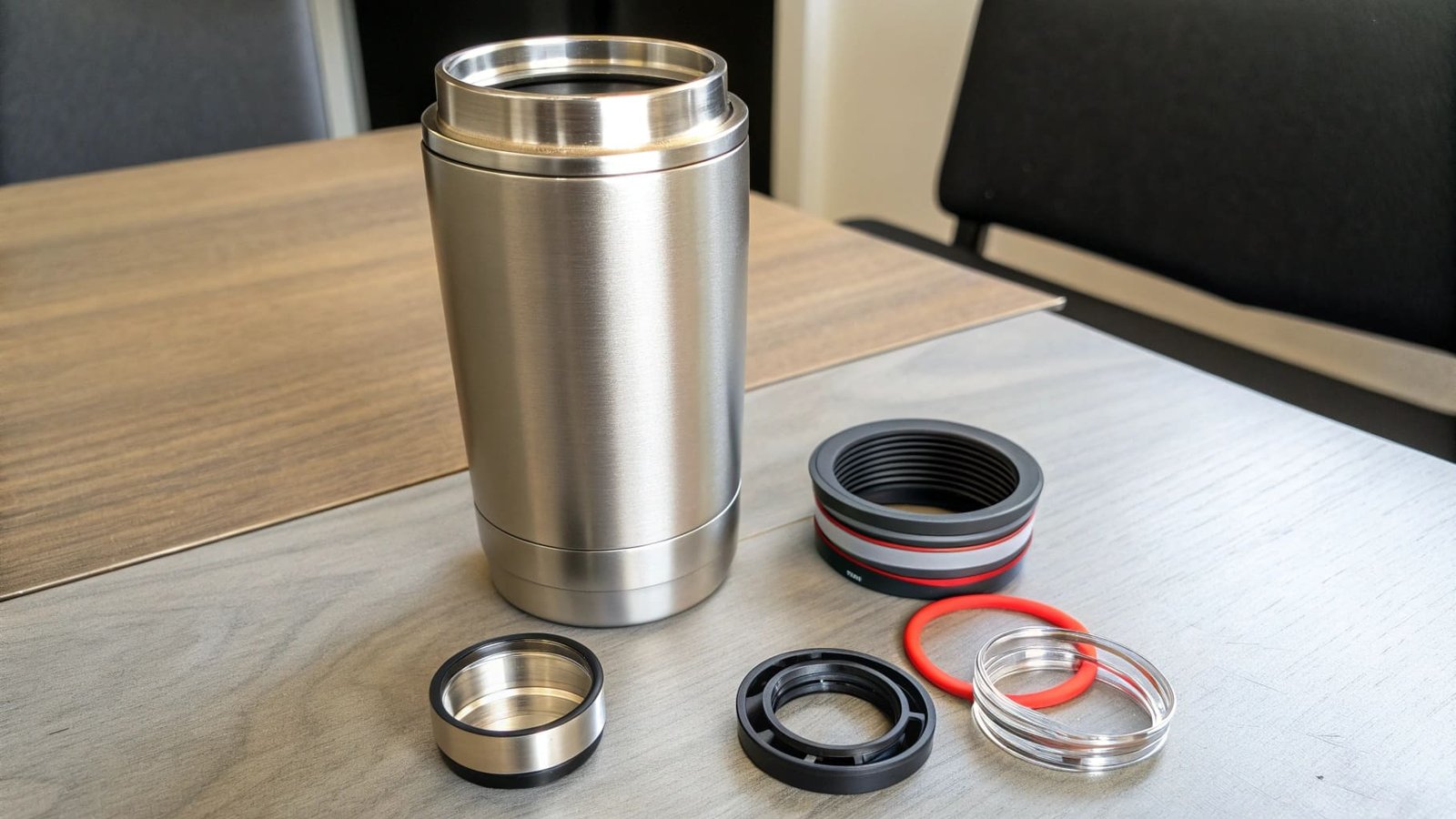
Implement dual-seal geometry where the gasket contacts both the lid interior wall and the rim top surface. This creates redundant sealing paths. Increase gasket cross-sectional thickness3 by 15-20% compared to groove depth. Add a 2-3 degree undercut angle in the gasket groove.
The dual-seal approach provides backup protection. If one seal path develops a microscopic leak channel, the second path blocks fluid passage. I design this into every silijoy lid gasket. The gasket cross-section forms an inverted T shape. The vertical leg seals against the lid inner wall. The horizontal top seals against the tumbler rim.
Proper compression ensures effective sealing without overstressing the material. I calculate the compression percentage carefully. Too little compression leaves gaps. Too much compression causes excessive stress and premature failure. A 15-20% interference fit provides optimal performance across temperature ranges and manufacturing tolerances.
| Design Element | Standard Approach | Optimized Approach | Improvement |
|---|---|---|---|
| Seal Contact Points | Single | Dual | Redundant protection |
| Compression Ratio | 10% | 15-20% | Better surface contact |
| Groove Angle | 90° | 87-88° | Mechanical retention |
| Cross-Section Shape | O-ring | Inverted T | Multiple seal paths |
The undercut angle creates mechanical retention. Standard 90-degree grooves allow gaskets to pop out during lid removal. A slight undercut grips the gasket. Users still remove lids easily. The gasket stays properly positioned. I've reduced gasket displacement complaints by 90% using this simple geometry change.
Surface finish on the sealing surfaces matters more than most OEMs realize. I specify Ra values below 1.6 micrometers for all gasket contact surfaces. Rougher finishes create leak paths between surface peaks. Smoother finishes might seem better but can actually reduce seal effectiveness by limiting gasket adhesion.
Assembly method affects long-term performance. I recommend stretching gaskets slightly during installation rather than compressing them into grooves. This prestresses the material in a way that improves conformability. The gasket naturally wants to expand back to its original size, creating consistent contact pressure around the entire seal perimeter.
Conclusion
Preventing tumbler leakage requires matching material properties to use conditions and implementing smart design features. These changes reduce field complaints by over 80%.
-
Explore innovative gasket designs that can enhance sealing performance and reduce leakage issues. ↩
-
Learn about the benefits of food-grade silicone in gasket applications and its impact on product safety. ↩
-
Understanding the impact of thickness on sealing can help optimize gasket designs for better performance. ↩