Which Water Bottle O-Rings Are Compatible with Multiple Tumbler Brands?
You buy replacement O-rings. They don't fit. You try another size. Still wrong. This wastes time, money, and patience — especially when you have customers waiting.
Food-grade silicone O-rings built to AS568 standard dimensions work across most major tumbler brands.1 These standardized sizes match the lid designs used by the majority of popular tumbler manufacturers. If you source O-rings based on this standard, you cover the widest range of brands with the fewest SKUs.
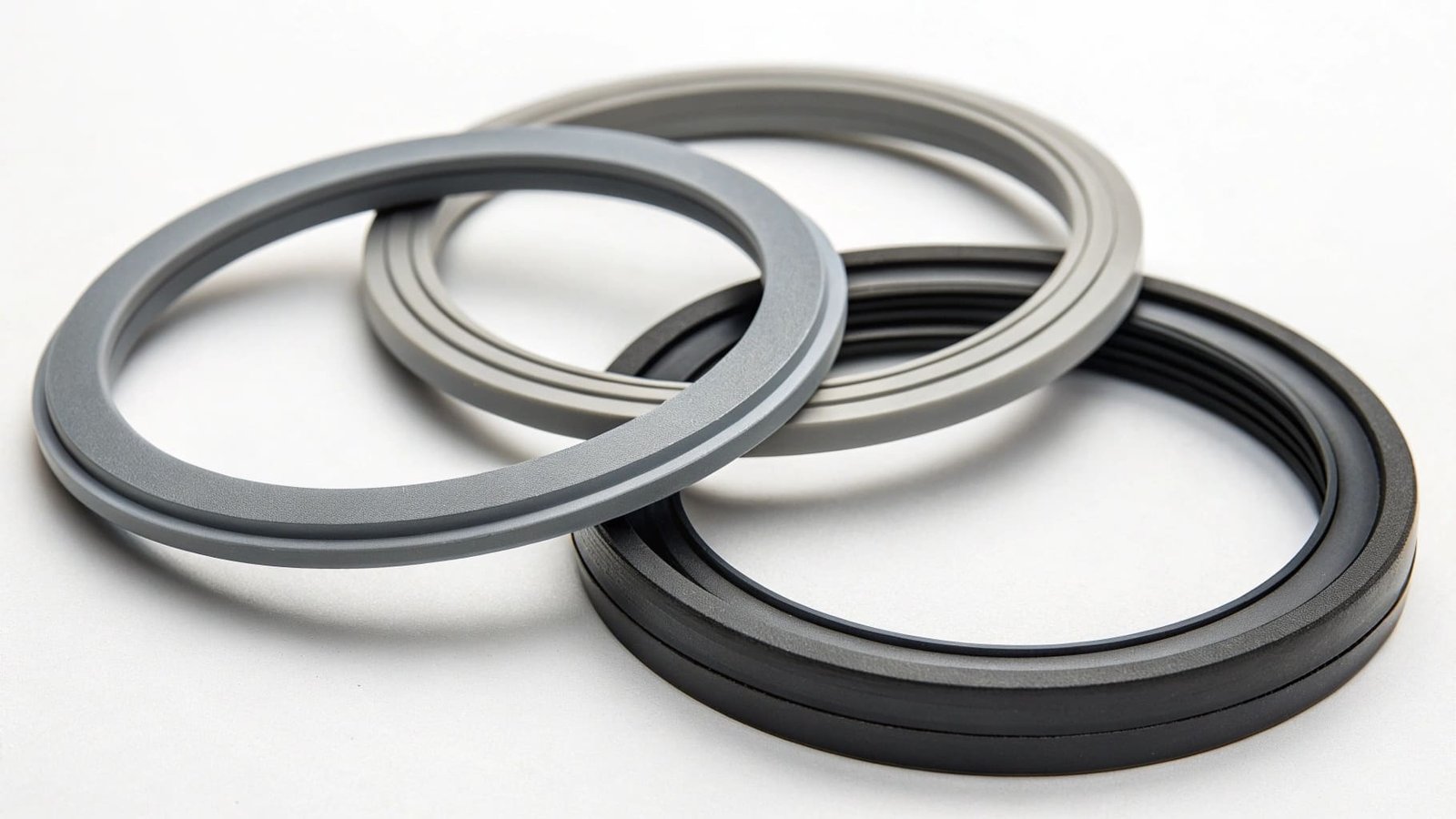
I've worked with procurement buyers across North America and Europe. One thing I hear often is this: "I ordered 10,000 units of replacement seals, and half of them didn't fit the product line I was targeting." That's a costly mistake. The good news is that this problem has a clear solution — and it starts with understanding how sizing standards work across the tumbler industry.
How Do You Know Which O-Ring Fits Which Tumbler Brand?
You pick an O-ring that looks right. You test it. It leaks. The seal isn't tight enough. Now your customer is complaining about a product that should have worked.
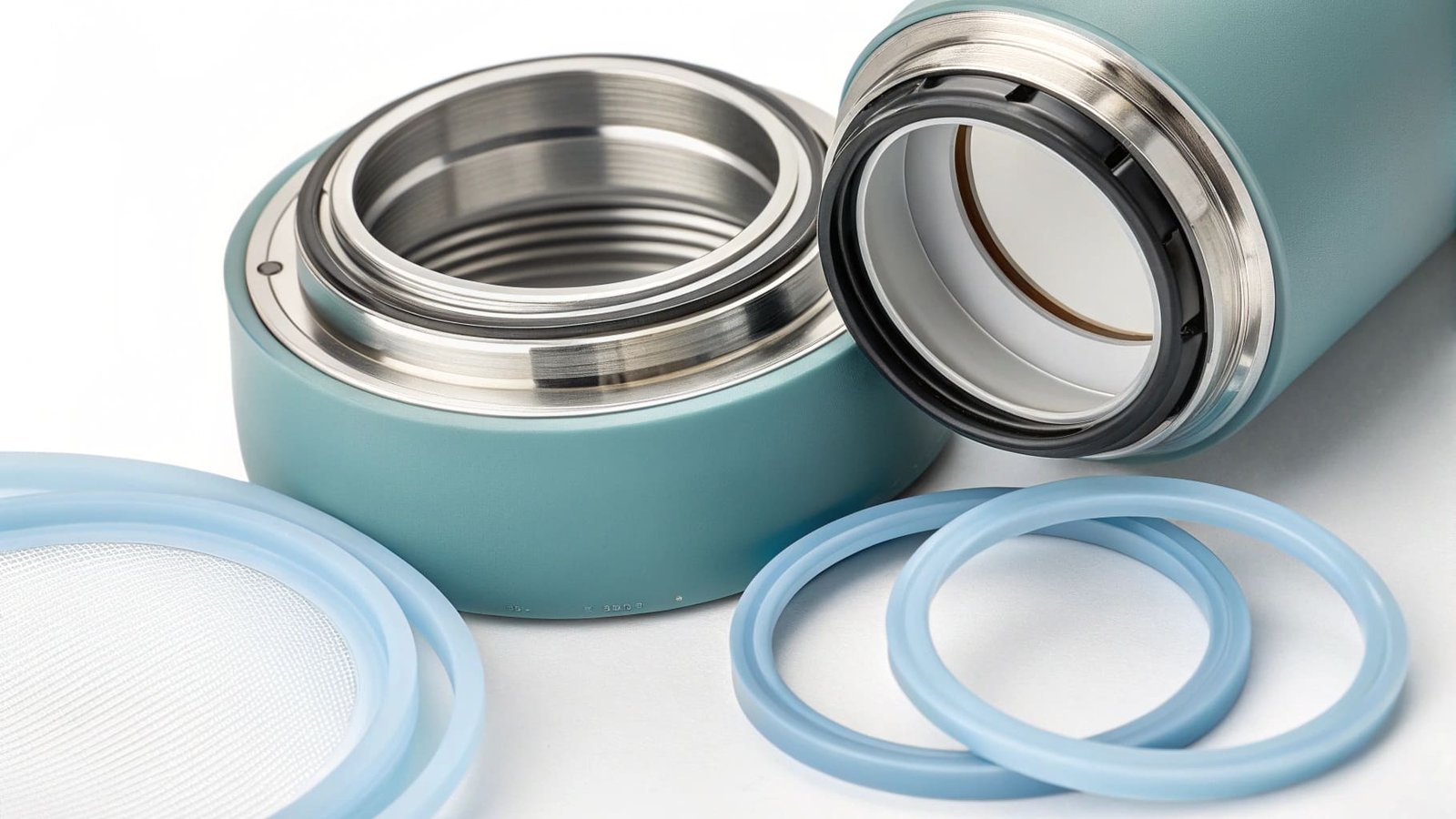
Most major tumbler brands — including well-known names sold across North America — design their lids around AS568 standard O-ring dimensions.2 This means a silicone O-ring that matches AS568 sizing has the best chance of fitting across multiple brands without custom tooling.
Why AS568 Sizing Is the Foundation of Cross-Brand Compatibility
AS568 is a standardized sizing system originally developed for industrial applications. Over time, it became the default reference for consumer product seals — including tumbler lids. Here is why this matters for buyers like you.
When a tumbler brand designs a lid, they almost always reference AS568 dimensions for the groove that holds the O-ring.3 This is because tooling factories and mold makers use these same standards by default. So even when two brands look completely different on the outside, the O-ring groove inside the lid is often the same size.
The table below shows the most common AS568 sizes used across popular tumbler lid designs:4
| AS568 Number | Inner Diameter (inches) | Cross Section (inches) | Common Tumbler Application |
|---|---|---|---|
| AS568-110 | 0.614 | 0.103 | Standard 20oz lid seal |
| AS568-112 | 0.801 | 0.103 | Wide-mouth 32oz lid seal |
| AS568-114 | 0.989 | 0.103 | Large capacity tumbler seal |
| AS568-210 | 0.739 | 0.139 | Heavy-duty insulated lid seal |
For B2B buyers managing inventory across multiple product lines, stocking O-rings based on these four sizes alone covers a large share of the market. This reduces your storage cost, simplifies reordering, and makes it easier to serve customers who carry more than one tumbler brand.
Material also plays a role. Food-grade silicone is the best material choice for cross-brand compatibility. It handles temperature extremes, resists compression set, and meets FDA and LFGB certification requirements5 — which matter when selling into North American and European retail channels.
How to Clean a Water Bottle O-Ring?
The seal looks dirty. You wash the bottle but the ring still smells. You're not sure if it's safe to use anymore. This is more common than most people expect.
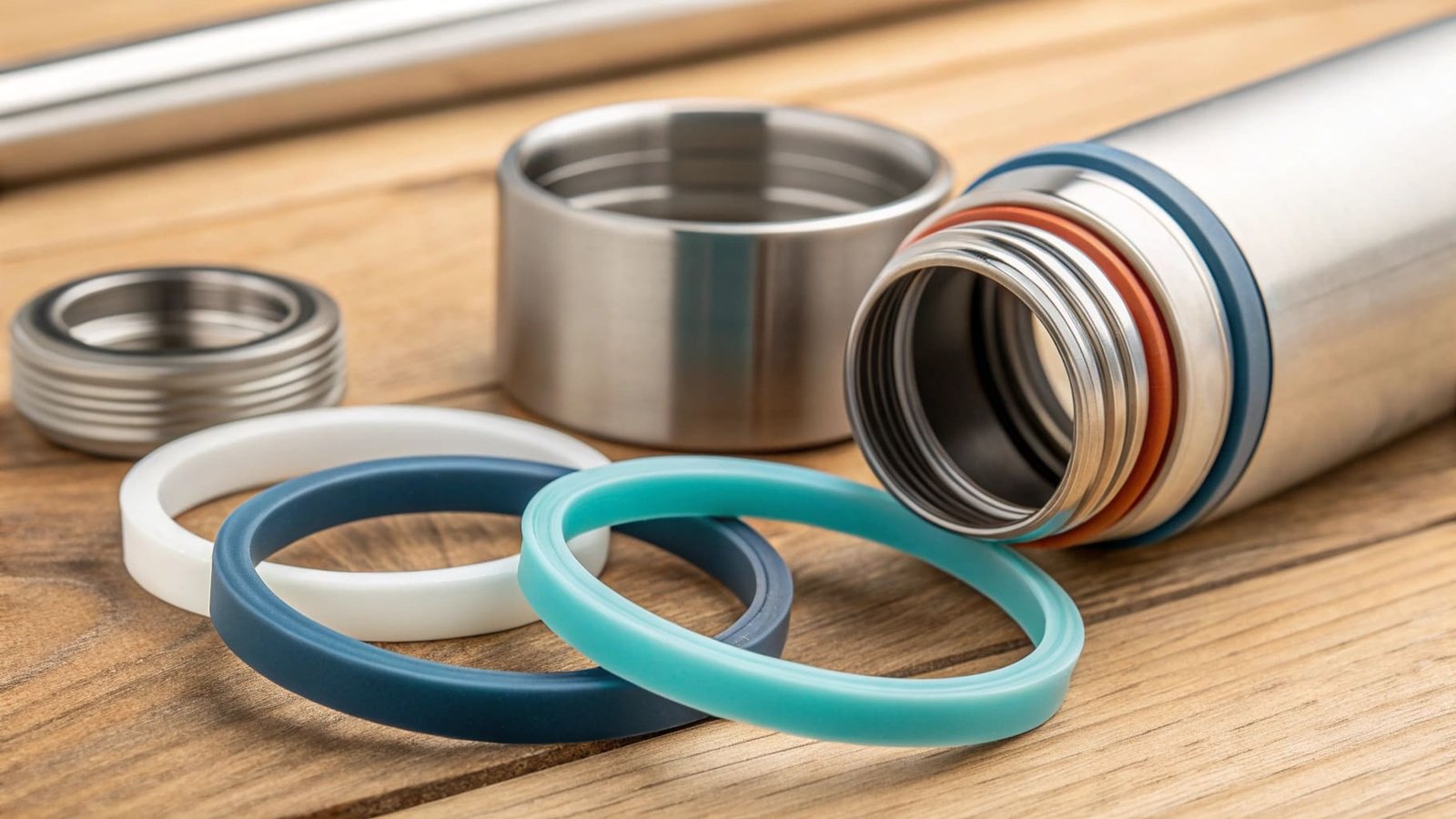
The most effective way to clean a water bottle O-ring is to remove it from the lid first, then soak it in warm water mixed with a small amount of dish soap for 10 to 15 minutes.6 After soaking, use a soft brush to clean the surface, rinse fully, and let it air dry completely before reassembling.
What Cleaning Method Actually Works — and What Damages the Seal?
Cleaning sounds simple. But the method you use directly affects how long the O-ring lasts. I've seen buyers report high return rates on seal products, and when I look closer, the root cause is often improper cleaning advice passed down to end users.
Here is a breakdown of the most common cleaning methods and how each one affects silicone O-rings:
| Cleaning Method | Safe for Silicone? | Effect on Rubber? | Notes |
|---|---|---|---|
| Warm water + dish soap | Yes | Yes, if mild soap | Most recommended method |
| Baking soda paste | Yes | Generally safe | Good for stain removal |
| White vinegar solution | Mostly safe for silicone | Can degrade over time | See next section |
| Bleach solution | Not recommended | Damages most compounds | Causes discoloration |
| Dishwasher (top rack) | Depends on grade | Often shrinks rubber | Only safe for high-grade silicone |
The key step most people skip is full drying before reassembly. Moisture trapped between the O-ring and its groove is what causes most odor and contamination problems.7 If you're providing product care instructions to your retail customers, this point should be front and center.
For B2B buyers sourcing replacement seals, this is also a product positioning opportunity. Supplying a simple care card alongside your O-ring products — one that covers removal, cleaning, drying, and reinstallation — reduces customer complaints and return requests. It also signals to your buyers that you understand the product at a deeper level than most suppliers.
What Does Vinegar Do to Rubber Seals?
Vinegar feels like a natural, safe cleaner. You use it on your seal. A few months later, the seal feels stiff. It doesn't compress the same way. Did the vinegar cause this?
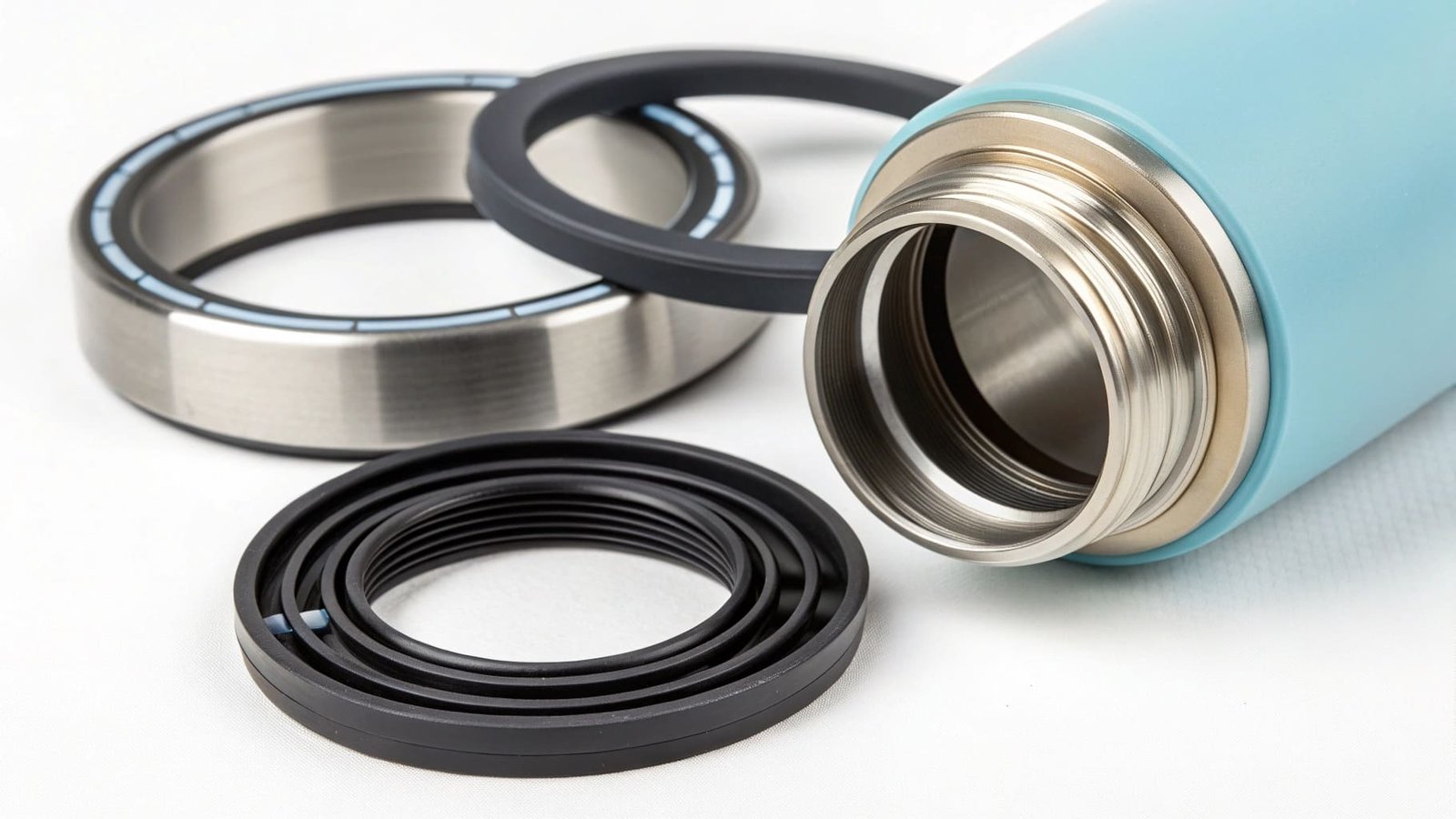
Vinegar's acetic acid causes standard rubber seals to swell, harden, and lose elasticity over time.8 Food-grade silicone handles vinegar exposure much better. It resists chemical breakdown and keeps its shape and sealing performance even after repeated cleaning with vinegar solutions.
Why Material Grade Determines Whether Vinegar Is Safe or Damaging
This is the part that most product listings don't explain clearly. The answer to "is vinegar safe for my seal?" depends almost entirely on what the seal is made from.
Here's how different seal materials respond to repeated vinegar exposure:
| Seal Material | Vinegar Resistance | Long-Term Effect | Common Use Case |
|---|---|---|---|
| Standard rubber (EPDM) | Low | Swelling, cracking, stiffness | Low-cost tumblers |
| TPE (Thermoplastic Elastomer) | Medium | Gradual softening | Mid-range products |
| Food-grade silicone | High | Minimal degradation | Premium tumblers |
| Platinum-cured silicone | Very High | Near zero degradation | Medical and premium consumer use |
Acetic acid — the active compound in vinegar — works by breaking down molecular bonds in less stable rubber compounds. With EPDM or standard TPE, repeated exposure causes the material to absorb liquid, expand, and then dry out in a deformed shape. Over time, the seal no longer creates a proper water-tight fit.
Food-grade silicone has a fundamentally different molecular structure. It is built around silicon-oxygen bonds rather than carbon-carbon bonds.9 These silicon-oxygen bonds are far more resistant to acid exposure. This is why a silicone O-ring can survive repeated vinegar cleaning cycles without losing its original shape or compression performance.
For B2B buyers, this distinction is a direct selling point. If your end customers or retail partners are positioning products as "easy to clean" or "low maintenance," then silicone O-rings are the only material that can support that claim honestly. Sourcing lower-grade materials to cut cost often leads to warranty claims, negative reviews, and brand damage down the line.
How to Remove Black Stuff from a Water Bottle Seal?
You pull apart your bottle lid. There's black residue around the seal. It looks wrong. You're not sure if it's mold, dirt, or a material defect.
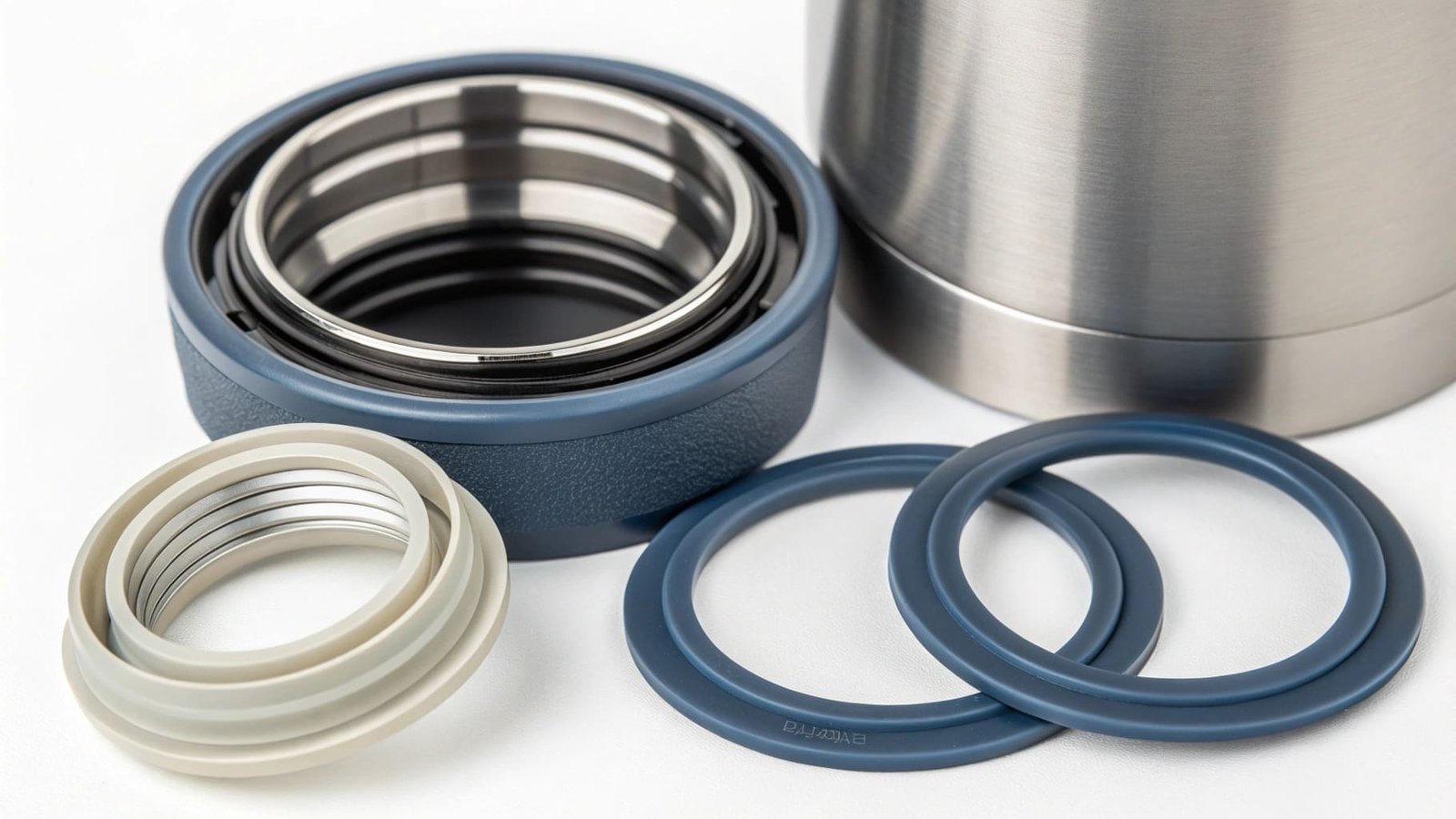
The black residue on water bottle seals is almost always mold or mildew. It grows in the wet gap between the O-ring and the lid groove. The most effective removal method is a baking soda paste applied directly to the seal, left for 10 minutes, then scrubbed with a small brush and rinsed fully.
Why Mold Grows on Seals — and How to Stop It From Coming Back
This is one of the most common complaints in the tumbler and water bottle category. I've spoken with brand owners who said mold on seals was their top customer service issue. Understanding why it happens makes it much easier to address — both in product design and in the advice you give to customers.
Mold grows on seals for one reason: trapped moisture. The groove that holds the O-ring creates a narrow gap. After washing, water sits in that gap. If the bottle is reassembled while still damp, that moisture never fully evaporates. Mold spores — which are present in normal tap water — find this wet space and begin to grow. Within days, you have visible black residue.
Here is a step-by-step cleaning and prevention protocol that works:
| Step | Action | Purpose |
|---|---|---|
| Remove the O-ring | Pull it out of the groove | Allows full access to both surfaces |
| Apply baking soda paste | Mix baking soda with a few drops of water | Mildly abrasive, kills mold without harsh chemicals |
| Scrub with a small brush | Focus on the groove channel | Removes residue from hard-to-reach surfaces |
| Rinse fully with clean water | Remove all baking soda residue | Prevents taste contamination |
| Dry completely before reassembly | Air dry for at least one hour | Prevents moisture from being trapped again |
From a product design standpoint, some forward-thinking brands are now using antimicrobial silicone formulations. These materials include additives that prevent mold growth at the surface level. This doesn't replace good cleaning habits, but it significantly reduces how fast mold returns after cleaning.
For B2B buyers, there are two practical takeaways here. First, specify food-grade silicone with antimicrobial additives if your customers are in the premium or health-focused segment. Second, include a clear care instruction card with every order. Brands that do this see fewer complaints, fewer returns, and stronger repeat orders. It costs almost nothing to produce, and it removes one of the most frustrating pain points for end users.
Conclusion
Cross-brand compatible O-rings rely on AS568 sizing and food-grade silicone. Clean them properly, dry them fully, and the seal lasts far longer with far fewer complaints.
-
"AEROSPACE STANDARD", https://inpp.ohio.edu/~wiki/handbook/lib/exe/fetch.php?media=as_568b_aerospace_size_standard_for_o-rings.pdf. SAE AS568 defines standardized O-ring size dimensions used in seal design; this supports the dimensional-standard portion of the compatibility claim, though it does not independently verify compatibility across most tumbler brands. Evidence role: general_support; source type: institution. Supports: The source should establish that AS568 defines standardized O-ring dimensions and is commonly used as a reference for seal and groove design.. Scope note: Contextual support only; a standards source cannot by itself prove market-wide tumbler compatibility. ↩
-
"AS568 O-Ring Size Chart & Dimensions", https://www.marcorubber.com/o-ring-size-chart-as568.htm/. Independent dimensional measurements of multiple tumbler lid seals would provide case-based support that some products use AS568-compatible O-ring sizes, but such evidence would not necessarily establish that most major brands do so. Evidence role: case_reference; source type: research. Supports: The source should document measured O-ring sizes or lid-groove dimensions from multiple tumbler or bottle products and compare them with AS568 sizes.. Scope note: Would support a narrower claim unless the source includes a representative sample of major brands. ↩
-
"O-Ring Groove Information - AS568", https://www.theoringstore.com/store/index.php?main_page=page&id=16. Engineering design references describe O-ring glands as being dimensioned around standardized O-ring cross-sections and diameters such as AS568 sizes; this supports the design mechanism but not the assertion that tumbler brands almost always follow it. Evidence role: mechanism; source type: education. Supports: The source should explain how O-ring groove or gland design is typically based on standardized O-ring dimensions such as AS568.. Scope note: Contextual design support; it does not quantify adoption among tumbler manufacturers. ↩
-
"AS568 O-Ring Size Chart & Dimensions - Marco Rubber & Plastics", https://www.marcorubber.com/o-ring-size-chart-as568.htm/. The AS568 standard verifies the dimensional values for AS568-110, AS568-112, AS568-114, and AS568-210 O-rings; additional product-measurement evidence would be needed to prove that these are the most common tumbler lid sizes. Evidence role: general_support; source type: institution. Supports: The source should verify the listed AS568 dimensions and, ideally, provide independent evidence that these sizes appear in tumbler lid applications.. Scope note: A standards source supports the dimensions, not the claimed frequency of use in tumblers. ↩
-
"21 CFR 177.2600 -- Rubber articles intended for repeated use. - eCFR", https://www.ecfr.gov/current/title-21/chapter-I/subchapter-B/part-177/subpart-C/section-177.2600. Food-contact regulations such as FDA 21 CFR 177.2600 and German LFGB-related requirements provide compliance frameworks for rubber and silicone articles intended for food contact; they support the regulatory relevance of silicone O-rings but do not certify any particular product without test documentation. Evidence role: expert_consensus; source type: government. Supports: The source should support that silicone rubber is used in food-contact applications and that compliant formulations may be evaluated under FDA and German/EU food-contact rules.. Scope note: Regulatory sources define requirements; they do not prove that every food-grade silicone O-ring meets them. ↩
-
"How to Clean, Sanitize, and Store Infant Feeding Items ... - CDC", https://www.cdc.gov/hygiene/faq/index.html. Public-health cleaning guidance generally supports washing reusable food-contact items with soap and water, rinsing thoroughly, and drying before reuse; this supports the cleaning approach but not the specific 10-to-15-minute duration or the claim of being the most effective method. Evidence role: general_support; source type: government. Supports: The source should support removal, washing with soap and water, rinsing, and drying as appropriate hygiene practices for reusable bottle components.. Scope note: Contextual support; comparative effectiveness and exact soaking time would need direct testing. ↩
-
"Daily Use Water Bottles as a Hub for Microbial Population - PMC", https://pmc.ncbi.nlm.nih.gov/articles/PMC11174293/. Public-health and microbiology references identify persistent moisture as a key condition for microbial and mold growth on surfaces, supporting the mechanism by which trapped water around an O-ring can contribute to odor and contamination. Evidence role: mechanism; source type: government. Supports: The source should explain that moisture retention promotes microbial growth, mold, or biofilm formation on surfaces.. Scope note: Supports the mechanism, not the quantified claim that it causes most bottle-seal complaints. ↩
-
"Ethylene Propylene Diene Monomer-Based Composites ...", https://pmc.ncbi.nlm.nih.gov/articles/PMC12525967/. Elastomer chemical-resistance studies show that acid exposure can alter swelling and mechanical properties in some rubber compounds; this supports caution about vinegar exposure, although effects depend on the elastomer formulation, concentration, temperature, and exposure time. Evidence role: mechanism; source type: research. Supports: The source should describe how acetic acid exposure affects elastomer swelling, hardness, or mechanical properties for common rubber compounds.. Scope note: Material-specific; the claim should not be generalized to all rubber seals without compound data. ↩
-
"From Amorphous Silicones to Si-Containing Highly Ordered Polymers", https://pmc.ncbi.nlm.nih.gov/articles/PMC8157024/. Polymer chemistry references describe silicone rubbers as polysiloxanes with repeating silicon-oxygen backbones, distinguishing them from many organic elastomers with carbon-based backbones. Evidence role: definition; source type: education. Supports: The source should explain the chemical structure of silicone polymers and distinguish the Si-O backbone from carbon-based polymer backbones.. ↩