What Are Stretch & Seal Silicone Lids Used for in Commercial Kitchens?
Plastic lids crack. They warp. They stain. And at some point, every commercial kitchen manager asks the same question: is there something better?
Stretch and seal silicone lids are flexible, food-grade covers that stretch over containers of different sizes to create an airtight seal1. They replace plastic wrap, foil, and rigid lids in commercial kitchens. They work across freezer, microwave, and dishwasher environments without breaking down or losing shape.

I have worked with commercial kitchen buyers for years now. One thing I hear over and over again is this: they do not want to keep replacing the same product every few months. Silicone lids solve that problem directly. But before any bulk purchase decision gets made, three questions come up almost every time. I am going to answer each one of them here, with as much detail as I can give you.
Are Silicone Lids Safer Than Plastic Lids?
Most people assume plastic is fine because it has always been around. That assumption is getting more expensive by the year.
Food-grade silicone lids are safer than plastic lids in commercial kitchen conditions.2 Platinum-cured silicone contains no BPA, phthalates, or chemical additives.3 It stays stable from -40°F to 450°F. Plastic lids begin to warp and release microplastics above 140°F.4 For commercial kitchens, silicone removes contamination risk and cuts replacement costs.
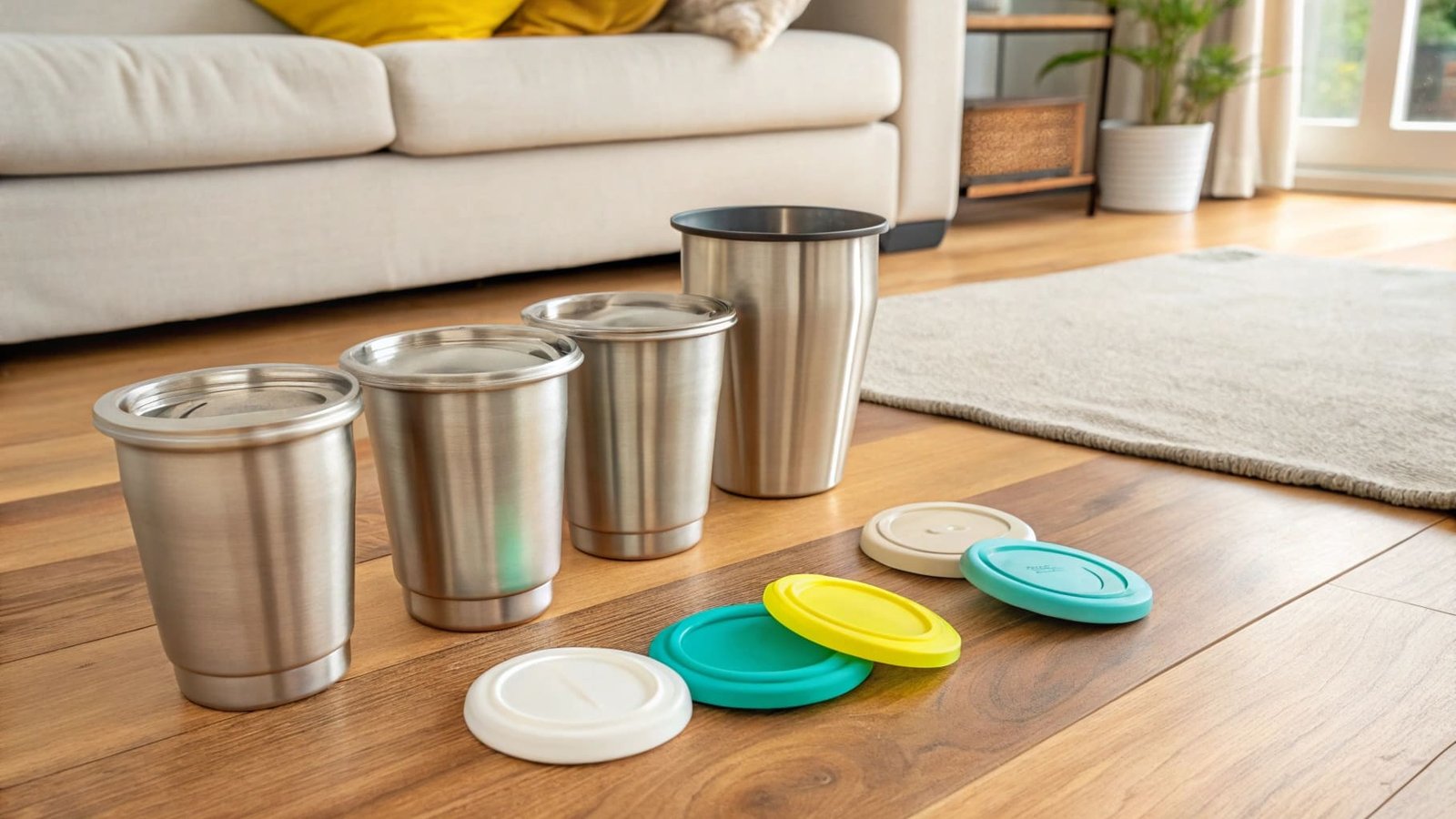
The temperature range difference is the most important factor here. Commercial kitchens do not operate at steady room temperature. Food goes from a freezer at -10°F to a hot holding unit at 160°F, sometimes within the same shift. Plastic lids are not built for that range. Silicone is.
There is also a surface wear issue that most buyers overlook.
Why Does Surface Wear Matter So Much in Commercial Settings?
Plastic develops microscopic cracks after repeated dishwasher cycles.5 Those cracks are too small to see. But bacteria can live in them. Silicone is non-porous. Its surface does not crack under repeated high-heat washing. This matters for any kitchen that puts covers through a commercial dishwasher multiple times per day.
Here is a side-by-side comparison of how the two materials perform in typical commercial kitchen conditions:
| Condition | Plastic Lid | Silicone Lid |
|---|---|---|
| Temperature range | Up to ~140°F safely | -40°F to 450°F |
| BPA or chemical additives | Often present | None in platinum-cured silicone |
| Microplastic release under heat | Yes, above safe threshold | No |
| Surface after 100+ dishwasher cycles | Cracked, rough | Smooth, intact |
| Bacterial growth risk | Higher due to surface cracks | Lower due to non-porous surface |
| Average replacement frequency | Every few months | Every few years |
For procurement officers buying in volume, the replacement cost reduction alone often justifies the switch. Add the liability reduction from food safety compliance, and the case becomes straightforward.
I have spoken with buyers who switched to silicone after a single food safety audit flagged their plastic lids. That conversation usually does not need to happen twice.
How to Get a Smooth Finish with Silicone Sealant?
This question sounds like it belongs on a construction site. But it tells you something important about what to look for when you buy silicone lids in bulk.
In commercial lid applications, a smooth finish on the rim contact surface means the lid will seal correctly6. High-quality silicone lids use precision molding that removes air bubbles and surface irregularities. A rough or uneven finish is a sign of lower manufacturing standards and a weaker seal.
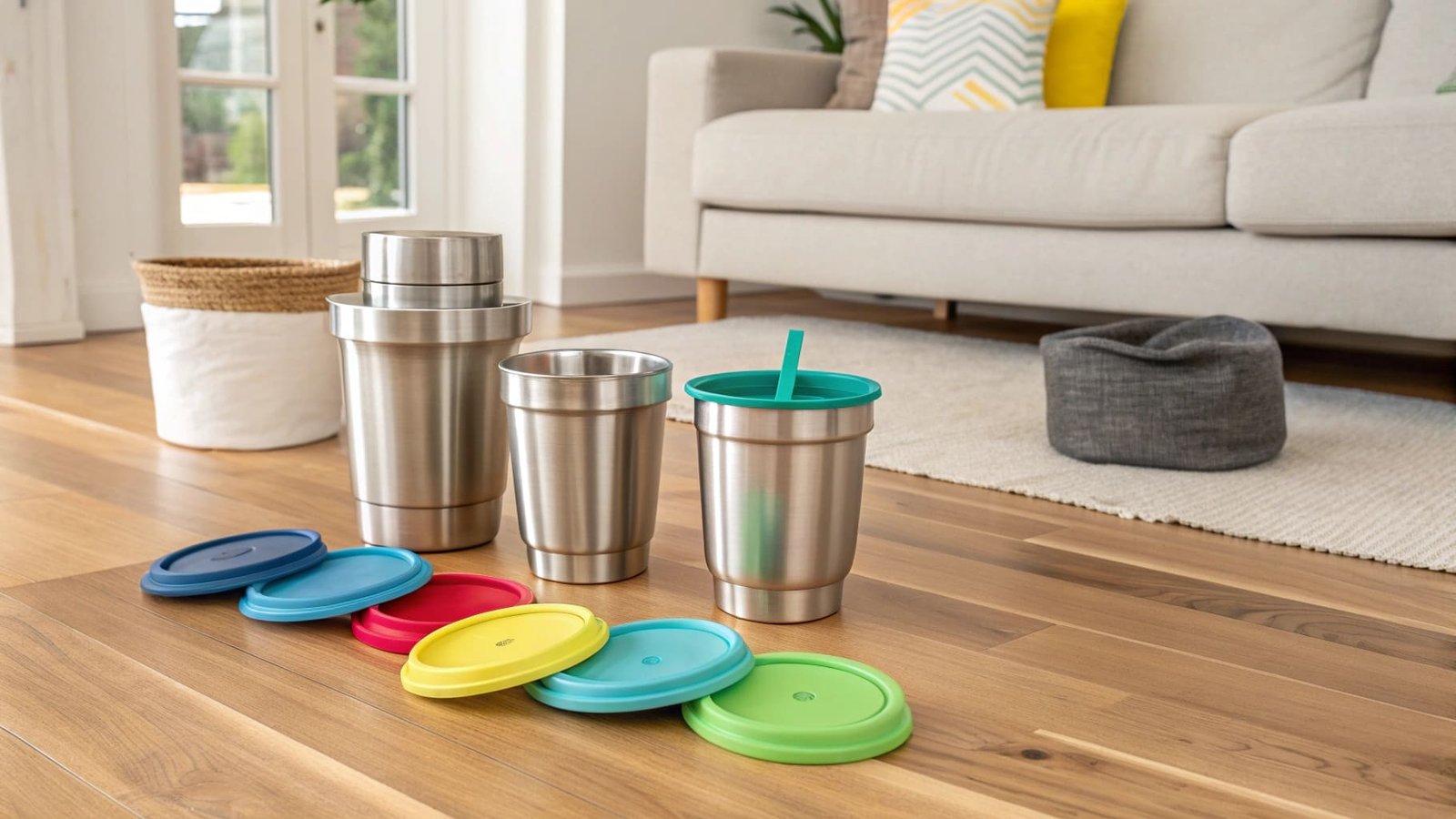
When I source products for buyers, I always ask them to request samples before placing a bulk order. This step alone filters out a large number of low-quality suppliers. Here is what to check when you have a sample in your hand.
What Should You Check on a Sample Before Ordering in Bulk?
Run your finger along the inner rim of the lid. That is the surface that makes contact with the container edge. It should feel smooth and consistent with no raised lines or rough patches. Visible mold lines or texture variations are warning signs. They point to a poorly controlled manufacturing process.
Here is a simple evaluation checklist for B2B buyers reviewing silicone lid samples:
| Feature to Check | What Good Looks Like | What to Reject |
|---|---|---|
| Rim contact surface | Smooth, uniform, no texture variations | Rough patches, visible mold seam lines |
| Wall thickness | Consistent around the full circle | Thin spots or uneven sections |
| Stretch response | Even stretch in all directions | Pulls unevenly or resists on one side |
| Surface color | Consistent with no discoloration | Blotchy or inconsistent color throughout |
| Smell after handling | Minimal or no odor | Strong chemical or rubbery odor |
The smooth finish is not just about appearance. It is directly tied to whether the lid will hold an airtight seal across thousands of daily uses. In a commercial kitchen, a lid that loses its seal contaminates food, wastes prep time, and creates a liability risk.
A buyer I work with told me they once ordered 500 units without requesting a sample first. The seals failed on nearly a third of them within two months. That order was not a savings. It was a loss. Requesting samples costs nothing. Skipping them can cost a lot.
Does Silicone Leach into Food When Microwaved?
This question makes procurement teams nervous. It should. Any material that goes near food under heat needs to be verified, not assumed.
Food-grade silicone that meets FDA and LFGB certification standards does not leach into food when microwaved.7 The silicon-oxygen molecular bond in cured silicone is stable at temperatures well above standard microwave heating ranges.8 Typical microwave temperatures reach 212°F to 300°F. Food-grade silicone stays stable up to 450°F.
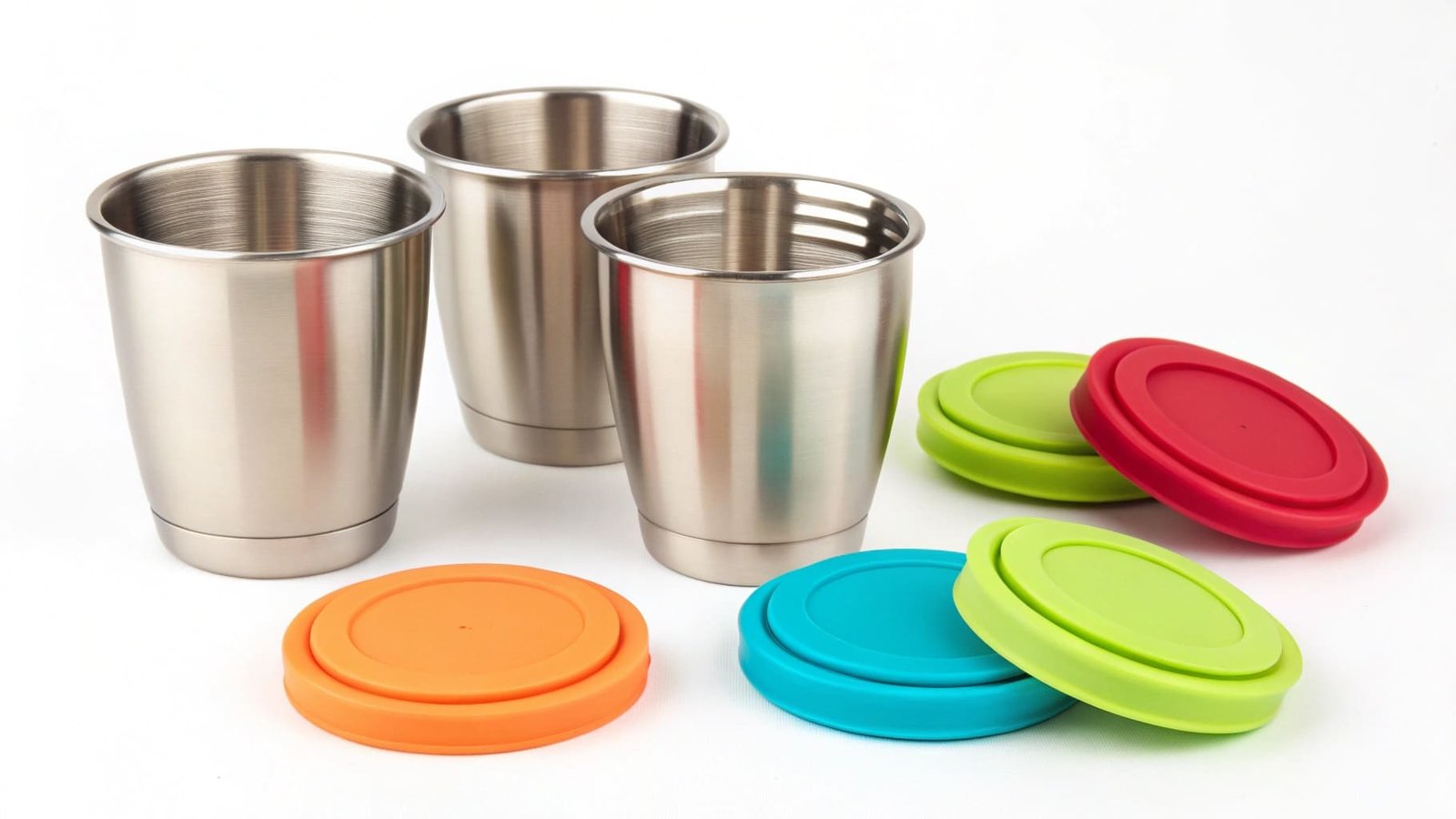
The key phrase in that answer is food-grade silicone. Not all silicone products sold commercially meet that standard. The quality of the raw material and the curing process both determine whether a silicone lid is safe for repeated microwave use.
How Do You Tell the Difference Between Safe and Unsafe Silicone?
The two most common curing methods for silicone are platinum curing and peroxide curing. Platinum-cured silicone is purer and more stable. Peroxide-cured silicone can leave residue behind from the curing agent. Some lower-cost silicone products also include filler materials that reduce cost but reduce stability under heat.
Here is a breakdown of how different silicone types compare for commercial microwave use:
| Factor | Platinum-Cured Silicone | Peroxide-Cured Silicone | Silicone with Fillers |
|---|---|---|---|
| Migration risk under microwave heat | Very low | Moderate | Higher |
| FDA compliance | Typically yes | Varies | Often no |
| LFGB certification | Typically yes | Varies | Rarely |
| Odor when heated | None | Possible | Likely |
| Suitable for commercial microwave use | Yes | With verification | No |
For B2B buyers specifying silicone lids for commercial microwave use, three documents should always be requested before finalizing a supplier:
- FDA compliance documentation
- Third-party migration test results
- Material composition disclosure from the manufacturer
These are not optional requests. In a high-volume kitchen where hundreds of containers go through a microwave every day, any migration risk compounds with frequency. Suppliers who cannot provide these documents should not be on your shortlist.
I ask for these documents on behalf of every buyer I work with. Suppliers who are confident in their product provide them without delay. Suppliers who hesitate or push back are telling you something important about what is in their product.
Conclusion
Silicone stretch lids outperform plastic on safety, durability, and microwave stability. Buy certified, check your samples, and verify supplier documentation before committing to bulk orders.
-
"Safe Food Storage Containers - ISU Extension and Outreach Blogs", https://blogs.extension.iastate.edu/answerline/2023/10/10/safe-food-storage-containers/. Materials-science references describe silicone elastomers as flexible, resilient polymers used in sealing and food-contact applications, supporting the characterization of stretch lids as elastic covers that seal by conforming to container rims. Evidence role: definition; source type: education. Supports: Silicone elastomers are flexible, resilient materials used in food-contact applications and capable of forming seals by elastic deformation.. Scope note: This supports the material mechanism and common application, but it does not verify the performance of any specific lid design. ↩
-
"Assessing the Release of Microplastics and Nanoplastics ... - PubMed", https://pubmed.ncbi.nlm.nih.gov/37343248/. Reviews of food-contact materials report that polymer migration can increase with heat and repeated use, while cured silicone elastomers are generally valued for thermal stability in food-contact applications. Evidence role: expert_consensus; source type: paper. Supports: Research comparing food-contact materials discusses migration risks from plastics under heat and the relative thermal stability of silicone elastomers.. Scope note: This provides contextual support for a safety comparison; it does not establish that every silicone lid is safer than every plastic lid in all commercial settings. ↩
-
"Phthalates in Food Packaging and Food Contact Applications - FDA", https://www.fda.gov/food/food-additives-and-gras-ingredients-information-consumers/phthalates-food-packaging-and-food-contact-applications. Polymer chemistry sources describe platinum-catalyzed silicone curing as an addition reaction with minimal volatile byproducts, and food-contact literature treats BPA and phthalates primarily as additives associated with certain plastics rather than with cured silicone elastomers. Evidence role: mechanism; source type: research. Supports: Platinum-catalyzed addition-cured silicone differs from peroxide-cured silicone and is associated with low byproduct formation; BPA and phthalates are plastic additives rather than typical silicone constituents.. Scope note: The source would support typical chemistry; actual absence of additives in a particular product requires supplier composition data or migration testing. ↩
-
"Assessing the Release of Microplastics and Nanoplastics ... - PubMed", https://pubmed.ncbi.nlm.nih.gov/37343248/. Experimental studies of heated plastic food-contact containers have documented microplastic and nanoplastic release under elevated-temperature conditions, supporting concern about heated plastic lids in food service. Evidence role: statistic; source type: paper. Supports: Scientific studies have measured microplastic or nanoplastic release from plastic food-contact containers under heating conditions and discuss thermal deformation risks for plastics.. Scope note: The literature may not identify 140°F as a universal threshold because release and deformation depend on polymer type, additives, age, and heating duration. ↩
-
"Contribution of household dishwashing to microplastic pollution - PMC", https://pmc.ncbi.nlm.nih.gov/articles/PMC10076389/. Polymer-aging studies show that repeated heat, detergent exposure, and mechanical washing can alter plastic surfaces and produce micro-scale defects, providing a mechanism for cracking after repeated dishwasher cycles. Evidence role: mechanism; source type: paper. Supports: Repeated exposure to heat, detergents, and mechanical stress can age plastic food-contact materials and produce surface defects.. Scope note: The degree of cracking depends on the specific plastic, dishwasher conditions, detergent, and number of cycles. ↩
-
"Influence of Sealing Surface Microstructure Characteristics on Flow ...", https://pmc.ncbi.nlm.nih.gov/articles/PMC12525964/. Studies of elastomeric gasket sealing show that leakage is influenced by contact pressure, surface roughness, and defects at the sealing interface, supporting the importance of a smooth lid rim. Evidence role: mechanism; source type: paper. Supports: Elastomeric seal performance depends on contact conformity, surface roughness, and the absence of defects at the sealing interface.. Scope note: Gasket studies provide a mechanical analogy and may not test stretch silicone food lids directly. ↩
-
"Chemistry Recommendations for Submissions of Food Contact ...", https://www.fda.gov/regulatory-information/search-fda-guidance-documents/guidance-industry-preparation-premarket-submissions-food-contact-substances-chemistry. Food-contact regulations and migration-test standards require silicone materials intended for repeated food use to meet compositional and migration limits under specified test conditions, supporting the claim that compliant products should have low migration during intended heating. Evidence role: expert_consensus; source type: government. Supports: FDA and European/German food-contact frameworks regulate silicone materials through composition and migration limits intended to protect consumers during intended use.. Scope note: Compliance supports low migration within tested conditions, not literal zero leaching under every microwave scenario. ↩
-
"Silicone Nanocomposites with Enhanced Thermal Resistance", https://pmc.ncbi.nlm.nih.gov/articles/PMC11084908/. Polymer chemistry texts attribute the thermal stability of polysiloxanes in part to the silicon-oxygen backbone, which helps explain the heat resistance of cured silicone elastomers. Evidence role: mechanism; source type: education. Supports: Polysiloxanes have a silicon-oxygen backbone associated with high bond energy and thermal stability compared with many carbon-based polymer backbones.. Scope note: Thermal stability also depends on formulation, fillers, curing quality, and exposure time. ↩