Why Are Stanley Tumbler Boots Popular Among European Wholesalers?
European wholesalers are rushing to stock silicone tumbler boots. If you are missing this product category, you are leaving real money on the table.
Stanley tumbler boots are silicone sleeves that fit around the base of Stanley tumblers. They protect the cup from scratches, dents, and noise. European wholesalers stock them because they increase average order value, match EU consumer preferences for sustainable products, and create a complete product ecosystem around a core item that already sells itself.
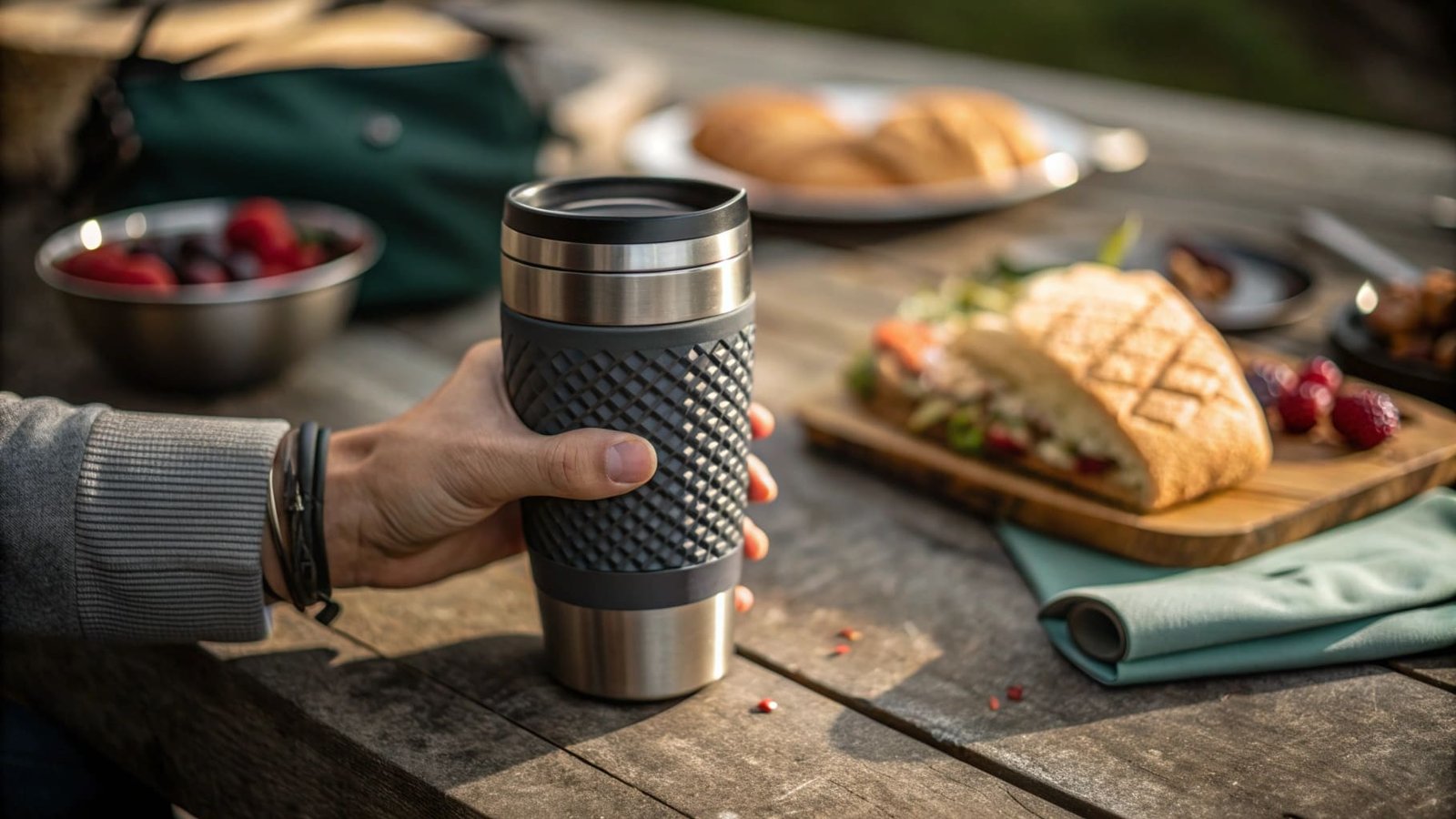
I have been supplying silicone accessories to wholesale buyers for years. One thing I keep seeing is this: the buyers who grow fastest are the ones who do not just sell a product. They sell a system. They find a product that consumers already love, and they build around it. Stanley tumblers are that product right now, especially in Europe. The question is not whether the demand is there. The question is whether you are positioned to capture it.
What's Special About Stanley Tumblers?
Most drinkware gets used and forgotten. Stanley tumblers get photographed, collected, and talked about. How did a metal cup become a lifestyle product?
Stanley tumblers use double-wall vacuum insulation.1 This keeps hot drinks hot and cold drinks cold for hours. The cup is built to take daily punishment. These two things together — performance and toughness — turned a functional tool into a product people trust and recommend. That trust is the foundation of the whole accessory market.
Why Durability Creates a Secondary Market
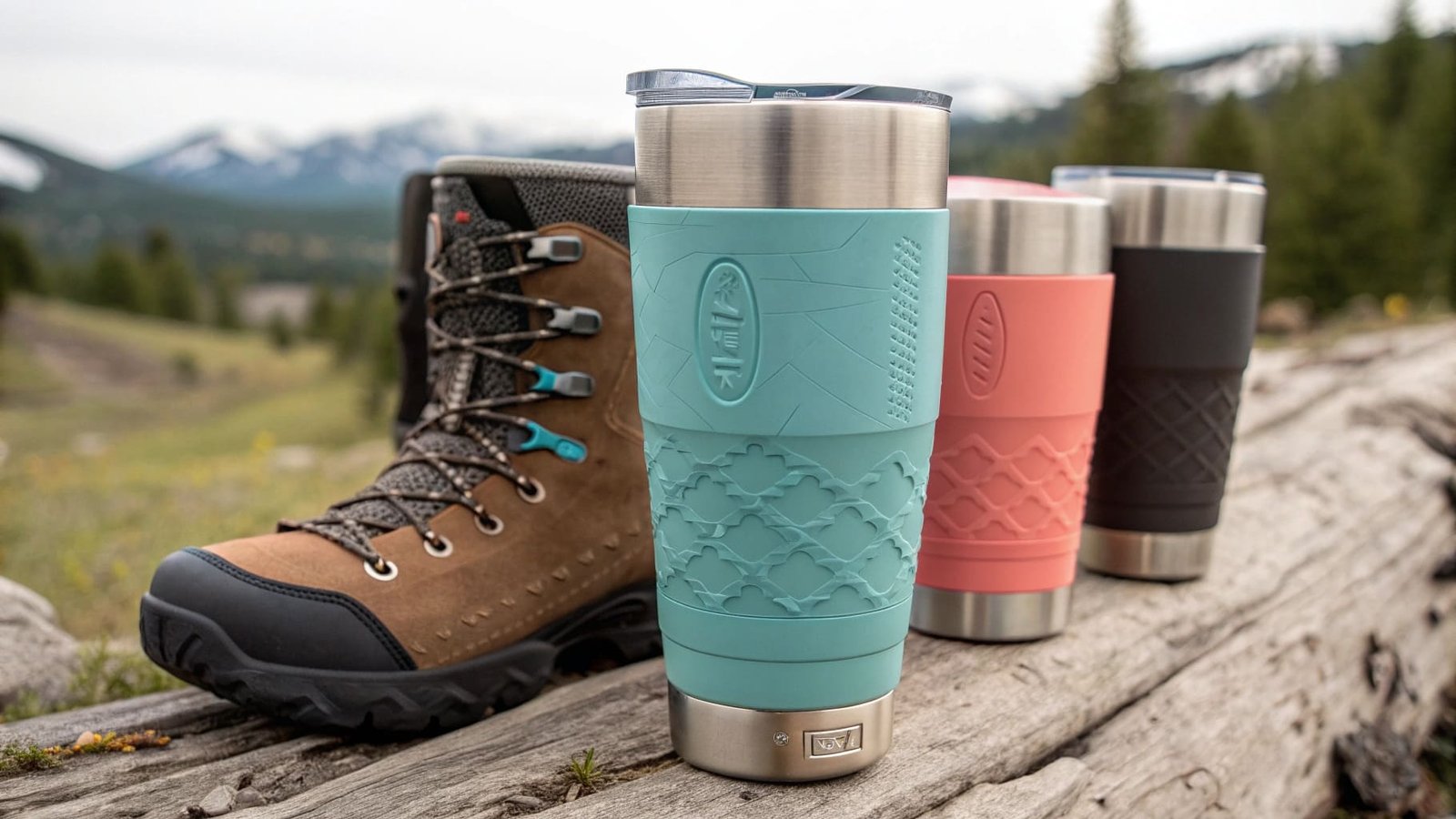
When a consumer trusts a product, they invest in it. They buy accessories. They buy protection. They buy personalization options. This is the exact behavior pattern that drives demand for silicone tumbler boots in Europe.
European consumers tend to prefer products that last. They are willing to pay more upfront if the product holds up over time. This is a cultural purchasing pattern, and it shapes what European wholesalers need to stock. A tumbler boot is not just a protective sleeve. It is a signal to the consumer that their expensive cup will stay in good condition. That message resonates strongly in markets where sustainability and product longevity carry real weight.
For B2B buyers like you, this has a direct business impact. When you offer a silicone boot alongside a Stanley tumbler, you are doing two things at once. You are increasing the average order value, and you are reducing the chance of a return caused by cosmetic damage.2 A scratched or dented tumbler is a customer service problem. A tumbler with a silicone boot stays looking new. That keeps your customers happy and keeps your return rate low.
| Benefit | Without Tumbler Boot | With Tumbler Boot |
|---|---|---|
| Surface protection | None | Full base coverage |
| Noise on hard surfaces | High | Near silent |
| Personalization options | Limited | Color and logo customization |
| Average order value | Base price only | Higher with accessory bundle |
| Customer return risk | Higher | Lower |
This is why European wholesalers are treating silicone tumbler boots as a strategic product line, not a side item. The margin on the boot is good. The value it adds to the core product is clear. And the customer has an easy reason to say yes.
What Is the Rarest Stanley Cup Color?
Some Stanley cup colors sell out in hours.3 Others become collector items traded at double the retail price. Why does cup color drive this much demand?
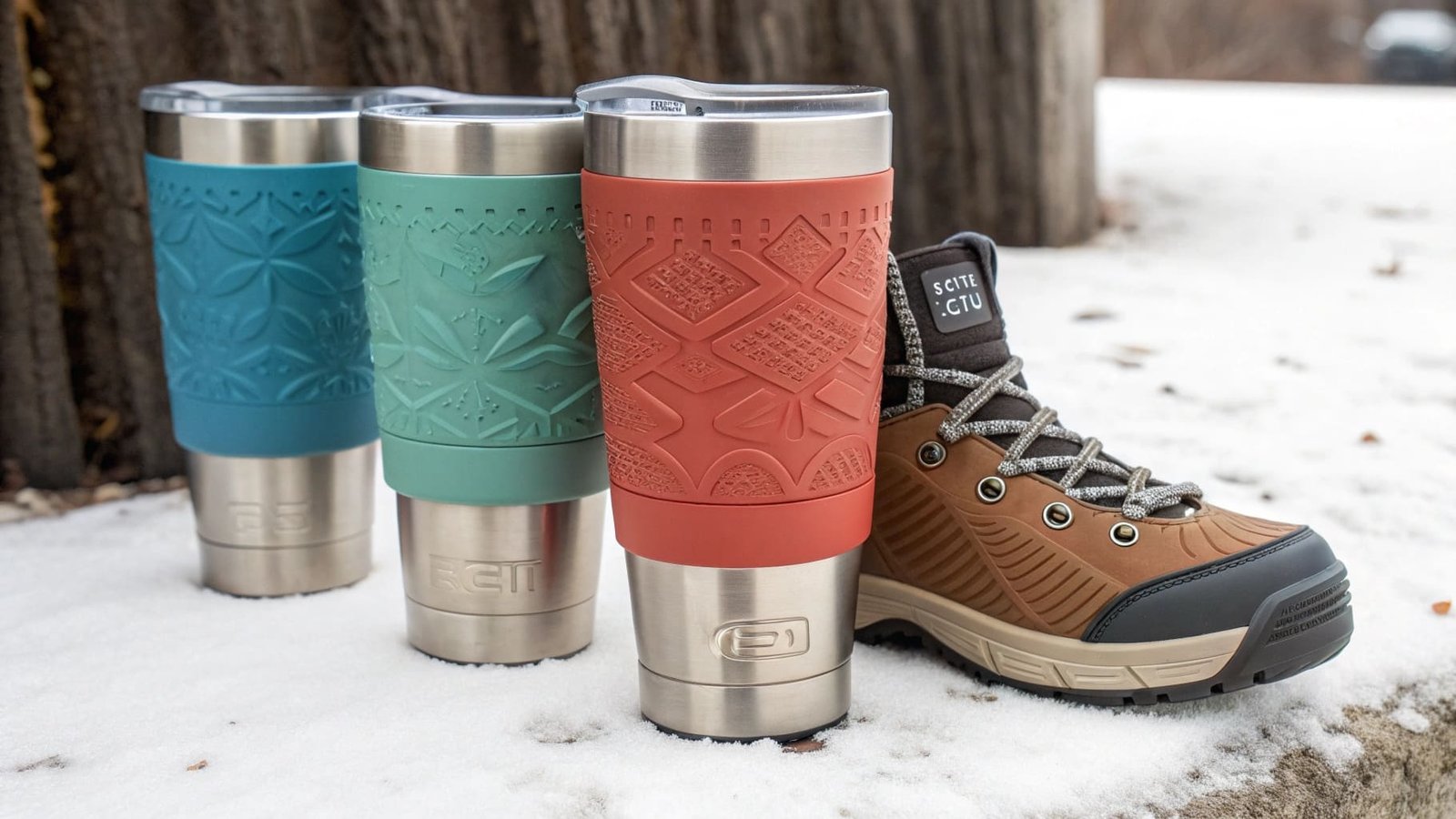
Discontinued seasonal releases and regional exclusives drive the rare end of the Stanley color market. Colors like Alpine and Heritage Green have sold for significant premiums in secondary markets across Europe and North America.4 These rare colors create urgency and emotional attachment that most consumer products never achieve.
What the Collector Market Teaches Wholesale Buyers
I want to be direct here because this is a lesson worth taking seriously. The Stanley cup collector market is not something you need to participate in directly. But it teaches you something important about consumer psychology that you can apply to your own product strategy.
When a product becomes scarce, its perceived value goes up.5 Consumers pay more. They act faster. They feel more attached to the purchase. Limited-edition silicone tumbler boots work on the same principle. If you offer a silicone boot in a color that matches a rare Stanley release, you are giving collectors exactly what they want: a way to complete the look of a cup they already treasure.
This is not a complicated strategy. It requires that you work with a supplier who can produce small-batch custom colors quickly and accurately. That is where customization capability becomes a real business advantage.
Here is how the logic plays out in practice:
| Scenario | Consumer Behavior | Your Opportunity |
|---|---|---|
| Rare cup color released | High urgency buying | Launch matching boot color |
| Cup color discontinued | Secondary market demand spikes | Offer coordinated accessories |
| Seasonal color trend | Consumer shares on social media | Align boot launch with trend cycle |
| Regional exclusive | Local pride and identity | Offer region-specific boot colors |
European wholesalers who understand this can turn a simple silicone accessory into something that carries emotional weight. A boot that matches a rare cup color is not just protection. It is part of a collector's story. That is a fundamentally different conversation to have with your retail customers, and it justifies a higher price point without apology.
The other thing I want to point out is timing. Limited-edition silicone accessories create urgency.6 When your retail customers know that a boot color is only available for a short window, they order earlier and they order more. That predictability is valuable for your inventory planning and your cash flow.
Is It Better to Drink From Ceramic or Stainless Steel?
Ceramic cups feel warm and quiet. Stainless steel cups perform better and last longer. So which should you be betting on as a wholesale buyer?
For mobile drinkware, stainless steel is the stronger choice. It holds temperature better, survives drops, handles thermal shock7, and does not carry the lead or cadmium risks found in some ceramic glazes. For EU market compliance, stainless steel is also easier to certify and document. These practical advantages make it the default material for daily-use tumblers in the European wholesale market.
How Silicone Closes the Gap Between Metal and Ceramic
This is the part that I find most interesting, and it is the part that most wholesale buyers miss entirely.
People who prefer ceramic cups are not wrong. Ceramic feels good in the hand. It is quiet on a desk. It does not feel as cold or as industrial as bare metal. These are real sensory preferences, and they are legitimate. The problem is that ceramic chips, cracks, and breaks. For a product that needs to survive in a bag, a car, or an outdoor setting, ceramic fails regularly.
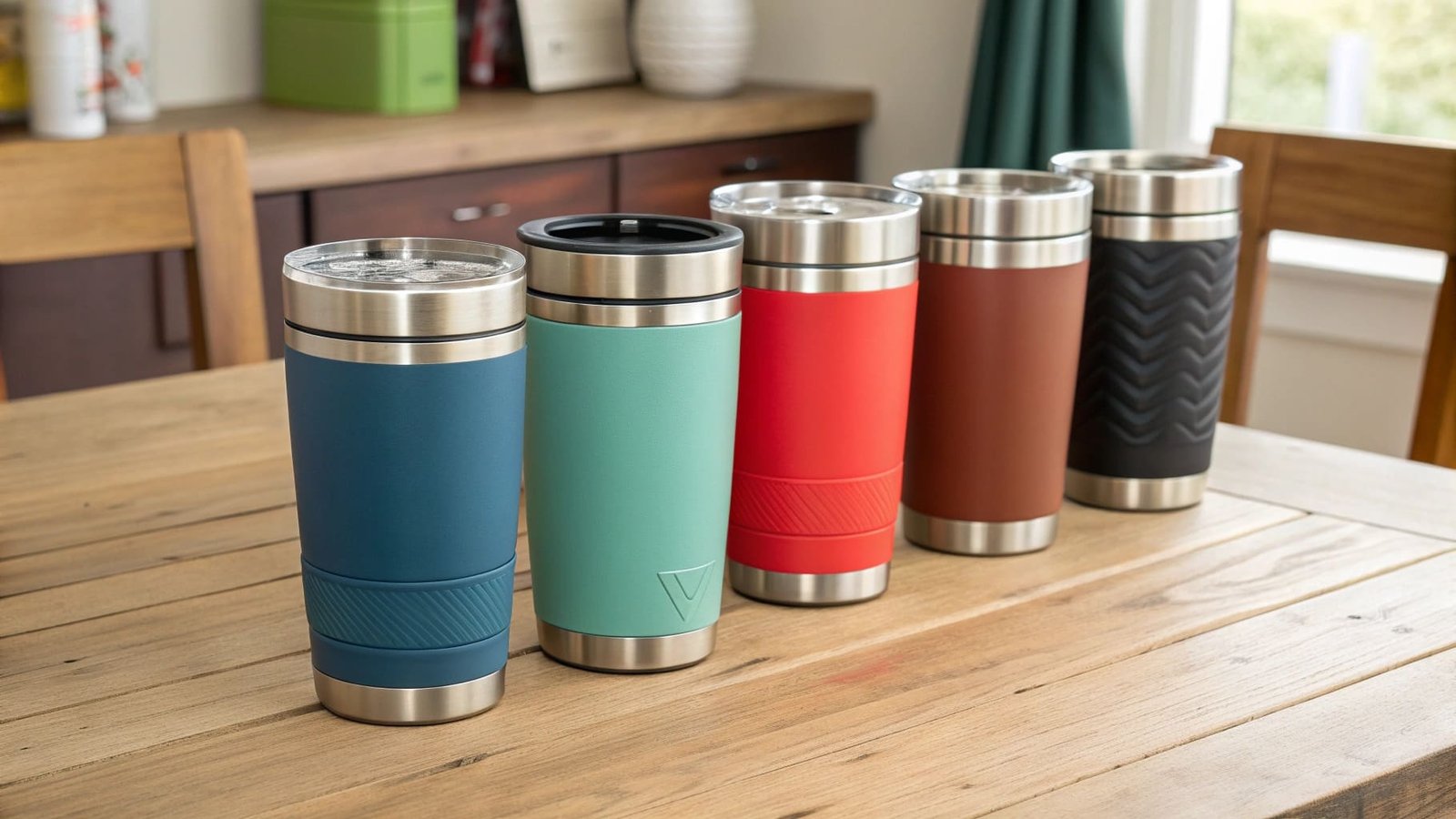
Silicone tumbler boots address this gap directly. A silicone boot on a stainless steel tumbler does something simple but effective: it makes the metal cup feel and behave more like ceramic in the ways that matter to the user, without any of the fragility.
| Consumer Preference | Ceramic Delivers | Stainless Steel Delivers | Silicone Boot Adds |
|---|---|---|---|
| Warm tactile feel | Yes | No | Yes |
| Quiet on hard surfaces | Yes | No | Yes |
| Temperature retention | Moderate | Excellent | No change needed |
| Drop resistance | Poor | Excellent | Improved grip |
| EU safety compliance | Variable | Consistent | Compliant when food-grade |
| Long product lifespan | Moderate | High | Extends lifespan further |
For European B2B buyers, this material understanding changes how you present the product to your retail customers. You are not selling a rubber sleeve. You are selling the sensory comfort of ceramic with the durability of stainless steel. That is a clear, honest value statement that resonates with European consumers who want both quality and longevity.
There is also a regulatory dimension worth noting. EU food contact material regulations are detailed and strict. Food-grade silicone that is properly certified removes a significant compliance burden for your retail customers. When you source from a supplier who provides full certification documentation, you are making your customer's job easier and reducing your own legal exposure. This is a point that experienced procurement officers notice immediately.
I have spoken with buyers who moved away from cheaper, uncertified silicone accessories after running into EU import issues. The cost savings at the front end were wiped out by delays, rejections, and the cost of finding replacement stock. Certification is not a box-ticking exercise. It is protection for your business.
Conclusion
Stanley tumbler boots sell well in Europe because they solve real problems, match consumer values, and give wholesalers a clear path to higher margins and stronger customer loyalty.
-
"Vacuum flask - Wikipedia", https://en.wikipedia.org/wiki/Vacuum_flask. Reference sources on vacuum flasks explain that double-walled vessels with an evacuated space reduce conductive and convective heat transfer, which is the insulation principle used in vacuum-insulated drinkware. Evidence role: definition; source type: encyclopedia. Supports: A source should define double-wall vacuum insulation and, if possible, confirm that insulated tumblers use this vacuum-flask principle.. Scope note: A general source supports the technology but may not independently verify every Stanley model. ↩
-
"Package design as a branding tool in the cosmetic industry - PMC", https://pmc.ncbi.nlm.nih.gov/articles/PMC9123395/. Retail-returns research identifies damaged or defective goods as a recurring reason for product returns, providing contextual support for the claim that protective accessories may reduce return risk related to visible damage. Evidence role: general_support; source type: research. Supports: A retail returns study should document damaged goods or cosmetic defects as a reason for returns, while materials evidence can support the protective role of silicone.. Scope note: The evidence would not directly prove that tumbler boots reduce return rates unless a product-specific field study is found. ↩
-
"People have camped out for hours just to get their hands on limited ...", https://www.facebook.com/WFAE/posts/people-have-camped-out-for-hours-just-to-get-their-hands-on-limited-edition-stan/866736848795486/. Contemporary news reporting on limited-edition Stanley tumbler releases documents rapid sell-outs and consumer queues, supporting the article's claim that some colorways can sell out within very short time windows. Evidence role: case_reference; source type: other. Supports: A neutral news report should document a specific limited-edition Stanley cup release that sold out rapidly.. Scope note: News reports usually cover prominent releases and may not represent all Stanley colors or European wholesale conditions. ↩
-
"Stanley Alpine - eBay", https://www.ebay.com/shop/stanley-alpine?_nkw=stanley+alpine. Secondary-market reporting or archived resale data showing Alpine and Heritage Green Stanley tumblers listed or sold above original retail prices would support the claim that rare colorways can command premiums. Evidence role: case_reference; source type: other. Supports: A source should document resale activity or reported premiums for the named Stanley colors, ideally with dates and prices.. Scope note: Marketplace prices fluctuate and listed prices do not always equal completed sale prices. ↩
-
"[PDF] Scarcity Effects on Value: A Quantitative Review of the Commodity ...", https://ecommons.cornell.edu/bitstreams/0a6de062-ba40-4119-ab56-dc826c45e297/download?utm_source=consensus. Consumer psychology research on scarcity effects and commodity theory finds that limited availability can increase perceived value and desirability, supporting the article's explanation of collector demand. Evidence role: expert_consensus; source type: paper. Supports: A consumer psychology paper should support the general relationship between scarcity cues and increased perceived value or desirability.. Scope note: The effect varies by product category, consumer involvement, and whether scarcity is viewed as authentic. ↩
-
"The Effect of Scarcity on Consumer Purchase Intentions", https://scholarworks.uno.edu/innovate/2014/posters/2/. Studies of scarcity marketing report that limited-edition or time-limited availability cues can increase perceived urgency and purchase intention, providing a behavioral basis for limited-edition accessory launches. Evidence role: mechanism; source type: paper. Supports: A marketing or consumer-behavior paper should show that limited editions or time-limited availability can increase purchase urgency or purchase intention.. Scope note: This supports the general mechanism and does not directly measure silicone tumbler accessories. ↩
-
"Evaluating The Fracture Toughness and Flexural Strength of ... - PMC", https://pmc.ncbi.nlm.nih.gov/articles/PMC4257931/. Materials-science references describe ceramics as comparatively brittle and susceptible to fracture or thermal shock, while stainless steels are tougher and more ductile, supporting the article's comparison for mobile drinkware durability. Evidence role: mechanism; source type: education. Supports: A materials-science source should explain that ceramics are brittle and vulnerable to fracture or thermal shock, while stainless steel has higher toughness and ductility.. Scope note: Temperature retention also depends on vessel design and insulation, not stainless steel alone. ↩