Can Silicone Stretch Lids Be Branded for Wholesale Promotional Campaigns?
You want a promotional product that works. Most giveaways end up in the trash. Silicone stretch lids don't. Here's why they're worth your attention.
Silicone stretch lids can be fully branded for wholesale promotional campaigns. You can add your logo through screen printing, debossing, or laser engraving. They are reusable, food-safe, and practical. That makes them one of the strongest promotional items available in bulk today.
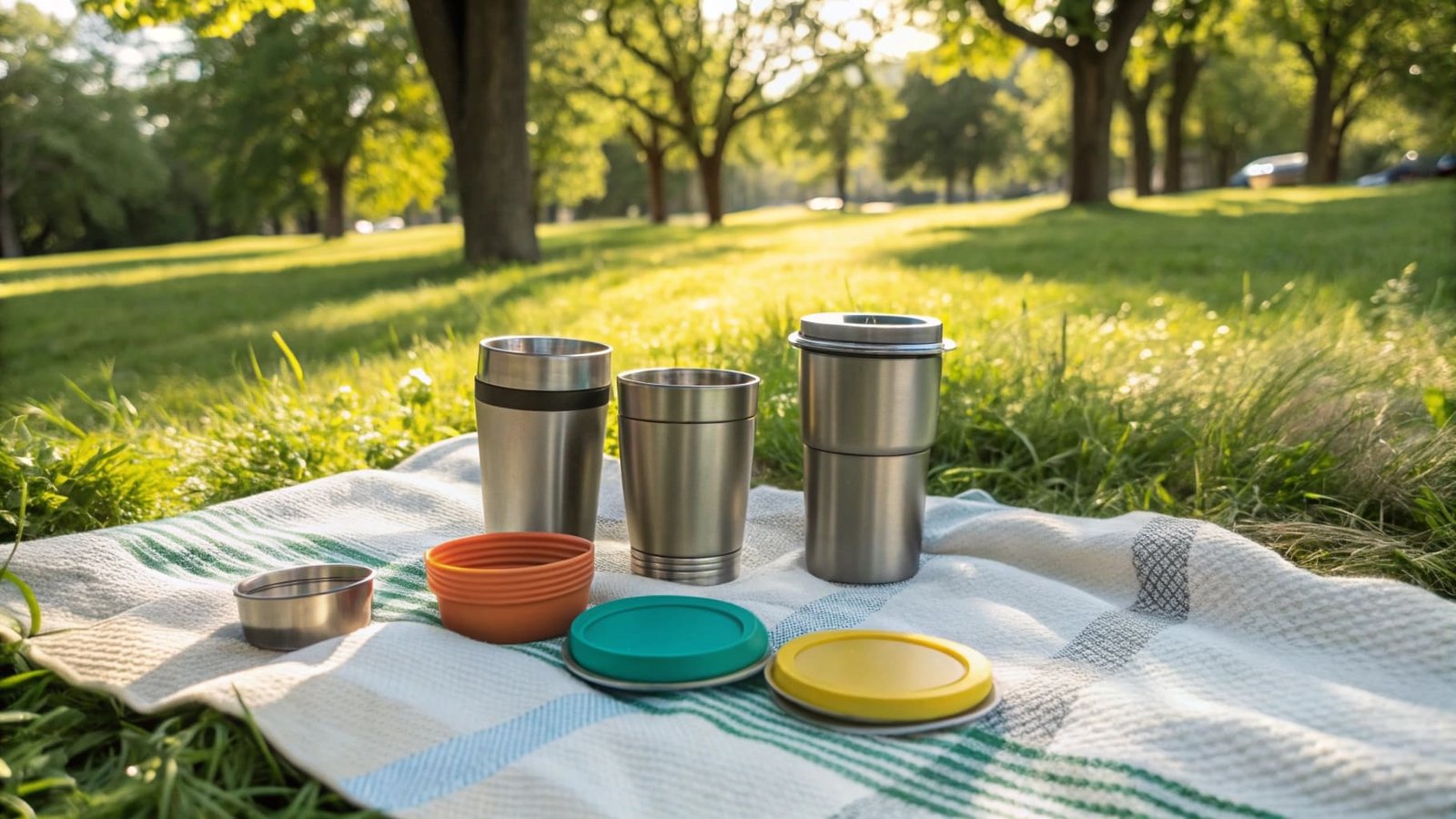
Promotional products need to earn their place in a customer's daily life. A branded silicone stretch lid sits in someone's kitchen. They see your logo every single day. That kind of repeat exposure is hard to buy with a tote bag or a pen. The rest of this article breaks down the material, the safety profile, and the branding mechanics so you can make a confident buying decision.
Can You Stretch Silicone?
Most buyers assume silicone is rigid. That assumption costs them good product opportunities. Silicone stretch lids are built around one core material property: elasticity.
Food-grade silicone can stretch up to three to four times its original diameter without breaking or deforming.1 This means one lid fits multiple container sizes. That versatility is a direct selling point for wholesale buyers who want a single SKU that works across a wide product range.

This stretch capability comes from silicone's molecular structure. The Si-O backbone in silicone gives it flexibility that most plastics simply don't have. When you pull a silicone lid over a bowl or a jar, it grips the rim and holds a seal. When you remove it, it returns to its original shape without damage.
For wholesale buyers, this matters in two ways.
First, it reduces SKU complexity. You don't need five lid sizes. One or two sizes cover most containers your customers use at home.
Second, it adds perceived value. When a customer stretches a lid over an odd-shaped container and it seals perfectly, that feels like a premium product. That feeling transfers to your brand.
Here is a quick breakdown of how silicone stretch lid sizing typically works in wholesale:
| Lid Size | Fits Container Diameter | Common Use Case |
|---|---|---|
| Small (approx. 3–4 in) | Cups, mugs, cans | Beverages, small bowls |
| Medium (approx. 5–6 in) | Standard bowls, pots | Leftovers, meal prep |
| Large (approx. 7–9 in) | Large bowls, pans | Batch cooking, storage |
When sourcing for a branded campaign, the shore hardness of the silicone matters. A hardness rating of 40A to 60A gives the best stretch performance. Too soft and the lid loses its grip. Too hard and the stretch range shrinks. Always ask your supplier to confirm the shore hardness before placing a large order.
Does Silicone Expand When Hot?
This question comes up every time I talk to a new buyer. They want to know if the branded lid will warp, shrink, or change shape after a dishwasher cycle.
Silicone does not expand in a way that affects performance. The volumetric change between -40°C and 230°C is typically under 3%.2 That is a negligible shift for any kitchen application.
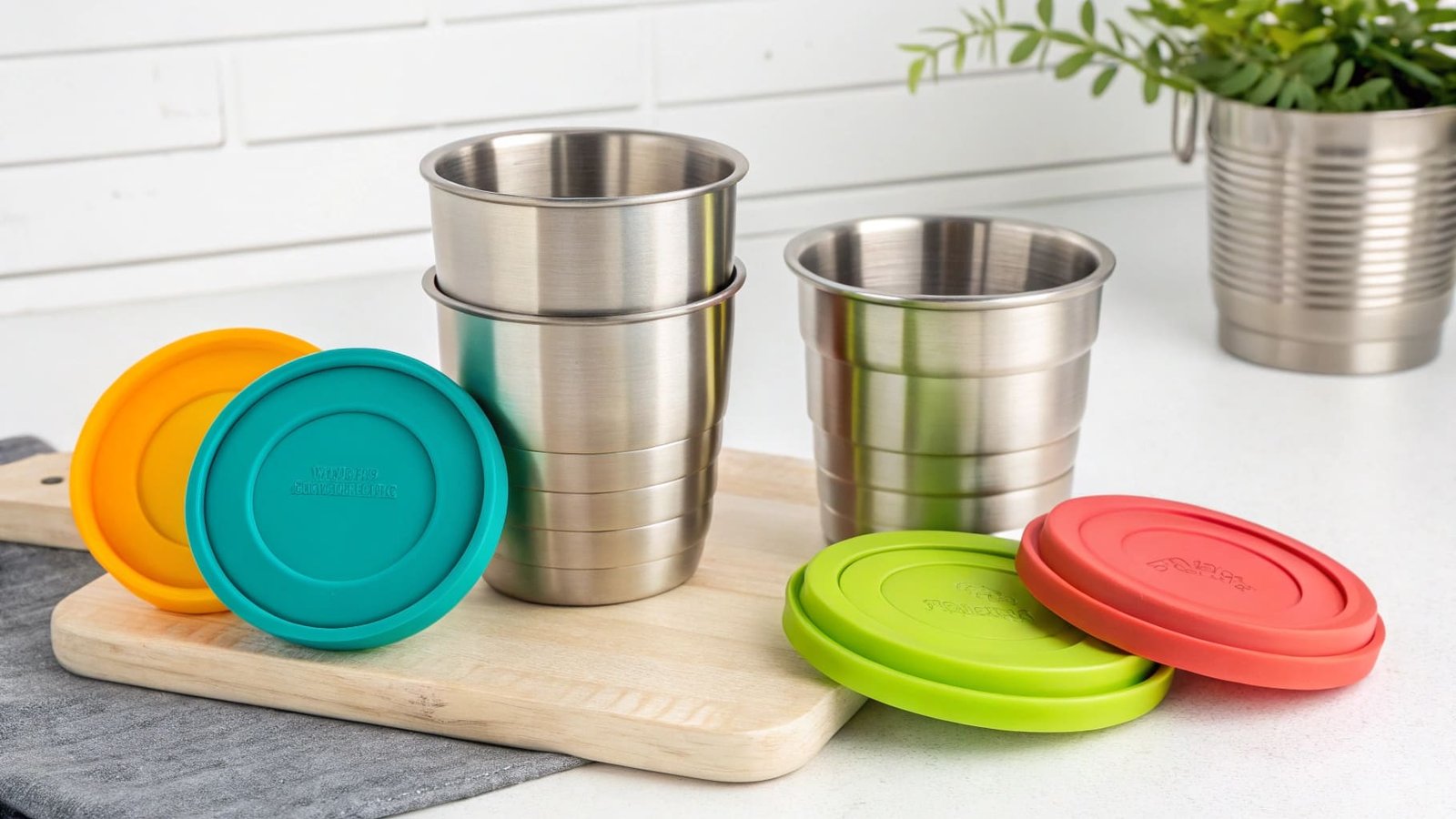
This thermal stability is one of silicone's most important properties for wholesale buyers. It means the product performs reliably in microwave ovens, dishwashers, freezers, and conventional ovens. Most food-contact environments your end customer will encounter fall well within that temperature range.
Here is a simple comparison of how silicone performs against common alternative materials across temperature conditions:
| Material | Safe Temp Range | Microwave Safe | Dishwasher Safe | Freezer Safe |
|---|---|---|---|---|
| Food-grade silicone | -40°C to 230°C | Yes | Yes | Yes |
| Standard plastic (PE) | -20°C to 80°C | No | Limited | Yes |
| Rubber | -30°C to 120°C | No | No | Limited |
| Fabric/beeswax wraps | Limited | No | No | Limited |
For a wholesale promotional campaign, this data is your sales argument. When you present branded silicone lids to a retail buyer or a corporate gifting manager, you can point to these numbers. The product works in every kitchen scenario. That daily-use reliability keeps your brand in front of the consumer far longer than a product that sits in a drawer after the first bad experience.
One practical note: the branding on silicone holds through heat cycles as well. Debossed logos and laser-engraved marks do not fade in the dishwasher.3 Screen-printed designs can wear over time with heavy washing. For long-term brand visibility, debossing or laser engraving is the stronger choice.
Are Silicone Lids Healthy?
Health and safety concerns are the first thing a cautious buyer raises. Especially in North American and European markets, end consumers read labels and ask questions. If your branded product cannot answer those questions clearly, it becomes a liability.
Food-grade silicone lids that carry FDA approval and LFGB certification contain no BPA, no phthalates, and no harmful chemical additives.4 They are inert. They do not leach into food or liquids, even at high temperatures.
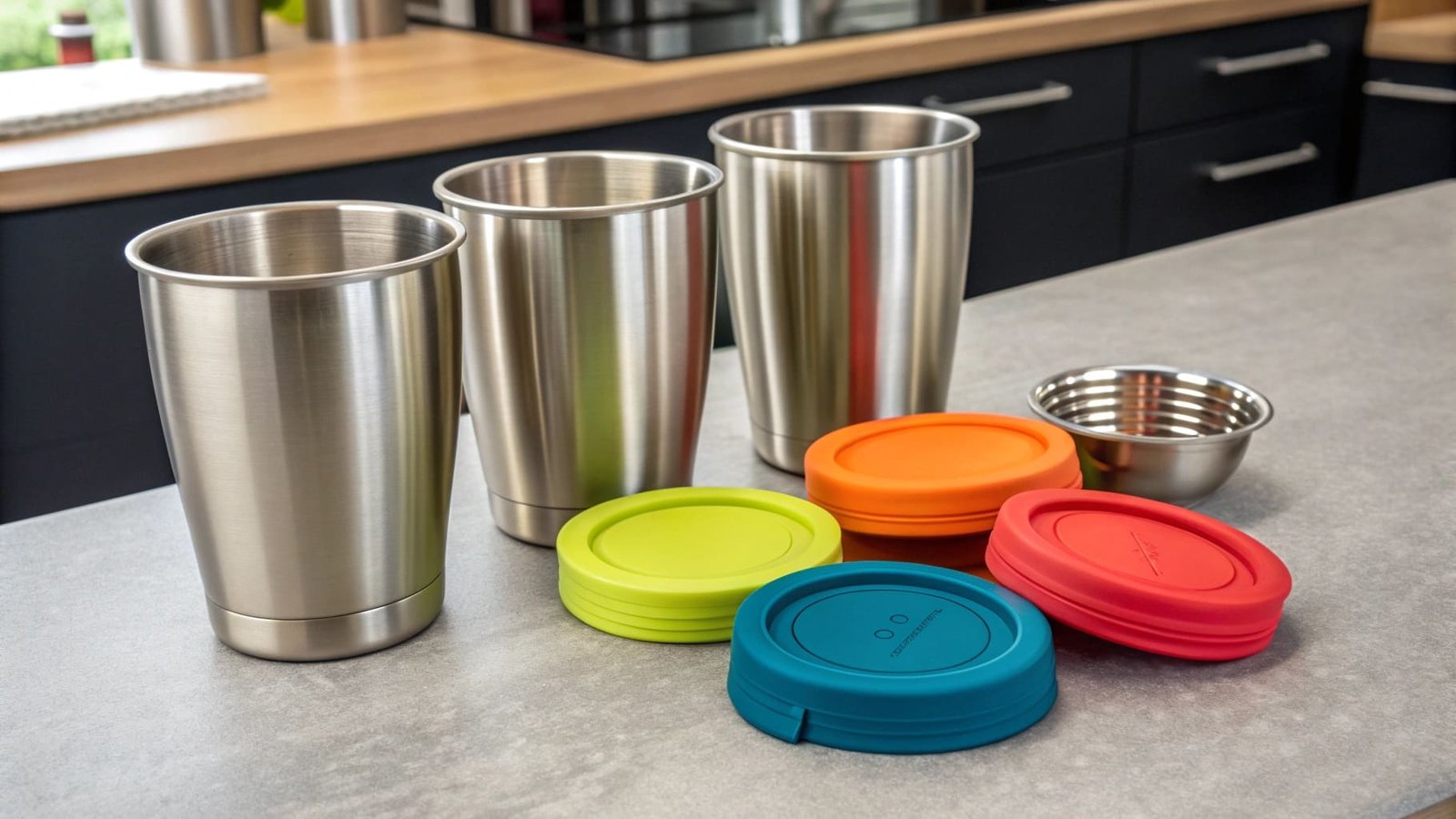
This clean safety profile is not just a compliance checkbox. It is an active marketing asset for your promotional campaign. Here is why that matters for wholesale buyers.
Corporate buyers in markets like the United States, Canada, Germany, and the Netherlands are under growing pressure to align their branded merchandise with ESG commitments.5 Plastic reduction is part of that. When you hand a procurement officer a product that is reusable, BPA-free, dishwasher-safe, and certified to international food-safety standards, you are giving them something they can put in front of their own stakeholders without hesitation.
The certifications you should look for when sourcing are:
| Certification | Market | What It Confirms |
|---|---|---|
| FDA (21 CFR 177.2600) | United States | Food-contact safety for silicone |
| LFGB (§ 30, 31) | Germany / EU | Food-grade material compliance |
| REACH | European Union | No restricted chemical substances |
| ROHS | Global / EU | No hazardous substances in materials |
From my experience working with wholesale buyers, the buyers who include these certifications in their product documentation close deals faster. It removes a major objection before the conversation even starts.
There is also a sustainability narrative available here. A single silicone stretch lid replaces hundreds of single-use plastic wraps over its lifespan.6 In markets where plastic bag and wrap bans are already in effect or being introduced, that narrative has real consumer pull. Branded silicone lids positioned as "green promotional gifts" land well in corporate gifting programs, trade show giveaways, and retail loyalty campaigns.
For wholesale campaigns specifically, the minimum order quantity for custom-branded silicone lids typically sits between 3,000 and 5,000 units. Color consistency across that run is a quality control point worth verifying early. Ask your supplier for a pre-production sample and a color swatch match before approving the production batch.
Conclusion
Silicone stretch lids stretch far, handle heat, and meet food-safety standards. They hold branding well and land daily in front of consumers. For wholesale promotional campaigns, they are a practical, defensible choice.
-
"[PDF] Physical Properties of Maxillofacial Elastomers Under Conditions of ...", https://deepblue.lib.umich.edu/bitstreams/afe9542b-604c-44c6-b943-64f2f551a13c/download. Polymer-property studies report elongation-at-break values for silicone rubber commonly in the several-hundred-percent range, supporting the general feasibility of substantial stretching before rupture. Evidence role: general_support; source type: paper. Supports: Typical silicone elastomers can have elongation-at-break values in the several-hundred-percent range.. Scope note: This supports the material class generally, not the exact stretch ratio of a specific lid design. ↩
-
"Thermal expansion", https://en.wikipedia.org/wiki/Thermal_expansion. Published coefficients of thermal expansion for silicone elastomers provide the basis for estimating dimensional change over a specified temperature interval. Evidence role: statistic; source type: paper. Supports: Published thermal-expansion coefficients can be used to estimate dimensional or volumetric change in silicone across temperature ranges.. Scope note: Such sources may not directly support the stated under-3% volumetric figure, which should be checked against the cited coefficient and product formulation. ↩
-
"Laser Marking on Silicones", https://www.susonity.com/US/en/knowledge-hub/plastics-printing/sustainability/silicone-laser-marking. Studies and technical references on silicone marking distinguish permanent surface modification from applied inks, supporting the expectation that engraved or molded marks resist removal better than printed coatings. Evidence role: general_support; source type: research. Supports: Permanent surface modification methods such as engraving or molded debossing can be more durable than applied surface inks.. Scope note: This is contextual support; dishwasher durability still depends on process depth, detergent chemistry, cycle temperature, and product design. ↩
-
"21 CFR 177.2600 -- Rubber articles intended for repeated use. - eCFR", https://www.ecfr.gov/current/title-21/chapter-I/subchapter-B/part-177/subpart-C/section-177.2600. Food-contact regulations such as FDA 21 CFR § 177.2600 and German LFGB-related testing frameworks address extractables and migration from rubber or silicone food-contact articles, supporting the need to verify chemical safety through compliance testing. Evidence role: general_support; source type: government. Supports: Food-contact regulations and migration tests set limits for substances that may transfer from silicone rubber articles into food.. Scope note: These frameworks do not prove that every silicone lid is BPA-free or phthalate-free unless the specific product has compliant test reports. ↩
-
"Integrating Responsible Business Conduct in Public Procurement", https://www.oecd.org/en/publications/integrating-responsible-business-conduct-in-public-procurement_02682b01-en.html. International sustainability frameworks and recent corporate reporting rules increasingly require or encourage organizations to account for value-chain environmental impacts, providing context for ESG pressure on procurement decisions. Evidence role: historical_context; source type: institution. Supports: Institutional ESG and sustainability frameworks increasingly emphasize value-chain impacts and procurement decisions.. Scope note: This supports the broader procurement context and does not directly measure demand for branded silicone lids. ↩
-
"Parametric life cycle assessment modeling of reusable and ...", https://css.umich.edu/publications/research-publications/parametric-life-cycle-assessment-modeling-reusable-and-single. Research on reusable food-storage alternatives shows that repeated use can reduce demand for single-use plastic films, supporting the substitution logic behind reusable silicone lids. Evidence role: general_support; source type: research. Supports: Reusable food-storage products can reduce reliance on single-use plastic films when they are used repeatedly over their lifespan.. Scope note: The specific figure of hundreds of wraps requires explicit assumptions about frequency of use and product lifespan. ↩