Can Small Seal Components Fit 17oz Tumblers for Bulk Replacement Orders?
You ordered a batch of 17oz tumblers. The seals failed. Now your customers are unhappy. This problem is more common than you think, and it costs real money.
Small seal components can fit 17oz tumblers for bulk replacement orders, but only when three conditions are met: lid design standardization, correct material selection, and tight dimensional control.1 Without all three, you will face misfit parts, leaks, and wasted inventory.
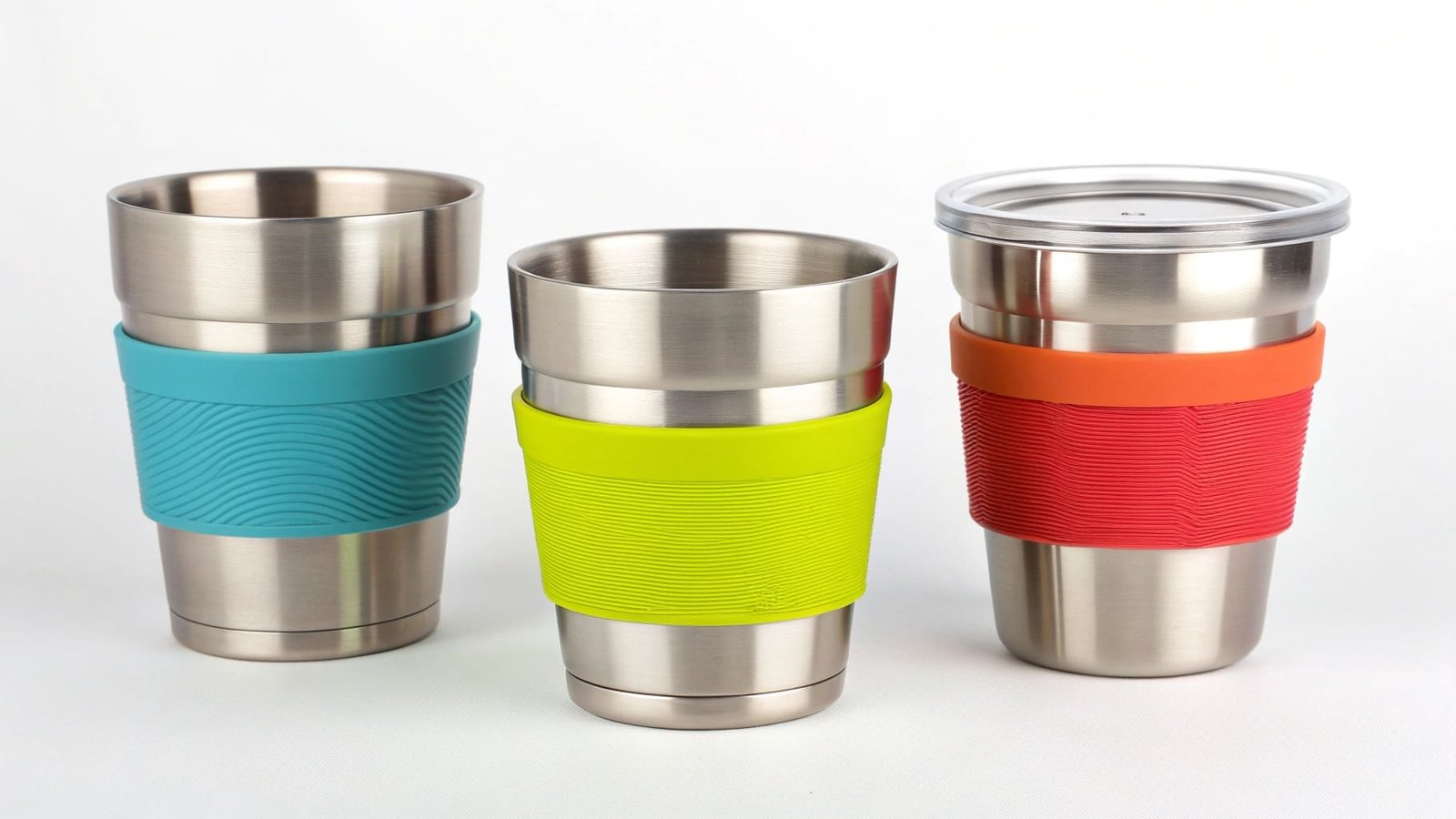
Getting replacement seals right is not just a technical task. It is a business decision. The seal is a small part, but it touches your brand reputation every single day. If you get it wrong, customers notice fast. If you get it right, they keep buying. Here is what I have learned from working with bulk tumbler seal orders, and what you need to know before placing your next purchase.
What Can You Use to Seal a Tumbler?
You find a supplier. They send you seals. The seals do not fit. You lose two weeks and pay for shipping twice. This is a fixable problem if you know your materials upfront.
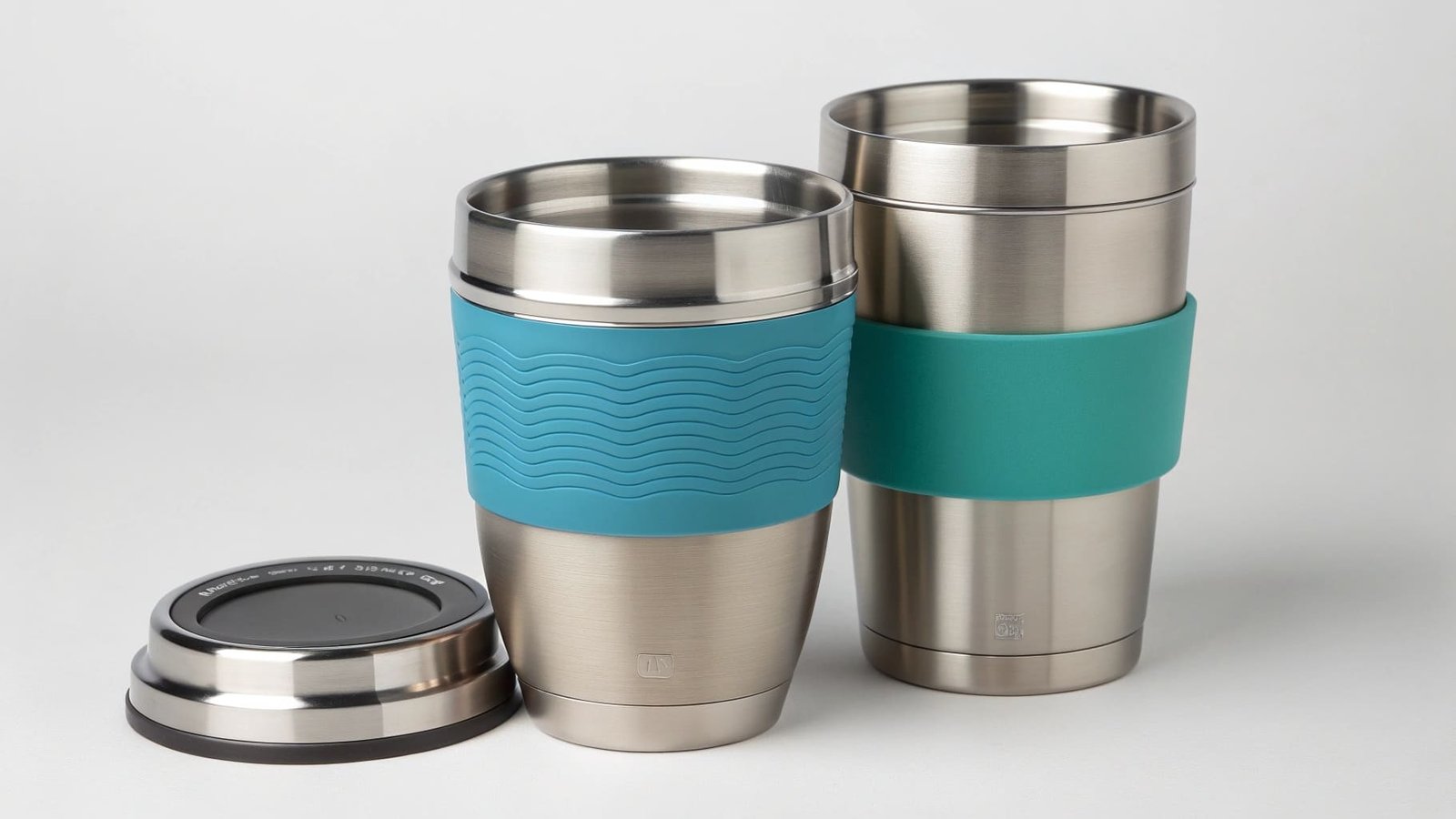
Silicone gaskets are the industry standard for sealing tumblers.2 They stay flexible across a wide temperature range, stop leaks reliably, and meet FDA and LFGB food safety requirements.3 Rubber and TPE materials exist, but they wear faster and hold odors over time.4
Why Silicone Outperforms Other Seal Materials
I have seen buyers try to cut costs by switching to rubber or TPE seals. In almost every case, they come back to silicone within one or two product cycles. The reason is simple: seals touch food and drink directly. Customers notice smell, taste, and texture. A cheaper seal saves a few cents per unit but creates returns, complaints, and brand damage that costs far more.
Here is a direct comparison of the three main seal materials used in tumbler production:
| Material | Temperature Range | Odor Resistance | Food Safety Certification | Lifespan |
|---|---|---|---|---|
| Silicone | -40°C to 230°C | Excellent | FDA, LFGB | Long |
| Rubber | -20°C to 100°C | Poor | Varies | Medium |
| TPE | -30°C to 120°C | Moderate | Varies | Medium |
Silicone wins across every category that matters to a brand selling premium tumblers. The flexibility of silicone also means it forms a tighter seal against both plastic and stainless steel lids.5 This matters because the seal bridges two different materials and must compress evenly without cracking or deforming over time.
For bulk replacement orders specifically, silicone holds its shape through repeated washing, dishwasher cycles, and daily use. This extends the replacement interval and reduces how often your end customers need to reorder. That is a quality signal your buyers will remember.
Which Two Materials Can Be Used to Make a Tumbler?
Your customer picks up a tumbler. It feels cheap. They put it down and never come back. The body material sets the first impression before the seal ever does its job.
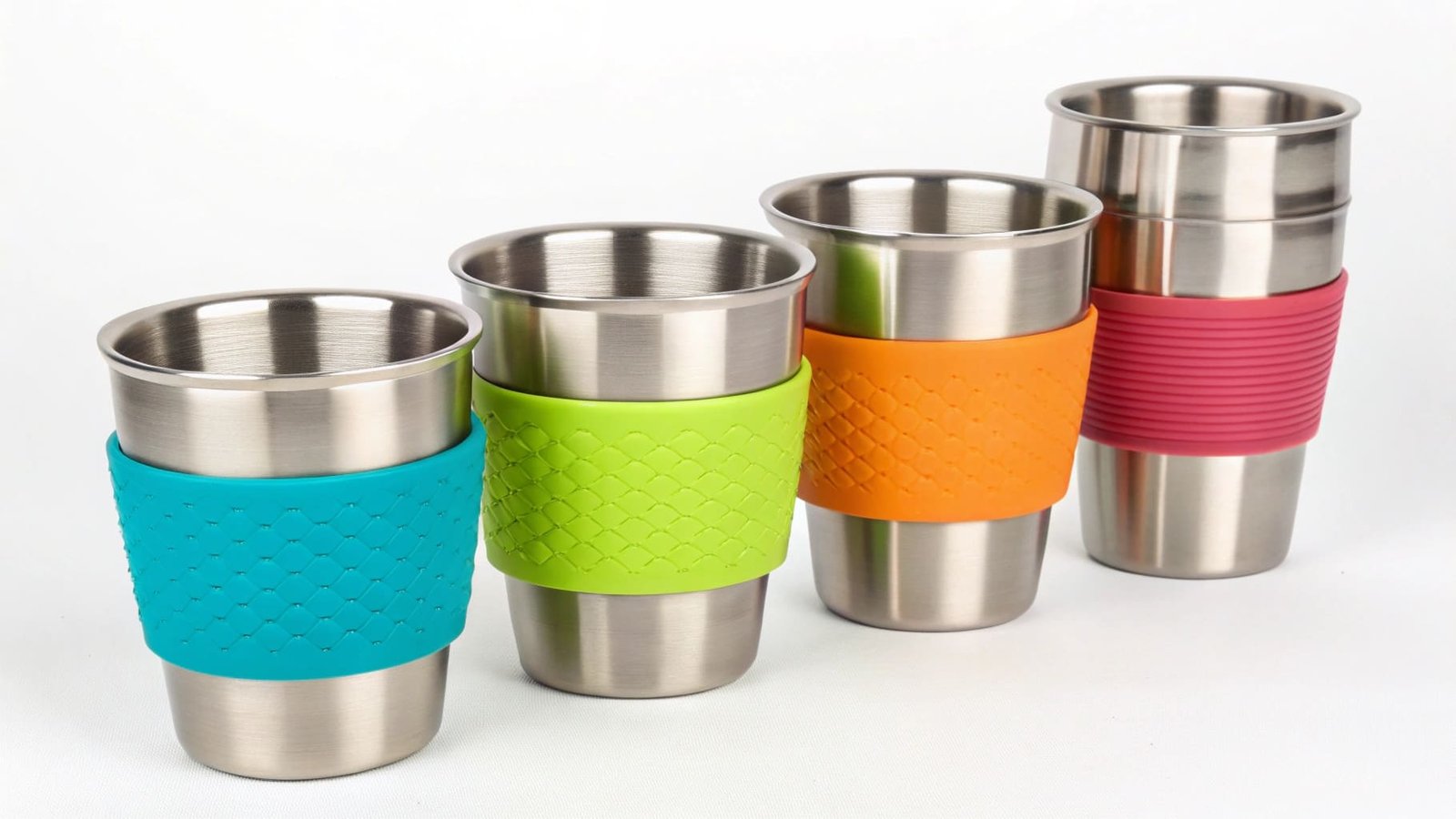
Stainless steel and BPA-free plastic are the two main materials used to make tumblers.6 Stainless steel delivers premium insulation and a durable feel. BPA-free plastic is lightweight and affordable, serving a different price point and use case.
How Tumbler Body Material Affects Seal Selection
I always tell buyers: the body material changes the product, but the seal material stays silicone. This is a point that surprises many people new to tumbler sourcing. No matter whether the tumbler body is stainless steel or plastic, the seal is almost always silicone. The reason is that the seal must bridge the contact point between the lid and the body. Both stainless steel and plastic expand and contract at different rates with temperature change.7 Silicone flexes enough to maintain a leak-free contact across both materials under changing conditions.
Here is how the two body materials compare across the most common buying criteria:
| Feature | Stainless Steel | BPA-Free Plastic |
|---|---|---|
| Insulation Performance | High | Low to Medium |
| Weight | Heavier | Light |
| Durability | Very High | Medium |
| Price Point | Premium | Budget to Mid |
| Seal Compatibility | Silicone | Silicone |
| Target Market | Premium buyers | Everyday use buyers |
For B2B buyers, this distinction matters when building a product line. If you sell into the premium segment, stainless steel with a high-grade silicone seal communicates quality clearly. If you sell into the volume segment, BPA-free plastic with the same silicone seal standard still meets safety expectations while keeping your unit cost low. The seal specification does not need to change between the two. That is one less variable to manage in your supply chain.
How to Create a Custom Tumbler?
You design a custom tumbler. It looks great. Then your first batch of replacement seals does not match any standard size. Now you have a supply chain problem that your original design created. I have seen this happen more than once.
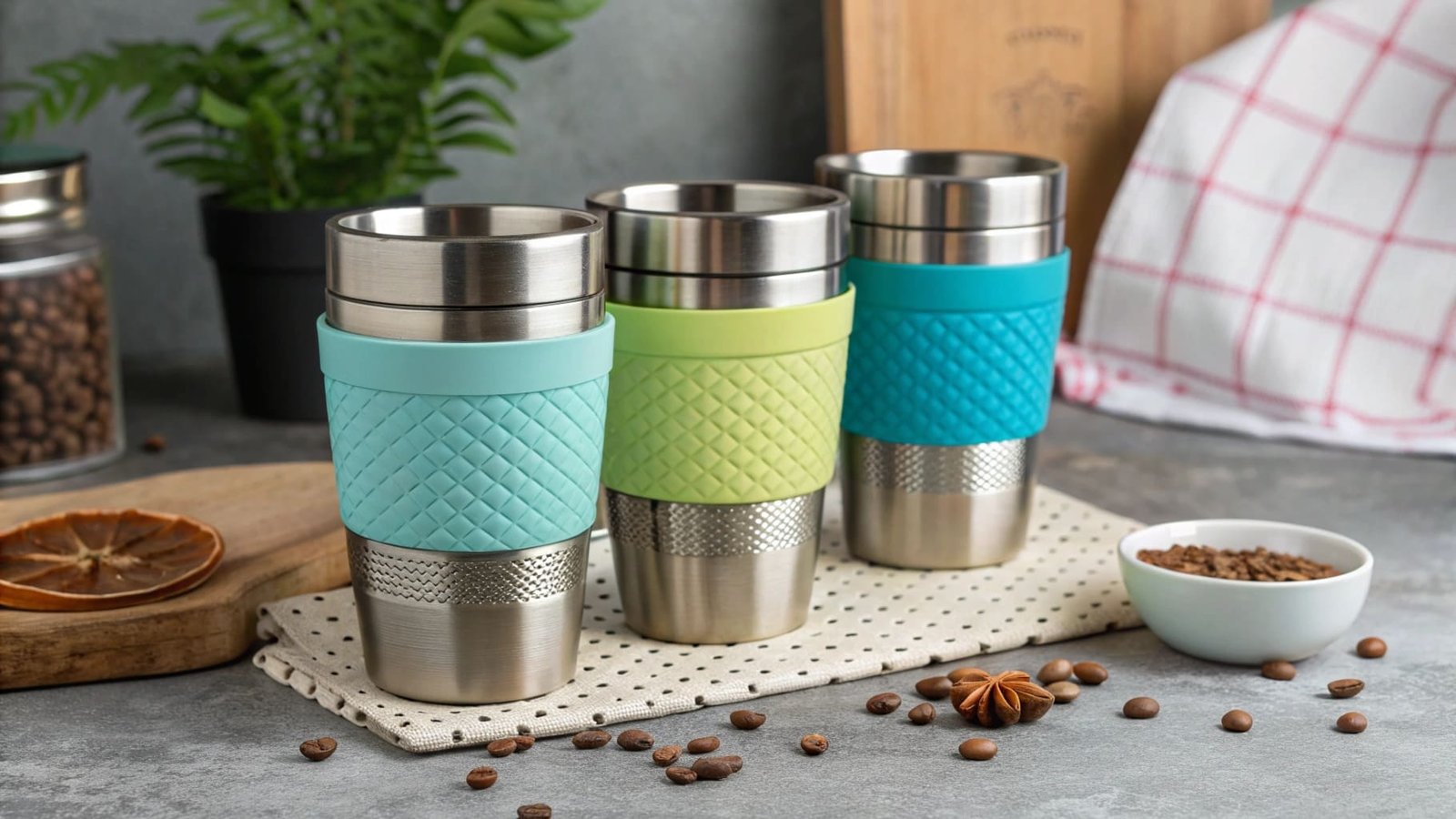
Custom tumblers require seal dimensions to be standardized during the design phase. If you design around common seal sizes from the start, multiple suppliers can produce replacement parts consistently. This reduces minimum order quantities and keeps replacement parts available long term.
The Step-by-Step Process for Designing a Custom Tumbler with Sourcing in Mind
Building a custom tumbler is not only a design task. It is a sourcing strategy. The decisions you make at the design stage determine how easy or hard your supply chain will be for years after launch. I approach custom tumbler projects with this in mind from day one.
Here is a breakdown of the key steps and what to consider at each stage:
| Step | Action | Why It Matters |
|---|---|---|
| Define the lid system | Choose a lid type that uses standard seal groove dimensions | Avoids proprietary seal sizes that limit your supplier options |
| Set seal specifications | Lock down inner diameter, outer diameter, and cross-section size early | Allows multiple suppliers to quote and produce the same part |
| Request sample seals | Test fit on physical prototype before finalizing tooling | Catches dimensional errors before they become expensive mold changes |
| Verify certifications | Confirm FDA or LFGB compliance from your seal supplier | Protects your brand and meets import requirements in North America and Europe |
| Plan replacement MOQ | Confirm that your seal supplier can fulfill small repeat orders | Replacement parts are often needed in small quantities across a long sales cycle |
| Document specifications | Store all seal dimensions and material grades in writing | Enables fast switching between suppliers if your primary source has issues |
Smart brands treat the replacement seal order as part of their product strategy, not an afterthought. When your B2B buyers see that you have a clear replacement parts program with documented specs and consistent supply, it becomes a selling point. It tells them that you have thought past the first sale and built a product that supports their business long term.
The minimum order quantity for replacement seals is also worth planning for early. Standard seal dimensions typically qualify for lower MOQs because suppliers can run them alongside other orders.8 Custom non-standard sizes often require higher MOQs and longer lead times. Choosing standard dimensions at the design stage directly reduces your procurement cost and risk on every future replacement order.
Conclusion
Seal compatibility for 17oz tumblers comes down to standardized dimensions, silicone material, and early design planning. Get these three right, and your bulk replacement orders become simple and reliable.
-
"Understanding Gasket Tolerances and Their Impact on Seals", https://www.durlon.com/understanding-gasket-tolerances-and-their-impact-on-seals/. A seal-design handbook or engineering reference should be cited here to support that gasket and O-ring performance depends on groove geometry, material selection, compression, and manufacturing tolerances; the evidence would describe sealing principles rather than 17-ounce tumbler parts specifically. Evidence role: mechanism; source type: research. Supports: Seal fit and leakage performance depend on groove geometry, material behavior, and dimensional tolerances.. Scope note: Contextual support only; general seal-design evidence may not test the exact tumbler size discussed. ↩
-
"Food Grade (FDA) Rubber Gaskets & Seals", https://www.customgasketmfg.com/food-grade-gaskets/. An institutional or technical materials source should be cited here to support that silicone elastomers are commonly used for food-contact gaskets and seals, including beverage-container applications; the source may establish common material use without proving it is the single industry standard for all tumblers. Evidence role: general_support; source type: institution. Supports: Silicone elastomers are commonly used for food-contact gaskets and seals in beverage or kitchenware applications.. Scope note: Contextual support only; broad food-contact seal usage does not prove universal adoption across the tumbler industry. ↩
-
"Food Packaging & Other Substances that Come in Contact ...", https://www.fda.gov/food/food-ingredients-packaging/food-packaging-other-substances-come-contact-food-information-consumers. A food-contact regulatory source and a materials reference should be cited here to support that appropriately formulated silicone rubber can be used in food-contact applications and remains flexible over a broad service-temperature range; compliance depends on the specific formulation and test documentation. Evidence role: general_support; source type: government. Supports: Food-contact silicone materials may be evaluated under FDA and European food-contact frameworks, and silicone rubber is known for broad service-temperature flexibility.. Scope note: The source would not verify that every silicone gasket offered by a supplier meets FDA or LFGB requirements. ↩
-
"Synergistic Effects of Multiple Environmental Factors on ... - PMC", https://pmc.ncbi.nlm.nih.gov/articles/PMC10647683/. A comparative elastomer study should be cited here to support that silicone, rubber, and thermoplastic elastomers can differ in aging resistance, compression set, and odor-related sorption behavior; the applicability depends on the exact polymer formulation and use conditions. Evidence role: general_support; source type: paper. Supports: Comparative elastomer data may show differences in aging, compression set, and odor or sorption behavior between silicone, rubber, and TPE materials.. Scope note: Material performance varies by grade, additives, curing system, and exposure conditions. ↩
-
"design and analysis of silicone gasket sealing for waterproof", https://rex.libraries.wsu.edu/view/pdfCoverPage?instCode=01ALLIANCE_WSU&filePid=13338221280001842&download=true. A seal-engineering reference should be cited here to support that elastomeric gaskets seal by deforming under compression and maintaining contact pressure against mating surfaces; the source would explain the mechanism rather than compare all tumbler lid materials directly. Evidence role: mechanism; source type: research. Supports: Elastomeric seals work by elastic deformation and contact pressure, allowing them to conform to mating surfaces.. Scope note: Contextual support only; actual sealing quality also depends on groove design, surface finish, and compression. ↩
-
"Steel, Glass, and/or Plastic Bottles: What is the best choice?", https://www.canr.msu.edu/news/steel_glass_and_or_plastic_bottles_what_is_the_best_choice. A consumer-product materials or food-contact materials source should be cited here to support that reusable drinkware commonly uses stainless steel and plastic materials; the source may not establish that these are the only or universally dominant tumbler materials. Evidence role: general_support; source type: institution. Supports: Reusable drinkware commonly uses stainless steel and food-contact plastics as body materials.. Scope note: Contextual support only; glass, ceramic, and other materials may also be used in drinkware. ↩
-
"Coefficient of Linear Thermal Expansion of Polymers ... - PMC", https://pmc.ncbi.nlm.nih.gov/articles/PMC12693757/. A materials-property database should be cited here to support that stainless steel and common plastics have different coefficients of thermal expansion, which can affect dimensional fit under temperature change; the exact effect depends on the specific plastic and part geometry. Evidence role: mechanism; source type: research. Supports: Stainless steel and common plastics exhibit different thermal expansion coefficients, so temperature changes can alter component fit.. Scope note: The source would provide material-property context, not direct measurements on the article's tumbler design. ↩
-
"Benefits of implementing economies of scale", https://www.edcparis.edu/en/blog/benefits-implementing-economies-scale. A manufacturing or supply-chain study should be cited here to support that standardized components can reduce setup costs, improve economies of scale, and simplify procurement; it would support the economic logic rather than prove a specific MOQ policy for seal suppliers. Evidence role: general_support; source type: paper. Supports: Standardized components can reduce setup costs, enable production aggregation, and lower procurement complexity.. Scope note: Supplier-specific MOQ decisions may also depend on tooling, material availability, labor, and commercial policy. ↩