What Makes Rubber Lid Seals Essential for Leak-Proof Tumbler Production?
Customers return tumblers for one reason above all others: leaks. One bad seal ruins trust, sales, and your brand reputation fast.
A rubber lid seal blocks fluid from escaping between a tumbler lid and its rim. It works by compressing against the rim when the lid closes. This creates a tight barrier. The right material, shape, and hardness level determine whether that barrier holds or fails.
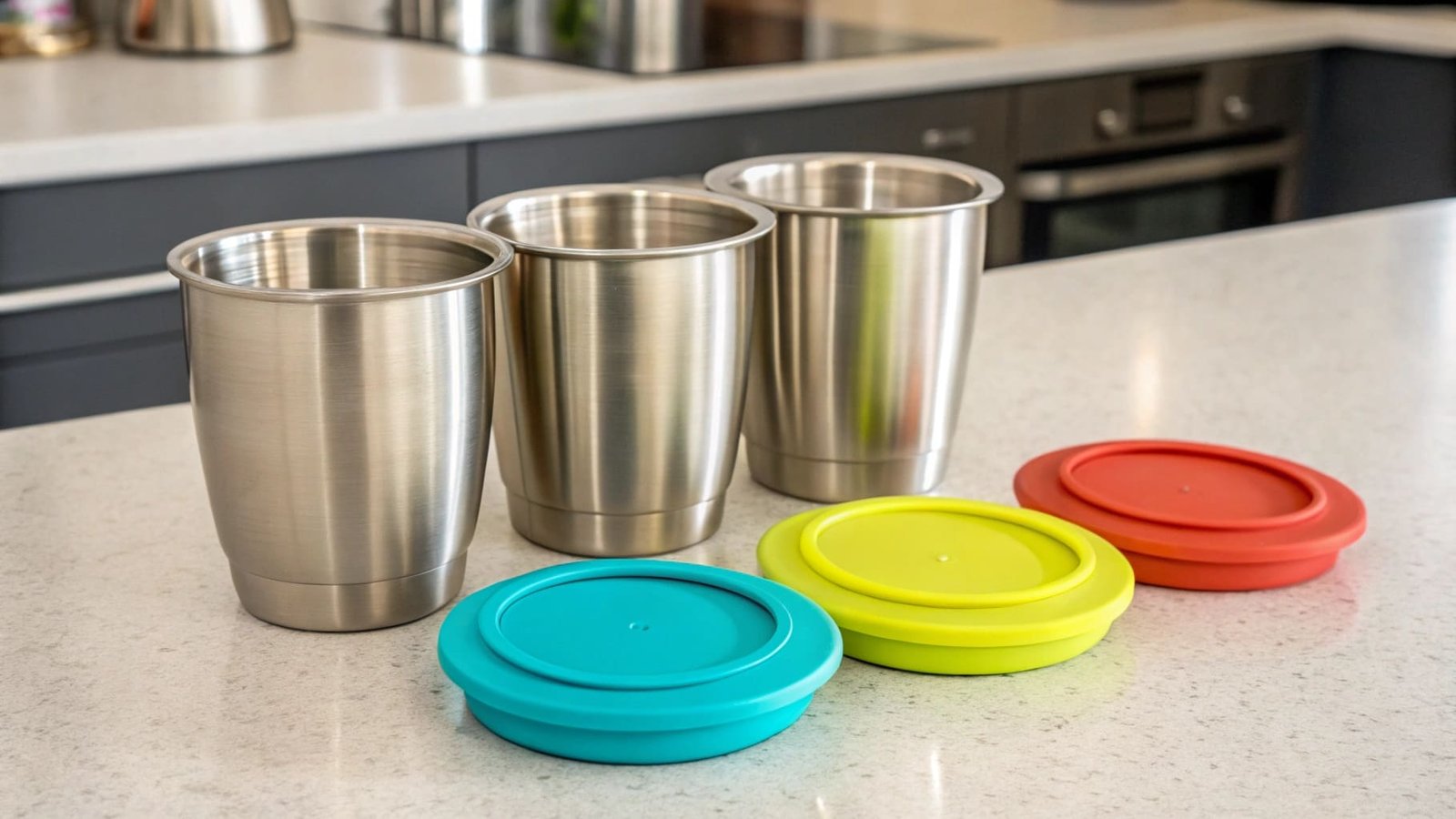
Most tumbler brands I speak with understand the lid design. But very few dig into the seal itself. That gap in knowledge is where quality problems start. If you source tumblers or manufacture them, the seal is not a small part. It is the part that your customers notice most when it fails. Let me walk you through what actually matters.
What Seal Prevents Fluid Leakage Between Parts?
A leaking tumbler does not just frustrate customers. It destroys product reviews overnight and creates costly returns that eat into your margins.
The seal that prevents fluid leakage between a tumbler lid and its body is called a lid gasket or lid seal ring. It sits inside the lid and presses against the rim of the tumbler when the lid is closed. This compression blocks any fluid path between the two parts.
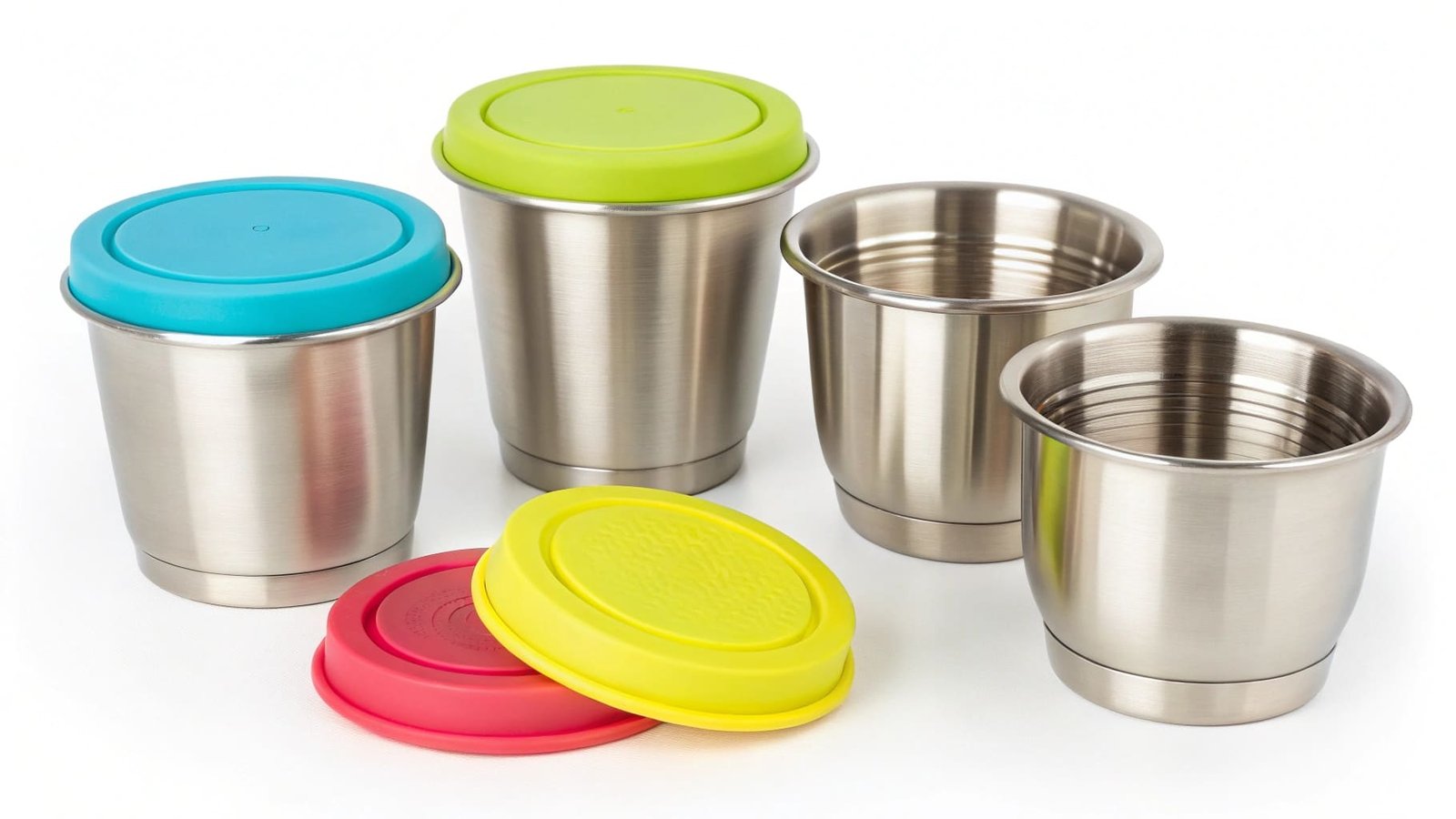
How Compression Sealing Actually Works
The seal works through one simple principle: compression. When the lid closes, the rubber seal is squeezed between the lid and the rim. This squeeze fills all tiny gaps that would otherwise let liquid pass through.
The key word here is calibration. The compression must land in the right range. Here is what happens when it falls outside that range:
| Compression Level | What Happens |
|---|---|
| Too low | Lid leaks, especially under pressure or when tipped |
| Just right | Clean seal, easy to open, long seal life |
| Too high | Lid is hard to close, seal deforms over time, gasket cracks |
The right compression depends on three things: the Shore hardness of the rubber, the cross-sectional size of the seal, and how tight the lid threads are.1 I always tell buyers to check all three together. Changing one without adjusting the others breaks the balance.
For tumbler applications, a Shore A hardness between 40 and 60 works best.2 Below 40A, the seal is too soft and loses shape quickly. Above 60A, it becomes too stiff and does not compress well enough to block fine gaps.
The seal profile also matters. O-ring profiles seal well under axial pressure. Flat gasket profiles cover larger surface areas. Each has a place depending on lid design. What you should never do is swap one profile for another without testing the fit first.
How Are Bottle Caps Sealed?
Many buyers assume the lid thread does all the sealing work. That assumption leads to sourcing decisions that result in leaking products.
Bottle caps and tumbler lids are sealed by combining two elements: a mechanical closure and a soft rubber seal.3 The closure, such as a screw thread or snap fit, holds the lid in place. The rubber seal fills the gap that the closure alone cannot close tightly enough.
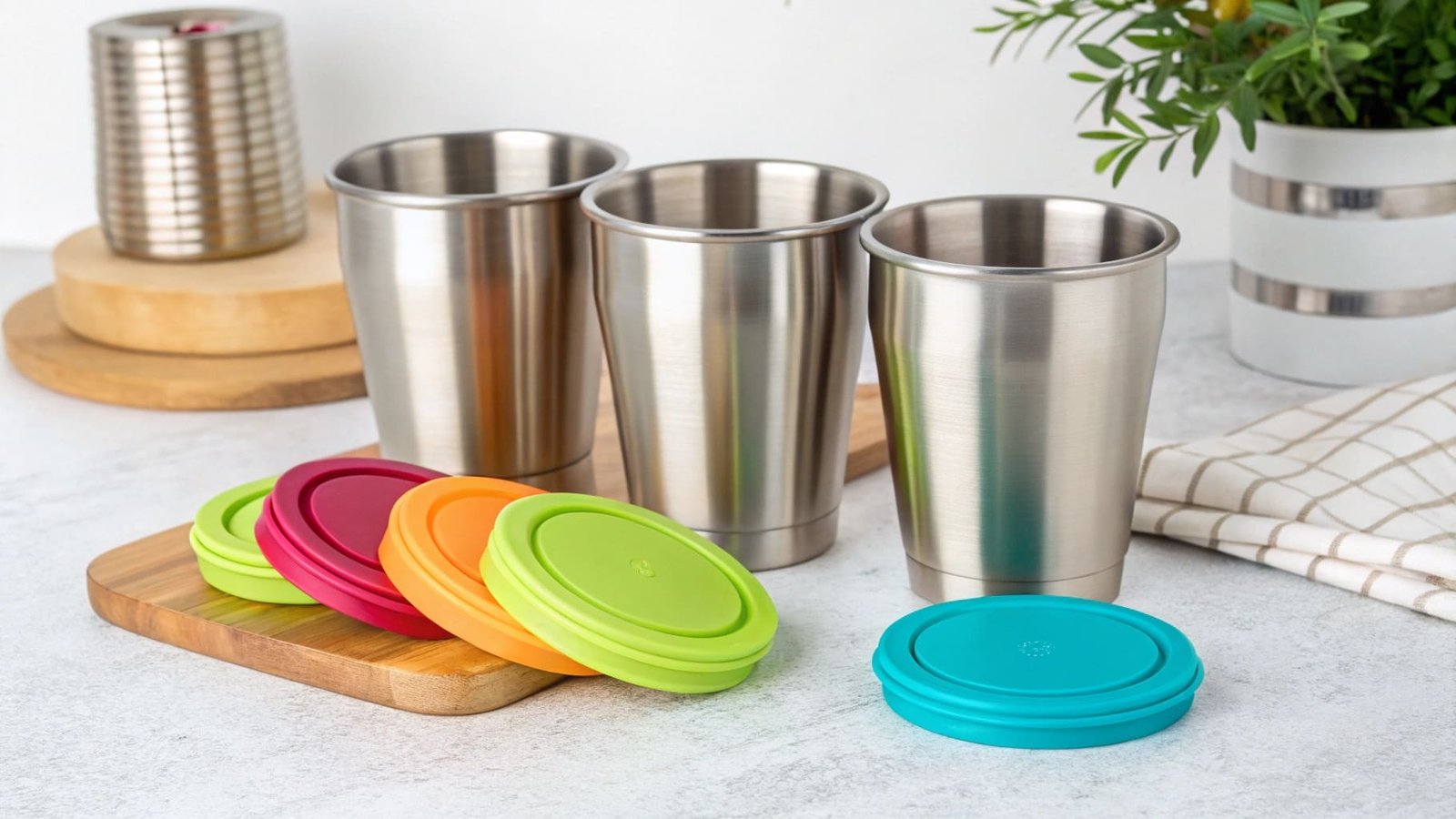
The Full Sealing System in a Tumbler Lid
A tumbler lid is not just a cap. It is a small system with several parts that must work together. Each part affects how well the seal holds.
Here are the main parts of that system and what each one does:
| Part | Role in Sealing |
|---|---|
| Lid thread or snap mechanism | Holds the lid in position and applies closing force |
| Rim flatness | Gives the seal an even surface to press against |
| Lid gasket or seal ring | Fills the gap and blocks fluid |
| Material compatibility | Prevents swelling or shrinking that breaks the seal |
I have seen cases where the gasket was perfect but the rim had a slight warp. That warp was less than half a millimeter. But it was enough to cause a leak on one side of the seal. This is why rim flatness tolerance is part of the sealing system, not a separate issue.
Thread precision is the other often-missed factor. If the thread pitch is inconsistent across production batches, the lid stops at a different angle each time.4 That means the compression on the gasket changes from unit to unit. Some lids seal well. Others do not. The inconsistency is the problem.
The materials used for the lid body and the seal must also be compatible.5 Silicone seals work with polypropylene and stainless steel. But certain plastics swell when exposed to hot liquids or cleaning agents. Swelling changes the compression and breaks the seal geometry over time. Always test material combinations under real-use conditions before locking in your sourcing specs.
How to Make a Bottle Cap Not Leak?
You can have a great seal and still end up with a leaking product. The seal only performs as well as the system around it allows.
To make a bottle cap not leak, you need to use the right seal material, ensure the lid closes with consistent compression, and verify that all contact surfaces are flat and clean. Testing under pressure and across temperature ranges confirms real-world performance before the product reaches customers.6
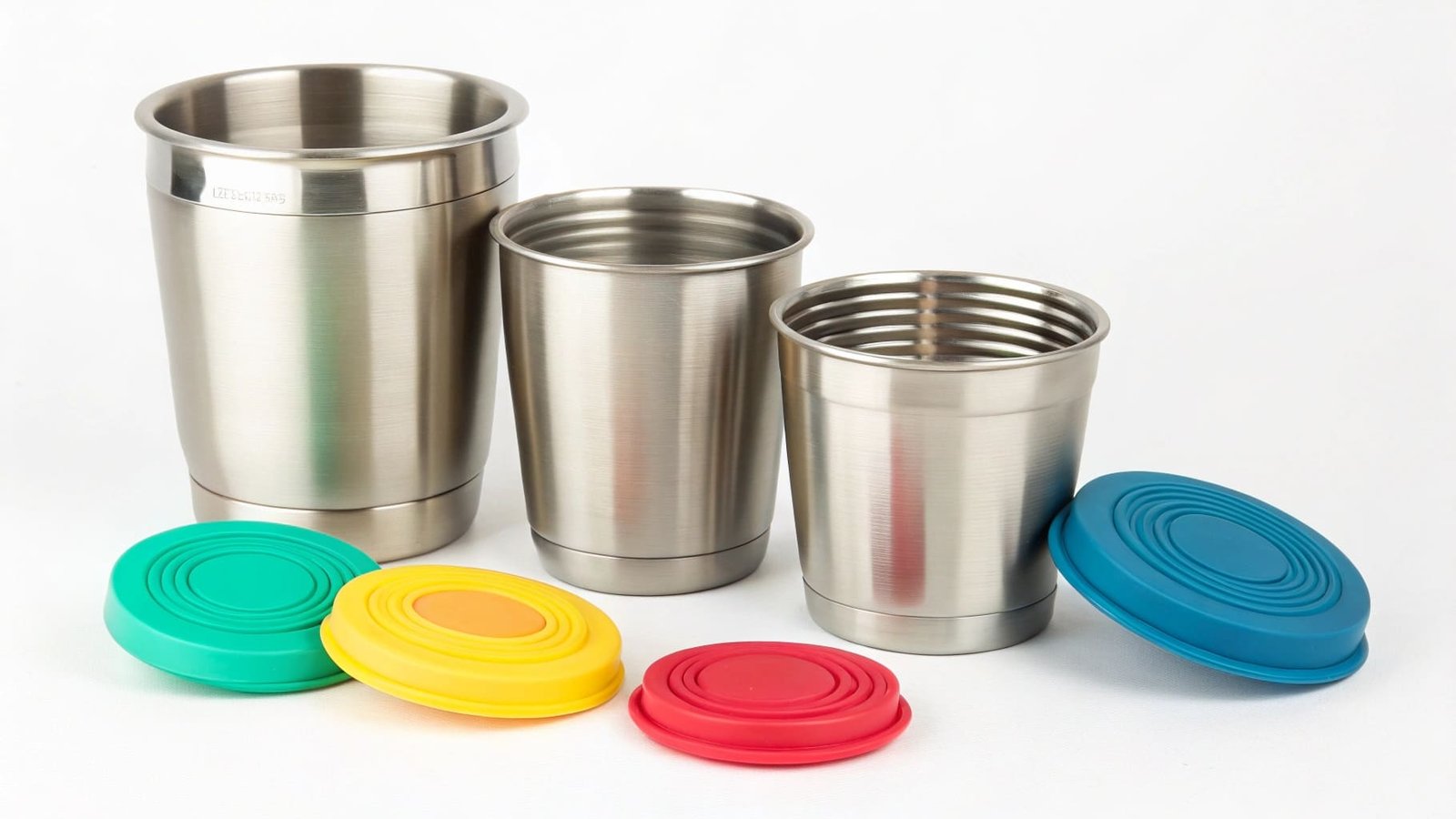
A Practical Checklist for Leak-Proof Tumbler Sourcing
When I work with buyers who are sourcing tumblers or seal components, I walk them through a set of checks. These are not complex. But skipping them is where most quality problems begin.
Material selection:
- Use food-grade silicone or EPDM rubber for the seal
- Confirm FDA or LFGB compliance with actual test reports, not just supplier claims
- Silicone handles temperature swings better than most rubber alternatives7
Seal geometry:
- Match Shore A hardness to your lid design (40–60A for most tumblers)
- Check cross-sectional dimensions against the groove size in the lid
- Smooth surface finish on the seal reduces microscopic gaps
Lid and rim quality:
- Verify rim flatness tolerance with your manufacturer
- Check thread consistency across a sample batch
- Test how the lid sits after 200+ open-and-close cycles
Performance testing:
| Test Type | What It Checks |
|---|---|
| Static leak test | Does it hold when filled and held upright? |
| Inversion test | Does it hold when turned upside down? |
| Pressure test | Does it hold when squeezed or shaken? |
| Temperature cycle test | Does it hold after hot and cold cycles? |
| Aging test | Does it hold after repeated washing? |
I have had buyers tell me they only do the static test before approval. That covers the easiest case. The real failures show up in the pressure test and the aging test. A seal that passes at day one may fail at week four if the material degrades from repeated dishwasher cycles.
One more thing that gets overlooked: the seal must be replaced eventually. Buyers who source tumblers for resale should think about whether their customers can find replacement seals. A tumbler that outlasts its seal and cannot be repaired becomes a return or a complaint. Building in a replacement seal option improves product lifetime and customer satisfaction.
Conclusion
Rubber lid seals control whether your tumbler passes or fails. The right material, geometry, compression, and testing process protect your quality and your brand.
-
"Understanding O-Ring Squeeze, Stretch & Compression", https://www.marcorubber.com/o-ring-groove-design-considerations.htm/. Engineering seal-design materials identify elastomer hardness, cross-sectional geometry, gland fit, and applied compression force as interacting variables that determine seal squeeze and leakage resistance. Evidence role: mechanism; source type: education. Supports: Elastomer seal performance is affected by material hardness, seal geometry, gland dimensions, and the compression force applied by the closure.. ↩
-
"Part 2 - Hennig Gasket & Seals, Inc. Blog", https://www.henniggasket.com/gasket-answers/page/2/. Elastomer design references commonly associate mid-range Shore A rubber compounds with gasket applications requiring both compressibility and shape retention; this contextual evidence supports the 40–60A range as a design guideline rather than a universal tumbler specification. Evidence role: general_support; source type: research. Supports: Mid-range Shore A elastomers are commonly used for flexible gasket applications because they balance conformability and resistance to deformation.. Scope note: Support is contextual because the optimal hardness for a specific tumbler depends on lid geometry, groove dimensions, and closure force. ↩
-
"[PDF] Module 17 - Closures for Glass Containers", https://www.fsis.usda.gov/sites/default/files/media_file/2022-02/17-Closures-of-Glass-Containers.pdf. Packaging references describe threaded or snap closures as applying holding force while liners or gaskets provide the compliant sealing interface that blocks leakage. Evidence role: mechanism; source type: institution. Supports: Packaging closures often use a mechanical cap or thread to apply force and a liner or gasket to create the fluid-tight seal.. ↩
-
"[PDF] GASKET HANDBOOK - Fluid Sealing Association", https://www.fluidsealing.com/wp-content/uploads/FSA-Gasket-Handbook-June2017Rev2025v2.pdf. Mechanical-design literature on threaded joints shows that thread geometry and manufacturing tolerances influence seating position and axial loading, which provides a mechanism by which thread variation can change gasket compression. Evidence role: mechanism; source type: paper. Supports: Thread geometry and tolerance affect how threaded parts seat and how much axial load or compression they apply.. Scope note: Support is contextual because most threaded-joint literature discusses bolts or closures generally, not tumbler lids specifically. ↩
-
"[PDF] Elastomer O-Ring Seal Swell Measurements for Sustainable ...", https://ecommons.udayton.edu/cgi/viewcontent.cgi?article=1380&context=uhp_theses. Materials-engineering sources explain that elastomer compatibility is a key seal-design requirement because chemical or physical interactions can change dimensions and mechanical properties. Evidence role: general_support; source type: education. Supports: Material compatibility affects elastomer seals because incompatible fluids or adjacent materials can cause swelling, shrinkage, hardening, or loss of sealing function.. ↩
-
"Recognized Consensus Standards: Medical Devices - FDA", https://www.accessdata.fda.gov/scripts/cdrh/cfdocs/cfstandards/detail.cfm?standard__identification_no=32452. Package-integrity testing standards use pressure- or vacuum-based leak methods and environmental conditioning to evaluate whether sealed products maintain closure integrity under anticipated handling and temperature conditions. Evidence role: general_support; source type: institution. Supports: Package and seal-integrity testing standards use pressure, vacuum, leak, and environmental conditioning methods to evaluate whether closures maintain integrity under use and transport conditions.. Scope note: Support is contextual because general package-integrity standards may not specify consumer tumbler protocols, but they substantiate the testing principles. ↩
-
"[PDF] investigation of silicone rubber blends and their shape", https://etd.ohiolink.edu/acprod/odb_etd/ws/send_file/send?accession=akron1525982588046477&disposition=inline. Elastomer materials references describe silicone rubber as having broad-temperature flexibility and thermal stability relative to many conventional organic rubbers, supporting its use where hot and cold cycling is expected. Evidence role: general_support; source type: research. Supports: Silicone elastomers are widely noted for thermal stability and service over broad temperature ranges compared with many organic rubbers.. Scope note: Support is general because exact temperature performance depends on the silicone formulation, curing system, additives, and product geometry. ↩