Which Tumbler Lid Gaskets Are Compatible with Multiple Bottle Brands?
You bought a new tumbler. Now the gasket is worn out. You search for a replacement and find dozens of options — but none clearly say they fit your brand. That is a frustrating place to be.
Most tumbler lid gaskets are not cross-compatible by design.1 Brands like Stanley and YETI use proprietary threading and custom silicone gasket dimensions that are unique to their lids.2 A gasket built for one brand will rarely seal correctly on another, even when the tumblers look similar in size.
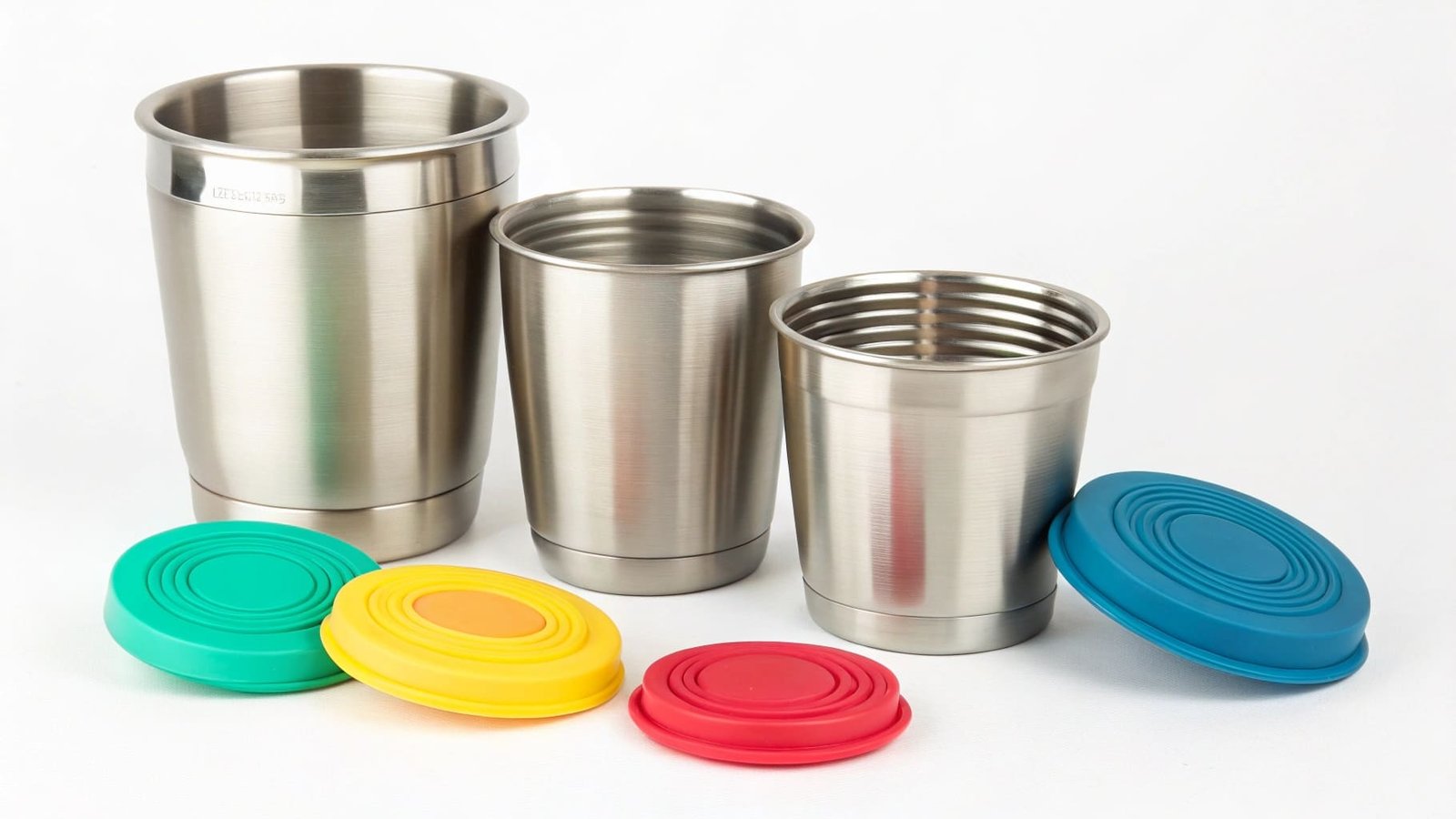
This is not an accident. It is a business decision. And once you understand the logic behind it, you can make smarter choices — whether you are buying a single tumbler or sourcing thousands of units for your brand. Let me walk you through the key questions buyers ask most, and give you clear answers backed by what I see every day working in silicone manufacturing.
Can You Mix and Match Stanley Lids?
You have two Stanley tumblers sitting on your desk. The lids look the same. You assume they will swap without any issue. Then you try it — and the seal is loose or the lid does not sit right.
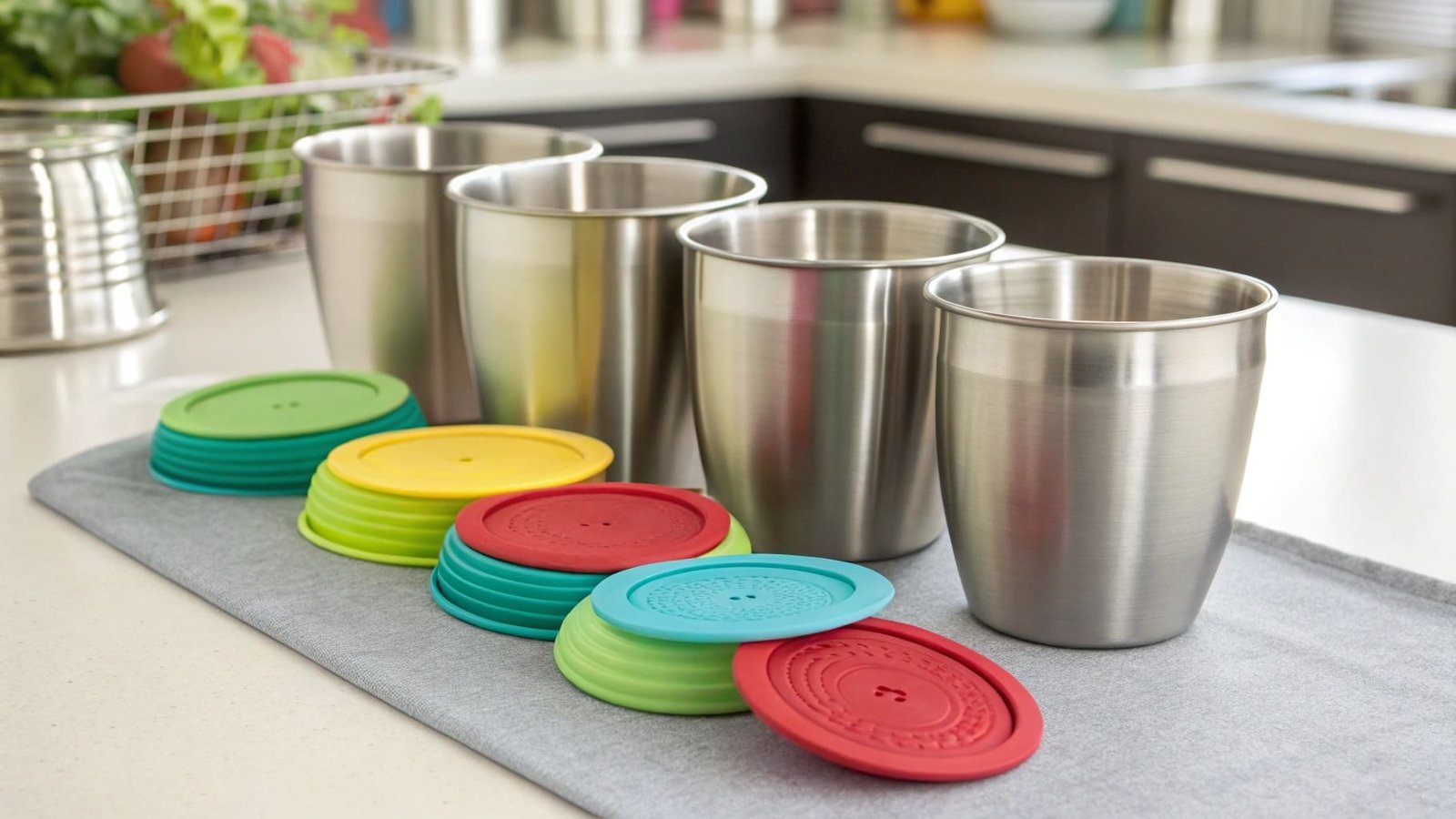
Stanley produces several lid formats across its product lines. The IceFlow, the Quencher, and the Classic series all use different lid geometries. Even within the same brand, direct swapping is not always possible. The outer diameter may be close, but the thread pitch, sealing lip depth, and gasket groove width are all slightly different by design.
Why Does Stanley Use Different Lid Formats Across Its Own Line?
Stanley's lid variation is not careless design. It is a deliberate product architecture strategy. Each product line targets a different user type, and the lid is a core part of that identity.
| Stanley Lid Type | Common Tumbler Series | Gasket Style |
|---|---|---|
| Straw Flip Lid | Quencher H2.0 | Silicone seal ring under flip mechanism |
| IceFlow Lid | IceFlow Flip Straw | Integrated gasket, not removable on all versions |
| Classic Screw Lid | Classic Legendary Bottles | Threaded silicone lid gasket |
Each lid above uses a different gasket shape, groove depth, and compression tolerance. The Quencher is Stanley's best-selling line, and it uses a soft silicone seal ring that fits snugly inside the lid. If you swap a lid from a different Stanley series, the gasket in that lid will not create the same compression against your tumbler's rim. You may get partial sealing or none at all.
From a manufacturing standpoint, this kind of variation comes from the fact that each lid goes through its own mold tooling. Custom molds are expensive. Brands build them to lock a specific lid to a specific tumbler series. This protects the brand's service ecosystem. It also means that replacement gaskets need to be sourced to match exact series specifications, not just brand name.
If you are sourcing private-label tumblers for your business, this matters a great deal. I always advise buyers to confirm which lid series their tumbler uses and to order replacement gaskets that match the mold spec, not just the tumbler size.
Are YETI and Stanley Lids Interchangeable?
This is one of the most common questions I see from tumbler buyers, especially those who own both brands. The tumblers look similar. The lids even look similar at a glance. It feels like they should work together.
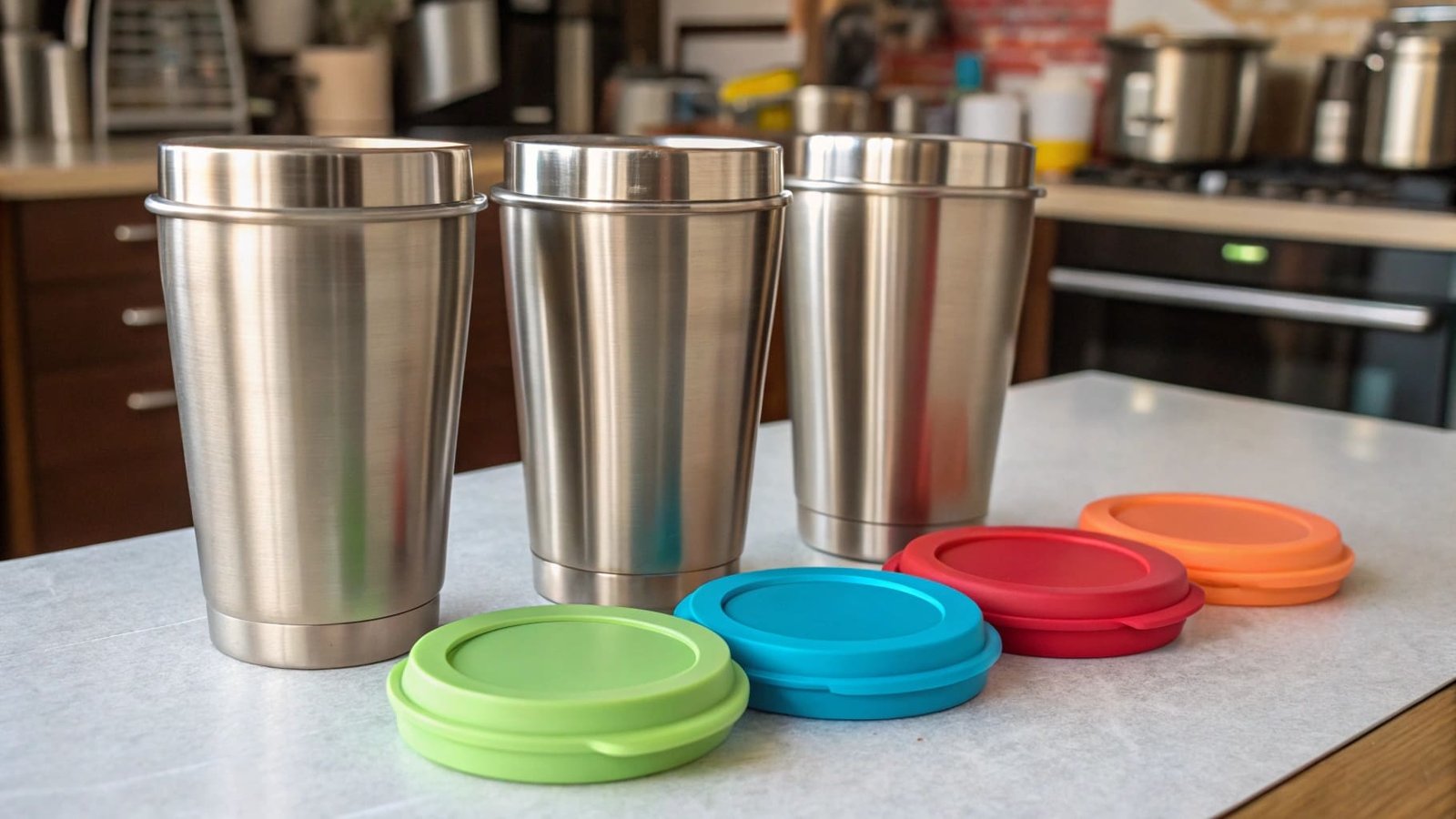
They do not. YETI and Stanley lids are not interchangeable.3 The outer diameter of a 30 oz YETI tumbler sits at approximately 3.5 inches at the rim, while a 30 oz Stanley Quencher uses a wider flared top.4 The thread profile, lid depth, and gasket groove dimensions are all different.
What Makes YETI and Stanley Lids Physically Incompatible?
The incompatibility is rooted in three areas: rim diameter, thread design, and gasket seating geometry.
| Dimension | YETI 30 oz | Stanley Quencher 30 oz |
|---|---|---|
| Rim outer diameter | ~3.5 inches | ~3.9 inches |
| Lid thread type | Fine, tight pitch | Wider, fewer thread turns |
| Gasket groove depth | Shallow channel | Deeper recessed groove |
| Lid removal method | Twist-off | Twist-off, but looser fit |
These differences are small in millimeters but large in function. A gasket that fits the YETI groove will not compress properly in the Stanley groove. The result is either a lid that feels loose, leaks under pressure, or cannot form a vacuum seal at all.
Both brands use food-grade silicone gaskets. Both meet similar safety certifications. But the physical shape of those gaskets is specific to each brand's mold. This is the part most buyers miss. They assume that if two products use the same material type, the parts will be interchangeable. That assumption is wrong in this case.
For businesses importing tumblers from manufacturers like us in China, this means you need to be clear with your supplier about which brand-style lid system your tumbler uses. If you want your tumbler to have a YETI-style lid fit, your manufacturer must tool the rim and thread to YETI-spec dimensions. The gasket your supplier provides must then match that exact groove, not a generic silicone ring cut to approximate size.
This also affects your after-sale strategy. If your branded tumbler uses a non-standard lid, customers will eventually need replacement gaskets. You either supply them as SKUs or your customers end up leaving negative reviews about leaking lids. I have seen this happen to several importers who did not think about the replacement parts chain when placing their first order.
How to Remove Black in Tumbler Rubber?
You pull the gasket out of your tumbler lid and see dark spots or a black film on the silicone. It looks like mold. You are not sure if it is safe to use, or if you can clean it off.
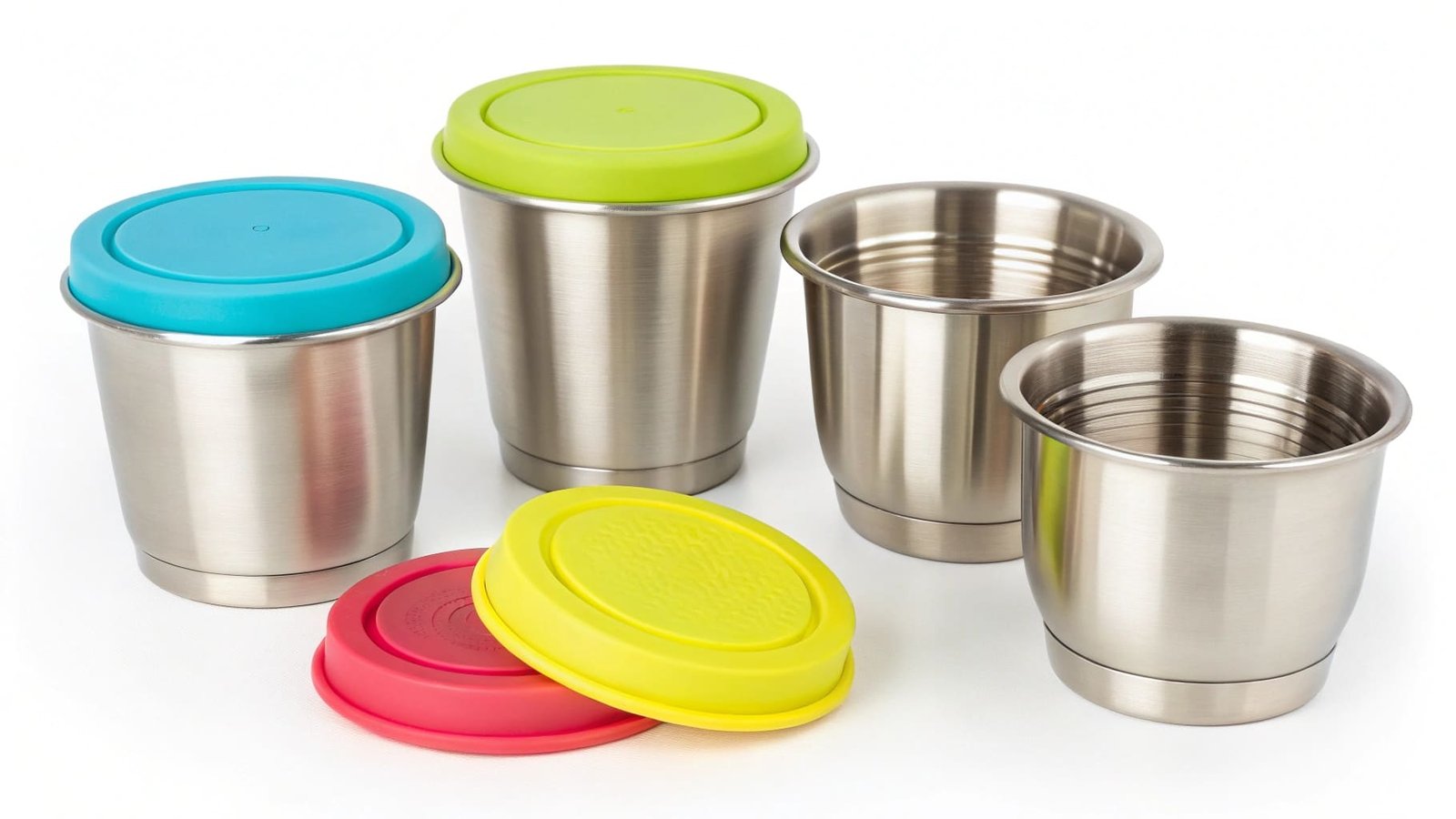
This is one of the most reported issues with tumbler gaskets. The black discoloration is usually a combination of mold growth, mineral deposits from hard water, and oil residue from coffee or tea.5 It builds up in the gasket groove because that area stays damp and rarely dries out completely between uses.
What Causes Black Stains on Tumbler Silicone, and How Do You Actually Remove It?
The root cause matters because it determines whether cleaning will work or whether you need to replace the gasket entirely.
| Cause of Discoloration | What It Looks Like | Can It Be Cleaned? |
|---|---|---|
| Surface mold from trapped moisture | Black or dark grey spots, often patchy | Yes, with white vinegar or baking soda soak |
| Coffee or tea tannin staining | Brown-black even spread | Partial — baking soda paste helps |
| Hard water mineral scale | White-grey with dark edges | Yes, with diluted white vinegar soak |
| Degraded silicone material | Sticky black residue that spreads | No — replace the gasket |
For surface mold, the most effective method is soaking the gasket in undiluted white vinegar for 30 minutes, then scrubbing with a soft brush and rinsing thoroughly.6 For tannin staining, make a paste with baking soda and water, apply it to the gasket, let it sit for 15 minutes, then rinse.
The case where cleaning will not help is when the silicone compound itself has degraded. This happens with low-grade silicone that was not platinum-cured. Cheaper silicone uses peroxide curing, which leaves behind byproducts in the material over time.7 When exposed to heat, acid from coffee, or repeated washing, the surface starts to break down. The black residue in this case is not mold — it is the material itself deteriorating. No amount of cleaning will fix this. The gasket needs to be replaced.
This is why the grade of silicone matters from a sourcing perspective. At Silijoy, all our tumbler gaskets use platinum-cured, food-grade silicone. Platinum-cured silicone has no peroxide byproducts, resists heat and staining better, and does not degrade the same way cheaper compounds do. For B2B buyers, specifying platinum-cured silicone in your purchase order is not a premium request — it is a basic quality requirement that protects your brand from customer complaints and return claims.
If you are currently working with a supplier who cannot confirm the curing method of their silicone gaskets, that is a gap worth addressing before your next order ships.
Conclusion
Gasket compatibility is not random — it follows mold specs and brand strategy. Knowing this helps you source smarter, prevent leaks, and protect your brand's reputation long-term.
-
"[PDF] Parker O-ring Handbook", https://wp.optics.arizona.edu/optomech/wp-content/uploads/sites/53/2016/10/Parker-O-ring-handbook.pdf. Seal-design references explain that elastomer gaskets require specified groove geometry and compression to seal reliably, which supports the view that visually similar lids are not necessarily gasket-compatible. Evidence role: mechanism; source type: research. Supports: A gasket or O-ring seal works only when its dimensions, groove, and compression match the mating components.. Scope note: This supports the sealing mechanism generally; it does not directly survey every tumbler brand. ↩
-
"Captain O-Ring – Replacement Lid Seal Gaskets for Yeti Stainless ...", https://www.amazon.com/Captain-Ring-Replacement-Stainless-Insulated/dp/B0CJZ99BP7. Product documentation for insulated drinkware replacement lids and gaskets commonly lists compatibility by model or series, indicating that lid-seal components are treated as model-specific parts. Evidence role: case_reference; source type: institution. Supports: Manufacturer or product documentation identifies lid and gasket parts by specific tumbler models rather than as universal parts.. Scope note: Such documentation supports model specificity for listed products but does not prove that all Stanley or YETI designs are proprietary in a legal sense. ↩
-
"30 oz 887 ml Tumbler Lids,Magnetic Tumbler Lid Replacement for ...", https://www.amazon.com/Tumbler-Lids-Magnetic-Replacement-Slider/dp/B0CXJFQL75. Model-specific lid compatibility information for YETI and Stanley drinkware supports the conclusion that their lids are not presented as interchangeable across brands. Evidence role: case_reference; source type: institution. Supports: Compatibility listings or measurements show that YETI and Stanley lids are specified for their own product lines rather than cross-brand use.. Scope note: This supports typical product compatibility; it may not exclude every third-party adapter or modified lid. ↩
-
"YETI Rambler 30 oz Tumbler With MagSlider Lid", https://www.yeti.com/drinkware/tumblers/rambler-30oz.html. Published product dimensions or documented measurements indicate that comparable 30 oz YETI and Stanley tumblers differ in top geometry, supporting the article’s explanation of lid incompatibility. Evidence role: statistic; source type: institution. Supports: Published dimensions or measurements show different top or rim diameters for 30 oz YETI and Stanley tumblers.. Scope note: Overall product dimensions may not always specify exact sealing-rim diameter, so the source may provide contextual rather than direct measurement support. ↩
-
"Mold - CDC", https://www.cdc.gov/mold-health/about/index.html. Public health and household-water guidance explains that persistent moisture promotes mold growth and that hard water can leave mineral scale, while beverage residues provide a plausible additional staining source. Evidence role: mechanism; source type: government. Supports: Damp enclosed surfaces can support mold growth, hard water leaves mineral deposits, and tea or coffee residues can stain surfaces.. Scope note: The evidence supports the mechanisms generally; identifying the exact cause on a specific gasket would require inspection or testing. ↩
-
"Did granny know best? Evaluating the antibacterial, antifungal ...", https://pmc.ncbi.nlm.nih.gov/articles/PMC7447605/. University and public-health cleaning guidance describes vinegar or acidic cleaners as useful for some household mold and mineral residues on nonporous surfaces when followed by mechanical cleaning and rinsing. Evidence role: general_support; source type: education. Supports: Acetic acid solutions such as vinegar can help clean some mold-contaminated nonporous household surfaces when combined with scrubbing and rinsing.. Scope note: The source may support vinegar cleaning generally but may not validate the exact 30-minute soak time for tumbler silicone gaskets. ↩
-
"Platinum Cured Silicones vs. Peroxide Cured Silicones", https://www.stockwell.com/platinum-cured-silicones-vs-peroxide-cured-silicones/. Polymer materials literature distinguishes peroxide-cured silicone systems, which may produce residual decomposition byproducts, from platinum-catalyzed addition-cure systems, which are commonly used where low extractables are desired. Evidence role: mechanism; source type: paper. Supports: Peroxide curing of silicone rubber can generate decomposition byproducts, whereas platinum-catalyzed addition curing is generally characterized by lower volatile byproduct formation.. Scope note: This supports the materials chemistry; it does not prove that every lower-cost gasket is peroxide-cured or defective. ↩