Can You Customize Oil Seals vs Rubber Seals for Water Bottle Production?
Choosing the wrong seal for your water bottle line can cost you sales, certifications, and customer trust. Here is what I have learned after years in this industry.
Oil seals are designed for machinery, not drinkware. For water bottle production, food-grade silicone seals are the right choice. They meet FDA and LFGB standards, resist high heat, and handle repeated washing without breaking down. They are the safer, smarter option for B2B buyers.
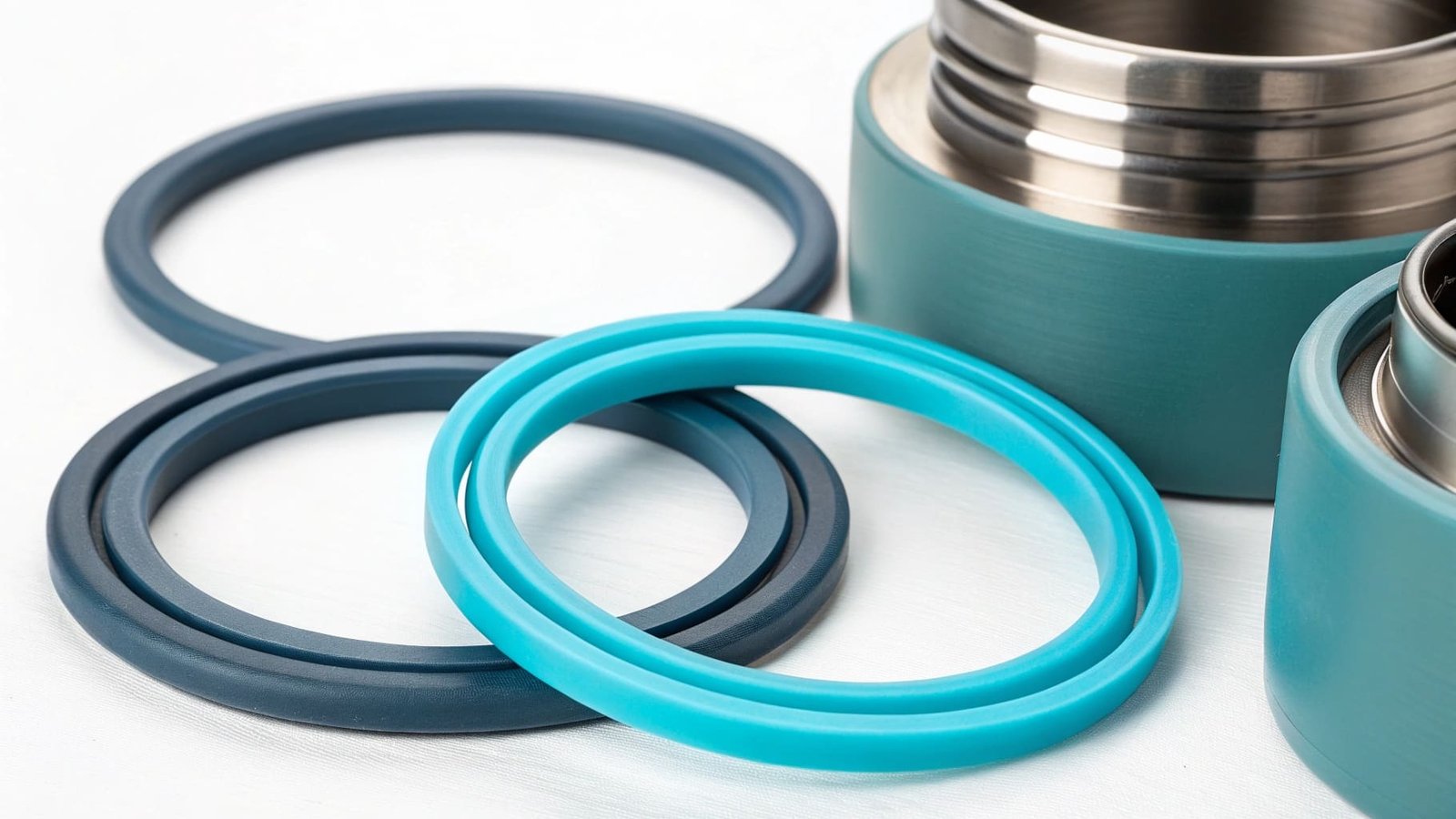
Many buyers come to me asking about oil seals and rubber seals for water bottles. They have the same question: which one is better for production? The answer matters more than most people think. Pick the wrong material, and you face recalls, failed certifications, and unhappy customers. Pick the right one, and your product stands out in North American and European markets. I want to walk you through everything you need to know.
Which Is Better, Metal or Rubber Oil Seal?
I have seen buyers mix up industrial seals and drinkware seals. That mistake leads to wasted money and production delays. Here is the clear answer.
Metal oil seals work well in engines and heavy machinery.1 Rubber oil seals are more flexible and handle moderate pressure. For water bottles, neither type is the right fit. Metal transfers taste. Standard rubber may leach chemicals. Food-grade silicone is the better choice for safe drinkware.
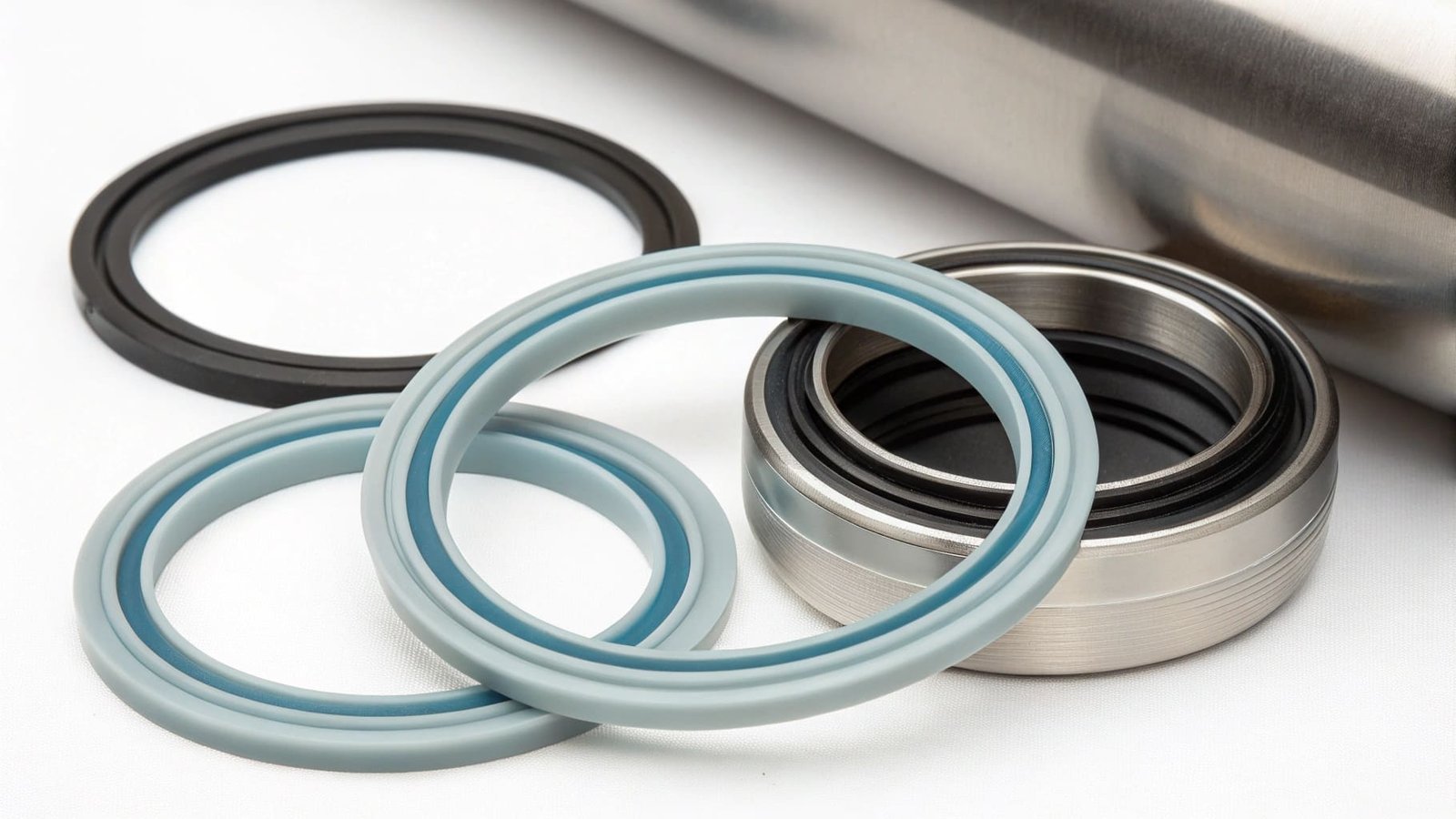
Metal and rubber oil seals each have a place. But that place is not in a water bottle. Let me break this down clearly.
What metal oil seals are built for
Metal oil seals use a rigid casing, usually steel, bonded to a rubber lip. They hold up under high rotational speed and pressure. They are built for gearboxes, hydraulic systems, and automotive parts. They are not built for food contact.
| Feature | Metal Oil Seal | Rubber Oil Seal | Food-Grade Silicone Seal |
|---|---|---|---|
| Primary Use | Industrial machinery | Automotive / pumps | Food, drinkware |
| Temperature Range | High | Moderate | -40°C to 230°C |
| Food Safety | No | No | Yes (FDA / LFGB) |
| Taste Transfer Risk | High | Medium | None |
| Customization | Limited | Moderate | Extensive |
| Dishwasher Safe | No | No | Yes |
Metal seals risk metallic taste. Standard rubber seals, such as NBR or EPDM grades, may release chemicals when exposed to hot liquids. This creates a serious problem for any brand selling premium drinkware. Regulatory bodies in the US and EU require food-contact materials to meet strict certification standards.2 Metal and standard rubber oil seals simply do not meet those standards for water bottle applications.
For B2B buyers like Mark, who rebrand and resell in Canada, a failed safety certification can shut down an entire product line. The risk is not worth it. Silicone is the safer bet from day one.
What Is the Best Material for Oil Seals in Water Bottle Applications?
Many buyers ask me this question. They assume oil seal materials translate directly to drinkware use. The reality is different. Here is what actually works.
Food-grade silicone is the best material for seals used in water bottle production. It handles extreme heat and cold, resists chemical degradation, and meets FDA and LFGB certification requirements. It does not absorb odors or leach harmful substances into beverages.
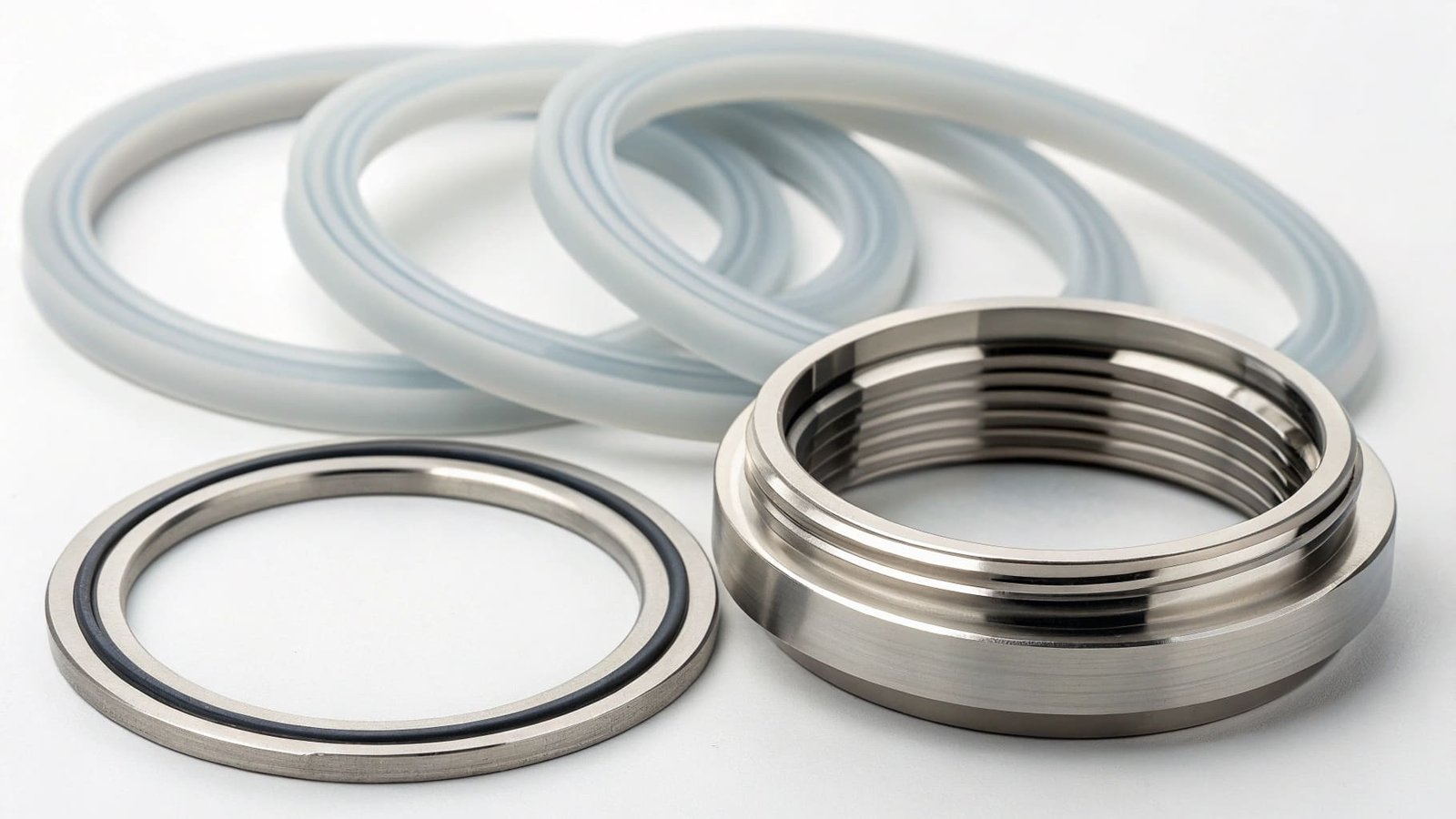
Silicone stands above other seal materials for drinkware. The reasons go beyond basic performance. Let me explain each one.
Why silicone outperforms other rubber types
Standard rubber materials used in oil seals include NBR (nitrile butadiene rubber) and EPDM (ethylene propylene diene monomer). Both have useful properties in industrial settings. Both fall short in food-safe applications.
NBR handles oils well. But it degrades when exposed to hot water over time. It is not rated for repeated dishwasher cycles. EPDM handles weather and ozone exposure. But it has lower resistance to oils and certain beverages. Neither meets food-grade standards without heavy processing.
Silicone, by contrast, has a stable inert chemical structure.3 It does not react with food, beverages, or cleaning agents. Here is how the materials compare:
| Material | Heat Resistance | Chemical Inertness | FDA Approved | Dishwasher Safe | Odor Absorption |
|---|---|---|---|---|---|
| NBR | Moderate | Low | No | No | High |
| EPDM | Moderate | Medium | Conditional | Limited | Medium |
| Food-Grade Silicone | High (-40°C to 230°C) | High | Yes | Yes | None |
I work with buyers who distribute drinkware across North America and Europe. These markets require documentation. FDA compliance covers the United States. LFGB covers Germany and the broader EU. Any seal used in water bottle production must carry these certifications to clear customs and reach retail shelves. Silicone from qualified manufacturers comes with both.
Beyond safety, silicone also performs better over time. It keeps its shape after compression. It does not crack or stiffen from temperature changes. This matters for buyers whose customers use bottles daily, wash them constantly, and expect them to last for years.
What Is the Difference Between Silicone and Rubber Seals?
This is the question I get most often. The words silicone and rubber sound similar. But the materials behave very differently. Here is the clear breakdown.
Silicone is chemically inert, temperature-stable, and food-safe. Standard rubber is more flexible and cost-effective but degrades faster and is not suitable for food contact in most cases. For water bottle seals, silicone provides better long-term performance and regulatory compliance.
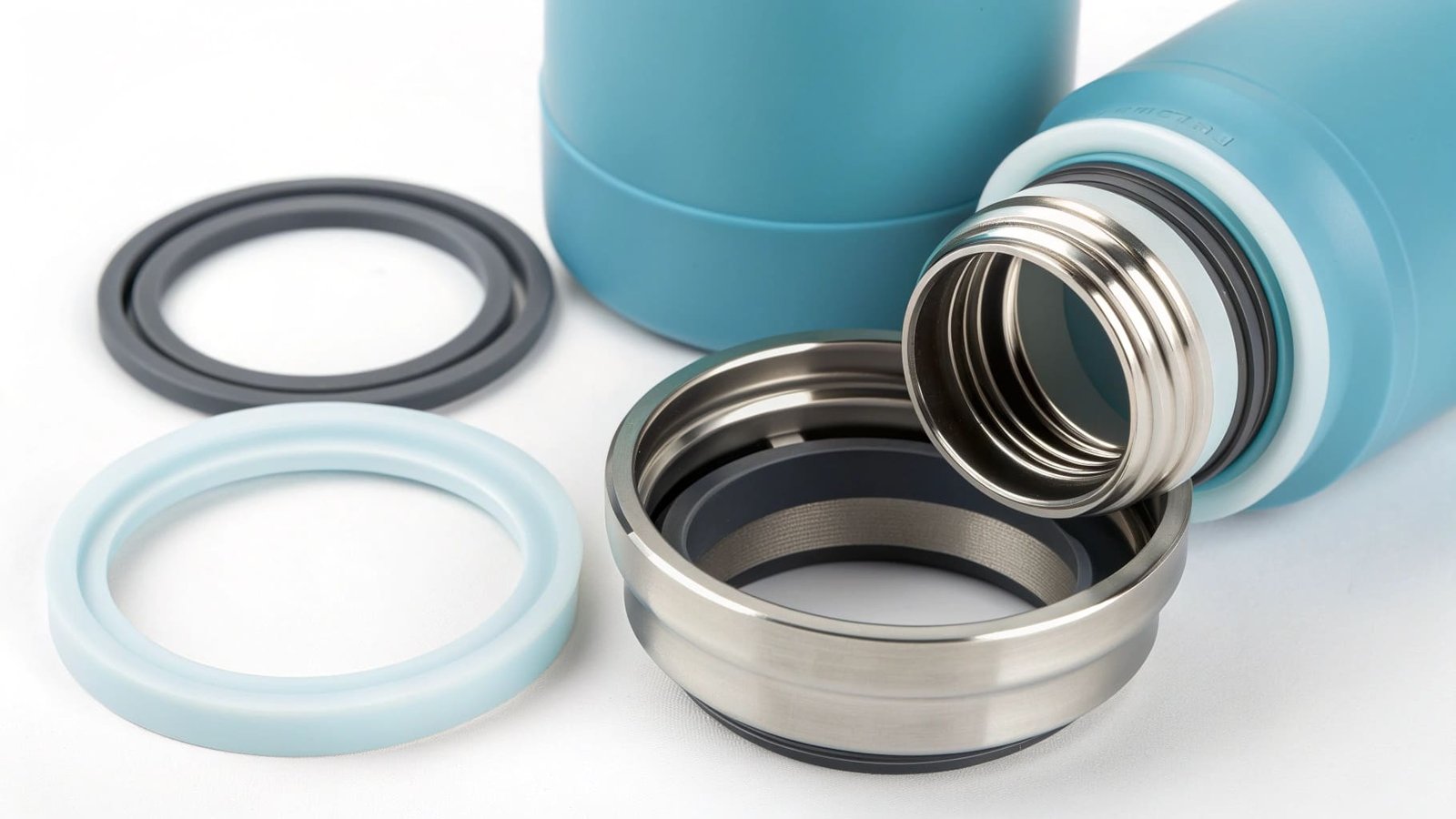
The difference between silicone and rubber seals is not just about material. It affects your production quality, your certifications, and your customer returns. Let me go through this in detail.
How silicone and rubber seals compare in real use
Rubber seals are made from natural or synthetic polymers. They are widely used because they are cheap and flexible. They work well in applications where chemical exposure and temperature extremes are not a concern. In drinkware, those conditions are present every day.
Silicone is also a polymer, but its backbone is silicon and oxygen rather than carbon. This gives it unique properties that standard rubber cannot match.
| Property | Standard Rubber | Food-Grade Silicone |
|---|---|---|
| Temperature Stability | Limited | -40°C to 230°C |
| Compression Set Resistance | Moderate | High |
| Chemical Resistance | Low to Moderate | High |
| Bacterial Growth Resistance | Low | High |
| Shore Hardness Range | Narrow | 30A to 80A |
| Color Customization | Limited | Full range |
| Logo Embossing | Difficult | Yes |
| Certifications Available | Rare | FDA, LFGB, REACH |
I have helped buyers spec out seal designs for custom tumbler lines. One of the most common requirements is Shore hardness selection. A softer seal, around 30A to 40A, creates a tighter fit for wide-mouth lids. A firmer seal, around 60A to 80A, works better for threaded closures under higher torque. Silicone gives you control over this. Standard rubber does not offer the same flexibility in customization.
Color matching is another area where silicone wins. Buyers building branded product lines need seals that match their packaging or bottle colors. Silicone can be produced in any Pantone color.4 This is a direct advantage for companies selling premium drinkware with strong visual branding.
Logo embossing on silicone seals adds another layer of brand protection. It is a simple step that makes counterfeiting harder and strengthens brand recognition in the retail market.
For buyers sourcing from China or Vietnam, working with a manufacturer who can provide silicone seals with full certifications, custom sizing, and consistent quality is not just a preference. It is a requirement for serious market entry.
Conclusion
For water bottle production, food-grade silicone seals are the clear choice. They outperform metal and rubber oil seals on safety, durability, certification, and customization for B2B buyers.
-
"The History and Applications of Oil Seals", https://www.nokcn-seals.com/resources/the-history-and-applications-of-oil-seals.html. Technical references define oil seals as sealing elements used around rotating shafts to retain lubricants and protect machinery, which supports the article's distinction between industrial oil seals and drinkware seals. Evidence role: definition; source type: encyclopedia. Supports: Oil seals are commonly defined as machine components used to retain lubricants and exclude contaminants around rotating shafts in automotive and industrial equipment.. Scope note: This establishes typical use and function, not that every metal-containing seal is categorically unsuitable for food-contact applications. ↩
-
"Food Packaging & Other Substances that Come in Contact with Food", https://www.fda.gov/food/food-ingredients-packaging/food-packaging-other-substances-come-contact-food-information-consumers. US FDA food-contact regulations and EU Regulation (EC) No 1935/2004 establish that materials intended to contact food must comply with safety requirements before being placed on the market. Evidence role: historical_context; source type: government. Supports: US FDA rules and EU Regulation 1935/2004 establish legal requirements for materials intended to contact food.. Scope note: The regulatory frameworks do not by themselves specify that silicone is always compliant; compliance depends on composition, migration testing, and documentation. ↩
-
"The Effect of Aging Process Conditions on the Thermal Properties of ...", https://pmc.ncbi.nlm.nih.gov/articles/PMC11595879/. Chemistry and materials-science sources explain that silicone polymers contain a silicon-oxygen backbone, a structural feature associated with the thermal stability and chemical inertness of many silicone elastomers. Evidence role: mechanism; source type: education. Supports: Educational or materials-science sources explain that silicones have a silicon-oxygen backbone associated with thermal and chemical stability.. Scope note: The mechanism supports general material behavior, while actual food-contact safety still depends on curing, additives, and regulatory testing. ↩
-
"Effect of Intrinsic Pigmentation on the Tear Strength and Water ...", https://pmc.ncbi.nlm.nih.gov/articles/PMC3602531/. Polymer-processing sources describe the pigmentation of silicone elastomers with compatible colorants, supporting the article's broader claim that silicone seals can be color-customized for product design. Evidence role: general_support; source type: research. Supports: Materials and polymer-processing sources document that silicone elastomers can be compounded with pigments and colorants.. Scope note: The wording 'any Pantone color' is stronger than most technical sources will prove; exact matching depends on pigment compatibility, translucency, manufacturing tolerances, and quality control. ↩