How Are Travel Mugs Made Leak-Proof for Wholesale Distribution?
A leaking travel mug destroys your brand. One bad batch can flood your inbox with returns, chew through your margins, and cost you your best retail accounts.
Leak-proof travel mugs rely on a three-layer seal system. This includes a lid gasket, a threading interface, and a drinking spout, each sealed with food-grade silicone.1 This system holds pressure during shipping, temperature swings, and daily use, cutting return rates for wholesale buyers.
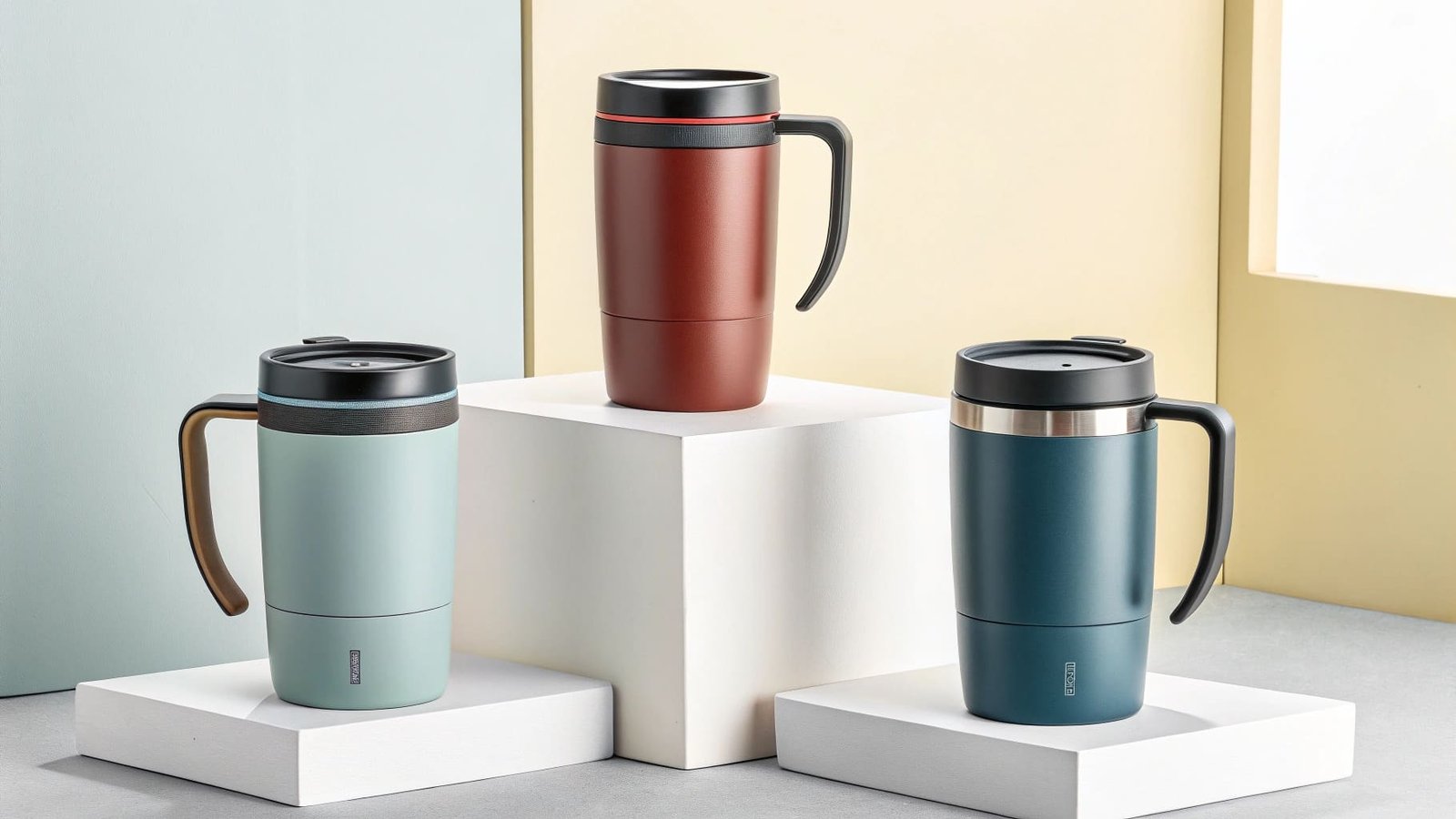
Getting leak-proof performance right matters at every step—from how the mug is built, to what it is made from, to how it survives your supply chain. Each of these steps affects your margins, your compliance standing, and your reputation with end customers. Let me walk through each one.
How Are Mugs Manufactured?
Most buyers I speak with know what they want the mug to do. Few know how it is actually built. That gap creates problems—because if you do not understand the process, you cannot spot where a factory is cutting corners.
Travel mugs are built in layers. The body is formed first through injection molding or deep drawing of stainless steel, then silicone seals are added through compression molding at specific joining points.2
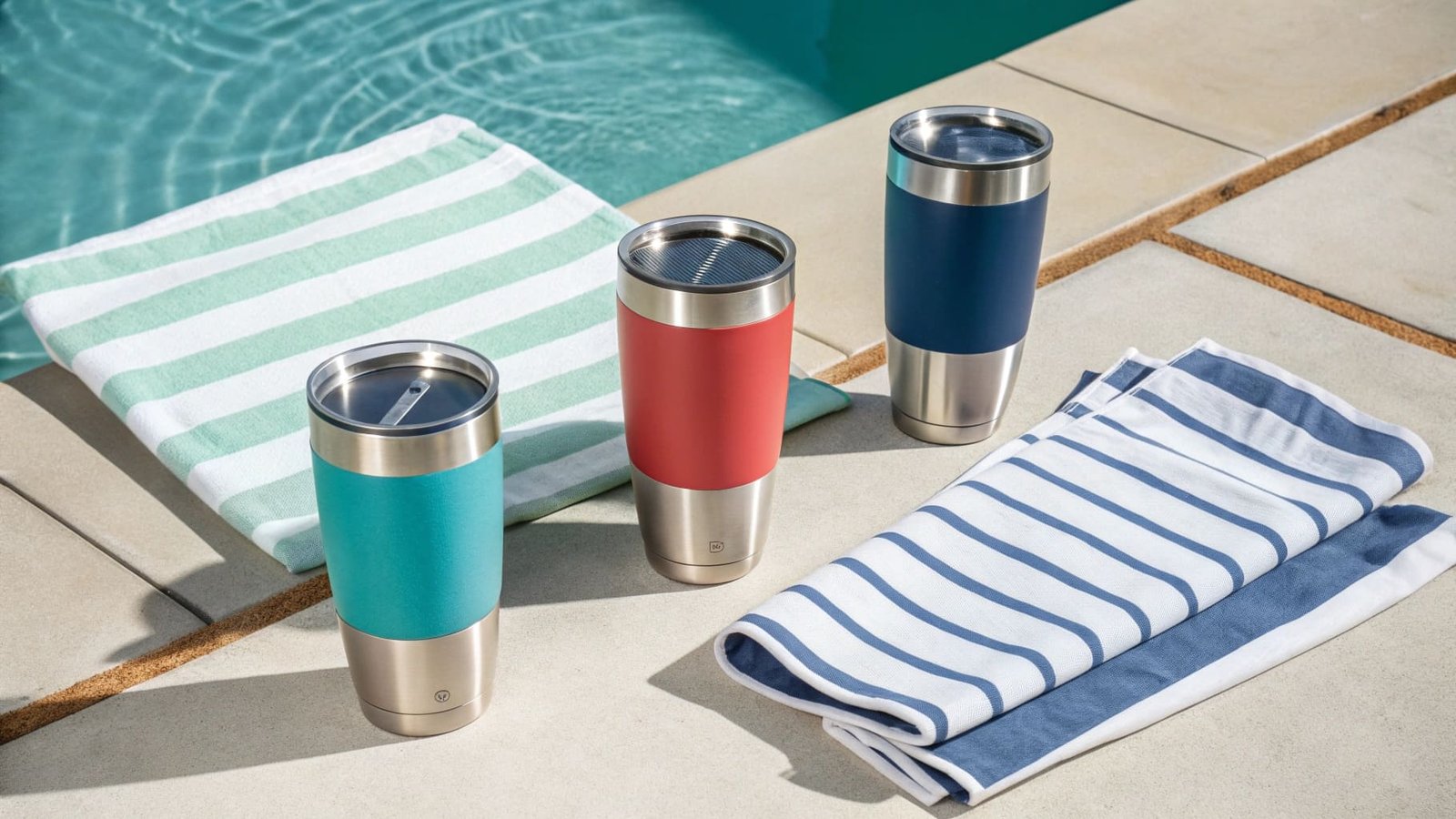
The body comes first. Most premium travel mugs use stainless steel formed through a deep-drawing process, where flat metal sheets are pressed into a cylindrical shape under high force.3 This creates a seamless wall with no weak joints. BPA-free plastic bodies follow a similar path through injection molding.
Once the body is formed, silicone seals are added. These are made through compression molding, where raw silicone is placed into a mold cavity and pressed under heat until it takes the exact shape of the seal component.4 This method gives consistent wall thickness across every unit in a batch—critical for bulk orders where even small variations multiply into large defect counts.
After assembly, quality manufacturers run vacuum pressure tests at 15 PSI. This simulates the conditions your mugs will face during air cargo, hot warehouse storage, or a container crossing the Pacific in summer.5 If a unit fails this test on the production line, it does not reach your customer's hands.
| Manufacturing Stage | Process Used | Purpose |
|---|---|---|
| Body formation | Deep drawing / Injection molding | Creates seamless, strong outer wall |
| Seal production | Compression molding | Ensures uniform silicone thickness |
| Assembly | Press-fit or threaded integration | Locks seal to body at critical points |
| Quality testing | Vacuum pressure test at 15 PSI | Simulates real shipping and use conditions |
For wholesale buyers, the most important thing to ask your supplier is not just "do you test?" but "what pressure do you test at, and can you send documentation?" A supplier who cannot answer that question clearly is a supplier who is skipping the test.
What Is the Best Material for Travel Mugs?
Here is where many buyers get confused. They ask for "the best material" as if there is one clear answer. There is not. The best material depends on your target market, your compliance requirements, and your price point.
For most B2B wholesale use cases, the strongest combination is an 18/8 stainless steel body paired with platinum-cured silicone seals. This pairing covers the widest range of regulatory requirements and performance conditions.
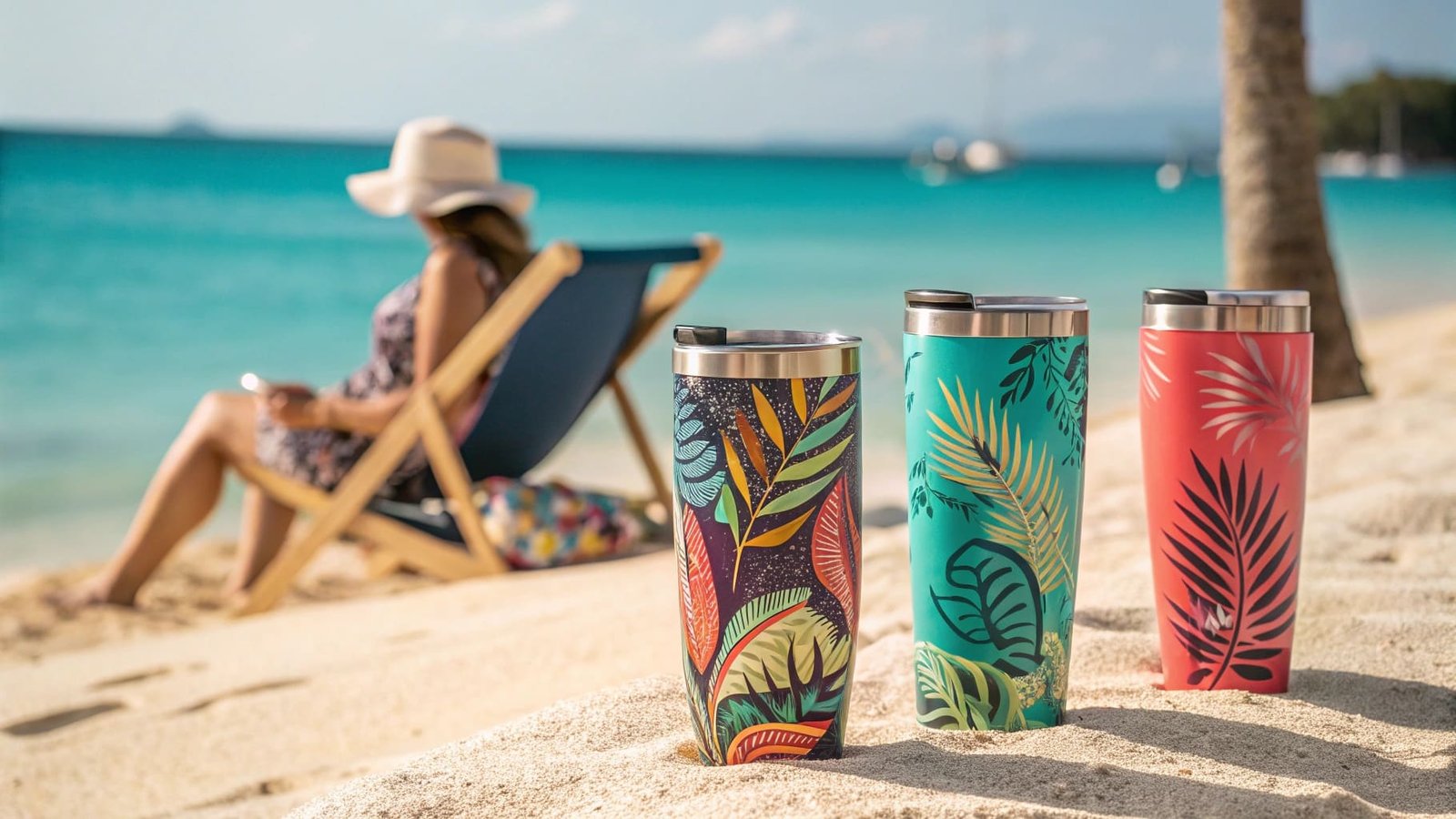
18/8 stainless steel, also called 304 grade, is the industry standard for a reason.6 It resists corrosion. It does not absorb flavors or odors. It holds up to acidic coffee, alkaline tea, and carbonated drinks without degrading over time.7 For wholesale distribution, this means fewer customer complaints tied to taste contamination—one of the most common negative review triggers in the drinkware category.
Platinum-cured silicone is the seal material of choice for the same reason. It does not release harmful by-products when it comes into contact with food or liquid. It stays flexible from -40°F to 450°F, which means it does not crack during cold ocean freight or harden inside a warehouse in a hot climate.8
Beyond performance, material choice affects your compliance paperwork. The 18/8 steel and platinum silicone combination satisfies FDA, LFGB, and REACH requirements at the same time.9 That matters if you are distributing across North America and Europe from a single SKU.
| Target Market | Material Priority | Key Compliance Standard |
|---|---|---|
| North America | Double-wall vacuum insulation + silicone seal | FDA |
| Europe | Recycled stainless steel + platinum silicone | LFGB / REACH |
| Global wholesale | 18/8 steel body + platinum-cured silicone | FDA + LFGB + REACH |
However, market preferences do shift. European distributors are putting more pressure on suppliers to source recycled stainless steel as part of sustainability positioning. North American buyers continue to lead with insulation performance as the main marketing hook. The silicone components stay consistent across all markets. No buyer is moving away from silicone seals, because nothing else lasts as long at the same cost.
What Is the Safest Material for Mugs?
Safety is not the same as quality. A mug can be well-made and still expose your customers to materials that regulators flag. This is especially relevant for wholesale buyers who are rebranding products and putting their own name on the label.
The safest material for travel mugs is a combination of food-grade 18/8 stainless steel and medical-grade silicone. Both are chemically inert, free from BPA and phthalates, and accepted by the strictest food contact regulations worldwide.

The safety question is mostly about what the mug does not release. Stainless steel and silicone are both considered chemically inert. This means they do not react with the liquids inside the mug and do not leach compounds into your drink—even after years of use or repeated dishwasher cycles.
Cheaper alternatives carry real risk. Some manufacturers use rubber seals that contain plasticizers. Others use lower-grade plastic inner walls that contain BPA or similar compounds. These materials may pass a basic visual inspection but fail chemical migration testing under heat. When your customer fills the mug with hot coffee and the lining starts to break down, that is your brand name on the problem.
For wholesale buyers, certificate verification is where this gets complicated. Certificate fraud is a real issue in this market. I have seen suppliers present LFGB certificates that were either expired, tested on different products, or issued by labs with no accreditation. The safest practice is to request a test report directly from the testing lab, not just the certificate, and to verify the lab's accreditation status independently.
| Material | Safety Profile | Risk if Substituted |
|---|---|---|
| 18/8 stainless steel | No corrosion, no flavor transfer | Rust, taste contamination |
| Platinum-cured silicone | No chemical migration, high temp stable | Plasticizer leaching, cracking in transit |
| BPA-free plastic body | Safe for cold drinks, moderate heat | Degradation above 140°F |
| Rubber seals | Lower cost, but limited safety data | Phthalate exposure, short lifespan |
One more point worth stating clearly: seal longevity is also a safety factor. Food-grade silicone seals last three to five years under normal use. Cheaper rubber or low-grade silicone alternatives begin to degrade in six to twelve months. A degraded seal does not just leak—it can introduce degraded material particles into the liquid. Specifying silicone hardness ratings in your purchase contract protects you from this substitution. For lid seals, request 40 to 60 Shore A. For base components, request 60 to 80 Shore A.
Conclusion
Leak-proof performance comes from the right manufacturing process, the right materials, and verified quality controls. Know these three things before you place your next bulk order.
-
"[PDF] determination of the leak size critical to package - VTechWorks", https://vtechworks.lib.vt.edu/bitstream/handle/10919/26690/Kelleretd.pdf?sequence=1&isAllowed=y. An engineering materials source describes elastomeric gaskets as components that form seals by compression between mating surfaces, and food-contact materials references identify silicone elastomers as commonly used where flexible, heat-resistant seals are required. Evidence role: mechanism; source type: education. Supports: A neutral engineering or materials source should explain that elastomeric gaskets and threaded closure interfaces create compressive seals that reduce fluid leakage, and that silicone is widely used for flexible food-contact seals.. Scope note: This supports the sealing mechanism and material choice generally, but may not verify the exact three-layer architecture of every travel mug design. ↩
-
"Injection moulding - Wikipedia", https://en.wikipedia.org/wiki/Injection_moulding. Manufacturing references define deep drawing as a sheet-metal forming process for hollow parts, injection molding as a process for producing plastic components, and compression molding as a standard method for forming elastomeric parts such as silicone seals. Evidence role: mechanism; source type: education. Supports: A manufacturing reference should define deep drawing, injection molding, and silicone compression molding and show why these methods are suitable for cup bodies and elastomeric seals.. Scope note: This provides process-level support rather than documentation of a specific factory’s production line. ↩
-
"(PDF) Modeling the deep drawing of an AISI 304 stainless-steel ...", https://www.academia.edu/78632999/Modeling_the_deep_drawing_of_an_AISI_304_stainless_steel_rectangular_cup_using_the_finite_element_method_and_an_experimental_validation. A manufacturing text explains that deep drawing forms flat sheet metal into cup-shaped or cylindrical hollow parts by forcing the sheet into a die with a punch. Evidence role: mechanism; source type: education. Supports: A neutral manufacturing source should support that deep drawing forms cylindrical or cup-shaped metal parts from sheet metal under pressure.. Scope note: The source supports the feasibility and common use of the process for such shapes, but it may not quantify the share of premium travel mugs made this way. ↩
-
"Silicone Rubber Compression Molding: A Guide to Getting Started", https://www.agiliantech.com/blog/silicone-rubber-compression-molding-get-started-guide/. A polymer-processing reference describes compression molding as placing rubber or silicone material into a heated mold cavity and applying pressure until the material cures into the molded part. Evidence role: definition; source type: education. Supports: A polymer-processing source should define compression molding for rubber or silicone elastomers and describe the use of heat, pressure, and a mold cavity.. ↩
-
"[PDF] The Effects of Transportation Distribution on the Performance of ...", https://repository.rit.edu/context/japr/article/1245/viewcontent/1245_Tang_v6.pdf. Transport-packaging references document that distribution environments can include altitude-related pressure changes and elevated temperatures in warehouses or freight containers, conditions that may stress sealed products. Evidence role: general_support; source type: institution. Supports: A transport-packaging or logistics source should document that goods in air cargo, warehouses, and shipping containers may experience pressure variation and elevated temperatures.. Scope note: This supports the environmental rationale for testing, but does not establish that a 15 PSI test precisely reproduces all shipping scenarios. ↩
-
"Is All Stainless Steel Food Grade?", https://atlanticstainless.com/news/is-all-stainless-steel-food-grade/. Metallurgical references identify AISI 304 stainless steel as an austenitic 18/8 stainless steel, typically containing about 18% chromium and 8% nickel, and note its common use in food-contact equipment. Evidence role: definition; source type: education. Supports: A metallurgical or food-contact materials source should confirm that 304 stainless steel is commonly described as 18/8 stainless steel because of its chromium and nickel composition.. Scope note: This supports the material identification and common application, but not the market share implied by the phrase 'industry standard.' ↩
-
"Study of the Corrosion Behavior of Stainless Steel in Food Industry", https://pmc.ncbi.nlm.nih.gov/articles/PMC11012613/. Materials references describe 304 stainless steel as corrosion-resistant because of its chromium-rich passive film and note its widespread use in food and beverage equipment where cleanability and resistance to product interaction are required. Evidence role: mechanism; source type: education. Supports: A materials source should explain that 304 stainless steel forms a chromium oxide passive layer that resists corrosion and is widely used in food and beverage service.. Scope note: This supports general beverage compatibility, but specific long-term performance depends on alloy quality, cleaning chemistry, chloride exposure, and use conditions. ↩
-
"Dragon Skin™ 10 MEDIUM Product Information | Smooth-On, Inc.", https://www.smooth-on.com/products/dragon-skin-10-medium/. Materials references for silicone rubber report broad service-temperature capability, commonly extending from about -40°F to over 400°F, with retention of elastomeric flexibility across much of that range. Evidence role: mechanism; source type: research. Supports: A materials reference or datasheet should support the service-temperature range and low-temperature flexibility of silicone rubber.. Scope note: The exact upper and lower limits vary by silicone formulation, cure system, filler package, and test method. ↩
-
"Food Packaging & Other Substances that Come in Contact with Food", https://www.fda.gov/food/food-ingredients-packaging/food-packaging-other-substances-come-contact-food-information-consumers. Food-contact and chemical-regulation sources indicate that stainless steel and silicone materials may be acceptable for food-contact articles when product-specific composition, migration, and restricted-substance requirements under FDA, LFGB, and REACH frameworks are met. Evidence role: general_support; source type: government. Supports: Regulatory sources should show that stainless steel and silicone may be used in food-contact applications when they meet applicable migration, composition, and substance-restriction requirements.. Scope note: The regulations do not certify a material combination automatically; compliance depends on formulation, additives, coatings, intended use, and test results for the finished article. ↩