What Is the Purpose of Inner Lid Rubber Boot Gaskets for Industrial Tumblers?
Leaking lids, heat loss, and broken seals are costly problems in industrial settings. One small component causes most of them. That component is the inner lid rubber boot gasket.
Inner lid rubber boot gaskets seal the gap between the lid and the drum in industrial tumblers.1 They prevent moisture and heat from escaping during operation. They also absorb vibration, reduce noise, and protect the lid from wear caused by repeated use under high temperatures.2
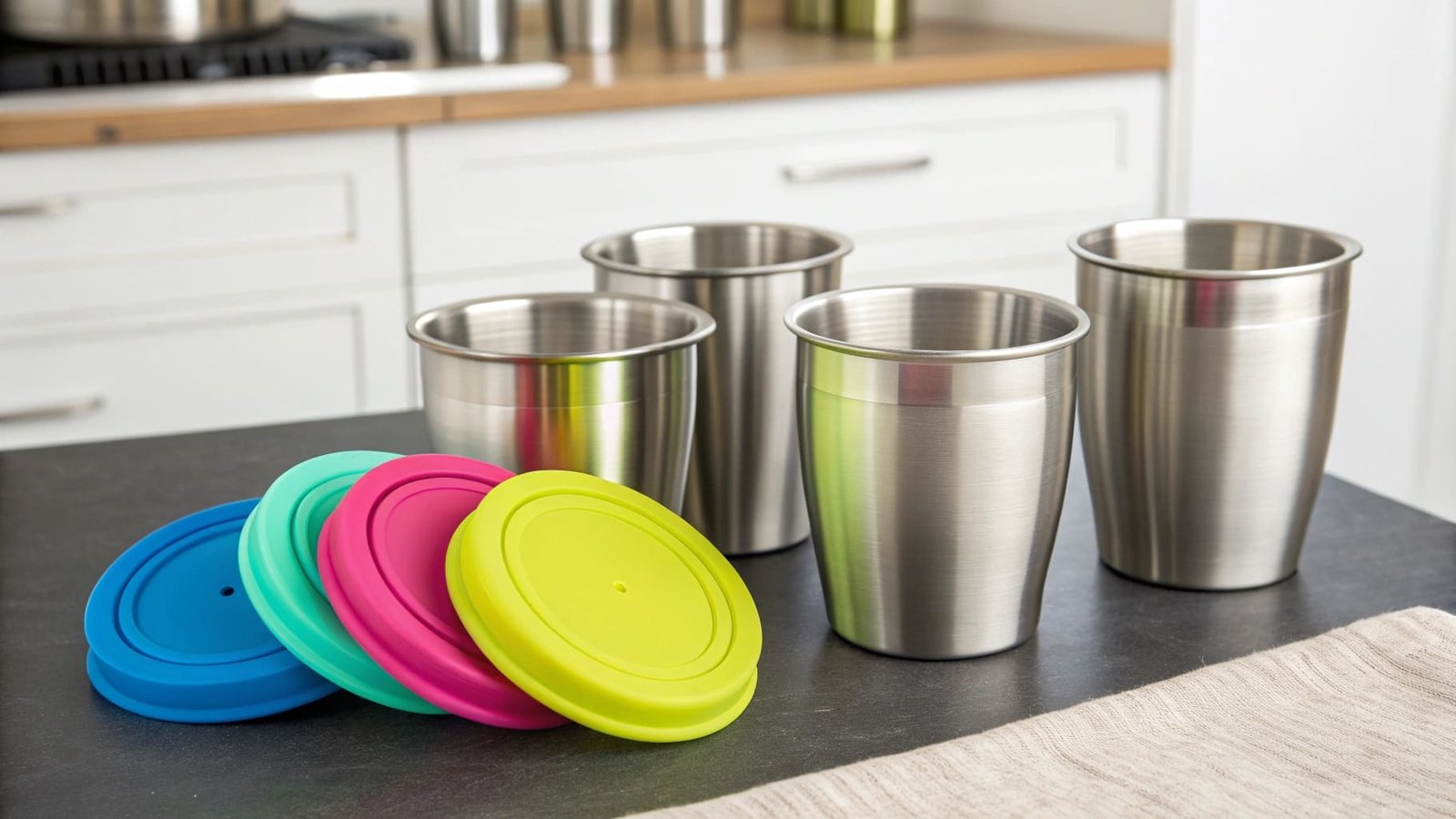
I have spent years working with silicone components used in industrial and commercial environments. The more I work with buyers like procurement officers and facility managers, the more I see the same pattern. Small sealing components get overlooked during equipment specification. Then they become the reason production stops. This article breaks down what these gaskets do, how they differ from seals, and how to keep them in place. By the end, you will have a clear picture of what to look for when sourcing them.
What Is the Purpose of the Rubber Gasket?
You are running a large-scale laundry or processing facility. One lid seal fails. Now you have heat loss, moisture leaking into the wrong area, and a maintenance call. That one gasket just cost you more than it should have.
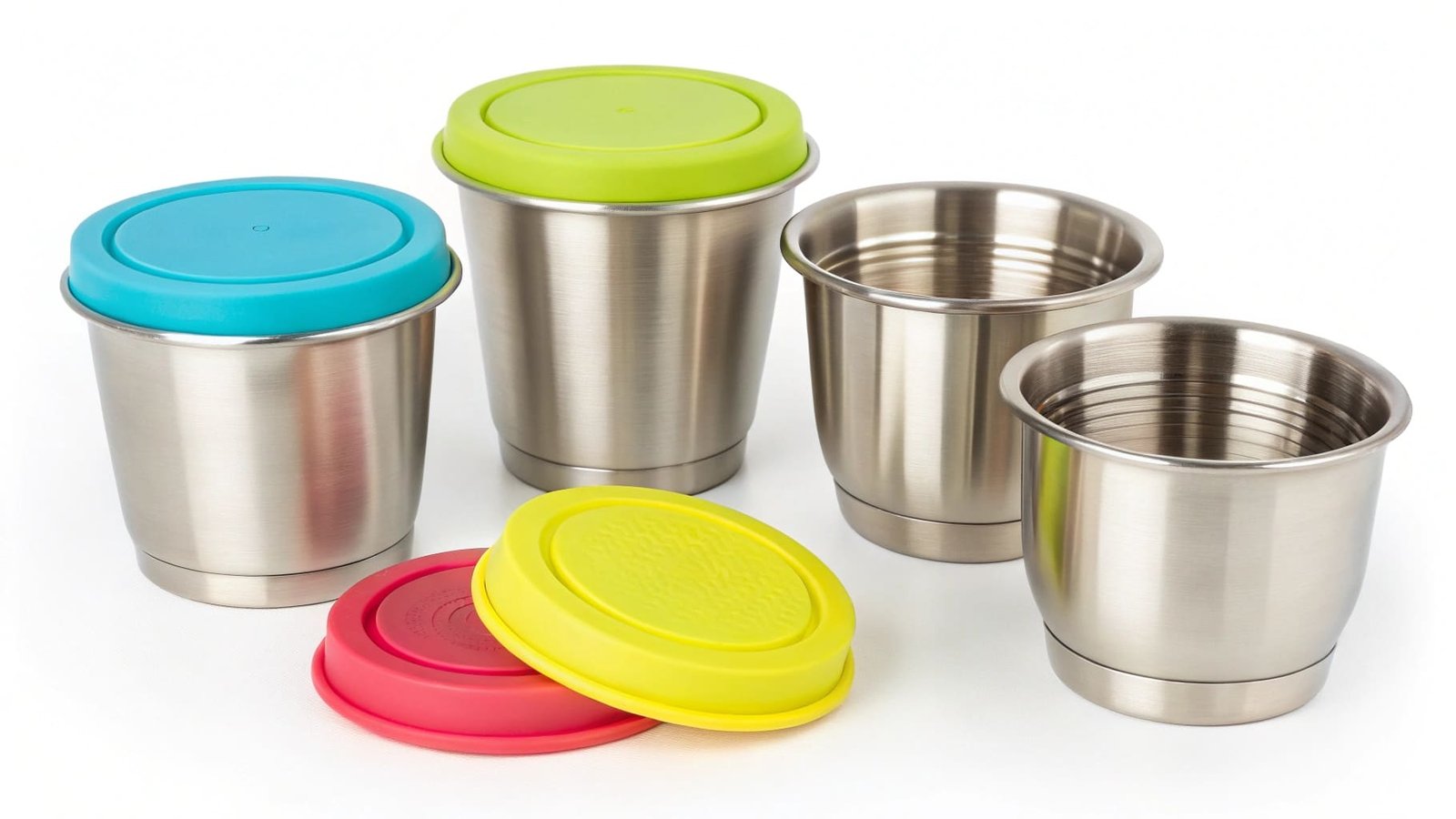
The rubber gasket in an industrial tumbler lid creates a controlled barrier between two surfaces. When the lid closes, the gasket compresses. That compression blocks air, moisture, and contaminants from passing through. It also absorbs the mechanical shock of the lid closing repeatedly throughout a shift.
Why Does This Matter Beyond Basic Sealing?
Most people think a gasket just stops leaks. That is true, but it is only part of the picture. I want to break this down into three core functions, because each one affects your operating costs differently.
Containment is the most obvious function. The gasket prevents liquid or vapor from escaping the drum during a tumbling cycle. In laundry environments, this means retaining heat and moisture inside the drum, which directly affects how well the cycle performs. In food processing or pharmaceutical applications, it also means keeping contaminants out.
Protection is less obvious but just as important. The lid in an industrial tumbler opens and closes hundreds of times per day. Without a gasket, the two metal surfaces would make direct contact every single time. That contact causes wear, deformation, and eventually misalignment. The gasket acts as a buffer. It absorbs the impact and extends the life of the lid mechanism.
Performance consistency is the third function. A worn or displaced gasket changes the sealing pressure every time the lid closes.3 That inconsistency leads to variable cycle outcomes. In high-volume commercial settings, inconsistent performance is a real operational problem. It affects quality control and creates unpredictable maintenance schedules.
Here is a simple comparison of what happens with a good gasket versus a worn one:
| Factor | Good Gasket | Worn or Damaged Gasket |
|---|---|---|
| Heat retention | High | Low |
| Moisture containment | Consistent | Variable |
| Lid mechanism wear | Minimal | Accelerated |
| Noise and vibration | Dampened | Increased |
| Maintenance frequency | Low | High |
The material of the gasket also matters a great deal. Silicone rubber handles temperatures up to 200°C far better than standard rubber compounds.4 It also recovers its shape better after repeated compression cycles. That recovery ability is called compression set resistance, and it is one of the main reasons I recommend silicone for high-temperature industrial applications. A gasket that does not recover its shape after compression no longer seals properly, even if it looks fine from the outside.
What Is the Difference Between a Rubber Seal and a Rubber Gasket?
The terms "seal" and "gasket" get used as if they mean the same thing. They do not. Using the wrong term when specifying parts can lead to the wrong component being supplied, and that creates real problems on the production floor.
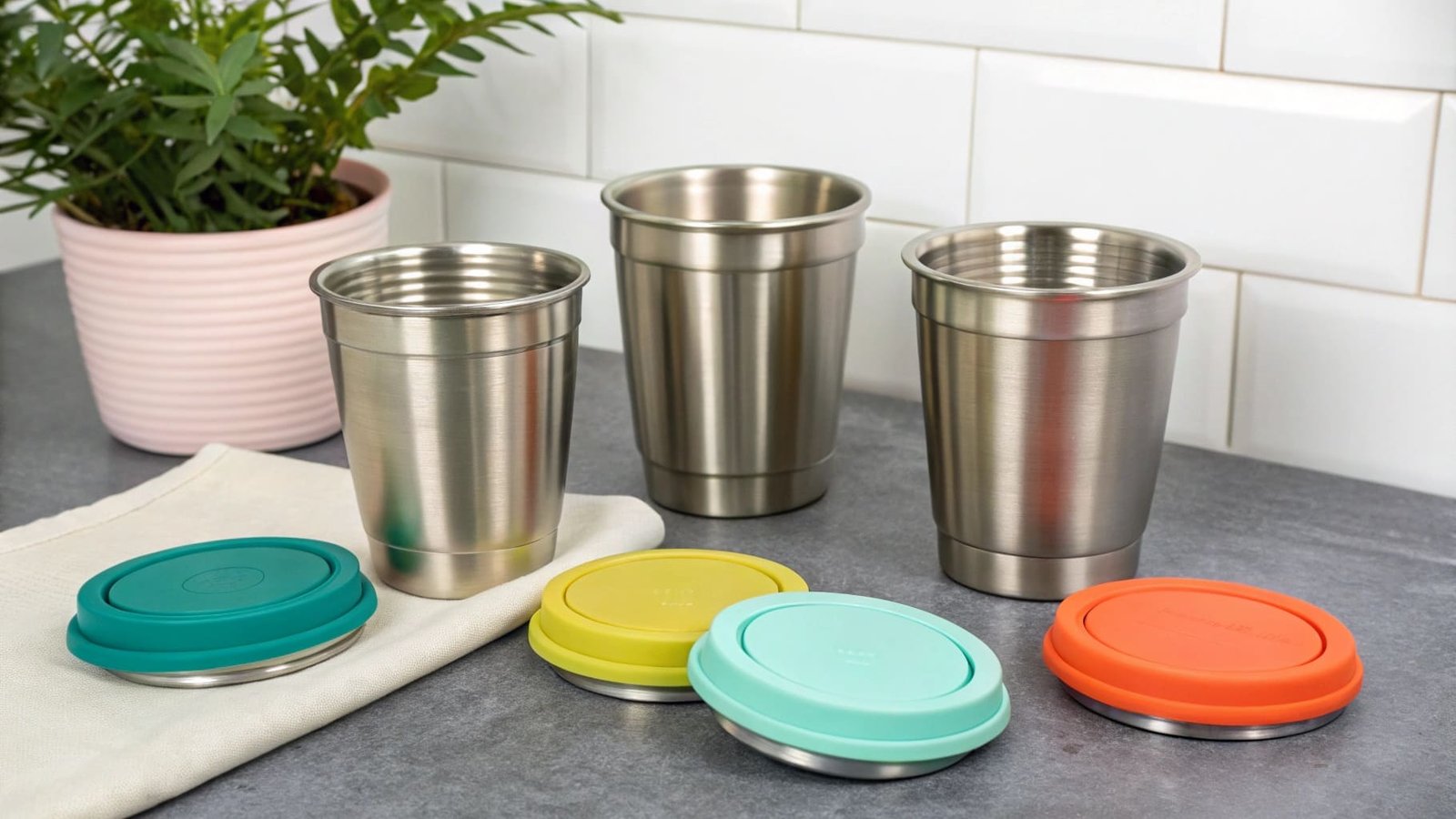
A rubber gasket is a static component.5 It sits between two flat or flanged surfaces and compresses when those surfaces are pushed together. It does not move once installed. A rubber seal typically handles dynamic applications, meaning one surface is moving relative to the other, and the seal maintains contact throughout that motion.6
How Does This Distinction Apply to Industrial Tumbler Lids?
For an industrial tumbler lid, the gasket stays in one position. When the lid closes, the gasket compresses. When the lid opens, it recovers. There is no rotational or lateral movement involved. That makes it a static gasket application, not a dynamic seal application.
This distinction matters when you are sourcing components. Here is a breakdown of how the two differ across key technical factors:
| Factor | Rubber Gasket | Rubber Seal |
|---|---|---|
| Application type | Static | Dynamic |
| Movement involved | None | Yes, continuous or reciprocating |
| Compression method | Flange or lid closure | Shaft, bore, or groove contact |
| Typical location | Between two flat mating surfaces | Around rotating or sliding parts |
| Common example | Tumbler lid seal, pipe flange | Shaft seal, hydraulic piston seal |
| Material priority | Compression set resistance | Wear resistance and lip integrity |
When I work with buyers who are sourcing for the first time, I often find that they have been quoted dynamic seals for a static application. The parts may look similar, but the internal compound and geometry are different. A dynamic seal used in a static gasket application will not compress evenly, and it will not recover consistently. That leads to leaks and premature failure.
For tumbler lid gaskets specifically, you want a flat or profiled static gasket made from food-grade or industrial-grade silicone, depending on your application. You want it to compress fully at the designed closure pressure and return to its original shape when the lid opens. That recovery behavior is what keeps the seal consistent over thousands of cycles.
If a supplier cannot tell you the compression set value of the silicone they use, that is a warning sign. Any serious manufacturer of silicone gaskets will have that data available in their technical documentation.
How to Make a Rubber Gasket Stay in Place?
You install a new gasket. Three days later, it has shifted. Now the lid does not seal properly, and the gasket is pinched on one side. This is one of the most common complaints I hear from facility managers, and it is almost always a design problem, not an installation problem.
Gasket displacement happens for several reasons. Thermal expansion causes the material to shift during heating and cooling cycles.7 Repeated compression cycling can cause a gasket to creep out of position over time. High-pressure cleaning procedures used during equipment maintenance can also dislodge gaskets that are only held in place by friction.
What Design and Installation Methods Actually Work?
There are several proven ways to keep a rubber gasket in position. Each approach suits a different type of installation environment. I will go through the main ones and explain when to use each.
Retention Groove Design
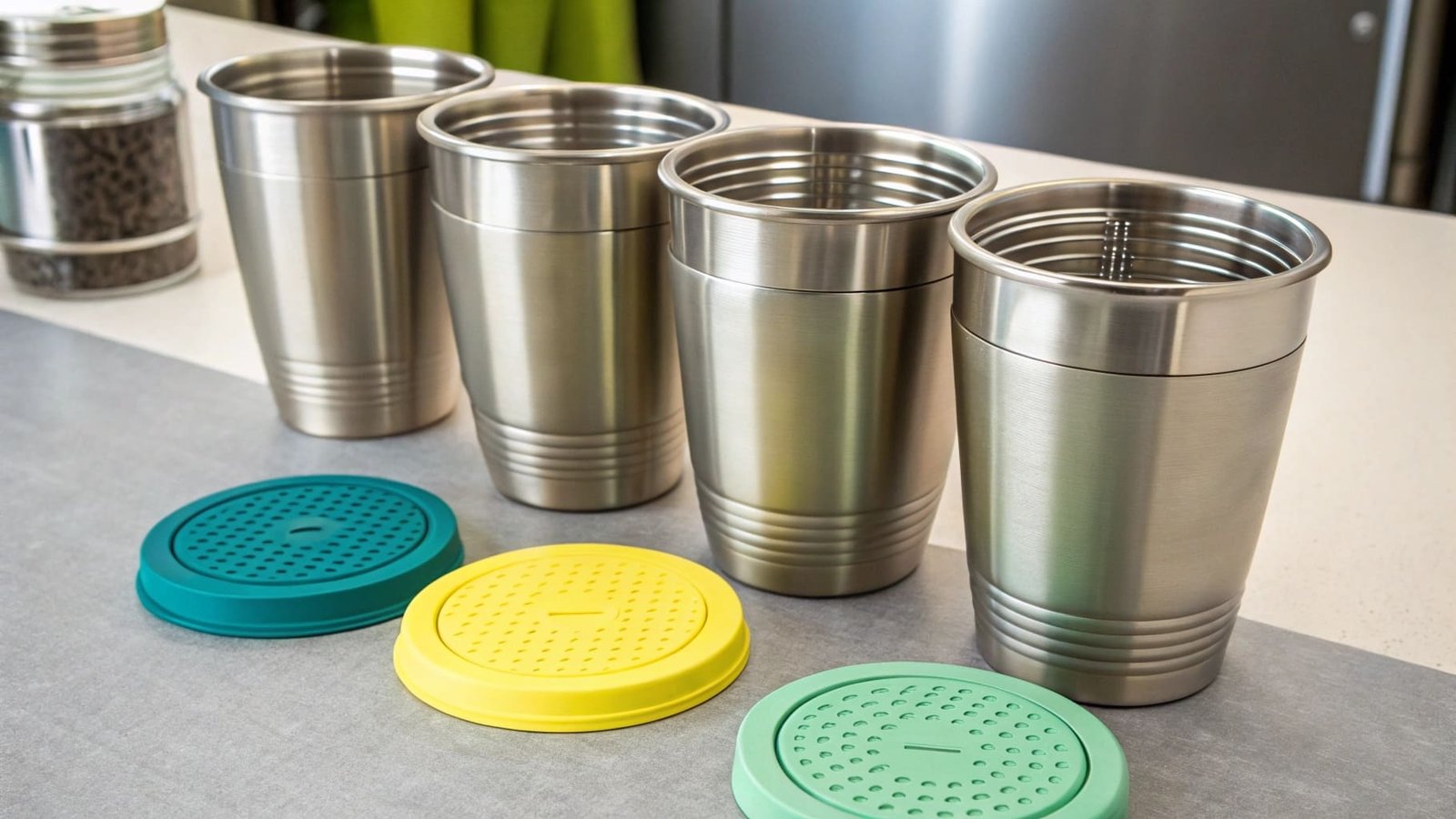
The most reliable method is a machined retention groove in the lid frame. The gasket profile is shaped to fit into this groove, usually with a slight interference fit. The groove holds the gasket in place during both compression and thermal cycling. This is the method I recommend most often for industrial tumbler applications because it requires no adhesives and makes gasket replacement straightforward.
Tongue-and-Groove Profile
Some gaskets use a tongue-and-groove interlocking profile. The gasket has a raised tongue that fits into a corresponding groove on the mating surface. This creates a mechanical lock that resists lateral movement. It is more complex to manufacture but performs well in applications where vibration is a major factor.
Adhesive-Backed Gaskets
For applications where retrofitting a groove is not practical, adhesive-backed gaskets provide a semi-permanent solution. The gasket has a pressure-sensitive adhesive on one face. It bonds to the lid frame and does not shift during operation. The downside is that replacement requires removing adhesive residue, which adds time to maintenance procedures.
Here is a comparison of these three approaches:
| Retention Method | Reliability | Ease of Replacement | Suitable For |
|---|---|---|---|
| Machined retention groove | High | Easy | New equipment, standard industrial tumblers |
| Tongue-and-groove profile | High | Moderate | High-vibration environments |
| Adhesive-backed gasket | Moderate | More time-consuming | Retrofit applications, low-vibration settings |
When I evaluate a supplier's product quality, I look at whether gasket retention is built into the design or left to the installer to figure out. Good manufacturers treat it as a design requirement. They specify the groove dimensions, the gasket profile tolerances, and the recommended installation procedure in their product documentation.
If you are a procurement officer evaluating suppliers, ask about gasket retention design directly. Ask whether the gasket is designed to fit a specific groove profile, and ask for the dimensional tolerances across production batches. Consistent dimensions across batches matter because even small variations in a gasket's cross-section will change how it sits in the groove and how it compresses at closure.
You should also ask about material certifications. For food-grade or pharmaceutical applications, FDA-compliant silicone is the minimum standard. A reliable supplier will provide this documentation without hesitation.
Conclusion
Inner lid rubber boot gaskets seal, protect, and stabilize industrial tumblers. Knowing the difference between gaskets and seals, and understanding retention design, helps you source the right component the first time.
-
"Gasket - Wikipedia", https://en.wikipedia.org/wiki/Gasket. A neutral engineering or encyclopedia source defines a gasket as a compressible element installed between mating surfaces to create a seal, supporting the description of the lid gasket as the barrier between the tumbler lid and drum. Evidence role: definition; source type: encyclopedia. Supports: A gasket is a compressible sealing component placed between mating surfaces to prevent leakage.. Scope note: A general gasket definition supports the sealing principle but may not discuss inner lid rubber boot gaskets for industrial tumblers specifically. ↩
-
"Experimental Investigation of Damping Properties of Selected ... - PMC", https://pmc.ncbi.nlm.nih.gov/articles/PMC11205283/. Materials research on elastomers describes their viscoelastic damping behavior, supporting the claim that rubber gasket materials can absorb impact energy and reduce vibration-related noise and wear. Evidence role: mechanism; source type: paper. Supports: Rubber and elastomer materials exhibit damping behavior that can absorb mechanical energy and reduce vibration transmission.. Scope note: The source would support the material mechanism generally rather than proving performance for every tumbler lid design or temperature condition. ↩
-
"Calculation Model of Mechanical and Sealing Properties of NiTi ...", https://pmc.ncbi.nlm.nih.gov/articles/PMC9267744/. Research on gasketed joints shows that gasket deformation and compression level influence contact pressure distribution and leakage behavior, supporting the claim that a worn or displaced gasket can produce inconsistent sealing pressure. Evidence role: mechanism; source type: paper. Supports: Changes in gasket geometry or compression affect contact pressure distribution and leak tightness.. Scope note: The source would support the relationship between deformation and sealing pressure, not directly measure cycle-to-cycle variation in a specific tumbler lid. ↩
-
"Silicone - Wikipedia", https://en.wikipedia.org/wiki/Silicone. Materials references list silicone rubber as an elastomer with a broad service-temperature range that can extend to about 200°C or higher, supporting its use in higher-temperature gasket applications. Evidence role: general_support; source type: encyclopedia. Supports: Silicone rubber is widely described as retaining useful properties across a broad temperature range that includes approximately 200°C.. Scope note: Exact temperature limits vary by silicone formulation, exposure duration, and operating environment; the comparison with 'standard rubber compounds' is therefore contextual rather than universal. ↩
-
"Combination spacer and gasket provides effective static seal", https://ntrs.nasa.gov/citations/19660000483. Mechanical engineering references classify gaskets as static seals installed between stationary mating surfaces, supporting the article’s distinction between a gasket and a dynamic sealing element. Evidence role: definition; source type: education. Supports: Mechanical engineering references commonly classify gaskets as static seals used between stationary surfaces.. Scope note: Terminology can vary by industry, and some sources may use 'seal' broadly to include both static gaskets and dynamic seals. ↩
-
"[PDF] A Survey of Actuator Shaft Sealing Techniques", https://ntrs.nasa.gov/api/citations/19730010752/downloads/19730010752.pdf. Seal-design references define dynamic seals as sealing elements used with rotating, reciprocating, or otherwise moving surfaces, supporting the contrast with static gasket applications. Evidence role: definition; source type: education. Supports: Dynamic seals are used where there is relative motion, such as rotating or reciprocating shafts and pistons.. Scope note: The citation would clarify terminology but would not by itself determine the correct part for every tumbler lid configuration. ↩
-
"[PDF] Elastomeric seals and materials at cryogenic temperatures", https://nvlpubs.nist.gov/nistpubs/Legacy/RPT/nbsreport6749.pdf. Studies and design references on elastomer seals describe thermal expansion and contraction during temperature cycling, supporting the mechanism by which gasket position and fit can change in heated equipment. Evidence role: mechanism; source type: paper. Supports: Elastomers undergo dimensional changes with temperature, and thermal cycling can affect seal fit and stress distribution.. Scope note: The evidence would support a plausible mechanism; actual displacement depends on groove design, friction, compression level, and material formulation. ↩