How to Choose 20oz Tumbler Sleeves for Sublimation OEM Production?
Most buyers focus on price first. They end up with sleeves that don't fit, don't last, and quietly kill their margins. Here is what to check before you order.
A 20oz tumbler sleeve for sublimation OEM production needs to match specific dimensions, use food-grade silicone, and leave the printed design area clear. Getting these three things right protects your artwork, meets compliance standards, and gives your product a finish that holds up at retail.
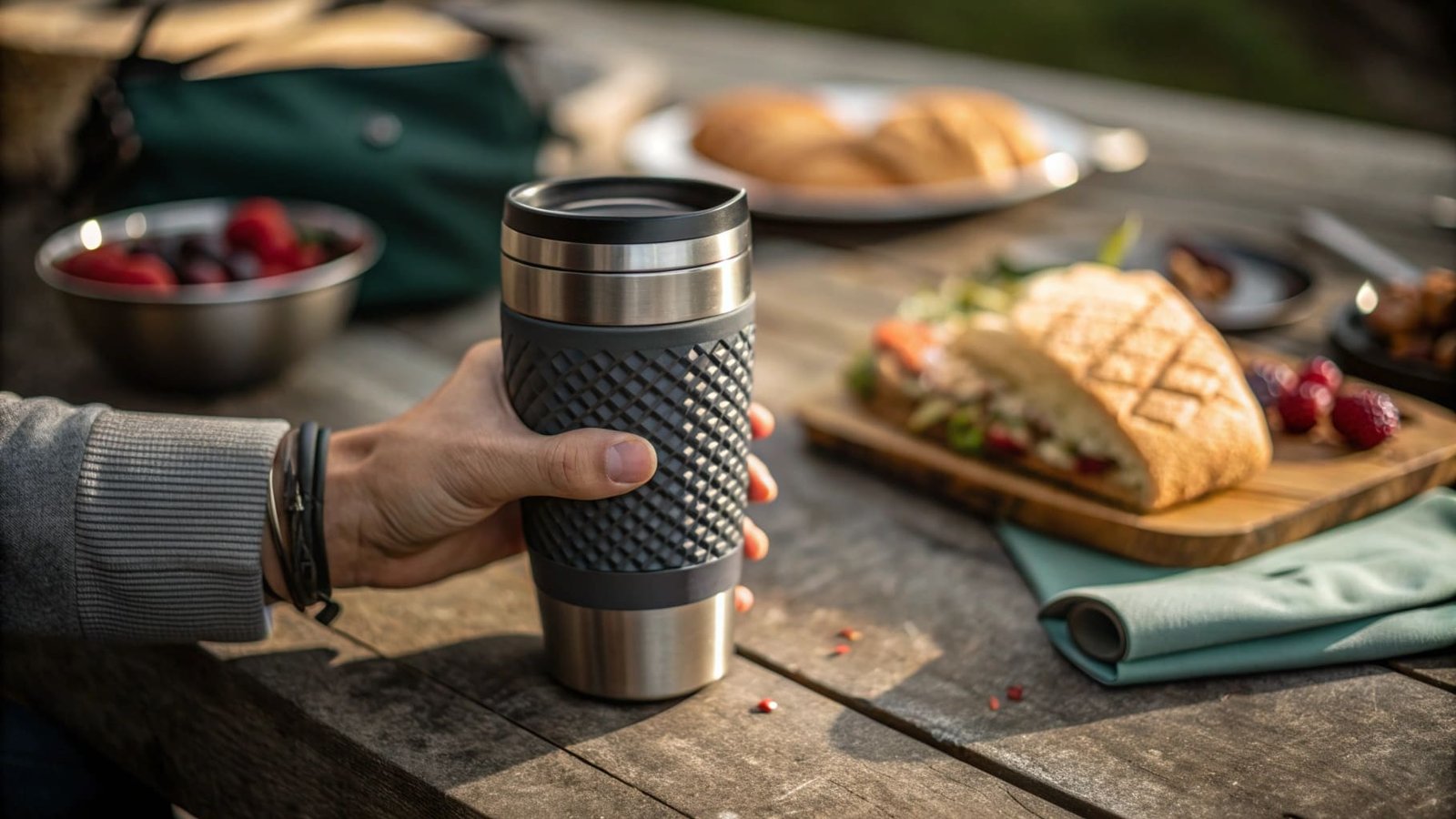
I have worked with buyers who thought sleeve selection was simple. Pick a size, pick a color, done. Then the first shipment arrives and the sleeve covers half the sublimation graphic. Or it smells like chemicals on arrival. Or it stretches out of shape after two weeks of use. Each of these problems costs money to fix, and most of them are easy to avoid if you know what to look for before production starts.
How Big Should a Decal Be for a 20oz Tumbler?
Getting the decal size wrong is one of the most common mistakes in sublimation production. It wastes transfer paper, ruins alignment, and makes the finished product look cheap.
For a standard 20oz tumbler, the decal should be between 8.5 and 9.5 inches wide and 6 to 6.5 inches tall. This range covers the full wrap-around surface while accounting for the slight taper of most 20oz designs.
Why Does the Sleeve Position Affect Your Decal Layout?
This is where a lot of buyers run into trouble. They finalize the decal artwork before deciding where the sleeve will sit on the tumbler. Then they place the sleeve order and realize the sleeve covers part of the graphic.
The sleeve position has to be part of the artwork brief, not an afterthought.
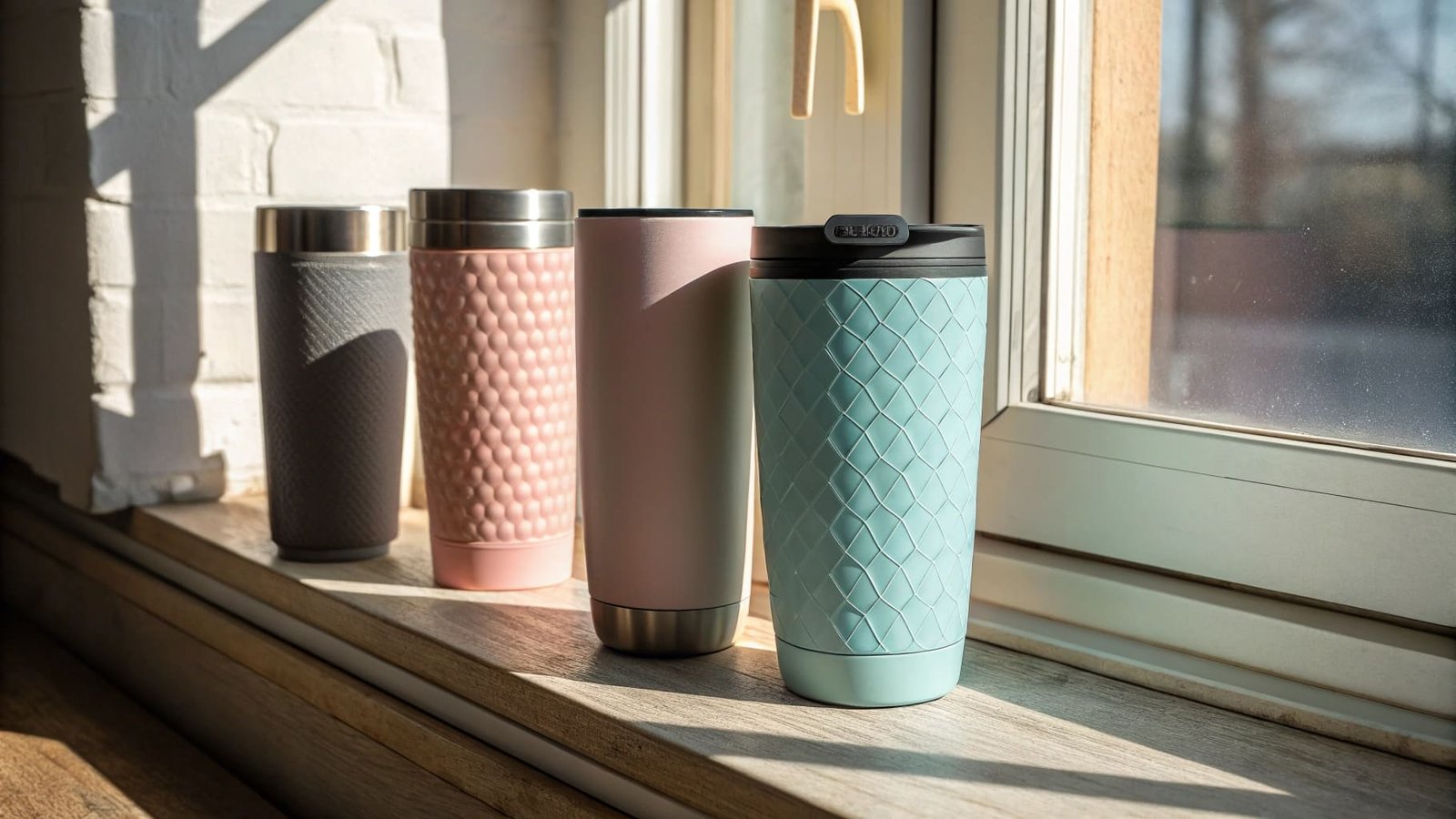
A well-designed silicone sleeve for a 20oz tumbler typically sits on the lower third of the body. This placement gives the user a natural grip zone and keeps the main design area fully visible. If your decal runs from top to bottom with no clear zones, the sleeve will cut through the artwork. If your decal is centered in the middle of the tumbler, the sleeve placement may block it entirely.
The table below shows how sleeve position affects your usable print area.
| Sleeve Position | Sleeve Height Range | Safe Print Zone |
|---|---|---|
| Lower third | 2.5 to 3.5 inches | Upper 3.5 to 4 inches fully clear |
| Mid-body | 2.5 to 3.5 inches | Top and bottom split, risky for centered designs |
| Full grip wrap | 4 to 5 inches | Very limited print visibility |
I always tell buyers: decide on sleeve placement first, then brief your designer on the safe zones. This one step removes a whole category of rework costs. When I source sleeves for OEM clients, I include a simple placement diagram in the product spec sheet so the sublimation team and the sleeve supplier are working from the same reference.
What Are the Measurements for a 20oz Sublimation Tumbler?
If you are sourcing sleeves from a supplier overseas, you cannot assume all 20oz tumblers share the same dimensions1. They do not. And a sleeve made for one 20oz tumbler may not fit another.
A standard 20oz sublimation tumbler is 6.5 to 7 inches tall with a circumference of 9 to 10 inches at the widest point2. The base is narrower, usually around 7 to 8 inches in circumference.
Why Do Small Measurement Differences Cause Big Production Problems?
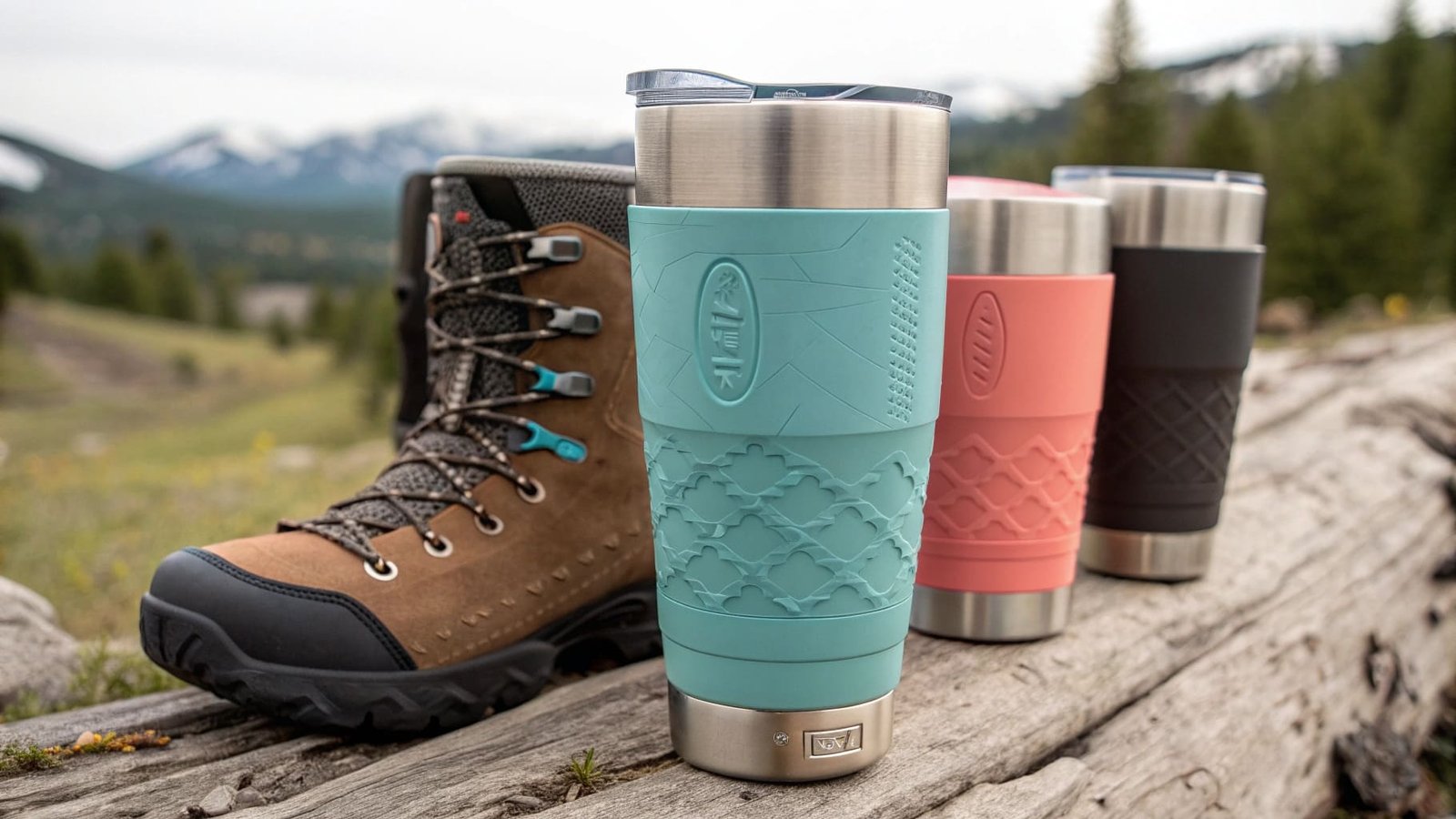
A difference of just 3 to 5mm in tumbler diameter can change how a silicone sleeve fits.3 A sleeve that is too tight will be hard to apply at scale and may leave stretch marks on the surface. A sleeve that is too loose will slide during use and look unprofessional on the shelf.
This matters most in OEM production because you are not ordering one unit. You are ordering thousands. If the sleeve spec is off, the entire batch is off.
Here are the key measurements you need to confirm before approving a sleeve sample.
| Measurement Point | Standard 20oz Range | Why It Matters |
|---|---|---|
| Tumbler height | 6.5 to 7 inches | Sets the maximum sleeve height |
| Top diameter | 3.5 to 3.8 inches | Sleeve must clear the rim without riding up |
| Mid-body diameter | 2.9 to 3.2 inches | Main grip zone, determines sleeve inner diameter |
| Base diameter | 2.3 to 2.6 inches | Affects sleeve lower edge fit |
| Sleeve height | 2.5 to 3.5 inches | Needs to match intended placement zone |
I recommend requesting a tolerance spec from your sleeve supplier and asking them to confirm dimensional tolerance within plus or minus 0.5mm. Suppliers who cannot give you this number in writing are not ready for OEM production. At Silijoy, we hold our sleeve dimensions to this tolerance as a standard, not as an upgrade. It is the only way to keep fit consistent across large volume orders.
One more thing. Always test the sleeve on the actual tumbler model your buyer is using, not a generic sample. Send your supplier three to five production tumblers before approving the sleeve mold. This one step has saved several of my clients from a full batch rejection.
Can You Make Money Selling Sublimation Tumblers?
Yes. But only if your cost structure is built correctly from the start. Many sellers underestimate the role that accessory components like silicone sleeves play in their margin performance.
The margin on sublimation tumblers is real, but it is easy to give it away through poor component choices, returns, and compliance failures. Choosing the right sleeve protects your profit from multiple directions at once.
What Does the Right Sleeve Actually Do for Your Margins?
I want to break this down clearly because most buyers think of a sleeve as a small add-on. It is not. It is a margin protection tool when used correctly.
Material quality determines your return rate.
Food-grade platinum-cured silicone costs 15 to 25 percent more per unit than peroxide-cured silicone.4 But peroxide-cured silicone often carries a chemical smell5 that triggers returns and negative reviews. One bad review cycle on Amazon or a retail platform can wipe out months of margin gains. FDA and LFGB compliance is not optional in North American and European markets.6 It is a barrier to entry. Buyers who skip certification checks often discover this at customs, not before.
Sleeve quality affects perceived product value.
A tumbler with a well-fitted, matte-finish silicone sleeve feels more premium in the hand. This tactile experience is part of what justifies a higher retail price point. Buyers in the North American market are used to premium packaging and product feel. A cheap sleeve that slides around or feels rough signals low quality before the customer even uses the product.
The table below shows how sleeve choice affects total landed cost and margin.
| Sleeve Type | Unit Cost Premium | Return Rate Impact | Compliance Risk | Retail Price Justification |
|---|---|---|---|---|
| Platinum-cured silicone | +15 to 25% | Low | Meets FDA and LFGB | Supports premium pricing |
| Peroxide-cured silicone | Baseline | Higher due to odor complaints | May fail import checks | Limits retail price ceiling |
| Generic ungraded silicone | Lowest | Highest | Not suitable for food contact | Cannot support premium branding |
I have spoken with buyers who switched from peroxide-cured to platinum-cured sleeves mid-season after a spike in returns. Their unit cost went up by about 18 percent. Their return rate dropped by more than half. The net result was a higher margin, not a lower one.
OEM customization opens a second margin lever.
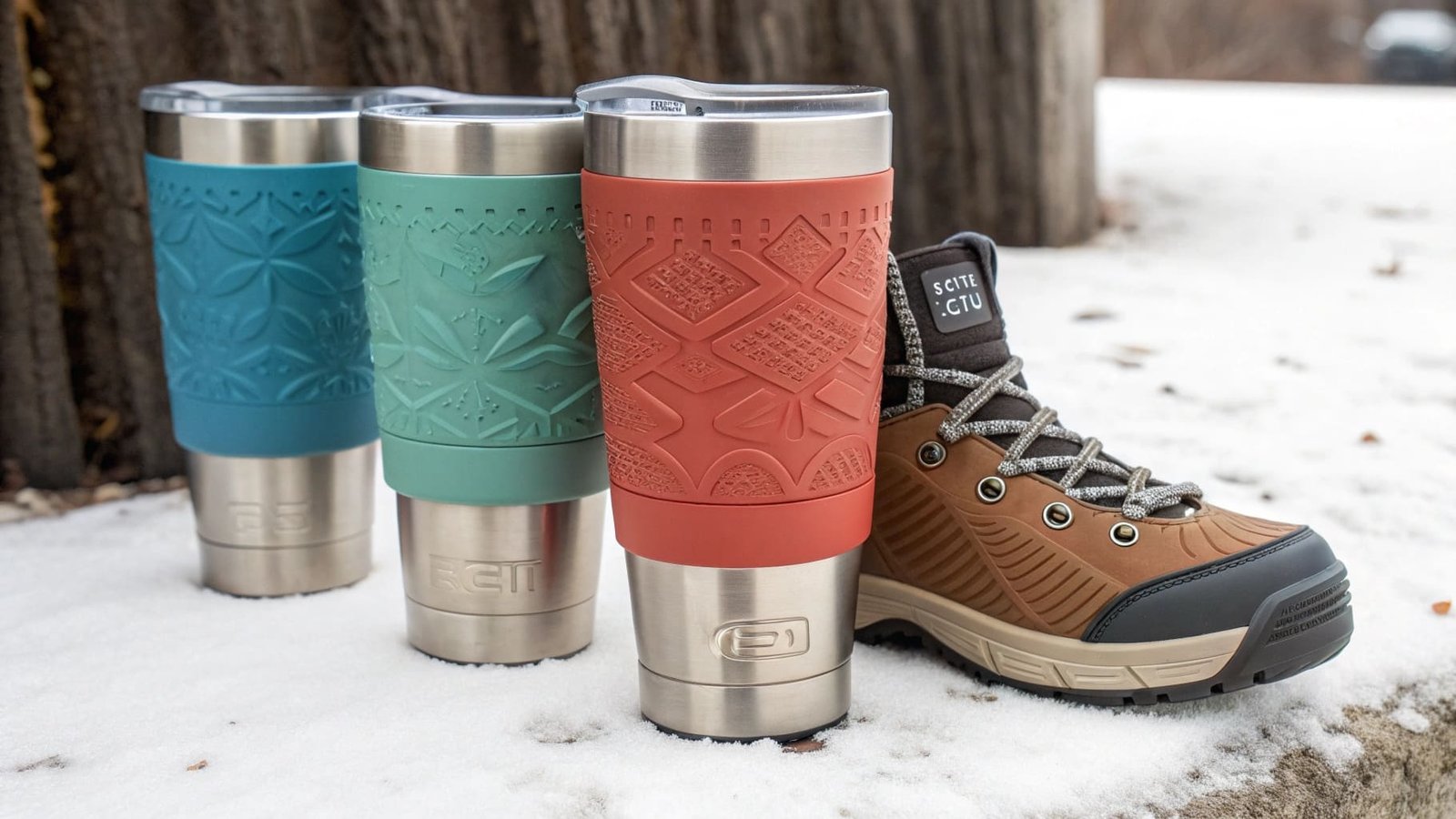
Beyond material choice, custom sleeve design is where serious margin growth happens. Engineered textures, pantone-matched colors, and precision-molded bottom patterns that prevent scratching all increase the perceived value of the product without dramatically increasing unit cost. Brands that test a custom sleeve design against a generic sleeve almost always see better sell-through on the custom version.
The key is finding an OEM partner who offers design consultation as part of the process, not as a paid extra. And one who can run small batch customization without minimum order quantities that make testing impossible. This flexibility is what allows a smaller brand to compete with larger players on product differentiation, even before they reach high-volume production.
Conclusion
Get the dimensions right, choose platinum-cured silicone, and align sleeve placement with your decal layout. These three steps protect your product, your margins, and your brand.
-
"What are the measurements for a 20oz skinny tumbler? - Facebook", https://www.facebook.com/groups/925520099039014/posts/1191731269084561/. The cylinder-volume relationship shows that a fixed capacity can be produced by different combinations of height and radius, supporting the caution that nominal 20oz capacity does not determine a single tumbler dimension. Evidence role: mechanism; source type: education. Supports: The geometry of volume shows that containers with the same capacity can have different height and diameter combinations.. Scope note: This is geometric support for dimensional variability, not market data on specific tumbler models. ↩
-
"What size should I use for a 20oz skinny tumbler? - Facebook", https://www.facebook.com/groups/1655261694953377/posts/1824609691351909/. Published specifications for common 20oz sublimation tumblers generally report heights and circumferences close to the stated range, supporting its use as a practical sourcing reference. Evidence role: general_support; source type: other. Supports: Published specifications for common 20oz sublimation tumblers fall near the article's stated height and circumference range.. Scope note: Because there is no single universal 20oz tumbler standard, the cited source should be framed as representative rather than definitive. ↩
-
"What is Pi in Math? & Finding Circumference of a Circle - [7-5-8]", https://www.youtube.com/watch?v=a0BCYBzJnzE. The circumference relationship C = πD shows that a 3–5 mm diameter difference changes circumference by roughly 9–16 mm, providing a geometric basis for why small tumbler-diameter differences can affect sleeve fit. Evidence role: mechanism; source type: education. Supports: A small diameter change produces a circumference change equal to pi times the diameter change, which can alter stretch and fit in an elastic sleeve.. Scope note: The calculation supports the dimensional mechanism but does not by itself define an acceptable fit tolerance for a specific silicone formulation. ↩
-
"Platinum Cured Silicones vs. Peroxide Cured Silicones", https://www.stockwell.com/platinum-cured-silicones-vs-peroxide-cured-silicones/. Industry and materials references generally describe platinum-cured silicone as costlier than peroxide-cured silicone due to catalyst and processing requirements, providing contextual support for a unit-cost premium. Evidence role: general_support; source type: other. Supports: Platinum-cured silicone is generally more expensive than peroxide-cured silicone because of catalyst and processing differences.. Scope note: The source would support the direction of the cost difference, but the exact 15–25% figure should be verified with current supplier or market data. ↩
-
"Peroxide-Based Crosslinking of Solid Silicone Rubber, Part I - PMC", https://pmc.ncbi.nlm.nih.gov/articles/PMC9609014/. Materials studies of cured silicone elastomers report that peroxide curing can leave residual decomposition products or volatile extractables, supporting the mechanism by which peroxide-cured silicone may exhibit noticeable odor. Evidence role: mechanism; source type: paper. Supports: Peroxide-cured silicone can contain residual decomposition products or volatile extractables that may contribute to odor.. Scope note: Odor intensity depends on formulation, curing conditions, and post-curing, so the evidence should not imply that all peroxide-cured silicone smells unacceptable. ↩
-
"21 CFR 177.2600 -- Rubber articles intended for repeated use. - eCFR", https://www.ecfr.gov/current/title-21/chapter-I/subchapter-B/part-177/subpart-C/section-177.2600. FDA food-contact regulations and EU food-contact material law require materials intended to contact food to meet safety and migration requirements, supporting the article's emphasis on compliance for silicone tumbler sleeves. Evidence role: definition; source type: government. Supports: Food-contact products must comply with applicable food-contact material safety rules in the jurisdictions where they are sold.. Scope note: LFGB is a German legal framework often used in testing claims; EU-wide compliance is governed primarily by EU food-contact legislation, so the citation should avoid treating LFGB as the sole European requirement. ↩