Which Silicone Mug Sleeve Works Best for B2B Corporate Gift Programs?
Choosing the wrong sleeve ruins your entire gift program. Poor grip, weak branding, and safety risks kill customer trust fast. Here is what actually works.
The best silicone mug sleeve for B2B corporate gift programs is a food-grade, platinum-cured slip-on sleeve with a Shore A hardness of 40–60A. It delivers strong grip, passes FDA or LFGB safety standards, and works across standard mug sizes with low minimum order quantities.
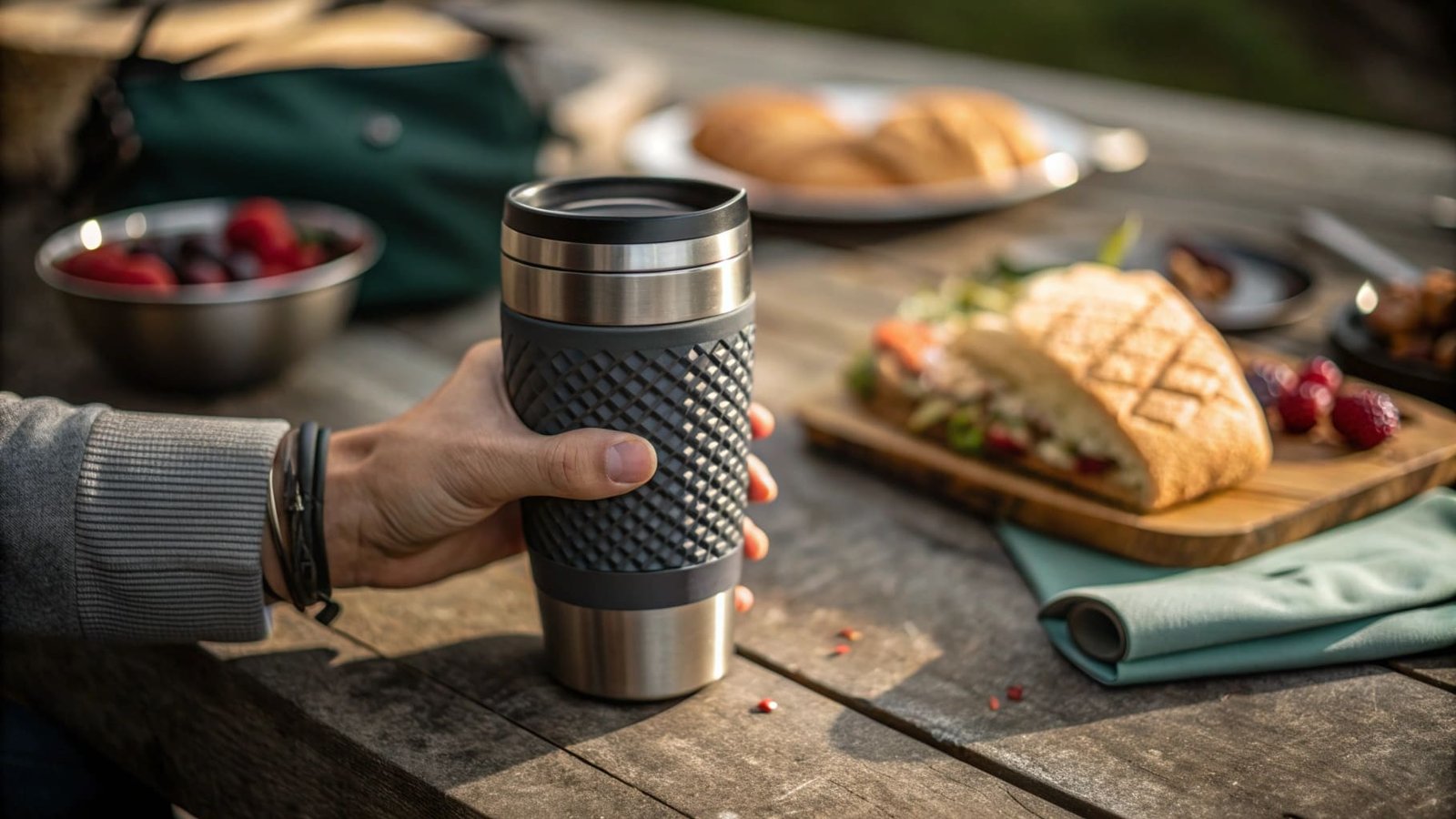
I have spent years sourcing silicone drinkware accessories for B2B buyers across North America and Europe. One thing I keep seeing is this: buyers focus too much on logo placement and not enough on material quality and sleeve type. That mistake costs them money and damages their brand. The three questions I get asked most often are about grip, sleeve types, and health safety. I will answer all three clearly, so you can make a smarter sourcing decision before your next corporate gift order.
Can Silicone Sleeves Improve Grip?
Most people assume all sleeves feel the same. They do not. A low-quality sleeve slips in your hand and makes things worse. That is a real problem in office settings.
Yes, silicone sleeves improve grip. The natural surface texture of silicone creates friction between the hand and the cup.1 This reduces accidental drops significantly, especially when people are multitasking at their desks or walking between meetings.

Why Grip Matters More Than You Think
I once had a client who ordered sleeves based on color options alone. The sleeves looked great in photos. But once employees started using them, the feedback was poor. The sleeves felt slippery when hands were even slightly wet. That led to one damaged laptop and a very unhappy procurement officer.
The reason that happened was simple. The sleeves had a Shore A hardness rating that was too high. High Shore A means the material is stiffer.2 Stiff material does not conform to the shape of your hand. It reduces the contact area between your skin and the sleeve. Less contact means less grip.
Premium silicone sleeves fall between Shore A 40 and Shore A 60. This range gives you the right balance. The material is soft enough to grip naturally but firm enough to hold its shape over time.
Here is a quick breakdown of how Shore A hardness affects real-world performance:
| Shore A Rating | Feel | Grip Quality | Best Use Case |
|---|---|---|---|
| Below 40A | Very soft, almost jelly-like | Moderate | Promotional giveaways |
| 40A – 60A | Firm but flexible | High | Office and corporate gifts |
| Above 60A | Stiff, rubber-like | Low | Industrial or heavy-duty use |
For corporate gift programs, the 40–60A range is the standard I recommend. It also holds printed logos better. Soft silicone distorts under pressure, which blurs custom branding. The right hardness keeps your logo sharp and clean throughout years of daily use. Tech companies and office-based businesses care about this because their employees carry mugs all day. A sleeve that improves grip also reduces the chance of spills on equipment. That is a quiet but real value-add that decision makers appreciate.
What Are the Three Types of Sleeves?
Not all sleeves fit the same way. Picking the wrong type for your program leads to poor fit, high costs, or weak brand impact. The type you choose changes everything.
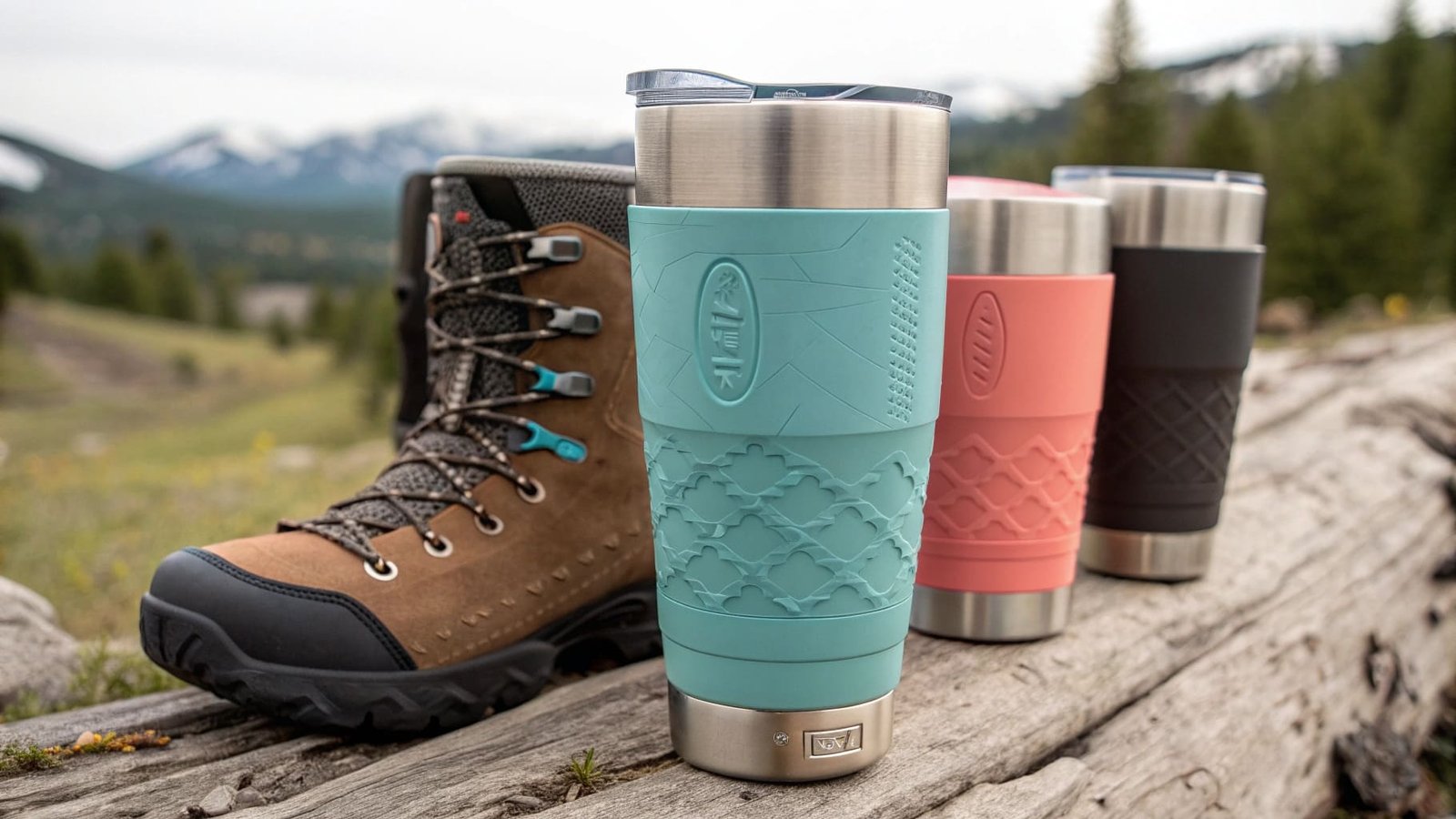
There are three main types of silicone mug sleeves in the B2B market. They are slip-on sleeves, handle-wrapped sleeves, and custom-fit sleeves. Each type serves a different purpose and fits a different budget or branding goal.
Breaking Down Each Sleeve Type by Business Need
I work with buyers who range from startup founders to procurement officers at large distributors. Their needs are very different. Sleeve type is often where those differences show up most clearly.
Here is how the three types compare:
| Sleeve Type | How It Attaches | MOQ Range | Best For | Key Trade-off |
|---|---|---|---|---|
| Slip-On | Slides over the cup body | 500–1,000 units | General corporate gifts | Fits most mugs but not perfectly |
| Handle-Wrapped | Wraps around the handle area | 1,000–2,000 units | Ergonomic or premium gifts | Limits mug style compatibility |
| Custom-Fit | Molded to match a specific mug | 2,000+ units | Premium branded drinkware | Higher tooling cost upfront |
Slip-on sleeves are the most common choice in B2B programs. They fit most standard mug diameters without custom tooling. This keeps costs low and lead times short. If you are running a gift program for the first time or testing a new product line, slip-on is the safest starting point.
Handle-wrapped sleeves are less common but worth considering for ergonomic product lines. They wrap around the handle area and reduce hand strain during long holds. Some buyers in the wellness and healthcare sector prefer this style because it signals care for the end user.
Custom-fit sleeves cost more at the start due to tooling fees. But they pay off if your brand is trying to own a specific look. The sleeve wraps the entire mug body precisely. There is no gap, no sliding, no misalignment. When a customer picks up that mug, they feel the quality immediately. That perception of quality is what justifies a premium price tag in the Canadian or US retail market.
My advice is this: match your sleeve type to your brand positioning. If you sell volume, go slip-on. If you sell premium, invest in custom-fit.
What Is the Healthiest Cup to Drink From?
Cheap materials in drinkware are more common than buyers realize. Some suppliers cut costs in ways that are not visible to the eye. That puts your brand at risk and your customers at harm.
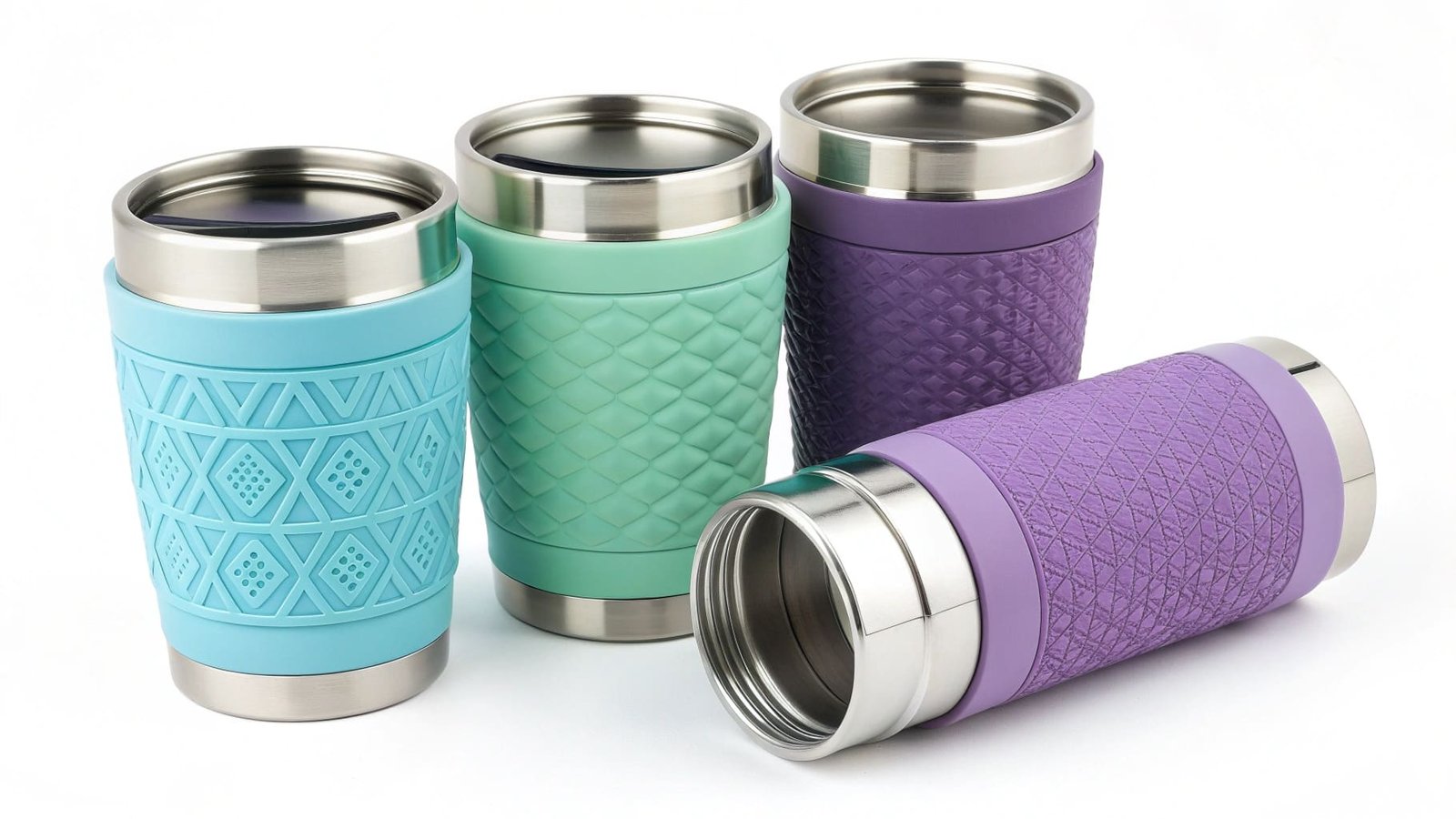
The healthiest option for corporate drinkware programs is a cup with a food-grade, 100% platinum-cured silicone sleeve. This material is FDA-approved, BPA-free, and releases no chemicals even at temperatures up to 230°C.3 It is safe for daily use across hot and cold beverages.
How to Verify Health and Safety Claims Before You Order
I have seen certificate fraud happen. A supplier sends a document that looks official. The logo is there, the format looks right, and the buyer signs off. Months later, a compliance check fails. The certificate was copied from another product. The material used in the actual production was not tested at all.
This is one of the biggest pain points I hear from experienced B2B buyers. You cannot always verify quality by looking at a sample. You need documentation you can trust.
Here is what to check when a supplier provides health certifications:
| Certification | Issuing Region | What It Confirms | How to Verify |
|---|---|---|---|
| FDA | United States | Safe for food contact | Cross-check with FDA database |
| LFGB | European Union | Safe for food and lip contact | Request the test report, not just the certificate |
| REACH | European Union | No restricted chemicals | Check substance list against SVHC list |
| RoHS | Global | No hazardous materials | Common in electronics but relevant for multi-use gifts |
Beyond certification, the curing process matters. There are two main ways silicone is cured during manufacturing. Peroxide curing is cheaper. It often leaves behind chemical residues called volatile organic compounds.4 These residues can affect taste and are not ideal for drinkware. Platinum curing costs more but produces a purer material. No harmful byproducts remain after the curing process.5 The result is a sleeve that is safe, odorless, and fully inert even under repeated heat exposure.
For brands distributing products in Canada, the US, or the EU, platinum-cured silicone is the only acceptable option. It protects your end customer. It protects your brand. And it aligns with corporate sustainability goals because the material lasts two to three years under daily use without degrading. That means fewer replacements, less waste, and a better story to tell your clients.
When I evaluate a new supplier, the first thing I ask for is their LFGB or FDA test report. I ask for the actual report, not just the certificate. A real test report includes the testing lab name, the specific materials tested, the date, and pass or fail results for each substance. If a supplier hesitates on that request, I move on.
Conclusion
The right silicone sleeve improves grip, fits your program's budget, and meets health standards. Choose based on hardness rating, sleeve type, and verified certifications.
-
"In vivo friction properties of human skin - PubMed", https://pubmed.ncbi.nlm.nih.gov/10493141/. Tribology studies of silicone elastomers report measurable friction against skin or skin-like substrates, supporting the mechanism by which a silicone sleeve can improve hand grip. Evidence role: mechanism; source type: paper. Supports: The source should show that silicone elastomers can exhibit measurable friction against skin or comparable surfaces.. Scope note: Such studies may not test mug sleeves specifically, so the support is contextual rather than direct product proof. ↩
-
"Durometer Shore Hardness Scale - Smooth-On", https://www.smooth-on.com/page/durometer-shore-hardness-scale/. Technical references on Shore durometer scales explain that higher Shore A values indicate harder and less compliant elastomeric materials. Evidence role: definition; source type: education. Supports: The source should define Shore A hardness and explain that higher values correspond to harder, less compliant elastomeric materials.. ↩
-
"21 CFR 177.2600 -- Rubber articles intended for repeated use. - eCFR", https://www.ecfr.gov/current/title-21/chapter-I/subchapter-B/part-177/subpart-C/section-177.2600. FDA food-contact regulations and food-contact migration studies support that specified silicone rubber formulations may be suitable for repeated food contact under defined compositional and testing conditions. Evidence role: general_support; source type: government. Supports: The source should support that specified silicone rubber formulations may be compliant for repeated food contact and that migration testing is used to assess chemical release.. Scope note: This does not prove that every platinum-cured sleeve is BPA-free or releases no chemicals at 230°C; those claims require formulation-specific migration testing. ↩
-
"Peroxide-Based Crosslinking of Solid Silicone Rubber, Part I - PMC", https://pmc.ncbi.nlm.nih.gov/articles/PMC9609014/. Polymer studies of peroxide-cured silicone elastomers describe residual decomposition products and volatile compounds that can remain after curing and may require post-curing to reduce extractables. Evidence role: mechanism; source type: paper. Supports: The source should explain that peroxide curing can generate residual decomposition products or volatile compounds in silicone elastomers.. Scope note: The cost comparison may require separate industry cost evidence; the chemistry source primarily supports the residue mechanism. ↩
-
"Chemical Migration from Silicones used in Connection with Food ...", https://www.nal.usda.gov/research-tools/food-safety-research-projects/chemical-migration-silicones-used-connection-food. Polymer chemistry literature distinguishes platinum-catalyzed addition-cure silicones from peroxide-cured systems and supports the view that addition curing avoids peroxide-decomposition byproducts. Evidence role: mechanism; source type: paper. Supports: The source should explain the difference between platinum-catalyzed addition curing and peroxide curing, especially with respect to curing byproducts and extractables.. Scope note: This does not prove that no harmful substances remain in every finished product; residual catalysts, additives, or contaminants must still be assessed by product-specific testing. ↩