How to Choose Silicone Lids for Cups in Bulk for Restaurant Supply Chains?
Buying silicone lids for a restaurant supply chain sounds simple. But one bad batch can shut down a kitchen, trigger a health inspection, and kill your reputation overnight.
Food-grade silicone cup lids are the safest choice for restaurant supply chains. They handle extreme temperatures, resist chemical leaching, and hold up under daily commercial use. The key is knowing how to verify quality before you place a bulk order.
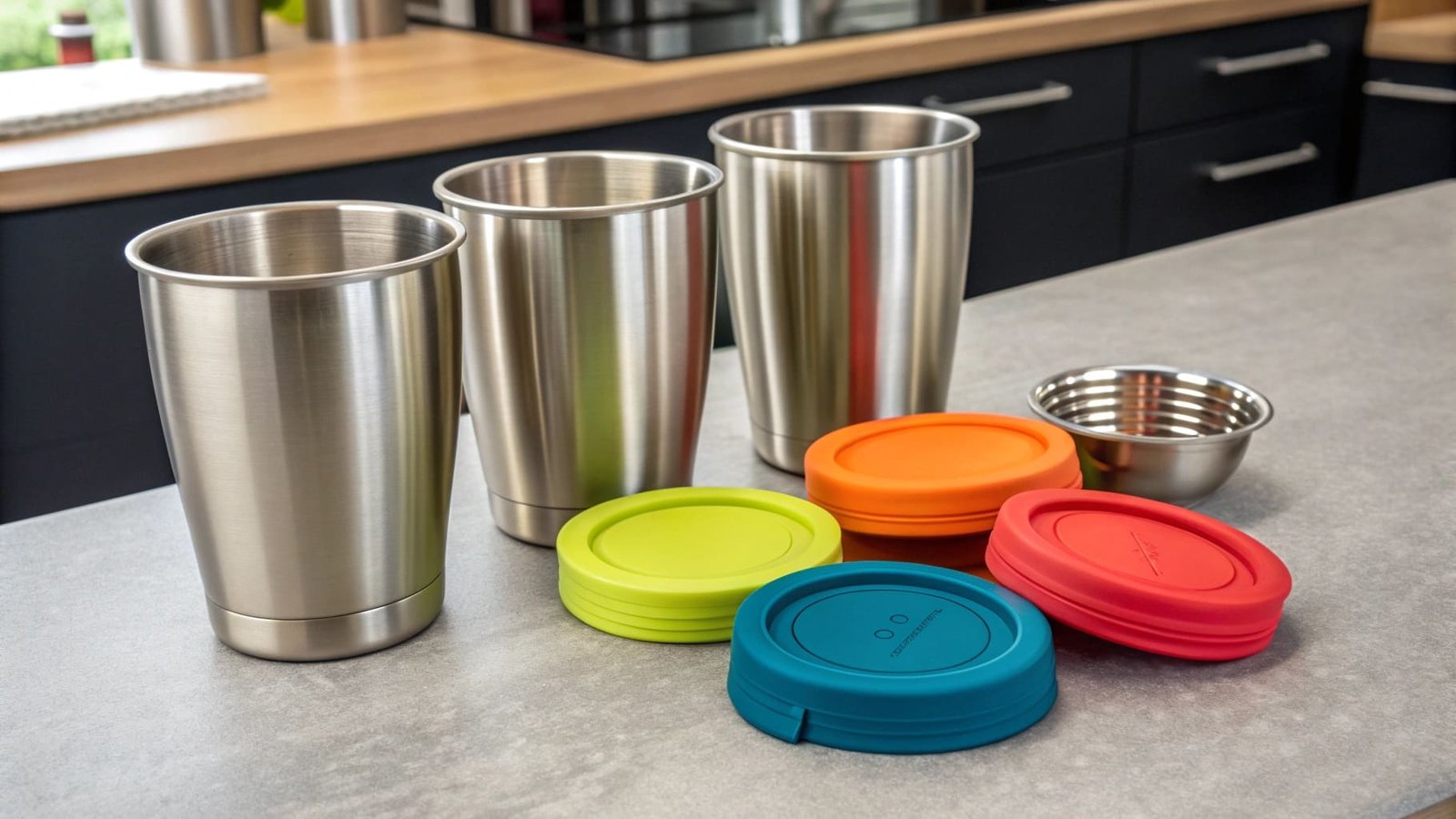
Most buyers focus on price per unit. That is a mistake. The real cost shows up six months later, when lids crack, certifications fail audits, or a supplier ghosts you after payment. I want to walk you through what actually matters when sourcing silicone lids at scale.
Can You Freeze Silicone Lids?
You have a walk-in freezer running at -10°F. You need lids that survive it. But how do you know which ones will crack and which ones will hold?
Yes, you can freeze food-grade silicone lids. High-quality silicone handles temperatures from -40°F to 450°F without cracking, warping, or losing its seal.1 This makes it a reliable choice for both freezer storage and hot beverage service in commercial kitchens.
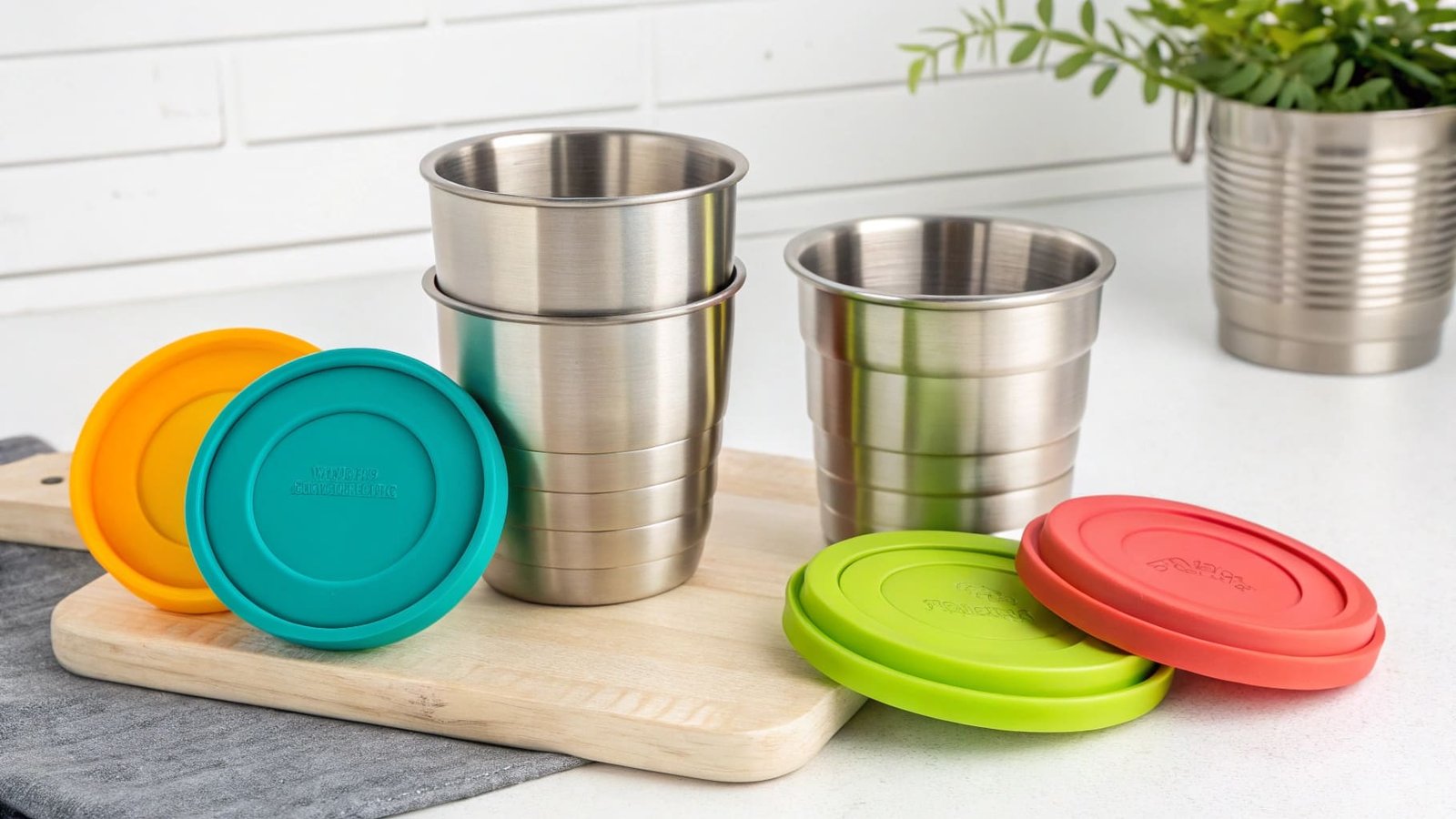
The temperature range matters more than most buyers realize. A restaurant supply chain does not use lids in one setting. The same lid might go from a hot dishwasher cycle to a freezer shelf within hours. That kind of thermal stress destroys cheap materials fast.
What Makes a Silicone Lid Truly Freeze-Safe?
The difference between a lid that survives freezing and one that does not comes down to the silicone formula used in production.
| Feature | Platinum-Cured Silicone | Peroxide-Cured Silicone |
|---|---|---|
| Temperature Range | -40°F to 450°F | -40°F to 400°F |
| Residual Chemicals | None | Possible byproducts |
| Flexibility After Freezing | Maintained | May stiffen |
| Certification Eligibility | FDA / LFGB ready | Harder to certify |
| Recommended for Food Use | Yes | With caution |
Platinum-cured silicone stays flexible after repeated freeze and thaw cycles.2 Peroxide-cured silicone may leave behind chemical residues from the curing process.3 These residues do not always appear in basic tests. They show up in lab analysis.
When I evaluate a new supplier, I always ask one direct question: which curing method do you use? A supplier that cannot answer that question clearly is a supplier I walk away from.
For bulk buyers, the practical test is simple. Request a sample batch. Put the lids in a freezer at the lowest temperature your operation runs. Check them after 72 hours. A good lid comes out flexible, odor-free, and unchanged in shape.
How to Tell If Silicone Is Food Safe?
A supplier sends you a product sheet that says "food grade." That phrase means nothing without proof. So how do you actually confirm it?
To tell if silicone is food safe, request FDA or LFGB certification documents tied to the specific product batch4. Food-safe silicone should also pass a pinch test — white marks when twisted indicate fillers that do not belong in food-contact materials.
Certification fraud is a real problem. I have heard from other buyers who received forged documents. The certificates looked correct. The logos were there. But the test results were fabricated. This is not rare. It happens often enough that experienced procurement officers treat every document as suspect until verified.
How to Verify Food Safety Without Relying on Paperwork Alone?
You need a multi-step approach. Documents are the start, not the finish.
Step one: Request batch-specific certificates.
A legitimate certificate is tied to a production batch number. A generic certificate that applies to "all products" is a red flag. Ask for the batch number on your sample order and match it to the certificate.
Step two: Run physical tests on your samples.
| Test | What to Do | What a Safe Result Looks Like |
|---|---|---|
| Odor Test | Smell the lid at room temperature | Little to no chemical smell |
| Pinch Test | Twist the lid firmly | No white marks appear |
| Rub Test | Rub the surface on white paper | No color transfer or residue |
| Flexibility Test | Bend and release | Returns to original shape immediately |
| Heat Test | Boil in water for 10 minutes | No discoloration, no odor release |
Step three: Cross-reference certifications with issuing bodies.
FDA and LFGB certificates come from recognized testing labs. The lab name appears on the document. You can contact those labs directly to confirm the certificate is real. This step takes ten minutes and protects you from months of supplier headaches.
Step four: Ask for material composition reports.
A trustworthy supplier can provide a full breakdown of what is in their silicone formula. This includes the base polymer, curing agents, colorants, and any additives. If a supplier refuses to share this, that tells you everything you need to know.
Does Silicone Leach Into Food When Frozen?
You are storing food in silicone-lidded containers overnight in a commercial freezer. A chef asks you: is this safe? What do you tell them?
High-quality food-grade silicone does not leach into food when frozen.5 It is chemically inert and non-porous. This means it does not react with food or release substances at low temperatures. The risk only appears with low-grade silicone that contains fillers or additives.
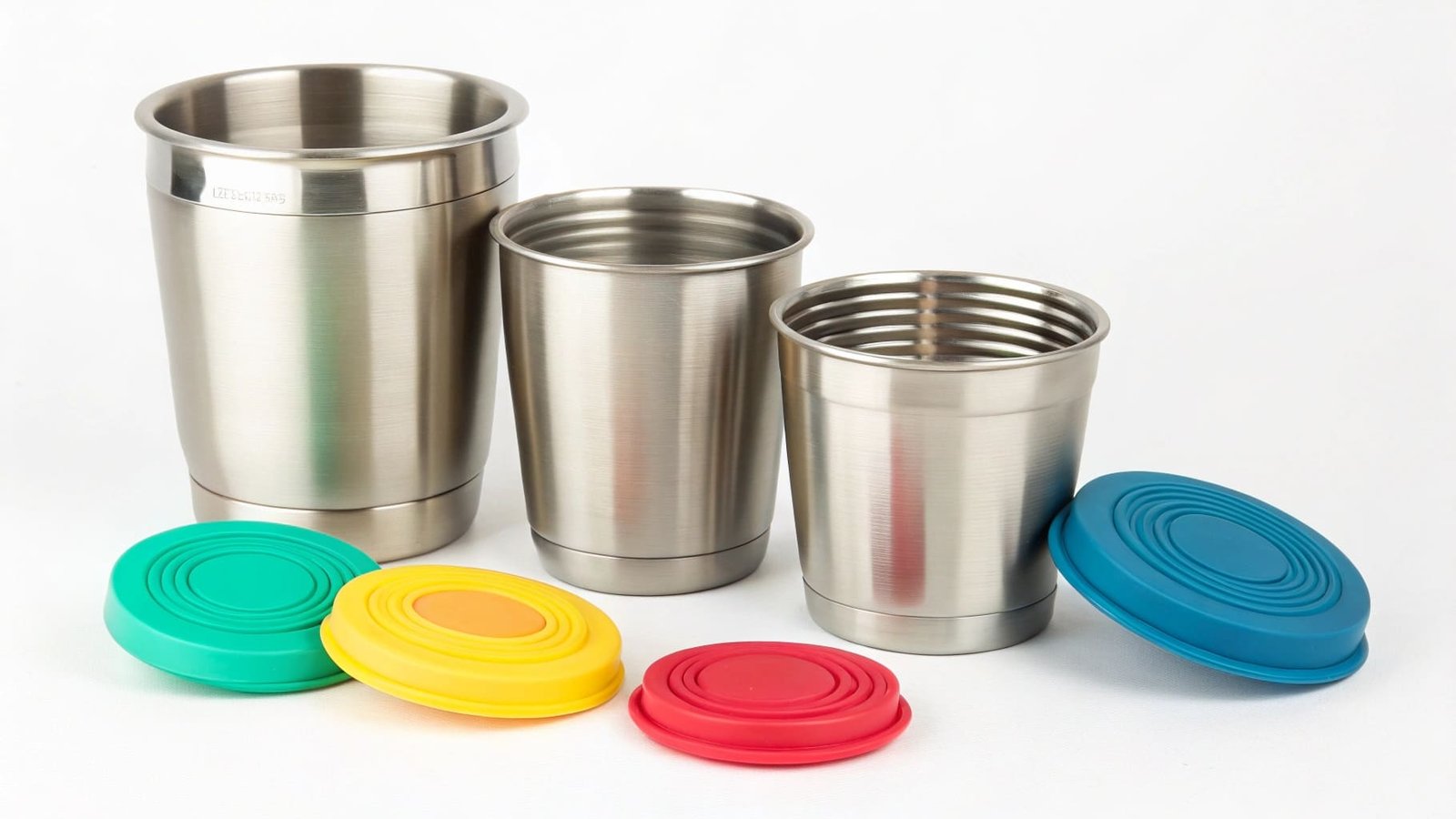
This is the question I get asked most often by restaurant operators. It is a fair question. The answer depends entirely on the grade of silicone you are buying. Not all silicone sold as "food grade" meets the same standard.
What Are the Real Leaching Risks in Commercial Kitchen Environments?
The risk of leaching is low with certified silicone. But the conditions in a commercial kitchen push materials harder than home use. Here is what actually creates risk.
| Risk Factor | How It Happens | How to Prevent It |
|---|---|---|
| Filler-Heavy Silicone | Manufacturers add chalk or clay to cut costs | Demand material composition reports |
| Acidic Food Contact | Citrus and vinegar interact more aggressively with fillers | Use only platinum-cured, certified silicone |
| Repeated Thermal Cycling | Freeze to heat cycles degrade low-quality formulas | Test samples through 50+ thermal cycles before bulk order |
| Surface Damage | Cuts and scratches on lids create entry points | Inspect lids for surface integrity on delivery |
| Improper Storage | UV exposure degrades silicone over time | Store lids away from direct sunlight |
The most common source of contamination I have seen in commercial supply chains is not the silicone itself. It is the fillers. Manufacturers add calcium carbonate, talc, or clay to reduce material costs.6 These fillers are not food-safe. They break down over time, especially in freeze-thaw cycles, and they do migrate into food.
The pinch test I mentioned earlier directly targets this. Pure silicone does not leave white marks when twisted. Filler-heavy silicone does. That one test, done on every new sample batch, has saved buyers from serious problems.
For restaurant supply chain managers, the final protection is building leaching resistance into your supplier contract. Require that every production batch comes with a migration test report. Migration testing specifically measures whether any substances move from the silicone into a food-simulating liquid.7 It is the gold standard for food-contact safety verification.
Conclusion
Choosing bulk silicone lids for restaurant supply chains comes down to three things: verified certifications, platinum-cured material, and a supplier who provides proof, not just promises.
-
"A High-Temperature-Resistant and Conductive Flexible Silicone ...", https://pmc.ncbi.nlm.nih.gov/articles/PMC12073532/. Published materials-property references report that silicone rubber maintains useful elastomeric properties over a broad temperature range, commonly extending from about −40°C to above 200°C for suitable grades. Evidence role: general_support; source type: paper. Supports: Silicone rubber commonly retains elasticity across a wide temperature range, including subfreezing temperatures and high heat, depending on grade and formulation.. Scope note: The source would support typical silicone-rubber capability, not guarantee that every lid maintains its seal across that full range. ↩
-
"Silicone rubber - Wikipedia", https://en.wikipedia.org/wiki/Silicone_rubber. Studies of silicone elastomers indicate that properly formulated addition-cured silicone can retain elastomeric behavior at low temperatures, supporting its use where freezing and thawing are expected. Evidence role: mechanism; source type: paper. Supports: Addition-cured, platinum-catalyzed silicone elastomers can retain elasticity at low temperatures, with performance depending on formulation and fillers.. Scope note: The evidence would support low-temperature flexibility in suitable formulations, not prove durability after a particular number of freeze-thaw cycles for a specific product. ↩
-
"Peroxide-Based Crosslinking of Solid Silicone Rubber, Part I - PMC", https://pmc.ncbi.nlm.nih.gov/articles/PMC9609014/. Research on peroxide-cured silicone rubber reports that peroxide decomposition can leave residual volatile or extractable byproducts, which are commonly addressed through post-curing and migration or extractables analysis. Evidence role: mechanism; source type: paper. Supports: Peroxide curing can generate decomposition byproducts or residual volatile compounds that may require post-curing or extractables testing.. Scope note: This supports the possibility of residues; it does not show that all peroxide-cured silicone lids are unsafe. ↩
-
"[PDF] Q7 Good Manufacturing Practice Guidance for Active ... - FDA", https://www.fda.gov/files/drugs/published/Q7-Good-Manufacturing-Practice-Guidance-for-Active-Pharmaceutical-Ingredients-Guidance-for-Industry.pdf. Food-contact-material regulations and GMP guidance require traceability and compliance documentation for materials intended to contact food, indicating that batch- or lot-specific evidence is more probative than a generic supplier statement. Evidence role: expert_consensus; source type: government. Supports: Food-contact-material rules and good manufacturing practice emphasize traceability, declarations of compliance, and documentation tied to materials or lots used in production.. Scope note: Regulations may not use the exact commercial phrase “FDA certificate” or require a single standardized certificate format. ↩
-
"Influence of cooking conditions on the migration of silicone ...", https://pubmed.ncbi.nlm.nih.gov/33453582/. Migration studies for silicone food-contact materials show that extractable or migratable substances depend on formulation, contact medium, time, and temperature; compliant materials are assessed against migration limits rather than assumed to release nothing. Evidence role: general_support; source type: paper. Supports: Migration from compliant silicone food-contact materials is evaluated using food simulants and is generally temperature- and formulation-dependent, with lower temperatures expected to reduce migration compared with heating conditions.. Scope note: This would temper the article’s wording by supporting low expected migration under frozen conditions, not literal zero leaching for every product. ↩
-
"The Effect of Various Fillers on the Properties of Methyl Vinyl ... - PMC", https://pmc.ncbi.nlm.nih.gov/articles/PMC10058771/. Polymer-compounding literature identifies mineral fillers such as calcium carbonate, talc, and clay as common additives in elastomer formulations, where they can reduce material cost or alter mechanical behavior. Evidence role: general_support; source type: paper. Supports: Mineral fillers including calcium carbonate, talc, and clay are used in elastomer and silicone-rubber formulations to modify cost and mechanical properties.. Scope note: This supports the plausibility of filler use in silicone products, not the prevalence of such fillers in restaurant lid supply chains. ↩
-
"Chemistry Recommendations for Submissions of Food Contact ...", https://www.fda.gov/regulatory-information/search-fda-guidance-documents/guidance-industry-preparation-premarket-submissions-food-contact-substances-chemistry. Food-contact-material regulations define migration testing as the measurement of substances transferred from a material into food or food simulants under specified contact conditions. Evidence role: definition; source type: government. Supports: Food-contact migration testing uses food simulants to measure transfer of substances from a material into media representing foods under specified conditions.. ↩