How to Choose Tumbler Rubber Barrel Gaskets for High-Volume OEM Orders?
Choosing the wrong gasket for a high-volume OEM order can shut down your production line. I have seen it happen. The cost is real, and the fix is not quick.
Choosing tumbler rubber barrel gaskets for OEM orders means looking beyond size. You need to check the material, the groove dimensions, the thickness, and the compression behavior. Get these right before you place a large order, and you will avoid most of the common failures I see buyers run into.
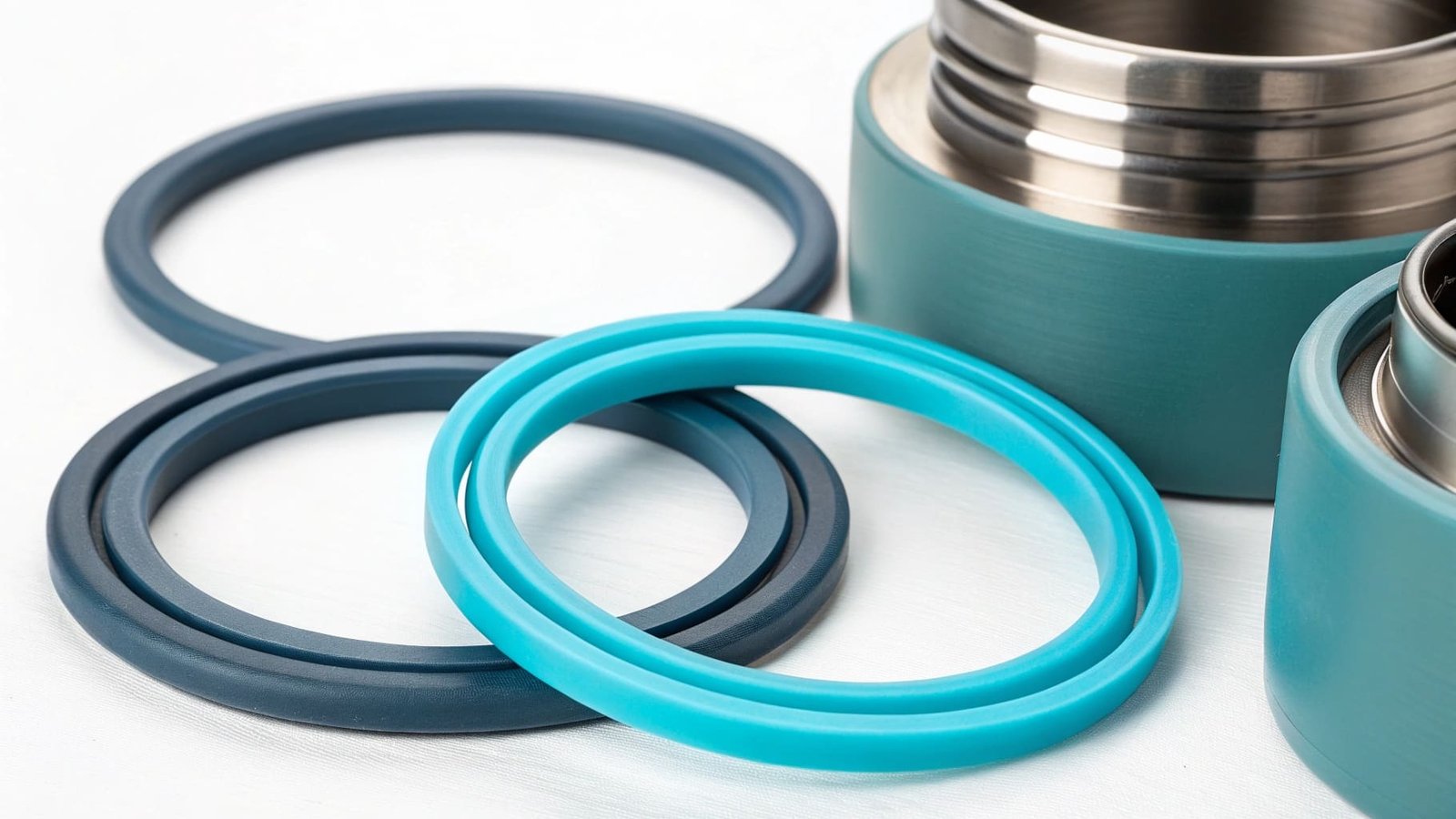
Most buyers I talk to think gasket selection is simple. They pull a diameter number off a drawing and send it to a supplier. That works sometimes. But when you are placing a high-volume OEM order, one wrong assumption can give you thousands of leaking tumblers and a shipment you cannot sell. The sections below break down the three decisions that matter most. Get through them, and you will have a clear picture of what to ask your supplier before you commit.
How Do You Choose the Right Gasket?
A wrong material choice does not always show up right away. It shows up after your customer has used the tumbler for three weeks and the seal starts to break down.
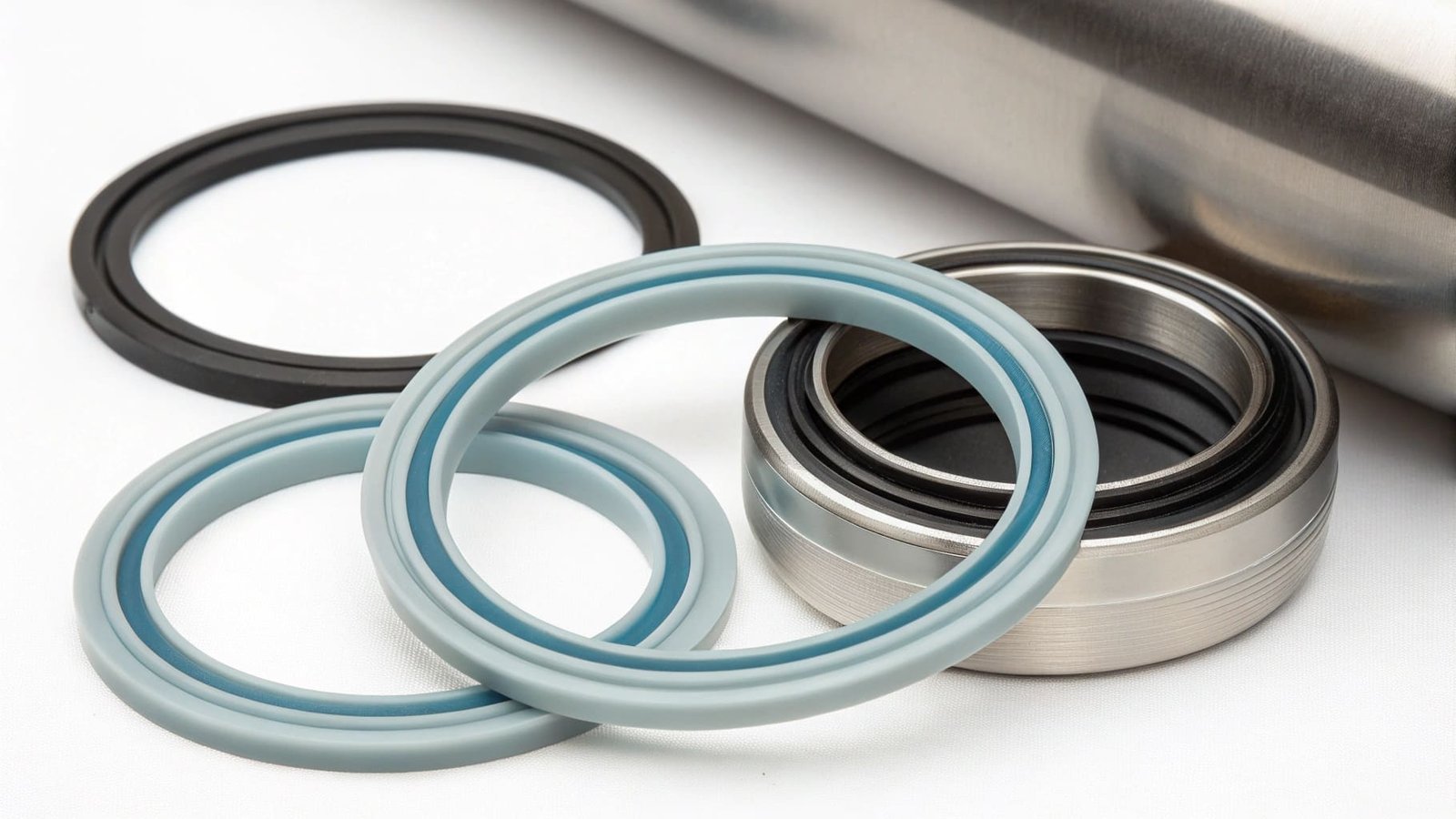
The right gasket starts with knowing how the tumbler will be used. Food-grade tumblers need FDA-compliant silicone or EPDM materials.1 These materials must hold up through repeated dishwasher cycles without breaking down or releasing anything harmful.2 Industrial tumblers may need resistance to chemicals, oils, or high temperatures instead.
What Operating Conditions Should You Map Before Choosing a Material?
Many buyers skip the application analysis step. They look at price first and material second. That order of thinking leads to early seal failure and expensive replacements.
Before you choose a gasket material, you need to map the conditions the gasket will face. Here is what that means in practice.
Liquid contact: Is the tumbler carrying water, coffee, juice, or something with oils and acids? Each liquid puts different stress on a gasket material. Silicone handles a wide range of liquids well. EPDM resists water and steam but does not hold up as well against oils.
Temperature range: Will the tumbler go from a freezer to a dishwasher? Silicone handles temperature swings better than most materials.3 If your end customer uses the product in extreme heat or cold, silicone is usually the safer choice.
Cleaning cycles: High-frequency sanitization breaks down materials faster. If your customer is a food service business or a gym, the tumbler will be washed far more often than a personal-use bottle. You need a material rated for that load.
Regulatory requirements: Some markets require FDA compliance. Some require food-contact certifications specific to their country. Check what certifications your supplier can provide before you finalize the material.
| Condition | Recommended Material | Risk if Ignored |
|---|---|---|
| Food and beverage contact | FDA silicone or EPDM | Health risk, returns |
| High-heat or freezer use | Silicone | Cracking, deformation |
| Frequent washing | High-grade silicone | Early breakdown |
| Oil or solvent exposure | Fluorosilicone | Swelling, seal failure |
Mapping these conditions takes about thirty minutes. It can save you from a production problem that takes weeks to fix.
How to Size a Rubber Gasket?
Most sizing mistakes come from measuring only one dimension. Buyers measure the barrel diameter and stop there.
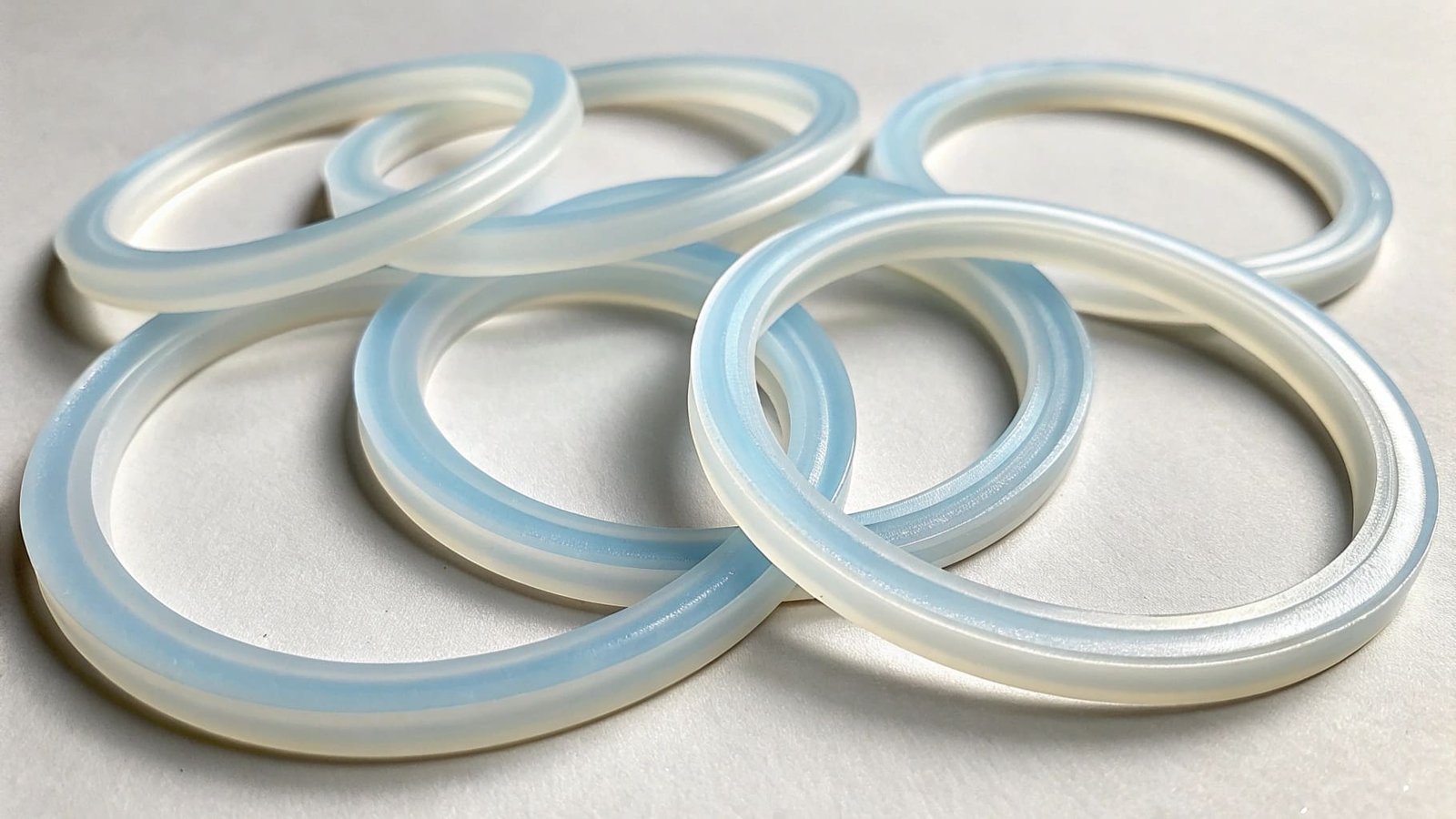
Proper gasket sizing means measuring the groove, not just the barrel. You need the inner diameter, the outer diameter, the groove depth, and the groove width. If any one of these is off, the gasket will either fall out or compress unevenly.
What Dimensions Do You Actually Need to Get Sizing Right?
Getting the diameter right is a good start. But it is only the first step. I have worked with buyers who sent perfect diameter measurements and still ended up with gaskets that did not seat correctly. The reason was almost always the groove.
The groove is the channel cut into the barrel lid or rim where the gasket sits. If the groove is too shallow, the gasket sits proud of the surface and gets pinched unevenly. If the groove is too wide, the gasket shifts during use and the seal becomes inconsistent.
Here is what you need to measure and confirm before placing an order.
Inner diameter (ID): This is the measurement across the inside of the gasket. It needs to match the inner edge of the groove precisely.
Outer diameter (OD): This is the measurement across the outside of the gasket. It sets how far the gasket extends across the sealing surface.
Groove depth: This tells you how much of the gasket sits below the surface. A gasket that sits too high above the groove will over-compress. One that sits too low will under-compress and leak.
Groove width: This controls how much room the gasket has to move. Too much room means the gasket can shift. Too little means it will deform and lose its sealing shape.
Cross-sectional profile: Round profiles are common and easy to install. Square profiles give more surface contact and can hold a tighter seal. Custom profiles are possible but require more lead time and tooling from the supplier.
| Dimension | Why It Matters | Common Mistake |
|---|---|---|
| Inner diameter | Sets the fit on the barrel rim | Measuring barrel OD instead |
| Outer diameter | Controls sealing surface coverage | Ignoring groove width |
| Groove depth | Determines compression level | Not requesting groove drawing |
| Cross-section profile | Affects seal quality and ease of install | Defaulting to round without checking fit |
For custom tumblers, ask your supplier for CAD drawings of the lid and barrel assembly. Then request sample gaskets and test them on your actual product before you approve full production. This step costs a small amount of time. Skipping it can cost you a full order.
How to Select Gasket Thickness?
Thickness feels like a simple number. It is not. The same thickness can perform very differently depending on the hardness of the material and the force the lid applies.
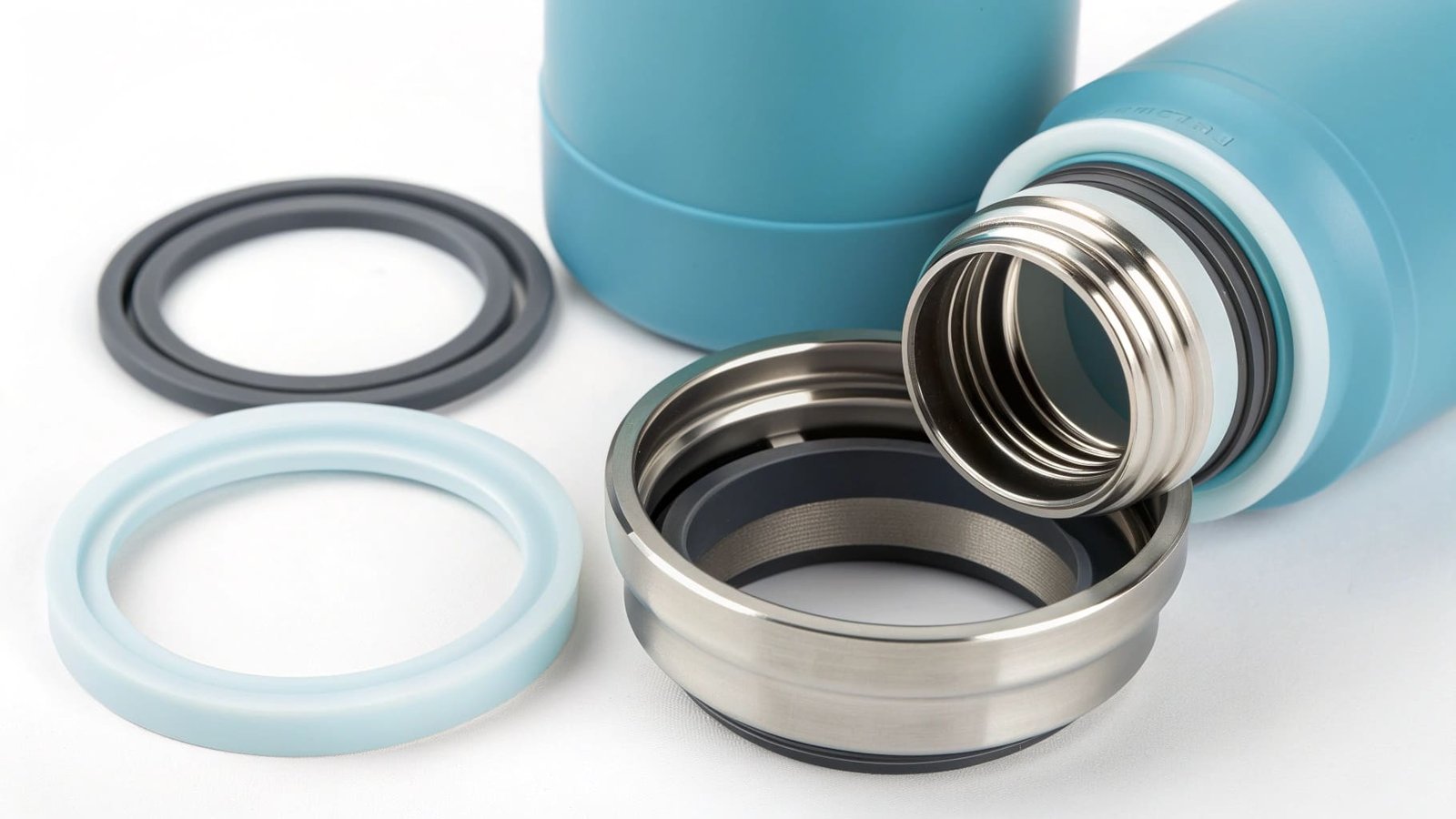
Gasket thickness affects how well the seal holds and how long the gasket lasts. Too thin and the gasket compresses too far over time. Too thick and the lid may not close correctly or the seal pressure may not be even across the surface.
How Does Thickness Interact With Hardness and Closure Force?
Thickness alone does not tell you how a gasket will perform. You also need to know the durometer, which is the measure of how hard or soft the material is. Thickness and durometer work together. Getting one right without the other still gives you a bad result.
Here is how to think about the relationship between these two factors.
Thin gaskets (under 2mm): These conform well to surfaces that are not perfectly flat. They are useful when the lid has slight variation in its seating surface. But they compress quickly under repeated use. Over time, the gasket loses its ability to spring back, and the seal weakens.
Medium gaskets (2mm to 5mm): This is the range where most high-volume OEM tumbler gaskets land. A 3mm gasket in a mid-range silicone durometer, around 40 to 60 Shore A, gives you a good balance of initial seal quality and long-term durability.
Thick gaskets (over 5mm): These provide strong cushioning and last longer under load. But they need more clamping force to compress correctly. If the lid does not apply enough force, a thick gasket will not seal at all.
Durometer and thickness together: A soft compound at 30 Shore A seals well when new but wears faster. A harder compound at 70 Shore A holds up through thousands of open-and-close cycles but needs more compression force.4 For high-volume OEM orders going into demanding markets, I recommend specifying both thickness and durometer in your purchase order, not just one.
| Thickness | Durometer Range | Best Use Case | Risk |
|---|---|---|---|
| Under 2mm | 30–50 Shore A | Smooth, precision surfaces | Fast compression fatigue |
| 2mm–5mm | 40–60 Shore A | Standard OEM tumblers | Balance point, works for most |
| Over 5mm | 50–70 Shore A | Heavy-duty industrial use | Requires strong lid closure |
When you are placing a large order, ask your supplier to run a compression set test. This test shows how much the gasket deforms after being held under pressure for a set time. A low compression set means the gasket returns close to its original shape. A high compression set means the gasket will flatten out and lose its seal faster than you expect.
Conclusion
Choose your gasket material by application, size it from groove dimensions, and match thickness to durometer. Do these three things, and your OEM order will hold up.
-
"21 CFR 177.2600 -- Rubber articles intended for repeated use. - eCFR", https://www.ecfr.gov/current/title-21/chapter-I/subchapter-B/part-177/subpart-C/section-177.2600. FDA regulations for rubber articles intended for repeated food-contact use specify compositional and extractive requirements, supporting the need to verify FDA compliance when selecting silicone or EPDM gasket materials for tumblers. Evidence role: general_support; source type: government. Supports: Food-contact rubber articles used repeatedly must comply with applicable FDA food-contact requirements, and silicone or EPDM compounds may be formulated for such applications.. Scope note: The regulation supports compliance requirements for rubber food-contact articles but does not endorse any specific tumbler gasket formulation. ↩
-
"Progress in research on the safety of silicone rubber ...", https://pubmed.ncbi.nlm.nih.gov/37183940/. Studies of food-contact polymers show that heat, detergents, and repeated use conditions can influence material degradation and migration behavior, supporting the need to evaluate gasket compounds under repeated dishwasher-cycle conditions. Evidence role: general_support; source type: paper. Supports: Repeated washing, heat, detergents, and food-contact conditions can affect polymer degradation and potential migration, making durability and safety testing relevant.. Scope note: Such studies may address food-contact polymers or silicone materials generally rather than tumbler barrel gaskets specifically. ↩
-
"Crystallization and Second-Order Transitions in Silicone ...", https://nvlpubs.nist.gov/nistpubs/jres/44/jresv44n4p367_A1b.pdf. Materials references report that silicone elastomers retain useful properties across unusually broad temperature ranges compared with many common rubbers, supporting their selection for applications with freezer-to-dishwasher temperature swings. Evidence role: general_support; source type: research. Supports: Silicone rubber is widely used where elastomers must retain flexibility and sealing function over broad low- and high-temperature ranges.. Scope note: The source would support general silicone behavior, while actual performance depends on the grade, formulation, and gasket design. ↩
-
"Cyclic Compression Testing of Three Elastomer Types—A ... - PMC", https://pmc.ncbi.nlm.nih.gov/articles/PMC9002981/. Seal-design and elastomer-mechanics references indicate that higher-durometer rubber typically requires greater load to reach the same squeeze, supporting the warning that a 70 Shore A compound needs more closure force. Evidence role: mechanism; source type: research. Supports: Increasing elastomer hardness generally increases the force required to achieve a given compression, and hardness is associated with resistance to deformation in cyclic use.. Scope note: The source may support compression-force behavior directly but only contextualizes durability across thousands of cycles, which depends on compound formulation and test conditions. ↩