How to Customize Silicone Lids for Ceramic Mugs in Hotel Bulk Orders?
Hotels lose money every year on the wrong bulk orders. Bad silicone lids crack, warp, and generate guest complaints. The cost is not just the product—it's your brand reputation.
Customizing silicone lids for hotel ceramic mugs means matching heat resistance, use case, and certification to each area of the property. Guestrooms need microwave-safe lids. Conference rooms need dishwasher-durable lids. Getting this right at the order stage prevents returns and complaints later.
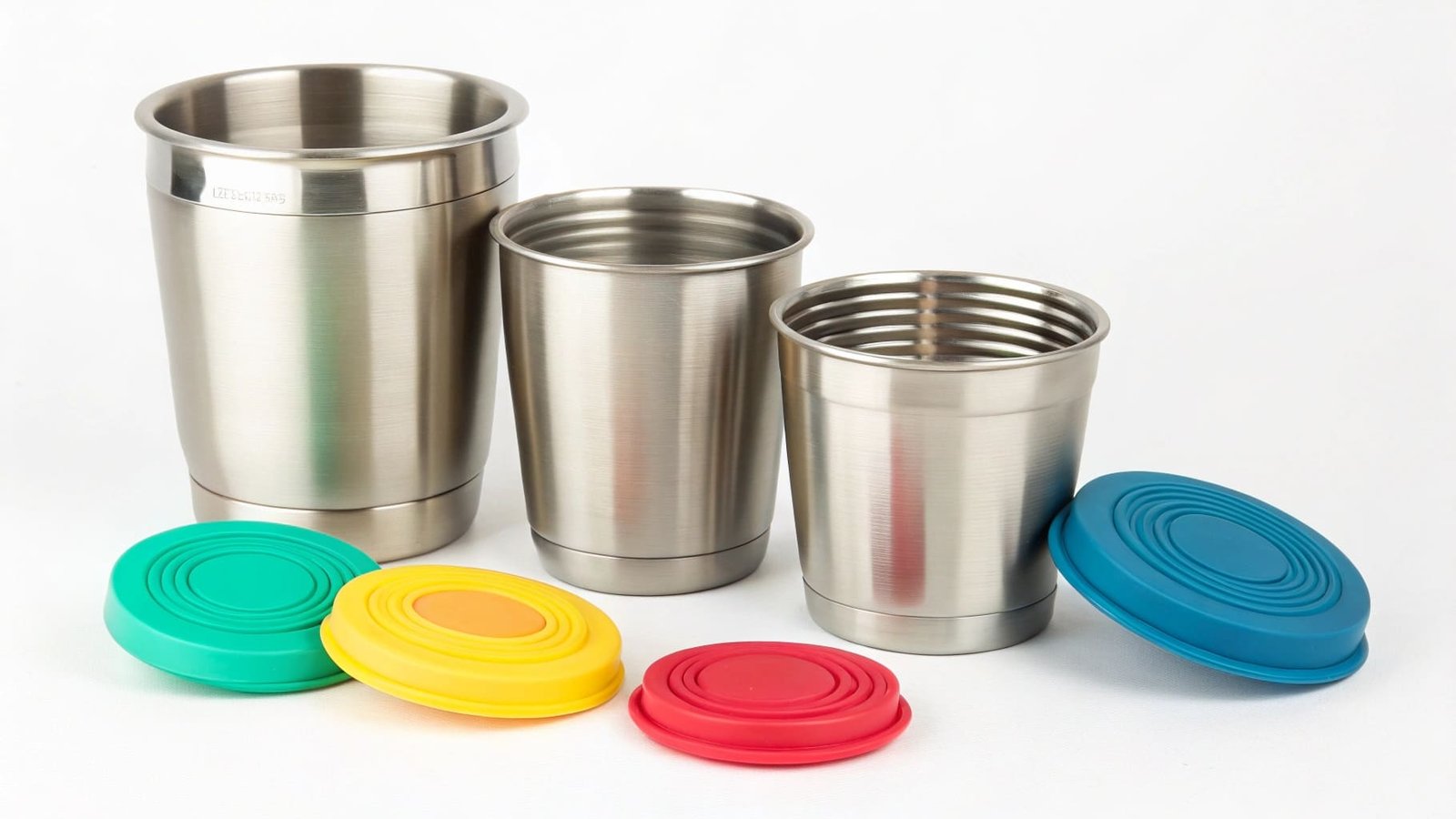
Most hotel procurement teams treat silicone lids as a simple commodity. They pick a size, pick a color, and move on. That approach works—until guests start calling the front desk about warped lids or a lid that pops off mid-pour. The details matter more than they look. The next three questions are the ones I hear most often from buyers placing bulk orders. Each one connects directly to decisions you need to make before your order ships.
Are Silicone Lids Heat Resistant?
You're sourcing lids for guest mugs. You want them to hold up. But "heat resistant" printed on a spec sheet doesn't tell you much about what happens after 200 dishwasher cycles.
Food-grade silicone lids handle temperatures from -40°F to 450°F (-40°C to 230°C).1 This range covers hot tea, coffee, and standard beverage service.2 For hotel use, this temperature range is more than enough for daily guest-facing operations.
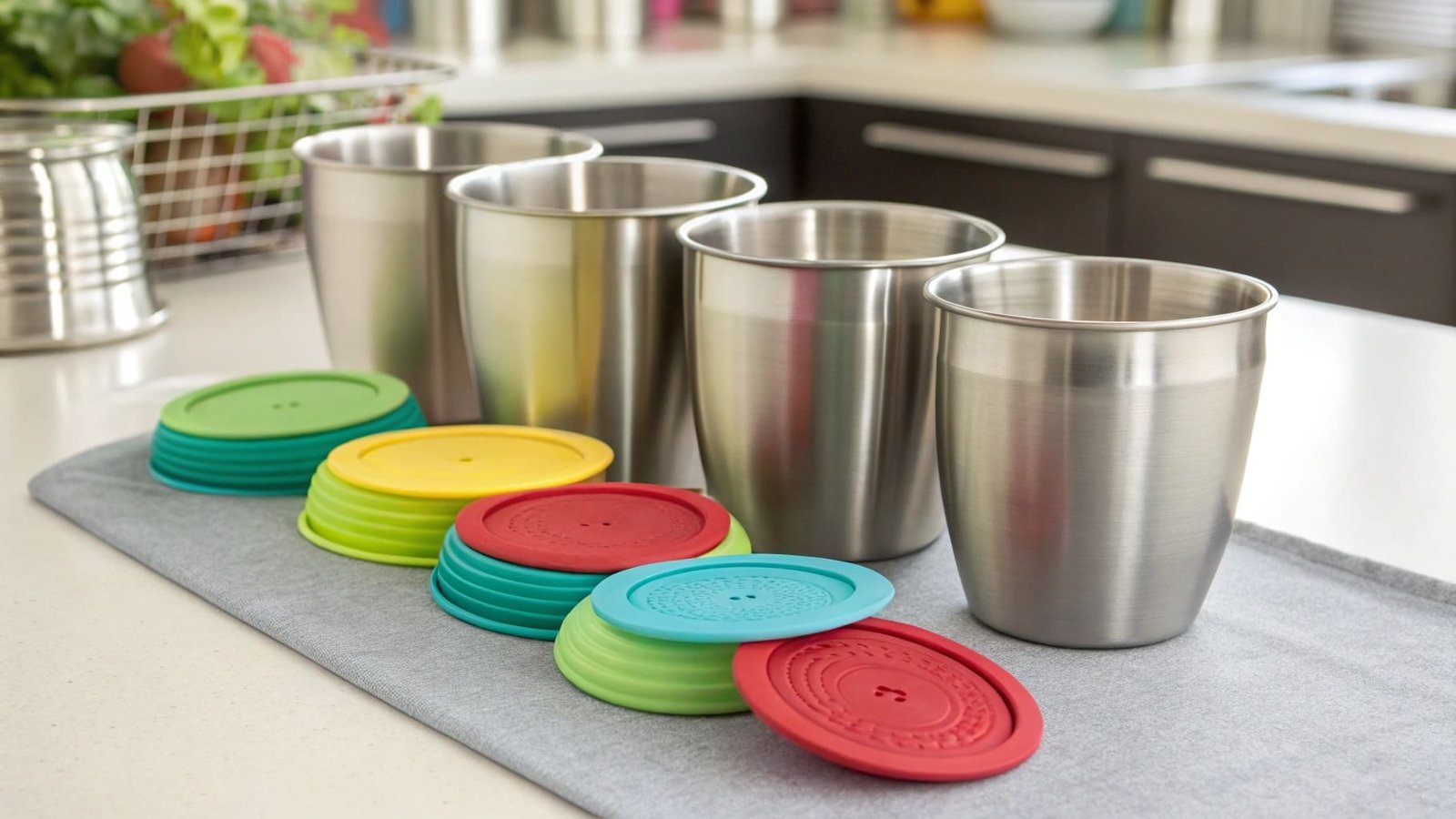
Heat resistance sounds simple, but it breaks into two separate concerns once you look closer. The first concern is how the lid holds its shape under heat. The second concern is whether the lid stays safe for food contact under the same conditions.
What Does Heat Resistance Actually Cover?
Heat resistance means the silicone material does not melt, crack, or deform within its rated temperature range. It does not automatically mean the lid is certified for food contact at every point in that range. These are two separate things.
For hotel bulk orders, both need to be confirmed at the same time. A lid that holds its shape but leaches compounds into a guest's coffee is a liability problem, not just a quality problem.
How to Confirm Heat Resistance Before You Order
| What to Check | Why It Matters | What to Ask Your Supplier |
|---|---|---|
| Temperature rating on spec sheet | Confirms the lid covers your use range | Ask for the exact min/max figures in writing |
| Food-grade certification (FDA or LFGB) | Confirms safety at rated temperatures | Request the actual certificate, not just a label |
| Material composition | Confirms no fillers that degrade under heat | Ask if the silicone is 100% platinum-cured |
| Dishwasher cycle test data | Confirms shape retention after repeated washing | Ask how many cycles the lid was tested for |
I always tell buyers to ask for the certificate file directly. A lot of suppliers list "food-grade" on their product pages, but when you ask for the actual document, the response tells you everything. A reliable supplier sends the file the same day. Others go quiet. That silence is your answer.
The heat resistance question is also the right moment to nail down your dishwasher spec. Hotels run high-temperature commercial dishwashers, and those machines are harder on silicone than a home unit. Make sure your supplier's test data covers commercial dishwasher temperatures, not just household ones.
Can I Put Silicone Lids in the Oven?
Your hotel's breakfast station wants to keep covered mugs warm. Someone on the team asks if the silicone lid can go in the oven. The answer is not as simple as yes or no.
Standard food-grade silicone lids rated to 450°F can technically handle oven heat. But the mug and the seal between the mug and lid become the weak points, not the silicone itself.
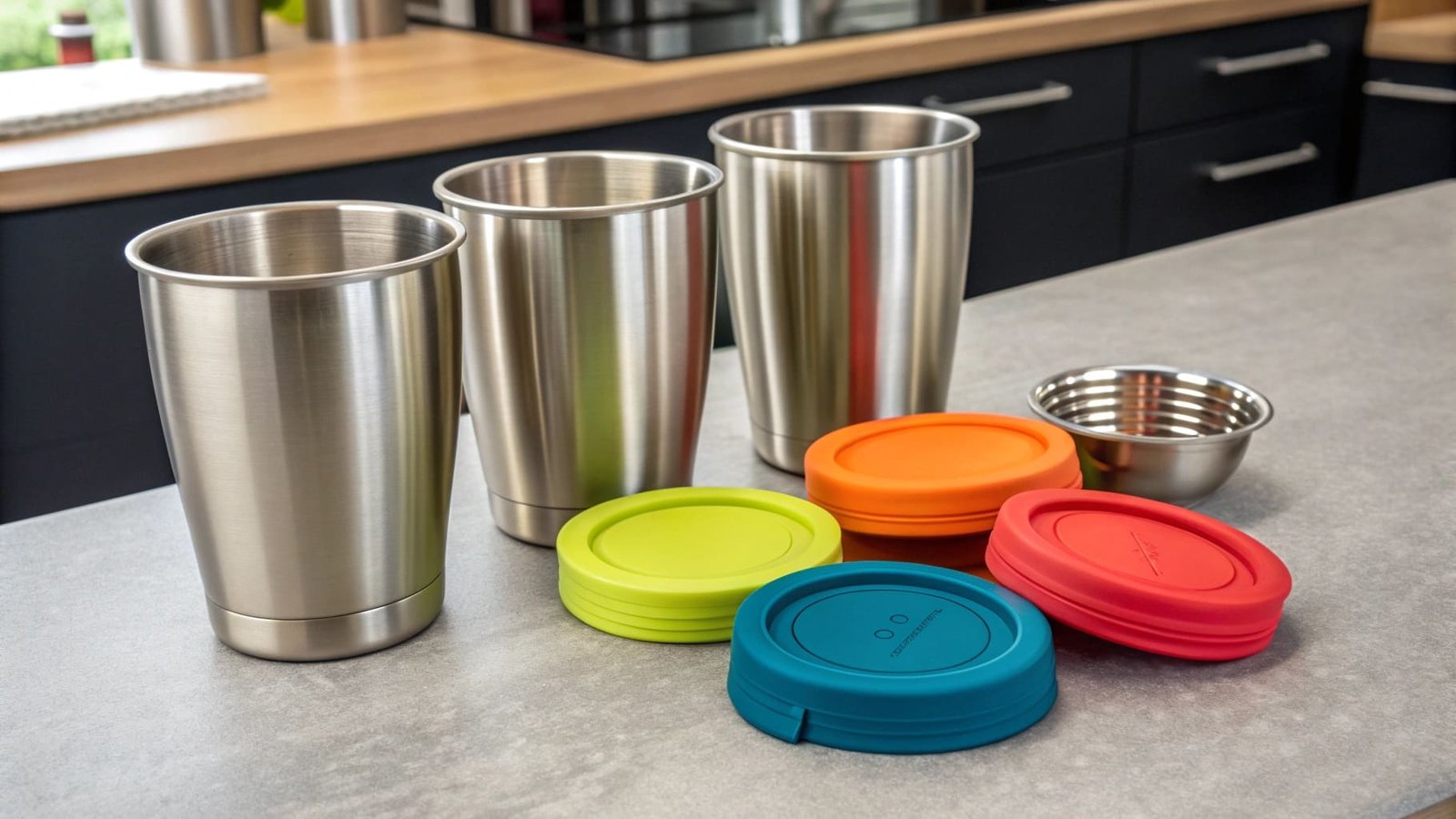
Putting a ceramic mug with a silicone lid into a commercial oven creates three separate risk points. You need to check all three before you put this into any hotel workflow or guest instruction card.
The Three Risk Points for Oven Use
The first risk point is the ceramic mug. Not all ceramic mugs are oven-safe.3 Many hotel ceramic mugs are designed for beverage service only. Thermal shock from oven heat can crack them.4 Check the mug spec separately.
The second risk point is the seal. When a covered mug heats in an oven, pressure builds inside. A lid designed for spill prevention during transport is not the same as a lid designed to vent under pressure. A non-venting lid can pop off or build enough pressure to crack the mug.
The third risk point is the silicone lid's certification. "Heat resistant" and "oven-safe" are different certifications. For hotel use, you need to specify oven-safe during your customization brief, not assume it is covered by the general heat resistance rating.
Oven Use Decision Table for Hotel Departments
| Hotel Area | Typical Use | Oven Use Needed? | Certification to Specify |
|---|---|---|---|
| Guestroom | In-room hot beverage service | No | Microwave-safe, dishwasher-safe |
| Breakfast Station | Keeping covered mugs warm | Possibly | Oven-safe + venting design |
| Conference Room | Room-temperature beverage service | No | Dishwasher-safe, spill-resistant seal |
| Room Service Tray | Transport of hot beverages | No | Spill-prevention seal, heat-resistant |
My recommendation for most hotels is to avoid oven use with silicone-lidded ceramic mugs entirely. The risk points stack up fast, and the operational benefit is small. If a specific area genuinely needs oven-safe coverage, treat it as a separate product line and specify it that way in your bulk order. Do not try to cover every use case with one lid design.
Can Silicone Lids Be Microwaved?
Guests reheat their coffee. It happens in every hotel with in-room coffee service. The question is whether your silicone lid is safe to leave on the mug when the guest puts it in the microwave.
Silicone is microwave-safe as a material.5 It does not absorb microwave energy and does not heat up on its own. But seal integrity and compound stability still need to be confirmed for your specific product.
The microwave question is really three questions at once. Is the material safe? Does the seal hold? And does the lid perform the way a guest expects it to? All three need to work together before you put a lid on a guestroom mug and assume it's microwave-ready.
Breaking Down the Microwave Safety Question
The first question—material safety—is answered by the food-grade certification. FDA or LFGB certified silicone does not release harmful compounds in a standard microwave cycle6. This is a baseline requirement, not a premium feature. If your supplier cannot confirm this certification, do not move forward.
The second question—seal integrity—is more specific to your product. When a guest microwaves a covered mug, the liquid inside heats and creates steam. The lid needs to either vent that steam or release before pressure builds. A lid that seals too tightly can cause hot liquid to spray when the guest removes it. This is a burn risk and a liability issue.
The third question—guest experience—is the one most procurement teams skip. A lid that is technically microwave-safe but pops off mid-cycle, or fogs up completely, or warps slightly after three microwave uses, will generate complaints. The guest does not think about material science. They think about whether the product worked.
Microwave Performance Checklist for Hotel Bulk Orders
| Performance Factor | What to Look For | How to Test Before Ordering |
|---|---|---|
| Material certification | FDA or LFGB food-grade | Request the certificate document |
| Venting design | Small vent hole or pressure-release feature | Check product spec sheet or request sample |
| Seal retention after microwave | Lid fits the same before and after heating | Test sample with 3 microwave cycles at 2 minutes each |
| Visual appearance after use | No warping, discoloration, or fogging | Inspect sample after microwave and dishwasher cycles |
| Odor after heating | No smell released during or after microwave use | Heat a sample and check immediately after |
I always ask for a physical sample before signing off on any hotel bulk order. Spec sheets tell you what the product is supposed to do. Samples tell you what it actually does. For guestroom mugs, I run the sample through a microwave cycle and a dishwasher cycle before I give a final recommendation. That extra step has saved me from more than one bad order.
Conclusion
Matching silicone lids to the right hotel use case—guestroom, conference room, or breakfast station—prevents complaints, reduces returns, and protects your brand.
-
"[PDF] Elastomer Characteristics", https://www.nrc.gov/docs/ML0720/ML072040257.pdf. A materials reference on silicone elastomers reports that silicone rubber commonly remains usable across low temperatures and temperatures approaching 200–230°C, supporting the article's stated operating range for food-grade silicone lids. Evidence role: general_support; source type: research. Supports: A neutral materials reference should support the typical service-temperature range of silicone elastomers used in food-contact products.. Scope note: The cited range would describe typical silicone elastomer performance; the exact rating still depends on formulation, curing method, and manufacturer testing. ↩
-
"Calculating the optimum temperature for serving hot beverages", https://pubmed.ncbi.nlm.nih.gov/18226454/. Studies of hot beverage serving and consumption temperatures generally place coffee and tea far below the upper service temperature of silicone elastomers, supporting the claim that the stated silicone range is adequate for ordinary beverage service. Evidence role: general_support; source type: paper. Supports: A neutral source should document typical serving or consumption temperatures for hot beverages, showing they are far below 230°C.. Scope note: This supports normal beverage use, not accidental exposure to direct flame, broiler heat, or industrial heating equipment. ↩
-
"Ceramic Mug Thickness: How It Affects Drink Temperature - malacasa", https://malacasa.com/blogs/journal/ceramic-wall-thickness-beverage-temperature?srsltid=AfmBOooRNFlCVAv5nIMQpkDjY_eVLp26ZUUF_jj-OwTZfeSPGNTvF2wL. Ceramics references describe thermal-shock resistance as dependent on clay body, glaze, thickness, and firing conditions, supporting the article's caution that a ceramic mug should not be assumed oven-safe without product-specific confirmation. Evidence role: general_support; source type: education. Supports: A university or materials source should explain that ceramic ware varies in thermal-shock resistance and that not all ceramic products are suitable for oven heating.. Scope note: This is contextual support for a safety precaution rather than proof about any specific hotel mug model. ↩
-
"[PDF] Thermal Shock Fracture Behaviors of Functionally Graded Ceramics", https://digitalcommons.library.umaine.edu/context/etd/article/1278/viewcontent/LuoW2006.pdf. Materials-science sources explain that rapid temperature changes can create internal stress in brittle ceramic materials and cause thermal-shock cracking, supporting the article's warning about oven heating ceramic mugs. Evidence role: mechanism; source type: education. Supports: A materials-science source should explain that thermal gradients produce stress in ceramics, which can lead to cracking or fracture.. Scope note: The risk level depends on the specific ceramic body, glaze, geometry, and heating conditions. ↩
-
"Inventory of Food Contact Substances Listed in 21 CFR", https://hfpappexternal.fda.gov/scripts/fdcc/index.cfm?search=silicone&set=IndirectAdditives. Public food-safety guidance generally recognizes silicone cookware and food-contact articles as suitable for microwave use when they are manufactured for that purpose and used according to instructions, supporting the article's material-level statement. Evidence role: expert_consensus; source type: government. Supports: A public food-safety authority should support that silicone cookware or food-contact silicone is generally acceptable for microwave use when labeled and used as directed.. Scope note: This does not prove that every silicone lid design is microwave-safe; certification, formulation, and venting still require product-specific verification. ↩
-
"Chemical Migration from Silicones used in Connection with Food ...", https://www.nal.usda.gov/research-tools/food-safety-research-projects/chemical-migration-silicones-used-connection-food. Food-contact migration standards and studies evaluate whether substances transfer from silicone articles into food or food simulants under heating conditions, supporting the article's claim that compliant food-grade silicone is expected to remain within safety limits during ordinary microwave use. Evidence role: general_support; source type: paper. Supports: A migration study or food-contact standard should show that compliant silicone articles are evaluated for chemical migration under foreseeable heating conditions.. Scope note: This is conditional on verified compliance and appropriate use; it is not direct proof for an uncertified or untested lid. ↩