What Quality Standards Apply to Food Grade Silicone O-Rings for EU Markets?
Sourcing the wrong silicone O-rings for EU food applications can cost you everything. One failed compliance check and your shipment gets rejected at customs.
Food grade silicone O-rings for EU markets must comply with EU Regulation 1935/2004 and EU Regulation 10/2011.1 These rules set strict limits on chemical migration into food. Compliant O-rings must be platinum-cured, tested by accredited labs, and backed by a full declaration of compliance from the manufacturer.2
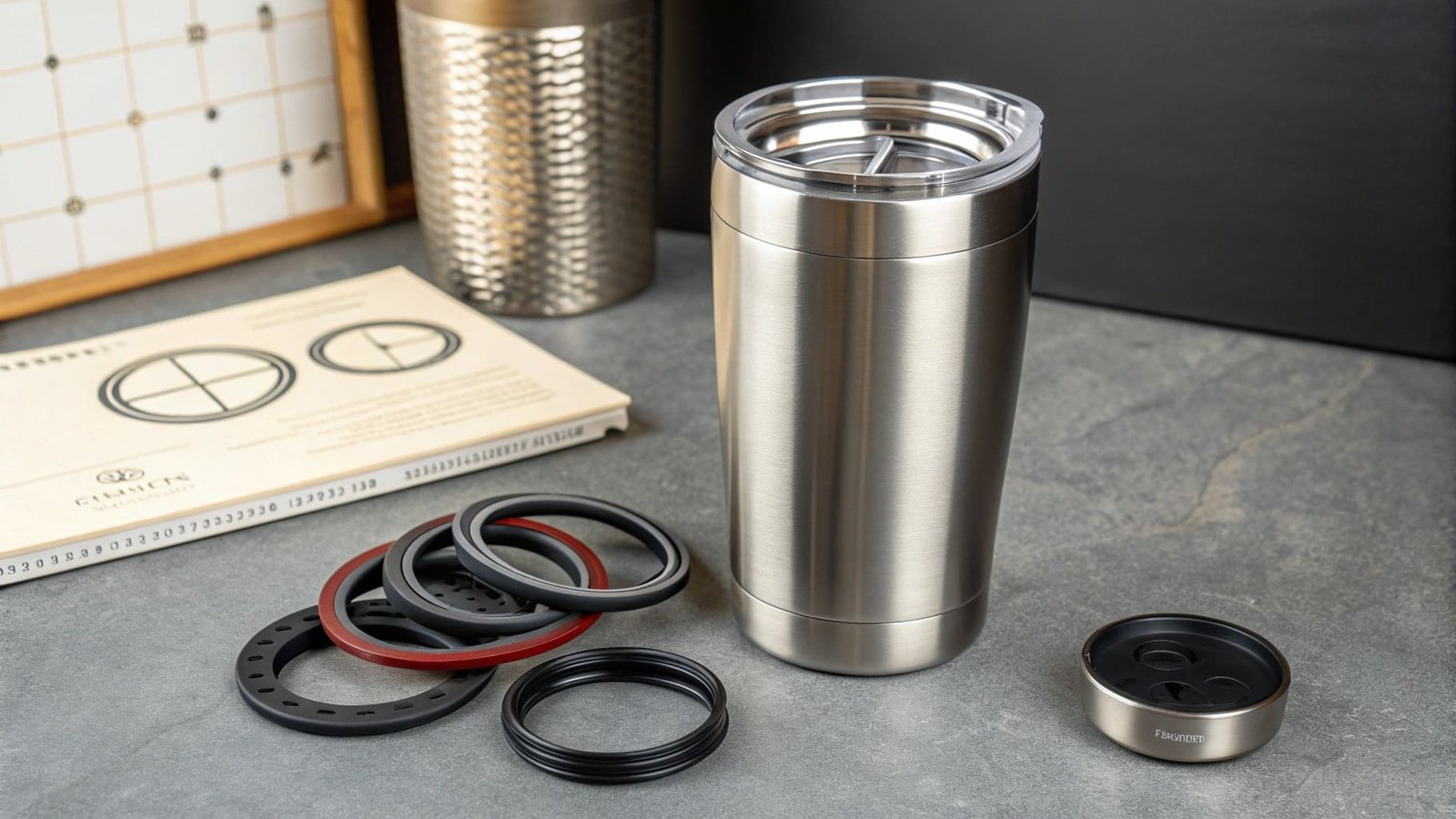
I have worked with buyers who thought any silicone O-ring would do the job. It does not. The EU market has specific rules that go far beyond basic material selection. If you are sourcing these products for distribution or manufacturing in Europe, the details I cover below will help you avoid costly mistakes and find the right supplier.
Are Silicone O-Rings Food Grade?
Not every silicone O-ring qualifies as food grade. Many buyers discover this too late, after a product recall or a failed audit.
Food grade silicone O-rings are made from a specific formulation of silicone that has been tested and certified safe for direct food contact.3 The key difference is in how they are made and what testing they go through. Standard industrial O-rings do not meet this bar.
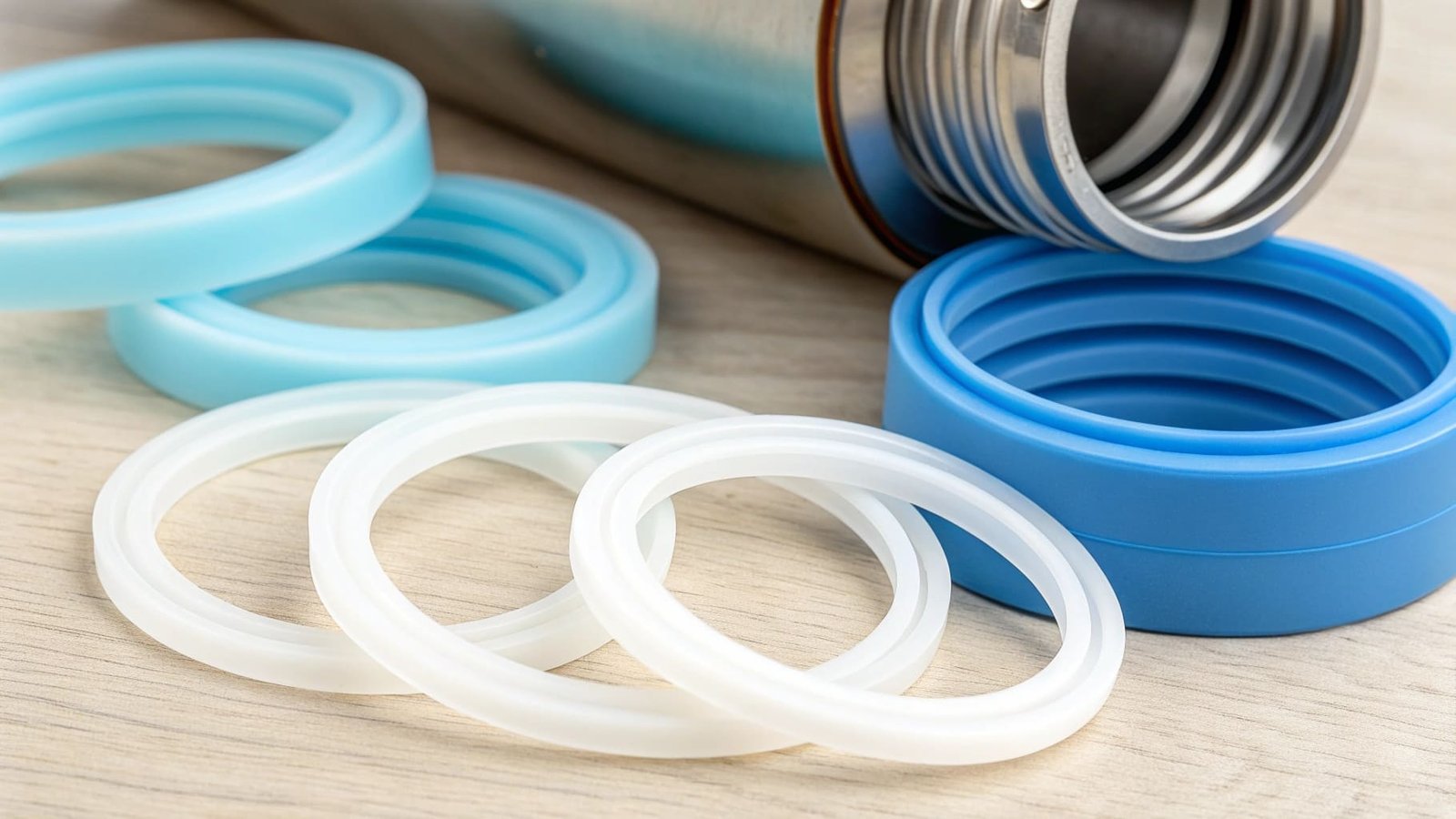
The word "silicone" on a product label does not mean it is safe for food contact.4 I see this confusion come up often when buyers are comparing prices across suppliers. Here is what actually separates a food grade silicone O-ring from a standard one.
What Makes an O-Ring Truly Food Grade?
The starting point is the curing method. Food grade silicone O-rings must be made using a platinum-curing process. Peroxide-cured silicone leaves behind chemical residues after the curing process is complete.5 Those residues can migrate into food products during contact. Platinum curing avoids this problem entirely.
Beyond the curing method, the raw silicone compound itself must be free from harmful additives, pigments, and fillers that are not approved for food contact. A manufacturer who understands this will be able to show you the compound formulation and point to the specific approvals it carries.
The table below shows the main differences between food grade and standard industrial silicone O-rings.
| Feature | Food Grade Silicone O-Ring | Standard Industrial O-Ring |
|---|---|---|
| Curing Method | Platinum-cured | Peroxide-cured or other |
| Migration Testing | Required, by accredited lab | Not required |
| Additive Control | Strict, approved substances only | Varies by application |
| Documentation | Full compliance declaration | Often not available |
| Regulatory Scope | EU 1935/2004, EU 10/2011, FDA CFR 21 | No food contact standard |
| Price Point | Higher | Lower |
When I work with buyers who are setting up sourcing for the European market, I always tell them the same thing. Ask for the full documentation before you discuss price. A supplier who cannot provide migration test reports from an accredited laboratory is not a supplier you want to work with for food contact applications.
Is Food Grade Silicone FDA Approved?
Many buyers ask about FDA approval first. That makes sense if you are selling into the US market. But EU buyers need to think differently about this question.
FDA approval under CFR Title 21 applies to the US market. It does not automatically satisfy EU food contact requirements.6 However, a supplier who holds both FDA compliance and EU certification is showing you something important about how they run their business.
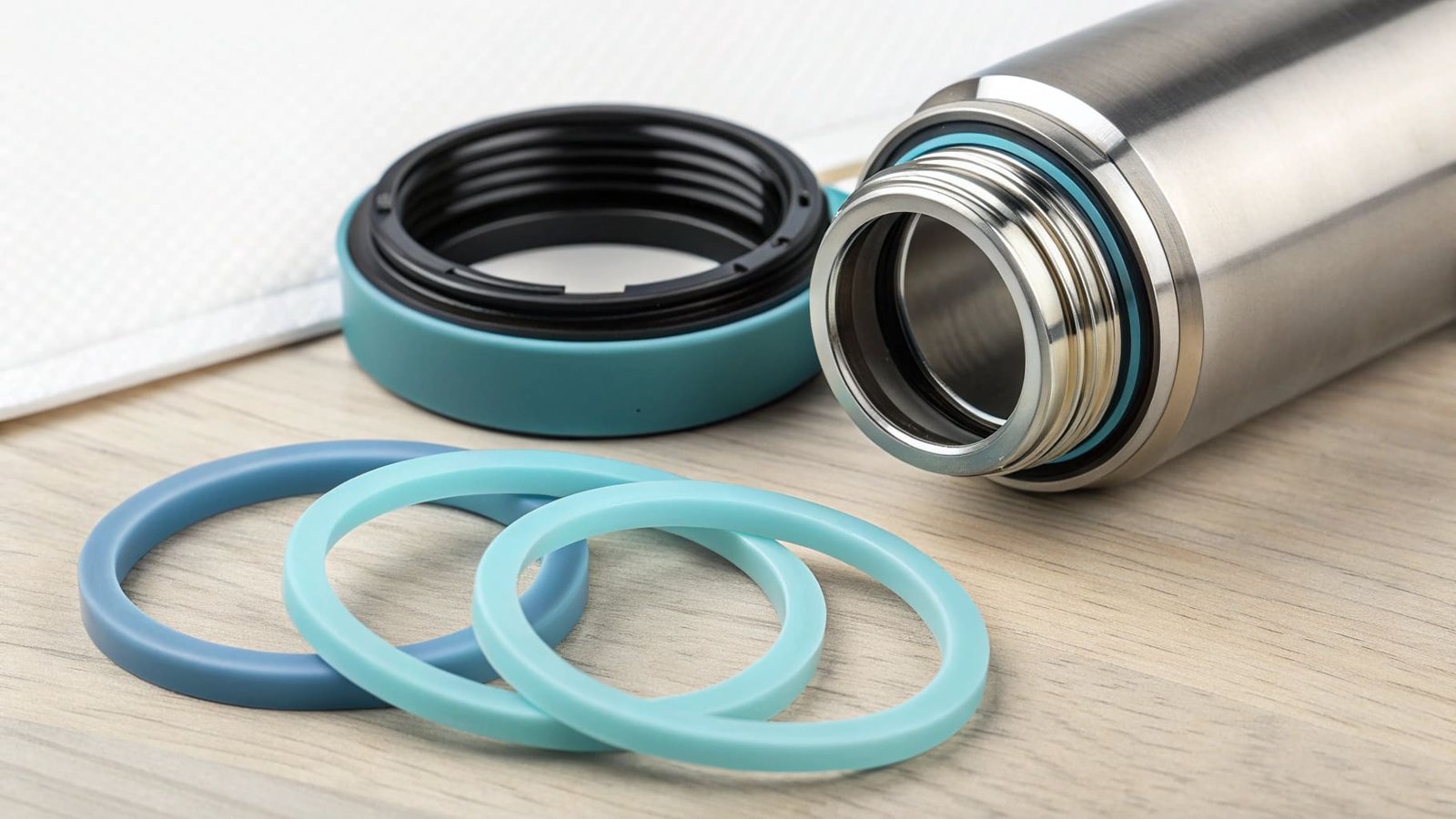
I have seen suppliers present FDA documentation as proof of EU compliance. These are two separate regulatory frameworks. Understanding the difference protects you from making a sourcing decision based on the wrong set of documents.
How Do FDA and EU Food Contact Standards Compare?
The FDA regulates food contact materials under CFR Title 21, which covers substances used in food contact articles. It sets rules on which materials and additives are permitted and in what quantities.
The EU takes a different approach. EU Regulation 1935/2004 sets the general framework for all food contact materials sold in Europe.7 On top of that, EU Regulation 10/2011 applies specifically to plastic materials but also influences how silicone products are evaluated.8 Manufacturers in Europe often use it as a reference point for acceptable migration limits, even for silicone.
The table below gives you a clear side-by-side view of how these two systems work.
| Criteria | FDA (US Market) | EU Regulations (EU Market) |
|---|---|---|
| Main Regulation | CFR Title 21 | EU 1935/2004, EU 10/2011 |
| Approach | Permitted substance lists | Migration limits and substance controls |
| Testing Requirement | Manufacturer responsibility | Third-party lab testing expected |
| Documentation Needed | Self-declaration often accepted | Declaration of compliance required |
| Dual Compliance Value | Signals strong quality control | Primary requirement for EU market entry |
When I evaluate a new supplier, I look for dual compliance as a positive signal. It tells me the manufacturer is not cutting corners. They have invested in both sets of testing and documentation, which means they take regulatory risk seriously. For a buyer distributing into multiple markets, that matters a great deal.
One more point worth making here. Certification fraud is a real problem in this industry. I have heard from buyers who received documents that turned out to be fabricated. The safest way to verify compliance is to ask for the original test report, check the accreditation number of the testing laboratory, and confirm it directly with the lab if the order is large enough to justify that step.
What Are the Properties of Food Grade Silicone?
Food grade silicone costs more than standard silicone. Buyers who do not understand why often push back on price. That pushback can lead to a bad sourcing decision.
Food grade silicone has a specific set of physical and chemical properties that make it suitable for food contact environments. These properties are not just about safety. They directly affect how long the O-ring lasts and how well it performs under real working conditions.
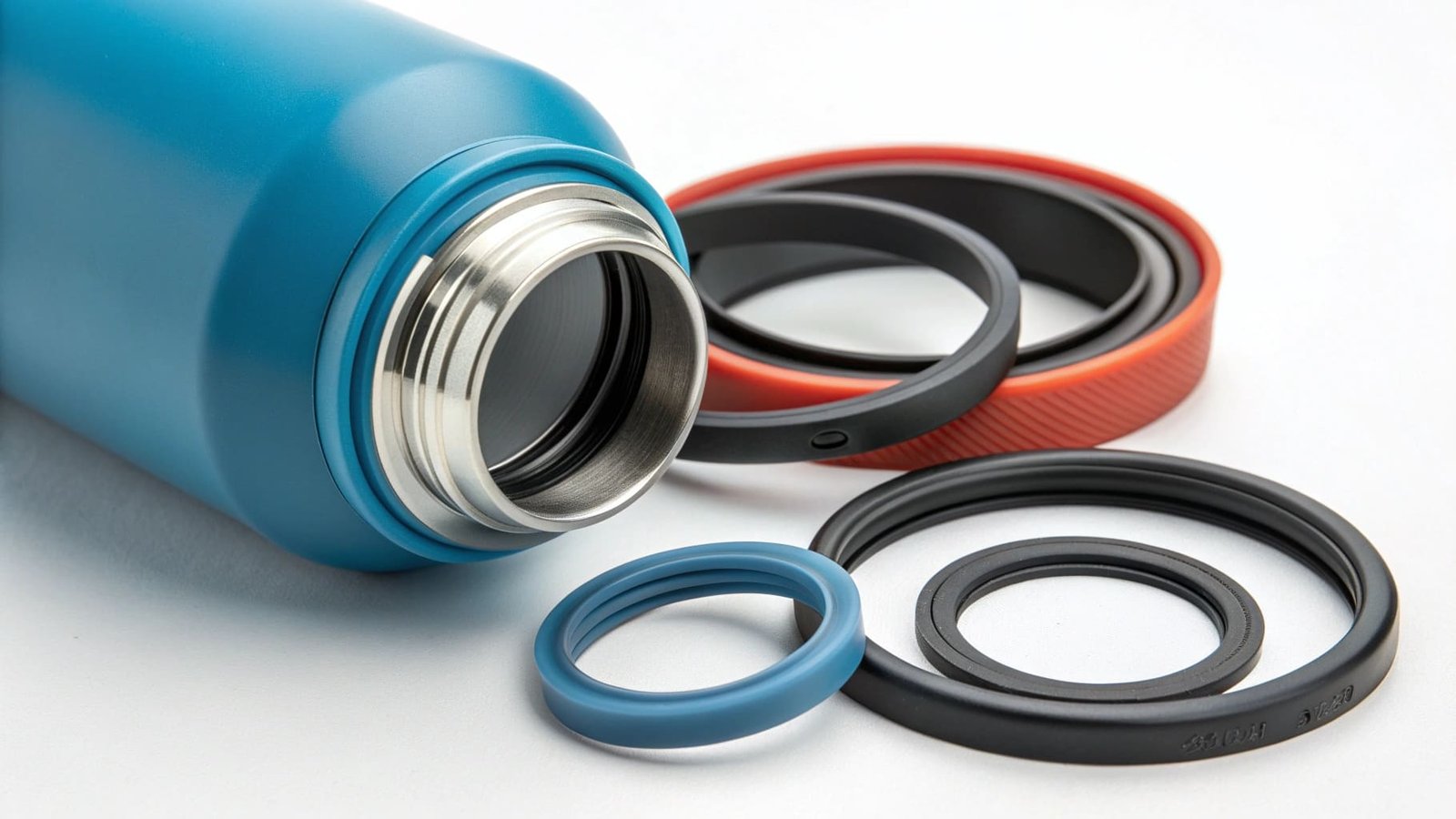
I want to walk through the key properties in detail. Understanding these will help you ask better questions when you are talking to a supplier and make a stronger case internally when you are justifying the cost difference.
Why Do These Properties Matter for Your Application?
Temperature Range
Food grade silicone maintains its performance across a temperature range from minus 60°C to plus 200°C.9 This matters because food processing environments can go from cold storage to hot filling within the same production line. An O-ring that becomes brittle in cold or loses its shape under heat will fail to seal properly and create a contamination risk.
Chemical Stability
Food processing facilities use strong cleaning agents, acids, and fats on a regular basis. Food grade silicone resists degradation when exposed to all of these substances.10 Standard silicone grades can swell, crack, or break down under the same conditions. A failed O-ring in a food contact environment is not just a maintenance problem. It is a product safety event.
Compression Set
Compression set measures how well a material returns to its original shape after being compressed. A low compression set value means the O-ring keeps its sealing ability through many cycles of compression and release. For food processing equipment that runs continuously, this directly affects how often you need to replace seals and how much downtime that creates.
Sterilization Resistance
Food grade silicone can handle repeated sterilization using steam, chemical agents, or radiation. This is essential for any application where the O-ring must survive cleaning-in-place (CIP) cycles or autoclave sterilization. Standard industrial silicone often degrades after repeated sterilization, which shortens its usable life significantly.
The table below brings these properties together so you can see them as a complete picture.
| Property | Food Grade Silicone | Why It Matters |
|---|---|---|
| Temperature Range | -60°C to +200°C | Handles cold storage and hot filling |
| Chemical Resistance | High, resists acids, oils, fats, cleaning agents | Survives food processing environments |
| Compression Set | Low | Maintains sealing over many cycles |
| Sterilization Resistance | High, withstands steam, chemical, radiation | Suitable for CIP and autoclave cycles |
| Bacterial Resistance | Inherent | Reduces contamination risk |
| Migration Level | Within regulated limits | Safe for direct food contact |
When buyers understand these properties, the price conversation changes. You are not paying more for the same product. You are paying for a material that works differently, lasts longer, and keeps your end customers and their products safe.
Conclusion
Food grade silicone O-rings for the EU market require platinum curing, strict migration testing, and full compliance documentation. Know the standards before you source.
-
"Risk assessment of food contact materials - PMC - NIH", https://pmc.ncbi.nlm.nih.gov/articles/PMC9749432/. Regulation (EC) No 1935/2004 establishes general EU requirements for materials intended to come into contact with food, while Regulation (EU) No 10/2011 lays down specific rules for plastic food-contact materials; this supports the regulatory context for food-contact seals, although silicone elastomers may also be addressed through national rules or guidance rather than the plastics regulation alone. Evidence role: definition; source type: government. Supports: The source should establish the EU food-contact framework and clarify the scope of Regulation 1935/2004 and Regulation 10/2011.. ↩
-
"Platinum migration and dietary exposure associated to commercial ...", https://www.sciencedirect.com/science/article/pii/S221428942500122X. Food-contact compliance systems commonly rely on documented formulation control, migration testing, and declarations of compliance, and technical literature distinguishes platinum-cured silicone from peroxide-cured silicone because curing byproducts can affect extractables; this supports the quality-control rationale, although it does not by itself prove that platinum curing is a universal legal requirement for every EU silicone O-ring. Evidence role: expert_consensus; source type: institution. Supports: The source should support the importance of curing chemistry, migration testing, and declarations of compliance for food-contact materials.. ↩
-
"Food contact materials | EFSA - European Union", https://www.efsa.europa.eu/en/topics/topic/food-contact-materials. Food-contact material safety is assessed by considering the material composition, intended conditions of use, and migration of substances into food, which supports the statement that a silicone O-ring must be formulated and tested for direct food contact rather than treated as food-safe solely because it is silicone. Evidence role: general_support; source type: institution. Supports: The source should show that direct food-contact suitability depends on approved composition and testing under intended-use conditions.. ↩
-
"21 CFR 177.2600 -- Rubber articles intended for repeated use. - eCFR", https://www.ecfr.gov/current/title-21/chapter-I/subchapter-B/part-177/subpart-C/section-177.2600. Regulatory provisions for rubber or silicone articles specify compositional limits, extractives limits, and conditions of use, showing that the material name 'silicone' alone is insufficient to establish food-contact suitability. Evidence role: definition; source type: government. Supports: The source should demonstrate that silicone articles for food contact are subject to compositional and use restrictions.. ↩
-
"Peroxide-Based Crosslinking of Solid Silicone Rubber, Part I", https://pmc.ncbi.nlm.nih.gov/articles/PMC9609014/. Polymer studies of silicone rubber curing report that peroxide systems can produce residual decomposition products and volatile or extractable byproducts after curing, supporting the concern that curing chemistry can affect residues available for migration. Evidence role: mechanism; source type: paper. Supports: The source should explain that peroxide curing can generate residual decomposition products or volatile/extractable compounds in silicone rubber.. ↩
-
"Inventory of Food Contact Substances Listed in 21 CFR - FDA", https://www.fda.gov/food/packaging-food-contact-substances-fcs/inventory-food-contact-substances-listed-21-cfr. The United States regulates food-contact substances through FDA-administered provisions including Title 21 of the Code of Federal Regulations, whereas the European Union applies its own food-contact legislation such as Regulation (EC) No 1935/2004; compliance with one framework therefore provides context but is not automatic legal compliance under the other. Evidence role: historical_context; source type: government. Supports: The source should establish that FDA and EU food-contact material regimes are separate legal frameworks.. ↩
-
"Factsheet - 32004R1935 | European Free Trade Association - Efta.Int", https://www.efta.int/eea-lex/32004r1935. Regulation (EC) No 1935/2004 is the EU framework regulation for materials and articles intended to come into contact with food, establishing general safety, traceability, labeling, and compliance principles for such materials. Evidence role: definition; source type: government. Supports: The source should confirm that Regulation 1935/2004 is the EU framework regulation for materials and articles intended to contact food.. ↩
-
"Risk assessment of food contact materials - PMC - NIH", https://pmc.ncbi.nlm.nih.gov/articles/PMC9749432/. Regulation (EU) No 10/2011 expressly governs plastic materials and articles intended to contact food, and its migration-limit framework is often used as a technical reference point in food-contact assessments; this supports the article's comparison while limiting the claim because silicone elastomers may fall under separate national recommendations or non-harmonized guidance. Evidence role: definition; source type: government. Supports: The source should confirm the plastic-specific scope of Regulation 10/2011 and provide context for using migration principles in related materials.. ↩
-
"Split-Hopkinson Pressure Bar Test of Silicone Rubber - PMC - NIH", https://pmc.ncbi.nlm.nih.gov/articles/PMC9504100/. Technical references for silicone rubber commonly report usable service temperatures extending from about -60 °C to around 200 °C, supporting the stated range as a typical material capability rather than a guarantee for every formulation or application. Evidence role: general_support; source type: education. Supports: The source should support the typical service-temperature range of silicone rubber elastomers.. ↩
-
"Chemical Compatibility Chart | Applications - Jehbco Silicones", https://jehbco.com.au/products/chemical-compatibility-chart/. Materials references describe silicone rubber as having good resistance to many oils, fats, dilute acids, and cleaning environments used in processing, supporting its suitability for many food-contact seals; compatibility remains conditional on the exact chemical, concentration, temperature, and exposure duration. Evidence role: general_support; source type: research. Supports: The source should support silicone rubber's general resistance to many food-processing chemicals while acknowledging compatibility limits.. ↩