How to Select Silicone Tea Lids for Food Service Wholesale Applications?
Buying the wrong silicone tea lids costs you more than money. It costs you customer trust, return shipments, and peak-season sales. Here is what you need to know before placing your next wholesale order.
Silicone tea lids for food service wholesale must meet three key criteria: broad cup size compatibility, material-specific rim fit, and verified dishwasher durability. Getting all three right protects your margins and keeps your commercial clients coming back.
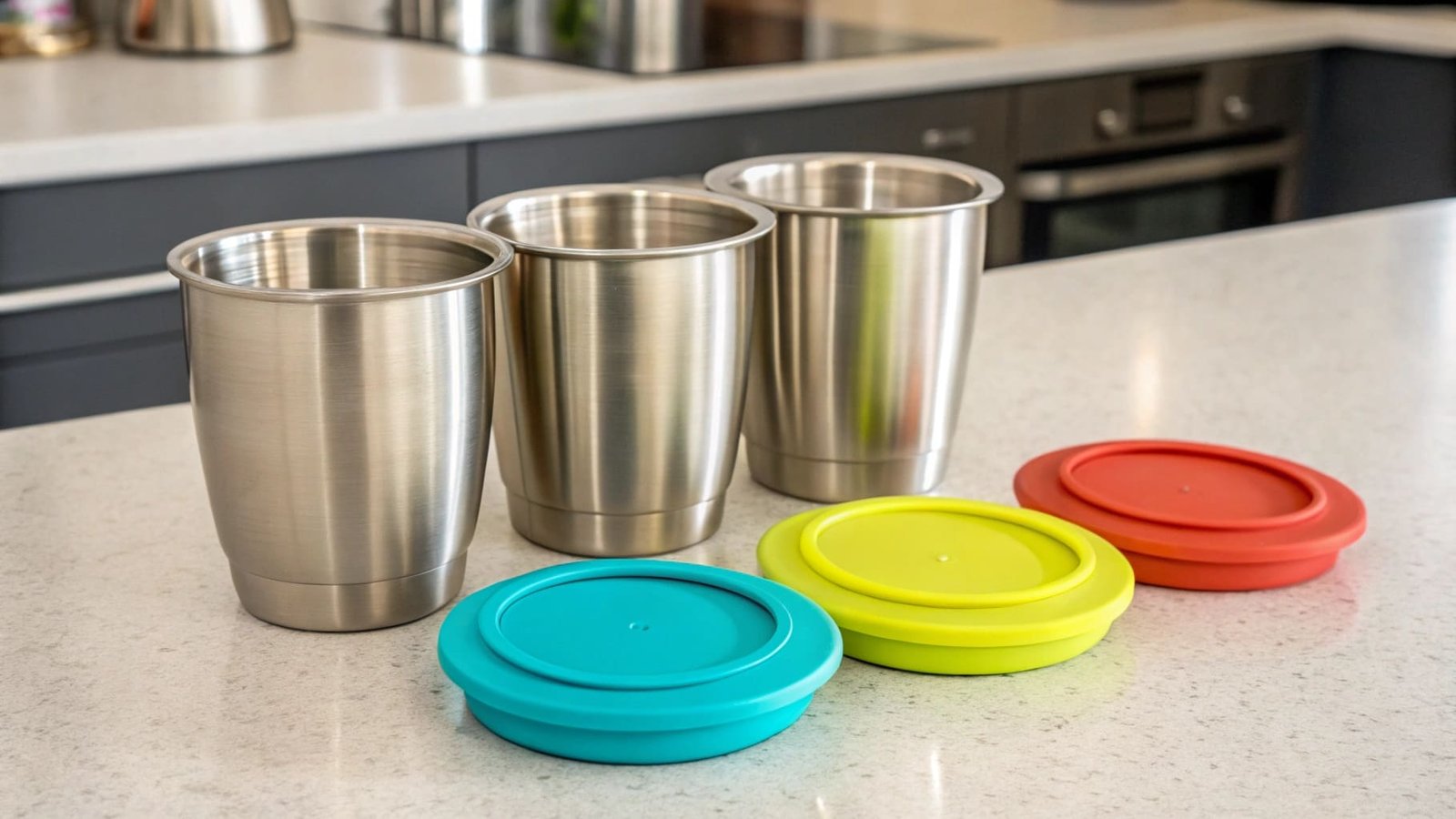
I have spoken with many wholesale buyers who focus only on price when sourcing silicone lids. They find out later that the lids do not fit their cup range, or they fail after a few dishwasher cycles. This article breaks down the three questions every food service wholesale buyer should ask before choosing a silicone tea lid supplier.
How to Use Silicone Lids?
A silicone lid that confuses the end user will come back to haunt you as a wholesale buyer. Customer complaints and return requests follow quickly. Here is the practical side of silicone lid use that you need to factor into your sourcing decisions.
Silicone tea lids work through a stretch-and-seal method.1 The lid stretches over the cup rim and creates an airtight closure. A good silicone lid should stretch to fit cup diameter variations of at least 10 to 15 percent.2 This range matters when your clients use multiple cup sizes across their service line.
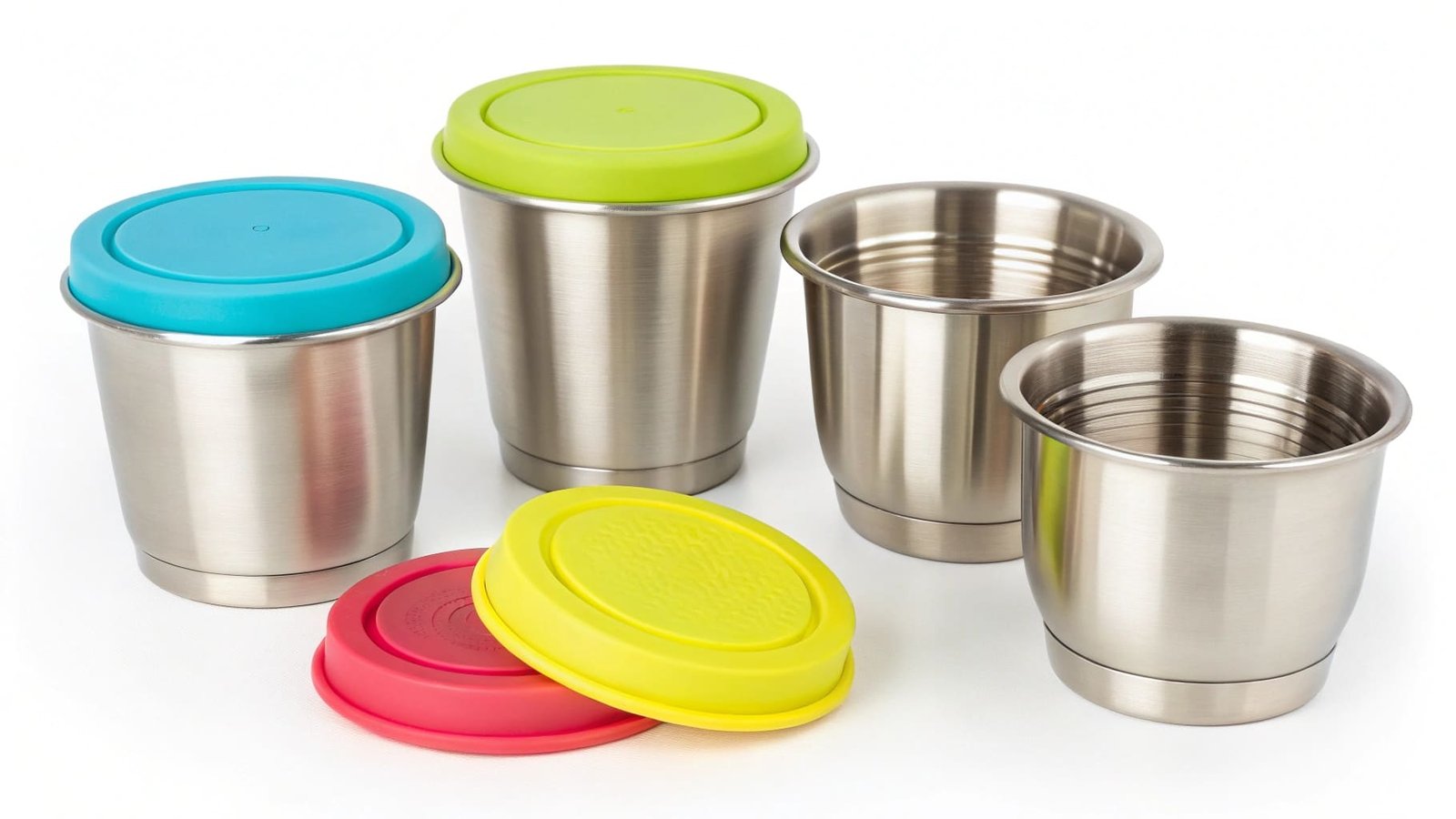
When I first started sourcing silicone lids, I assumed all lids were roughly the same in terms of stretch. That assumption cost me an order because the lids I sourced could not fit the full range of cups my client was using. I learned to test stretchability against the actual cup range before committing to any volume order.
What Temperature Range Should You Look For?
The performance of a silicone lid depends directly on the silicone grade used in its production. Food-grade silicone should handle temperatures from -40°C to 230°C.3 This range covers both iced drinks and hot tea service, which is the core use case in most food service environments.
The table below shows how temperature performance affects different service settings:
| Use Case | Typical Temperature | Required Silicone Grade |
|---|---|---|
| Iced beverages | -5°C to 10°C | Standard food-grade silicone |
| Hot tea / coffee | 80°C to 100°C | High-grade food-grade silicone |
| Oven or microwave use | 150°C to 230°C | Platinum-cured food-grade silicone |
For wholesale buyers, the most important factor is not just the temperature range but the ease of use at both ends of that range. A lid that seals easily at room temperature may become stiff and hard to remove when chilled.4 On the other hand, a lid that works well cold may become too soft to seal tightly when filled with a hot drink. When evaluating samples, test the lid at the temperatures your clients will actually use, not just at room temperature. This is a step most buyers skip, and it is where problems begin.
End users in food service settings prefer lids that seal with one hand and minimal effort. They also need to remove the lid cleanly without spilling. If the seal requires too much force or the lid springs off too easily, your commercial clients will stop reordering. This balance between seal strength and ease of removal is something you should test personally before approving a supplier sample.
What Type of Plastic Is Most Commonly Used for Disposable Cups?
If your silicone lids do not fit the cups your clients already use, you have a problem before the product even reaches the end user. Cup material affects rim shape, and rim shape affects how well a silicone lid seals.
The two most common plastics in disposable cups are polypropylene (PP) and polyethylene terephthalate (PET).5 PP is used mainly for hot drinks because it handles heat up to around 120 to 130°C.6 PET is used for cold drinks because it is clear and rigid.7 Your silicone lid needs to fit both rim types reliably.
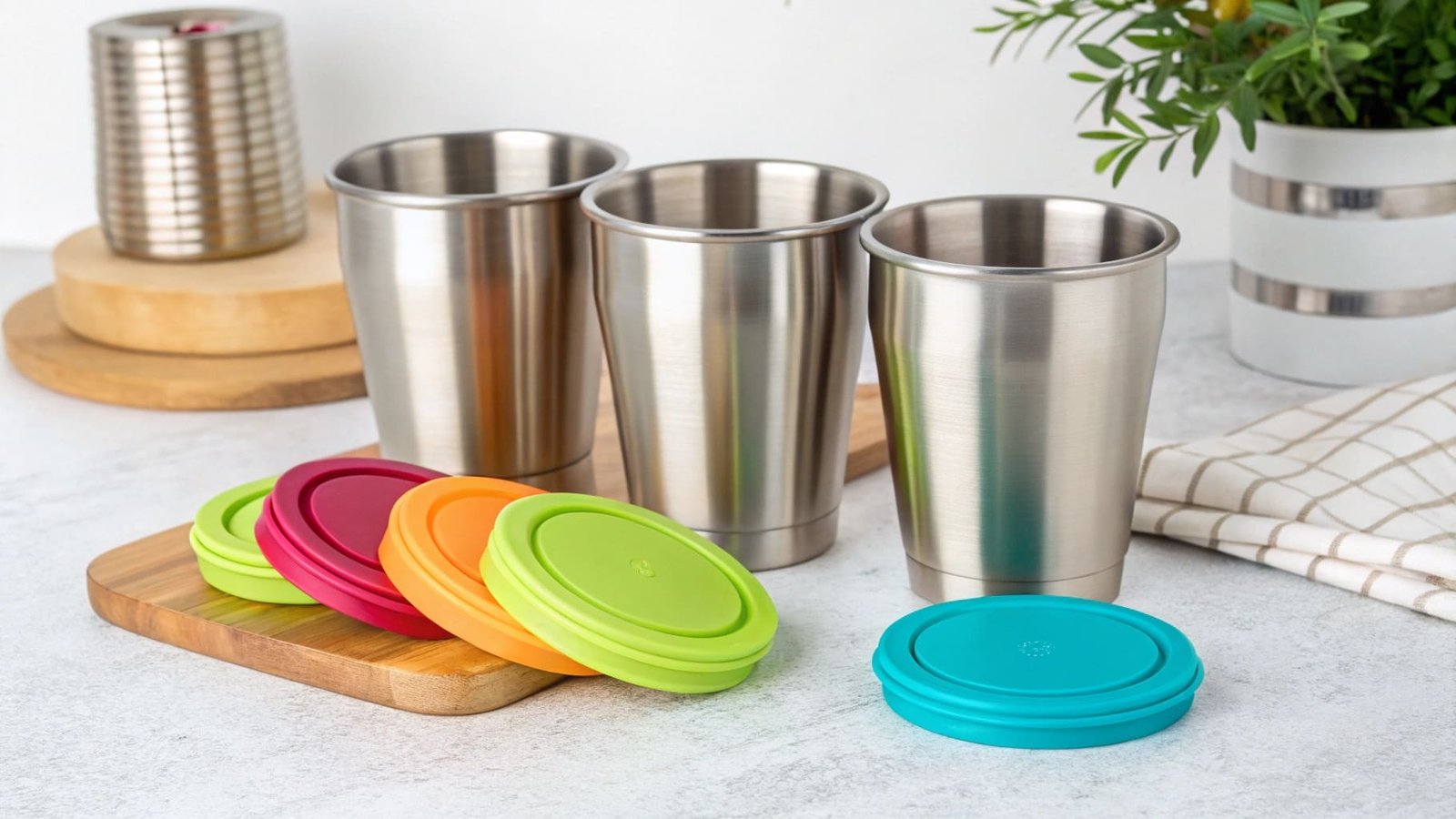
I once had a client who distributed silicone lids to a chain of bubble tea shops. The shops used both PP and PET cups depending on whether the drink was hot or cold. The lids I sourced were designed with PET in mind, and they did not seal well on PP rims. We had to reorder with a corrected rim specification. That delay pushed us past peak season.
How Do PP and PET Rims Differ in Practice?
PP and PET cups look similar at first glance, but their rims behave differently under a silicone lid.8 Understanding this difference helps you write better product specifications when placing wholesale orders.
| Property | PP Cup Rim | PET Cup Rim |
|---|---|---|
| Rim thickness | Slightly thicker | Thinner and sharper |
| Rim flexibility | More flexible | More rigid |
| Surface texture | Slightly matte | Smooth and glossy |
| Heat resistance | Higher (120–130°C) | Lower (suitable for cold drinks) |
| Common use | Hot beverages | Cold beverages, smoothies |
A silicone lid with a rim channel that is too narrow will not stretch over a PP cup without tearing or losing its seal. A rim channel that is too wide will not grip a PET cup tightly enough to prevent leaking. When sourcing, specify that your supplier test both cup materials and provide sample results before production begins. Ask for photos or video of the fit test. This small step prevents costly corrections after the order is placed.
There is also a growing shift in markets like Europe and North America toward paper cups with PE coating or bio-based alternatives.9 These cups often have softer, less defined rims. If your wholesale clients operate in these markets, check whether the silicone lids you source can also seal on paper cup rims. The rim channel design may need to be adjusted. Raising this question early with your supplier saves you from finding out the hard way after distribution.
Are Silicone Food Covers Dishwasher Safe?
A food service buyer who sells silicone lids to cafes and restaurants will face one question more than any other: can these go in the dishwasher? If the answer is no, or even a hesitant maybe, the commercial client will look elsewhere.
High-quality food-grade silicone lids can handle dishwasher cycles at temperatures up to 180°C without breaking down.10 However, not all silicone is the same. The manufacturing process determines how long the lid holds up under repeated high-heat washing.11
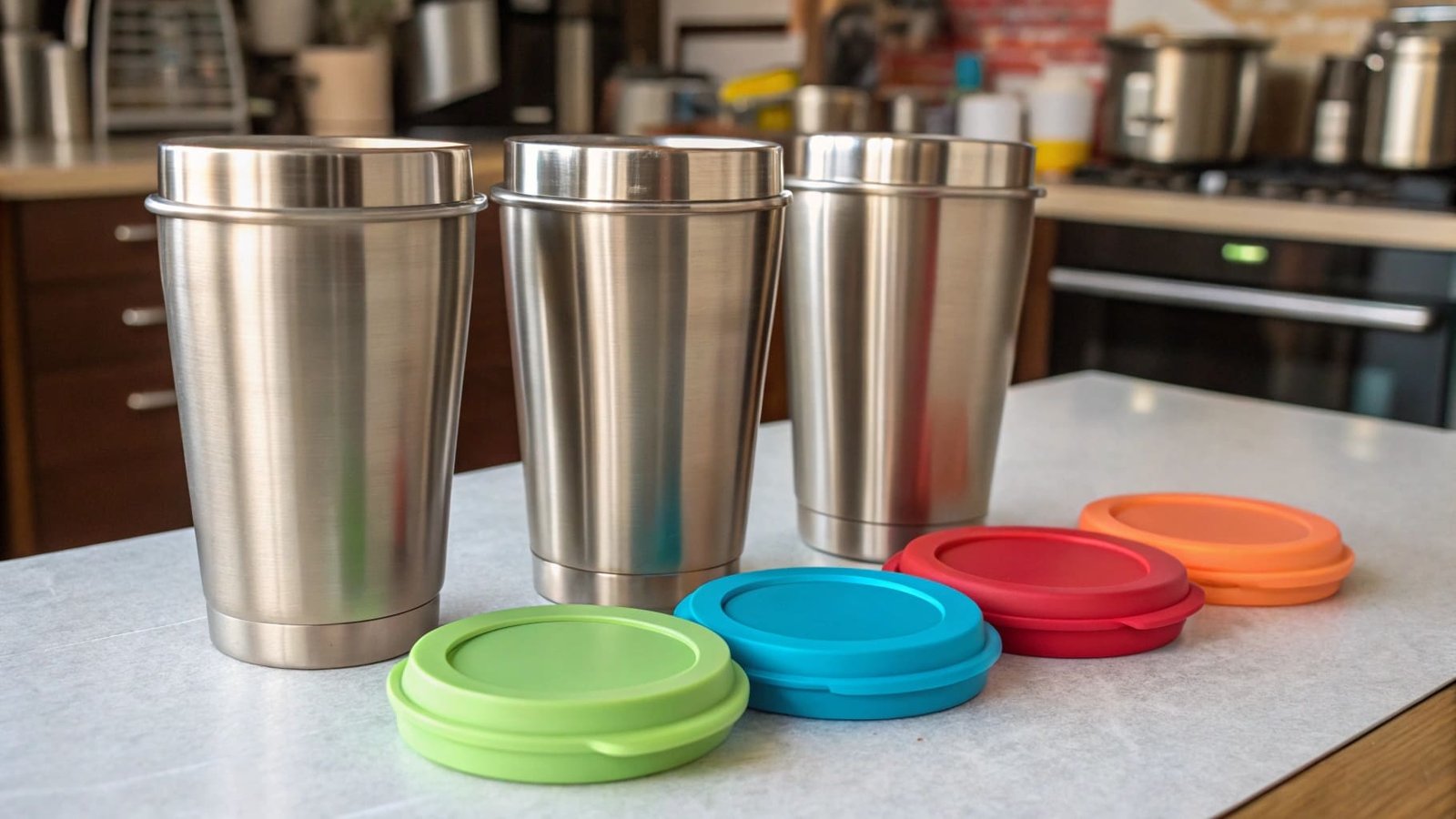
I have seen suppliers present certificates that claim dishwasher safety, but when I asked for actual cycle-test data, many could not provide it. The certificate tells you the material is safe. It does not tell you how long it lasts. Those are two different things, and for commercial buyers, longevity is the one that matters most.
Platinum-Cured vs. Peroxide-Cured Silicone: Which One Should You Buy?
The silicone curing process is the single biggest factor in dishwasher durability. Most wholesale buyers are not aware of this technical detail, but it directly affects how long your clients will use your lids before replacing them.
| Property | Platinum-Cured Silicone | Peroxide-Cured Silicone |
|---|---|---|
| Cost | 20–30% higher | Lower upfront cost |
| Dishwasher cycle endurance | 500–1000+ cycles | 100–300 cycles |
| Odor after washing | No odor | May retain slight odor |
| Regulatory compliance | Easier to certify for FDA and EU | May require additional testing |
| Best suited for | Commercial food service | Light consumer use |
Platinum-cured silicone costs more to produce, but it lasts three to five times longer under commercial dishwasher conditions.12 For a cafe or restaurant that washes lids daily, this difference means months of additional use before replacement. When you present this to a commercial buyer, the conversation shifts from unit price to total cost of ownership. Commercial buyers think in those terms, and this is where your product stands out from lower-cost alternatives.
When evaluating suppliers, ask directly for dishwasher durability test reports. A reliable supplier should be able to show you performance data after 500 cycles at minimum. If they cannot provide that data, treat it as a red flag. Also check that the product holds FDA and EU food contact certifications specifically for repeated high-heat use. Some certifications cover the material under standard conditions but do not account for repeated dishwasher exposure. Read the scope of the certificate, not just the name of it.
Conclusion
Choose silicone tea lids based on stretch range, cup material compatibility, and verified dishwasher durability. These three factors protect your wholesale margins and build long-term commercial client trust.
-
"Characterization of Mechanical and Dielectric Properties of Silicone ...", https://pmc.ncbi.nlm.nih.gov/articles/PMC8197861/. Technical descriptions of silicone rubber note that its elastomeric deformation and resilience allow it to conform to adjoining surfaces, which supports its use in flexible sealing applications. Evidence role: mechanism; source type: education. Supports: A neutral technical source should explain that silicone rubber is an elastomer capable of elastic deformation and is commonly used for sealing because it can conform to surfaces under compression or stretch.. Scope note: This supports the general sealing mechanism of silicone elastomers, not the performance of any particular tea lid design. ↩
-
"Impact of nano-cellulose fiber addition on physico-mechanical ...", https://pmc.ncbi.nlm.nih.gov/articles/PMC10497998/. Published mechanical-property data for silicone rubber show high elongation capacity relative to many rigid plastics, providing material context for designing stretch-fit lids across modest cup-diameter variation. Evidence role: general_support; source type: paper. Supports: A source should provide mechanical-property data showing that silicone rubber can undergo substantial reversible elongation, giving context for why a lid may be designed to fit varying diameters.. Scope note: Such data would contextualize feasibility but would not independently validate the article's specific 10–15 percent design target without product-level testing. ↩
-
"Eli5: what is silicone? Is it plastic? Is it really food safe? - Reddit", https://www.reddit.com/r/explainlikeimfive/comments/1ggbhrr/eli5_what_is_silicone_is_it_plastic_is_it_really/. Materials references commonly describe silicone elastomers as retaining useful properties over a broad temperature range, often extending from subzero conditions to temperatures above 200°C. Evidence role: general_support; source type: research. Supports: A neutral materials reference should document the typical low- and high-temperature service range of silicone elastomers used in food-contact products.. Scope note: The exact allowable range depends on formulation, curing chemistry, additives, and the duration of heat exposure. ↩
-
"Temperature and Frequency Dependence of the Dynamic ... - PMC", https://pmc.ncbi.nlm.nih.gov/articles/PMC10383995/. Studies of silicone elastomers report temperature-dependent mechanical behavior, indicating that changes in temperature can alter stiffness and handling characteristics. Evidence role: mechanism; source type: paper. Supports: A source should explain that elastomer modulus and flexibility are temperature dependent, with cooling generally increasing stiffness as materials approach lower-temperature transitions.. Scope note: This supports the material mechanism but does not measure removal force for the specific lid geometry discussed in the article. ↩
-
"Microplastic Release from Single-Use Plastic Beverage Cups - PMC", https://pmc.ncbi.nlm.nih.gov/articles/PMC11121293/. Packaging-material references identify polypropylene and polyethylene terephthalate as widely used polymers in food-contact and beverage-packaging applications, including disposable cups. Evidence role: general_support; source type: institution. Supports: A packaging or plastics institution source should identify PP and PET as widely used polymers in food-service cups or beverage packaging.. Scope note: The source may establish common use but may not rank PP and PET as the two most common materials in every regional market. ↩
-
"Polypropylene Melting Point | Softening Temperature & Heat ...", https://kanplas.com/blogs/fibc/polypropylene-melting-point. Polymer references describe polypropylene as having higher heat resistance than many commodity packaging plastics, supporting its use in hot-fill or hot-beverage food-service items. Evidence role: definition; source type: encyclopedia. Supports: A neutral polymer reference should document polypropylene's thermal properties and explain why it is used in heat-resistant food packaging.. Scope note: Heat resistance varies by grade and test method, so a general polymer reference does not certify a specific cup for use at 120–130°C. ↩
-
"Polyethylene terephthalate - Wikipedia", https://en.wikipedia.org/wiki/Polyethylene_terephthalate. Reference descriptions of polyethylene terephthalate note its transparency and mechanical strength, properties that explain its common use in clear rigid beverage packaging. Evidence role: definition; source type: encyclopedia. Supports: A polymer reference should state that PET is transparent and mechanically stiff enough for rigid packaging applications.. Scope note: The source supports the material-property rationale but may not address every commercial reason for choosing PET cups. ↩
-
"A Comparative Study on Crystallisation for Virgin and Recycled ...", https://pmc.ncbi.nlm.nih.gov/articles/PMC10708313/. Comparative polymer-property data show that polypropylene and polyethylene terephthalate differ in stiffness, flexibility, and thermal response, which provides a material basis for different rim behavior under a flexible lid. Evidence role: mechanism; source type: paper. Supports: A source should compare the mechanical properties of PP and PET, especially stiffness or modulus, to explain why cup rims made from these polymers may respond differently to a stretch lid.. Scope note: Material-property comparison does not directly test a particular cup-rim geometry or lid design. ↩
-
"The future of single-use paper coffee cups - BioResources", https://bioresources.cnr.ncsu.edu/resources/the-future-of-single-use-paper-coffee-cups-current-progress-and-outlook/. Policy and packaging-market sources document increasing attention to fiber-based, coated-paper, and bio-based food-service packaging as part of broader efforts to reduce reliance on conventional single-use plastics. Evidence role: historical_context; source type: government. Supports: A government or institutional source should document policy or market movement away from certain single-use plastics and toward fiber-based or bio-based food-service packaging.. Scope note: Such sources support a broad regional trend and policy context rather than proving that all buyers in Europe and North America are shifting at the same rate. ↩
-
"DHS 105.14(8)(a)8. - Wisconsin Legislative Documents", https://docs.legis.wisconsin.gov/document/administrativecode/DHS%20105.14(8)(a)8.. Materials and dishwashing standards sources indicate that silicone elastomers can tolerate high heat and that commercial dishwashing involves repeated hot-water or sanitizing cycles, providing context for evaluating dishwasher durability. Evidence role: general_support; source type: institution. Supports: A source should support silicone's high-temperature stability and a separate source may be needed for typical dishwasher operating temperatures or cycle conditions.. Scope note: This would not directly prove survival at 180°C in a dishwasher unless the cited source includes product-specific cycle testing at that temperature. ↩
-
"[PDF] Studies on the effect of movement during the cure on the mechanical ...", https://tsapps.nist.gov/publication/get_pdf.cfm?pub_id=860453. Research on silicone rubber curing shows that curing chemistry and crosslinking conditions influence mechanical properties and heat-aging behavior, which is relevant to durability during repeated washing. Evidence role: mechanism; source type: paper. Supports: A technical paper should explain how curing chemistry and crosslink structure affect silicone rubber's mechanical strength, heat aging, and durability.. Scope note: The evidence explains the mechanism but does not establish the exact service life of a particular lid without cycle testing. ↩
-
"Silicone Cookware Needs to be Platinum Cured - Reddit", https://www.reddit.com/r/cookware/comments/1ijf7a4/silicone_cookware_needs_to_be_platinum_cured/. Comparative technical literature distinguishes platinum-cured and peroxide-cured silicone systems in curing chemistry, residual byproducts, and heat-aging behavior, supporting the relevance of curing method to long-term durability. Evidence role: general_support; source type: research. Supports: A source should compare platinum-cured and peroxide-cured silicone in terms of production cost, extractables, heat aging, or durability under repeated washing or heat exposure.. Scope note: Unless the source reports commercial dishwasher cycle testing, it would contextualize the durability difference but not directly prove the article's three-to-five-times figure. ↩