What Is the Difference Between Gaskets and Washers in Tumbler Manufacturing?
One wrong component choice can ruin an entire product line. I have seen this happen. A small mix-up between gaskets and washers led to leaks, returns, and a damaged brand.
A gasket creates a watertight seal between two surfaces. A washer distributes load and reduces friction.1 They look similar, but they do completely different jobs. Using one in place of the other causes product failures.
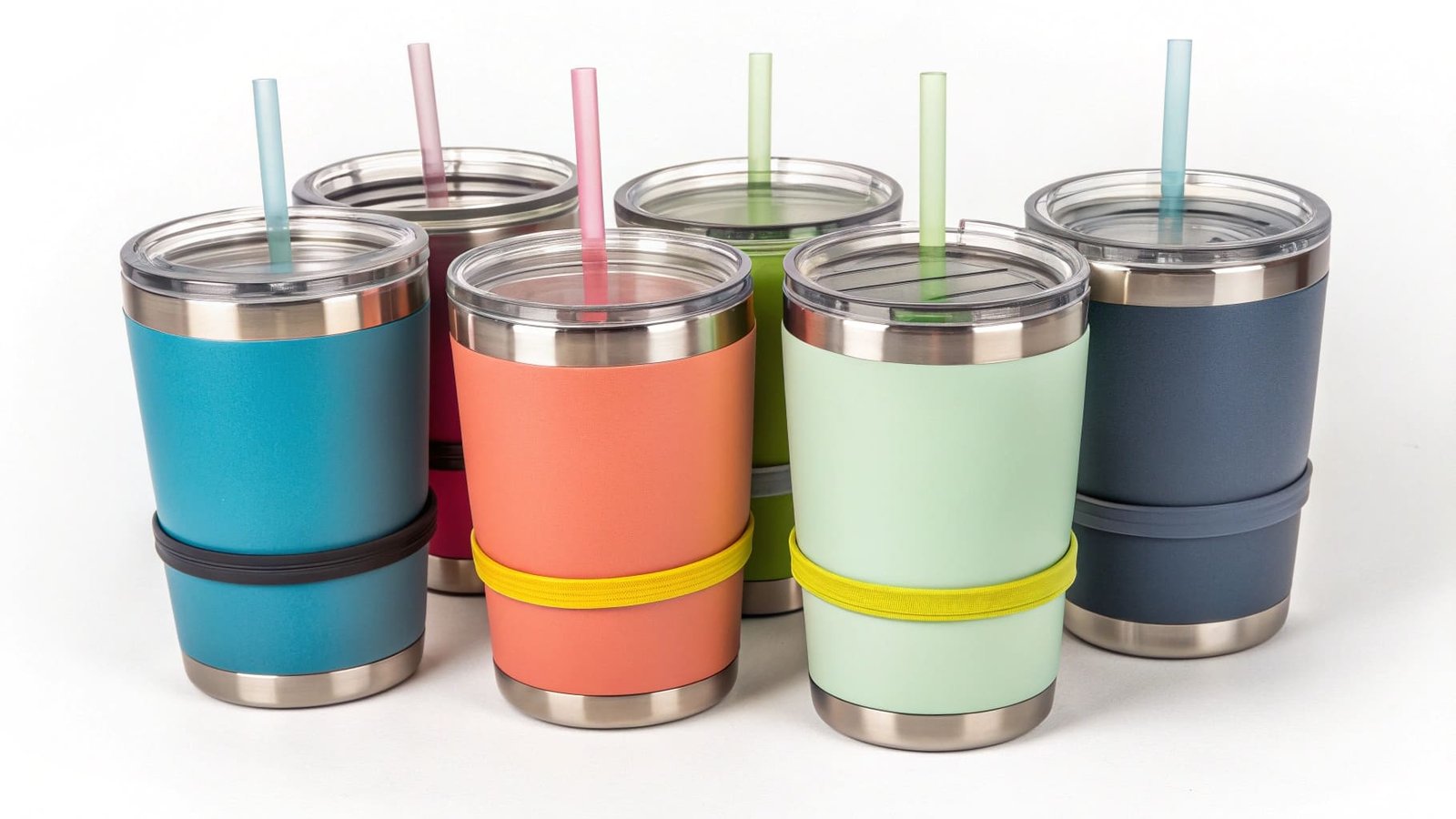
This difference matters more than most buyers think. In tumbler manufacturing, the stakes are high. A leaking lid means returns, bad reviews, and lost customers. Understanding which component does what job is the first step to avoiding that outcome. I want to walk you through each question clearly, so you can source the right parts with confidence.
What Is the Difference Between a Washer and a Gasket?
Many buyers treat these two parts as the same. They are not. Mixing them up is one of the most common sourcing mistakes I see in tumbler manufacturing.
A gasket seals the gap between two surfaces to stop liquid or air from passing through.2 A washer spreads pressure across a surface to protect material and keep fasteners tight.3 Both look flat and round, but their purpose, material, and design are completely different.

In tumbler manufacturing, gaskets and washers each appear in very specific places. A gasket sits inside a lid groove. When you close the lid, the gasket compresses and fills the small gaps between the lid and the cup. This compression is what stops liquid from leaking out.
A washer sits under a bolt or screw. Its job is to spread the force of the fastener so it does not dig into or crack the surface beneath it. Some tumblers use washers under the hardware that holds a handle in place. The washer protects the outer surface. It does not seal anything.
The material difference is also important. Gaskets use soft, compressible materials. In food and beverage products, silicone is the most common choice.4 Silicone gaskets can be compressed and released many times without losing their shape. This property is called compression set resistance. A gasket with poor compression set resistance will lose its ability to seal after a few weeks of daily use.5
Washers are usually made from harder materials. Metal washers are common in industrial settings. Nylon or rubber washers appear in consumer products. These materials are chosen for durability under load, not for flexibility or sealing.
The table below shows the key differences at a glance.
| Feature | Gasket | Washer |
|---|---|---|
| Primary Job | Create a seal | Distribute load |
| Material | Soft silicone or rubber | Hard metal, nylon, or rubber |
| Location in Tumbler | Lid groove, straw hole | Under screws, bolts |
| Compressibility | High | Low |
| Sealing Ability | Yes | No |
| Food-Grade Needed | Yes, for food contact | Depends on location |
When I talk to procurement teams, I always ask them to confirm which component they need before placing an order. The part numbers look different, but the names can be used loosely in conversation. That loose language costs money.
Can a Washer Be Used as a Gasket?
This question comes up often. Buyers look at both parts and think they can swap one for the other to cut costs. I understand the logic, but the answer is no.
A washer cannot replace a gasket. The two parts are built for different jobs. Putting a washer where a gasket should go will almost always cause leaks.
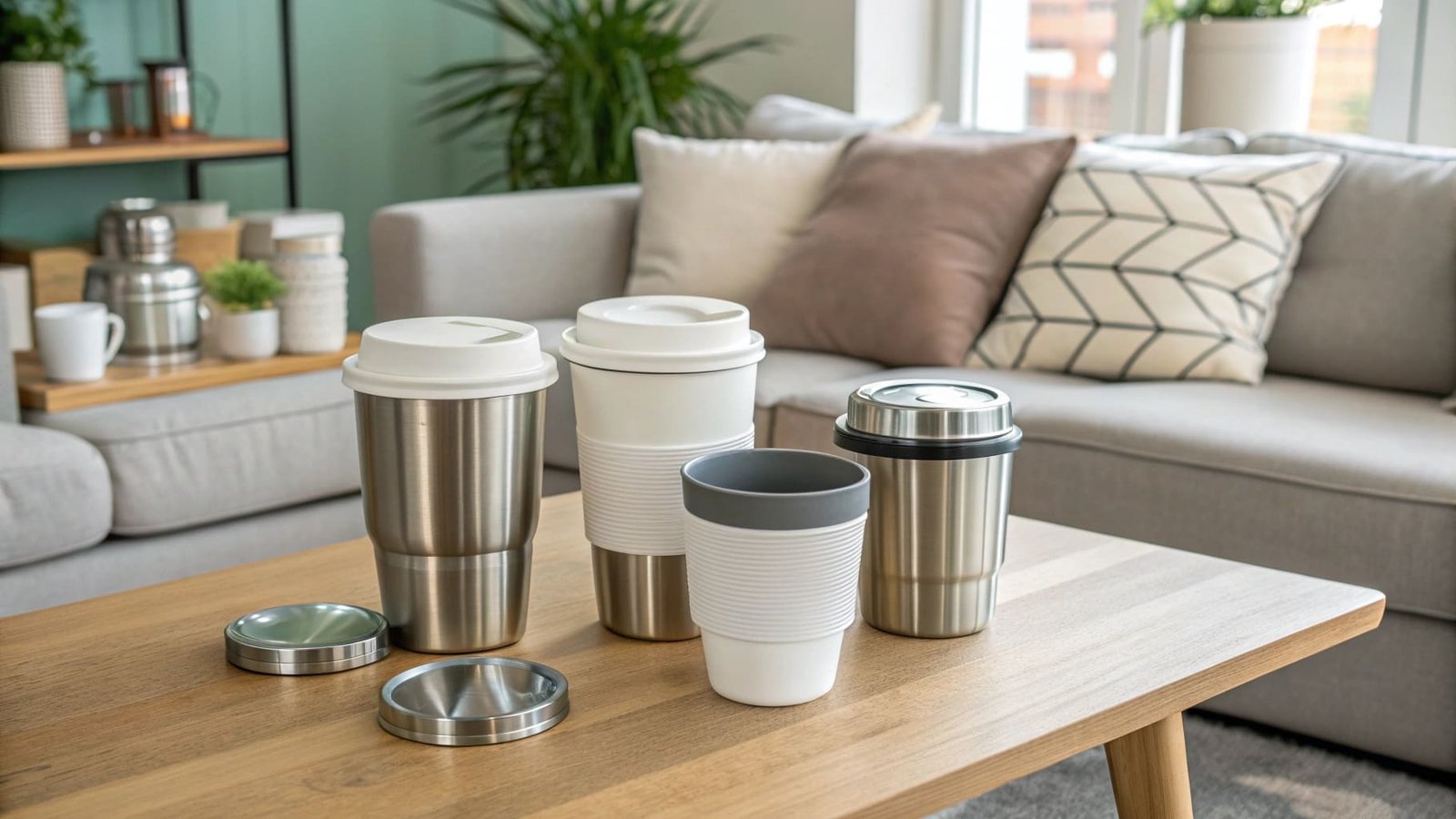
Here is why this substitution fails. A gasket works because it is soft enough to compress and fill tiny surface gaps. When the lid of a tumbler closes, the surfaces are not perfectly smooth at a microscopic level. There are small ridges and dips. A gasket material flows into those gaps under pressure. A washer material does not do this. It is too hard to fill gaps. Liquid finds those gaps and passes through them.
There is also the question of shape. Most lid gaskets are designed to fit a specific groove. The groove holds the gasket in place and controls how much it compresses. A washer has no groove-fitting design. It will shift, tilt, or sit unevenly. An uneven sealing surface makes leaks worse, not better.
Some buyers think using a thicker washer will fix the problem. It does not. Thickness is not the same as compressibility. You can stack washers together and still get a leaking lid because the material cannot fill the surface gaps.
The cost math also does not work. A silicone gasket for a tumbler lid costs very little per unit. If you replace it with a washer and the product leaks, you face returns, refunds, and a reputation problem. The money saved on the cheaper part disappears many times over in warranty costs.
I have seen this happen with a customer who switched suppliers mid-production to save a small amount per unit. The new supplier sent washers that looked similar to gaskets. The production team did not catch the error. The products went to market and the leaks started within weeks. The cost of replacing those units was far higher than the original savings.
The right approach is to specify the gasket material, hardness, and groove dimensions clearly in your purchase order. Do not leave it to the supplier to interpret. Clear specs protect you.
Are Washers and O-Rings the Same?
Some buyers group washers and O-rings together because both can appear small and round. They are not the same part, and using them in the wrong place creates its own set of problems.
A washer is flat. An O-ring is round in cross-section, like a small tube bent into a circle. That shape difference is what makes them work differently.
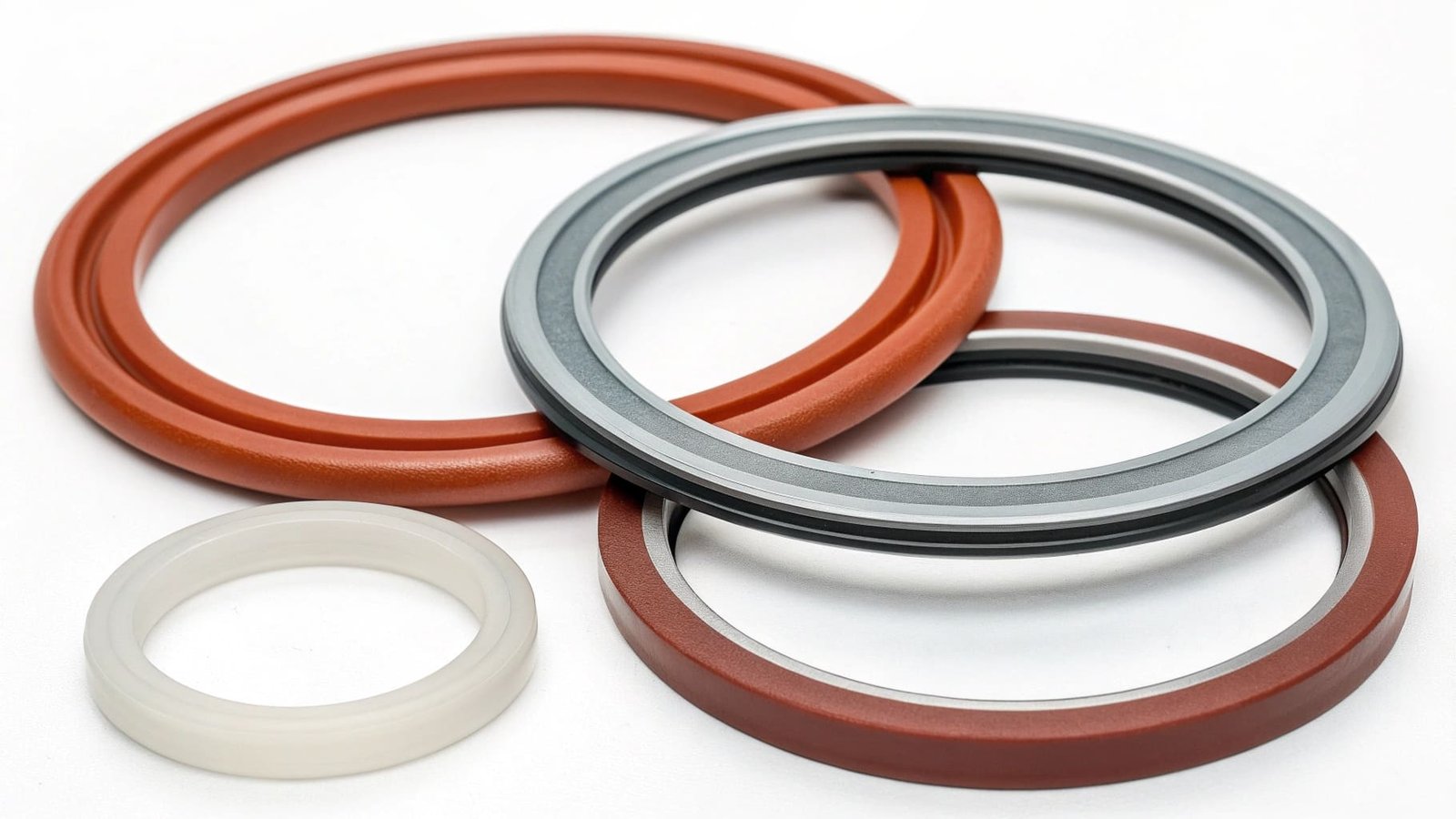
An O-ring is a type of gasket.6 It is designed to sit inside a groove and seal a gap by being squeezed from the side or from above. The round cross-section is important. When an O-ring is compressed, it deforms into a shape that fills the groove tightly. This creates a strong seal with very little material.
In tumblers, O-rings appear in several places. They are common in straw mechanisms. The straw hole in a lid needs a tight seal so liquid does not drip out when the tumbler tilts. An O-ring around the straw creates that seal. O-rings also appear in threaded lid systems. When you screw a lid onto a cup, the O-ring is compressed as the threads tighten. This seals the gap between the lid and the cup body.
A washer placed in the same location as an O-ring will not compress correctly. The groove is designed for a round cross-section. A flat washer sits in that groove at the wrong angle. The seal fails.
The table below shows how these three components compare.
| Feature | Washer | O-Ring | Gasket |
|---|---|---|---|
| Shape | Flat, disc | Round cross-section, ring | Flat or molded to a specific shape |
| Cross-Section | Flat | Circular | Flat or custom |
| Primary Job | Load distribution | Radial or axial sealing | Surface sealing |
| Common Location in Tumbler | Under hardware fasteners | Straw hole, lid thread | Lid groove |
| Material | Metal, nylon, rubber | Silicone, EPDM, rubber | Silicone, rubber |
| Food-Grade Required | Depends | Yes, if food contact | Yes, if food contact |
When sourcing for tumbler products, I always ask suppliers to confirm the cross-section dimension of O-rings in addition to the inner diameter and outer diameter. A supplier who cannot provide that data is a supplier who may not fully understand what they are selling you.
One more thing worth knowing: O-rings come in standardized sizes. There are published size charts that manufacturers follow. If you give a supplier the correct size number, they should be able to match it exactly. If a supplier cannot confirm the size standard they are using, request a physical sample before committing to a bulk order.
Conclusion
Gaskets seal surfaces. Washers spread load. O-rings seal grooves. Getting these three parts right protects your product quality and keeps your customers happy.
-
"Washer (hardware)", https://en.wikipedia.org/wiki/Washer_(hardware). An engineering reference distinguishes gaskets, which seal joints between mating surfaces, from washers, which are placed under fasteners to distribute load and reduce surface damage or friction. Evidence role: definition; source type: encyclopedia. Supports: A neutral reference should define gaskets as sealing components and washers as components used with fasteners to distribute load or reduce wear/friction.. ↩
-
"O-ring - Wikipedia", https://en.wikipedia.org/wiki/O-ring. Reference definitions describe a gasket as a sealing element placed between mating surfaces to prevent leakage of liquids or gases from the joint. Evidence role: definition; source type: encyclopedia. Supports: A source should support that gaskets are deformable sealing elements used between surfaces to prevent leakage of fluids or gases.. ↩
-
"Fastener Design Manual", https://ntrs.nasa.gov/citations/19900009424. Fastener-design references describe washers as components that distribute clamping load under a bolt or screw head and can reduce localized damage to the bearing surface. Evidence role: mechanism; source type: institution. Supports: A technical reference should explain that washers are used with threaded fasteners to distribute clamping force and reduce local surface damage.. ↩
-
"21 CFR 177.2600 -- Rubber articles intended for repeated use. - eCFR", https://www.ecfr.gov/current/title-21/chapter-I/subchapter-B/part-177/subpart-C/section-177.2600. Food-contact regulations and materials references identify silicone rubber among elastomeric materials used in repeated-contact food applications, including sealing components. Evidence role: general_support; source type: government. Supports: A source should support that silicone rubber is accepted or widely used in repeated food-contact applications, including seals or gaskets.. Scope note: This supports silicone's suitability and common use in food-contact seals but does not by itself prove that silicone is the single most common material across all food and beverage products. ↩
-
"6 Reasons Why Gaskets Fail: Materials and Environment", https://www.rogerscorp.com/blog/2025/6-reasons-why-gaskets-fail-materials-and-environment. Studies and design references on elastomer seals report that increased compression set reduces elastic recovery and contact pressure, which can compromise sealing performance over time. Evidence role: mechanism; source type: research. Supports: A materials or sealing reference should support that high compression set reduces seal recovery and sealing force, increasing leakage risk.. Scope note: Such evidence would support the mechanism of seal degradation, but the specific 'few weeks' timeframe would require product-specific testing. ↩
-
"O-ring - Wikipedia", https://en.wikipedia.org/wiki/O-ring. Reference definitions describe an O-ring as a circular mechanical gasket or seal, commonly seated in a groove and compressed between parts. Evidence role: definition; source type: encyclopedia. Supports: A source should define an O-ring as a circular mechanical gasket or seal.. ↩