How to Source Silicone Lid Covers for Food Storage Wholesale Distribution?
You picked the wrong supplier once. Your customer complained. Your reputation took a hit. Sourcing silicone lid covers without checking certifications is a risk you cannot afford.
Sourcing silicone lid covers for food storage wholesale distribution requires you to verify food-grade certification, request third-party lab reports, confirm FDA or LFGB compliance, and check the manufacturing process1. Suppliers using platinum-cure silicone with documented test results are the safest choice for wholesale buyers.2
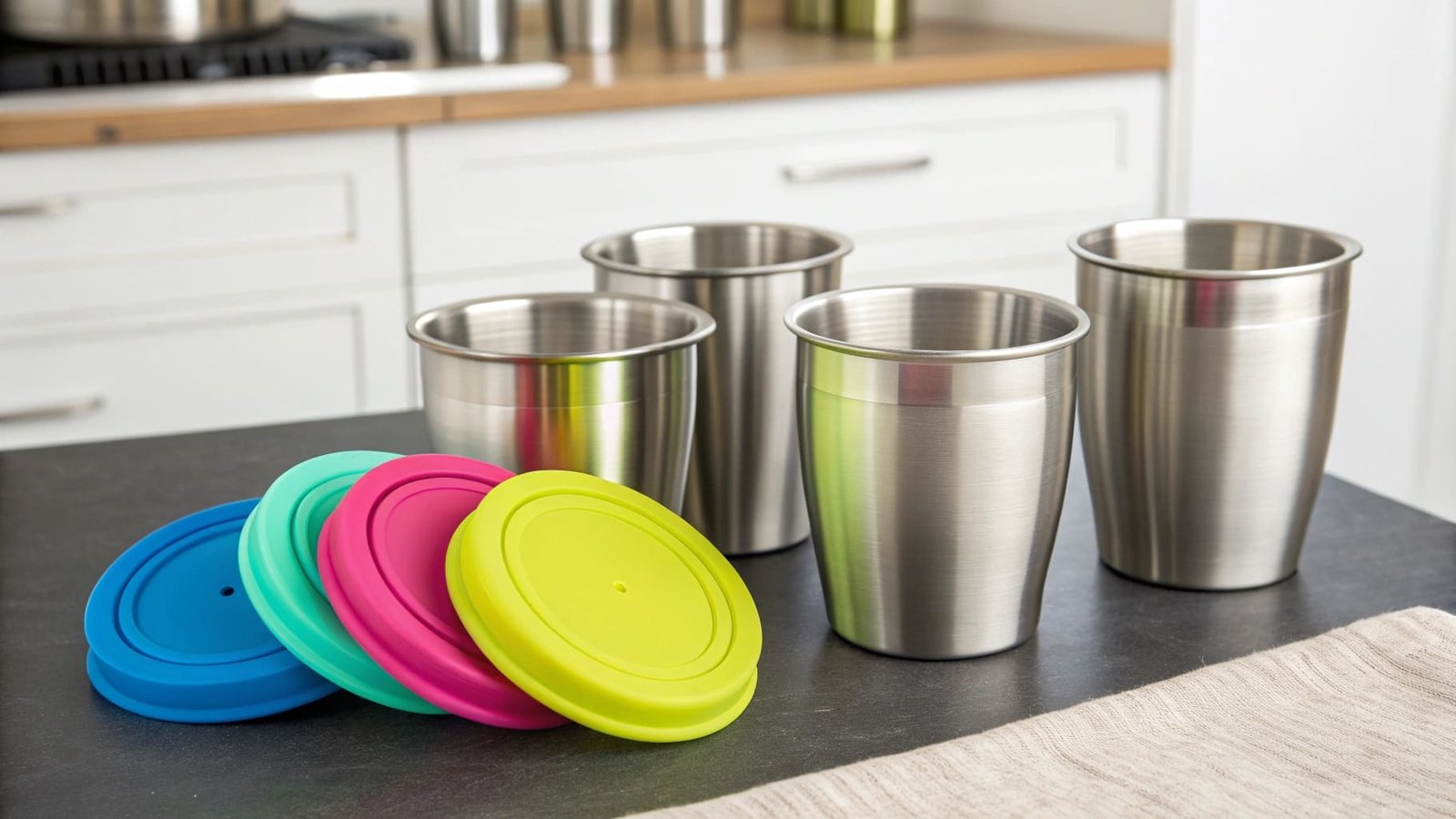
The silicone lid cover market looks simple from the outside. You find a supplier, place an order, and resell. But once you dig into the details, you quickly realize that product safety, certification fraud, and material quality are the real issues that will make or break your business in markets like North America and Europe. This article walks you through exactly what you need to know before you place a single order.
How to Tell If It's Food Grade Silicone?
You receive a product sample. It looks clean. It smells fine. But looks and smell alone cannot tell you if a silicone lid cover is actually safe for food contact.
Food-grade silicone contains no fillers, no chemical additives, and no volatile organic compounds that can move into food.3 It is made through a platinum-cure process, which produces a purer, cleaner material than peroxide-cured alternatives. A white mark left behind on a white paper when you twist the material is one early sign of low-grade silicone with fillers.4
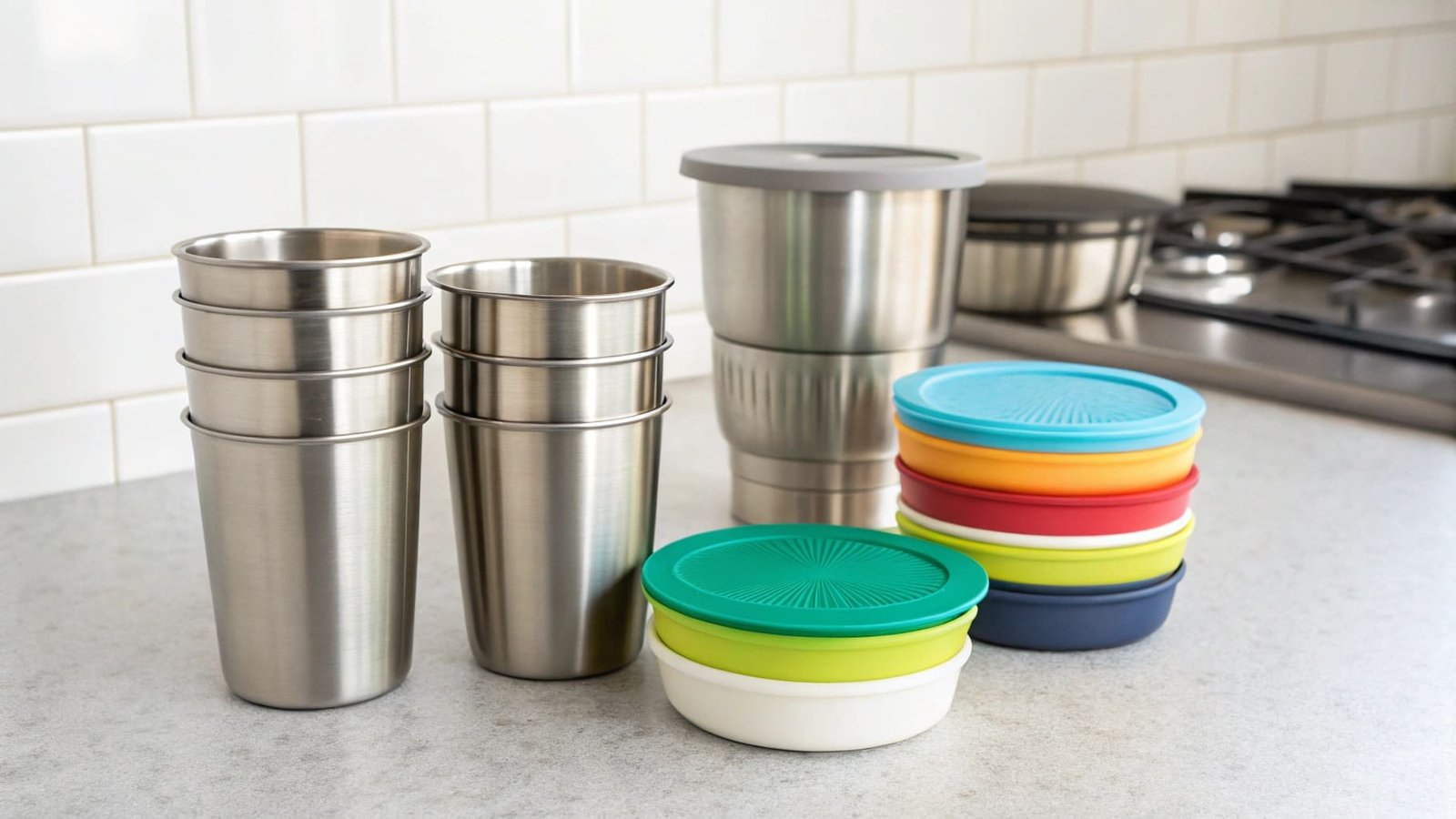
What Makes Food-Grade Silicone Different From Industrial-Grade Silicone?
Most suppliers will tell you their silicone is food grade. Not all of them are telling the truth. The difference between food-grade and industrial-grade silicone comes down to three things: the raw material formula, the curing process, and the presence of additives.
| Feature | Food-Grade Silicone | Industrial-Grade Silicone |
|---|---|---|
| Fillers | None | Often contains calcium carbonate or other fillers |
| Curing Process | Platinum-cure | Peroxide-cure |
| Odor | Odorless | May have a chemical smell |
| Flexibility | High | Lower |
| Color Stability | Stable | May yellow or fade over time |
| Safe for Food Contact | Yes | No |
Platinum-cure silicone costs more to produce. That is why some suppliers cut corners and use peroxide-cured silicone instead. Peroxide-cured products leave behind by-products after curing, which creates a stronger smell and increases the risk of chemical migration into food.5
I always ask suppliers directly: what curing process do you use? If they cannot give me a clear answer, that is already a warning sign. A serious manufacturer will have this information ready without hesitation.
You should also ask for a physical test. Take a white cloth and rub it firmly against the silicone surface. If any white powder transfers onto the cloth, the product likely contains fillers. Another test is the pinch test. Pinch and twist the silicone tightly. If the color turns white at the twisted point, fillers are present.
These tests are not perfect. But they give you a fast first filter before you spend money on lab testing. For final confirmation, always request third-party test reports from the supplier.
What Is FDA Approved Silicone?
You see "FDA approved" printed on a product listing or a supplier brochure. It sounds official. But this phrase is used loosely in the industry, and many buyers do not know what it actually means.
FDA-approved silicone refers to silicone materials that meet the standards in Title 21 of the Code of Federal Regulations.6 This governs materials that come into contact with food. However, FDA approval covers the raw silicone material itself. It does not automatically apply to every finished product made from that material.7
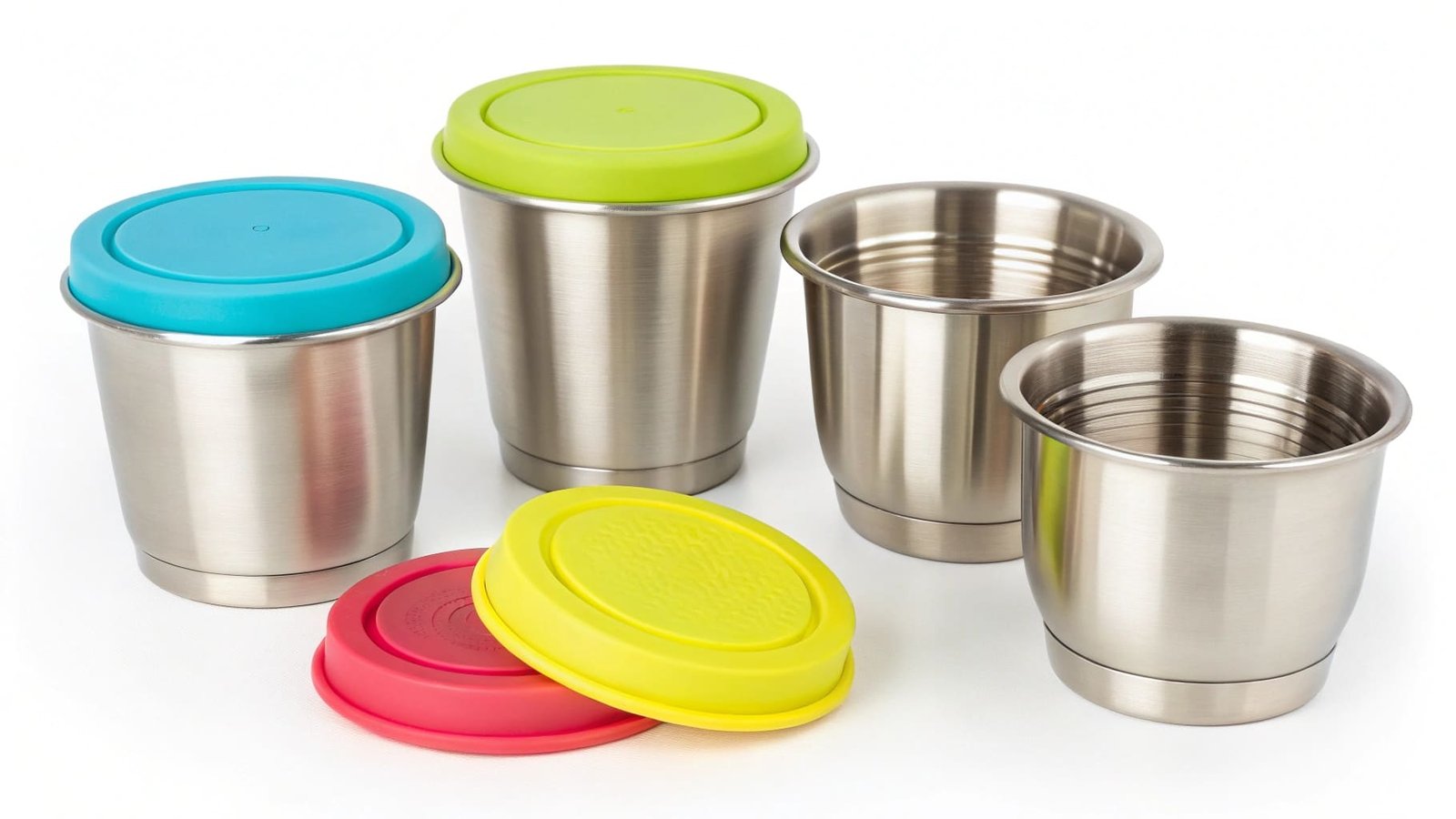
Does FDA Approval Cover the Finished Silicone Lid Cover Product?
This is one of the most common misunderstandings I see among wholesale buyers. A supplier can use FDA-compliant raw silicone and still produce a finished product that fails safety standards if the manufacturing process introduces contaminants or if other materials in the product are not FDA-compliant.
| What FDA Covers | What FDA Does NOT Automatically Cover |
|---|---|
| Raw silicone material composition | The entire finished product |
| Approved additives and colorants in the material | The full manufacturing process |
| Migration limits for substances into food | Other components like clips, seals, or printed labels |
| Temperature resistance standards | Finished goods from all factories using "FDA silicone" |
As a wholesale distributor, you need to do more than trust a supplier's claim. Here is what you should request from every supplier before committing to a bulk order:
- A third-party lab test report specifically for the finished product, not just the raw material
- Confirmation that the report was issued by an accredited testing laboratory
- LFGB test reports if you plan to sell into European markets8
- A valid certificate with a current expiration date
I have personally encountered suppliers who provided certificates with expired dates or reports that tested a different product variant than what was actually shipped. This is a real risk. Certificate fraud is one of the top pain points I hear about from wholesale buyers.
My advice is simple. Do not accept certificates at face value. Contact the testing laboratory directly to verify the report number and product details. This one step has saved me from costly mistakes more than once. Dual certification covering both FDA and LFGB standards gives you access to both the North American and European markets without running separate sourcing processes.
What Is the Safest Material for a Microwave Cover?
You sell to customers who heat food at home every day. If your microwave cover warps, melts, or releases chemicals under heat, you will get returns, complaints, and a damaged brand reputation.
Pure platinum-cured food-grade silicone is the safest material for a microwave cover. It stays stable from negative 40 degrees Fahrenheit up to 450 degrees Fahrenheit. Unlike plastic covers, it does not warp, melt, or release harmful chemicals when exposed to microwave heat.
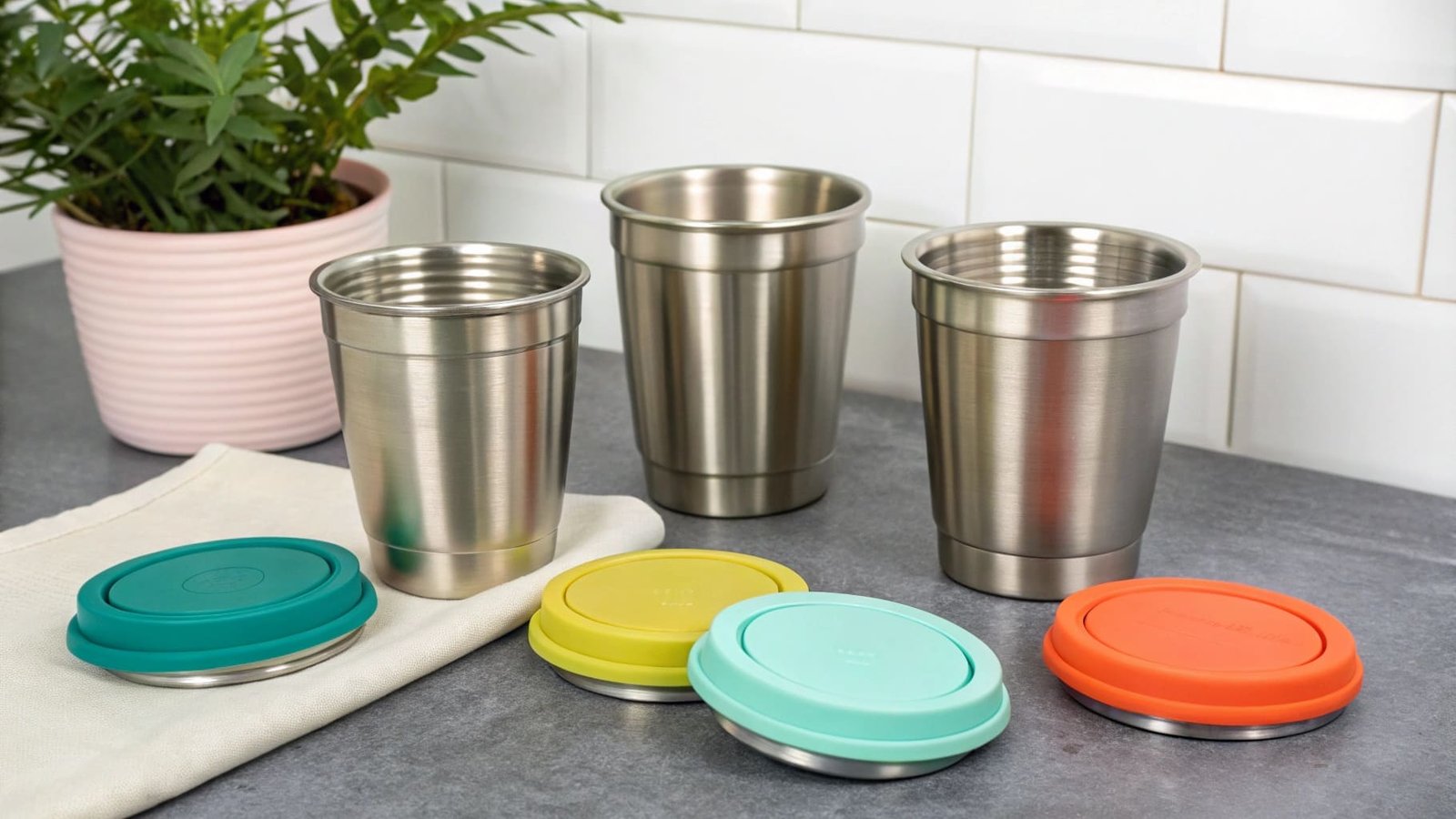
How Does Silicone Compare to Other Microwave Cover Materials?
When I first started evaluating microwave cover materials for wholesale distribution, I compared three main options: plastic, BPA-free plastic, and food-grade silicone. The differences are significant, especially for buyers targeting health-conscious customers in North America and Europe.
| Material | Heat Resistance | Chemical Risk Under Heat | Durability | Regulatory Status |
|---|---|---|---|---|
| Standard Plastic | Low | High risk of leaching | Short lifespan | Varies, often not food safe at high temps |
| BPA-Free Plastic | Moderate | Lower, but other chemicals may still migrate | Moderate | BPA-free does not mean fully safe |
| Food-Grade Silicone | Very High (-40°F to 450°F) | Minimal to none | Long lifespan | FDA and LFGB compliant available |
Plastic covers may carry BPA-free labels, but recent research points to other plastic additives that may still pose health risks under heat.9 Silicone eliminates most of these concerns because it is chemically inert.10 This means it does not react with food or release compounds when heated.
For wholesale distributors, this matters beyond product safety alone. Your customers in Canada and the United States are increasingly aware of what materials they allow in their kitchens. A microwave cover made from certified food-grade silicone gives you a clear product story that supports premium pricing and builds customer trust.
When you vet suppliers for microwave-safe silicone lid covers, ask for the following:
- Documented temperature resistance range for the finished product
- Microwave safety test results included in the third-party lab report
- Confirmation that colorants used in the product are also food-grade and heat-stable
Color is a detail many buyers overlook. Some silicone lid covers use low-grade colorants that are not heat-stable. Under repeated microwave use, these colorants can degrade. Always confirm that the pigments used are food-grade and tested alongside the silicone base material.
I have found that suppliers who are transparent about their temperature ratings and colorant specifications are almost always the more reliable manufacturing partners overall. Transparency in technical details is a strong signal of a factory that takes quality seriously.
Conclusion
Source silicone lid covers by verifying food-grade certification, checking FDA and LFGB compliance, using physical tests, and always requesting third-party lab reports from suppliers.
-
"Chemistry Recommendations for Submissions of Food Contact ...", https://www.fda.gov/regulatory-information/search-fda-guidance-documents/guidance-industry-preparation-premarket-submissions-food-contact-substances-chemistry. Food-contact regulatory guidance from agencies such as the FDA and European authorities supports the need to verify applicable material compliance and testing documentation before placing food-contact articles on the market; this supports the article's due-diligence checklist rather than proving that every silicone lid cover requires the same documents in every jurisdiction. Evidence role: expert_consensus; source type: government. Supports: Food-contact materials are subject to regulatory compliance requirements and may require documentation, migration testing, and verification of materials and manufacturing controls.. Scope note: The support is contextual because documentation requirements vary by jurisdiction, product composition, and intended use. ↩
-
"Is Platinum Cured Silicone Tubing Safe for High-Purity Applications?", https://elastostar.com/is-platinum-cured-silicone-tubing-safe-for-high-purity-applications/. Materials-science literature on silicone elastomer curing indicates that peroxide curing can generate decomposition by-products, whereas platinum-catalyzed addition curing avoids those peroxide residues; this supports the preference for platinum-cured silicone with product-specific test data, although it does not by itself certify the safety of a particular supplier's finished lid. Evidence role: mechanism; source type: paper. Supports: Platinum-cured silicone generally avoids peroxide decomposition by-products and documented testing can verify extractables or migration limits for food-contact use.. Scope note: Direct safety depends on the exact formulation, additives, pigments, processing controls, and finished-product test results. ↩
-
"21 CFR 177.2600 -- Rubber articles intended for repeated use. - eCFR", https://www.ecfr.gov/current/title-21/chapter-I/subchapter-B/part-177/subpart-C/section-177.2600. Food-contact regulations such as FDA 21 CFR 177.2600 and related European guidance regulate rubber or silicone articles through permitted substances and extractive limits, supporting the need to verify low migration for food-use silicone; this does not prove that all food-grade silicone contains no additives or zero volatile compounds. Evidence role: definition; source type: government. Supports: Food-contact silicone is evaluated through regulatory limits on composition and extractable or migratable substances rather than by appearance or smell alone.. Scope note: The article's wording is stronger than most regulations, which generally set limits rather than requiring absolute absence. ↩
-
"Silanized Silica-Encapsulated Calcium Carbonate@Natural Rubber ...", https://pmc.ncbi.nlm.nih.gov/articles/PMC7697249/. Materials-characterization studies show that inorganic fillers in silicone rubber can be identified by analytical methods such as FTIR, thermogravimetric analysis, or ash-content testing; this provides context for using visual whitening only as a preliminary screen, not as proof of filler content. Evidence role: mechanism; source type: paper. Supports: Fillers such as calcium carbonate can be present in silicone rubber, and reliable identification normally requires analytical methods rather than visual inspection alone.. Scope note: A visual twist or paper-mark test is not a validated substitute for laboratory analysis. ↩
-
"Peroxide-Based Crosslinking of Solid Silicone Rubber, Part I", https://pmc.ncbi.nlm.nih.gov/articles/PMC9609014/. Studies of silicone elastomers and food-contact silicone report that curing chemistry can influence residual volatile compounds and extractables, supporting the claim that peroxide-cured materials may require closer assessment for odor and migration; this does not establish that every peroxide-cured lid is unsafe. Evidence role: mechanism; source type: paper. Supports: Peroxide curing may generate residual volatile or extractable by-products that can affect odor and migration testing outcomes.. Scope note: Actual migration depends on post-curing, formulation, temperature, food simulant, and exposure time. ↩
-
"21 CFR 177.2600 -- Rubber articles intended for repeated ...", https://www.ecfr.gov/current/title-21/chapter-I/subchapter-B/part-177/subpart-C/section-177.2600. FDA regulations in 21 CFR 177.2600 set compositional and extractive requirements for rubber articles intended for repeated food-contact use, providing the regulatory basis often referenced for food-contact silicone; the regulation does not mean the FDA has individually approved every silicone lid cover. Evidence role: definition; source type: government. Supports: FDA food-contact regulations in Title 21 include provisions for rubber articles intended for repeated use, commonly cited for food-contact silicone elastomers.. Scope note: The phrase 'FDA-approved silicone' is often used informally; the legally relevant issue is compliance with applicable food-contact requirements. ↩
-
"Regulatory Status of Components of a Food Contact Material - FDA", https://www.fda.gov/food/packaging-food-contact-substances-fcs/determining-regulatory-status-components-food-contact-material. Food-contact regulatory guidance treats compliance as dependent on the finished article, including formulation, processing, and intended conditions of use; this supports the article's distinction between raw-material compliance and finished-product compliance, although exact obligations differ between U.S. and European frameworks. Evidence role: expert_consensus; source type: government. Supports: Food-contact compliance depends on the finished article's composition, processing, intended use, and migration or extractives profile, not only on the base polymer.. Scope note: The support is regulatory context rather than a direct assessment of silicone lid covers. ↩
-
"Risk assessment of food contact materials - PMC - NIH", https://pmc.ncbi.nlm.nih.gov/articles/PMC9749432/. German and EU food-contact material guidance shows that LFGB requirements and BfR recommendations are relevant for products sold in Germany and often requested in European trade, while EU Regulation 1935/2004 provides the broader European framework; this supports the article's reference to LFGB but should not be read as a single EU-wide certification requirement. Evidence role: historical_context; source type: government. Supports: LFGB is a German food and feed code relevant to food-contact compliance, while EU-wide food-contact rules also apply across European markets.. Scope note: LFGB is specifically German law, not a standalone requirement for every European country. ↩
-
"Most Plastic Products Release Estrogenic Chemicals - PMC", https://pmc.ncbi.nlm.nih.gov/articles/PMC3222987/. Peer-reviewed studies and reviews of food-contact plastics report that BPA-free products may use substitute chemicals or other additives with measurable migration or biological activity, particularly under stressors such as heat; this supports the article's caution but does not show that all BPA-free microwave covers are hazardous. Evidence role: expert_consensus; source type: paper. Supports: BPA-free labeling does not necessarily eliminate concern about other plastic additives or substitutes, and heating can affect migration from food-contact plastics.. Scope note: Risk depends on the polymer, additives, temperature, exposure duration, and actual migration levels. ↩
-
"Progress in research on the safety of silicone rubber ...", https://pubmed.ncbi.nlm.nih.gov/37183940/. Scientific reference sources describe silicone elastomers as chemically stable and relatively inert across many conditions, supporting their common use in food-contact applications; this provides mechanistic context rather than proving zero migration from every colored or processed silicone lid. Evidence role: mechanism; source type: research. Supports: Silicone elastomers are generally chemically stable and inert under many use conditions, which helps explain their use in food-contact and medical applications.. Scope note: Silicone products can still contain pigments, fillers, catalysts, or residual low-molecular-weight siloxanes that require testing. ↩