How to Source Silicone Lids for Ceramic Travel Mugs in European Markets?
You found a great ceramic mug product. But the lid is holding you back. Poor lid quality is killing your sales in Europe before they even start.
Sourcing silicone lids for ceramic travel mugs in European markets means finding food-grade, LFGB-compliant silicone suppliers who can deliver leak-proof, BPA-free lids with consistent quality. The right lid turns a fragile ceramic mug into a travel-ready product that European buyers will pay a premium for.
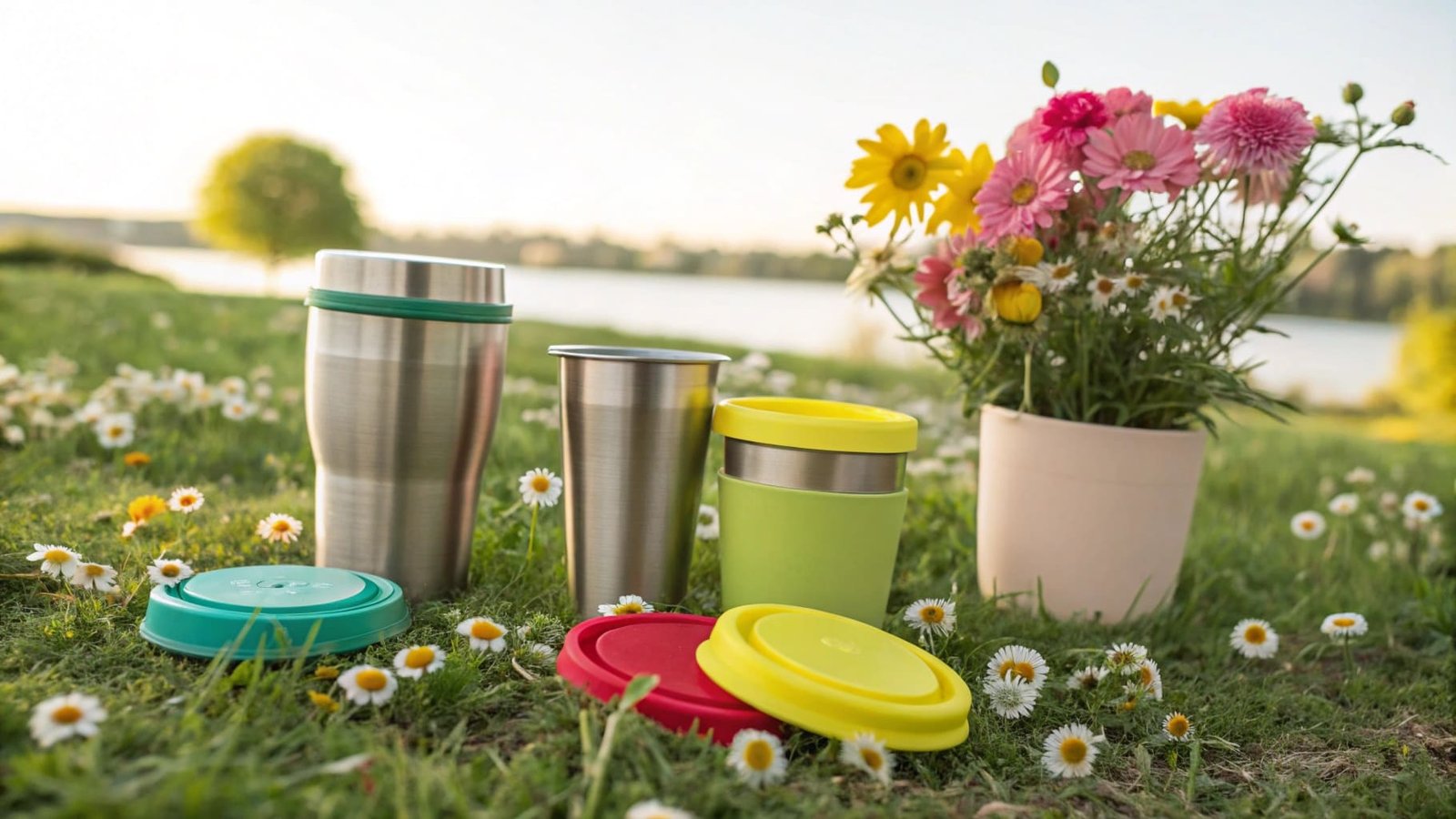
The ceramic mug market in Europe is growing.1 Consumers there want products that are safe, sustainable, and built to last.2 But ceramic mugs have real weaknesses. Without the right lid, those weaknesses become your problem. I have worked with buyers across North America and Europe, and I see the same mistake every time. They focus on the mug and treat the lid as an afterthought. That is where margin gets lost. The lid is not a small detail. It is the part that makes or breaks the user experience. In the sections below, I will walk through what you need to know before you place a single order.
What Are the Disadvantages of Ceramic Mugs?
You love the look of ceramic. Your customers love it too. But ceramic has real problems that no amount of good design can fully fix.
Ceramic mugs are heavier, more fragile, and harder to travel with than stainless steel or plastic alternatives.3 They chip easily, cannot handle sudden temperature changes well, and offer no protection against spills without a well-fitted lid.
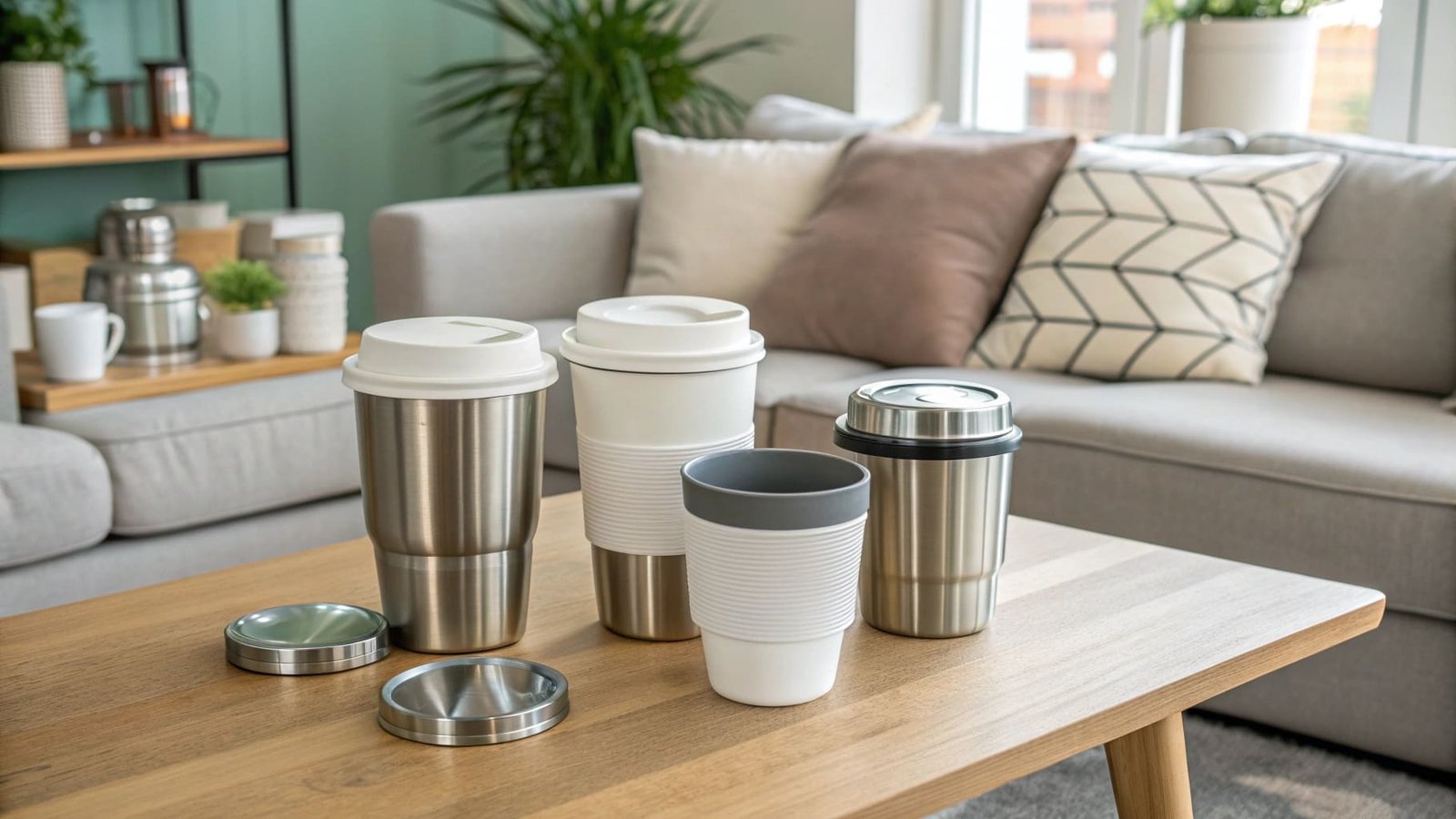
Ceramic is a beautiful material. It does not hold onto flavors or odors. It does not leach chemicals into your drink. European consumers know this, and they choose ceramic for those reasons. But the moment someone puts a ceramic mug in a bag or a car cupholder, the problems start. The weight alone is a barrier. A standard ceramic travel mug can weigh two to three times more than a comparable stainless steel option.4 That matters to a commuter who carries a bag every day.
The fragility issue is even more serious for B2B buyers. Chips and cracks are not just cosmetic. A chipped ceramic mug raises food safety questions. Buyers in Europe will return products that show surface damage, and that means your returns go up and your reputation takes a hit.
Here is a clear breakdown of the core disadvantages:
| Disadvantage | Impact on the Buyer | Impact on the End User |
|---|---|---|
| Fragility | Higher return rates, damaged stock | Chipped mugs feel unsafe to use |
| Weight | Higher shipping cost per unit | Uncomfortable to carry daily |
| No spill protection | Requires a well-fitted lid | Spills damage bags, cars, documents |
| Thermal shock risk | Warranty and quality complaints | Mug cracks from cold water rinse |
| Limited portability | Niche market appeal | Not practical for active lifestyles |
The good news is that a quality silicone lid addresses almost every one of these problems. A secure, flexible lid prevents spills. A lid with a protective rim absorbs light impact and reduces chipping. This is the exact reason why the lid becomes so important when you sell ceramic mugs in a travel context. A poor lid does not just fail on its own. It makes every weakness of the ceramic body worse.
What Is the Least Toxic Travel Mug?
Health-conscious buyers in Europe are asking harder questions about their products. If you cannot answer the toxicity question clearly, you will lose the sale.
The least toxic travel mug uses platinum-cured, food-grade silicone for seals and lids, combined with a ceramic or glass body.5 This combination avoids BPA, phthalates, heavy metals, and PFAS coatings that appear in many plastic and coated stainless steel products.6
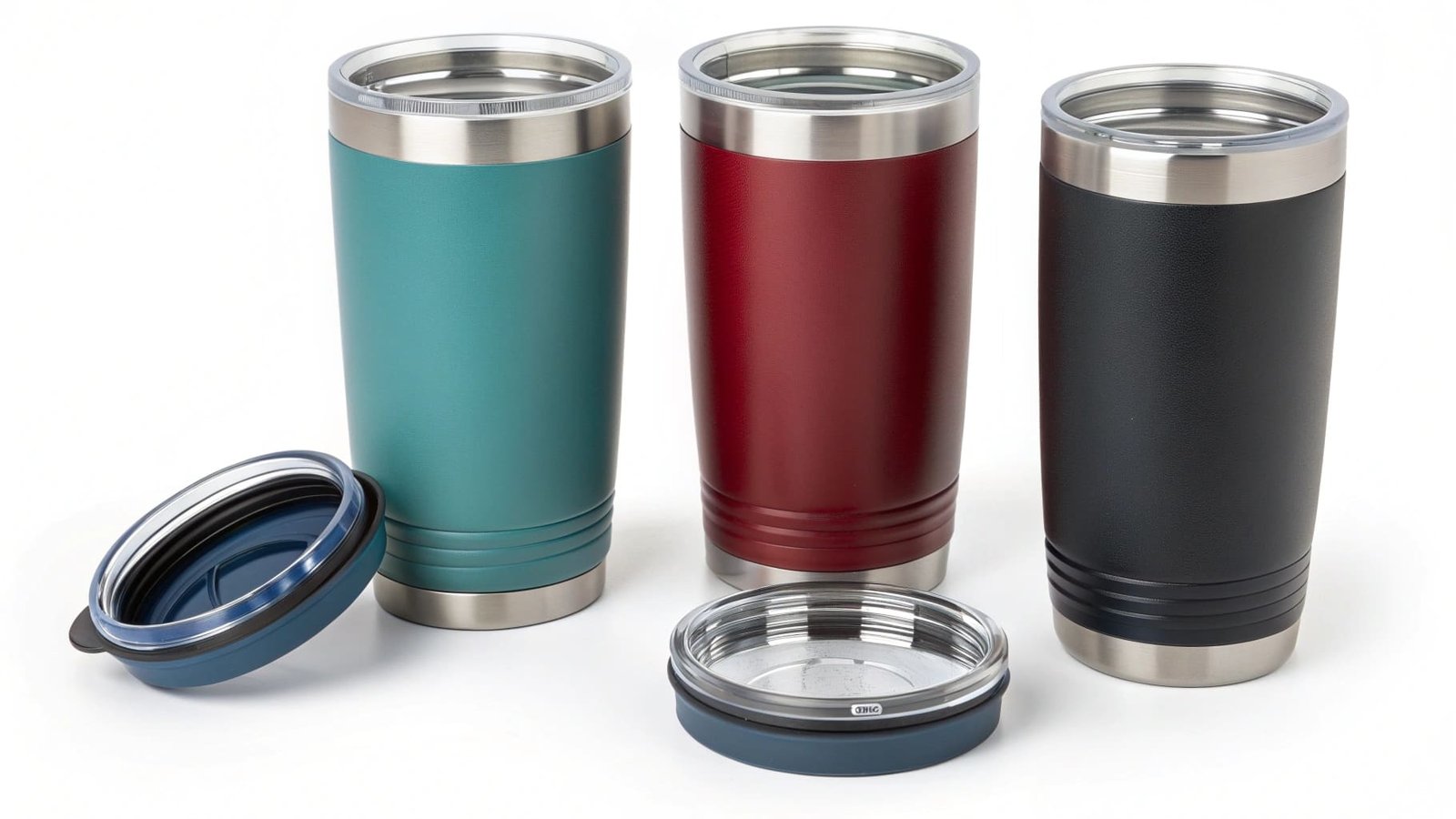
I get this question from procurement officers more than almost any other. They are not asking because they are curious. They are asking because their customers are demanding answers, and they need documentation to back up their claims on packaging and in marketing. In Europe, that documentation is not optional. It is a market entry requirement.7
The materials that raise the most concern in travel mugs are the ones most buyers do not think about. The mug body gets attention. The lid and the seal do not. But the lid is the part that touches the drink repeatedly. It is the part that gets washed in a dishwasher, exposed to heat, and placed directly against the user's mouth. If your lid is made from low-grade silicone or recycled rubber compounds, it will fail both safety tests and durability tests.
Here is how the main material types compare on safety:
| Material | BPA-Free | EU LFGB Compliant | Taste Neutral | Dishwasher Safe | Recommended |
|---|---|---|---|---|---|
| Platinum-cured silicone | Yes | Yes | Yes | Yes | Yes |
| Standard silicone | Yes | Varies | Mostly | Yes | With caution |
| Plastic (PP/Tritan) | Varies | Varies | No | Varies | No |
| Rubber compounds | Yes | Rarely | No | No | No |
| Coated stainless steel | Yes | Varies | Varies | Varies | With caution |
When I source silicone lids for European market distribution, I always ask for platinum-cured silicone specifically. The curing process matters because it determines what residual chemicals, if any, remain in the final product. Peroxide-cured silicone is cheaper to produce but can leave behind byproducts that affect taste and may not clear LFGB testing.8 Platinum-cured silicone is cleaner, more stable, and far more likely to pass the documentation review that European importers require. The cost difference per unit is small. The difference in compliance risk is large.
What Is the Best Material for Travel Coffee Mugs?
There are a lot of opinions on this topic. Most of them are based on personal preference. But if you are buying for resale in Europe, preference is not enough. You need a material that performs, complies, and sells.
The best material combination for travel coffee mugs in the European market is a ceramic body paired with a platinum-cured food-grade silicone lid and seal. This pairing offers chemical safety, heat retention, taste neutrality, and a strong sustainability story.
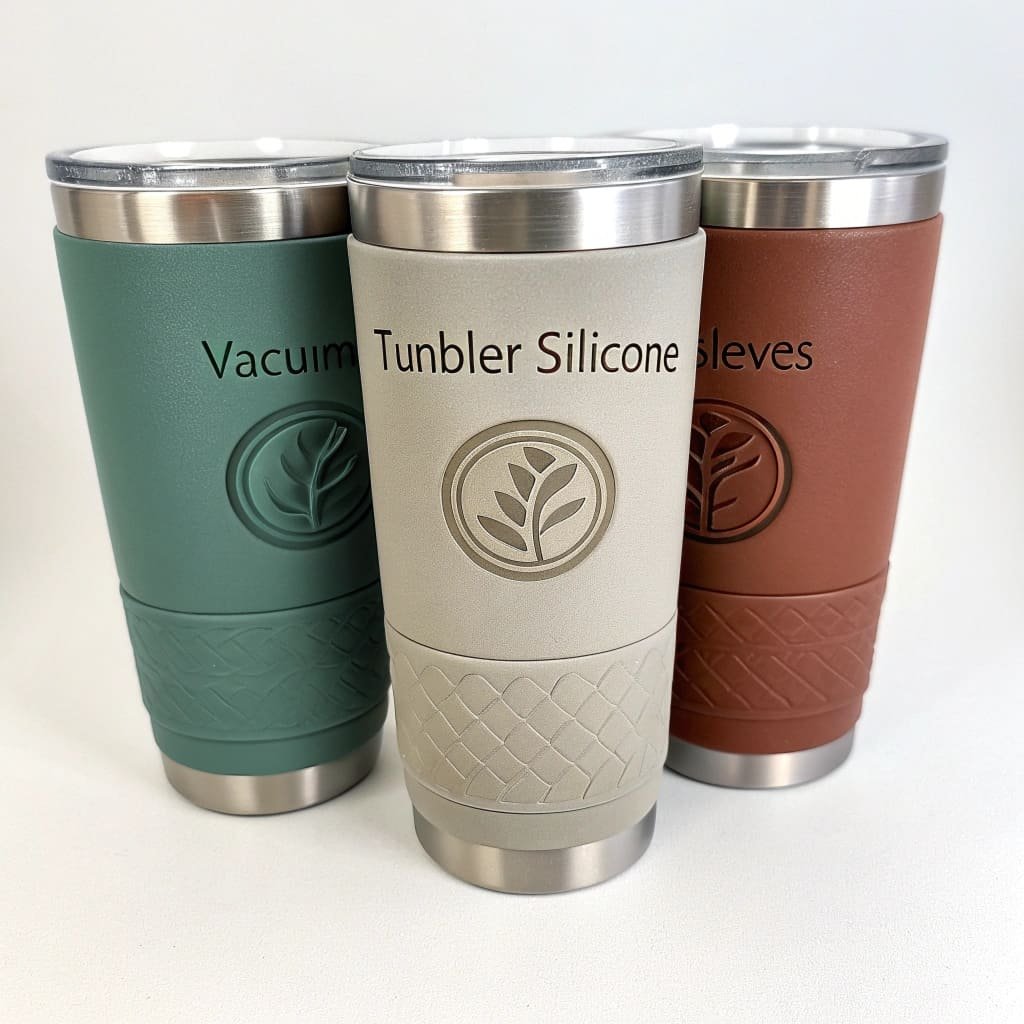
I have watched the European drinkware market shift over the past several years. Stainless steel dominated for a long time because it was durable and light. But consumer concerns about metallic taste, PFAS coatings on non-stick interiors, and the industrial feel of steel have opened a gap. Ceramic fills that gap well. It is neutral in taste, chemical-free in composition, and aesthetically warm in a way that stainless steel is not. But ceramic needs silicone to travel safely.
The pairing works because the two materials cover each other's weaknesses. Ceramic brings thermal performance and taste purity. Silicone brings flexibility, grip, and a leak-proof seal that ceramic alone cannot provide. When I help clients build a product line for the European market, this combination consistently gets the best response from both retail buyers and end consumers.
Here is how the most common travel mug material combinations compare across the metrics that matter most to European B2B buyers:
| Material Combination | Heat Retention | Taste Neutrality | EU Compliance | Sustainability Score | Portability |
|---|---|---|---|---|---|
| Ceramic + Silicone lid | High | Excellent | Strong | High | Moderate |
| Stainless Steel + Silicone lid | Very High | Good | Strong | Moderate | High |
| Glass + Silicone sleeve | High | Excellent | Strong | High | Low |
| Plastic + Plastic lid | Low | Poor | Varies | Low | High |
| Bamboo + Silicone lid | Moderate | Good | Moderate | Very High | Moderate |
For buyers focused on the premium segment of the European market, ceramic with silicone is the strongest choice. For buyers focused on the outdoor or active lifestyle segment, stainless steel with silicone gives better durability. The key point is that in both cases, silicone is the lid and seal material of choice. It is the only material that consistently passes EU food contact standards, handles repeated dishwasher cycles, and remains flexible enough to maintain a seal as the product ages.
One more thing I always tell my B2B clients: the sustainability angle is not just marketing in Europe. It is a purchasing criterion. A ceramic mug paired with a high-quality silicone lid lasts significantly longer than a plastic-bodied alternative. That extended lifespan directly supports the circular economy messaging that European retailers now expect from their suppliers. When you can show that your product reduces replacement frequency and landfill contribution, you are not just selling a mug. You are selling a position in a values-driven market.
Conclusion
Ceramic mugs need quality silicone lids to work in European markets. Prioritize LFGB-compliant, platinum-cured silicone. That choice protects your compliance, your margins, and your reputation.
-
"Global Ceramic Tableware Market Size, Share, and Trends Analysis ...", https://www.databridgemarketresearch.com/reports/global-ceramic-tableware-market?srsltid=AfmBOorwSecDEJGUNwB1NVZ11Alfy9_PVefQaW4HNs6tMUIa4lj4VJ_0. Market or trade statistics on European ceramic tableware can substantiate that demand in related ceramic drinkware categories has increased; the evidence is category-level and may not isolate travel mugs specifically. Evidence role: statistic; source type: institution. Supports: Recent market or trade data showing growth in European ceramic tableware, drinkware, or related household ceramic categories.. Scope note: Likely supports the broader ceramic tableware or drinkware market, not necessarily silicone-lidded ceramic travel mugs. ↩
-
"Sustainable consumption - European Commission", https://commission.europa.eu/topics/consumers/consumer-rights-and-complaints/sustainable-consumption_en. European Commission and Eurobarometer research on sustainable consumption can support the claim that many European consumers consider safety, durability, and environmental impact in purchasing decisions; it does not prove preferences for ceramic mugs specifically. Evidence role: statistic; source type: government. Supports: Survey or policy research indicating that European consumers value sustainable, safe, and durable products.. Scope note: Consumer-preference evidence is broad and not specific to travel drinkware. ↩
-
"Electron-rich Metals Make Ceramics Tough to Crack", https://today.ucsd.edu/story/electron-rich-metals-make-ceramics-tough-to-crack. Materials science references describe ceramics as generally brittle and often denser than polymer alternatives, supporting the article's comparison of ceramic mugs with plastic or metal travel products; the source would explain material tendencies rather than measure a specific mug design. Evidence role: mechanism; source type: education. Supports: Ceramics are typically brittle materials with higher density than many plastics, which helps explain higher weight and fragility in mug applications.. Scope note: Material-level evidence may not account for wall thickness, product design, or manufacturer-specific construction. ↩
-
"The 7 Best Travel Mugs of 2026, Tested & Reviewed - Serious Eats", https://www.seriouseats.com/best-travel-mugs-5191838. A comparison of published weights for similarly sized ceramic and stainless-steel travel mugs could support the stated two-to-three-times weight range; such evidence would be product-sample dependent rather than a universal material rule. Evidence role: statistic; source type: other. Supports: Measured product weights or compiled specifications comparing ceramic and stainless steel travel mugs of similar capacity.. Scope note: The ratio varies with capacity, wall thickness, insulation, handle design, and lid construction. ↩
-
"Chemical Migration from Silicones used in Connection with Food ...", https://www.nal.usda.gov/research-tools/food-safety-research-projects/chemical-migration-silicones-used-connection-food. Food-contact safety literature and regulatory guidance support the use of compliant glass, ceramic, and properly cured silicone in beverage-contact applications; this supports a low-exposure material strategy but does not prove that this combination is the single least toxic design. Evidence role: expert_consensus; source type: research. Supports: Food-contact glass, compliant ceramics, and properly cured silicone are widely used materials with established safety assessment frameworks.. Scope note: The term 'least toxic' is comparative and depends on product formulation, testing, and actual use conditions. ↩
-
"Presence of Perfluoroalkyl and Polyfluoroalkyl Substances (PFAS ...", https://pmc.ncbi.nlm.nih.gov/articles/PMC8306913/. European and food-safety regulatory sources document concerns about BPA and phthalates in some plastics, PFAS in certain coatings, and heavy-metal migration from non-compliant ceramics; this supports the chemical-risk context but not the claim that all plastic or coated stainless-steel mugs contain these substances. Evidence role: general_support; source type: government. Supports: Regulators have identified BPA, phthalates, PFAS, and heavy metals as potential concerns in certain food-contact materials or coatings.. Scope note: Contextual evidence on possible hazards, not proof of chemical content in every competing material. ↩
-
"EU Declaration of Compliance (DoC) for Food Contact ...", https://www.compliancegate.com/eu-declaration-of-compliance-doc-food-contact-materials/. EU food-contact material regulations establish safety, traceability, and compliance-documentation obligations for articles intended to contact food or beverages; this supports the need for documentation, though the exact documents required vary by material and national implementation. Evidence role: definition; source type: government. Supports: EU food-contact material regulation requires materials to be safe and traceable, and certain materials require declarations of compliance and supporting documentation.. Scope note: Documentation requirements differ by material category, supply-chain role, and member-state enforcement practice. ↩
-
"Chemical Migration from Silicones used in Connection with ...", https://www.nal.usda.gov/research-tools/food-safety-research-projects/chemical-migration-silicones-used-connection-food. Technical literature on silicone rubber curing supports that peroxide-cured systems can contain residual byproducts or volatiles relevant to migration and sensory testing, whereas platinum-cured systems may reduce such residues; this does not determine compliance for any specific formulation without laboratory testing. Evidence role: mechanism; source type: paper. Supports: Peroxide curing can generate residual volatile or extractable byproducts, while platinum-cured silicone is often associated with lower byproduct formation for food-contact applications.. Scope note: Actual LFGB or migration performance depends on formulation, post-curing, processing controls, and test results. ↩