How to Source Tumbler Protective Bases for Custom Brand Development Projects?
Building a custom tumbler brand sounds exciting. But most people hit a wall fast. They pick the wrong base material, get stuck with bad suppliers, and watch their launch fall apart.
Sourcing the right tumbler protective base starts with silicone. It outperforms rubber and TPE on durability, safety certifications, and customization options.1 Paired with the right supplier, it gives your brand a strong foundation from day one.
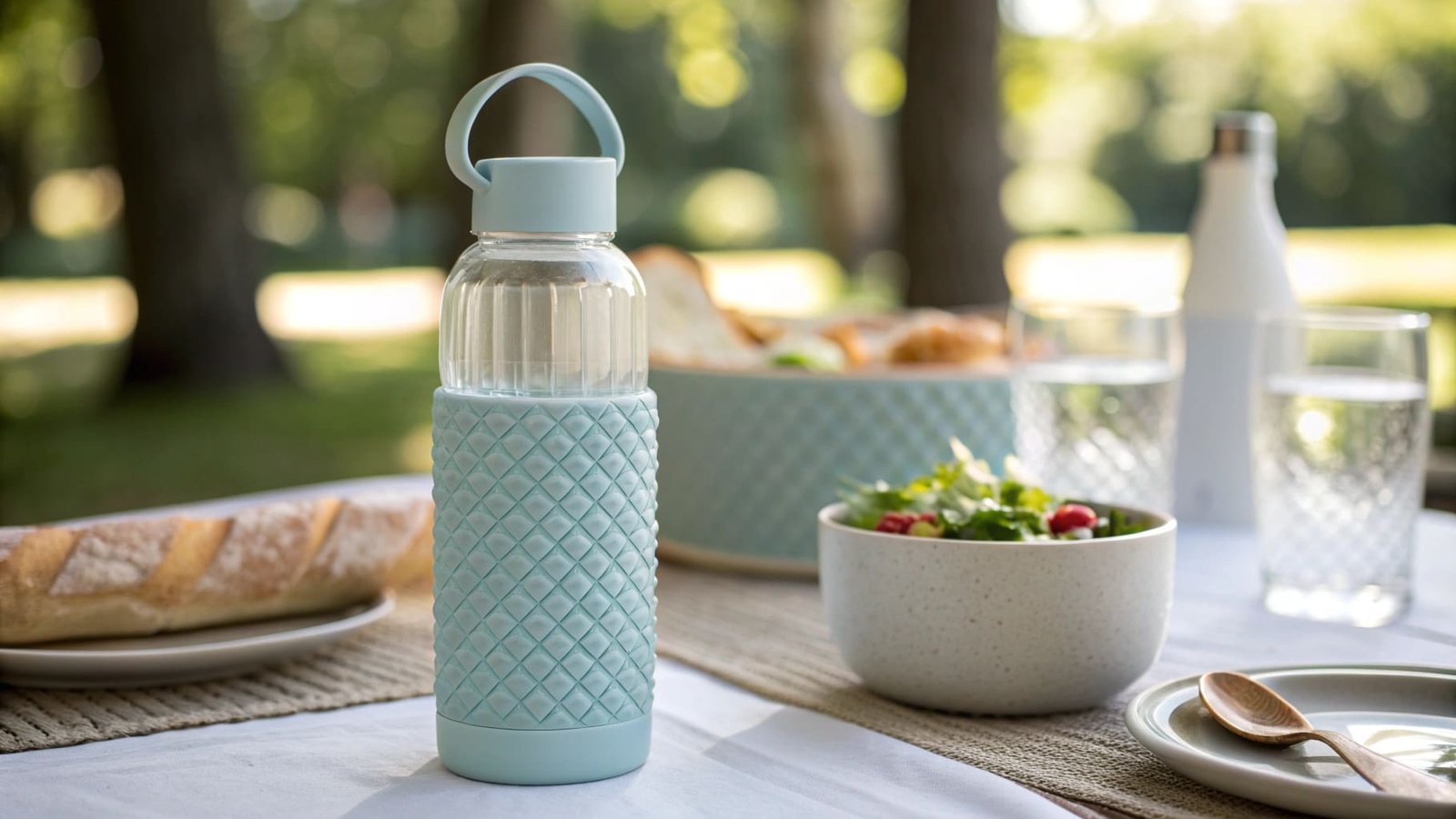
I have worked with dozens of buyers who came to me after a bad first attempt. They picked a cheap base, skipped the paperwork, and ended up with a product that could not enter their target market. I want to help you avoid that. In the next few sections, I will walk you through material selection, raw material factors, and everything you need to launch a custom tumbler project that actually works.
What is the Best Material for Tumblers?
You want your product to feel premium. But you also need it to pass certifications, survive daily use, and not embarrass your brand on a shelf. The material you pick decides all of that.
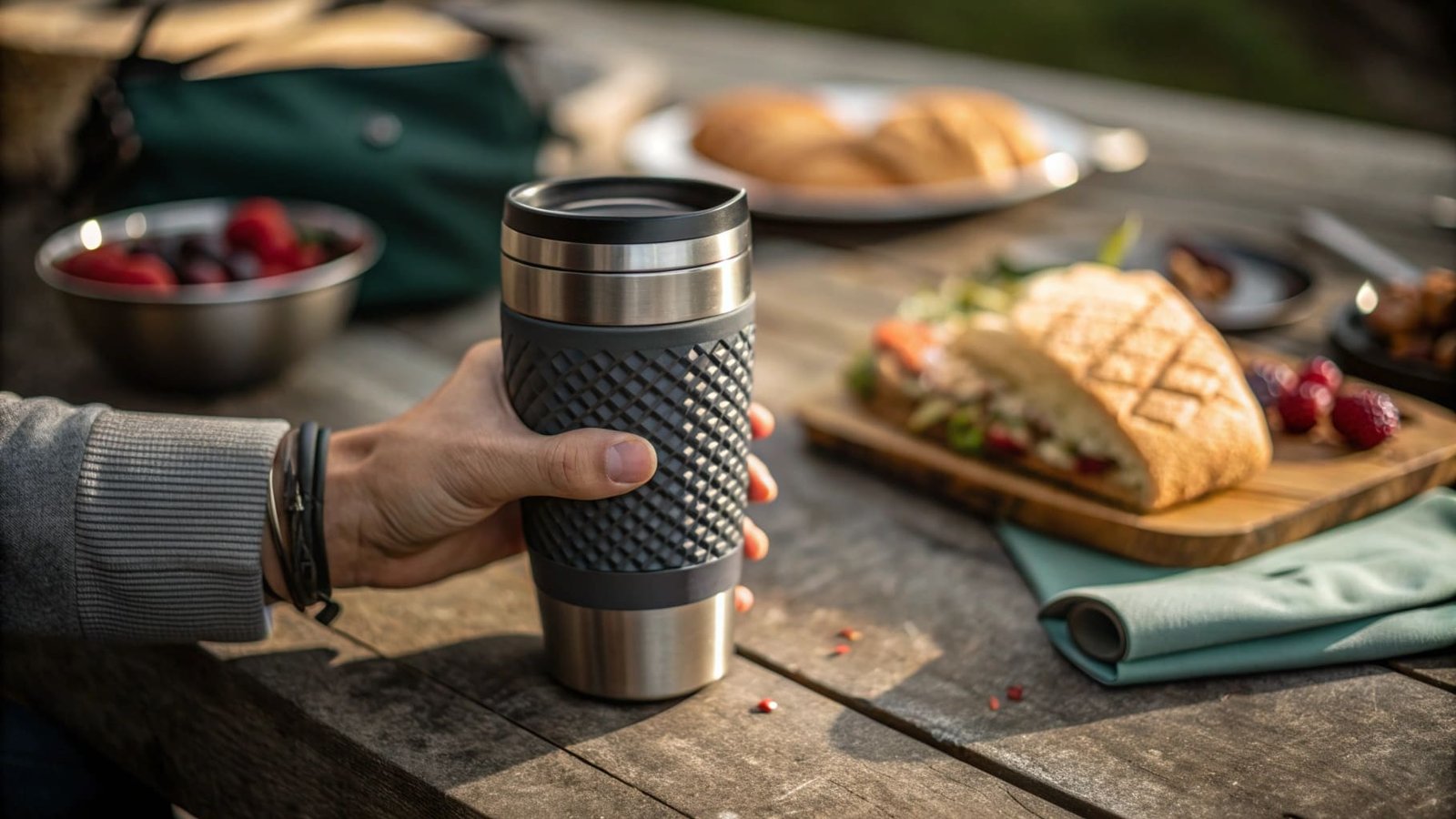
Silicone is the best material for tumbler protective bases.2 It handles extreme temperatures, resists staining and odor, and meets FDA and LFGB certifications required for North American and European markets.3 It also grips surfaces well and prevents scratches, which customers notice immediately.
Why Does Material Choice Matter So Much for a Custom Brand?
Most buyers focus on color and logo. That is the fun part. But the material underneath those visuals is what your customer actually experiences every day.
Here is how the three most common materials compare:
| Property | Silicone | Rubber | TPE |
|---|---|---|---|
| Temperature Range | -40°F to 450°F | Limited range | Moderate range |
| FDA / LFGB Certified | Yes | Rarely | Sometimes |
| Odor Resistance | Excellent | Poor | Moderate |
| Shape Retention | Excellent | Moderate | Moderate |
| Stain Resistance | Excellent | Poor | Moderate |
| Non-Slip Performance | Excellent | Good | Moderate |
Rubber degrades faster and absorbs odors over time. That creates bad reviews. TPE is cheaper, but it does not always qualify for the certifications you need when selling in the US or Europe.4 Silicone costs a bit more up front. But it protects your brand reputation in the long run, and that is worth far more.
I always tell buyers: your base material is not a line item to cut. It is a signal to your customer that you take quality seriously. If the base warps, scratches a countertop, or smells strange after a week, that is what they remember about your brand.
For premium retail positioning or corporate gifting, silicone is the only material that makes sense. It justifies a higher price point and gives retail buyers something concrete to point to when they pitch your product.
What Are the Raw Materials for Tumblers?
You know you want silicone. But not all silicone is the same. The raw material spec your supplier uses quietly determines how long your product lasts and how safe it is for end users.
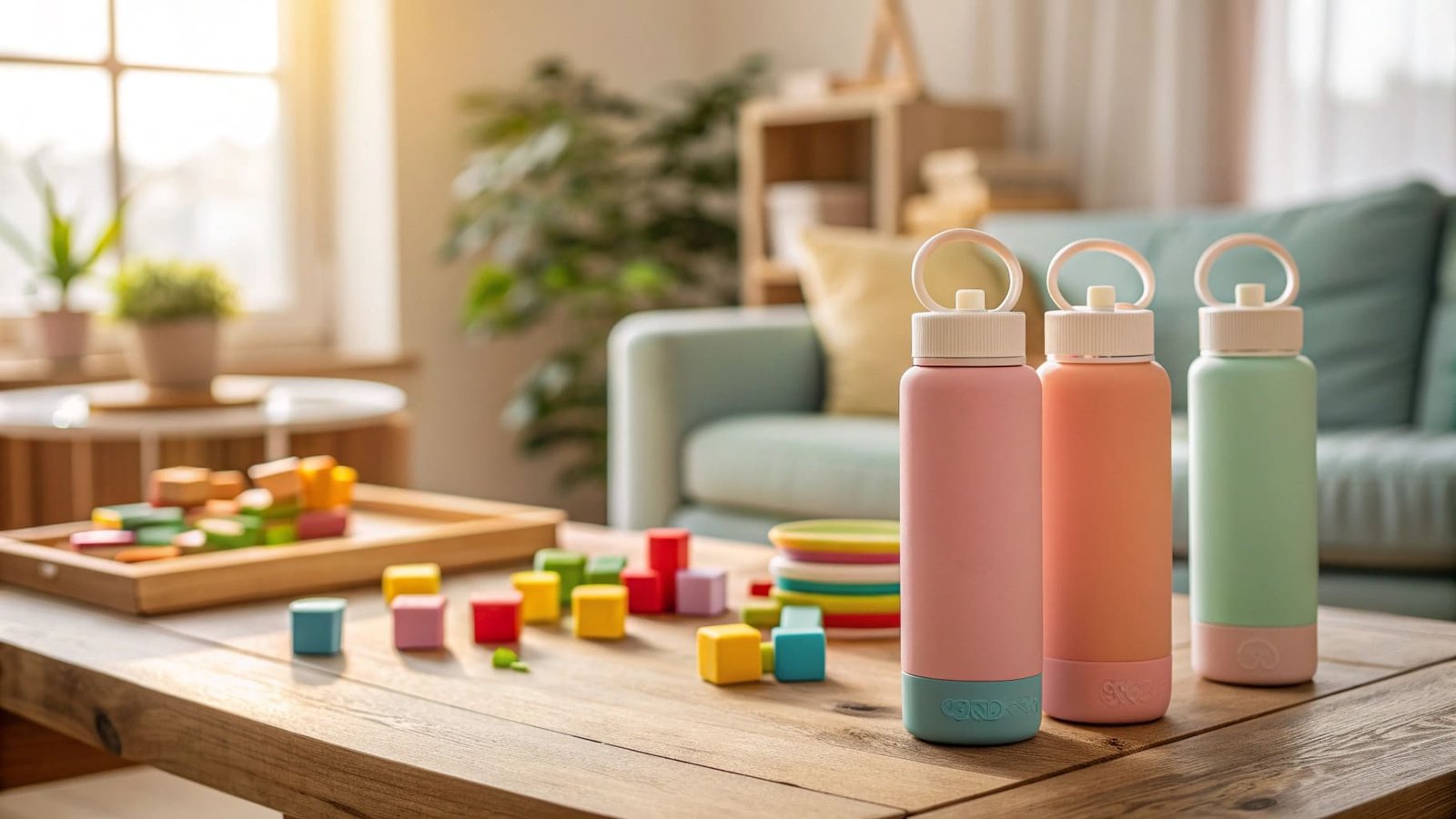
The core raw material for a high-quality tumbler base is 100% pure silicone rubber.5 The key specs to ask for are Shore A hardness between 40 and 60, high tear strength ratings, and low compression set.6 These three numbers tell you how the base will feel, how it holds up under pressure, and whether it will keep its shape over time.
How Do You Tell Good Silicone Raw Material from Bad?
This is where most buyers get lost. They are not engineers. They do not know what platinum-cured means or why it matters. I want to break this down simply.
There are two main curing processes used in silicone manufacturing:
| Curing Type | VOC Risk | Feel and Clarity | Best For |
|---|---|---|---|
| Platinum-Cured | None | Soft, clean, clear | Premium branded products |
| Peroxide-Cured | Present | Slightly stiffer | Basic utility products |
Platinum-cured silicone costs around 15 to 20 percent more. But it removes the risk of volatile organic compounds, which are chemicals that can leach out of lower-grade materials. For a product that sits on a kitchen counter and touches food containers daily, that matters. It also matters to retail buyers who will ask about it before putting your product on their shelves.
Beyond curing type, ask your supplier for the material safety data sheet before you commit to anything. A reliable supplier hands this over without hesitation. One who stalls or gives you vague answers is a supplier worth avoiding.
The Shore A hardness range is also worth understanding. A base at 40A feels soft and grippy. A base at 60A is firmer and more structured. For most tumblers, somewhere in the middle works best. It grips the table, cushions the base from impact, and still feels solid in the hand.
One thing I have learned from working in this space: buyers who understand raw material specs have much stronger conversations with suppliers. You do not need to be a chemist. You just need to know the right three or four questions to ask.
What Do I Need to Make Custom Tumblers?
You have the material sorted. Now you need to know what it actually takes to run a custom tumbler project from start to finish. This is where a lot of first-time buyers underestimate the work involved.
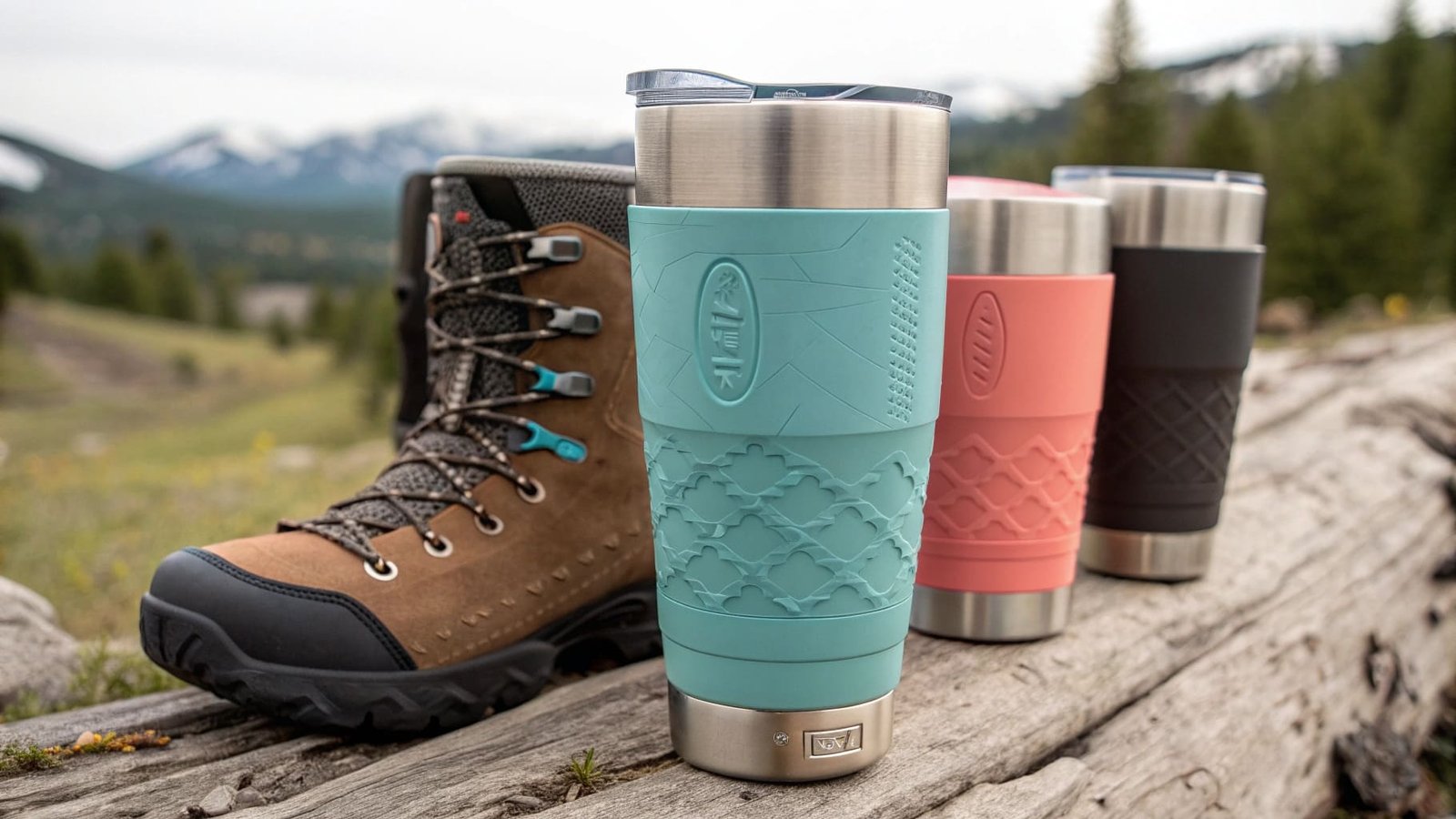
A successful custom tumbler project needs three things: a supplier with a low minimum order quantity for testing, full customization options including Pantone color matching and logo work, and complete documentation including FDA certificates, MSDS sheets, and durability test reports.
What Should You Actually Check Before Placing a Custom Order?
Most buyers focus on the sample. The sample looks good, the price fits the budget, and they move forward. But there are five other areas that decide whether the project succeeds.
Here is a checklist I recommend going through before signing off on any custom tumbler order:
| Check Area | What to Ask | Why It Matters |
|---|---|---|
| MOQ | Can you start at 500 to 1,000 units? | Reduces risk during market testing |
| Color Options | Do you support Pantone matching? | Keeps your brand visuals consistent |
| Logo Application | Debossed or embossed available? | Affects how premium the product looks |
| Size Compatibility | Do you cover 30oz and 40oz diameters? | These are the most popular sizes in the market |
| Certifications | Can you provide FDA and LFGB documents? | Required for US and European market entry |
| Durability Testing | Do you test for 10,000 use cycles? | Proves the product holds up under real conditions |
| Production Timeline | Is a 25 to 35 day window realistic? | Lets you plan your launch without surprises |
The production timeline piece is something buyers consistently overlook. Custom work takes longer than off-the-shelf orders. You need time for design revisions, sample approval, and production runs. If you are planning a seasonal launch, you need to build that 25 to 35 day window into your schedule before you even place the order.
The documentation list is just as important as the product itself. FDA compliance certificates protect you legally if a customer or retailer raises a safety concern. Durability test reports give retail buyers and corporate gift clients something concrete to evaluate. MSDS sheets show that the materials are safe and traceable. These documents are not just paperwork. They are part of what you are selling.
I always recommend treating your first order as a test run. Start with a smaller quantity. Validate the product in your market. Collect feedback. Then scale. Suppliers who push you to jump straight to a large order before you have done any testing are not thinking about your success. They are thinking about their revenue.
Conclusion
Pick silicone, understand the raw material specs, and verify everything before you order. That is the short version of how you build a custom tumbler brand that lasts.
-
"Progress in research on the safety of silicone rubber products in ...", https://pubmed.ncbi.nlm.nih.gov/37183940/. Materials-science references describe silicone elastomers as chemically stable, heat-resistant, and suitable for food-contact consumer applications, supporting the article’s general comparison with rubber and TPE; however, the source would not prove superiority for every tumbler-base design or supplier formulation. Evidence role: general_support; source type: research. Supports: Silicone elastomers are commonly selected for food-contact or consumer-product applications because of heat resistance, chemical stability, durability, and processability compared with some conventional rubbers or TPEs.. Scope note: Contextual support only; comparative performance depends on grade, additives, curing system, and product design. ↩
-
"Progress in research on the safety of silicone rubber products in ...", https://pubmed.ncbi.nlm.nih.gov/37183940/. University or technical materials references identify silicone rubber as flexible, thermally stable, and widely used in food-contact or kitchenware applications, providing contextual support for selecting it for protective tumbler bases. Evidence role: general_support; source type: education. Supports: Silicone rubber has properties relevant to tumbler protective bases, including flexibility, thermal stability, and suitability for food-adjacent applications.. Scope note: The source would support suitability, not an objective ranking of silicone as the single best material in all use cases. ↩
-
"21 CFR 177.2600 -- Rubber articles intended for repeated ...", https://www.ecfr.gov/current/title-21/chapter-I/subchapter-B/part-177/subpart-C/section-177.2600. FDA food-contact regulations and European food-contact frameworks, including LFGB-related testing practices, establish compliance requirements for materials used near food, supporting the need to verify silicone formulations for target markets. Evidence role: general_support; source type: government. Supports: Food-contact materials sold in the United States and Europe are subject to regulatory requirements, and silicone materials may be evaluated under applicable FDA and LFGB or EU food-contact frameworks.. Scope note: This supports the need for regulatory compliance documentation, but it does not show that all silicone products are automatically FDA- or LFGB-certified. ↩
-
"Chemistry Recommendations for Submissions of Food ...", https://www.fda.gov/regulatory-information/search-fda-guidance-documents/guidance-industry-preparation-premarket-submissions-food-contact-substances-chemistry. Food-contact regulations in the United States and Europe evaluate polymer materials by composition and migration behavior, supporting the statement that a TPE formulation may require verification before sale in those markets. Evidence role: general_support; source type: government. Supports: Food-contact compliance for polymer materials depends on the specific formulation, authorized substances, and migration testing, so not every TPE formulation will be suitable for US or European food-contact use.. Scope note: This supports the regulatory uncertainty of TPE formulations but does not independently establish that TPE is generally cheaper than silicone. ↩
-
"[PDF] Report Name:National Food Safety Standard for Silicone Rubber ...", https://apps.fas.usda.gov/newgainapi/api/Report/DownloadReportByFileName?fileName=National%20Food%20Safety%20Standard%20for%20Silicone%20Rubber%20Materials%20and%20Products%20for%20Food%20Contact%20Use%20Notified%20to%20WTO_Beijing_China%20-%20People%27s%20Republic%20of_CH2023-0168. Institutional guidance on food-contact silicone emphasizes controlled formulation and compliant additives, supporting the article’s emphasis on pure silicone rubber as the preferred base material for higher-quality products. Evidence role: general_support; source type: institution. Supports: Food-grade silicone products rely on controlled silicone rubber formulations and compliant additives to meet safety and performance expectations.. Scope note: The evidence would support formulation control and food-contact suitability, not the commercial label “100% pure” unless the source specifically defines that term. ↩
-
"Evolution of Shore Hardness under Uniaxial Tension/Compression ...", https://pmc.ncbi.nlm.nih.gov/articles/PMC9697891/. Elastomer testing references define Shore A hardness, tear strength, and compression set as standard measures of firmness, tear resistance, and permanent deformation, supporting their use as key specifications for silicone tumbler bases. Evidence role: mechanism; source type: research. Supports: Shore A hardness measures elastomer firmness, tear strength relates to resistance to tearing, and compression set measures permanent deformation after compression.. ↩