Should Black Lid and Sleeve Sets for 12oz Cups Include Wholesale Discounts?
Many buyers ask me this question every week. They want a good deal, but they are not sure if it is fair to ask. This confusion costs time and money.
Yes, black lid and sleeve sets for 12oz cups should include wholesale discounts. Volume orders reduce production costs. Bundling lids with sleeves adds value to the package.1 A tiered pricing structure starting at 1,000 sets is the most common and fair approach.2
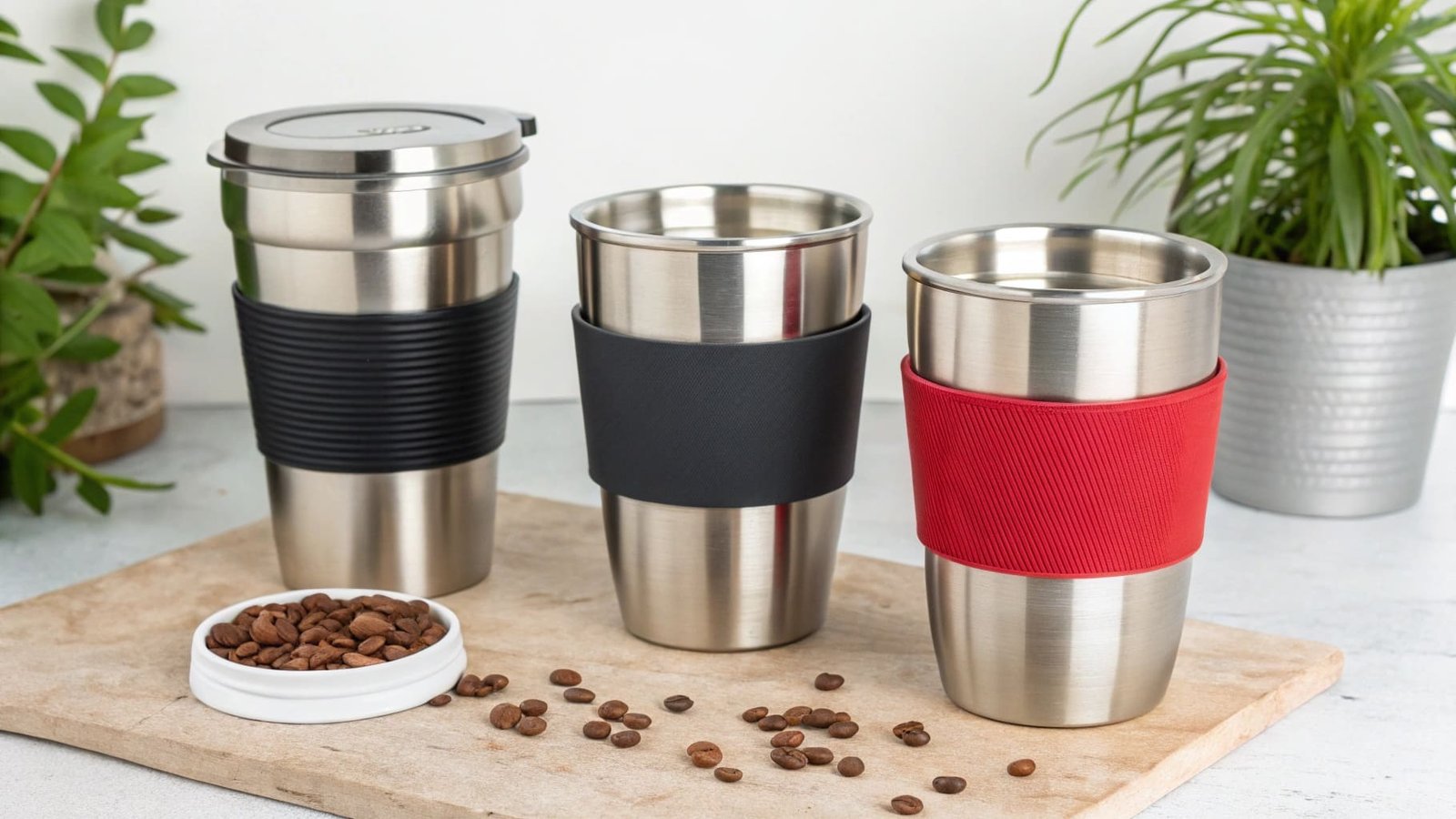
I have worked with many buyers from North America and Europe. Most of them come to me with the same question in their head. They want to know if they are getting a good deal, or if they are leaving money on the table. The answer depends on how well they understand the cup accessory business. Once they understand the basics, the decision becomes easy. Let me walk you through everything you need to know.
What Is the Profit Margin of the Cup Business?
Many buyers think they know the margin. Most of them are wrong. A wrong guess at the margin leads to bad pricing decisions and lost profit.
The profit margin in the cup accessory business usually sits between 25% and 40%.3 This number changes based on material quality, order size, and whether you add custom branding. Silicone sleeves often sit at the higher end because they offer more value than paper or cardboard options.
Why Silicone Sleeves Earn a Higher Margin
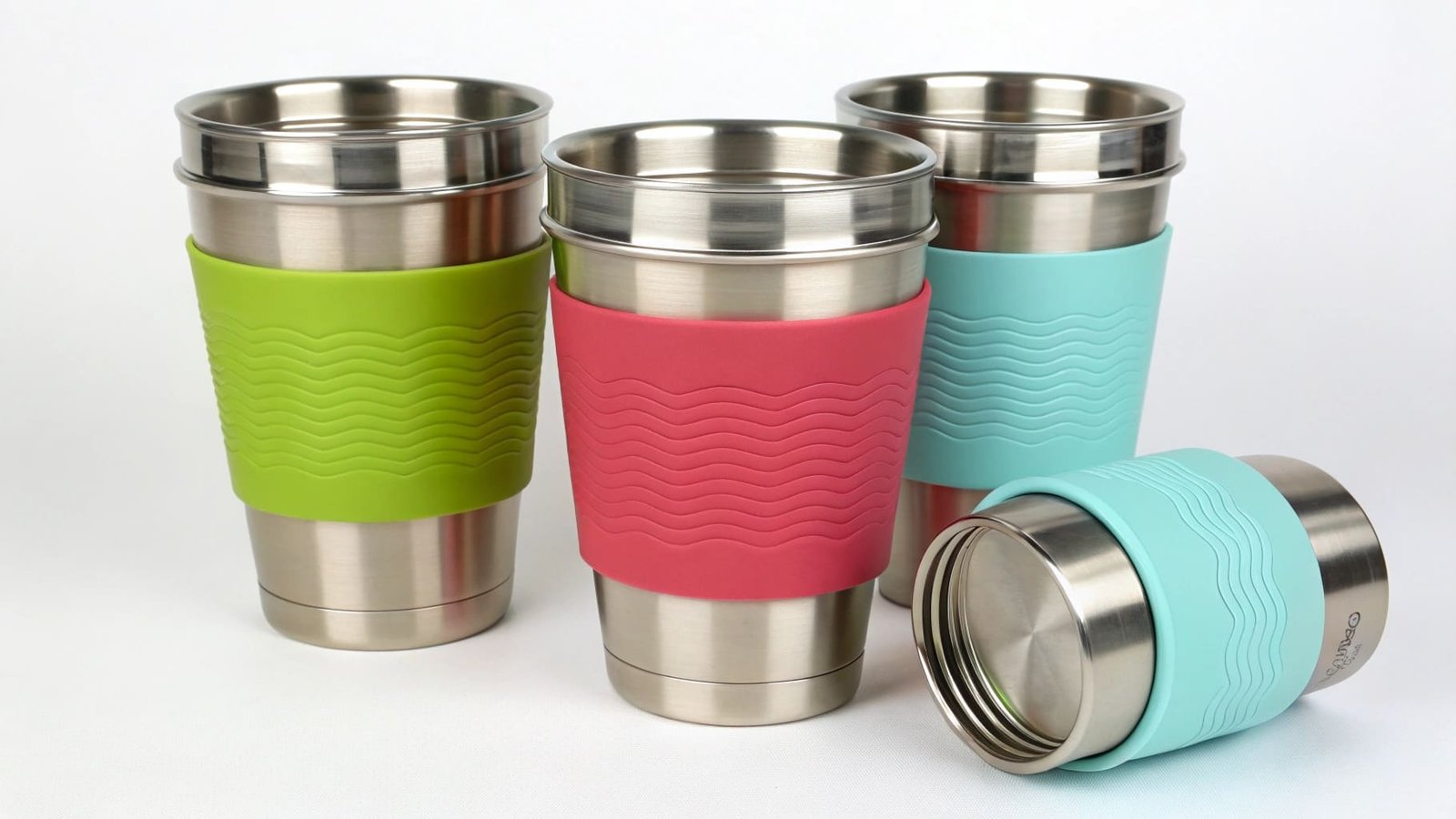
Silicone sleeves are not the same as paper sleeves. Paper sleeves are disposable. Silicone sleeves are reusable. That difference alone justifies a higher price point. Buyers who sell silicone sleeves under their own brand can charge more at retail, which means more room in the margin.
Here is how the margin breaks down across common sleeve materials:
| Material | Reusable | Heat Protection | Typical Margin Range |
|---|---|---|---|
| Paper / Cardboard | No | Low | 15% – 25% |
| Neoprene | Yes | Medium | 20% – 30% |
| Silicone | Yes | High | 30% – 40% |
The material choice also affects the minimum order quantity that makes sense. Silicone has a higher unit cost, so buyers often start at 1,000 sets.4 At 10,000 sets or more, the per-unit cost drops enough to push the margin even higher.5
Bundling lids with sleeves is another way to protect the margin. A lid alone has a low perceived value. A sleeve alone has a moderate perceived value. Together, they form a complete product that buyers can sell as a set. This approach reduces the pressure to compete on price for individual parts. Instead, the buyer competes on the value of the full package. I have seen this strategy work well for buyers who distribute to coffee shops and outdoor gear retailers. The set sells for more than the sum of its parts, and the margin reflects that difference.
For my customers at Silijoy, the tiered pricing structure looks like this in practice. A buyer who orders 1,000 sets gets a standard wholesale price. A buyer who orders 5,000 sets gets a mid-tier discount. A buyer who crosses 10,000 sets gets the deepest discount available. This structure rewards commitment and gives the buyer a clear reason to increase their order size over time.
What Is the Standard Size for a Coffee Cup?
Buyers often assume all cups are the same size. They are not. Ordering sleeves or lids that do not fit the right cup is a costly mistake.
The 12oz cup is the most common standard size in the coffee industry.6 It is widely recognized as the medium size. Most coffee shop chains, office coffee programs, and food service suppliers use this size as their base reference point.
Why the 12oz Size Matters for Procurement
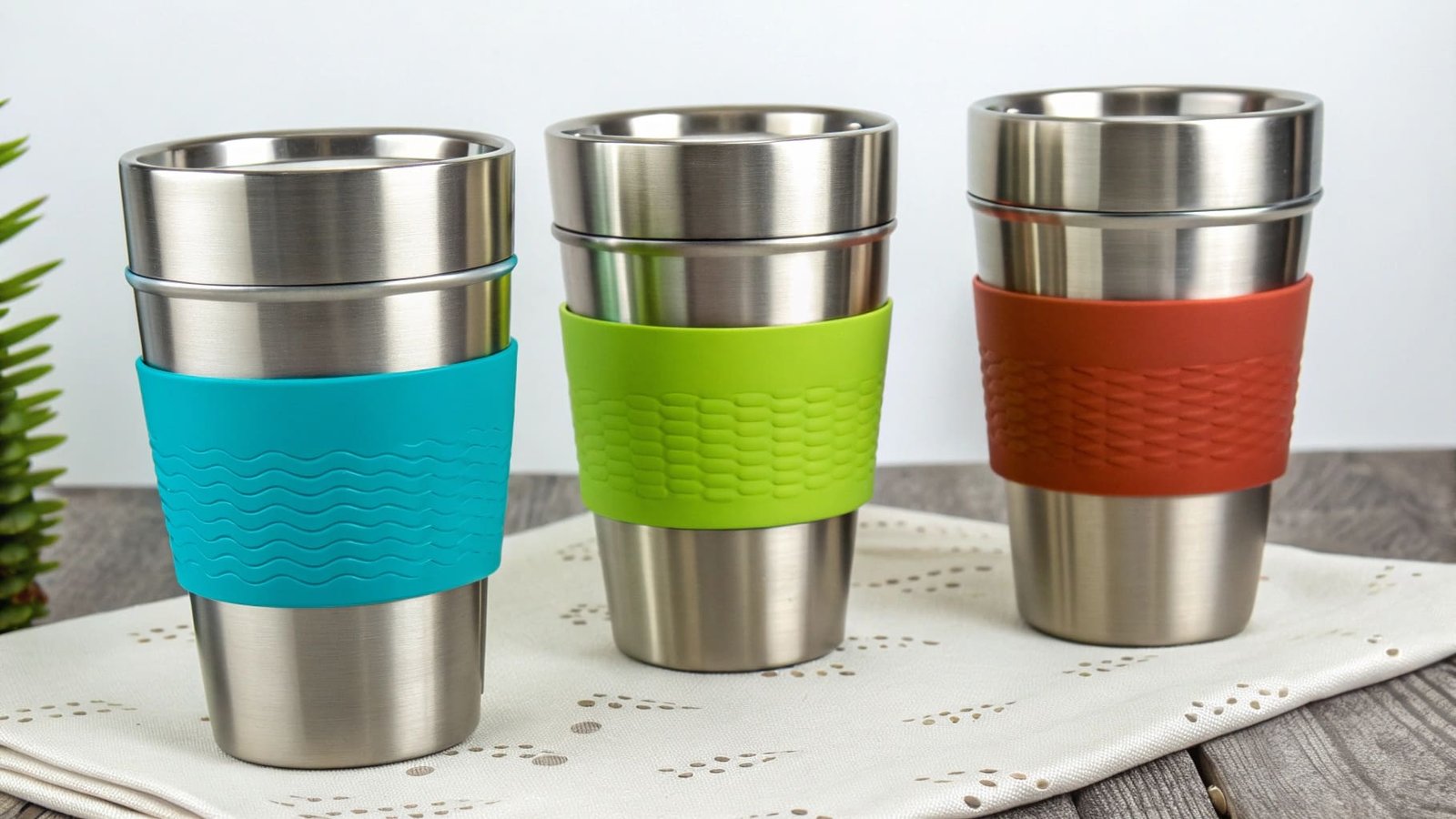
When you source accessories for the 12oz size, you are buying for the largest part of the market. This matters for three reasons.
First, a wider market means more potential buyers for your product. Second, more buyers mean higher reorder rates. Third, higher reorder rates give you more leverage when negotiating prices with your supplier.
Here is a breakdown of common cup sizes and their market position:
| Cup Size | Common Label | Market Share | Accessory Demand |
|---|---|---|---|
| 8oz | Short / Small | Low | Low |
| 12oz | Tall / Medium | High | High |
| 16oz | Grande / Large | Medium | Medium |
| 20oz | Venti / Extra Large | Low | Low |
The 12oz size also reduces inventory risk. Because so many brands use this size, a buyer can sell accessories across multiple cup lines without needing separate SKUs for each one. This is especially important for buyers who distribute to diverse retail clients.
When I talk to procurement officers about this, I always point to the compatibility advantage. A silicone sleeve made for a 12oz cup will fit most standard cups in that category.7 That means one mold, one production run, and one inventory line. The cost savings from that simplicity are real and they compound over time. I have seen buyers cut their accessory SKU count in half just by focusing on 12oz compatibility. Fewer SKUs mean simpler logistics, fewer storage costs, and easier quality control. For a buyer managing a large catalog, that matters a lot.
What Size Coffee Cups Does Starbucks Use?
This question comes up more than you might expect. Buyers use Starbucks as a reference point. That makes sense, because Starbucks shaped the language of cup sizes for the whole industry.
Starbucks uses four main cup sizes. Their 12oz cup is called the "Tall." This is the size that most accessory buyers use as their benchmark when sourcing lids and sleeves.
How Starbucks Sizing Influences the Wholesale Market
Starbucks did not just create a menu. They created a sizing standard that spread across the global coffee industry. When Starbucks called their 12oz cup a "Tall," they made that size the reference point for medium. Other brands followed. Suppliers followed. Accessory makers followed.
Here is a simple comparison of Starbucks sizes against common industry labels:
| Starbucks Name | Volume | Common Industry Label |
|---|---|---|
| Short | 8oz | Small |
| Tall | 12oz | Medium |
| Grande | 16oz | Large |
| Venti (Hot) | 20oz | Extra Large |
For B2B buyers, this matters because your retail clients already think in Starbucks terms. When a café owner says they want sleeves for their medium cups, they mean 12oz. When a corporate office manager orders cup accessories for the break room, they are thinking of the same size. This shared language makes the 12oz the easiest size to sell downstream.
This is why I always recommend that new buyers start their silicone sleeve orders with the 12oz size. It is the safest entry point. The demand is proven, the compatibility is broad, and the resale path is clear. Once a buyer has stable sales in the 12oz category, they can expand into other sizes with confidence. The 12oz order also tends to generate the highest reorder frequency, which means a more predictable cash flow for the buyer's business. For buyers like Mark, who need to plan inventory around seasonal peaks, that predictability is not just convenient, it is essential.
Conclusion
Wholesale discounts on black lid and sleeve sets are fair and standard. The 12oz size gives buyers the best market fit, the lowest inventory risk, and the strongest margin opportunity.
-
"[PDF] The Dynamic Effects of Bundling as a Product Strategy", https://www.hbs.edu/ris/Publication%20Files/dynamicbundling_2013_06_20_13def9fb-1904-479a-8a37-fa64eff9663a.pdf. Research on product bundling indicates that combining complementary goods can affect perceived value and purchase evaluation, providing a theoretical basis for treating a lid-and-sleeve set as a higher-value package. Evidence role: mechanism; source type: paper. Supports: A marketing research paper should support that product bundles can change perceived value, simplify purchase decisions, or affect willingness to pay.. Scope note: This would provide general marketing support and may not test disposable cup lids and silicone sleeves specifically. ↩
-
"The effects of quantity discounts on supply chain performance - PMC", https://pmc.ncbi.nlm.nih.gov/articles/PMC7578567/. Sources on wholesale quantity discounts and minimum order quantities support the general practice of offering lower unit prices at larger order tiers. Evidence role: general_support; source type: education. Supports: A source should explain the general use of quantity discounts and minimum order quantities in wholesale or manufacturing procurement.. Scope note: Such support would not independently verify that 1,000 sets is the most common threshold for this specific product category unless an industry dataset is found. ↩
-
"Monthly Wholesale Trade - Definitions - Census Bureau", https://www.census.gov/wholesale/definitions.html. Industry or government margin data for relevant foodservice-packaging and wholesale categories would provide a benchmark for evaluating whether a 25% to 40% margin range is plausible. Evidence role: statistic; source type: government. Supports: A government or industry dataset should provide gross margin or markup benchmarks for foodservice packaging, disposable goods, or related wholesale categories.. Scope note: Broad category data may be contextual rather than direct proof for black lid and sleeve sets. ↩
-
"Advanced Injection Molding Methods: Review - PMC", https://pmc.ncbi.nlm.nih.gov/articles/PMC10489002/. Manufacturing sources on silicone products and molded components can support the general point that material choice, tooling, and production scale affect unit cost and minimum viable order quantities. Evidence role: general_support; source type: research. Supports: A materials or manufacturing source should explain cost drivers for silicone products, including material costs, tooling, molding, and scale requirements.. Scope note: This would be contextual unless the source reports a 1,000-set starting quantity for cup sleeves specifically. ↩
-
"Economies of scale - Wikipedia", https://en.wikipedia.org/wiki/Economies_of_scale. Manufacturing-cost literature supports the mechanism that larger production runs can reduce unit costs by distributing setup and tooling costs over more units. Evidence role: mechanism; source type: paper. Supports: A manufacturing economics source should support that per-unit costs often decline with larger production runs, especially where fixed tooling or setup costs are significant.. Scope note: This would not verify that 10,000 sets is the exact point at which margins rise for this product. ↩
-
"Coffee Cup Size Guide - WebstaurantStore", https://www.webstaurantstore.com/guide/1307/coffee-cup-sizes.html?srsltid=AfmBOorQ4-5DVXh6Y_Al8SIVIccBK9NVrxhNjH1-w7yv3IcTkjdGCp23. Foodservice or market data showing widespread use of 12 oz hot cups would support the claim that this size functions as a common standard in coffee retail. Evidence role: statistic; source type: research. Supports: A market research, foodservice, or procurement source should provide evidence that 12 oz cups are widely used or have high demand relative to other sizes.. Scope note: Evidence may show broad usage rather than prove that 12 oz is the single most common size across all coffee markets. ↩
-
"Standard Hot Cups - Graphic Packaging International", https://www.graphicpkg.com/products/standard-hot-cups/. Dimensional specifications for 12 oz disposable hot cups can provide contextual support for the claim that sleeves designed for that size may fit many standard cups. Evidence role: general_support; source type: institution. Supports: A standards, procurement, or institutional foodservice source should show that 12 oz hot cups commonly share similar dimensions relevant to sleeve fit.. Scope note: Cup taper, wall thickness, and manufacturer-specific dimensions can vary, so dimensional evidence would not guarantee universal compatibility. ↩